Archives

Attic apartments in Kvarteret Generalen

Designed by Ivar Tengbom
Architecture, Cultural Heritage
Accessibility, Building Preservation & Restoration, Housing, Renovation & Transformation
Client: Bostadsbolaget
Location: Göteborg
Year: 2019-ongoing

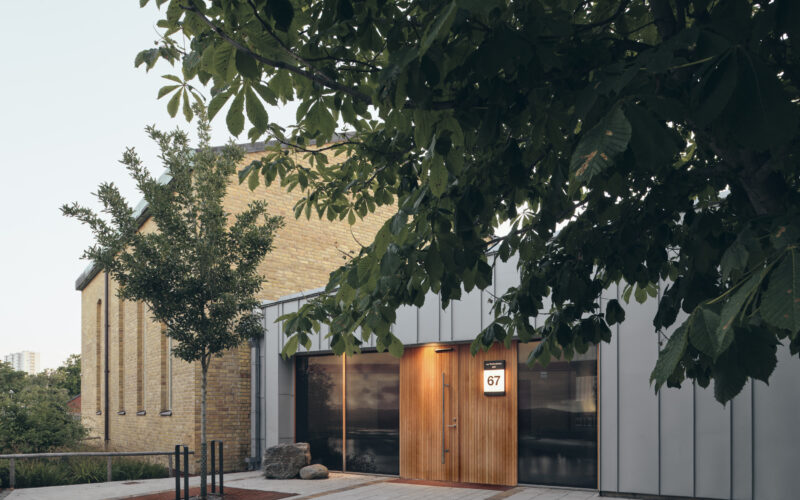
As Gothenburg continues to grow, so does the demand for housing. There are many ways to address this, but one sustainable solution is to convert existing buildings. In Kvarteret Generalen, unused attic spaces are being transformed into 24 new apartments — preserving history while creating much-needed homes.

In 2019, the municipal housing company Bostadsbolaget received a tip from its staff about unused attic spaces in one of its properties in Haga. A feasibility study soon confirmed that the high ceilings — reaching up to six or seven metres — could accommodate 24 new apartments, while still leaving room for new attic storage areas.

Since then, twelve loft apartments have been completed on Södra Allégatan, and another twelve are on the way.

Original drawing by Ivar Tengbom.

“The attic space our staff noticed in Haga had impressive ceiling heights. The study showed that we could create 24 apartments while still providing new storage areas in the attic”, says Per Orshammar, Project Manager, Bostadsbolaget

Each apartment is unique in layout and size, ranging from 31 to 35 square metres. All feature an open-plan kitchen and living space. The next phase of the project will begin in 2024, with the final twelve apartments set to be available for rent by 2025–2026.

We’ve had to be creative while showing great respect for the building’s cultural and historical values.

Kvarteret Generalen – a historic landmark

Haga is one of Gothenburg’s oldest districts, known for its cobblestone streets, small squares, and historic buildings. It’s a highly desirable area, but new construction is nearly impossible. Instead, the focus is on adapting existing buildings, as seen in Kvarteret Generalen.

Originally built in 1866 as a children’s hospital, the property was designed by architect Frans Jacob Heilborn. In 1910, four additional stone buildings—ranging from four to six storeys—were added, designed by Ivar Tengbom and Ernst Torulf. Today, Haga’s charm attracts both residents and visitors, blending a vibrant café culture with historic character.

Attic conversions in two phases

The first twelve apartments are now complete, marking the first phase of the project. With the second phase underway, another twelve apartments and additional storage spaces are being created.

“What makes this project particularly exciting is the challenge of preserving and enhancing the original architecture while creating modern homes,” says Helena Elisson, architect at Tengbom.

“We approached the project with a solution-driven mindset—balancing creativity with deep respect for the building’s cultural heritage.”

By preserving Ivar Tengbom’s original architectural vision, we have created new living spaces without compromising the historic integrity. Achieving this required careful material selection and thoughtful design. The project began with a feasibility study and a building permit process to ensure a seamless transformation.

Smart and sustainable solutions

By reusing existing structures, the project reduces environmental impact while creating valuable new homes for Gothenburg residents. Helena emphasises that collaboration with Bostadsbolaget was key to solving challenges within the complex structure of the building, especially in areas like ventilation and chimney placement.

“Together, we explored a variety of solutions. In some apartments, we designed skylights, in others dormer windows,” explains Helena.

“One innovative approach was to install a raised floor, making it easier to route plumbing and ventilation systems. The white interiors and light-stained wooden floors further enhance natural daylight and create a modern feel.”

Transforming the future of housing

The Kvarteret Generalen project demonstrates how historical buildings can be preserved and adapted while contributing to the housing market. By creating 24 new homes within an existing structure, the project showcases a sustainable and innovative response to housing shortages.

“While 24 apartments won’t solve Gothenburg’s housing crisis, it’s a great example of how we can rethink and repurpose existing spaces,” says Helena. “It required technical expertise, creativity, and a deep respect for the building’s historic significance.”

Contact person

Kajsa Crona

+46 727 07 79 73

Nyhemsskolan

Open to all
Architecture, Landscape
Education, Parks, Play & Public Spaces
Client: Ängelholmslokaler
Location: Ängelholm
Construction operators: Skanska Sverige AB, Region Hus Syd
Assignment years: 2014 - 2017
Environmental class: Miljöbyggnad Silver
Photographer: Felix Gerlach

School by day. Sports, culture, and community life in the evenings and on weekends. Nyhemsskolan is a resource for all of Ängelholm.

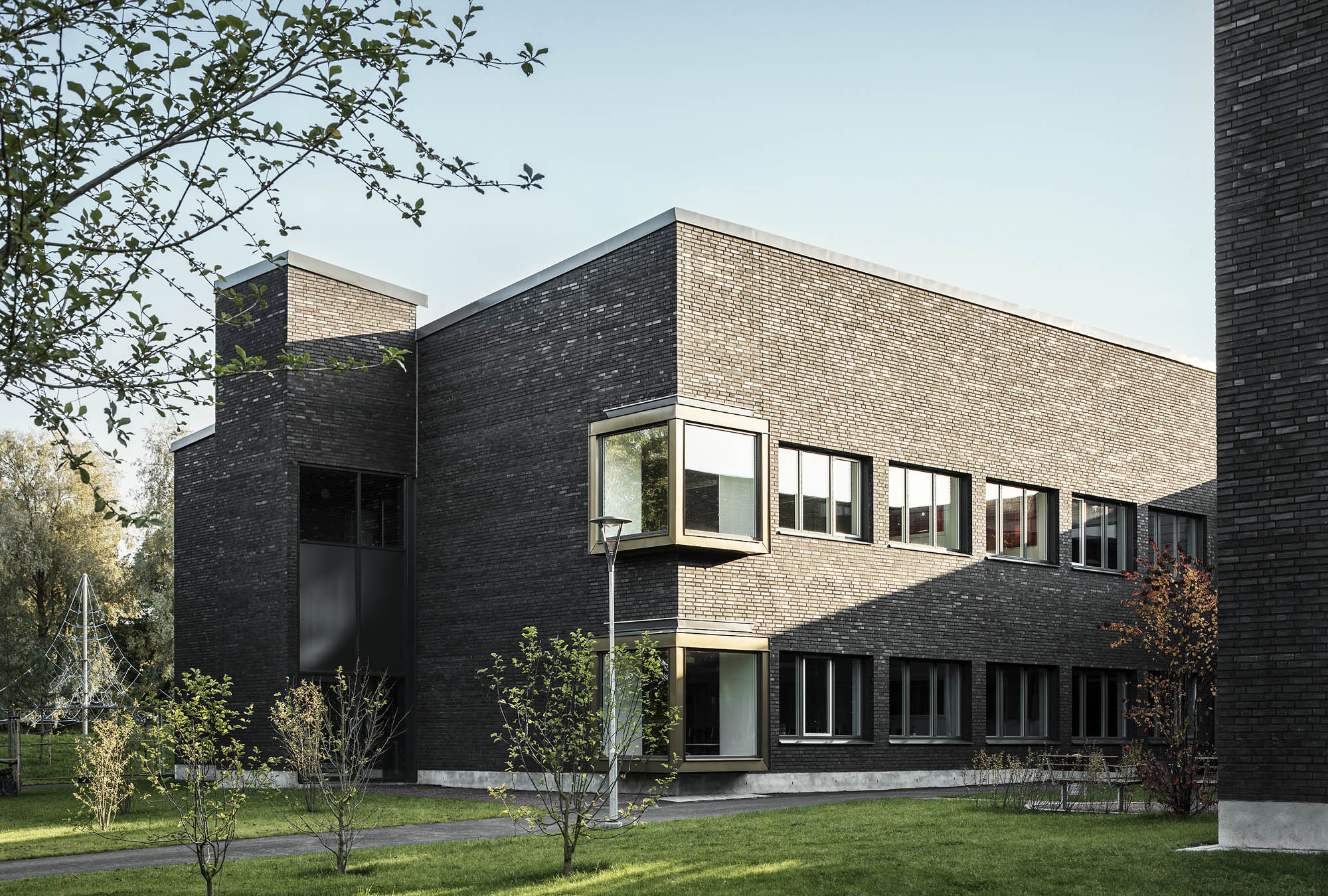
Step onto most school grounds, and you immediately sense that you’re in a space designed solely for students. Sometimes even feeling like you don’t quite belong there. But the vision for Nyhemsskolan was different. From the start, the goal was to create an inclusive, open, and inviting environment that would be a true asset to the city.

A school that welcomes the entire city

In 2014, Ängelholmslokaler launched a site allocation competition, where Tengbom, in partnership with Skanska, emerged as the winner. Since April this year, students have been enjoying their new school, along with the rest of the community.

Ängelholm has a strong tradition of clubs and associations, especially within music and sports, and there was a clear need for facilities that could serve multiple purposes beyond school hours. Throughout the planning process, the school’s public role was a guiding principle.

The public areas, such as the auditorium, foyer, cafeteria, specialist classrooms, and sports hall, were placed along the school’s main approach, making them easy to find. Meanwhile, the more private areas, like classrooms and group rooms, were set further back towards the surrounding greenery.

“It should be clear that this is a school for everyone in the community, in every sense.”

Spaces designed for connection

Nyhemsskolan is a large school, with around 450 students in grades 7–9, as well as a special education unit, which required a high level of accessibility and thoughtful design both indoors and outdoors.

“The schoolyard reflects how teenagers like to spend time. Hanging out, socialising, observing, and being seen,” says Cecilia Parin. “That’s why we created a variety of seating and gathering spaces for different types of interaction.”

Multi-use spaces with a purpose

The outdoor areas are closely connected to the learning spaces inside, with a culture square outside the music and art rooms, garden plots near the home economics classroom, and an outdoor café area for the cafeteria.

The site also had strict stormwater management requirements, which became a visible part of the landscape design. Two sunken areas, playfully shaped like red asphalt “amoebas”, temporarily collect rainwater before it drains away. At other times, these spaces double as play areas for skateboarding, mountain biking, or scooters.

Designing Nyhemsskolan was a complex challenge, requiring both a strong vision and practical solutions.

“It’s a high-quality result, and it’s clear that the municipality values well-designed public spaces, which we love to see. It’s also a matter of sustainability, building something that will last for generations.”

Contact person

Campus Tensta

A historic revival
Tensta 2
Architecture, Cultural Heritage
Building Preservation & Restoration, Renovation & Transformation
Client:
Location: Tensta, Stockholm
Collaborators: Byggprojekt, Seveko, Reichmann antikvarier, Projektel
BTA: 15 000 sqm
Awards and nominations: Nominated for Kasper Salin 2025
Photographer: Felix Gerlach

The former upper secondary school in Tensta, a heritage-listed building of the highest cultural value, is set to reopen as Campus Tensta under the management of Hemsö. Blending late modernism and brutalism with influences from Asian architecture, the school has been carefully restored by Tengbom, with a strong commitment to preserving its original identity.

Tensta 1 Tensta 2

Designed by Gösta Uddén, the school was inaugurated in 1984. Some call it “the last truly grand school built in Sweden”, while others argue it should be designated a listed building. Since 2018, it has stood empty, with rumours of demolition causing concern among both architectural experts and the public. However, Hemsö’s vision is the opposite: the school will be carefully restored, ensuring its architectural integrity remains intact.

Letting go of the ego

“As an architect, there’s always a desire to make your mark on a project. But when working with heritage buildings, you have to set aside your own vision in favour of preserving the original structure,” says Josefin Larsson, architect and business developer at Tengbom, specialising in restoration, cultural history, and adaptive reuse.

Tensta 7 Tensta 3

A cultural restoration detective story

Tengbom has led the extensive renovation, which aims to bring the school back to its original condition while meeting modern requirements for accessibility, acoustics, and fire safety.

That was then. Photograph: Bo Eriksson

Together with Reichmann Antikvarier, Tengbom has mapped and documented the building’s cultural and historical attributes. As an expert in heritage conservation under Swedish planning law, the antiquarian ensures that all modifications comply with strict preservation regulations.

Patterned concrete and pagoda-inspired roofs

The original complex, designed by Uddén, includes the school, the Tensta Träff community centre, a library, and later a sports and swimming hall. Together, these three buildings form a triangle.

The facades feature high-quality materials such as red brick, patterned cast concrete, laminated wood, and black-painted steel. At the heart of the school, a glass-roofed winter garden floods the interior with natural light. Architectural elements include open-air corridors, diagonally protruding staircases, and dramatically curved roofs inspired by Asian pagodas.

Stockholm’s City Museum has classified the school as a “blue-listed” building—the highest level of heritage protection, meaning it is considered an essential part of Sweden’s cultural heritage.

“For Campus Tensta, this means an absolute prohibition against alterations that could compromise the building’s historic character,” explains Josefin.

Thoughtful additions that blend in

Each space within the school has been assessed for its cultural significance. Architecturally valuable areas are marked as “rooms of special character,” allowing only minimal changes. Other spaces, such as classrooms and restrooms, are being renovated to meet modern standards while preserving the original design.

Tensta 10Campus Tensta’s classrooms are being upgraded with new acoustics, lighting, and accessibility features. Suspended ceilings are being replaced, and all restrooms will receive new tiles, sinks, and toilets. However, in areas such as corridors and the winter garden, everything is being restored to its original state.

“The principle behind the renovation is gentle transformation—we work with the building’s original logic,” says Josefin. “Any additions should blend in rather than stand out, and we prioritise reusing materials whenever possible. New technical systems will be discreetly integrated, and interventions will be minimal yet highly functional.”

Tensta 11 Tensta 8Campus Tensta – reviving the original vision

In 2021, Hemsö acquired both the school and the Tensta Träff community centre. The goal was to create Campus Tensta, a space where education and culture come together.

Tensta 12Their vision is to bring together secondary and adult education, higher education, cultural initiatives, and entrepreneurial ventures under one roof.

“We are truly excited to bring life back to these incredible buildings. Our goal is for Campus Tensta to enrich both the local community and Stockholm as a whole – contributing to education, culture, and creativity,” says Johan Einarsson, project developer at Hemsö.

The first step begins in autumn 2024, when Järva Gymnasium moves in. The newly established foundation-based upper secondary school will mark the start of a new era for Campus Tensta.

Contact person

Josefin Larsson

+46 72 183 02 34

OAS in Malmö

From railway to workplace
Architecture
Offices
Client: Skanska
Location: Malmö, Västra Hamnen
Year: 2021
LOA: 7 500 sqm
Sustainability certification: LEED platinum, WELL
Photographer: Felix Gerlach

On the site of the old Sillabanan railway, which once connected Limhamn to central Malmö, a new kind of workplace is taking shape. A health- and environmentally certified oasis, designed to energise employees and promote recovery. Tengbom developed the concept for Kvarteret Abborren, a space where history meets the future of work.

A historic site becomes a cutting-edge district

OAS is located between Ribersborg’s recreational area and Malmö Central Station, seamlessly linking the modern Västra Hamnen district with Malmö’s historic core.

The inner courtyard still holds traces of the old railway, preserving a tangible connection to the city’s industrial and maritime heritage. The demand for new workplaces and housing in Malmö is high, and OAS will provide 7,500 square metres of office space tailored for health, well-being, and sustainability.

“As a symbol of the entire project, we’re reusing and preserving the original Sillabanan tracks in the courtyard,” says Magnus Nilsson, lead architect.

The coastal identity of Malmö is reflected in the blue-green patterned concrete façades, while the craftsmanship of the materials is evident in the detailing. Locally sourced, untreated wood has been prioritised as a sustainable choice, despite the exposed location.

What makes people choose the stairs instead of the elevator?

OAS is designed to encourage healthy choices through subtle design cues. The stairwells will feature calming soundscapes, such as birdsong, making them a more inviting alternative to the lift.

At street level, a bike hotel will offer showers, changing rooms, and tools for repairs—making cycling to work easier than ever. Employees will be able to dock their bike and head straight to their workstation, in a well-lit and secure environment designed to support active commuting.

A workplace designed for restoration

OAS is more than just an office, it’s a place to recharge. The lush rooftop terrace, tucked away from the city below, offers panoramic views of Malmö and the Öresund. It’s a peaceful retreat for meetings, quiet moments, or informal gatherings with colleagues.

Climbing plants cover the façades inside and out. The team sources many materials and furnishings locally or reuses them.

“We’re investing heavily in restorative environments,” says Magnus Nilsson. “Health at work isn’t just about exercise, it’s also about recovery. Here, you can step away from your desk, take a remote meeting, or simply catch your breath for a moment.”

A workplace built for well-being

Skanska is developing OAS as a place where people, ideas, and businesses can grow. At the same time, they are designing it to foster well-being.

“Security at work is incredibly important, and our client has been very focused on that aspect,” Magnus explains. “After a long period of remote work, many people are eager to return to a workplace that supports their well-being. They also want an environment that enhances productivity.”

Awards and recognition

The Sweden Green Building Council has named OAS the LEED Project of the Year 2024.

Contact person

Josefin Klein

+46 40 641 31 18

Tenhults Naturbruksgymnasium

Spaces for animals
Architecture
Education
Client: Region Jönköpings län
Construction operator: Brixly
Year: 2023
Where: Tenhult, outside Jönköping
BTA: 890 sqm
Photographer: Felix Gerlach

How do you design a floor plan for a bird? What kind of daylight does a snake need? When our architects took on the challenge of creating a new animal care facility for Tenhults Naturbruksgymnasium, the goal was clear: to design a safe and educational environment for both animals and humans. And along the way, we learned a lot.

Located in the scenic Tenhult Valley near Jönköping, Tenhults Naturbruksgymnasium offers students the chance to combine their secondary education with a passion for animals. The school provides training in equine care, animal care, agriculture, and horticulture, with 220 students, 80 teachers, and on-site accommodation for those who travel long distances. Graduates go on to work in veterinary clinics, zoos, kennels, pet stores, or further their studies at university.

A school designed for animal lovers

A modern home for a diverse animal family

In 2023, the school opened its newly designed animal care facility, created by Tengbom. The facility includes modern, tailored spaces for various species, spacious classrooms, and a dedicated veterinary treatment room. Today, it houses hundreds of animals, including rodents, rabbits, birds, fish, snakes, lizards, turtles, snails, and spiders.

“Previously, the animals were kept in old buildings near the former headmaster’s residence,” says Sandra Skoglund, lead architect. “The facilities were outdated and no longer fit for purpose.”

To improve animal welfare and create a more functional, accessible, and well-adapted learning environment, the school needed a new, purpose-built facility. The first phase focused on birds, reptiles, and fish, but future expansions may add more buildings.

Aviaries for birds – and a tropical habitat for reptiles

The school’s new aviaries provide large, enclosed spaces where birds can fly freely. The roofs are covered with protective netting to keep them safe from predators. Exotic species, including macaws, cockatoos, and budgies, now enjoy both indoor and outdoor environments, moving between spaces through a small hatch in the exterior wall.

One aviary is designated as a quarantine space for isolating sick birds. Special attention was given to materials and design to accommodate the birds’ natural behaviours.

“Birds love to peck at walls, floors, and other surfaces,” explains Sandra. “We had to carefully select materials that could withstand constant interaction.”

For tropical species, including snakes, lizards, frogs, and exotic fish, we designed a tropics-inspired habitat with space for terrariums and aquariums.

Traditional farm aesthetics with modern functionality

Working closely with Region Jönköping, we developed a design that is both visually in tune with its rural surroundings and highly functional as an educational facility. The buildings resemble traditional barns, with a contemporary edge.

“The deep red façades and natural colour palette connect the facility to its rural setting,” says Sandra.

Balancing modern standards, animal welfare, and human needs while ensuring the buildings blend into the landscape was a challenge. Since the structures are classified as agricultural buildings, installation systems had to remain visible rather than concealed.

“Daylight, temperature regulation, and natural rhythms must work for both animals and humans.”

A functional, future-proof design

The facility also includes classrooms, staff areas, and dedicated spaces for cleaning and care. Since animals need attention every day of the week, we designed two separate kitchens for preparing different types of animal food—from insects for the reptiles to seeds for the birds.

Technical rooms are placed on the upper floor, above the animal spaces, to optimise the use of space while ensuring that ventilation and heating systems do not disrupt the animals or the architecture. External staircases lead to the upper levels, allowing storage for cleaning and feeding equipment underneath.

Built for sustainability

Tenhults Naturbruksgymnasium now has a future-proof animal care facility, offering a healthy, functional, and adaptable environment for both students and animals.

“Easy access to outdoor areas is essential,” says Sandra. “A school dedicated to nature should maintain a strong connection to the outdoors, following the rhythm of the seasons.”

The buildings feature timber frames and wooden façades, with solar panels on the roofs. Integrated into the existing environment, the new facility feels both modern and natural. It fulfils both functional and sustainability goals to meet Miljöbyggnad Silver certification.

Awards and Recognitions

Tenhults Naturbruksgymnasium got nominated for Rödfärgspriset in 2024.

Contact person

Sandra Skoglund

+46 36 17 32 33

Anna Whitlock’s Upper Secondary School

Honouring history and the future
Architecture, Cultural Heritage
Education, Renovation & Transformation
Client:
Location: Stockholm
Awards and nominations: Stockholm building of the year 2019
BTA: 23 000 sqm
Completed: 2018
Photographers: Åke E:son Lindman, Johan Fowelin

In the former government offices on Kungsholmen, designed by Axel Lindegren in the 1920s, stands Anna Whitlock’s Upper Secondary School. With great care, our architects at MAF (now Tengbom) transformed this historically significant building into an inspiring learning environment for future generations, breathing new life into the neighbourhood.

Welcome in. Photo: Åke E:son Lindman

Originally constructed in 1926, the building was designed as office space for various government agencies, earning it the nickname Ämbetshuset (“The Government Building”). Over the years, it housed institutions such as the National Board of Public Works and the Swedish National Agency for Education, before becoming home to the County Administrative Board in the 1970s, which remained there until 2015.

“We wanted to preserve memories of the building’s past. Leftover door openings became bookshelves or display cases, and forgotten attic spaces were transformed into art studios”, says Amanda LeCorney, architect at Tengbom. “The students have awakened the building from its slumber. It’s more alive and vibrant than ever before.”

Adapting history for modern education

The key challenge in repurposing the building was creating enough classrooms within a structure originally designed for small offices with load-bearing walls.

For a functional learning environment, classrooms need to be around 60 square metres, with proportions that support good acoustics and clear communication. The solution? Removing some of the load-bearing heart walls, but only in the courtyard wings, which were less historically sensitive. This allowed for the larger rooms required for subjects like chemistry and biology, without compromising the building’s heritage.

“It’s amazing to see how the students have made the building their own. Lounging in the seating we designed or working in a window nook,” says Amanda.

More light, more space, more interaction

Originally, the building had dark corridors, with offices lining the façade. By removing the heart walls, the circulation spaces were moved to the courtyard side, bringing in natural light. Unlike newly built schools, which often prioritise teaching spaces over social areas, this adaptation made clever use of existing spaces, turning leftover areas into valuable communal spots.

Moving through the school now, you feel its generosity. Each floor offers study spaces and social areas, creating a more dynamic learning environment.

Photo: Johan Fowelin

A courtyard with identity

The building lacked a large gathering space for its many students, and the existing courtyard was structurally unsound. The solution? A new courtyard design, inspired by the herringbone parquet flooring in the school’s grand rooms.

A soft rubber surface now covers the central space, featuring a Christmas tree stand at its heart. Just like in a traditional living room.

This flexible courtyard serves as a meeting place, a stage for school assemblies, and a celebration space for graduations.

“The pattern has become a symbol of the school on social media. It’s exciting to see how the students have embraced and expanded on our creativity.”

Photo: Johan Fowelin

Dining in rooms, not halls

With no large open space available, the school restaurant was spread across multiple rooms. What started as a necessity became an advantage, creating a quieter, more pleasant dining experience.

Each room has its own lighting and atmosphere, with some playing music, allowing students to find their preferred spot. Furnished for both small and large groups, the restaurant also functions as a study area outside lunchtime.

Dividing the dining area into smaller rooms should be standard in schools. It significantly improves the acoustic environment.

Photo: Johan Fowelin

A debated but forward-thinking design

Since the school has no sports hall, students use nearby sports facilities. However, the basement features yoga rooms, a gym, and gender-neutral changing rooms. Here, students change and shower in individual booths, with lockers positioned outside. An inclusive design that sparked debate when first introduced.

“This was likely one of the first gender-neutral changing rooms. Today, it’s the norm. At the time, it caused controversy in local media.”

Given that changing rooms are a common site for school bullying, these enclosed shower booths were designed to prevent any form of invasive photography, with doors sealed from floor to ceiling.

“Ironically, when the building was first constructed, strict gender separation was the norm—many original floor plans include rooms labelled ‘female assistant.’”

Anna Whitlock’s. Photo: Åke E:son Lindman

Anna Whitlock’s – a celebrated and accessible school

Throughout the renovation, many original features were restored, including the limestone staircase in the main entrance. The building was carefully adapted for accessibility while preserving its historical character.

“We were fortunate to work with bold clients who had a high level of ambition and deep respect for the building’s heritage,” says Amanda.

In 2019, Stockholm named Anna Whitlock’s Upper Secondary School Building of the Year. Today, it plays a vital role in Kungsholmen’s vibrant city life.

Contact person

Oskar Eriksson

+46 702 56 27 39

Sollentuna fire station

Safe and inclusive
Architecture
Offices
Client: Fire department Attunda
Location: Sollentuna, Stockholm
Year: 2020
Photographer: Felix Gerlach

Located along the E4 near Häggvik’s commercial district, Sollentuna’s new fire station is more than just a workplace. It’s designed to improve working conditions and strengthen team spirit. With a focus on sustainability, inclusivity, and architecture that supports both safety and collaboration, we hope future firefighters will feel right at home here.

The process of designing and building Sollentuna’s new fire station can be summed up as an equality initiative that has strengthened team cohesion.

With Tengbom as lead consultant, the outdated and condemned station was rebuilt from the ground up, at a completely new location. Lead architect Ingela Marberg has been instrumental throughout the project, driving the design from both an architectural and a gender-inclusive perspective.

“We’re starting to see real diversity in the profession, and we wanted to embrace and encourage that through the station’s design,” says Ingela.

A station where diversity thrives and team spirit grows.

Sustainability and unity — a winning combination

Sustainability has been a central theme throughout the project, from carefully selected materials to the solar panels that contribute to long-term energy efficiency. At the same time, safety and psychological well-being have been key considerations, ensuring a functional and supportive workplace.

A prime example is the innovative locker room, designed to foster team spirit while accommodating all genders. Personal lockers are located in a shared space, while individual booths provide privacy for changing and showering. It’s a thoughtful solution that balances practical needs with a strong emphasis on community and respect.

“After an emergency response, it’s important to talk things through, not sit isolated in separate rooms. The well-planned locker area creates new spaces for informal conversations and mutual support. The feedback from firefighters has been overwhelmingly positive. They already feel a stronger sense of unity,” says Ingela.

A protective structure that follows the road’s movement.

Architecture that builds trust

Sollentuna Fire Station’s form is a direct response to its function and location. The solid brick façade provides a protective barrier against the busy E4 motorway, following the curve of the on-ramp with a strong, grounding presence. Behind it lies a quiet, sheltered courtyard, creating a calm environment for both work and reflection.

At the same time, the welcoming glass façade houses the administrative offices and public functions. A space where form and function come together to support community engagement and knowledge-sharing.

“This is a building that embodies the strength and security of an essential service we all rely on. It’s designed to stand the test of time in every sense,” concludes Ingela.

In service around the clock

Sollentuna Fire Station is a 24/7 full-time station, responding to around 600 calls per year. Since its inauguration in 2020, it has continued to play a vital role in the municipality’s emergency response and public safety efforts.

Contact person

Mark Humphreys

+46 8 412 53 43

Isborgen

Breaking new ground with ice
Architecture
Sports & Health
Client: Gällivare kommun, SAMT
Assignment year: 2020
BTA: 6 500 sqm
Project type: General consultant, program work, system documentation, detailed planning for collaboration and execution contracts
Photographer: Anders Bobert

At the heart of Gällivare stands Isborgen. A multifunctional and modern ice and event arena designed to bring people together through movement and shared experiences. Covering 6,500 square metres, it is a new landmark for Malmfälten.

Isborgen challenges the idea of what a world-class Arctic town can be. How does Malmberget’s heritage of wooden mining settlements shape Gällivare’s future? This arena is a nod to history while embracing progress.

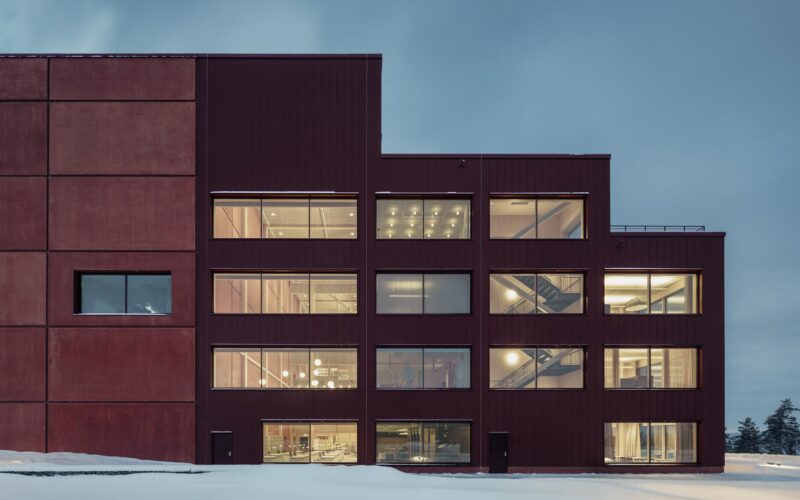
“We wanted to merge the area’s rich history with an arena that meets today’s need for an inclusive and sustainable gathering place. Its rounded shape and traditionally red façade create a welcoming atmosphere—an unmistakable symbol of movement and activity”, says Jonas Jakobsson, project lead at Tengbom.

A stage for play, performance, and participation

The arena’s architecture evokes a grand stage, designed to host everything from ice hockey and figure skating to concerts and community events.

Built with an impressive glulam structure, the gently sloping cross-laminated timber walls give the building a playful yet respectful presence alongside the newly renovated Sjöparken.

A space where sport and culture meet

Inside, Isborgen is warm and minimalistic, with natural materials like wood complemented by dark concrete. It’s a place where activity and togetherness take centre stage.

The flexible spaces are designed to accommodate both sports and social events, with public areas around the entrance and restaurant taking cues from an experimental theatre lobby rather than a traditional ice rink — setting the scene for celebration.

As visitors enter, they are greeted with a smile from Peter Johansson’s figurines, reminding them they are always welcome back.

Award-winning design

Isborgen is an arena for all generations. A place where sport and culture come together, honouring the past while shaping the future.

In 2024, the Swedish Architects nominated Isborgen for the Swedish Architects’ Övre Norrland Architecture Award.

Contact person

Oskar Eriksson

+46 702 56 27 39

Frälsningsarmén

A cultural heritage mystery
Architecture, Cultural Heritage
Accessibility, Building Preservation & Restoration, Culture, Renovation & Transformation
Client:
Entrepreneur: Construction company Viktor Hanson
Location: Sankt Göransgatan 61 Stockholm
Assignment years: 2016-2019
LOA: 900 sqm
Collaborators: Tyréns, Acoustic Environment, BK Calculation Consultants, Fire Protection Team, Storköksbyrån, VVS-Kompetens, ÅF, COWI

Frälsningsarmén’s heritage-listed building on Kungsholmen, Stockholm, was in need of both restoration and modernisation. Through a careful balance of reuse and reconstruction, the goal was to preserve its identity while adapting it for today’s needs. But first, one crucial question had to be answered: what lay hidden behind the walls?

A building waiting to be rediscovered

Hantverkaren 18, home to Frälsningsarmén’s 6th Corps, was built in 1911. Over the years, the organisation’s needs had changed, yet the facilities had not kept pace. The kitchen was too small, the lighting inadequate, and the overall wear and tear significant. The work environment needed improvement, and the building required a comprehensive restoration that honoured its past while supporting its future.

With a guiding principle of “preserve and adapt,” the renovation focused on enhancing both function and aesthetics while maintaining the building’s historical character.

A space for many purposes

The updated facility needed to accommodate a variety of functions, including:

  • A flexible assembly hall with a balcony for worship services and large gatherings
  • Meeting rooms, corridors, kitchens, storage, showers, and changing rooms
  • A multifunctional dining room, central to Frälsningsarmén’s mission, where meals are served to those in need
Photo: Sten Jansin

Messages from the past

To uncover the building’s true identity, we had to look back. The investigative phase, known as anamnèsis, the Greek word for “recollection” — guided every decision. The team studied oral histories, archival drawings, historical documents, and photographs, combining historical research with insights from Frälsningsarmén’s staff.

Then, the team conducted a physical investigation — scraping paint layers, uncovering hidden spaces, and evaluating what could be restored, reused, or reconstructed. During the process, they discovered hidden doors, which were carefully repaired and reinstated. Long-buried wood paneling was uncovered and restored, while paint analysis informed a subtle, historically inspired colour scheme. Sealed-off skylights were reopened, allowing natural light to once again fill the dining hall. Additionally, the checkerboard-patterned linoleum flooring was replaced, bringing back the original wooden design.

We reopened the skylights in the dining hall to let light into the premises. Photo: Sten Jansin.

Time, knowledge, and respect

Restoring a 100-year-old building requires more than just technical expertise, it demands patience, precision, and deep respect for history.

By carefully weaving Frälsningsarmén’s legacy into the present, we ensured that its mission, history, and identity remain visible and meaningful for generations to come.

Contact person

Lina Swanberg

+46 8 412 53 36

Sundbyberg water tower

A well-preserved Tengbom classic
Architecture
Building Preservation & Restoration, Culture
Client: Sunbybergs stad
Location: Sundbyberg
Project type: Restoration, Reconstruction
Assignment years: 1912, 2009–2010

Our founder, Ivar Tengbom, designed the Sundbyberg Water Tower, which was completed in 1912. This early concrete structure is fully clad in Helsingborg brick, featuring cross-bond patterns and bold ornamentation that reflect the national romantic ideals of the time. Nearly a century later, in 2009, we took on the challenge of adapting the tower for public use, bringing new life to a landmark that had long stood without a clear function.

Sundbyberg water tower is remarkably well-preserved and holds great architectural and historical value. It is a prime example of the utility and industrial buildings constructed around the turn of the 20th century.

As Sundbyberg’s most iconic landmark, its distinctive, monumental character remains a striking presence in the cityscape. When it was first built in 1912, the tower stood as a symbol of Sundbyberg’s rapid modernisation.

Photo: Sten Jansin

Sundbyberg’s most important landmark

A careful transformation

The renovation respected the building’s cultural heritage, using historically accurate materials and methods.

Photo: Sten Jansin

Externally, the design team preserved the tower’s original silhouette by making only minimal changes. Inside, they carefully maintained the original layout and built-in features. They meticulously cleaned and repainted the grand wooden staircase, all windows, and other carpentry details with linseed oil paint in their original colour. Additionally, they designed and crafted a new entrance door to match the original design.

Today, parts of the tower serve the public, now housing a café and exhibition spaces.

A breathtaking view from Sundbyberg’s water tower

If you haven’t visited yet, we highly recommend stopping by for a bite to eat, stunning architecture, and a panoramic view over Sundbyberg from the top of Tornparken.

If you share our passion for restoration and heritage conservation, we invite you to explore more of our work. Take a look at some of our other projects [HERE].

Contact person

Lina Swanberg

+46 8 412 53 36