Archives

Ersta Hospital

Holistic care
Ersta hospital
Architecture, Interior Design, Landscape
Health, Parks, Play & Public Spaces
Client: Ersta Diakoni
Location: Södermalm, Stockholm
Assignment years: 2017 - 2023
Gross area: Approx. 24,000 m²
Partners: Emma Olbergs Design

Together with Ersta Diakoni, Tengbom is developing Ersta Hospital on Södermalm in central Stockholm. With an evidence-based approach and in close partnership with healthcare providers, the organization, patients and family members, we are creating an industry-leading healthcare environment where people will feel (almost) completely at home.

Ersta hospital

Ersta Hospital opened on the heights of Södermalm in 1864. In 1907, Axel Kumlien designed a new building for the hospital, which relocated nearby. Fifty years later, Tengbom designed major additions and extensions to the block. In 2014, an architectural design competition launched for Ersta Nya Sjukhus—the new Ersta hospital. The goal was to create a design that honored the historic identity of both the surroundings and the hospital’s key areas of expertise. Nyréns Arkitektkontorwon the competition and, together with RATIO, developed a concept that elegantly followed the topography and reflected the area’s scale and classical aesthetic. They led the project until the building permit application phase.

Ersta hospital

Winner of Best Healthcare category in Monocle Design Awards 2024

In 2017, Tengbom was tasked with managing and carrying out the project – and developing the function and design of the new hospital. Work was conducted in close partnership with the Ersta Diakoni Program Office, and in light of the modified and granted building permit, with the City of Stockholm and its architecture office.

Connection to the city

The new hospital rises some six stories up the hill from one of the island’s busiest streets, Folkungagatan. At eight stories, the building’s highest section runs from east to west along the crest of the hill, in harmony with the characteristic buildings nearby. Two projecting buildings – one facing south toward Folkungagatan and one facing the old hospital building to the north – form two lush courtyards.

Even inside the new hospital, the connection to the city is the primary theme. From the wards and rooms to the hallways and large rooftop terraces, the surrounding city and vegetation have a constant presence. The city landscape is part of the healing environment. The glassed-in hospital lobby is a large, bright and welcoming room rising up three stories, with views of the surroundings.

Ersta hospital

Architecture, exterior character and facades of the hospital

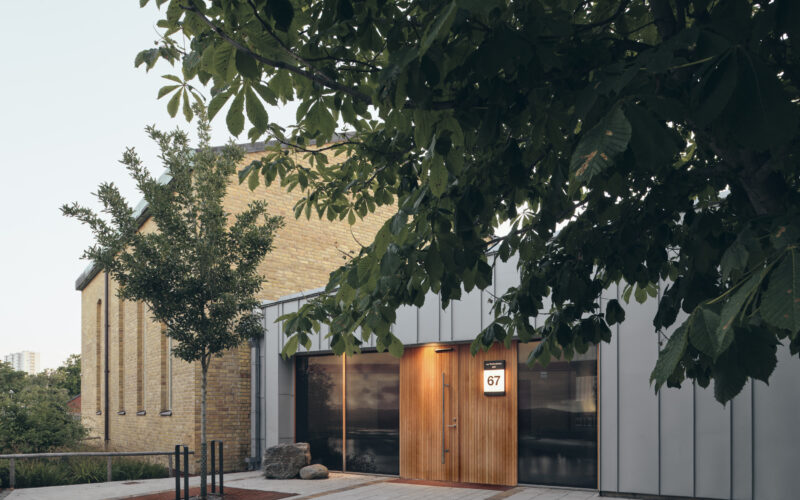
The interior and exterior of the new Ersta hospital create a sense of cohesion. Patients and visitors should feel welcome, safe and well cared for. In a classic interplay of large windows and horizontal and vertical features, the facades are made of metal and ocher brown anodized aluminum in a carefully chosen hue.

Ersta hospital

The materials change in character and reflect light, while the colours complement the yellow and brown plaster facades of the surroundings. Windows match the facade colour, creating a sturdy and uniform expression that enhances the urban quality. A grayish-red flamed granite foundation reinforces the building’s cohesive design.

Tengbom’s starting point is to create healthcare environments in which patients are the focus, and where the architecture supports medical development and new working methods.

Somewhere between a hospital and a home

If you imagine a scale ranging from the public, often impersonal spaces of large hospitals, to a private, home-like setting, the aim is for the new Ersta hospital to be a balance between both worlds. It should be infused with personality and a sense of care-giving, paired with professionalism and trust.

Ersta hospitalInterior

The new Ersta hospital is characterized by calm, quality, and genuine natural materials like wood and stone. The details are thoughtful and the colours are classic, light and earthy. The colour and material concept was developed with inspiration from Ersta’s visual legacy in an exciting collaboration with Emma Olbers Design.

Ersta hospital

The bright, glassed-in lobby runs through the building like an axis. A spacious open staircase defines the backdrop, creating a welcoming focal point with a sense of space and clarity. Patients, visitors, and staff share the hospital lobby and the adjacent elevator hall, reinforcing an open and inclusive atmosphere.

Ersta hospital

Ersta hospitalOutdoor environments

Designing the hospice ward required extra care. Patients and their families should feel at ease and spend quality time together. A private, green rooftop terrace offers a peaceful retreat. A swing by the elevators and a playroom for children add warmth and comfort to the environment.

In front of the main entrance at Folkungagatan, the courtyards and rooftop terraces are significant in terms of design. A fundamental part of our task is to make it possible to see nature from multiple stories in the building.

Ersta hospitalUnique operational development with long-term solutions

The new Ersta Hospital delivers resource efficiency, flexibility, a good working environment, and a strong focus on patient safety. The floorplan improves efficiency by using just one elevator hall with short corridors. Stacking hospital units keeps related functions close. The busiest departments, with the shortest visitation times, sit nearest to the entrance. In-ward recovery plays a central role in the hospital’s care concept. Patient rooms prioritise proximity to windows. The layout places the patient and family area by the window and the care provider area by the corridor. Staff conceal medical equipment and materials or integrate them into the surroundings. This creates a calmer and more patient-friendly atmosphere.

Ersta hospital

With Ersta Nya Sjukhus, the new Ersta hospital, the team at Tengbom aims to contribute to world-class medical care. The building extends the hospital’s long history and strengthens its presence in the city. It will play a key role in Stockholm’s continued growth.

Awards and nominations for Ersta Hospital

Stockholm Building of the Year 2024. Monocle Design Awards 2024, winner in the Best Healthcare category. Vårdbyggnadspriset 2025, awarded in the category “Spaces for Care”.

Contact person

Anna Morén

Studio Manager Health and Life Science
+46 841 03 54 47

Posthornet office building

A stamp of architectural quality
Architecture, Interior Design, Landscape
Kitchens, Offices, Parks, Play & Public Spaces, Residential environments
Client: Wihlborgs Fastigheter
Contractor: Peab Sverige AB
Location: Lund
Years of commission: 2011–2014 (detailed plan) 2014–2017 (projection) 2016–2018 (tenant adaptions)
BTA: 16 500 sqm

A rolling concrete façade nowadays cradles train travellers to Lund Central Station. Here Tengbom has created a sought-after office space which varies both in architectural expression and relation to the site. Meet Posthornet office building.

On behalf of Wihlborgs Properties, Tengbom has confronted the challenge of building on a narrow plot of land close to Lund’s central station. The result is modern office space, which is very sensitively coordinated with housing in the neighbourhood. The office building, called the Posthorn, is what you might call a dream project. Here Tengbom, along with the architect responsible, Charlotte von Brömssen, has been the driving force from detailed plan to tenant adaptation.

Posthornet

We have decided for ourselves in this project what is the possibility and breadth of the architect’s role.

“We have decided for ourselves in this project what is the possibility and breadth of the architect’s role. Through timing and pedagogy, we have paved the way for the quality of the built project in a variety of ways. Here, a clear design manual has been an important success factor to focus on,” says Charlotte.

In addition to architecture and strategic advice, Tengbom has provided services in landscape architecture, interior architecture, visualisation and catering.

Posthornet
Head entrance facing the square.

Character and materiality

The neighborhood is designed to interact with adjacent urban spaces. It rises and falls in dialogue with surrounding buildings. The main façade faces Lund’s town hall and rail bridge, gradually sloping down toward the main entrance on the southeast corner. Inside the block, a narrow and semi-public space features a rounded design where various practical functions come together.

Posthornet Posthornet

To generate interest in the site, the design team crafted a story for the property owner. They chose the postal horn and stamp as symbols, inspiring the façade’s design language. Brass became a recurring material, while the yellow brick connects to the surrounding 1940s architectural style.

Well-arranged for tenants

The extent of Tengbom’s assignments has ranged from following up on the building on site to coordinating the work of tenants. We drafted contract and building documents for all tenants, and coordinated interior design projects. Tengbom also made the décor for three of the tenants: Folktandvården, Trivector and the law firm Trägårdh.

Contact person

Josefin Klein

Practice Director Skåne
+46 40 641 31 18

Temporary food hall at Östermalmstorg

Brief with a lasting impression
Architecture, Interior Design
Retail, Temporary
Client:
Location: Stockholm
Assignment Years: 2013-2016
Project Type: Temporary food hall
Awards: Architizer A+ Award, Design S Architecture Award, Stockholm Chamber of Commerce Urban Environment Award

Trade in fresh, raw produce has returned to Östermalmstorg. Now in the form of a temporary food hall, commissioned by Tengbom. The temporary food hall has not only brought in more business than ever, it has also attracted a new clientèle to the area, and has revealed new uses of the town square. Good architecture in its best form, we say.

First, a little history

Historically, Östermalmstorg has been a place for trading stands and sales of fresh, raw produce. This was until the city administration banned this for hygienic and administrative reasons. In 1888, the new food hall stood on the corner of Humlegårdsgatan and Nybrogatan, a trading location of the most modern kind. At the same time, this meant that the square lost its original function. But today, with a temporary food hall occupying the square, we can speculate on the question “what if’ they had chosen, for example, to cover the market with a permanent building at its original location. How would that have changed Östermalm’s cityscape, and the function of the square?

Loss of surface area as a positive thing

128 years later, Östermalm’s Saluhall was in dire need of upgrading and development. During the two years of redevelopment, which Tengbom is also working on, the City of Stockholm has decided to erect a temporary building where trade can continue without the traders and regulars being affected too much. In order to accommodate all the traders and all the functions of the food hall, we were permitted to use the entire square area for the 1,970 square meter building. A tough nut to crack was to make the loss of urban space a positive thing. We solved this through careful architecture with a lot of character – a design that both attracts activity and traffic, but which also shows respect for the surroundings.

Temporary food hall
Photo: Felix Gerlach

Good architecture pays off

Prolonged opening hours in the temporary food hall have contributed to attracting the gaze of a younger target group, who are turning their attention to the food hall. That being said, you may think that the older and often returning clientèle would disappear, but that is also not the case.

The truth is that business is doing better now in the temporary hall compared to the Östermalm’s Saluhall, and the number of visitors has gone up.

Foto: Felix Gerlach
Photo: Felix Gerlach

Of course, this appeals to both traders and the City of Stockholm. So now our collaboration with the city will continue to take advantage of this unique atmosphere, with the ambition to bring it into the newly renovated hall in a few years. For us, this is strong evidence that good architecture pays off.

New old features

Östermalmstorg may look different today, with a structure of wood and plastic sheet panels placed at its centre. But great consideration has been taken to maintaining sight lines and lines of movement. For example, there is an entrance on all four sides of the building, in order for the existing flow of pedestrian traffic to function. The stalls are located along wide and straight lines of communication, which simplifies the orientation of the building. You can also see right through it, in order to orient yourself in the city and the square.

Temporary food hall
Photo: Felix Gerlach

Characteristic and temporary

We have designed a building with a frame of prefabricated modules that is quick to assemble and later dismantle when the building is taken out of service. It also creates the opportunity to reuse the hall in another location, possibly with a different function. Using wood as a material has several advantages. In this case its light weight played the biggest role in view of the difficult ground conditions of the square. It is also renewable and ecological, environmentally friendly, and climate smart. Externally, we clad the structure with untreated pine bars of varying sizes. The south-west corner and the south-east façade have large glass sections to offer views both in and out of the hall. The upper part of the market hall is fully clad in semi-transparent plastic sheet panels that let in a lot of daylight and lights up like a lantern in the evening.

Temporary food hall
Photo: Felix Gerlach

The challenge and the balance

We love a challenge. In this project the ground conditions were a significant contributing factor to this, among other things. The square slopes 1.9 metres, and is located directly above a metro station. The solutions we came up with have not only made the food hall possible. They also led to lasting improvements with replaced sewage pipes and modern garbage disposal solutions for the square, among other things.

Östermalmshallen padel

When Stockholm’s Östermalmshallen renovation was complete, and it was time to tear down the temporary Östermalmshall, the building was disassembled and shipped to Mölnlycke outside of Gothenburg, and rebuilt as a padel hall. In 2022 our temporary market hall from Stockholm was given a new lease on life. “First to six wins the game” is now the rule at Östermalmshallen Padel.

Awards

The temporary food hall has won the Design S award in the category of Architecture 2016. The Architizer A+ Award in the Commercial Retail 2017 Category. The Stockholm Chamber of Commerce’s Urban Environment Award 2017. The food hall was also nominated for the Mies van der Rohe Award in the late autumn of 2016.

Contact person

Mark Humphreys

Practice Director Stockholm
+46 8 412 53 43

Mojang

Mojang - geek friendly and familiar office
Interior Design
Offices
Client: Microsoft
Year of commission: 2017-2018
Type of project: Office
Location: Stockholm
Qualifications: Interior design

Exploration, combined with wanderlust, defines the game Minecraft. The same spirit shapes the new office of Mojang.

Here, Tengbom’s interior architects, in close collaboration with Mojang, have created a “geek friendly” atmosphere and workplace, rather than a stereotypical “sci-fi laser” place. The not-so-tech savvy of you may be wondering, what does that mean? Well, a familiar, safe place that you can be yourself in, and that is not too rigid.

Geek friendly” atmosphere and workplace, rather than a stereotypical “sci-fi laser”.

On behalf of Microsoft, Tengbom has been involved in this mission from the very beginning and even helped Mojang to find a location. The choice fell on Münchenbryggeriet, where three floors were designed and adapted to become an optimal workplace for Mojang’s more than 140 employees. The process has been very much a collaborative process, with around 20 people from Mojang participating and making decisions.

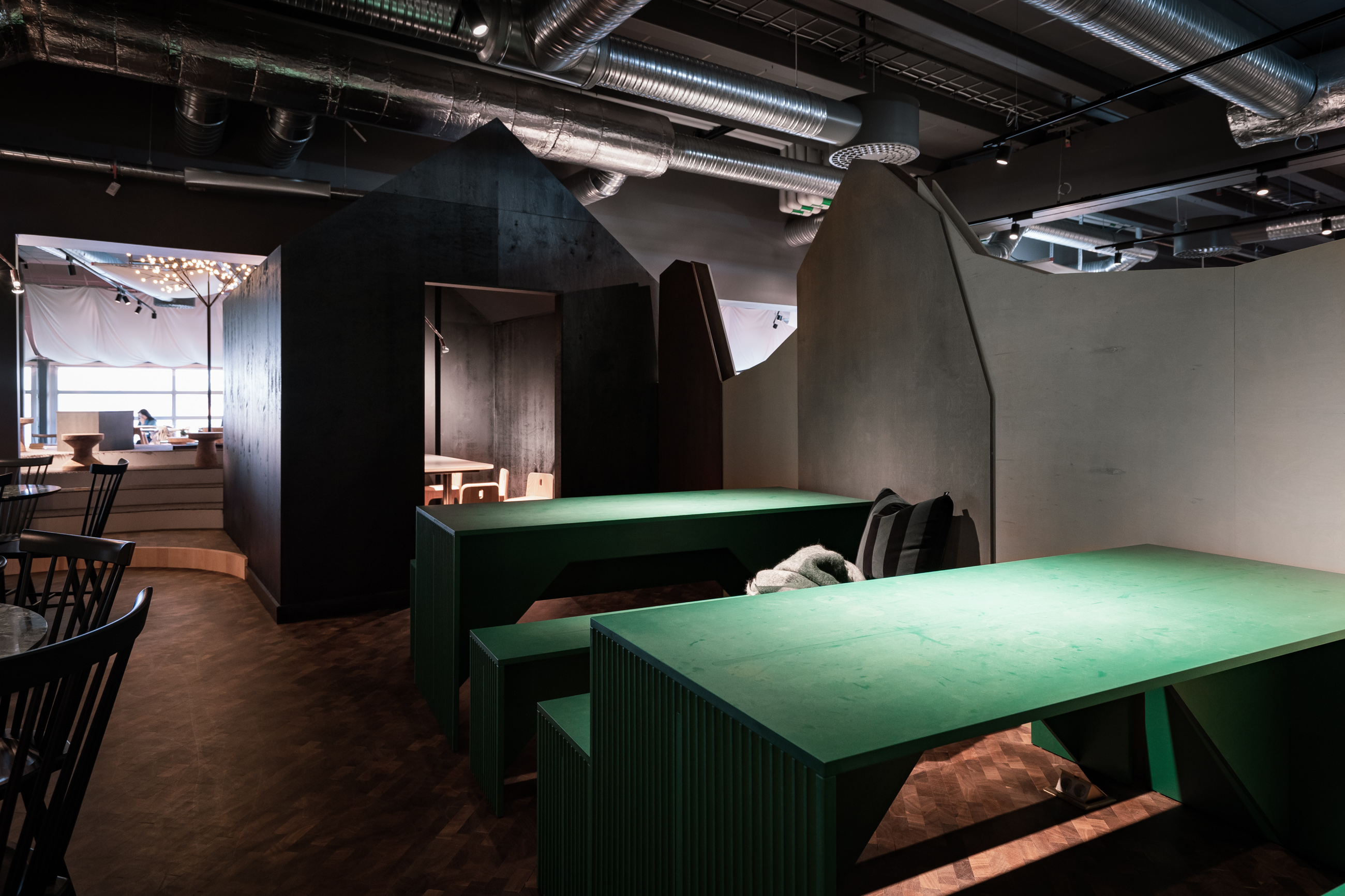
The first impression as you enter is just ‘recognition’. Here you will find a large mosaic in the Minecraft motif, a so-called selfie wall, for fans and visitors. The room grows into a general area with bar, kitchen, games, and relaxation for guests and employees. A prominent staircase leads up to the top floor which is dominated by desks and meeting rooms. An internal staircase leads down to the middle floor with even more work stations. Here, Mojang sits in different teams and a lot of focus has been on planning the work stations so that colleagues should not disturb each other by passing through, for example.

MojangMojangMojang Mojang

Mojang fills their office with humor. They created playful names for the meeting rooms and designed the graphics themselves. Hidden monsters, toilet humor, and etiquette add to the fun. Their creativity shines through every detail, and we truly love working with them.

Mojang
Mojang
Hey from Mojang.

Contact person

Kristina Jonasson

Studio Manager Interior Design
+46 708 23 14 33

Internetstiftelsen GoTo10

Office at the digital forefront
Interior Design
Offices
Client: Internetstiftelsen
Years of commission:: 2015-2017
Partners: Ciceron projekt (projektledning), Idé design & snickeri
LOA: Internetstiftelsen ca 2 400 m² Goto10 ca 940 m²
Photography: Mathias Nero

An inclusive collaboration and rational, unique solutions have created a dynamic office environment that facilitates the Internet Foundation’s (IIS) mission to promote the development of the internet. Interior architecture at its best.

Tengbom was commissioned to create a site plan for the Internet Foundation (Internetstiftelsen), IIS, where advice on a possible move was not only fundamental, but crucial. When a new site emerged, it was not only that business development of the company was made possible, but also space for the start-up hub GoTo10, Stockholm’s first meeting place for internet innovation.

“New sites were the key to the change they were looking for. They wanted better logistics and flows, with built-in flexibility for future changes,” says Johanna Garheden.

IISIISIISIIS Internetstiftelsen

Through regular workshops with the Internet Foundation the needs of the business became clear. It was then possible to agree on creative and customised solutions. Most employees sit in permanent places in an open landscape. Some have their own rooms, but the design is flexible and prepared to be able to be adapted in the future. In addition, there are lounges, touch down places, and meeting areas for other types of work.

Innovative in its simplicity

The premises exude “digital”, one example is the specially designed ceiling with circuit board pattern. Some furniture is also recycled. The colour scale was created through workshops and the palette that is repeated in all meeting rooms is CMYK: Cyan, Magenta, Yellow, and Black.

Focus on ideas

The start-up hub GoTo10 is located on the first and second floors. There are rooms and workplaces available to everyone through free membership. Other features include a café, seminar space, and street level mingling area. On the second floor there is a space for start-ups to hire. To meet the ambition of a unique meeting place, the interior is specially adapted with simple and cost-effective materials. An active flow of entrepreneurial ideas requires a dynamic workplace.

Internetstiftelsen

“It was about creating a great variety of meeting and work places in a small area. The hub is a little more playfully designed than the office, with a raw and urban feel with technical materiality”, says Linn Sylvan.

Internetstiftelsen
Internetstiftelsen.
Internetstiftelsen

Contact person

Kristina Jonasson

Studio Manager Interior Design
+46 708 23 14 33

The Hive

From restaurant to holistic experience
Interior Design
Kitchens, Restaurants

On behalf of Volvo Cars, Tengbom has developed and transformed the staff restaurant in Torslanda to become a contemporary place for meetings between people, food cultures, and landscapes. Say hello to The Hive.

The Hive

The interior architects Lisa Wingård, Karin Gullbrantz and Anders Löwander have enabled better utilisation of space, which means that the 2, 200 square metres that were previously used a fey hours a day are now a crowded place where spontaneous meeting happen continuously throughout the working day.

The Hive

One of the challenges with The Hive involved designing an interior environment that aligned with the company’s brand and identity. The team translated this concept into various scenes inspired by the Swedish landscape. Choosing to create a dedicated food court for an exclusive group made the project truly unique.

The Hive The HiveFor Tengbom, the assignment with The Hive began by redecorating the catering kitchen inside the restaurant, about 650 square metres of industrial kitchen space.

Curious to see more?

Tengbom has completed a wide range of projects in restaurants, interior design, kitchens, lighting design, product design, and more. Our expertise spans multiple disciplines, allowing us to create unique and well-crafted spaces. We continuously update our portfolio with fresh inspiration and exciting work. Feel free to explore and discover our latest projects!

Contact person

Kajsa Crona

Practice Director Gothenburg
+46 727 07 79 73

TAKO Restaurant

Enter the Dragon
Interior Design
Branding & Concept, Restaurants
Client: Elite Hotels through Stockholm Krogbolag
Location: Östermalm, Stockholm
Partners: Light Support (lightning consultant), Lerch Träinredningar (carpentry), Oscar Liedgren (graphic design), Blumenthalgroup (construction), Jan Engström (project management)
Type of project: Interior Design
Year of Commission: 2016-2017
Awards and Recognitions: Nominated for WAF 2018, Nominated for Restaurant & Bar Design Awards 2018

A brand-new dining concept with a lively atmosphere and a pinch of subtle decadence was recently commissioned by Stockholm Krogbolag. The restaurant weaves together Scandinavian, Japanese and Korean influences under the enigmatic name TAKO that translates to dragon or octopus. With an uncompromising approach to quality, Tengbom has created a unique space, marrying architectural and graphic expressions into a far-flung flair.

TAKO

Modern with a story

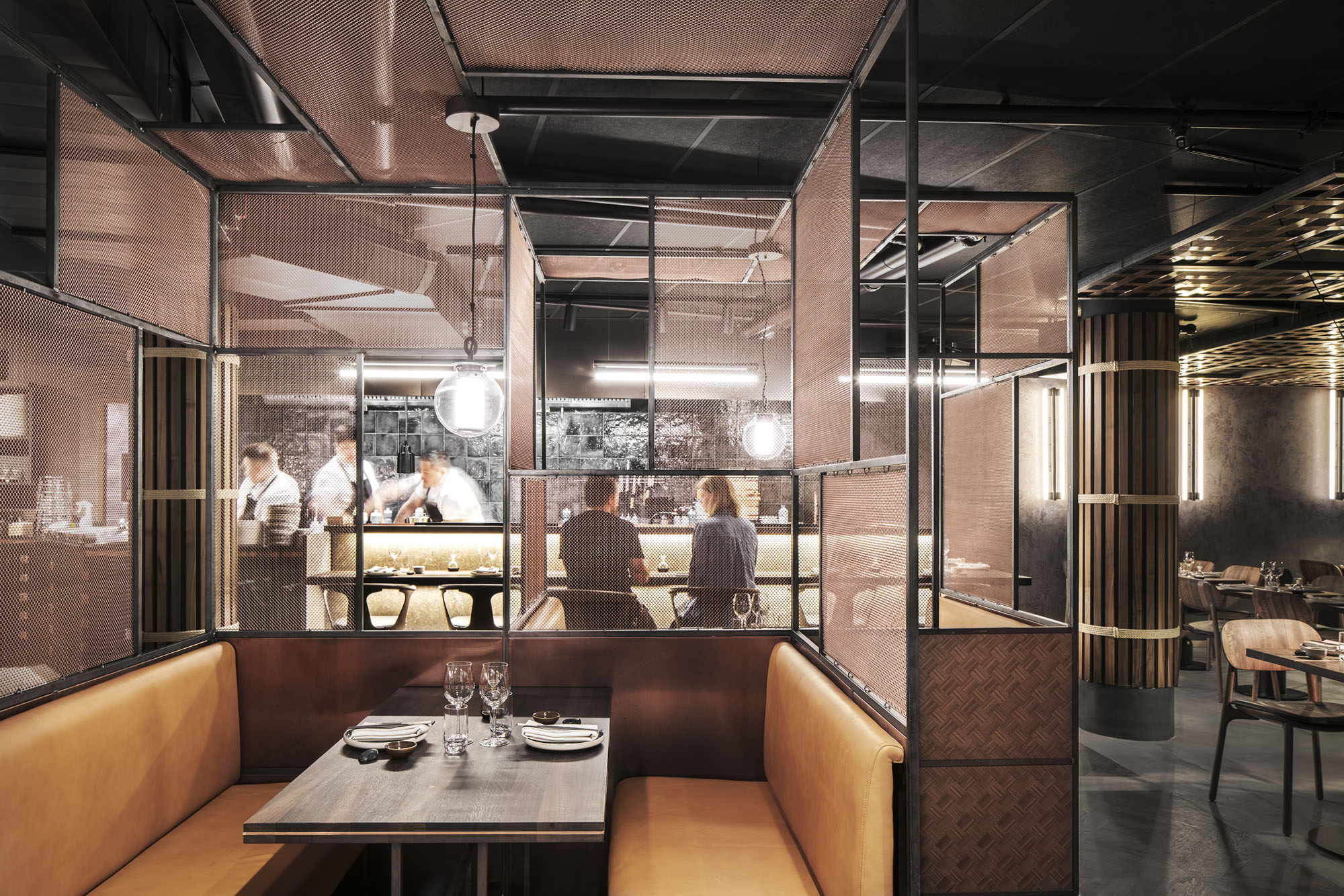
Wall-to-wall with its sister restaurant—Vassa Eggen, TAKO hides culinary treasures Stockholm hasn’t seen before. The space on Birger Jarlsgatan 29 has been known for its flourishing nightlife, where several clubs entertained flamboyant crowds once upon a time. A remanence of that era—varying floor levels and narrow passages have now been elevated to recreate the atmosphere of mystical backstreets of Tokyo that promise unforgettable adventures to those that find the way. An obscure, almost enigmatic entrance leads the guests down the glowing staircase that opens to an underground world steeped in deep jewel-like tones.

When you have the possibility to be in charge of the design process down to the very last detail, strong concepts arise.

TAKO

Mystic elegance

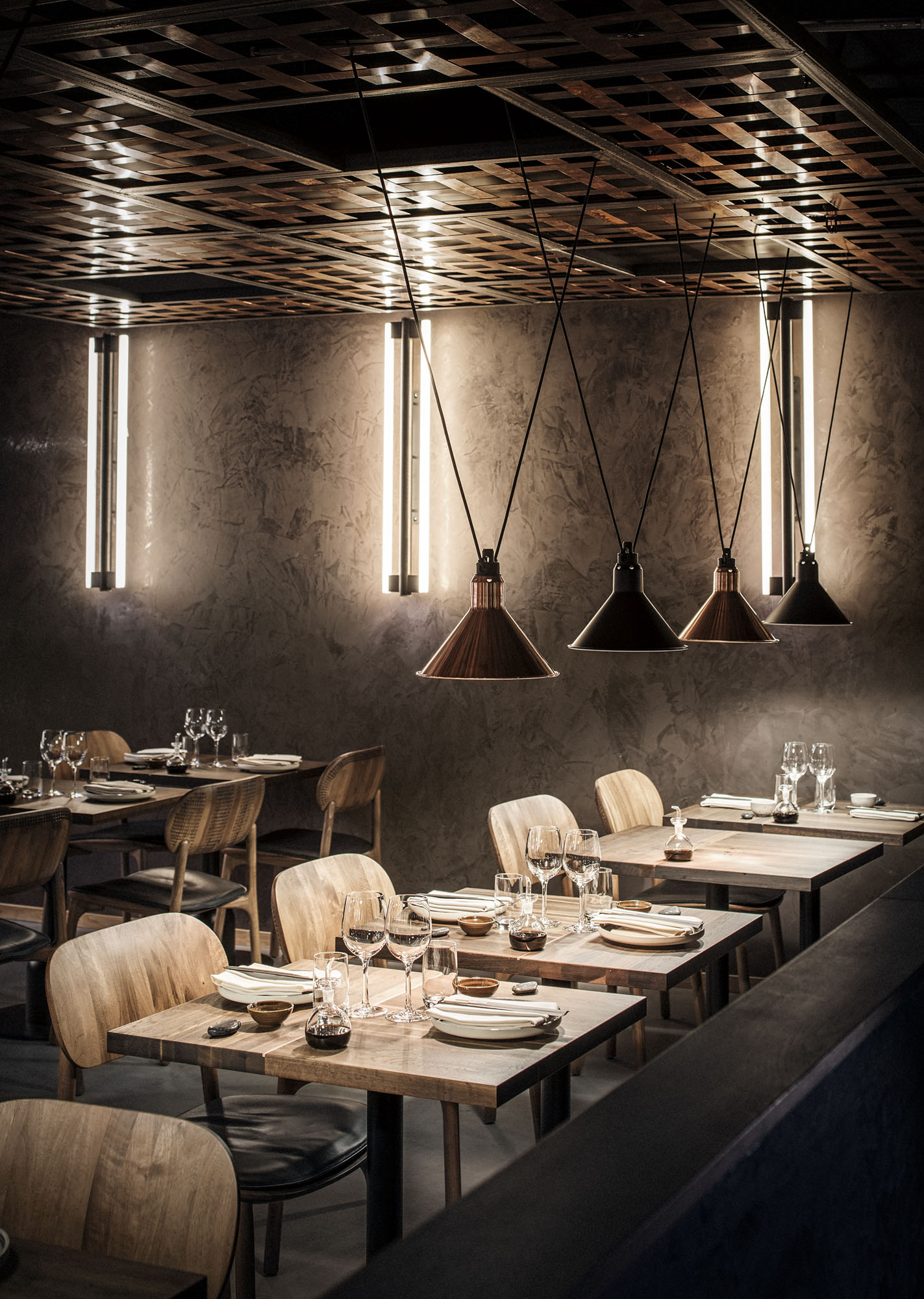
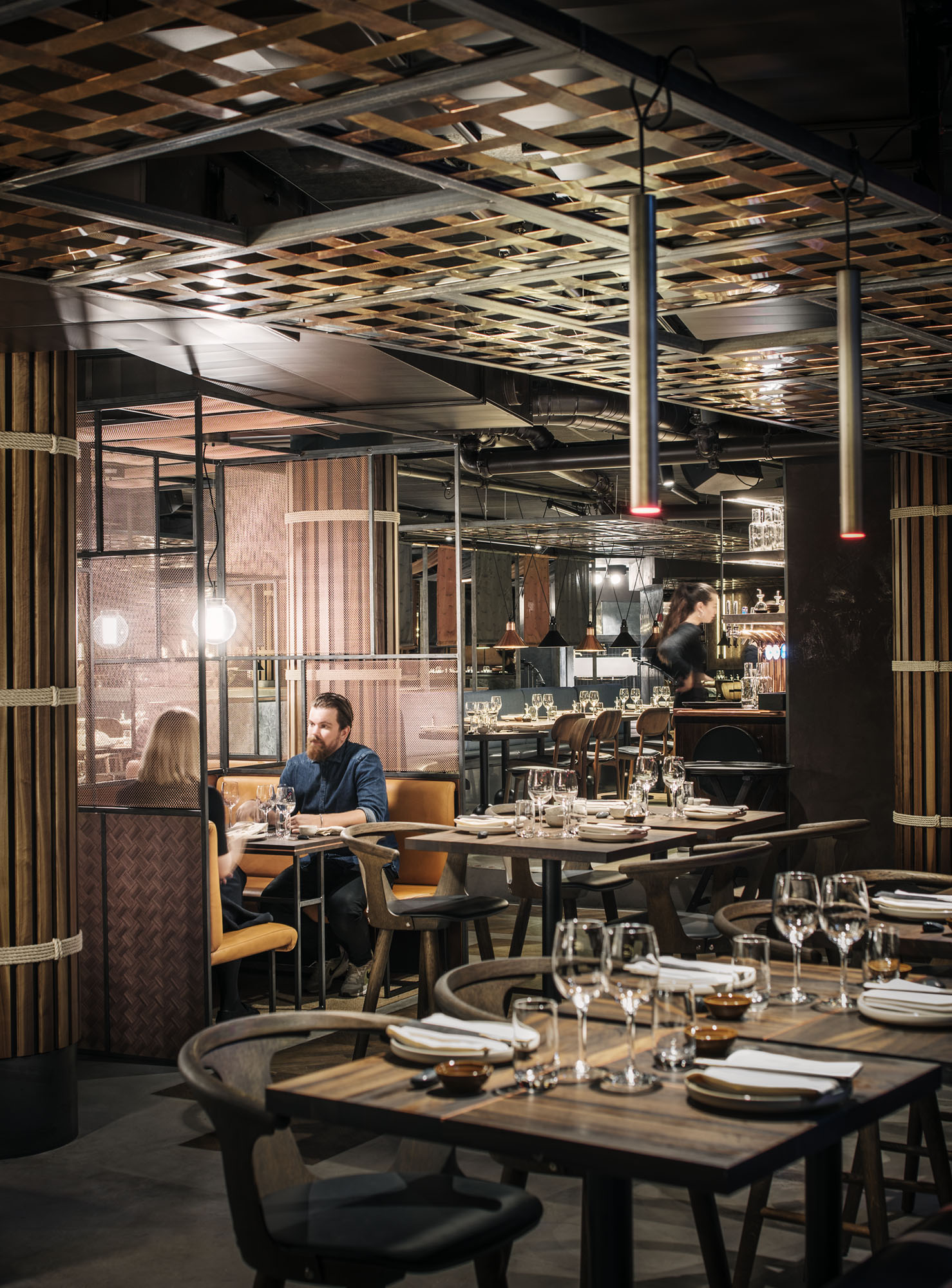
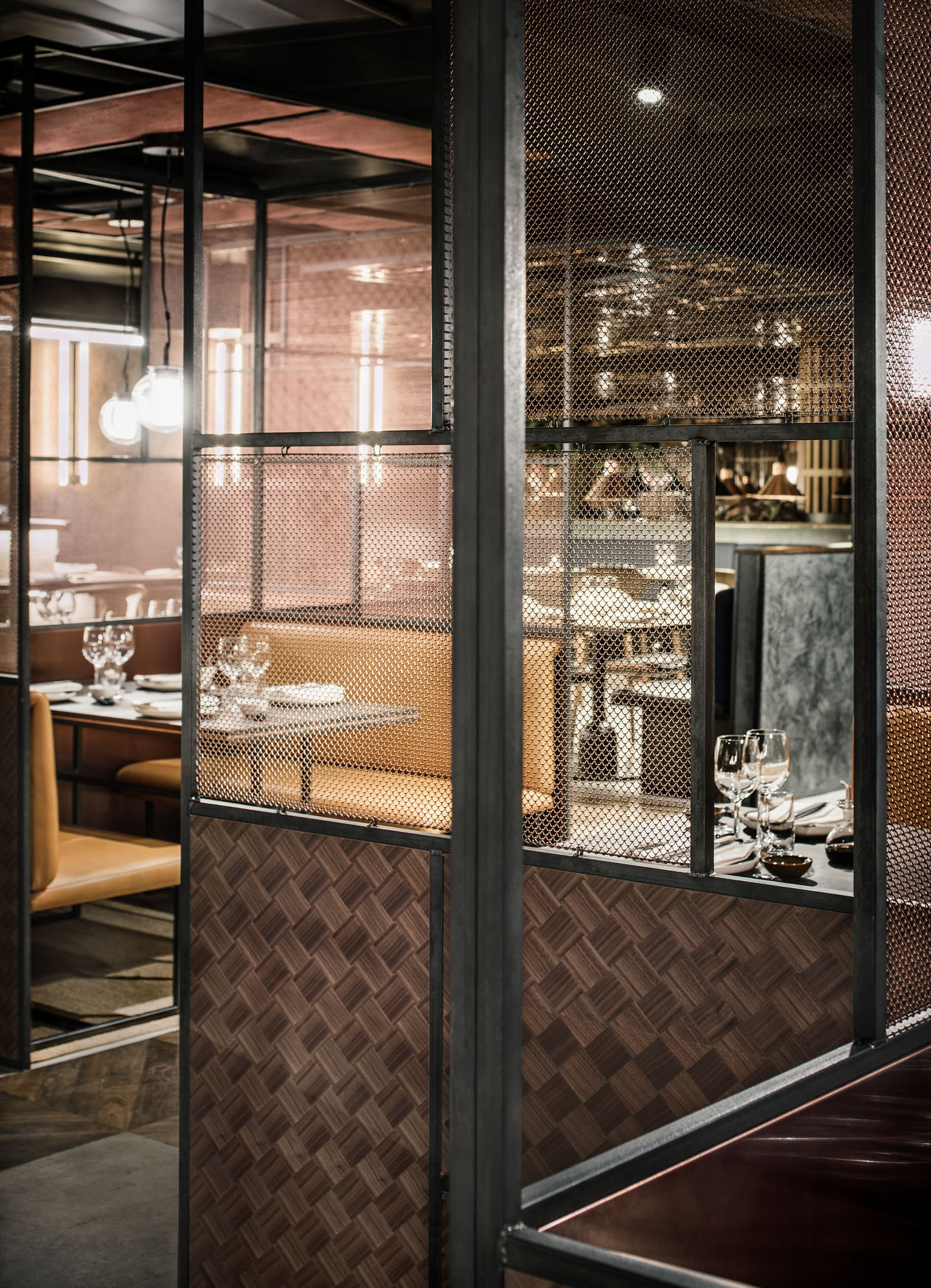
Offering seating for 180 guests and comfortable space for up to 300, TAKO features a sushi bar, an open barbecue station and a large drink bar. The lit aisles navigate the customers through a myriad of rooms and let them discover cosy nooks hidden from the sight behind mesh screens. Dimmed lights and varying dining suites enhance the atmosphere of a backstreet milieu. Hand-chiselled natural materials such as stone, wood and concrete add the finishing touch. Copper elements combined with cushy upholstery and earth-toned leather bring a welcoming warmth to the space. In the middle of the room, a temple-inspired suite assumes centre stage, graced by a bespoke fish pond carpet.


Relationships that go way back

The project is a part of a long business relationship between Stockholm Krogbolag and Tengbom, TAKO being the fifth restaurant we have designed for the restaurateur.

”When you have the possibility to be in charge of the design process down to the very last detail, strong concepts arise. Our collaboration with Stockholm Krogbolag has just got stronger with years. The mutual trust between us allows us to take the interiors to new design heights”, says Filip Svensson, interior designer at Tengbom. Filip worked on the project together with Ninna Helena Söderström and Josef Zetterman.

TAKO

“The restaurant has a quirky twist and an element of surprise, without compromising on the utmost attention to quality”

A twinkle in the eye

The graphic identity of the restaurant is created by Studio Oscar Liedgren, a longtime business partner. We share a successful history of collaborations and a strong creative foundation.

“When different teams work with the same client and receive the same brief, interesting things happen,” says Oscar Liedgren. “Our sensibilities start to reflect one another. It gets even better when they enhance each other. That’s when a special kind of creative spark ignites. This was exactly the case with the TAKO project. Everything fits together, like perfect pieces of a puzzle.”

By controlling the design process and maintaining a close dialogue with both the client and the carpenters from the very beginning, we ensured that every detail was carefully refined along the way. As a result, TAKO has developed into a sophisticated and standout addition to Stockholm’s restaurant scene. At the same time, it has become another masterpiece in Kristofer Sandström and Christian Olsson’s impressive business portfolio.

“TAKO is like an elegant friend with a twinkle in the eye. We want to create a social atmosphere filled with unique experiences and build our own dining culture together,” says Kristofer Sandström, founder of Stockholm Krogbolag. “The restaurant has a quirky twist and an element of surprise. At the same time, we never compromise on the utmost attention to quality.”


Contact person

Kristina Jonasson

Studio Manager Interior Design
+46 708 23 14 33

Buzzard Point

Scandinavian Way of Living
Architecture, Interior Design
Residential
Client: Akridge, Western Development, Orr Partners
Location: Washington DC
Type of project: Housing, Interior Design
Partners: Antunovich Associates, West 8, BCT Architects
Year of Commission: 2016-2020

500 apartments and amenity spaces were on the wish list when Tengbom was flown to Washington DC to create exclusive Scandi interiors that will attract design-savvy Americans to the new residential area on 1st Street at Buzzard Point.

– I love it!
– We love you!
– Bring forth the lobster!
– And the cappuccino!

That’s the sound of excitement when Scandinavian architecture makes an entrance in the United States. Tengbom has been commissioned to design 500 apartments with adjacent amenity spaces, which include a spa area, gym and a rooftop terrace with a pool in a property in the Buzzard Point area of Washington DC.

The project, which covers a total of 100,000 square meters, is scheduled to start in January 2018 and will be completed in 2020. There is a lot going on in the area – the entire district is being raised from the ground under the skilled eyes of renowned architect firms, including West 8 – whom we collaborate with in this project.

The whole story begins in Stockholm, where one of the American clients was staying briefly. One day, as he was walking in the city, he stumbled upon The Temporary Market Hall at Östermalmstorg, one of Tengbom’s most praised projects in recent years. It was love at first sight, and on the spot, he decided that he wanted to hire the company behind it for his new residential project at Buzzard Point.

Straight into the heart

The US Coast Guard previously occupied the building, but it will now transform into housing inspired by Nordic design. On-site in Washington, Johanna Munck of Rosenschöld and Stefan Rydin detailed their approach to the project. They presented the theoretical foundation and explained their material choices. The theme, The Scandinavian Way of Living, received standing ovations.

The love of light and nature

The idea is to create something completely new in Washington DC’s dense residential flora. Going the other direction than the trending “industrial chic”, we proposed light wood, natural materials such as leather, terrazzo and stone – all with great attention to high-quality material compositions. Top quality and meticulous finishes are be-all and end-all when it comes to environments based on clean lines.

“Industrial chic wasn’t even an option for us. Instead, we’ve tried to grasp the essence of Scandinavian design with its simplicity and clarity. In order to create an appealing and functional environment, the performance needs to be top-notch. We make very high demands on materials and the meeting points between them. The floor we choose is a wooden floor, but only the best quality will do, and this has been our approach to every detail, “says Stefan Rydin.

The new residential building’s design focuses on access to natural light and provides a lot of space for social gatherings.Buzzard PointWinning expertise

Our housing and interior architects won the commission in tough competition with three New York offices. For this project, Tengbom collaborates with local architects on-site, Antunovich Associates, but will have the main responsibility for the design. The team has already launched the project and expects to complete it in 2020.

Contact person

Mark Humphreys

Practice Director Stockholm
+46 8 412 53 43

Hilma Restaurant

A decadently welcoming experience
Interior Design
Branding & Concept, Restaurants
Client: Generator Hostels
Location: Torsgatan, Stockholm
Type of project: Restaurant concept, Interior design, Planning
Year of Commission: 2016
Awards and Recognitions: Winner, German Design Award 2019, Nominated for Frame Awards: Bar of the Year 2018, Nominated for The Andrew Martin Designer of the Year Award 2018
Partners: Artists: Jacob Erixson, Emil & Chris Deepwood tattoo; Project management: Nima Aase, Turner & Townsend; Entreprenör: Konrad Lewko, Manor House

How do you create a restaurant that feels pioneeringly decadent, yet warm and welcoming at the same time? A visit at Hilma in Stockholm will give you the answer.

Restaurant Hilma at Generator Hostel _Tengbom

Here, Tengbom’s interior design studio displayed its most innovative side, while care for the client and the visitor can be seen in every little detail.

“It is a holistic experience. Our work has included using multiple layers, extensive detail and contrasting materials and artwork. This restaurant is one fantastic roller coaster ride. Here you’ll find beauty and grotesqueness, innovation and something quite different”, says Nadia Tolstoy, who is an interior designer and also took on the role of creative director for the assignment.

Restaurang Hilma på Generator Restaurang Hilma på Generator

Cosy with an edge

The client, Generator Hostel, which has a portfolio full of design-driven hostels in trendy cities, has become known for not shying away from full-on interiors, and it was also from this that the “decadence and fetishism brief” emerged. But how do you design a “decadent interior”? And how do you combine that with the other clear desire, that Hilma should be a warm and cosy neighbourhood restaurant where everyone should feel welcome?

Restaurant Hilma at Generator Hostel _Tengbom Restaurant Hilma at Generator Hostel _Tengbom

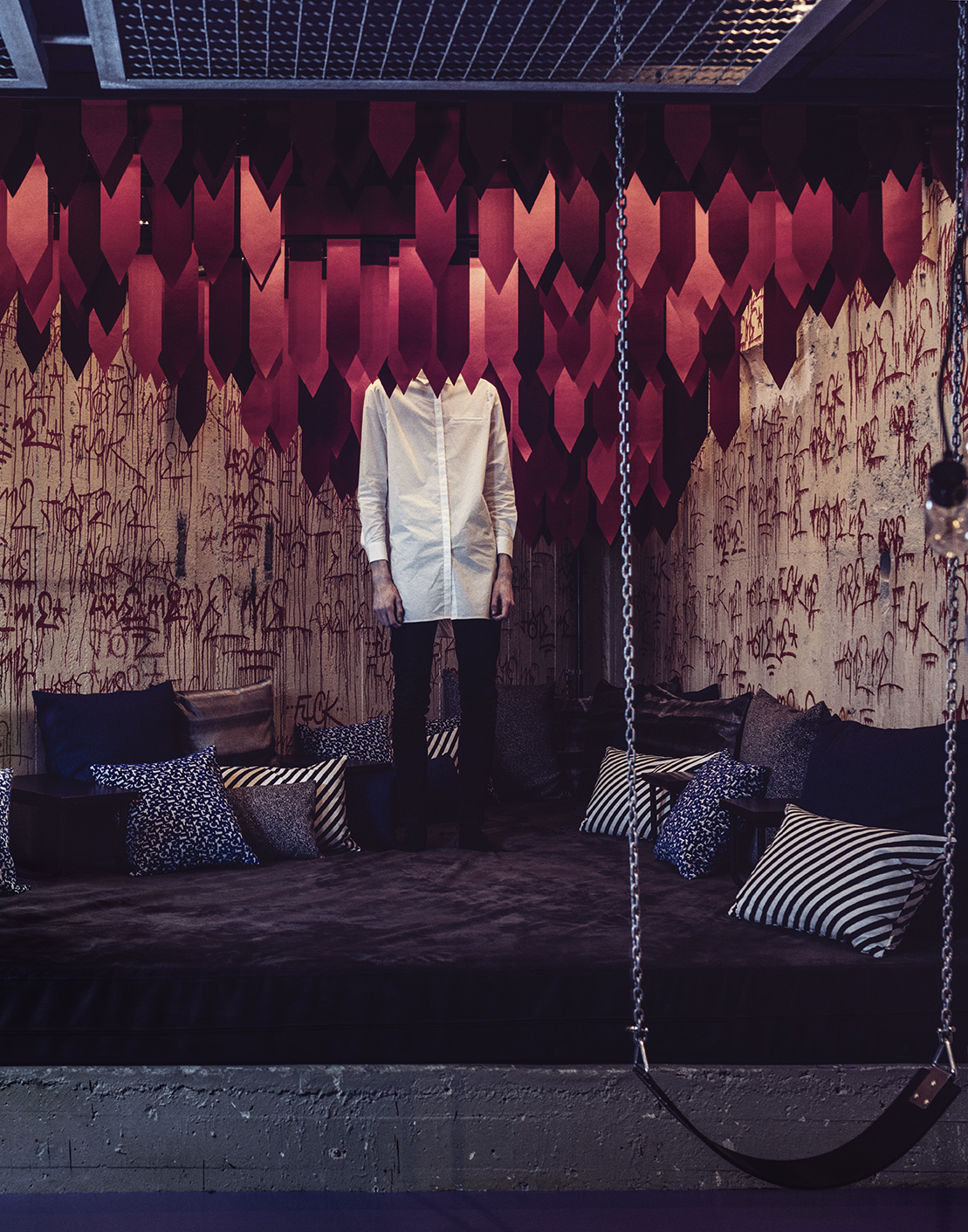
The solution was to zoom out a bit, and look at the world of art and fashion to see how they tackle subcultures. One clear inspiration was the artist Hilma Af Klint. The interior design circle around a contemporary Klint figure who creates tattoos with occult elements, shakes curative drinks and is a cruel figure in the DJ booth. To balance this out and create a sense of the artist’s superb treatment of colour, unexpected details are combined with warm, inviting fabrics, powdery colours and plenty of humour.

Hilma at Generator Hostel _Tengbom


The balance is the be-all and end-all

The restaurant is divided into clear zones and a great deal of the interior design is specially aimed at being adapted to the brief and the premises.

“When the customer comes to us with a vision of an environment that really stands out, you cannot just use ready-made solutions”, says Sara Persson, the interior designer in charge, who has designed everything from beds for people who want to eat lying down, splash-painted couches with stirrups, provocative light fittings, a cage that also functions as a VIP room and Instagram-friendly rope art installations.

7Hilma_Tengbom


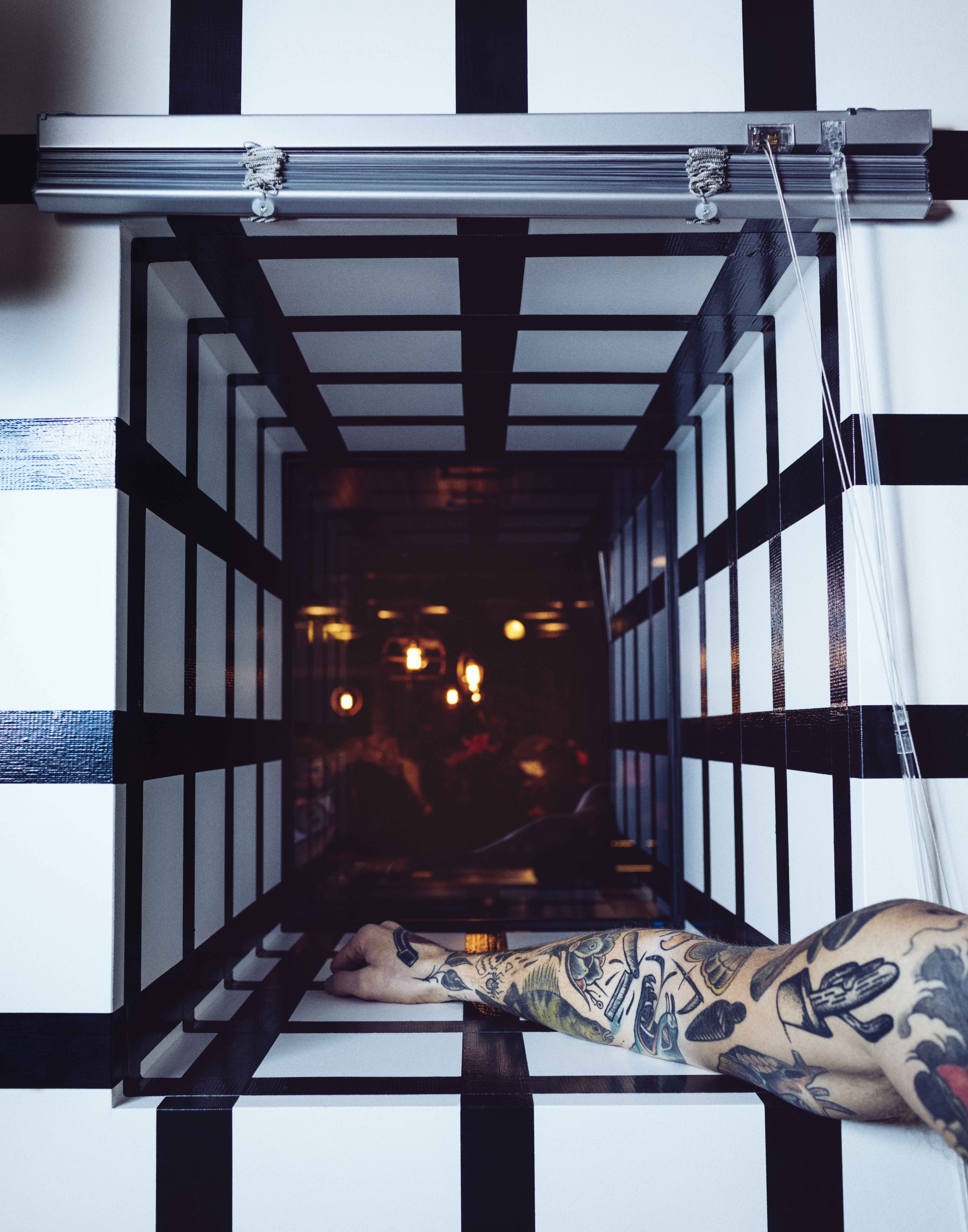
At Hilma there is also a functioning tattoo studio as an important part of the concept. And not forgetting enticing vintage pinball machines and multi-coloured flooring. But there is also a trustworthy bar in the traditional way and quieter seating areas for people who have come for the dining experience.

9 Hilma_Tengbom

Hilma stands out for its unique mix of action and calm. The same contrast defines the district where the restaurant is located—a quiet corner of the capital. At least for now.

“This summer, people will be able to eat outdoors, which is completely new for this area,” says Katya Högberg, architect at Tengbom and project lead. “Torsgatan is transforming into a pedestrian and cycle precinct, and the area will change significantly.”

Restaurang Hilma på Generator Restaurang Hilma på Generator

“Generator often tends to choose central locations that are a little bit “unexpected”. It will be exciting to see the energy emerges when a new, hip restaurant opens that was adamant about recreating a small part of Stockholm”, she continues.

“It will create a ripple effect throughout the district. And this time, we will be helping”, concludes Nadia Tolstoy.

Contact person

Kristina Jonasson

Studio Manager Interior Design
+46 708 23 14 33

Elite Hotel Mimer

A place to return to
Interior Design
Hotels & Meetings
Client:
Year of Commission: 2016
Location: Umeå, Sweden
Contractor: Elite Hotel
Partner: AB Gunnar Svensson (project management)
Competences: Interior Design

A stately building with an interesting history. What else do you need to make a successful hotel? Attention to the guest, of course! A strong décor concept can be a part of the experience, but comfort and satisfaction are always top priority. At the Elite Hotel Mimer in Umeå, the focus is on what makes the traveller feel at home.

What makes a visitor feel relaxed and welcome when checking in at a hotel? A good feeling, of course. For most guests, it’s not about experiencing breath-taking new architecture or sleeping amid cutting-edge design, as lovely as that may be. It’s about spending time with family, visiting a fascinating destination or perhaps getting some rest before an important client meeting. This was the starting point for Tengbom’s interior design at the Elite Hotel Mimer in Umeå.

Elite Hotel Mimer
Photographer: Per Ranung

The guest’s needs first

“Neither we nor Elite Hotel wanted it to feel strained. We didn’t want anything gimmicky or like something you’d find at theme park. We wanted to make a place to come back to. As an architect, one often tends to think that a strongly conceptual-driven interior is important, but after working with many hotels, I’ve learned that the interior design is just a small part of the experience. It’s a good lesson, reminding us that we architects aren’t the most important ones here – the guests are. And for the guest, a large TV may just be more important than a fluffy bedspread”, says Magnus Lindgren.

A concept you sense, rather than an overwhelming theme

Of course, concept is not completely unimportant. The neo-Gothic brick building, which previously served as a grammar school, provided a natural source of inspiration for the interior design. It is large and stately, boasting high ceilings and no shortage of lovely windows. The walls in the corridors and stairwells already had a charming limestone finish.

“It’s a gorgeous building and we knew instantly that its history as a former school would be our starting point. But we didn’t want to make it too obvious. No one’s going to walk into one of the rooms and say: “Wow! This looks like an old school!” Because it doesn’t; it looks like a regular hotel room with a soft bedspread, a few puffy pillows and a nice wooden cabinet, but somewhere there’s a feeling in it.”

And that’s how the interior design team around Magnus Lindgren prefers to work. The process is based on a concept, but the idea is that in the end it should have a cohesive feel and a certain sense of calm. If a visitor knows that the headboards were selected with a nod to the building’s history, or that the cabinets where you hang your clothes are designed to resemble an old-school locker – well, that’s a bonus, but not necessarily valuable in its own right.

“We try to work very conceptually. We don’t just go for ‘pretty’ or ‘brown and leather’. Of course it should look pretty, but things don’t usually work out very well if you don’t have a conceptual place to land. Even if visitors aren’t always thinking about it, they can feel it. If there’s a concept, an idea and a wholeness behind it, the space is a more pleasant place to be,” Magnus says.

And by all accounts, guests at this usually sold-out hotel seem to agree.

Elite Hotel Mimer

Contact person

Claes Morath

Interior Architect
+46 8 412 53 47