Giant laboratory to attract international scientists
Interior Design
Life Science, Offices
Client:
Location:
Lund
Years of commission:
2011-2016
Type of project:
Laboratory
Comptences:
Interior Design
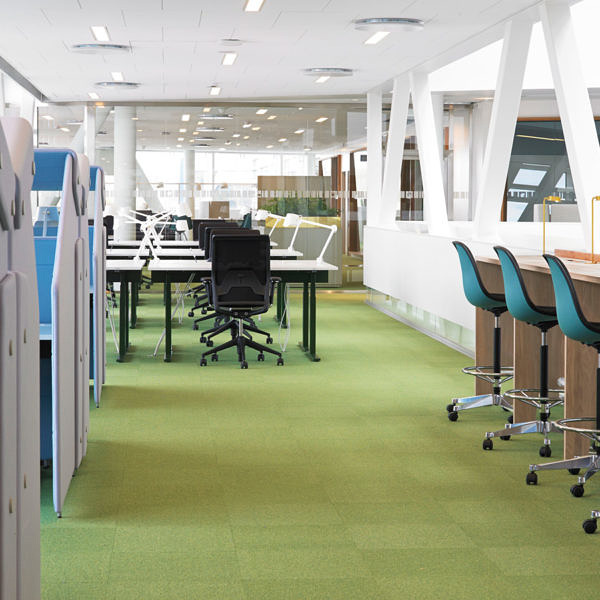
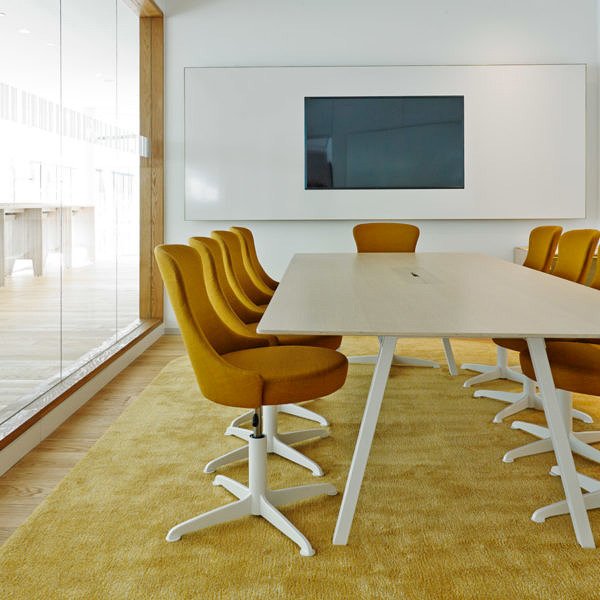
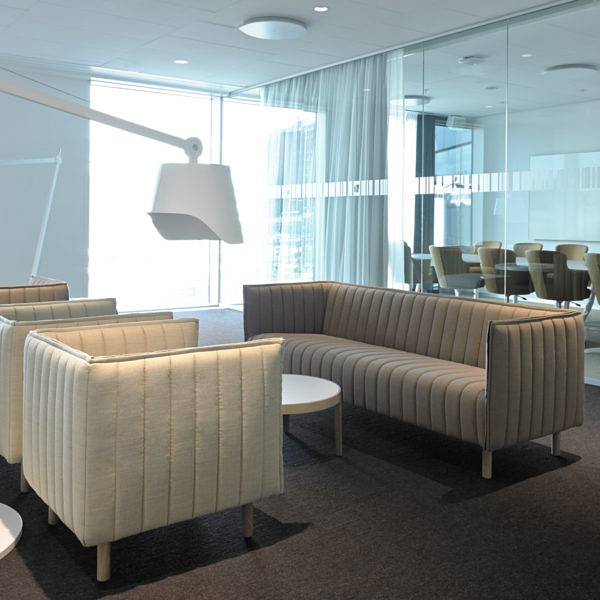
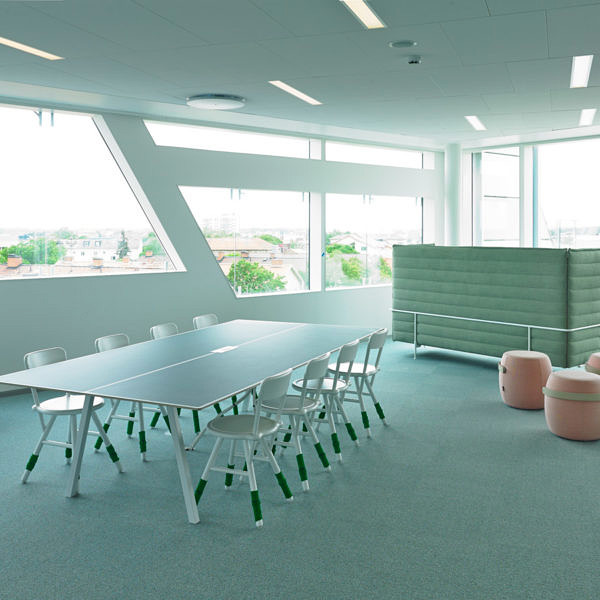
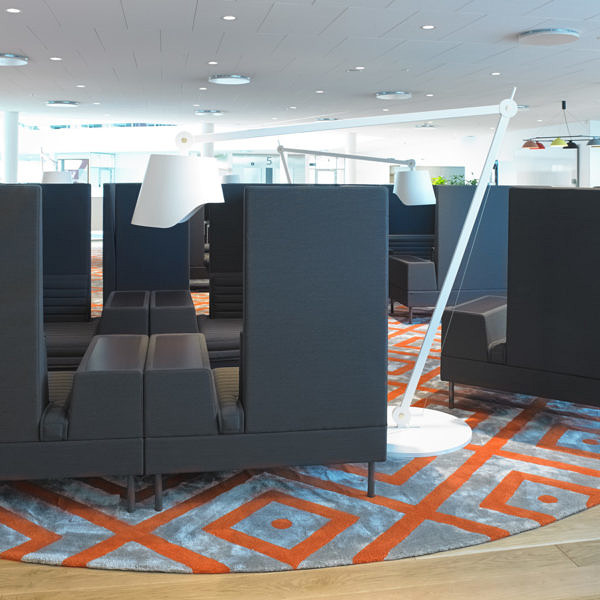
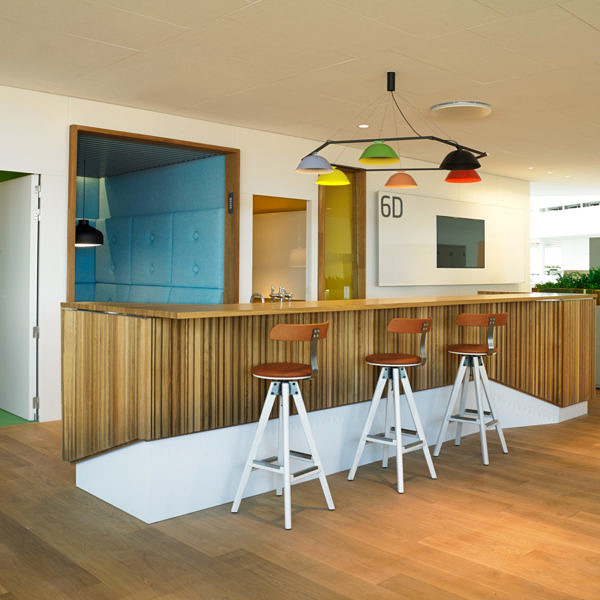
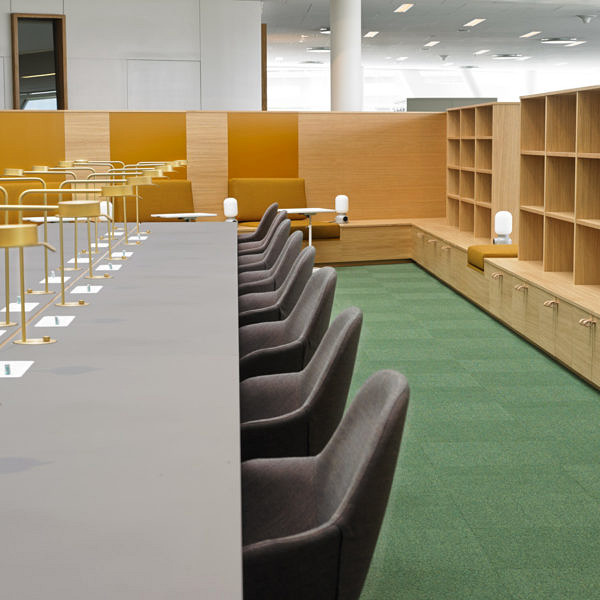
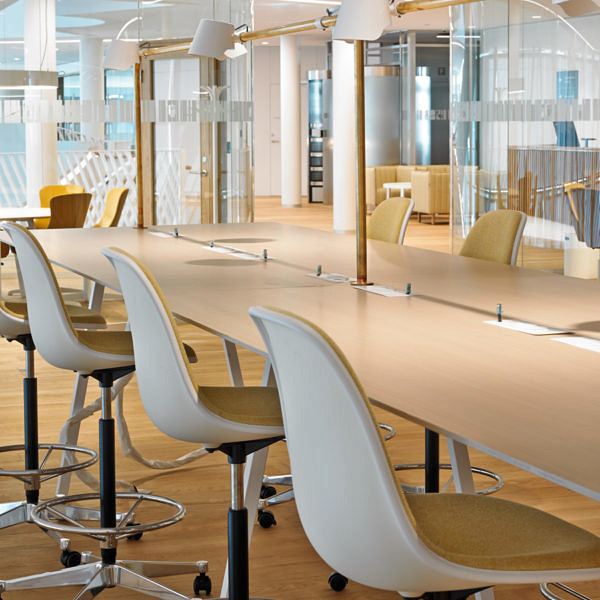
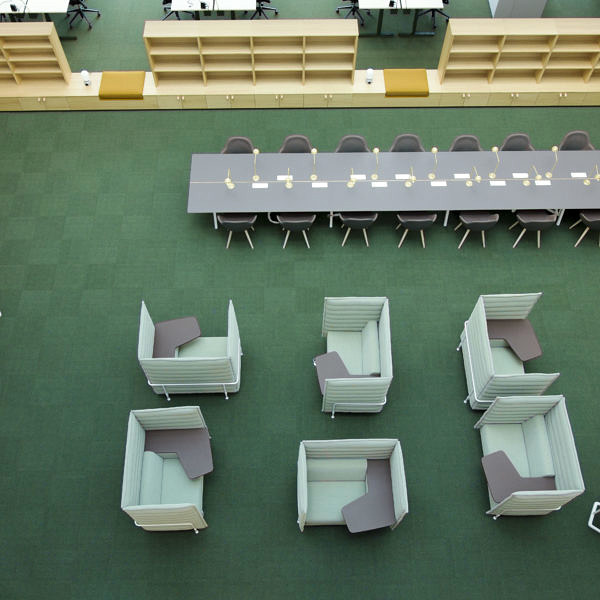
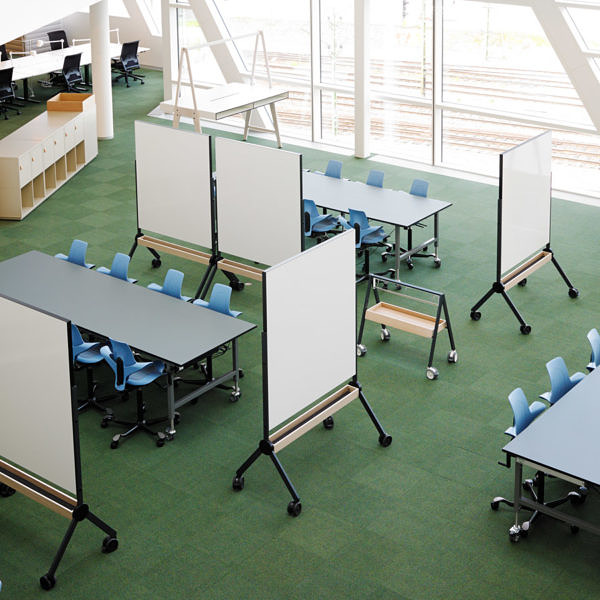
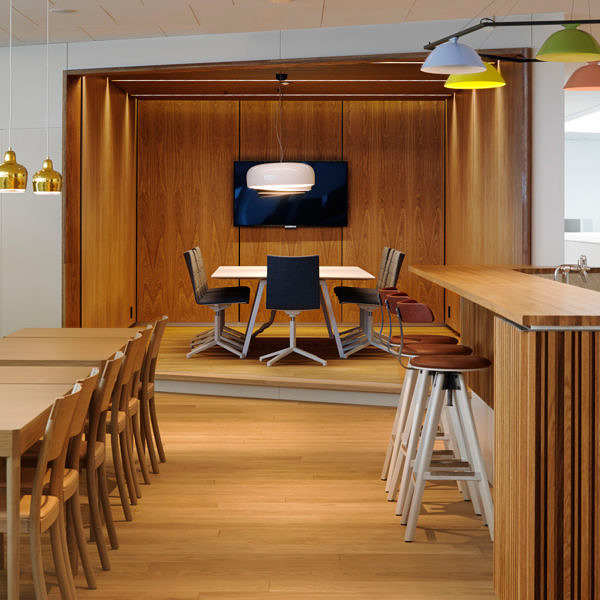
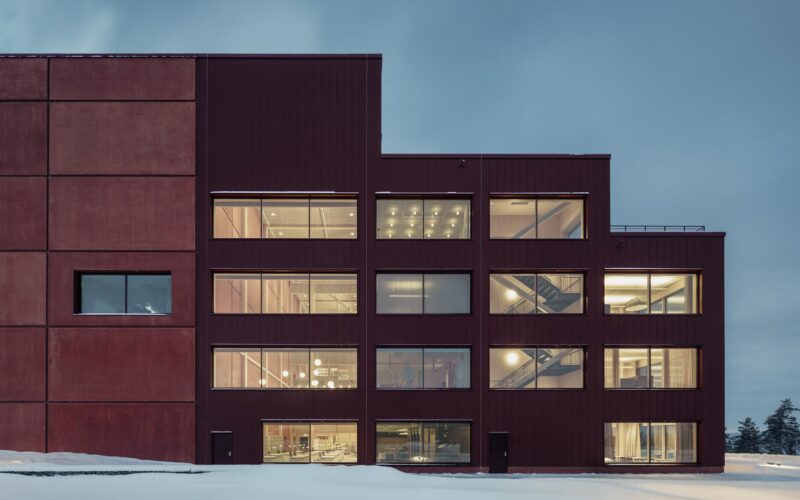
In 2012, we were given the extremely exciting task by Lund’s university to do the interior architecture of MAX IV, a giant laboratory that will play host to approximately 1,000 scientists from the entire world every year. Here, we have developed everything from customized solutions in the lab environments to representative spaces for international guests and a good working environment for the employees.
The MAX IV laboratory is a national facility at Lund’s university as a world university. The laboratory’s accelerators produce X-rays of very high intensity and quality. Each year, 1,000 scientists from around the world use them for scientific research. The vision for MAX IV is that the facility will be a world leader of its kind.
Photo: Felix Gerlach (Fojab & Snøhetta are exterior architects)
Lund University’s face to the world
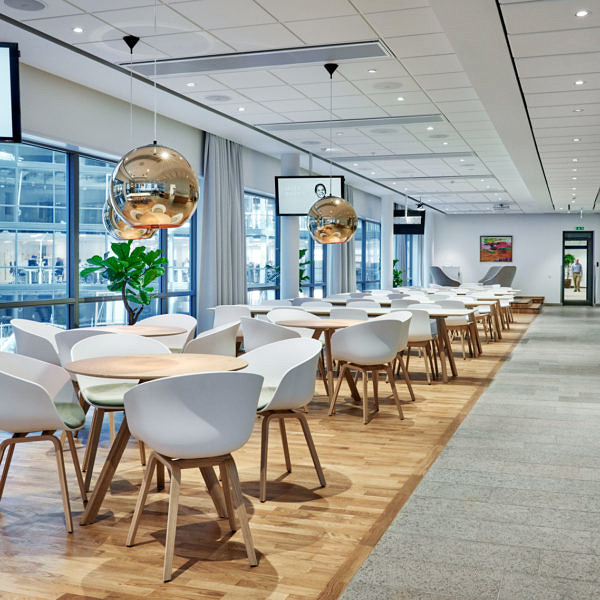
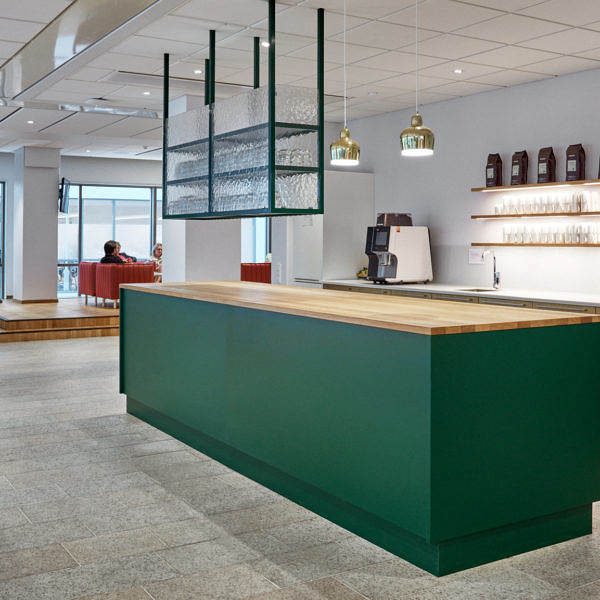
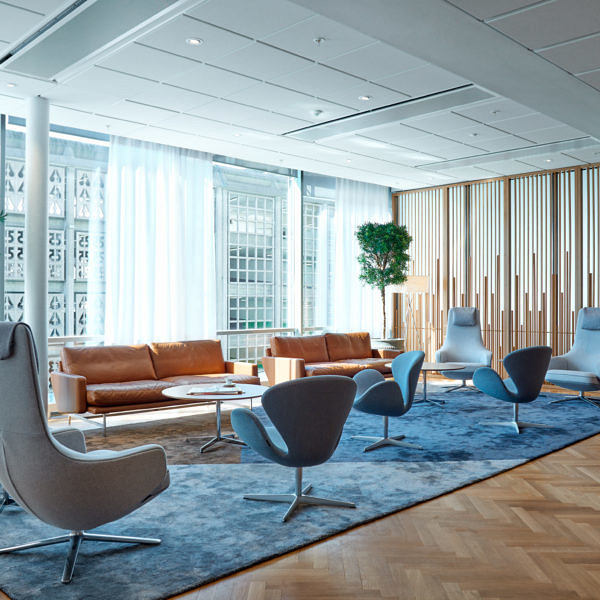
The 35,000 square meter large building houses wet and dry laboratory environments with linear accelerators and storage rings, a larger number of offices as well as representative spaces as conference facilities, auditoriums, refectory, café and lounge.
In the facility, research takes place using so called synchrotron radiation, a very strong X-ray light that makes it possible to study material structures down to the atomic level. MAX IV will be the next generation synchrotron radiation laboratory and a giant investment for Lund university, not least for the purpose of attracting these international scientists.
Photo: Felix Gerlach
Photo: Felix Gerlach
Photo: Felix Gerlach
Photo: Felix Gerlach
Photo: Felix Gerlach
Photo: Felix Gerlach
“We have a solid experience and expertise when it comes to creating customized working environments. In this project, function has been extremely important. The equipment is very expensive and requires rational and thoughtful solutions that offer as much flexibility as possible,” says Patrik Haglund. Patrik is Studio Manager of Interior Design at Tengbom in Malmö.
Photo: Felix Gerlach
An good working environment as focus
We are deeply committed to designing a functional and representative working environment for everyone at the lab, especially the researchers. This exciting challenge demands great precision to ensure that all equipment functions seamlessly. We have customized the surfaces to support particle cleaning, carried out by specially trained personnel.
Partners:
KS Projekt, Kökspennan och Oscar Liedgren
Years of commission:
2014–2015
Competences:
Interior design, Hotel & Restaurant
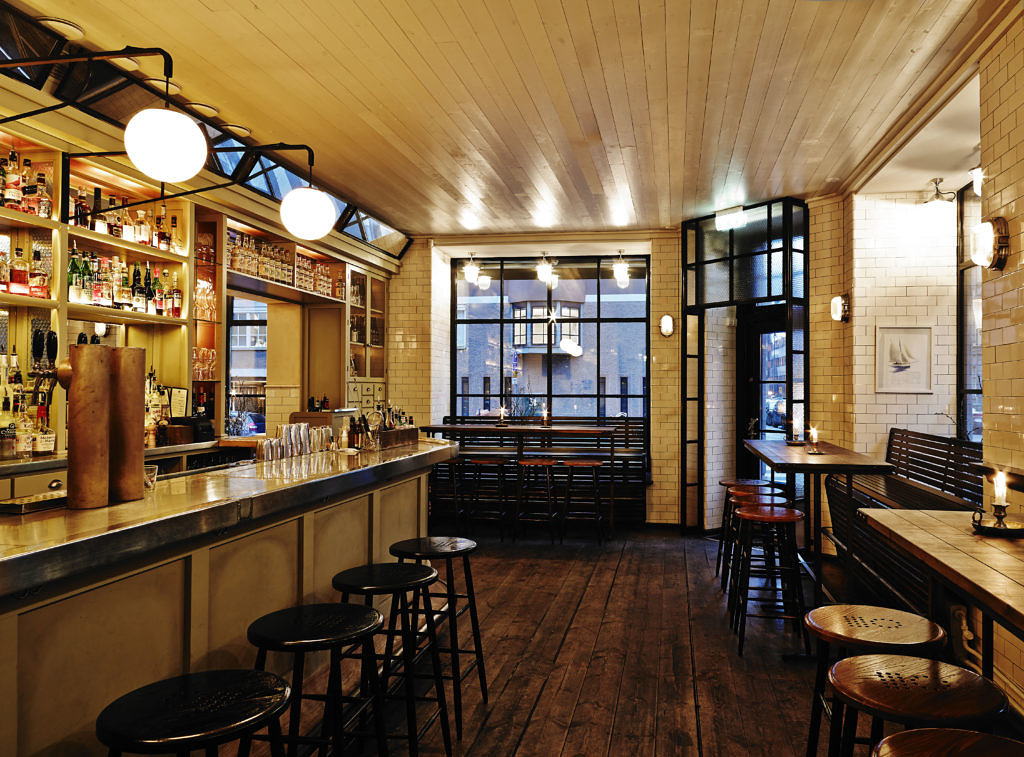
In the autumn of 2015, the doors were opened to restaurant Kommendören, another one of the concepts that we have developed to the Vassa Eggen group. This is a neighbourhood restaurant based on the New York bistro culture with a nicely relaxed, noisy atmosphere and a focus on really good food.
Kommendörsgatan 7, at the corner of Brahegatan, sits right next to Humlegården in Stockholm. This is where you’ll find the restaurant Kommendören. Since its opening, Kommendören has quickly become a popular neighborhood eatery. This was exactly what owners Christian Olsson and Kristofer Sandström envisioned when our collaboration began.
”Our task was really to find an interior design concept that rhymed with the menu – a modern American bistro with international influences and a love of really good quality”.
Filip Svensson, Interior Designer
Photo: Björn Lofterud
Photo: Björn Lofterud
Photo: Björn Lofterud
Specially designed and rustic
The result is a genuine, rustic bistro environment for approximately 60 guests in the restaurant and a further 25 by the bar. Almost all the interiors have been specially designed, from the light fixtures to the unusual bar. We have also designed the area with private booths that are separated by black, mullioned windows from metal. A detail that returns around the doors and mirrors in the room as well as the windows facing the street.
Kommendörsgatan 7, at the corner of Brahegatan, stands next to Humlegården in Stockholm. Here, the restaurant Kommendören welcomes its guests. Since opening, it has quickly become a popular neighborhood eatery. This is exactly what owners Christian Olsson and Kristofer Sandström envisioned when our collaboration began.
Bar of American proportions
The bar at Kommendören is much narrower that what is normal in Sweden. This is quite common in the USA and it means you get much closer to the bartender. This offers a more personal and relaxed effect, a reduced barrier that makes chatting easier.
Another fun partnership
Kommendören is one more in the line of fantastic restaurant concept that we have developed in partnership with the Vassa Eggen group. Vassa Eggen, Boquería, Albert & Jack’s and Tennstopet are all projects with strong concepts that have developed from our collaboration.
At Kommendören we have also collaborated with Oscar Liedgren Studio, who have developed the graphic profile of the studio. We have collaborated with Oscar Liedgren before on projects such as restaurant Boquería, and most recently on Tengbom’s own graphic profile. To etch the logotype of the Kommendören into the bar stools of the restaurant was a fun idea that complemented each other’s projects in a nice way.
Competences:
Hotel & Restaurant, Building preservation
Our collaboration with the Grand Hôtel in Stockholm dates back nearly 100 years. In the 1920s, Ivar Tengbom redesigned the hotel’s façade, lobby, and banquet hall Vapensalen. In 2014, we carried Ivar’s work on the lobby into the next era. And in 2020, it was the entrance’s turn to step into the future.
The lobby is the heart and face of the hotel. Preserving and highlighting details from the hotel’s rich history was of utmost importance to both us and the Grand Hôtel. Our goal was to give the space a contemporary expression and functionality while meeting the high standards of heritage preservation and accessibility adaptation.
“What would Ivar Tengbom do?” became the question that guided the project.”
Karin Hagelberg, architect
Photo: Åke E:son Lindman
“The collaboration with the Grand Hôtel is particularly enjoyable as it dates all the way back to Ivar Tengbom’s time. We’ve worked to recapture the essence of the changes Ivar made in the 1920s while also incorporating new, modern solutions,” says Karin Hagelberg, architect.
Bright and elegant space for everyone
Our concept has transformed the lobby into a bright and elegant space. We seamlessly integrated modern functionality and technology into the historic setting. A new marble floor with large inlaid rugs, along with a concealed sound and lighting system, brings the lobby into a new era.
Photo: Åke E:son Lindman
The beautiful ceiling moldings have been highlighted in a new way, and the hotel’s antiques are artfully combined with modern details. The addition of new ramps and railings ensures that the lobby is now accessible to everyone.
Carefully updated hotel rooms
Since 2010, we have continuously revitalized a large portion of the hotel rooms, most recently on the second floor and the third floor of the Royal Building. We have designed many rooms for flexible use, adding classic double doors to allow seamless connections. To enhance natural light, we have also introduced new French balconies in some rooms and clad the bathrooms in Carrara marble for a refined finish.
New era – new entrance
Foto: Per Kallstenius arkitektkontor
When Grand Hôtel updated its iconic entrance in 2020, Ivar Tengbom’s influence remained present throughout the process. The team replaced the revolving door with two glass panels, creating a sense of openness while keeping cold winds at bay. Inside, the space once dominated by the revolving door became a grand transitional zone between outdoors and indoors. The outer canopy was redesigned to improve the view from within. Custom-designed lanterns, recessed light wells, and gold-toned metal in the entrance ceiling now cast a warm, welcoming glow. In the lobby, the staircase was moved further into the room, returning to its original position from Ivar Tengbom’s time. His pattern design from the elevator doors was also revived, now adorning the new accessibility lift and the railings.
Influencer: Ivar Tengbom
Karin Hagelberg explains, “We built on what already existed. With great respect for history and a sensitive approach, we drew inspiration from timeless details and environments.”
Area of expertise:
Interior Design, Product Design
Neat, small tables designed to complement lounge areas. That idea led to X & Y, two small touch-down tables for SA Möbler. You can use them anywhere — perfect for temporary work or as classic coffee tables.
As our work becomes increasingly more digital and wireless, the requirements for our offices keep changing. To be able to relax with the laptop in a lounge environment is for many a welcome contrast to the more traditional, assigned desk. Today, more and more offices offer different types of work stations and new products are continuously appearing on the market, specially adapted to a more flexible way of working.
Illustration: Tengbom
Flexible tools
When we were developing the product range Platform for SA Möbler, the idea of complementing the lounge areas in the series with a small table to put your computer or notes on was born. A table that could easily be moved around as need be. The solution was the Y table.
A caring shape
The name Y comes from its distinctive shape, inspired by a foot and a leg. You can easily pull it over your knee, letting it serve as a small, practical helper. The stand also works as a handle, so you can bring it along effortlessly.
Illustration: Tengbom
Illustration: Tengbom
Illustration: Tengbom
“With a simple design, which characterizes both X & Y, the design of the details become even more important. Thus, the table stand made of steel profiles have been given rounded corners, to give them a kinder and more caring expression,”
Daniel Lavonius Jarefeldt, Industrial Designer
Many different versions
The launch of Y naturally led to the next step—the X table. Here too, the name comes from the design of the stand, where one leg now sits at the center of the base beneath the tabletop. X comes in different heights and sizes, making it easy to combine in groups. Both X and Y have multiple models at SA Möbler, allowing you to adapt them to specific environments.
We have designed an extension to the Alingsås District Court from 1899, clad entirely in zinc. The jury for the PLÅT prize considered that it was so spectacular and unique that they gave us the award. What do you zinc?
Architect Adrian Crispin Pettersson designed the District Court in Alingsås, a classic brick building from 1899. It stands a few blocks from the town centre, surrounded by large villas and a school from the early twentieth century. In the late 1950s, a brick wing was added. Just over half a century later, Tengbom designed the next extension. Another milestone in Alingsås District Court’s history came in 2016 when we won the PLÅT prize for the new zinc-clad addition. The annual PLÅT seminar is a major event dedicated to metal sheeting and architecture.
Photo: Felix Gerlach
We joined the project after it was already underway, when a brick extension by architect Börje Falemo had been proposed. The District Court, however, wanted to explore alternative facade solutions, giving us the opportunity to present a design based on the existing floor plan. Drawing inspiration from the surrounding buildings with their steep roofs, we proposed a structure with a saddle roof and curved bay windows. With a compact plot and thin walls, it made perfect sense to extend the zinc sheeting from the roof down the facade, creating a sleek, protective outer layer.
“This design gave us both flat and steep roofs, so we needed a material that could handle both — leading us to zinc. The old building has thick, solid walls, while the extension relies on thinner curtain walls. Here, zinc sheeting worked perfectly as exterior cladding. We could wrap the entire building in a single material, making it clear what was new and what was old,” says architect Fritz Olausson.
The result, a monolith in zinc, cannot be ignored. The sheeting accentuates the building’s shape and shows its own annual ring at the same time as it ages with dignity — much like a grey and wise judge.
Photo: Felix Gerlach
Photo: Felix Gerlach
Photo: Felix Gerlach
A contemporary take on traditional craftsmanship
“Zinc is a fine old classic material which was used extensively as roofing during the last century. We simply brought in down onto the facade and it fits beautifully with the granite foundation wall which is a common denominator for both buildings,” says architect Magnus Almung.
Even with its expressive form, the building maintains a restrained volume to avoid crowding the old one.
“The design represents our time, perhaps primarily thinking of the expressive volume. Monolithic buildings are typical these days with the same material for walls and roof. You can even see buildings without eaves. In the same way saddle roofs have come back into fashion in the past few years, something we didn’t see much of previously. The difference is perhaps that this building is constructed using craft techniques that are the same as at the beginning of the twentieth century. All the sheets are put up with great care and precision,” continues Olausson.
A living facade
The roof is clad with standing seam sheeting while the facades are covered with sheets of different widths placed in a set “random pattern” from base to ridge. Variation provides a living facade and by working with four different widths we could work round the predetermined window locations which were dictated by the internal functions. The entrance doors are also clad in zinc and fall into the pattern.
Photo: Tengbom
“Over time the facade will age as beautifully as the adjacent brick buildings. That´s when runnels and patination make their mark on the sheeting,” says Almung.
The team carefully chose the grey zinc sheeting, valuing its robust and confidence-inspiring aesthetic. Alingsås District Court emphasized the need for a dignified environment. Since the Court handles sensitive and serious cases, the surroundings must both show respect and instill confidence in visitors.
“A good client is key to a successful result. The requirements of the Swedish National Courts Administration and the District Court were decisive for the building’s appearance.”
Fritz Olausson, architect
Photo: Felix Gerlach
Metaphors and problem solving
Raising the roof wasn’t just a metaphor — it was a real challenge. High ceilings weren’t part of the original plans, but they allowed for two new courtrooms with a height matching the large courtroom in the old building. We refused to compromise on this. Some suggested lowering the ceilings to improve acoustics and recording conditions. Instead, skilled acousticians tackled the challenge together with sound and light engineers. Otherwise, the building’s exterior and interior would have clashed. Something we were determined to avoid.
Designed-in stories
Another aspect which the presiding judge liked was a building that told stories. Tengbom has also designed the interior and Carl Olofsson saw an opportunity to incorporate the courthouse’s history in the interior. There was an existing decision that the courtroom doors should be of walnut with elements of oak. Olofsson’s solution was a striped pattern with references to the five key years for the building. At the bottom of the doors is a code with lines that form the year. Tengbom has a frame contract with the Swedish National Courts Administration and designs interiors for courts throughout Sweden. Karin von Geijer designed the interiors of Alingsås District Court.
“We started in both the original and new buildings when we designed the courtroom furniture. The rooms are characterised by wood-panelled walls and floors. We wanted to get a feeling that the tables were growing out of the wooden floor. It was like a jigsaw getting the tables right bearing in mind the mass of technical equipment such as cameras and recording equipment that they contain. The interiors need to be beautiful and dignified since life-changing events will take place here. The rooms must be perceived as neutral as much by the public as by the parties and witnesses,” she says.
Furniture that elevates the space
The generous ceiling height made even higher demands on the technical installation, which influenced the furniture. The courtrooms have a lovely sense of space which must be reinforced, not supressed, by the furniture required. One solution to this, among others, is office chairs with semi-transparent backs which make the back wall behind the Court’s bench visible. The wooden frontals of the furniture have references to the facades in brick and zinc. Another unusual detail in the context of courtrooms is that they have direct daylight. If hearings are in camera then curtains can be drawn across the windows.
Now and then
The jury for the PLÅT prize stressed among other things that Alingsås District Court is “a building that arouses feelings (…) The designers have been insistent in their choice of material which shows a very good understanding for materials. A familiarity which has provided the finest details as well as space for great craftsmanship. Alingsås residents should confidently follow each annual ring on this solid building.”
Photo: Felix Gerlach
The District Court officially opened in September 2016.
Areas of expertise:
Interior design, Hotel & Restaurant
In May 2015, the doors to Torsgatan 21 opened – a new restaurant and delicatessen in an iconic Tengbom building. The interior design is intended to maintain the original feeling of the building and at the same time create a much needed, modern meeting place in Vasastan.
The address Torsgatan in Stockholm is occupied by the Bonnier building with new restaurants and the delicatessen Torsgatan 21. The building was designed in the 30s by Ivar and Anders Tengbom and it was the first skyscraper built from concrete after the first world war in Stockholm. The building was not completed until 1949 since the war got in the way and delayed the start. During the years, there have been additions and renovations based on Ivar and Anders’ original drawings.
Photo: Svarteld, Peter Karlsson
The building was designed in the 30s by Ivar and Anders Tengbom and it was the first skyscraper built from concrete after the first world war in Stockholm.
Inviting meeting place in a workshop environment
When we developed the concept for Torsgatan 21, we wanted to keep the atmosphere of the house. The interior catches the atmosphere in the old printers works with heavy, classic materials such as metal – steel and zinc – and a colour scheme in print black. Lighting from the roof joists reflects the work shop environment. A proud history in a modern interpretation.
Photo: Svarteld, Peter Karlsson
Photo: Svarteld, Peter Karlsson
Photo: Svarteld, Peter Karlsson
Photo: Svarteld, Peter Karlsson
Photo: Svarteld, Peter Karlsson
The restaurant buzzes with activity, offering a variety of different areas. Here, guests can explore the Dining Room, the Square, and the Delicatessen. The concept extends all the way to the atrium at the center of the building. This is where the outdoor restaurant takes place, blending seamlessly with PWC’s new glazed façade next door. Black metal accents highlight the transition between the spaces. Every surface is carefully designed. Thoughtful details, interesting views, and dynamic spatial features create a cohesive experience. In the autumn of 2016, the restaurant will expand even further with the opening of the Book Café.
When we developed the concept for Torsgatan 21, we wanted to keep the atmosphere of the house.
More than a restaurant
We felt truly honored to return to the Bonnier building. Developing the new activity on the ground level was an exciting opportunity.
Photo: Svarteld, Peter Karlsson
The overall concept has something for everyone, regardless of whether you live or work in the block or just happens to be passing by. The idea is that Torsgatan 21, is not only a restaurant but also a meeting place where you can find everything you may need in the way of food during the entire day. Excellent raw materials, outstanding cooking skills and hospitality are basic requirements regardless of whether you choose a croissant from the in-house bakery, a burger on the square or take a rich stew home with you.
In 2013, DNB faced the challenge of bringing all its’ activities to Stockholm into one common unit with a new culture – and in a new office. The old office spread over five floors with little opportunity for flexibility posed problems when it came to realising the visions of the business. With new premises on Mäster Samuel’s street in central Stockholm, they wanted to create a social and efficient space that would strengthen the collaboration and communication between co-workers and departments. We were given the task of designing the new office. In 2015, it was time for the co-workers to move in.
DNB
A lounge for four hundred
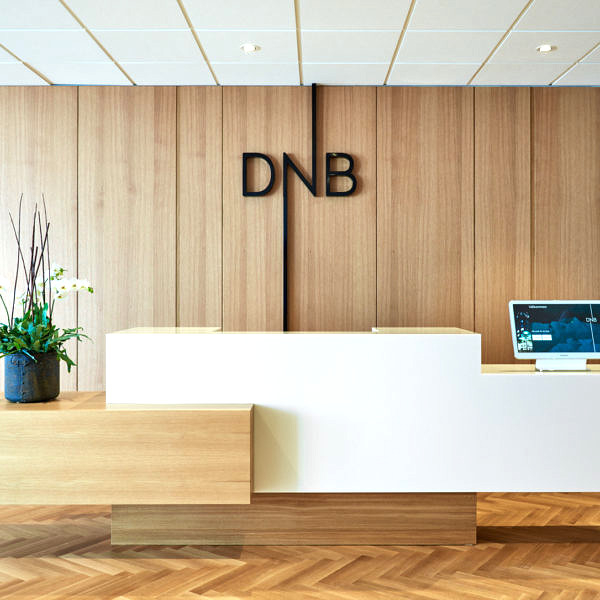
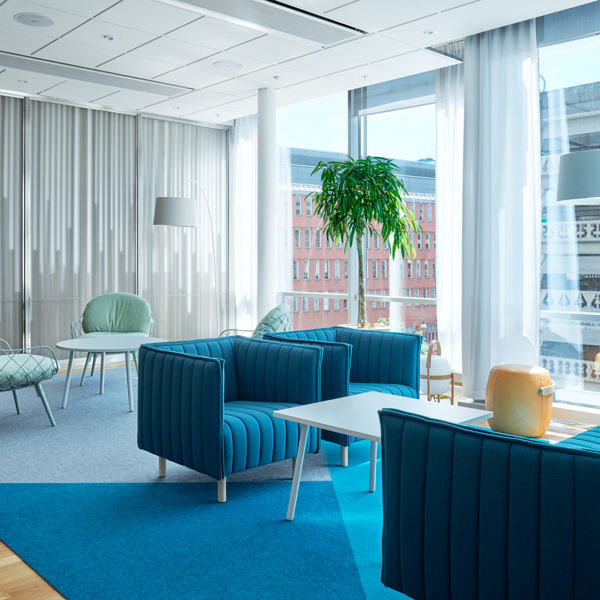
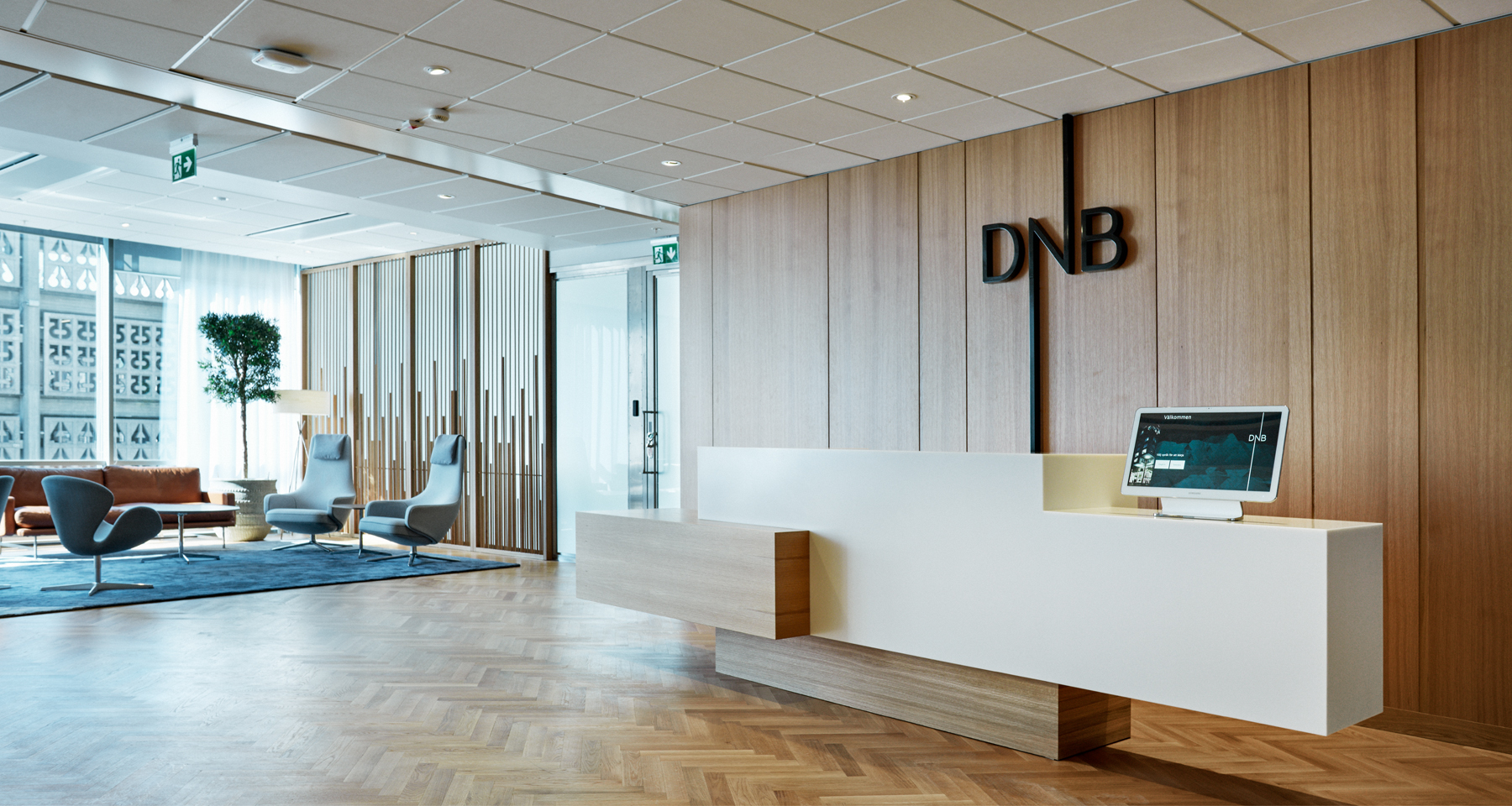
Openness and transparency shaped the design of the premises. The focus was on creating spaces that encourage spontaneous meetings and collaboration. At the heart of the office sits the large lounge by the entrance. This shared gathering place for 400 coworkers replaces the many small rest areas of the old office. The goal was to create a true living room—a central spot where everyone would want to spend time. Right next to the lounge, a service desk offers immediate support from administration and IT.
Photo: Johan Carlson
Flexible homes and a focus on privacy
The work surfaces are divided into so called homes within which you work in fixed places and with a clean desk-policy. We also adapted the office so that it will be possible to introduce a more mobile and flexible way of working in the future. The atmosphere in the new homes is calm and peaceful since a lot of the collaboration between the co-workers now can be carried out in the social parts of the office.
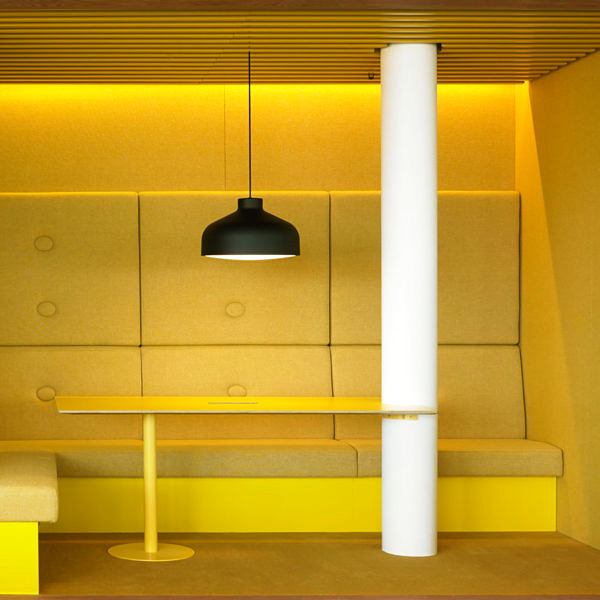
We have made great efforts to find natural locations for the bank’s privacy units. Based on natural behaviours, flows and the creation of rooms, we have created discrete boundaries that still signal the vision of openness and transparency through glass and other methods.
Photo: Johan Carlson
Light colours with a Nordic inspiration
DNB’s new office spans three buildings with varying roof heights and window placements. To create a cohesive environment, we opened up the rooms as much as possible, bringing in daylight from two directions. Different floor materials and raised areas define smaller spaces within the larger rooms. A central feature is the staircase connecting the two floors. Designed for openness and playfulness, it creates a natural flow. Light, air, and Scandinavian colours characterize the interiors.
Inspired by the bank’s graphic manual, we developed a Stockholm-specific concept based on the four seasons. The outer lounge represents winter, the inner lounge spring and summer, and the workstations autumn. Norwegian influences, drawn from the head office in Oslo, bring rich materiality and extensive use of wood. Traditional patterns appear throughout, including the herringbone parquet.
In 2014, Swedbank’s new head office covering a total of 45,000 m2 was opened in Sundbyberg. During a four-year period, we developed the interior environments of the offices based on the vision of an active and vibrant place for meetings. The interior design in the inspiring and energetic office was to reflect the three basic key words of the bank: open, simple and caring.
The Oak – Swedbank’s symbol for growth and a long term perspective – became the starting point for our design. From the trunk at the ground level to the business floors up in the tree, the concept of ‘life in the Oak’ is the running theme. We have created conditions for meetings, mingling and the exchange of knowledge in an environment where the employees are free to select a work station best suited to that day’s activities. The colours of the interior are based on the natural colours of the trunk, the green of the leaves and the blue of the sky.
Together with Swedbank, we have created an activity based pioneering office
Custom designed furniture as part of the whole
Every detail in the large office in Sundbyberg was carefully designed. To create the right atmosphere, our product designers developed custom-made solutions that balanced function and aesthetics. As the project progressed, several new products took shape. Morgana received the conference table Link, designed to enhance both collaboration and flexibility. Offecct introduced Focus Divider, a sound-absorbing workstation that creates small rooms within the room, improving both privacy and acoustics. Meanwhile, the team designed the light fixture Hätta for Örsjö, adding a warm and inviting touch to the space.
Foto: Björn Lofterud
All products were manufactured in Sweden. This project brought together Tengbom’s expertise in details, environmental focus, and collaboration. The process required a strong partnership and a shared vision.
“This is one of Tengbom’s largest and most complex interior design projects. And as well as a truly exciting challenge for us,” says Johanna Munck af Rosenschöld. “For four years, we worked intensively with Swedbank to create a pioneering activity-based office. The collaboration was both constructive and inspiring.”
On May 20, 2015, Swedbank’s new office won the prestigious architecture award Good Design is Good Business. Established in 1997 by the American journal Architectural Record, the award recognizes projects where strong design enhances business operations.
Competences:
Project planning & management, Interior Design, Hotel & Restaurant, Kultur & Idrott, BIM & 3D illustration
Here at Tengbom, we have played a decisive role in Malmö’s new social and cultural meeting place – Malmö Live. As construction architects, we have been instrumental in completing the vision, taking the interests and desires of many stakeholders into account within the context of the approved design programme.
The concert, congress and hotel facility Malmö Live was completed in 2015 and is one of Malmö’s largest municipality transformation projects. The neighbourhood is located in the area near the Neptuni park, which has become known as a type of bridge between the new and the old parts of the city, which also houses dwellings and offices. The whole thing started when Schmidt Hammer Lassen (SHL) architects and Skanska won a land use competition. Tengbom was given the honourable task of planning the project and help completing the vision. During the entire process, we had a close and fruitful collaboration with Skanska and SHL as design architects in charge.
“We are both happy and proud to have been amongst the creators of Malmö’s new social and cultural meeting place.”
Magnus Nilsson, architect
Greater contexts
We are gladly involved in municipality development projects of this type and work on the larger scale of things. Malmö Live, for example, has meant a lot for the business sector of the municipality, both through the creation of new jobs but it has also had larger consequences in that the building is attracting both international and local events to the city.
“We are both happy and proud of having contributed to Malmö’s new social and cultural meeting place. Our part of the project has meant that the municipality now has a suitable space and a platform to develop different types of art with everything from dance to music and theatre,” says Magnus Nilsson, architect in charge.
Photo: Joakim Lloyd Radoff
Cooperation yields results
The entire project is an example of a great partnership – not only between SHL, Skanska and ourselves but also within Tengbom, where experts were borrowed from Gothenburg and Helsingborg, in addition to the office in Malmö. When it comes to experience and expertise of public spaces and concert activities, we have been very lucky to dip into the Gothenburg office’s experience of the opera house in Gothenburg. The same office was also in charge of signs in the building. The Helsingborg office contributed their expertise and knowledge of detailed planning of the façade.
“In Malmö we have taken on the role of coordinating architect for technology, technical requirements, construction, ventilation, plumbing and electricity. Then there is another layer of acoustics and lighting, as well as the contractor’s implementation requirements. We also have to deal with regulatory requirements and other things such as accessibility and sustainability,” says Magnus Nilsson.
The entire project is a recipe for good collaboration.
A good partnership is the result of the will and drive of many experts to reach a common goal. The expertise to coordinate this and complete it comes from us and this is the greatest challenge.
Kitchen & Table Photo: Joakim Lloyd Radoff
The goal
The goal was to find sustainable solutions through design. An intensive analysis process guided material choices, balancing multiple complex factors. Close collaboration with clients and design architects ensured the best results. In this project, we advocated for durable and sustainable materials like solid wood, prefabricated concrete, and metal. The final design featured sound-insulated concrete walls in the concert and congress halls. Green roofs managed stormwater, while solar panels generated renewable energy for the building’s operations.
Eatery Social Taquería Photo: Joakim Lloyd Radoff
From ground level to sky bar
In addition to getting the opportunity to design details in all the important rooms in the building, we have also on request by Nordic Choice developed a concept and construction documents for the restaurants Eatery Social Taqueria on the ground floor and Kitchen & Table in the sky bar of the hotel.
Awards and Recognitions
Malmö Live got nominated in the Mixed Use – Completed Buildings category, WAF in 2016.
At the corner of Arenagatan – Hyllie Allé in the emerging new community of Hyllie, there is a brand new office building, The Hermod Block, which we have designed. At the end of 2015, our new Malmö office relocated its activities to the building, which was the plan ever since the start.
Midroc’s motto, “People in focus,” shaped our vision for the building. Unlike many of Hyllie’s large-scale structures, we aimed for a more human scale. The design creates a welcoming and easy-to-navigate environment. Visitors enter through a glass cube at the heart of the building. From there, lifts lead out to the yard, connecting to two wing buildings framed by warm brick. Solid, tactile materials define the atmosphere. Concrete, glass, and pine add honest architectural qualities. These elements create experiences, giving the building both presence and directness.
Photo: Andreas Svenning
The interior is flexible and can easily be adapted to the way people work. The floors normally house two to three tenants each but can generate up to nine different sizes of rooms. The building is L shaped and a social junction is created inside the glass cube on every floor with the opportunity for an open lounge and meeting area with exposure towards the street. Even the brick shanks are light and airy, designed to take in as much daylight as possible and offer a view of the exterior environments. The boundaries between in and out are erased not least by the entrances where the brick floor sneaks past the glass facade and out into the court yard.
To create a sustainable building both for the environment and for our colleagues has been very important to us and to Midroc.
Photo: Felix Gerlach
Sustainability for the environment and colleagues
We prioritized creating a sustainable building—for both the environment and our colleagues. Together with Midroc, we aimed for a BREEAM certification of excellence. The project included several key environmental initiatives. We carefully selected materials, implemented automated climate control, and installed solar cells on the roof. Sedum plantings and birdhouses on the communal roof terrace further enhanced sustainability. These additions help manage stormwater and increase biodiversity.
In a sustainable work environment, the health and well-being of our colleagues is important. In addition to the qualities of the office spaces, every floor level offers a so-called Green Room, which may be used as a balcony with fresh air coming in through the open window in the otherwise climate controlled office. At the basement level there is a sports depot with a bicycle garage and locker rooms for storage and showers. For anyone who does not get to the office using public transport and Hyllie station, located just around the corner.
To develop Hyllie – and to develop there together
Hyllie is a crossroads in the expansive Öresund region. Also it is an important international meeting place where architecture and town development issues are high on the agenda. Tengbom Malmö’s establishment in the neighbourhood of The Hermod Block is an investment in the development of Hyllie as a vibrant and sustainable community On our own offices, we want to highlight and inspire both future architecture and innovative working methods. The interior design concept reflect the different services that we offer, interpreted in a variety of colour schemes and materials in the different areas and becomes a living arena where we develop together.