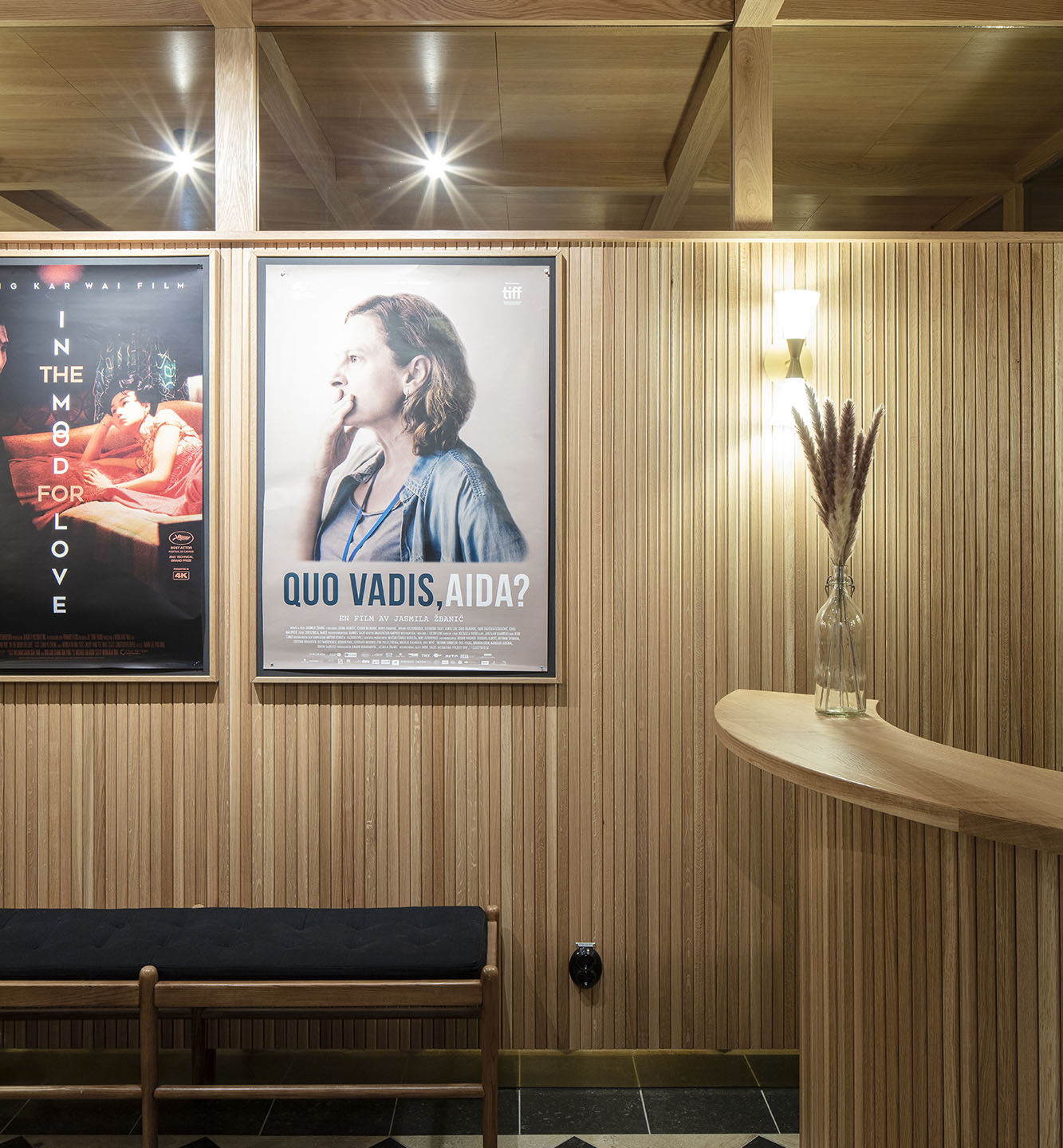
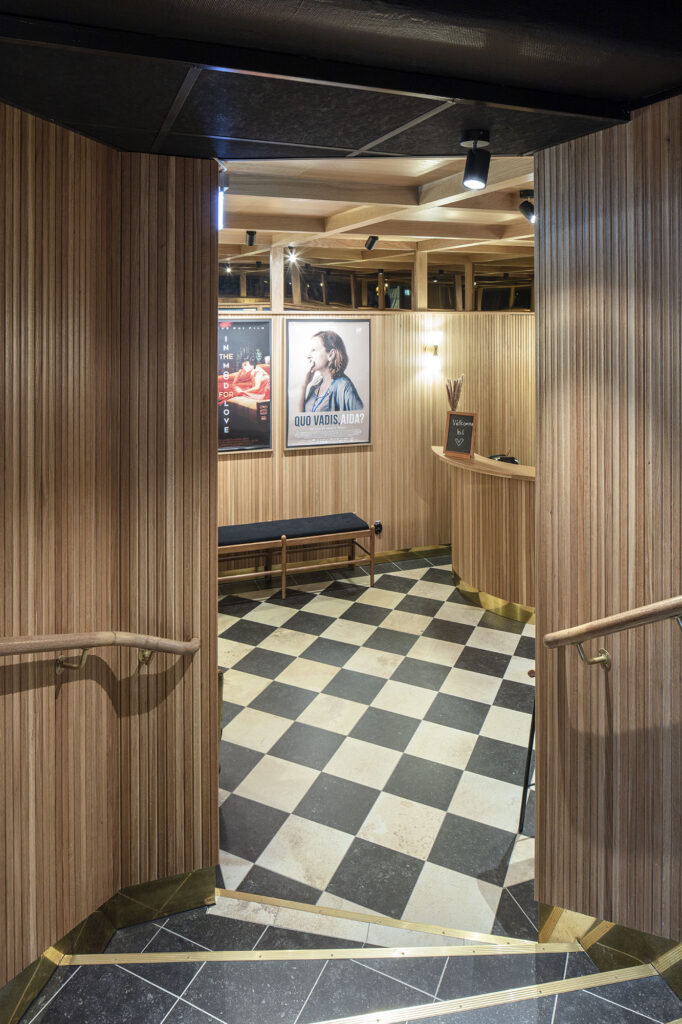
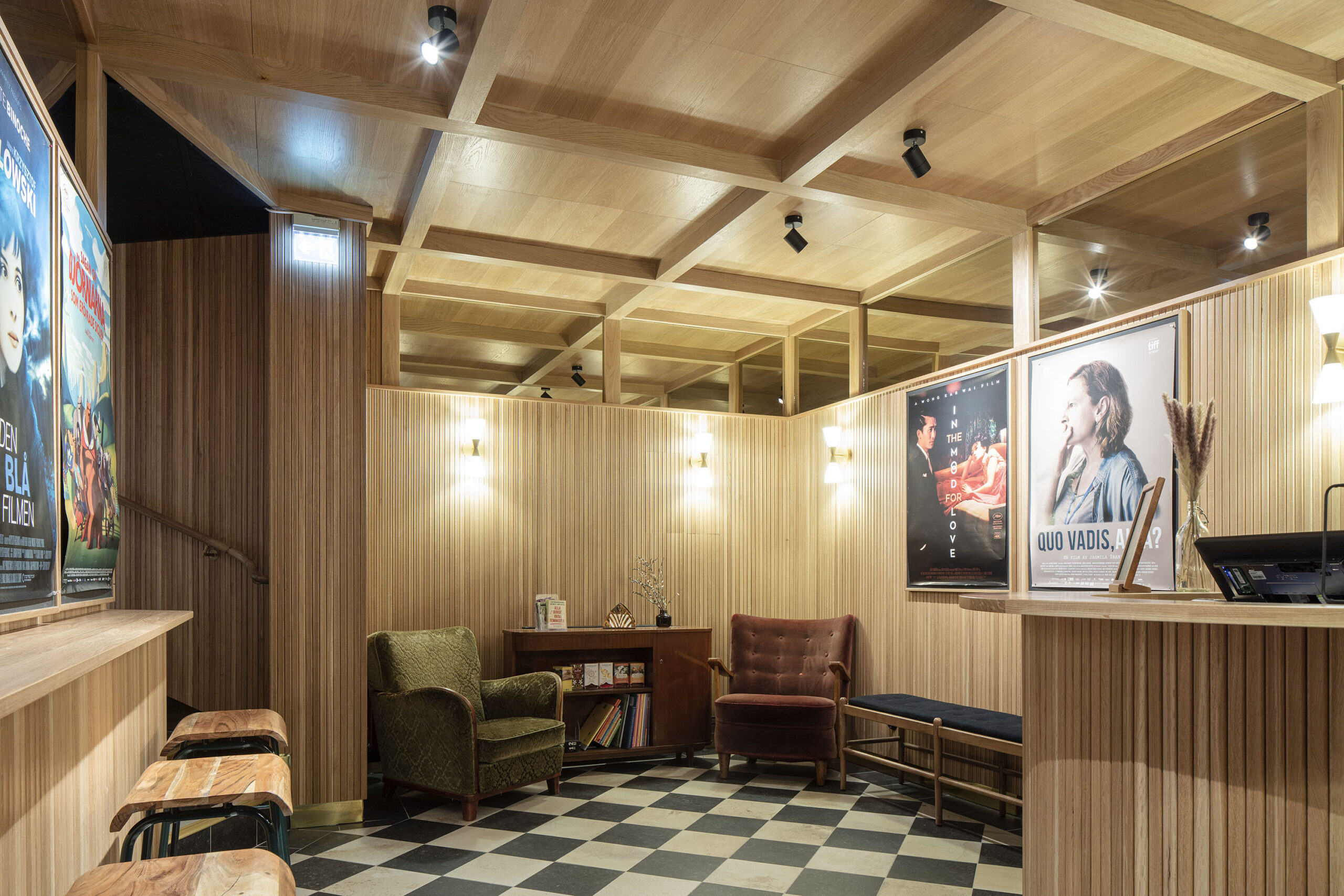
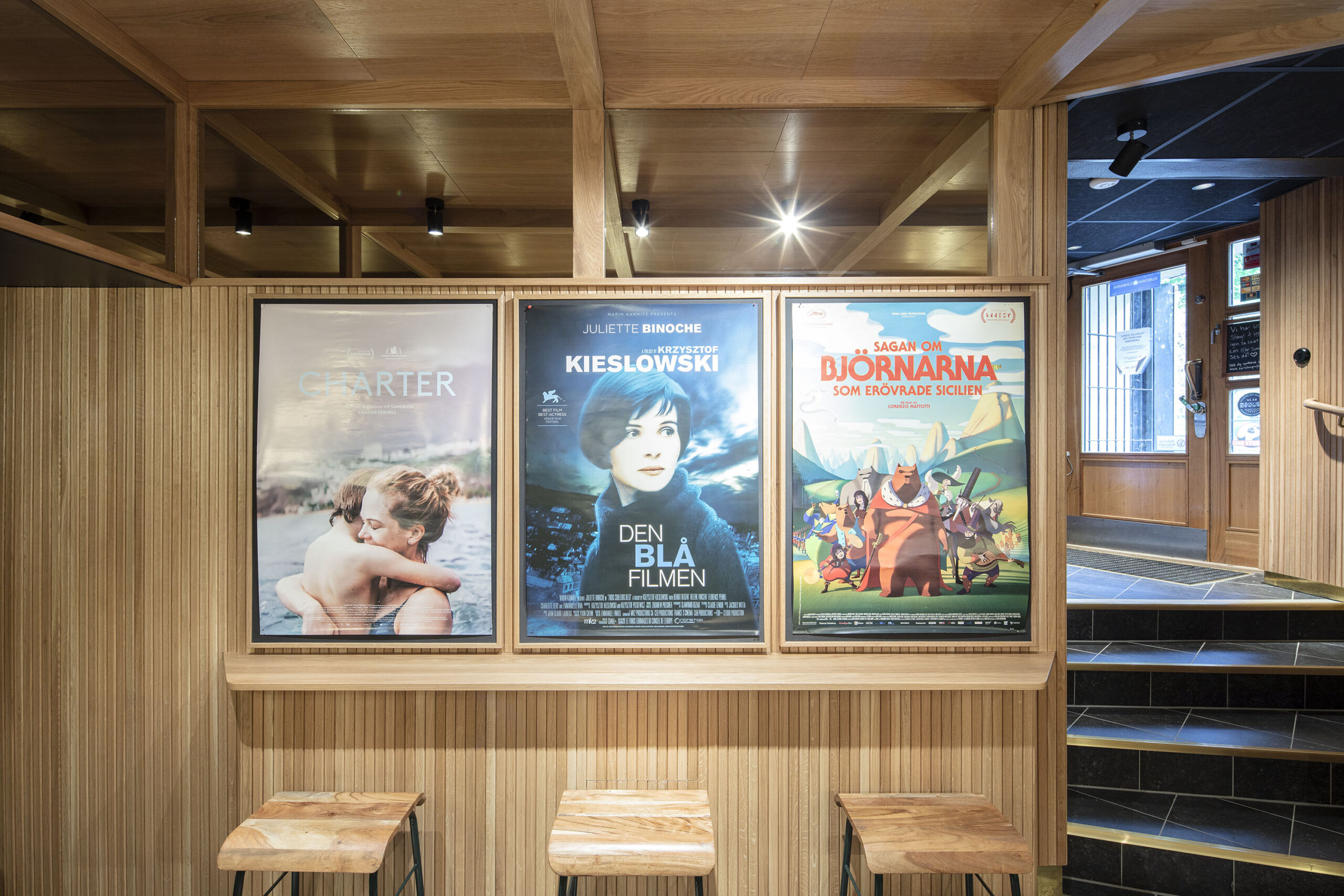
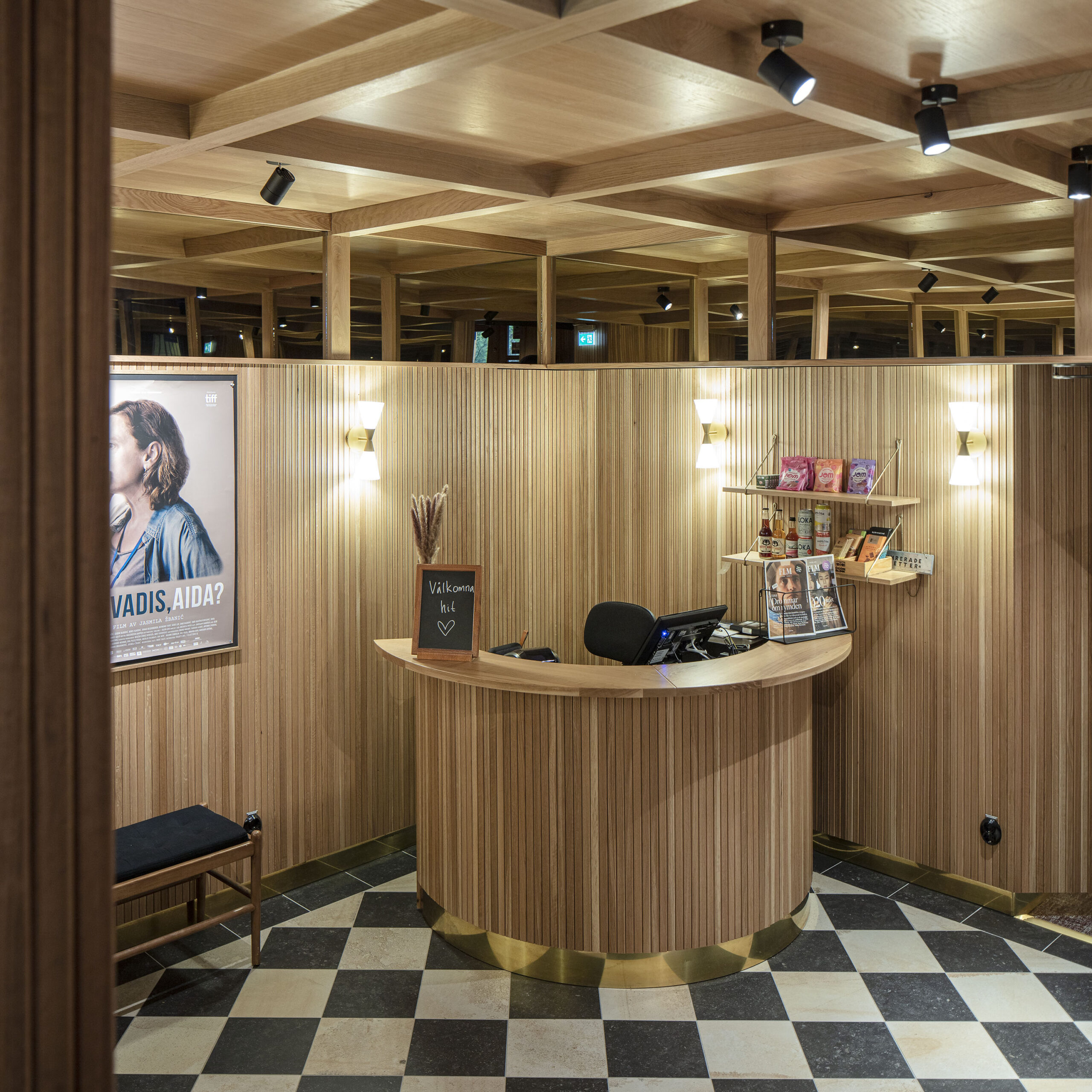
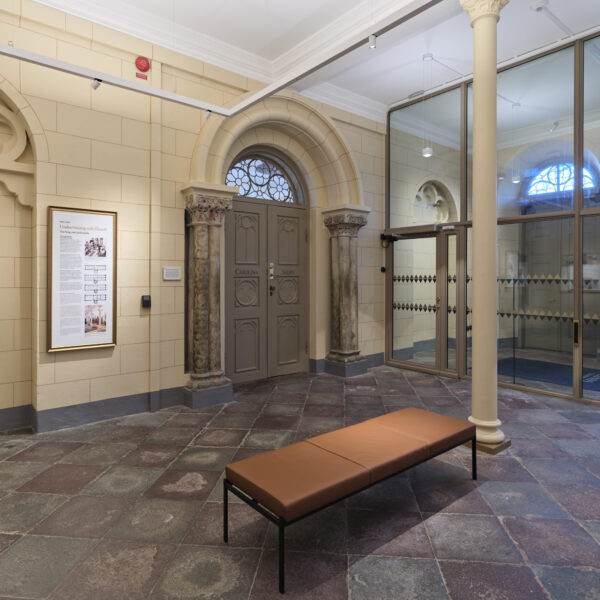
Do you remember when you didn’t want to miss the commercials at the cinema? Neither do we – until we stepped into Fyrisbiografen in Uppsala. This cultural treasure, one of Sweden’s oldest and most charming cinemas, was in need of an update. By cleverly reimagining the limited space, we recreated a cinematic environment now ready to once again become a palace of entertainment for the people of Uppsala.
Photo: Ojan, Wikimedia
Fyrisbion is one of Sweden’s oldest cinemas. With roots dating back to 1911, this classic cinema, located in the historic Skandalhuset building, has been an important part of Uppsala’s cultural life for over a century – a timeless symbol for film and culture enthusiasts alike.
Creative play with space
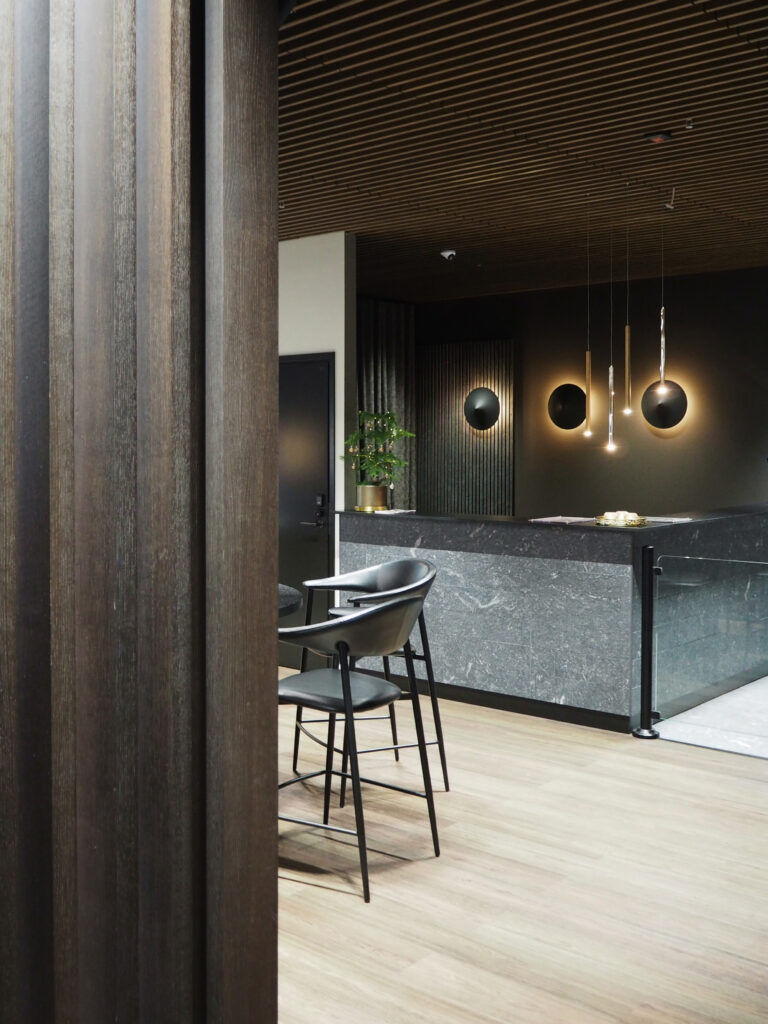
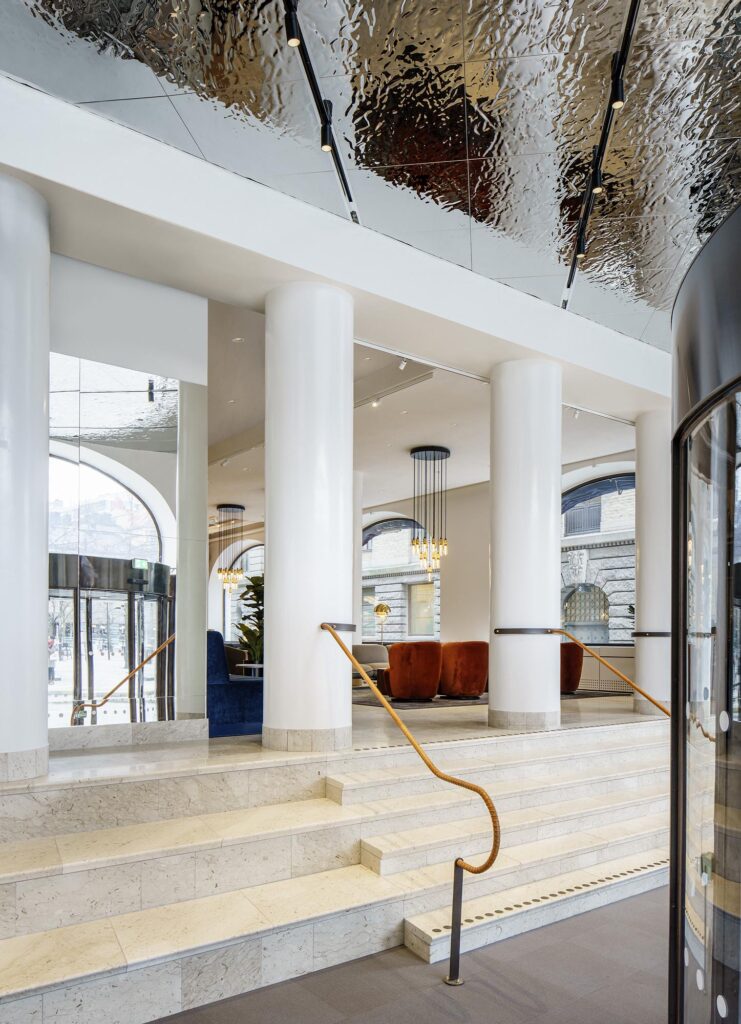
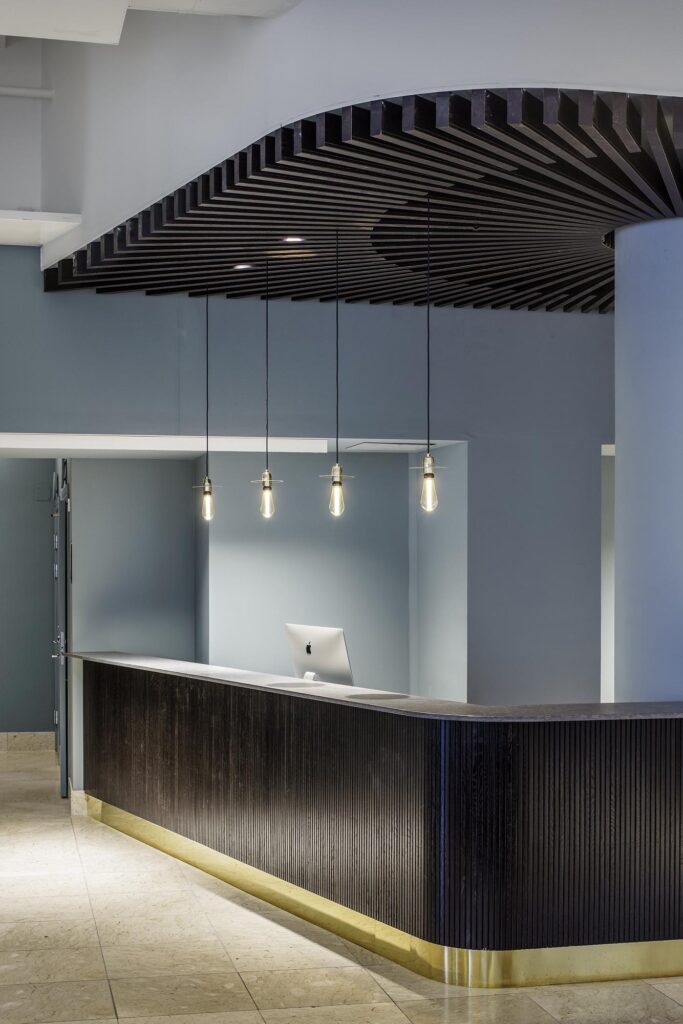
Despite its modest size, we managed to transform Fyrisbion into an inviting and functional meeting place – especially in the small foyer. By installing mirrors in the ceiling angle, visitors are given an illusion of space and light, creating the sense of a larger, more open room. Materials such as oak, stone, and brass were carefully selected to combine durability with timeless aesthetics. The classic paneling is a nostalgic nod to the era when cinemas were true palaces of entertainment.
Accessible film enjoyment
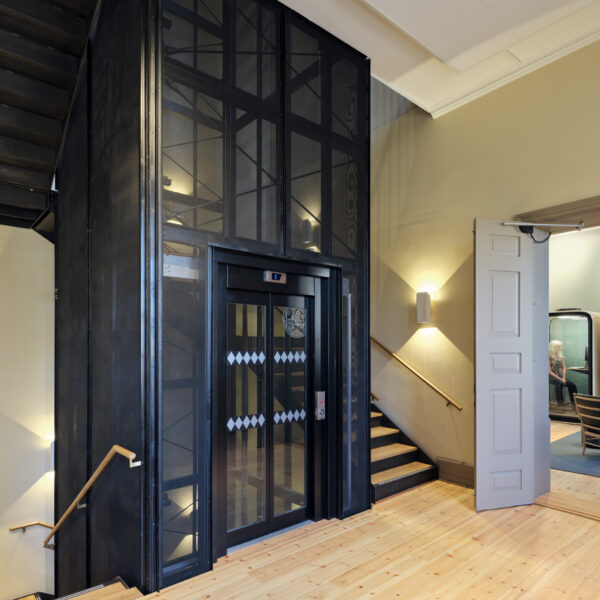
A central part of the renovation was making the cinema more accessible to all visitors. New restrooms and connections to the lift now allow wheelchair users to easily enjoy everything Fyrisbion has to offer. The working environment for staff has also improved through the addition of a new office and kitchenette.
The classic paneling is a nostalgic nod to the era when cinemas were true palaces of entertainment.
From Plengiér’s vision to a modern cultural hub
In 1911, cinema pioneer Hugo Plengiér founded Fyrisbion – a central figure in Uppsala’s early cultural scene. In the 1930s, David Annell took over, shaping the cinema’s profile by screening European films of high artistic quality – a repertoire that stood apart from the larger cinemas. Today, Fyrisbion is run by the non-profit association Föreningen Fyrisbiografen, a member of Folkets Bio. Thanks to dedicated members and volunteers, this venerable cinema continues to offer the people of Uppsala a place for film and cultural experiences.
The renovation of Fyrisbion was about more than preserving the past. We also wanted to create a modern and accessible environment for the film lovers of the future. With respect for history and an eye on what’s to come, Fyrisbion can now continue to shine – as a center for film art and culture in the heart of Uppsala.
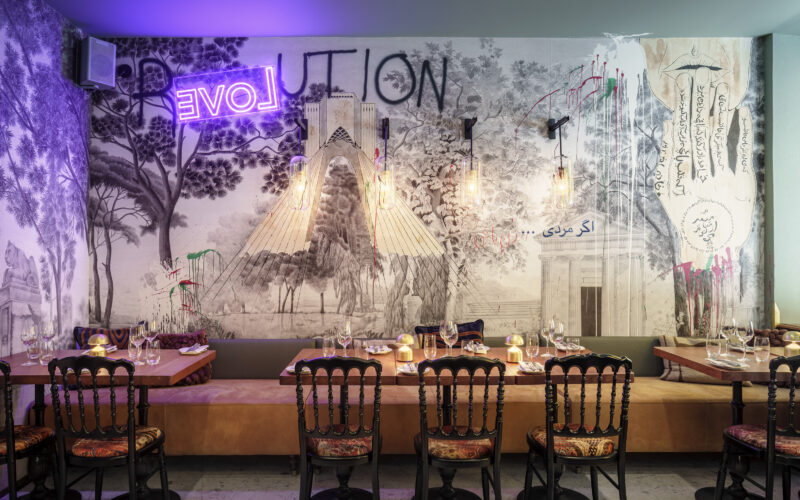
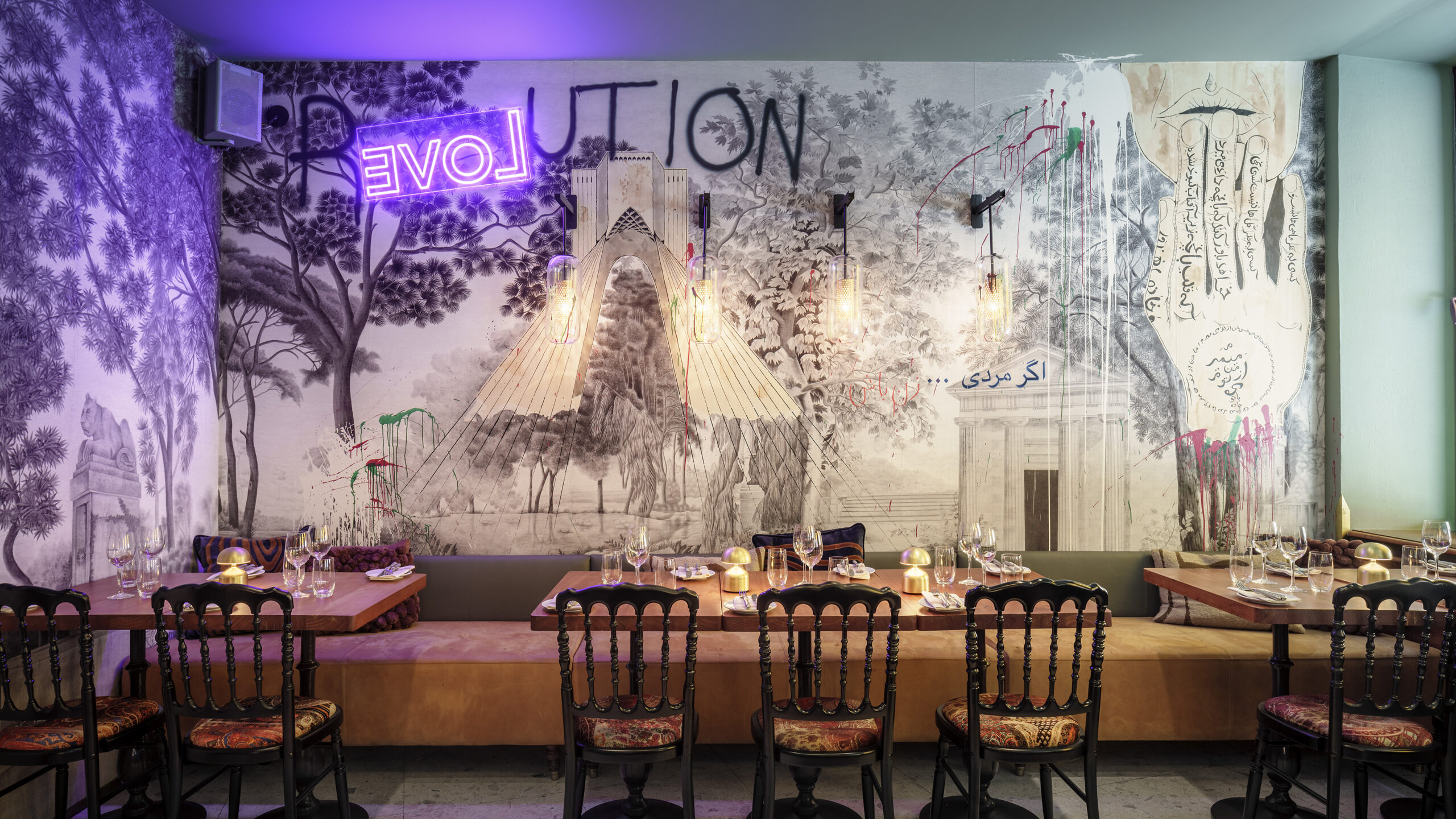
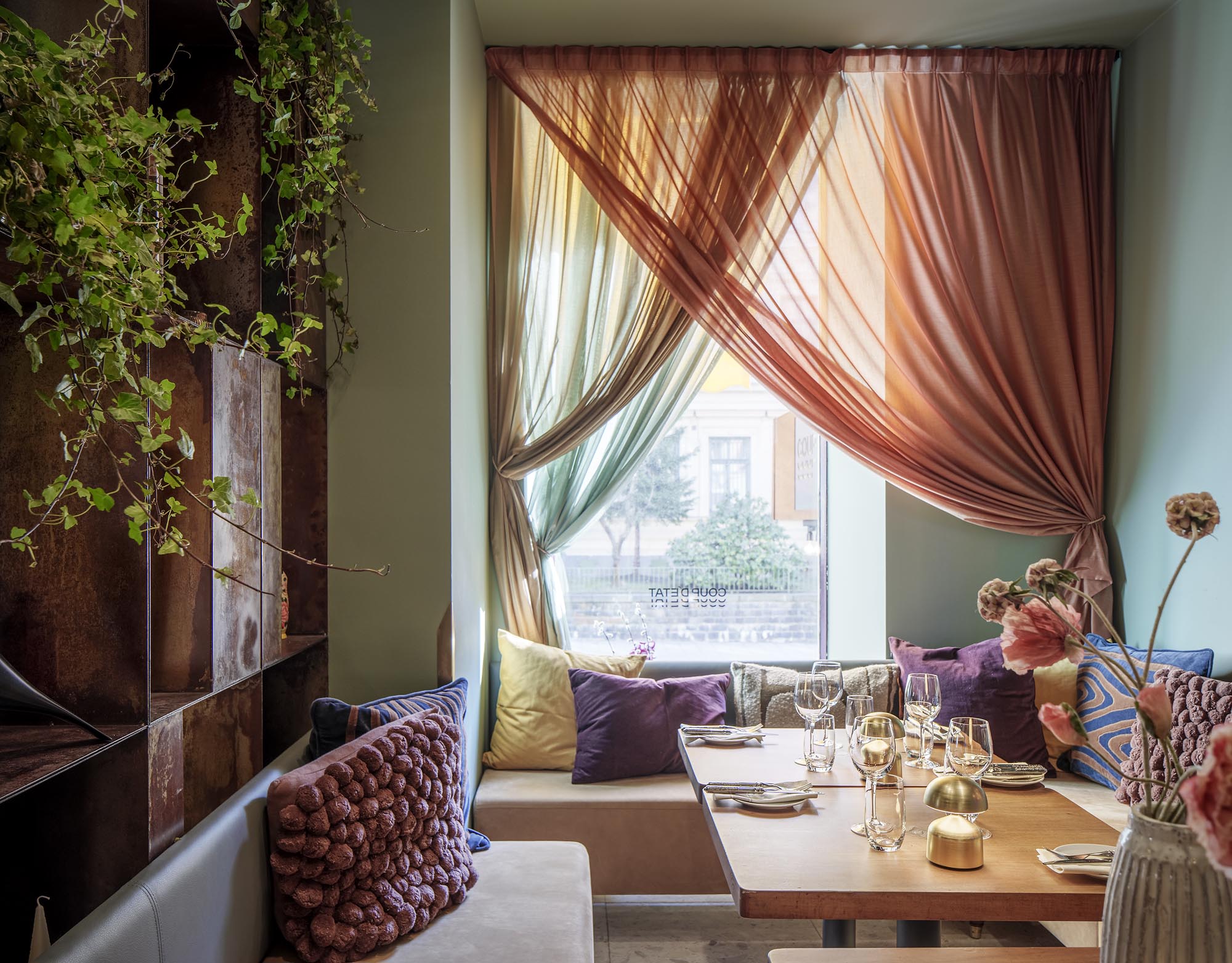
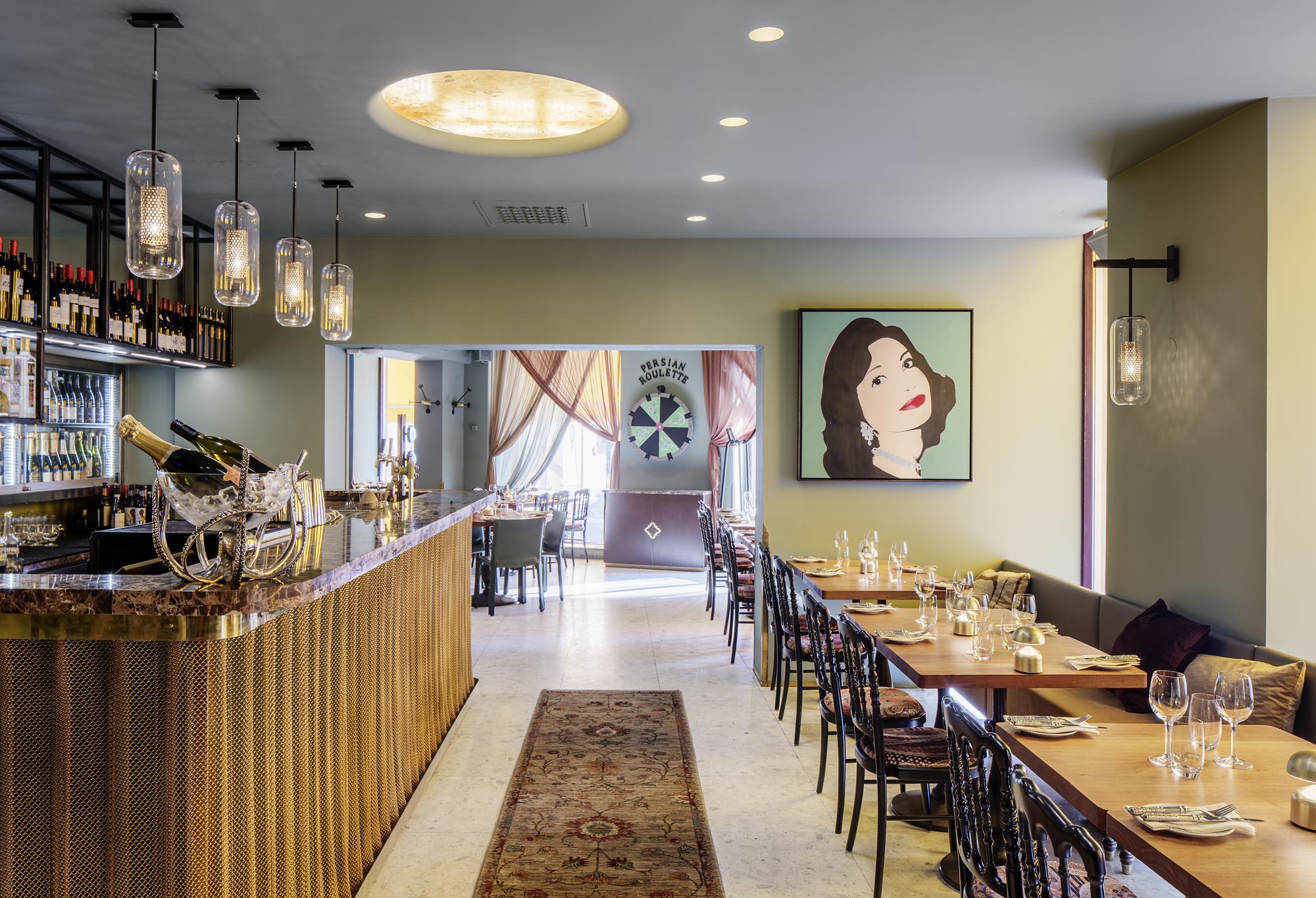
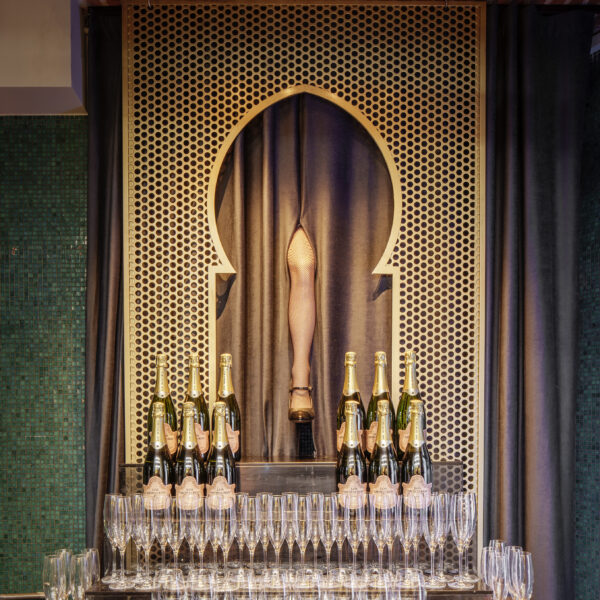
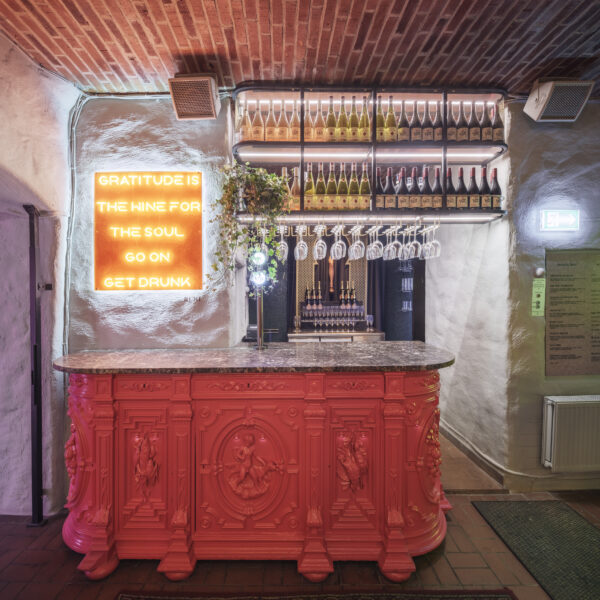
At the Persian restaurant Coup d’état, raw and refined elements were fused for a peaceful coup. In both interiors and cuisine. In a creative collaboration with restaurateurs, artists, and graffiti artists, Tengbom designed the interior.
Food was the starting point when Tengbom crafted the interior for the new Persian restaurant Coup d’état in Östermalm, Stockholm. Just as classic saffron rice, lamb, and aubergine purée meet modern oysters with sorbet and an extensive cocktail list, the interior reflects the loving palace coup. Persian green meets neon and street art.
Learn Farsi in an unexpected setting
An intercontinental mix
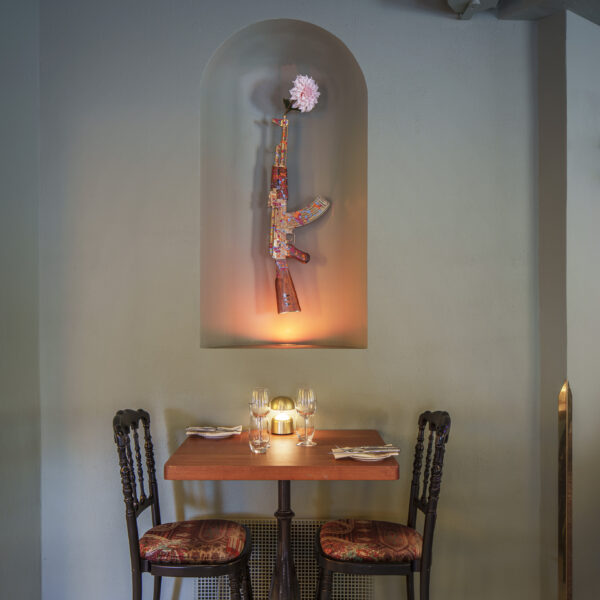
Persian cuisine with French and Scandinavian influences is on the menu at Coup d’état – French for “state coup.” The nations referenced in the kitchen are echoed in Tengbom’s interior concept. This is a restaurant that aims to shake things up, even if the weapons on the walls have had flowers tucked into their barrels.
“To carry out a palace coup by elevating Persian cuisine was something I appreciated,” writes star restaurateur Erik Videgård, who developed the menu. “I want to evolve modern Persian cuisine into something new, something luxurious, something everyone can relate to.”
Creative (artistic) collaboration with Coup d’état
The restaurant spans two floors. A dinner club at street level, and in the basement, a bar and a cinema showing black-and-white Iranian films from before the revolution. In the restroom, a looped language course in Farsi plays, adding an unexpected layer to the experience.
“We created the interiors through a creative collaboration between us as architects and the restaurateurs. Two of whom are artists themselves,” says project lead architect and design director Katya Högberg from Tengbom.
“We commissioned a graffiti artist with a strong identity, resulting in an interior that’s quite raw yet elegant.”
Katya Högberg
The space previously housed a Lebanese restaurant, which made it possible to reuse some of the existing chairs and tables. The team also rebuilt and repurposed the bars to suit the new concept. As a bonus, the kitchen and logistical functions were already in place, allowing the new operations to get off to a smooth start.
Among others, partners and artists involved in the project included Jacob Erixon, Ali S, and Arman Sultani.
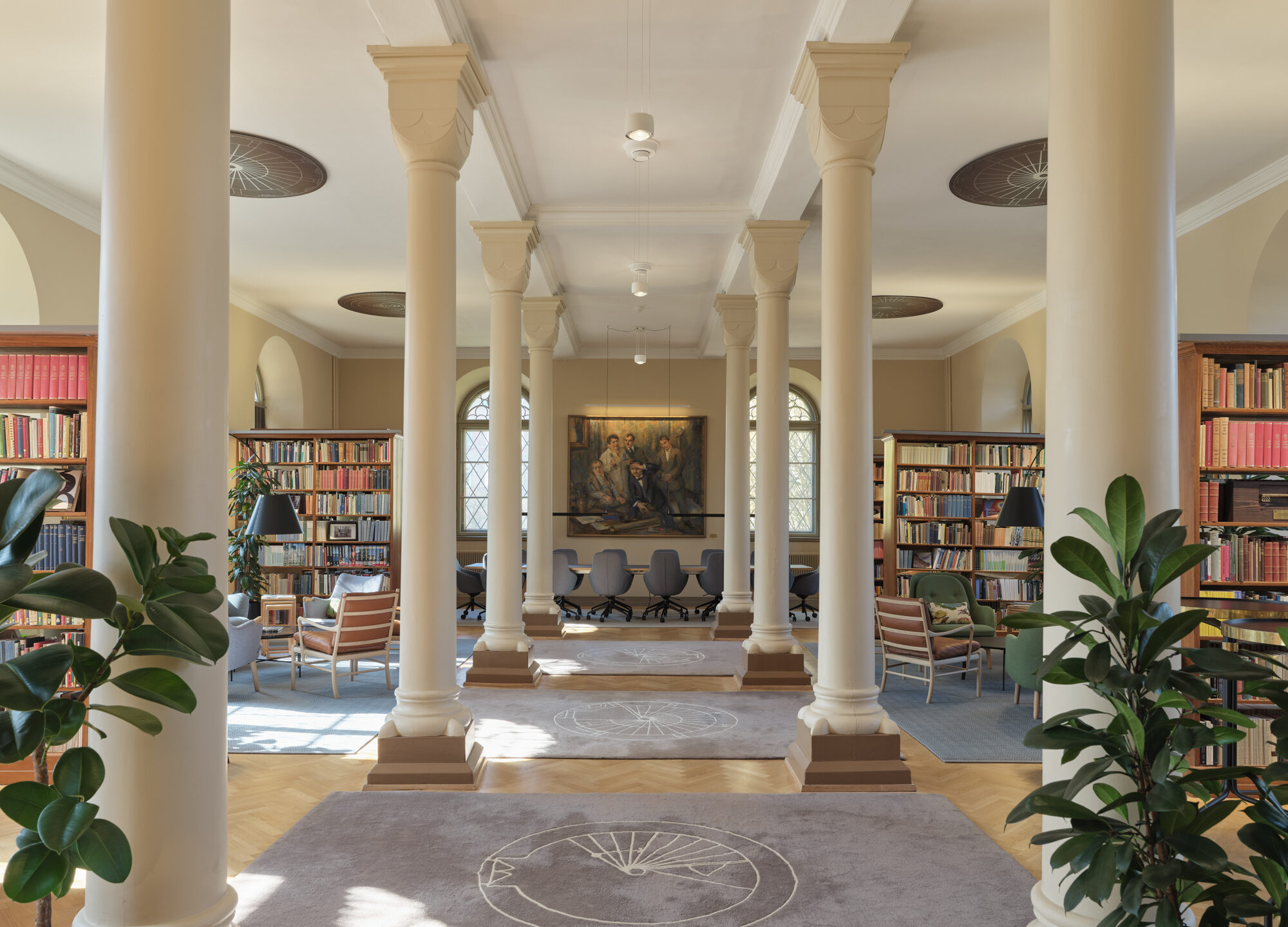
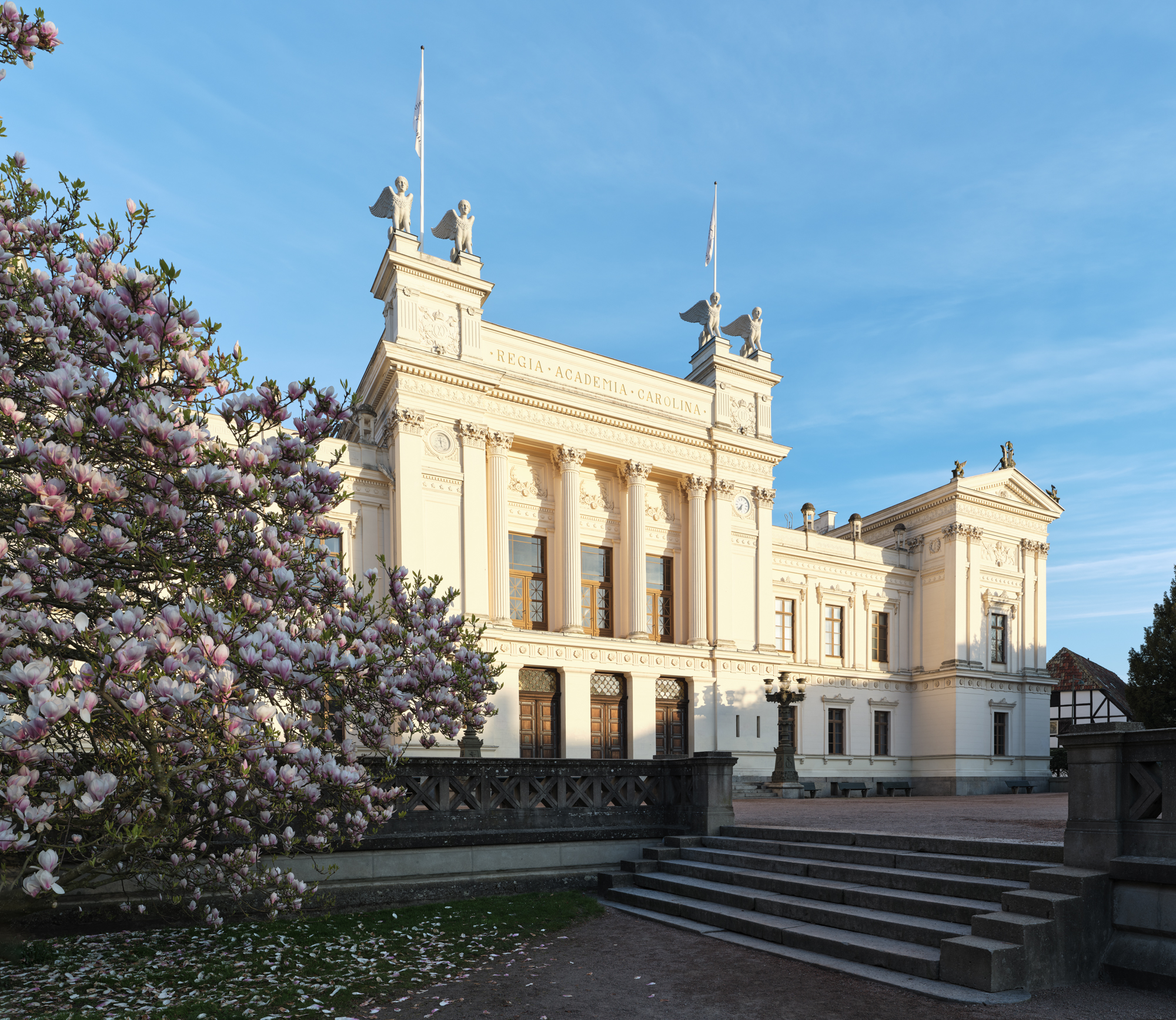
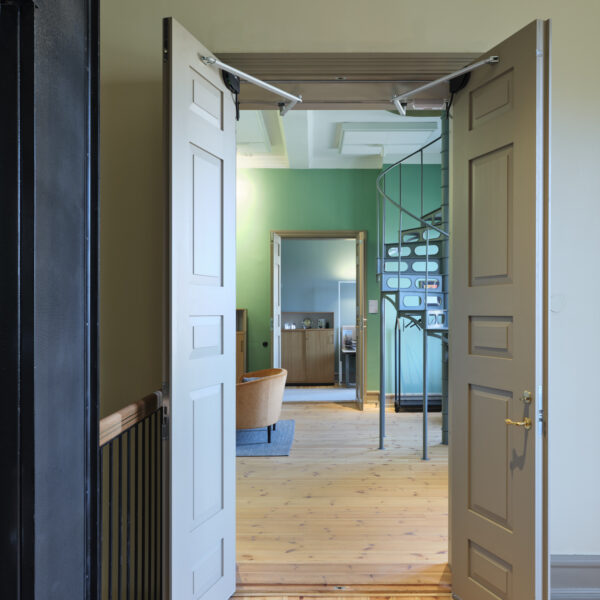
The walls echo thick with history in one of Lund’s most iconic buildings, erected in 1580 as a county residence. Today, Kungshuset serves as a functional workplace for the management of Lund University. For us, this meant a renovation characterized by precision and sensitivity – with interiors inspired by the building’s persona.
Just over a hundred years after its construction (1580), Kungshuset became the academic main building for Lund University. Since then, the house has undergone numerous transformations. As general consultant for the National Property Board of Sweden, with Lund University as tenant, we had the opportunity to add another 300 years of use.
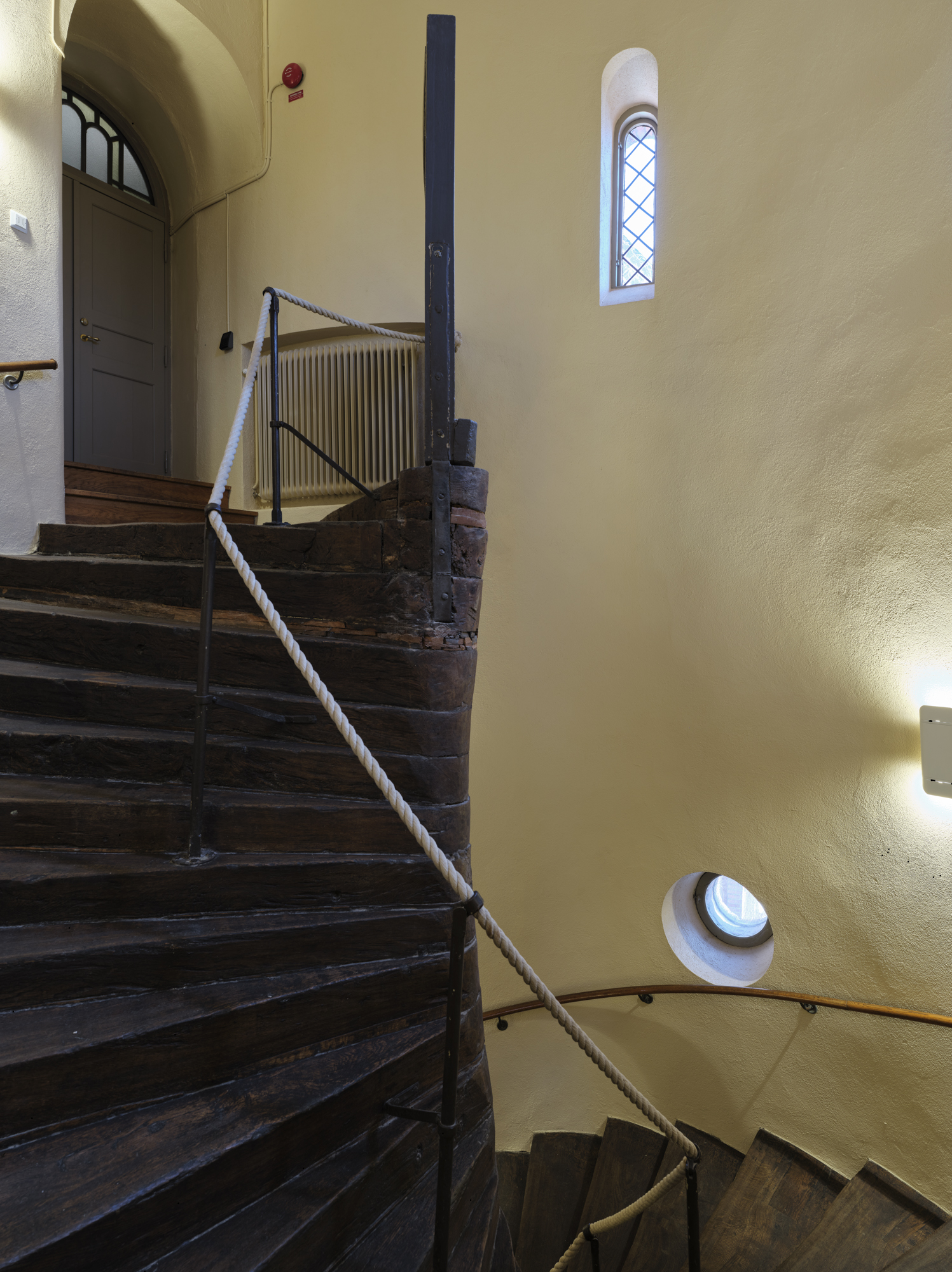
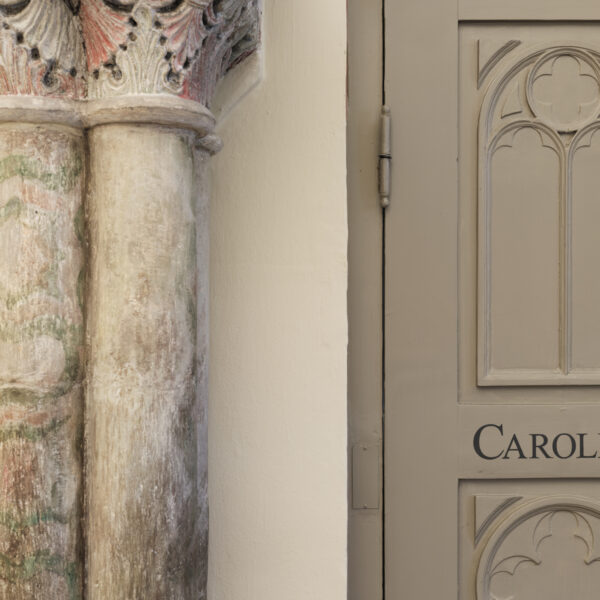
With traces from the 11th century
It would be untrue to say this was a small challenge. Requirements for accessibility, installations, and fire safety had to be met, while preserving the layout, materials, and cultural-historical values. By gathering all our specialists, we created solutions that endure over time while respecting the site’s history.
“Working with a building that carries so much of Lund’s and the university’s history requires humility. We removed later additions and highlighted what is truly unique, while carefully weighing each new intervention,” says Maria von Porat, Lead Architect.
During the renovation, remains of 11th-century buildings were discovered beneath the floor level. These findings serve as reminders of the site’s deep historical significance, making the demands for care even clearer.
A building for the 21st century
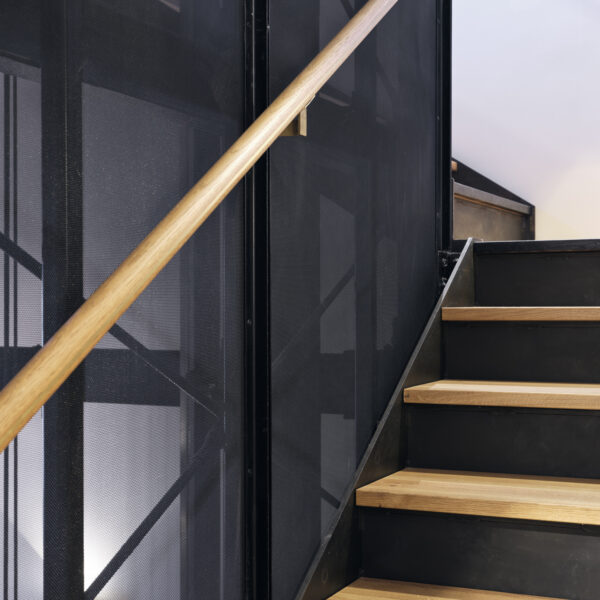
To avoid major interventions in other parts of the building, we placed the new staircase with elevator, restrooms, and main installation shaft at the core of the structure. Adjacent to it, we transformed a former window opening into a new, accessible main entrance. At the same time, we made a series of smaller but important decisions, from material choices to detailing – solutions that carefully and beautifully bridge old and new.
Home to the university leadership
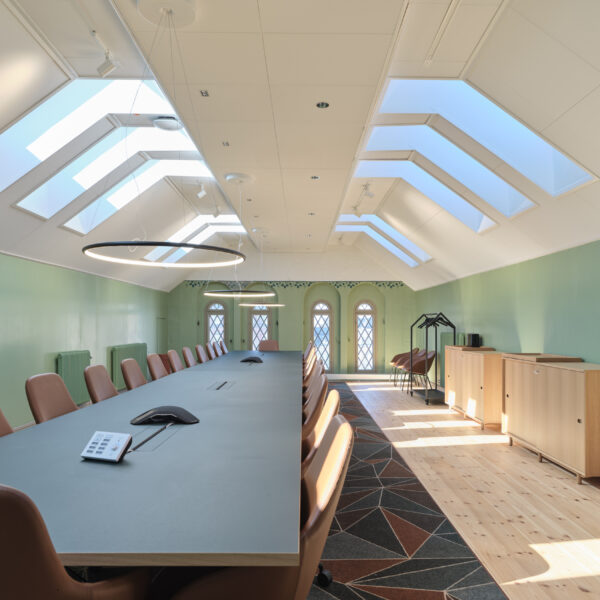
In close collaboration with the university leadership, the interior design developed with solutions that resonate deeply with the building’s character and history. At the same time, they embody modernity, sustainability, and comfort in a work environment – balancing functionality and aesthetics.
Today, the whole – building and interior – reflects the building’s new role as offices for the university’s leadership. It is a representative, professional, and welcoming workplace where color, light, and furniture complement each other.
“The university leadership was highly engaged. We held trial sittings and discussions on both color and form, and the vision for a representative, beautiful, and functional office was clear. For us at Tengbom, this was an incredibly rewarding collaboration”.
Anna Allard Brorsson, Lead Interior Architect at Tengbom
Colors with a past
The color scheme of both walls and woodwork is firmly rooted in the historical palette once present in the house. Furniture was carefully selected with attention to detail, materiality, and sustainability – Scandinavian design with substance. Together with the Skissernas Museum, we then selected artwork that ties the interiors to the building’s academic aura.
“We wanted to create a calm and harmonious environment that also feels relevant and contemporary. The acoustics, colors, and furniture truly make it feel like a home for the leadership. And we’ve heard the same from those who work here, which is really gratifying,” continues Anna.
History demands humility
Today, Kungshuset once again pulses with activity. And just as in the past, the university uses the building for representation, meetings, and dialogue. Everyday work unfolds in the open-plan offices, private rooms, and social spaces. Kungshuset is not open to the public, but its presence in Lundagård is proof enough that the site’s history continues to be written – now with yet another compelling chapter in its book.
How do you transform a monofunctional headquarters from the techy 80s into a modern workplace? In Helsinki, we’ve gradually highlighted the qualities of this culturally classified building, adapted it to new needs, and let its history play along with the future. Tietokuja 2 has now come back to life.
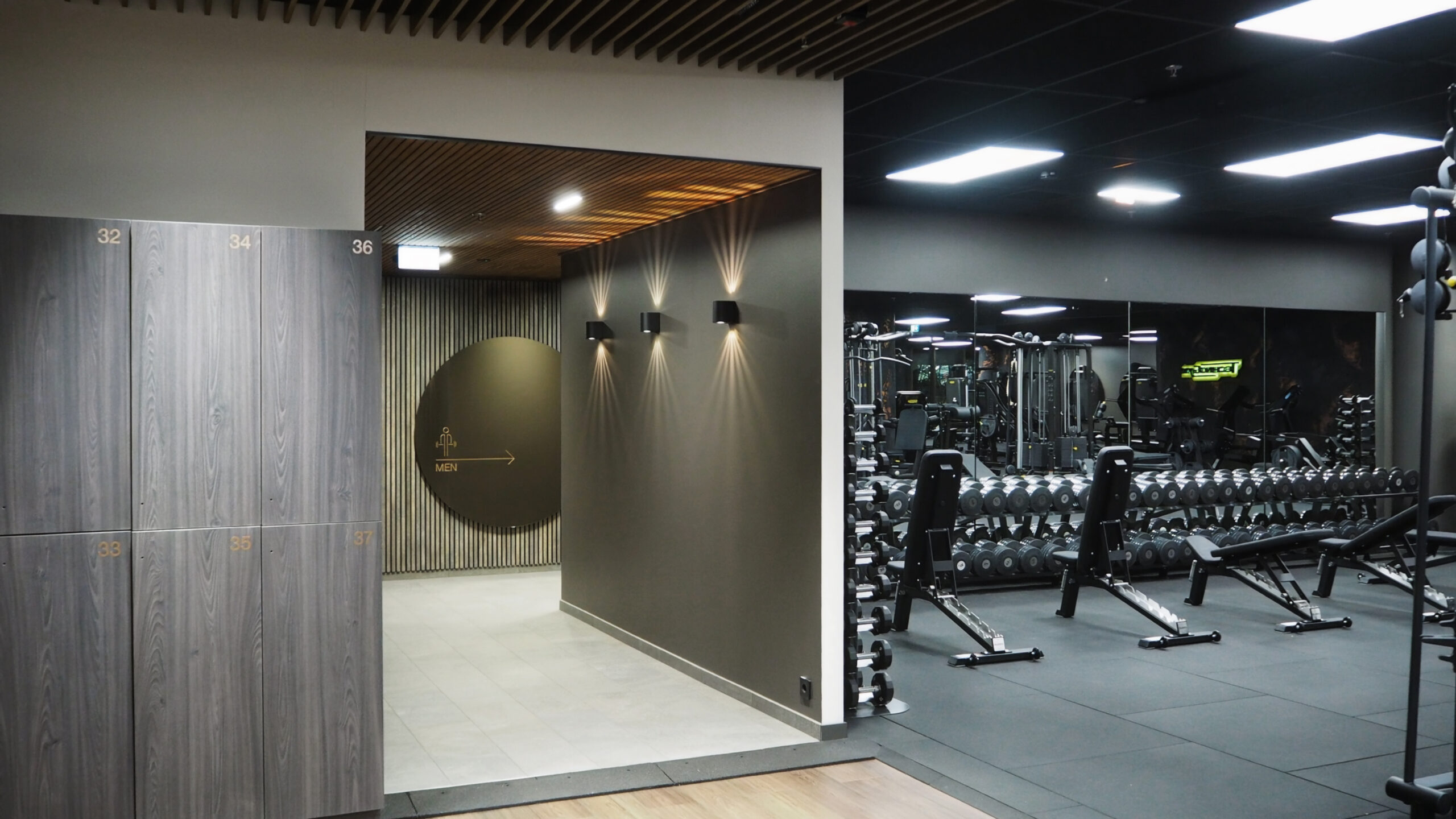
The office building, completed in the early 1980s, was designed by Osmo Lappo and has been owned by IBM.
The office building was designed by architect Osmo Lappo and opened in the early 1980s as IBM’s Finnish headquarters. With its 36,000 m², it was a giant of its time – but eventually, one that became too large for a single company. During the 2010s, parts of the property were rented out, and eventually, it was time for more substantial changes. Tengbom has worked with the property since 2012.
“A characteristic waffle slab roof in concrete, typical of Lappo’s constructivist design language.”
The first phase of the renovation of the office building at Tietokuja 2 in Munkkiniemi, Helsinki, included the main entrance, lobby, and restaurant
An upgraded lobby with respect for the original
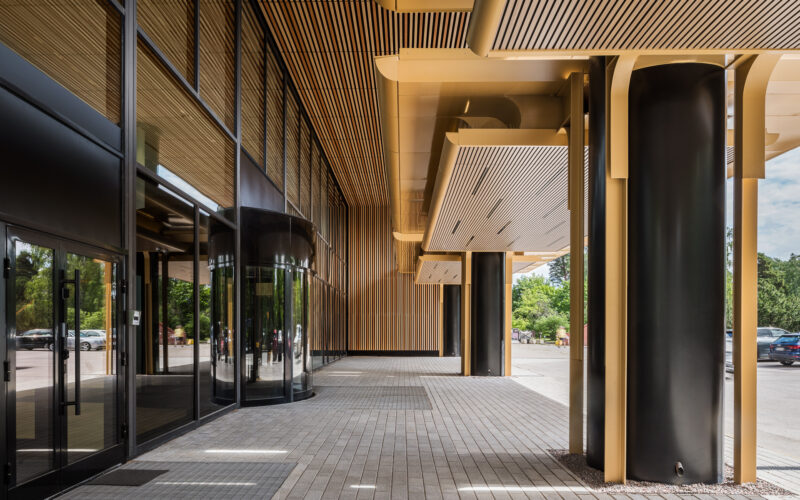
The main entrance has received a new design with a wider staircase and a new roof – elements that make the space more welcoming and intuitive. The staircase now serves as a natural guide to the meeting rooms on the upper floor.
Otherwise, the lobby has been carefully modernized. Only minor structural interventions were needed, while surfaces, furnishings, and lighting have been updated. Beneath the new floors, the original tiling remains.
Waffle ceiling in a new color
During the renovation of the restaurant, we discovered a hidden design element: a characteristic waffle ceiling in concrete, typical of Lappo’s constructivist style. We chose to make it visible and painted it orange – a color that emphasizes the detail’s unique character.
The design team reintegrated the ceiling into the restaurant environment to give the room a strong identity. They used the same ceiling in the bicycle parking area, pairing it with social functions such as bike service and changing rooms.
A building in constant development
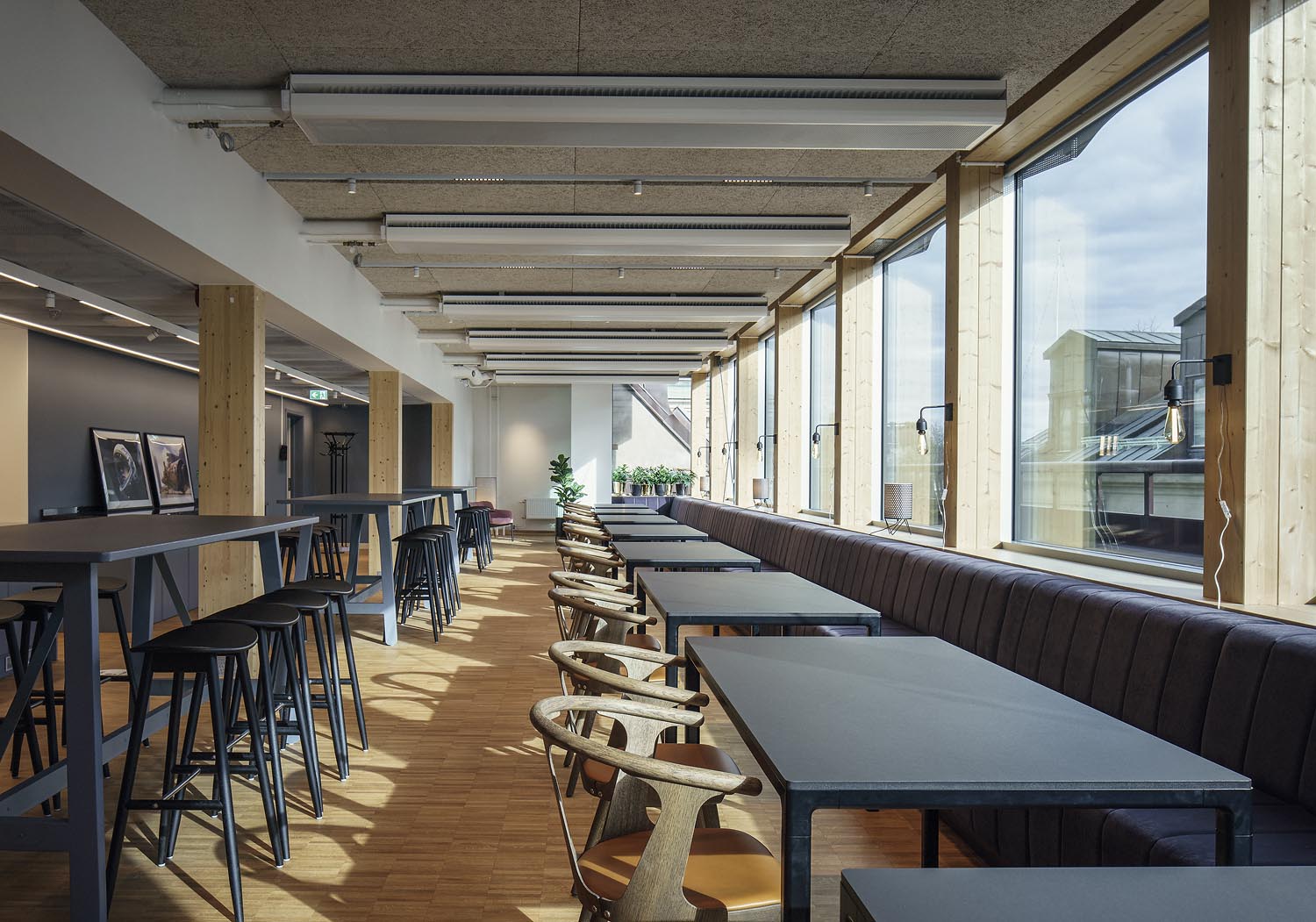
In addition to the restaurant and meeting areas, we’ve designed a new commercial gym (Ole.Fit Munkka gym), improved staff facilities – and ensured that the functions support a smoother everyday life and a more attractive work environment.
— At the same time, the new zoning plan has protected the building with an SR-3 classification. This means we preserve the historical values while bringing the building into the future, says Petrus Laaksonen, lead architect.
And the development continues: a veterinary clinic has already opened, and work is underway to transform other parts of the building into a hospital, a care facility for people with dementia, and an upper secondary school. We follow the transformation of Tietokuja 2 with curiosity.
Facts about Tietokuja 2
Architect: Osmo Lappo
Construction years: 1980–1987 (in two phases)
Origin: IBM’s Finnish headquarters
Protection status: SR-3 (zoning plan 2024)
Previous uses: Temporary schools and preschool
Ongoing transformation: From office to community property with high school, care home, and hospital
First renovation phase completed in 2024 (approx. 6,000 m²): entrance, lobby, restaurant, gym, bicycle parking. Focus on preservation and reuse
Upcoming phase: Facade renovation and new functions on the office floors
Area:
Area: 21,000 sqm (12,000 sqm new construction and 9,000 sqm renovation)
Collaborators:
Bröderna Perssons Specialsnickeri
Certification:
Miljöbyggnad Guld
Photografer:
Mads Frederik
At Forum Medicum, Lund University’s Faculty of Medicine has gathered its education and research in medicine, health and care into one shared space. Situated right next to the university hospital, this is the first time Lund University has a unified home for its health sciences and biomedical programs.
Through a combination of new construction and careful renovation, 21,000 square meters have been filled with state-of-the-art classrooms, offices, study zones and social areas. It’s a place for 170 research groups, 1,600 employees and 2,000 students – a dynamic environment where knowledge and ideas are exchanged every day.
Spaces for different minds
The power of choice makes a difference.
“The students were clear – they wanted plenty of varied places to study. And that’s what they got. There are large tables for groups. There are also quiet nooks for solo work. Some study areas are located in the lively foyer. Others are tucked away in secluded corners to retreat to. It’s a great feeling to visit and see how the students use the space. They come here both to study and to socialize,” says Elin Alm, Lead Interior Architect.
An interior that lasts – for the eye, the body and the future
Forum Medicum is home to a broad mix of rooms and functions. These range from high-tech ALC classrooms (Active Learning Classrooms) to method rooms where students practice in realistic hospital environments. To connect it all, we developed a cohesive and sustainable interior concept that unites materials and colours throughout the building. The continuity in furniture and finishes makes it easier to adapt spaces over time – and extends the life of the furniture.
“The style is consistent across the building. We didn’t want it to be a big deal if a chair ended up in the wrong room at the end of the day. With so many students on the move, it will happen. So instead, we made sure that the materials and colours go well together – without everything looking the same,” Elin explains.
The scale of the project is worth mentioning: 8,700 pieces of furniture. Thanks to digital tools, we were able to organize procurement, layouts and adjustments along the way. As a result, we kept the process on track.
Custom interiors for a specialized environment
When research and education share the same spaces, smart solutions are essential. At Forum Medicum, we worked with pine plywood – a material that recurs throughout the building, creating warmth and a sense of unity. We chose linoleum for the tabletops to add both durabily and tactility. Custom-designed AV stands for screens and whiteboards are built into the architecture, solving technical challenges while adding character.
Art as part of the architecture
Here, art is integrated into the environment. Three monumental wall pieces by artist Ylva Snöfrid stretch through the building, created in collaboration with Public Art Agency Sweden. The colour palette, materials and furniture were all selected to highlight both the art and the architecture. Together, they form an environment that feels considered, vibrant and inspiring.
Forum Medicum is certified at the highest level of Sweden’s Miljöbyggnad sustainability standard – Gold. It’s one of Lund University’s largest joint investments with Akademiska Hus. A project that brings students and researchers together, and sets a new standard for flexible, sustainable learning environments.
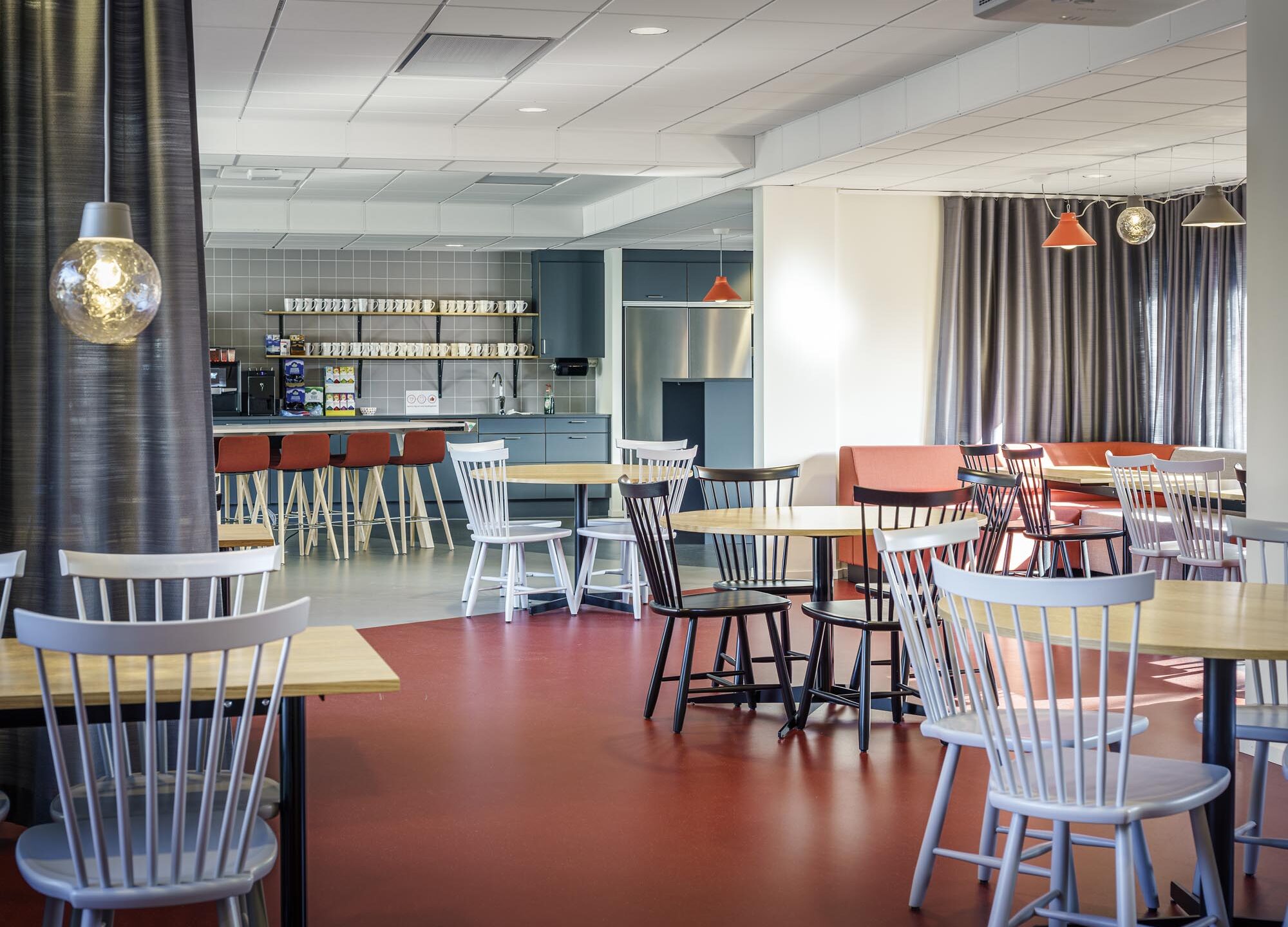
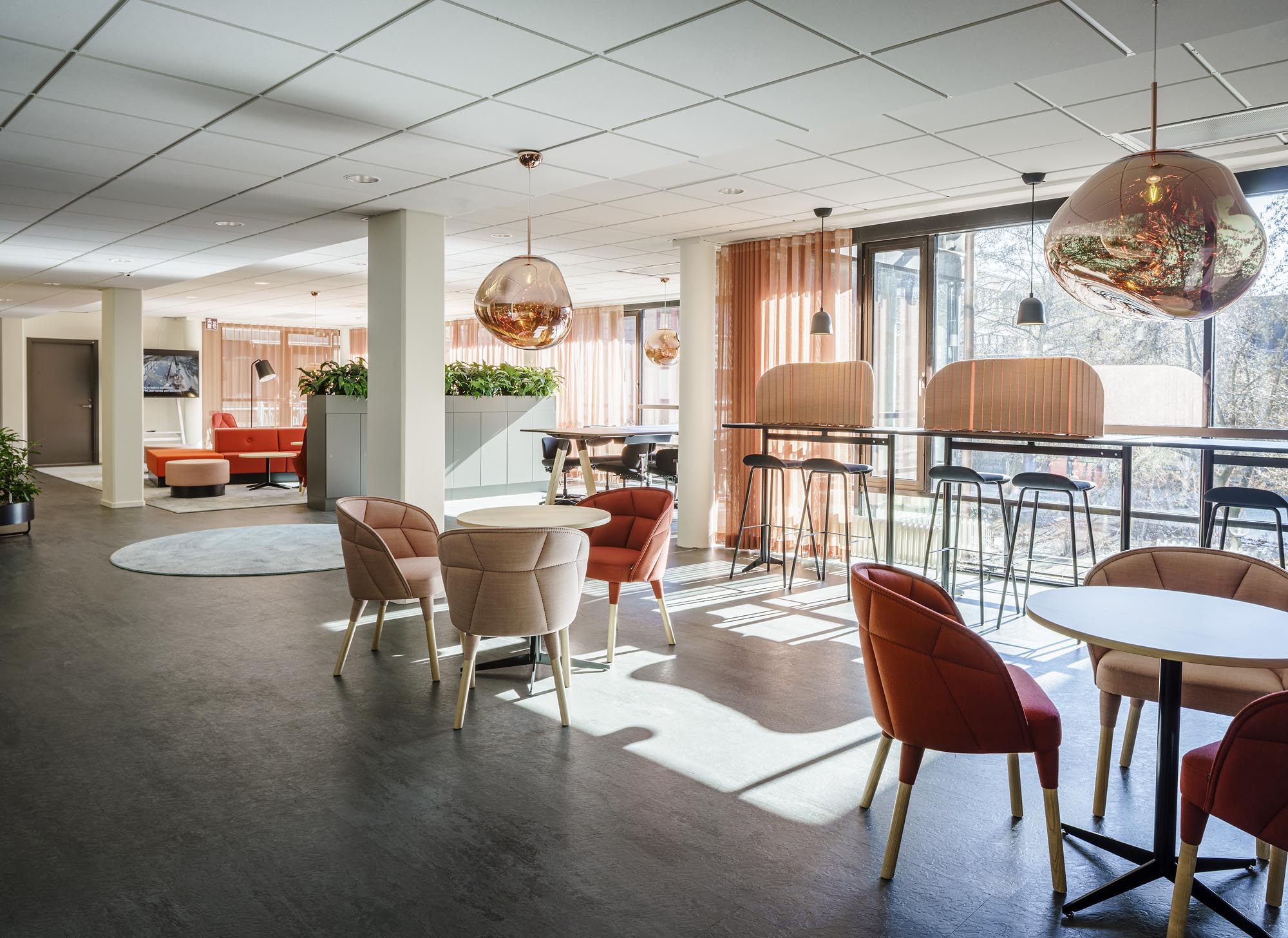
In the award-winning courthouse next to the railway tracks in Lund, Tengbom was entrusted with designing the interiors. The result is a series of harmonious, functional spaces where materials and colours draw inspiration from the four elements. Welcome to Lund District Court.
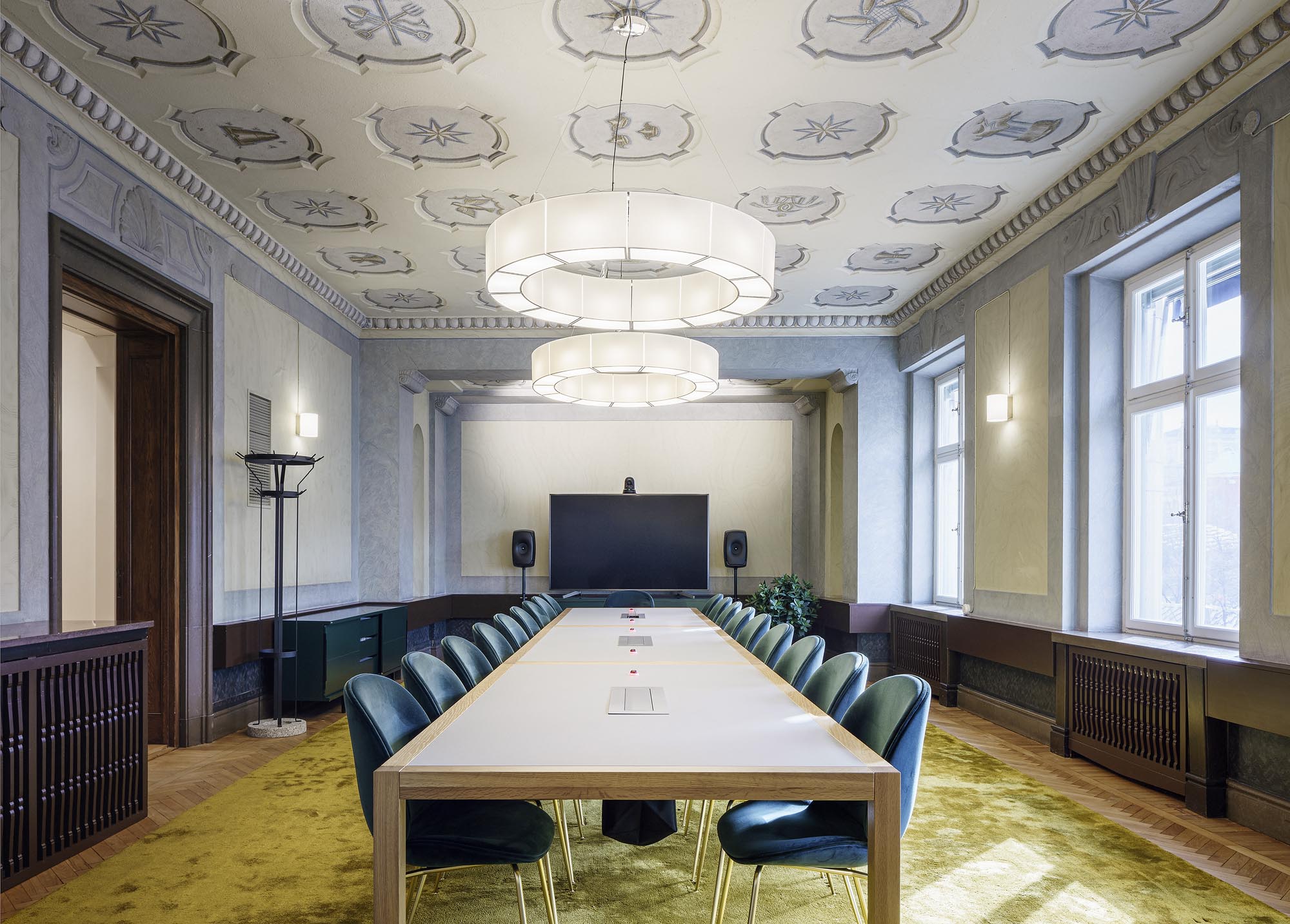
Commissioned by the Swedish National Courts Administration, Tengbom created an interior concept that balances calmness, dignity, and functionality. Courtrooms, offices, and meeting rooms feature a coordinated palette of materials and colours, reinforcing a sense of order and serenity.
The design manual, which ensures consistency across the building, builds on the courthouse’s distinctive materials, focusing on copper, brass, and ash wood. The team custom-designed many furnishings to meet the building’s unique security and functional requirements.
Earth, fire, water, and air
The colour scheme is inspired by the four elements, with deep, grounding tones bringing warmth and contrasting light materials creating a sense of openness. The use of ash wood and lustrous textiles enhances the interplay between these elements. Each office features a consistent base design of desks, storage, and seating, but varies in colour to introduce subtle differentiation. Meeting rooms have distinct colour themes, yet remain visually cohesive. In common areas such as the library, archives, and copy rooms, the palette shifts to more monochrome tones, with custom-designed furniture enhancing the refined atmosphere.
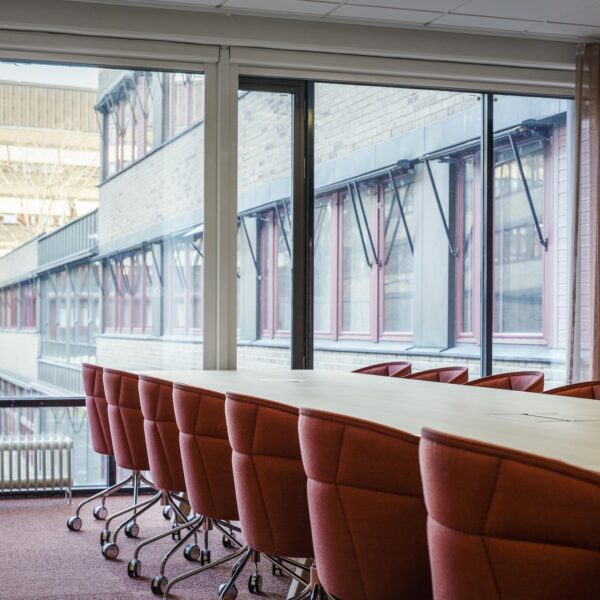
“The high-level meeting room, Knutsikten, is the building’s pride, offering a panoramic view. To highlight its unique shape, we designed a large, custom-made rug in contrasting colour blocks, creating a striking central element in the space,” says Elin Alm, interior architect at Tengbom.
Security meets well-being
Given the sensitive nature of court proceedings, the team prioritised security and discretion in every aspect of the interior. They carefully selected colours and materials to balance formality with comfort while maintaining a welcoming atmosphere.
“Textiles, soft lighting, and upholstered furniture create a more reassuring environment, particularly in rooms designed for protected witnesses,”
says Elin Alm
One of the courtrooms in Lund district court.
Blending advanced security with refined design
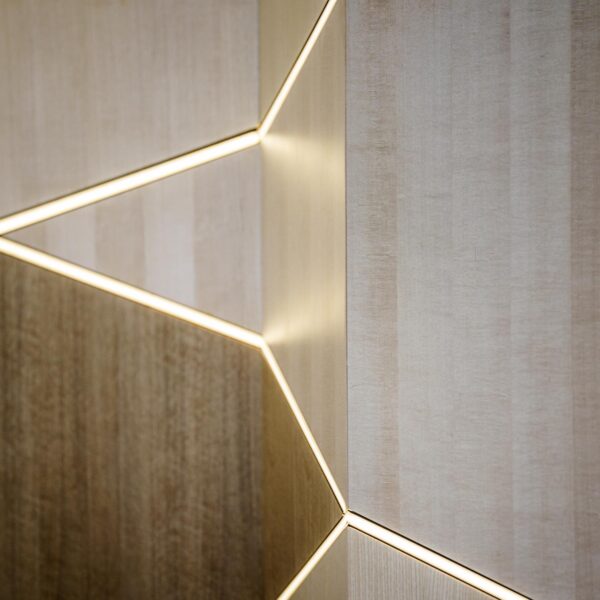
Detail of metal bands inserted in specially designed interior.
Lund District Court incorporates fixed furniture, concealed technical installations, and reinforced structures for security. The team carefully designed the courtroom interiors to integrate microphones, alarms, and security systems without disrupting the architectural aesthetic.
The custom horseshoe-shaped desks in the courtrooms hide state-of-the-art technology. They combine white-stained solid ash with thin metal inlays, reflecting the courthouse’s copper-clad façade.
“Despite the building’s scale, the coordinated colours, varied furnishings, and carefully chosen materials create a sense of cohesion and comfort. Staff and visitors notice it. They appreciate it, too,” concludes Elin Alm.
Project type:
Upper secondary school (Gymnasieskola)
A mix of natural sciences, technology, health, and entrepreneurship. A foundation for collaboration and innovation. A modern school and an inspiring workplace. That’s the essence of Widerströmska Upper Secondary School in Huddinge.
Just like the NEO and Technology and Health buildings, Widerströmska is part of the life science cluster that has taken shape in Campus Flemingsberg in recent years. Tengbom has been the lead architect for approximately 50,000 square metres here between 2012 and 2019.
The school, named after Karolina Widerström, Sweden’s first female medical doctor, now occupies one floor of the NEO building. Here, future researchers and entrepreneurs learn in close collaboration with the academic and healthcare institutions surrounding them.
Widerströmska upper secondary school’s entrance. Photo: Felix Gerlach
A life science hub for future innovators
Bright and inspiring classrooms
Inside, light, space, colour, and openness define the NEO building—and these qualities also shape the school’s interior. While the upper floors house cutting-edge research labs for Karolinska Institutet, the Widerströmska floor is designed to be a creative and inspiring learning environment.
Students and teachers can write directly on the walls, and large glass partitions ensure that natural daylight reaches every corner of the study spaces. A yellow-green carpet, running through all the classrooms, enhances the brightness even further.
“It has been incredibly exciting to help create a new upper secondary school that, through collaboration and synergies with academia, has become the first school with a life science profile.”
— Anna Morén Sahlin, lead architect
Design details create a cohesive identity
In collaboration with LINK Interior Architecture, Tengbom developed a material and colour scheme that aligns with the identity of the rest of the NEO building. Subtle design details connect the school’s interiors with the upper floors, including spiral staircases and accent colours in ceilings, doorways, and furniture.
A safe and social learning environment
Beyond classrooms and lecture halls, the school features a central gathering space known as Arenan, as well as a gym, science labs, café, multipurpose hall, and staff rooms.
A key priority in the project has been to foster a sense of social security and community. The spatial layout encourages interaction between students and teachers, with transparent environments and open sightlines.
“There are no hidden corners anywhere. Staff rooms are evenly distributed throughout the school, where students naturally spend their time.”
The school’s entrance and spaces. Photo: Felix Gerlach
Sture is a modern spindle-back chair in solid wood, designed for Stolab. A classic reinterpreted for future generations—crafted with cutting-edge production techniques.
Following a visit to Stolab’s factory, where Tengbom’s furniture designer Mathieu Gustafsson experienced the company’s craftsmanship up close, the creative framework for Sture took shape. The concept? A solid wood chair using spindle-back techniques, but with a fresh expression—tailored to Stolab’s advanced production line, which allows for soft, flowing forms.
A reflection of Stolab’s values
Sture embodies Stolab’s identity, built on a foundation of material expertise and craftsmanship. Tengbom’s designers embraced this legacy while pushing the boundaries of both form and function. The result is a chair with a contemporary aesthetic and a bold construction. With a slightly flexible backrest, Sture offers both comfort and versatility, making it suitable for a variety of settings.
A new take on tradition
Stability meets innovation
Like a traditional spindle-back chair, Sture’s construction is centred around the seat, where the legs and backrest connect. While the attachment technique may look familiar, it is, in fact, entirely new—developed through a close dialogue between designer and manufacturer. The result is an exceptionally stable chair, with legs that are both screwed and glued for added durability. These joints provide essential strength while also becoming a defining design feature.
Designed for versatility
Sture was launched at Stockholm Furniture Fair 2017 in two models: one with a solid wood backrest and one as an armchair. Both are available in birch and oak, showcasing the timeless beauty of natural materials.
Minimalist yet full of character—this is how one might describe the Tengbom Chair, originally designed for our offices at Slussen in Stockholm.
The Tengbom Chair wasn’t meant to exist. The plan was to furnish our newly designed office with a beautiful 1950s chair, not to create an entirely new piece. But then, product designer Mathieu Gustafsson had a thought—wouldn’t it be great to design a chair specifically for this space? The answer was yes.
“The chair is part of the overall interior concept, which draws inspiration from a workshop environment—a reflection of how we work. It was never about flashy design, but about creating tools for our daily routines,” says Mathieu Gustafsson, naturally seated on a Tengbom Chair.
The Tengbom Chair – a tool for everyday life
As the office interior took shape, the question of seating arose. The space featured workshop-style shelving, rubber flooring, and cork-clad rooms—all designed to be functional and inviting. Initially, the plan was to source a simple, stackable chair. The interior architects had all but decided on an existing model when Mathieu’s enthusiasm took over. His brief? To design a chair that was understated, calm, and free from unnecessary details.
“The original chair had more presence—the backrest stood out, the legs were more angled. It had character. The Tengbom Chair is more restrained. Just like our shelves, which are meant to display what’s on them rather than stand out themselves, the chair serves its purpose as a natural part of the space—just another tool in the room.”
Removing character was what gave the chair its character
An instant favourite
The chair had to meet high demands—and be ready fast. The production was handled by Mitab in Småland, who managed to deliver high-quality chairs in record time, just in time for move-in day. (Although, not quite all of them arrived in time for the photoshoot, which led to some creative chair-swapping to make sure they appeared in every shot!)
Despite not being part of Mitab’s regular collection, the Tengbom Chair has sparked curiosity. People keep asking: What finishes are available? How much does it cost? Can I order one today?
“Originally, we weren’t going to make a chair at all. Then, it was meant to exist only in our office. But now, since it’s already become so popular, there’s a good chance we’ll start incorporating it into future projects. With different colours and materials, it could work in all sorts of environments,” says Mathieu Gustafsson.
A stripped-back process
It’s no surprise the chair has gained attention. With its clear, honest construction—a pop-riveted, stained, moulded plywood back, a steel frame, and an upholstered seat—it’s a natural fit for our office but could just as easily belong in a restaurant. And it’s comfortable, too.
“What made this process unique was that I aimed to remove character. Usually, design is about adding personality. Here, I wanted to strip things back to reinforce our concept. Removing character was what gave the chair its character. That was a first for me,” concludes Mathieu Gustafsson, standing up from the chair that wasn’t supposed to exist.
A Stockholm icon. A piece of art and cultural heritage. One of Sweden’s most significant buildings from the National Romantic era. An architectural masterpiece designed by Tengbom’s founder, Ivar Tengbom. Since 1923, Högalidskyrkan has stood peacefully on Högalidsberget, surrounded by lush parkland, overlooking the city.
In the late 19th century, Stockholm’s western Södermalm experienced a population surge, creating a need for a new church. In 1905, Maria Magdalena Parish designated Högalidsberget for a chapel, and in 1913, Ivar Tengbom was chosen to design it. On June 10, 1923, Högalidskyrkan was inaugurated, two weeks before Ragnar Östberg’s City Hall opened across Riddarfjärden – a competition Tengbom notably placed second in.
Photo: Sten-Åke Stenberg
An urban sanctuary of serenity
Photo: Catharina Fredrikson, Church of Sweden
When Ivar presented his proposal, many raised their eyebrows. The design broke the norms of traditional Swedish church aesthetics of the time and faced some criticism for its modernist architecture – particularly due to the two slender towers, whose verticality would dramatically contrast with the nave and reach toward the sky to claim an influential place in Stockholm’s skyline. After a few revisions, however, the proposal was approved, and Södermalm would gain its spiritual gathering point. In 1917, the first stone was laid.
Breaking with tradition
Högalidskyrkan became, for many, a symbol of the modern era. Unlike the ornate church buildings of the time, Ivar used clean lines, geometric forms, and simple materials that gave the church a sense of simplicity and elegance. Instead of stone or wood, concrete and brick were used, imparting a modern and natural character to the building – a radical shift in material choices. The tall windows, allowing abundant light to flood the interior and reflect within, enhanced the spiritual atmosphere. Meanwhile, the functional layout, with the pulpit centrally placed, both facilitated communication and strengthened the sense of community among the church’s members.
Photo: Catharina Fredrikson, Svenska kyrkan
A national romantic basilica
Photo: Catharina Fredrikson, Svenska kyrkan
Ivar’s proposal was based on the form of a long nave church, a so-called basilica, designed with a central nave and side aisles. Dark red, hand-molded brick from Mälardalen’s brickworks clad the long nave structure, featuring a narrower, straight-ended chancel, flanked by octagonal twin towers. Together with the projecting gables and the pointed vaults of the roof, the church claimed a prominent place in the cityscape, perched on Högalidsberget’s highest plateau. The main portal, made of dark, carved granite, creates a striking contrast with the red brick. The exterior exudes a sense of monumentality through its authentic material craftsmanship.
The central nave is clearly divided from the side aisles by tall columns, which create rhythm and symmetry within the church interior. The form emphasizes the prominence of both the pulpit and the chancel in the church space. From the narthex, the first room visitors enter, the chancel and the large symbolic triumphal crucifix immediately draw the eye.
Towers shaping the cityscape
The church’s twin towers rise 84 meters, with their spires reaching 105 meters above Lake Mälaren’s waterline – matching the height of the gilded crowns atop City Hall’s tower.
As Tengbom himself said:
“With two towers, you avoid all comparisons.”
The towers have distinct purposes: the somber northern tower, crowned with a rooster, represents God’s law and houses a baptismal chapel on its ground floor. The southern tower, with its golden cross, symbolizes the gospel and spreads its message through the sound of its bells.
Photo: Catharina Fredrikson, Svenska kyrkan
A total work of art in cathedral form
Through the narthex, visitors enter the single-aisle vaulted church space, embraced by a sophisticated gray-toned plastered wall surface. Together with the breathtaking height up to the ceiling, the openness, spaciousness, and cathedral-like atmosphere become palpable. Tall buttresses on either side form arched niches, whose high windows help to soften the light entering from outside, showcasing a masterfully executed play of light. At the same time, the many artistic and crafted details create a sense of intimacy and closeness to the spiritual.
“The church’s interior must be regarded as a Gesamtkunstwerk directed by Tengbom and executed by several of the era’s most prominent artists and craftsmen.”
The interior, fixed furnishings, and artistic decorations represent various artistic styles and time periods. Here, one finds inspiration from both medieval and baroque forms. Ivar designed most of the fixed objects, such as the organ gallery, pulpit, iron gates to the baptismal chapel, and the lighting fixtures. However, he also collaborated with the most prominent artists and craftsmen of the time, including Gunnar Torhamn, Isaac Grünewald, Olle Hjortzberg, Erik Jerken, and Einar Forseth. To ensure the creative collaboration worked smoothly and seamlessly, a building workshop was established around the church, where the team worked side by side.
Photo: Sten-Åke Stenberg
Timeless cultural and historical value
Inaugurated by Archbishop Nathan Söderblom on June 10, 1923, Högalidskyrkan remains a vital cultural and spiritual landmark. From March 2021 to June 2023, Högalidskyrkan underwent a comprehensive renovation. The general contractor, In3prenör, and project managers KFS, along with the client Högalid Parish, ensured the building’s future while preserving its heritage. On June 10, 2023, the eagerly awaited reopening celebrated the church’s 100th anniversary.