Archives

Pop up park Humlegårdsgatan

Temporary oasis in busy street
Pop up park
Architecture, Landscape
Parks, Play & Public Spaces, Squares & Streets, Temporary
Client: Gamla Liv
Location: Stockholm
Years of commission: 2016
Type of project: Temporary street park
Joinery: Klöver Knekt
Competences: Infrastructure, Landscape

Hey! A pop up park. In the middle of Stockholm’s shopping district, we have created an oasis and transformed a formerly anonymous street into a destination for socializing and hanging out. Welcome to the livingroom of the city.

There are references to the High Line in New York and the benched landscape of Roppongi Hills in Tokyo; at least if you chose to believe what visitors to our Pop Up Park on Humlegårdsgatan say about the experience. Here, on the street’s lower 50 meters we have created a temporary street park, commissioned by the life insurance company Gamla Liv, and the City of Stockholm. We feel it’s like the living room moving out into the street, to meet Danish sand dunes and Italian sorbet.

Four similar Pop Up Parks will be created in Stockholm during the summer of 2016 with the ambition to highlight the potential of a handful of specific streets and their surrounding area.

Danish sand dunes meets Italian sorbet.

“Our analysis of Humlegårdsgatan is that it’s quite a narrow, dirty and noisy street. Despite being busy it’s quite anonymous, with little-to-no space for relaxation.

Pop up park
Photo: Tekla Evelina Severin

Pause, play, and stay

The aim with this project is to strengthen the path between the popular Stureplan and Östermalmstorg Squares, and also highlight Humlegårdsgatan as a destination with a character of its own. We wanted to brighten it up, give it air and add places to pause – rather than simply pass by. A room to live in,” says Åse Larsson, architect in charge at Tengbom.

A cluster of wooden platforms, painted in mint green and pink, actively reduces the pace on the street, where all traffic by car is forbidden during the time the park is open. The wooden furniture become urban stylized islands, with seats in different levels and in all directions. By docking them to the pavement we extend the width of the ‘outside room’ and erase the borders between street and pavement. So far, the islands have been used for both morning meditation and as a buffet stand when the park was inaugurated.

“We’re happy to see passersby and people in the area already making the park their own, using it for their own purposes. We wanted to create a space that is easy going, democratic and filled with activity, so it’s really fulfilling our vision,” says Oscar Malmerberg and Anders Brandstedt, landscape architects at Tengbom.

Pop up park
Photo: Tekla Evelina Severin

Summer vibes on the street

Greenery fills the islands, and sorbet-colored paint enhances the summery feel. Even the ground features a sprinkle-like pattern, adding to the playful atmosphere. A careful analysis of the traffic flow and current conditions shaped the concept. The goal was to find ways to improve the area while bringing in a sense of fun and relaxation. If the initiative proves successful, the Traffic Office and the City of Stockholm may see potential for more Pop Up Parks. Larger, perhaps even permanent, versions could appear across the city. Together, we reclaim the streets.

Gamla Liv initiated the project. As the property owner on both sides of the street, they played a key role in making it happen.

Contact person

Jenny Söderling

Studio Manager Landscape
+46 8 412 53 95

Mästerhuset

Exclusive office building in central Stockholm
Mästerhuset 2015
Architecture
Offices
Client: Pembroke Real Estate
Location: City of Stockholm
Year of commission: 2009–2015
Entrepreneur: NCC
Type of project: Office building with a commercial ground floor. Approximately 30 500 sqm.
Competences: Office, Retail, Landscape, BIM & 3D-illustration

Mästerhuset is a 30,500 sqm, new, international office block in Stockholm City. The challenge was to create modern and flexible offices of high international class and at the same time breathe new life into the Hästen block, the area around the southern side of Mäster Samuelsgatan.

The building sets a new standard for quality and sustainability for commercial properties in central Stockholm and is the first office building to achieve LEED Platinum certification in the City.

We set out to create a lively, safe, and well-structured streetscape. A new walkway between Mäster Samuelsgatan and Smålandsgatan adds movement and activity. The passage creates a direct connection to the galleria in the PK building. From there, it continues toward Hamngatan and Kungsträdgården. High-quality materials now enhance both pedestrian and driving surfaces. Upgraded lighting improves comfort, experience, and security.

Mästerhuset
Photographer: Per Myrehed

Sustainable and qualitative architecture

Key words such as quality, sustainability and flexibility have been present throughout the process. The building is permeated by a choice of high quality materials. The design is based on a Scandinavian pallet of wood and stone with accents of glass and metal. The façade of the building is based on the classic stone façades of the city that highlight sustainability, and solid construction expertise. The choice of granite of different colours was inspired by colours from the old Stockholm, its façades and stone paving.

Mästerhuset
Photographer: Per Myrehed

Flexible office space with optimal natural light intake

A DNA molecule from backtraven, a small cruciferous weed, inspired the seemingly random pattern of floor-to-ceiling windows. This idea transformed into an “architectural barcode.” Three-meter-high windows and a central atrium with a glass roof flood the building with natural light. Ten flexible floors, each offering up to 3,500 sqm of continuous office space, adapt to a variety of needs. Two generous stairwells enhance accessibility and flow. A light double-glazed façade tops the building. Varying heights, recesses, and terraces create the illusion of dissolving into the sky, softening the otherwise distinct volume.

Commercial street level contributes to a living environment

The atrium is a reflection of the shape of Kungsträdgården and has been filled with a “light sculpture” in the form of a central staircase and walkways for further maximum flexibility. Mästerhuset’s open and glazed ground floor with lobbies and double ceiling height as well as a concierge service, provides an international feel and offers the tenants excellent service and security. In addition to offices, Mästerhuset also contains a commercial street level with a high-end restaurant with over 400 seats, which further contributes to a living environment.

The building sets a new standard for quality and sustainability for commercial properties in central Stockholm and is the first office building to achieve LEED Platinum certification in the City.

Close partnership

The building’s considerable and complex conditions required special care and closeness in the development and design collaboration between client, architect and contractor. This has meant that much of the implementation planning has been done in common site offices.

Contact person

Mark Humphreys

Practice Director Stockholm
+46 8 412 53 43

Malmö Live

The new cultural hub of the city
Architecture, Interior Design
Culture, Hotels & Meetings, Restaurants
Client: Skanska
Location: Malmö
Years of commission: 2011-2015
Design Architect: Schmidt Hammer Lassen
Contractor: Skanska
Competences: Project planning & management, Interior Design, Hotel & Restaurant, Kultur & Idrott, BIM & 3D illustration

Here at Tengbom, we have played a decisive role in Malmö’s new social and cultural meeting place – Malmö Live. As construction architects, we have been instrumental in completing the vision, taking the interests and desires of many stakeholders into account within the context of the approved design programme.

The concert, congress and hotel facility Malmö Live was completed in 2015 and is one of Malmö’s largest municipality transformation projects. The neighbourhood is located in the area near the Neptuni park, which has become known as a type of bridge between the new and the old parts of the city, which also houses dwellings and offices. The whole thing started when Schmidt Hammer Lassen (SHL) architects and Skanska won a land use competition. Tengbom was given the honourable task of planning the project and help completing the vision. During the entire process, we had a close and fruitful collaboration with Skanska and SHL as design architects in charge.

Greater contexts

We are gladly involved in municipality development projects of this type and work on the larger scale of things. Malmö Live, for example, has meant a lot for the business sector of the municipality, both through the creation of new jobs but it has also had larger consequences in that the building is attracting both international and local events to the city.

“We are both happy and proud of having contributed to Malmö’s new social and cultural meeting place. Our part of the project has meant that the municipality now has a suitable space and a platform to develop different types of art with everything from dance to music and theatre,” says Magnus Nilsson, architect in charge.

Malmö Live
Photo: Joakim Lloyd Radoff

Cooperation yields results

The entire project is an example of a great partnership – not only between SHL, Skanska and ourselves but also within Tengbom, where experts were borrowed from Gothenburg and Helsingborg, in addition to the office in Malmö. When it comes to experience and expertise of public spaces and concert activities, we have been very lucky to dip into the Gothenburg office’s experience of the opera house in Gothenburg. The same office was also in charge of signs in the building. The Helsingborg office contributed their expertise and knowledge of detailed planning of the façade.

“In Malmö we have taken on the role of coordinating architect for technology, technical requirements, construction, ventilation, plumbing and electricity. Then there is another layer of acoustics and lighting, as well as the contractor’s implementation requirements. We also have to deal with regulatory requirements and other things such as accessibility and sustainability,” says Magnus Nilsson.

The entire project is a recipe for good collaboration.

A good partnership is the result of the will and drive of many experts to reach a common goal. The expertise to coordinate this and complete it comes from us and this is the greatest challenge.

Kitchen & Table Photo: Joakim Lloyd Radoff

The goal

The goal was to find sustainable solutions through design. An intensive analysis process guided material choices, balancing multiple complex factors. Close collaboration with clients and design architects ensured the best results. In this project, we advocated for durable and sustainable materials like solid wood, prefabricated concrete, and metal. The final design featured sound-insulated concrete walls in the concert and congress halls. Green roofs managed stormwater, while solar panels generated renewable energy for the building’s operations.

Eatery Social Taquería Photo: Joakim Lloyd Radoff

From ground level to sky bar

In addition to getting the opportunity to design details in all the important rooms in the building, we have also on request by Nordic Choice developed a concept and construction documents for the restaurants Eatery Social Taqueria on the ground floor and Kitchen & Table in the sky bar of the hotel.

Awards and Recognitions

Malmö Live got nominated in the Mixed Use – Completed Buildings category, WAF in 2016.

Contact person

Josefin Klein

Practice Director Skåne
+46 40 641 31 18

The Hermod Block

A human scale and tactility at the Hyllie hub
Architecture, Interior Design
Offices
Client: Midroc Property Development
Location: Hyllie, Malmö
Years of commission: 2011-2016
Type of project: Office building & interiors
Contractor: Thage AB
Competences: Office, Interior Design, Landscape

At the corner of Arenagatan – Hyllie Allé in the emerging new community of Hyllie, there is a brand new office building, The Hermod Block, which we have designed. At the end of 2015, our new Malmö office relocated its activities to the building, which was the plan ever since the start.

Midroc’s motto, “People in focus,” shaped our vision for the building. Unlike many of Hyllie’s large-scale structures, we aimed for a more human scale. The design creates a welcoming and easy-to-navigate environment. Visitors enter through a glass cube at the heart of the building. From there, lifts lead out to the yard, connecting to two wing buildings framed by warm brick. Solid, tactile materials define the atmosphere. Concrete, glass, and pine add honest architectural qualities. These elements create experiences, giving the building both presence and directness.

The Hermod Block
Photo: Andreas Svenning

The interior is flexible and can easily be adapted to the way people work. The floors normally house two to three tenants each but can generate up to nine different sizes of rooms. The building is L shaped and a social junction is created inside the glass cube on every floor with the opportunity for an open lounge and meeting area with exposure towards the street. Even the brick shanks are light and airy, designed to take in as much daylight as possible and offer a view of the exterior environments. The boundaries between in and out are erased not least by the entrances where the brick floor sneaks past the glass facade and out into the court yard.

To create a sustainable building both for the environment and for our colleagues has been very important to us and to Midroc.

The Hermod Block
Photo: Felix Gerlach

Sustainability for the environment and colleagues

We prioritized creating a sustainable building—for both the environment and our colleagues. Together with Midroc, we aimed for a BREEAM certification of excellence. The project included several key environmental initiatives. We carefully selected materials, implemented automated climate control, and installed solar cells on the roof. Sedum plantings and birdhouses on the communal roof terrace further enhanced sustainability. These additions help manage stormwater and increase biodiversity.

In a sustainable work environment, the health and well-being of our colleagues is important. In addition to the qualities of the office spaces, every floor level offers a so-called Green Room, which may be used as a balcony with fresh air coming in through the open window in the otherwise climate controlled office. At the basement level there is a sports depot with a bicycle garage and locker rooms for storage and showers. For anyone who does not get to the office using public transport and Hyllie station, located just around the corner.

To develop Hyllie and to develop there together

Hyllie is a crossroads in the expansive Öresund region. Also it is an important international meeting place where architecture and town development issues are high on the agenda. Tengbom Malmö’s establishment in the neighbourhood of The Hermod Block is an investment in the development of Hyllie as a vibrant and sustainable community On our own offices, we want to highlight and inspire both future architecture and innovative working methods. The interior design concept reflect the different services that we offer, interpreted in a variety of colour schemes and materials in the different areas and becomes a living arena where we develop together.

Contact person

Josefin Klein

Practice Director Skåne
+46 40 641 31 18

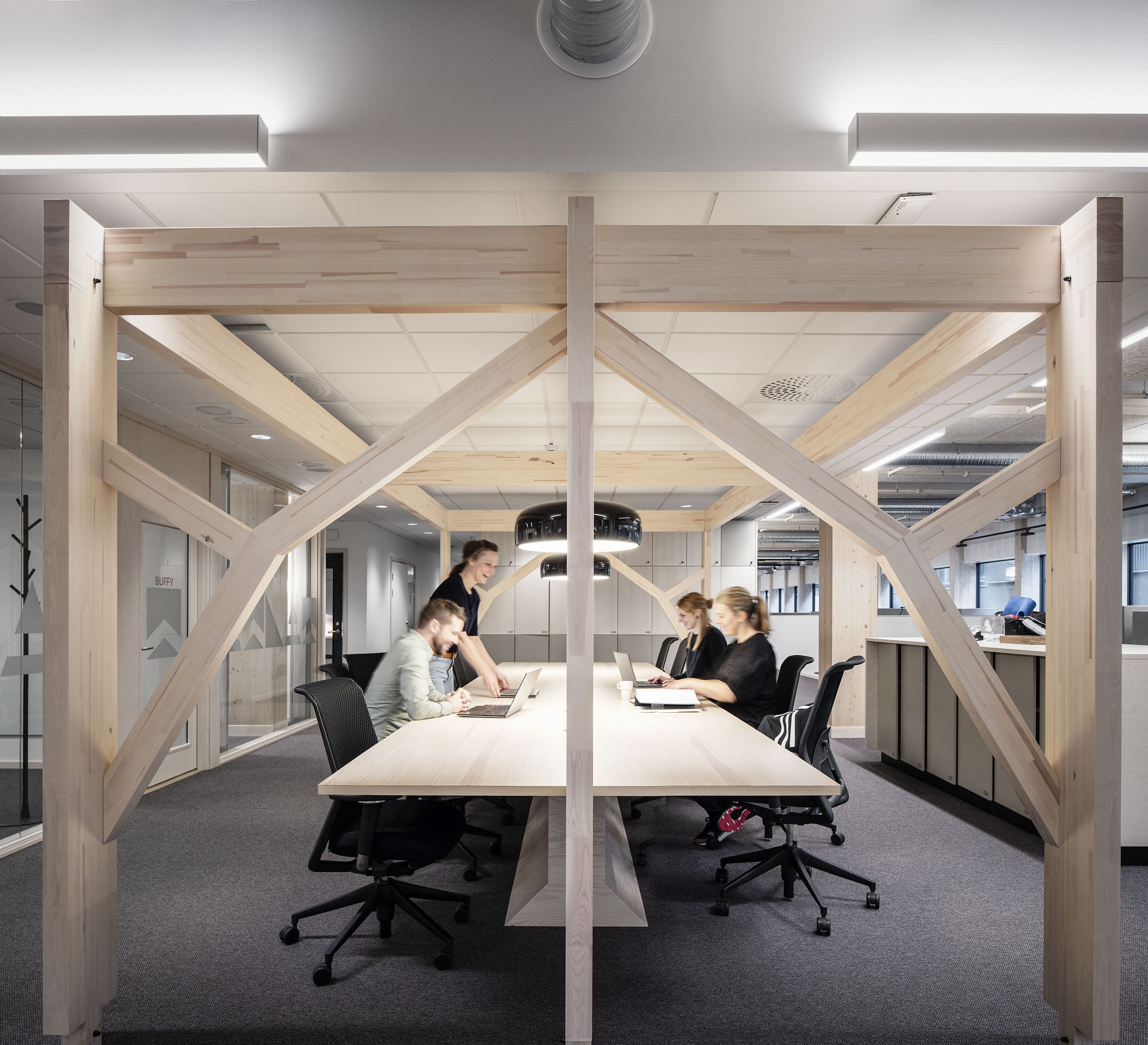
A Working Lab

An environment designed for innovation
Architecture
Education, Offices
Client: Akademiska Hus region Väst
Location: Gothenburg
Project years: 2013-2019
Type of project: Office building
Contractor: Akademiska Hus region Väst
Photographer: Felix Gerlach

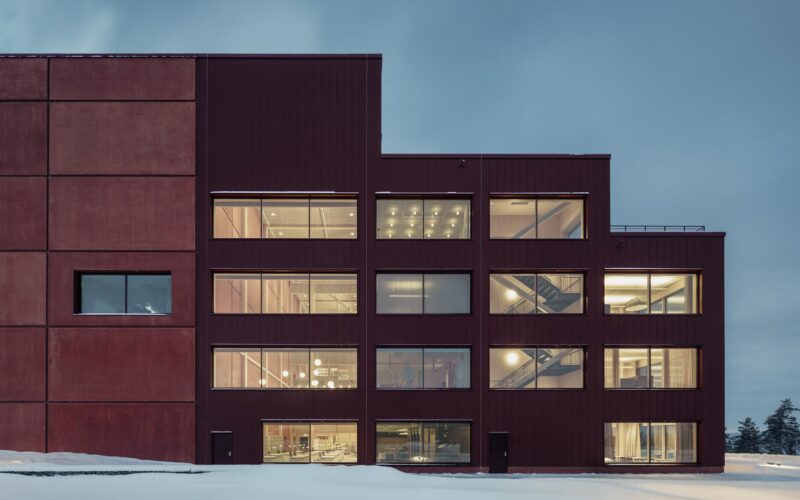
An office built for innovative collisions. A Working Lab, located on Chalmers Campus in Gothenburg, was awarded the title of West Sweden’s smartest property. With sustainable and inclusive solutions down to the finest detail, it challenges the traditional office environment.

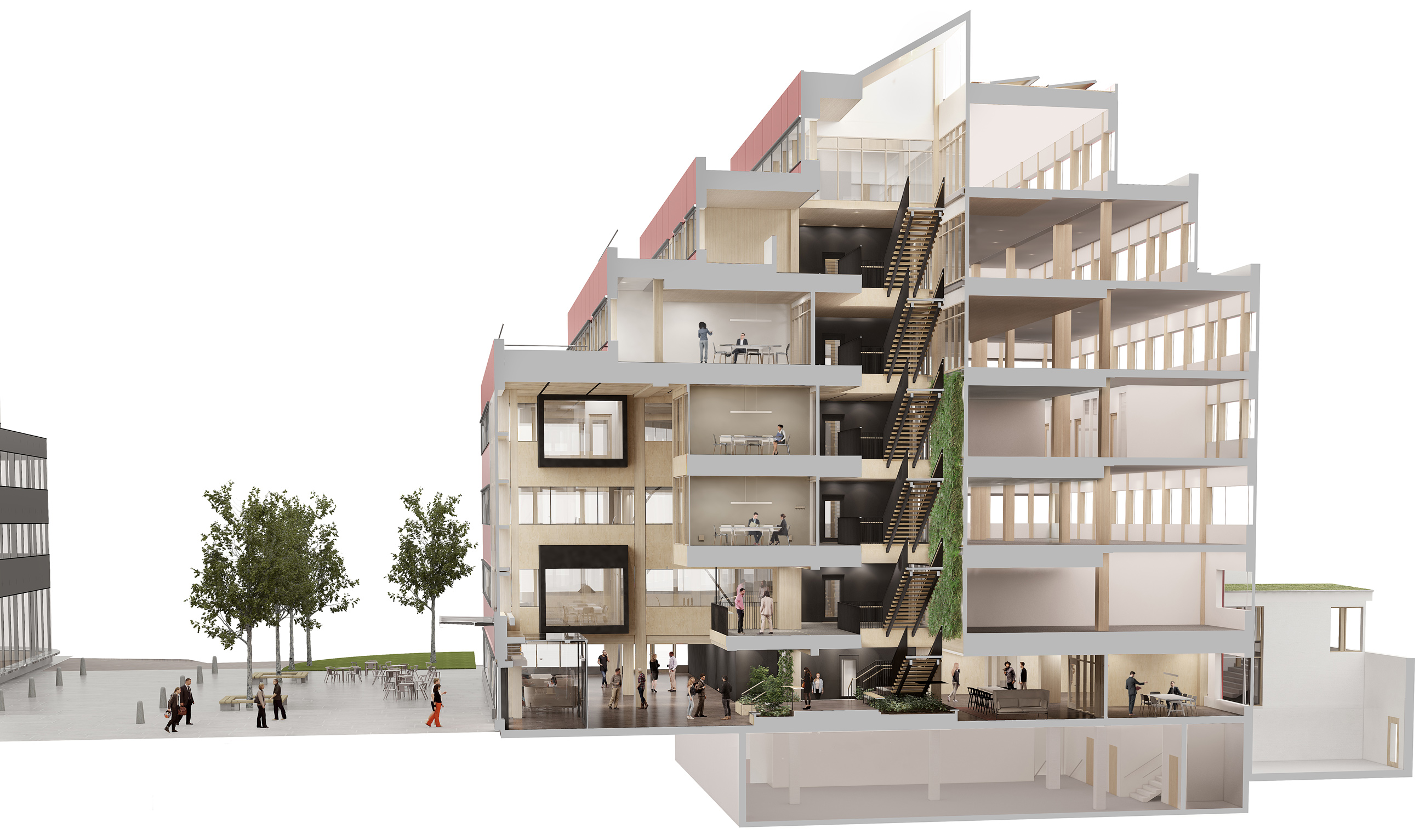
A Working Lab is more than just an office. The building — previously named Johanneberg Science Park Phase 2 — is better described as a multifunctional laboratory environment. Public and private spaces blend into one another from the ground floor all the way up through the building. The aim is to create unexpected meetings and collisions between companies, researchers, and students from around the world. It is a space for the exchange of ideas and knowledge between academia, industry, and public stakeholders.

Johanneberg Science Park

Flows and communication within the building are crucial to realizing this vision.

Architecture that generates new ways of working

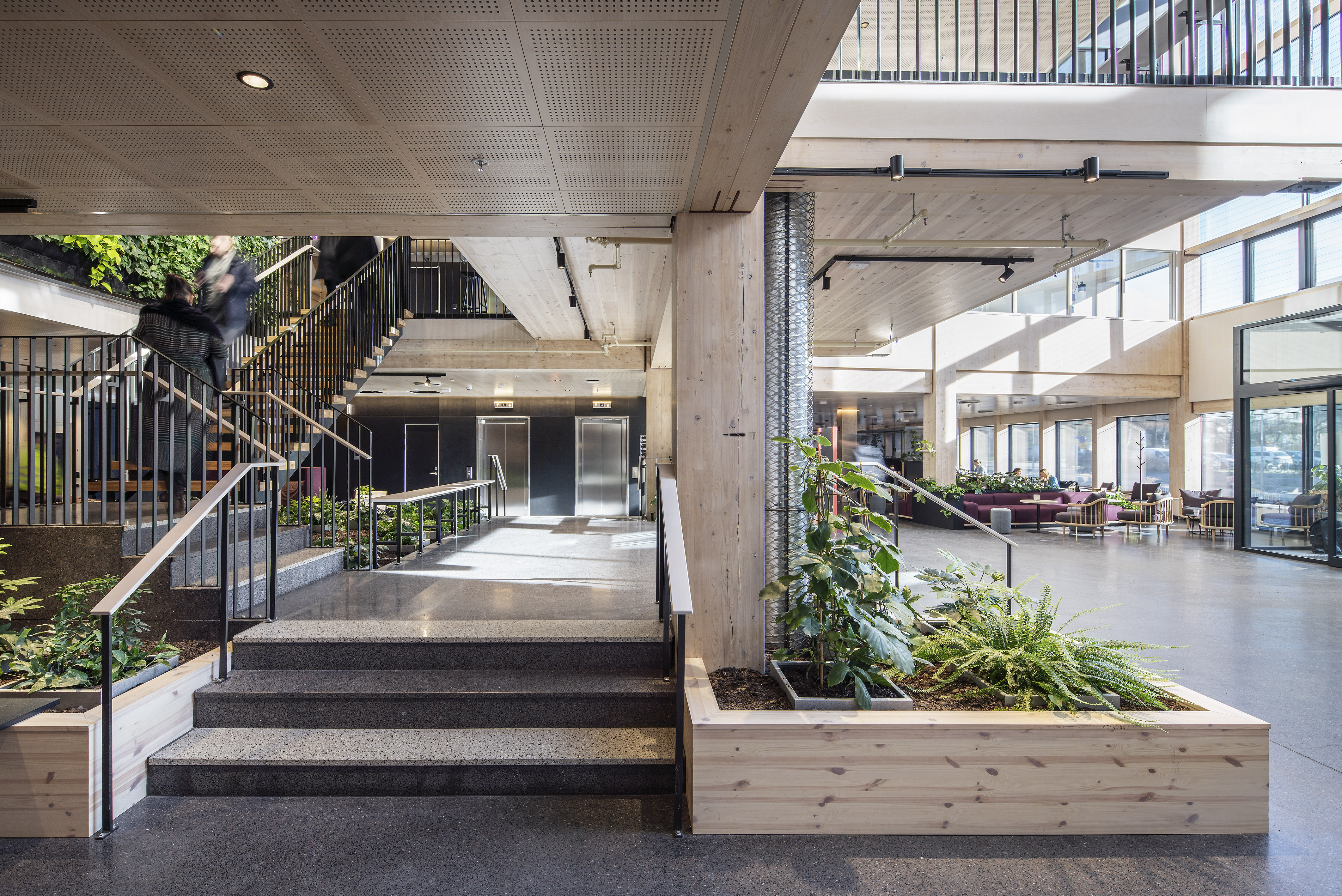
The building is characterized by multifunctional and adaptable spaces with advanced digital technology. The open floor plan enables flexible work, research, and interdisciplinary collaboration. One can sit down practically anywhere for spontaneous meetings. The ground floor is designed as a fully public street-level space connecting the campus with the business community. The atrium includes areas for workshops as well as cafés and restaurants.

Focus on sustainability led to environmental certification

A Working Lab is certified according to Miljöbyggnad Gold. A core principle of the project was to design a sustainable building — down to the smallest detail. From the structural frame to interior surfaces, wood — a renewable material with no carbon footprint — has been used. Wood is also health-promoting, providing a calm, warm indoor atmosphere — ideal for inclusive collaboration spaces.

A Working Lab

Stored energy powers electricity and ventilation

Numerous innovation projects are being conducted within the building in collaboration with tenants, suppliers, and researchers. A Working Lab functions as a so-called test bed — an open platform for development, testing, and innovation. Research topics include timber construction, acoustics, embedded sensors, and digital twins.

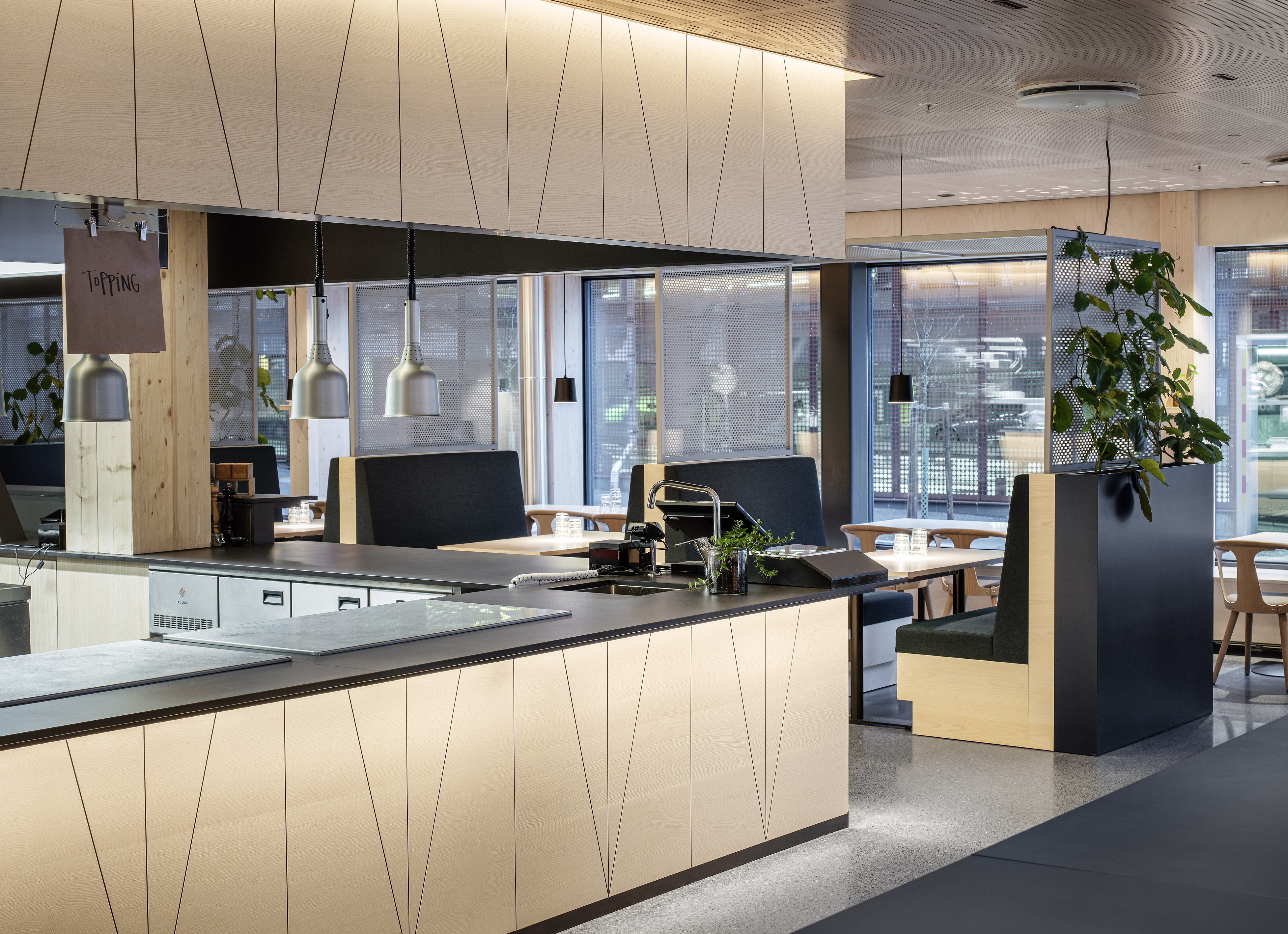
Discarded ingredients become restaurant meals

Beyond research initiatives, the sustainability concept runs like a red thread through countless details in the building. For example, the ground floor restaurant “Waste” serves meals made from discarded food ingredients. The coffee cups are made from the inner husk of coffee beans, which is normally thrown away. The coffee itself is Zero Water Coffee, made from sun-dried beans — unlike a regular cup, which typically requires 140 liters of water during production. Solar panels, green multifunctional spaces, and integrated electric public transport are three more environmentally smart solutions that embody the sustainability thinking behind every function.

An algorithm designed the ceiling with no straight lines

Creating an organic pattern of dots without straight lines is a challenge with pen and paper. So is manufacturing a product with such a pattern. However, digital technology simplifies the task. The lighting was to be integrated into the ceiling through a pattern of perforations — without any straight lines between the holes. The organic pattern in the wooden ceiling was intended to reinforce the experience of the building’s core concepts: research and sustainability. The ceiling is divided into sections, and we developed an algorithm that generated non-linear patterns within each section. These sections can be rotated relative to each other to form a large, organic pattern across the entire ceiling. Parametric design makes this kind of challenge more feasible and efficient than traditional methods.

Johanneberg Science Park

A Working Lab – a new growth ring at Chalmers

To contrast the surrounding brick architecture, the building’s façade is red. However, the color was adapted for environmental reasons, as the original idea of a bright Jaguar red shade couldn’t be achieved with eco-friendly components. Together with the two completed buildings from Johanneberg Science Park Phase 1, and our adjacent parking structure, A Working Lab has formed a new growth ring on Chalmers Campus since 2019.

Contact person

Kajsa Crona

Practice Director Gothenburg
+46 727 07 79 73

Hedenverket

Efficient investment in the environment
Hedenverket
Architecture
Industry
Client: Karlstads Energi
Location: Karlstad
Years of commission: 2011-2015
Type of project: CHP Plant
Collaborative partners: WSP, JD-gruppen, KVE Konsult, Brandskyddslaget
Competences: Industry

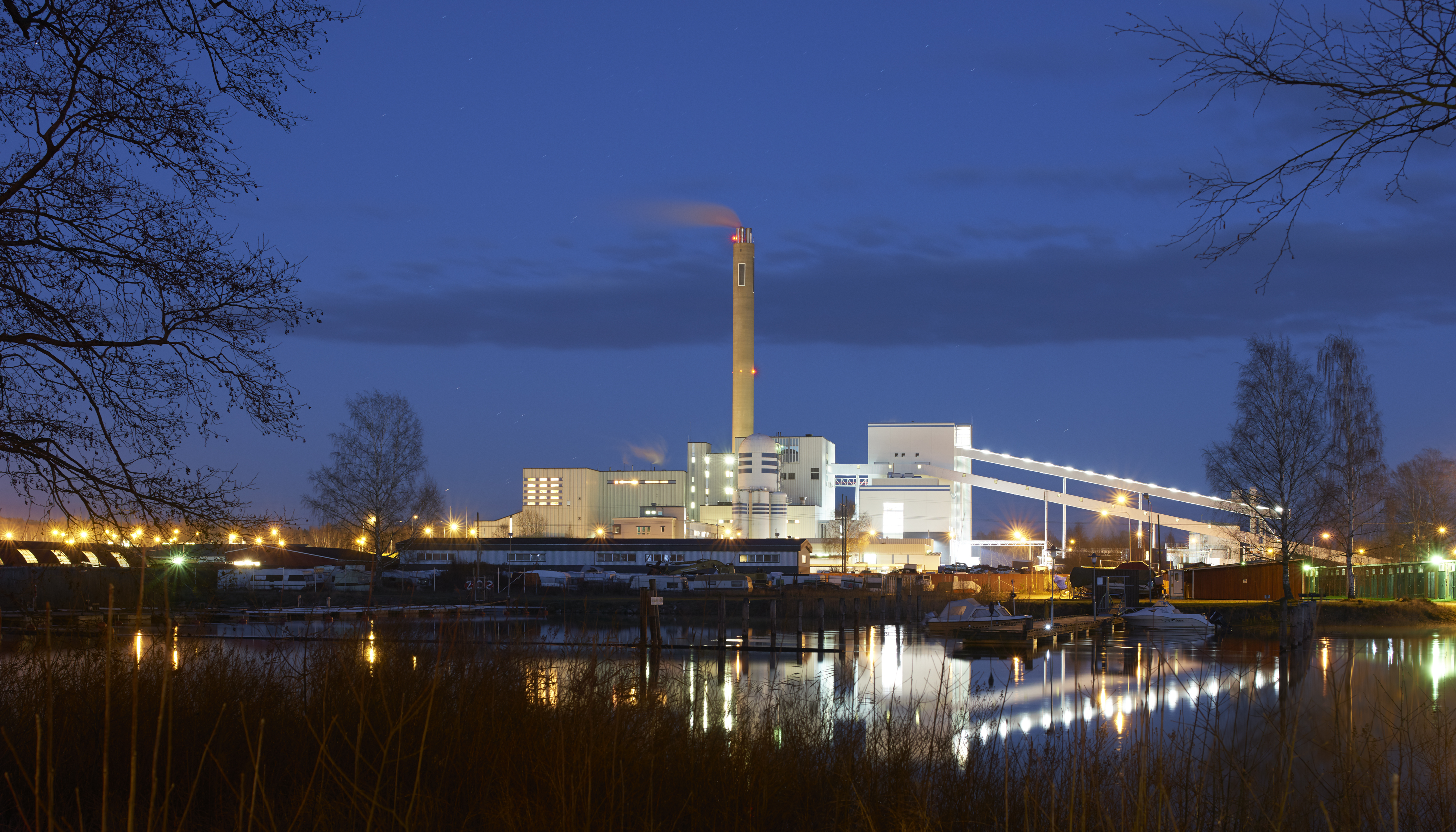
When Karlstad Energi was ready to start construction on the third stage of Hedenverket, we were involved as architects throughout the entire process. This power plant is Karlstad municipality’s greatest investment ever and when it comes to projects this large, it is particularly important that we can contribute to an efficient process.

We did the volume study and developed the architectural idea at the feasibility study stage. We were also responsible for the model visualisation and the system documents; we participated in the procurement of the land, the construction hire and contractor processing, and in the work on the construction documents for the project.

Hedenverket
Illustration: Tengbom

Visualising the process

Part of our work with Hedenverket was to visualise the planned building process. We also developed the tender documents to the suppliers illustrating the supply limits in 3D models. The entire project was completed in a fully developed BIM planning in ArchiCAD, where the architecture model is added to the other player’s models for more coordinated planning.

Thanks to excellent planning and successful procurement, the cost for the investment came in at approximately SEK 150 million less than calculated.

A very successful project

Hedenverket is a project that we are incredibly proud of. Thanks to excellent planning and successful procurement, the cost for the investment came in at approximately SEK 150 million less than calculated. Despite this, Karlstad Energi got an even bigger boiler and a more powerful turbine than they had planned for.

Hedenverket
Photo: Anders Lipkin

More environmental gains

The new power station has played a key role in eliminating fossil oil from district heating production. In just 30 years, Karlstad’s district heating has transitioned from full oil dependence to being completely fossil-free. The station has also doubled renewable electricity production at Hedenverket, increasing output from 100 to 200 GWh. This amount covers the annual electricity consumption of 66,000 apartments.

Contact person

Elin Larsson

Practice Director Karlstad
+46 702 75 67 66

The attics at Vasahuset

Unused loft becomes 29 unique flats
Architecture
Residential
Client: Setune Fastigheter
Location: Vasagatan, Luthagen, Uppsala
Years of commission: 2014-2016
Type of project: Loft apartments
Contractor: Setune Fastigheter
Competences: Residential

Centrally located in Uppsala, in the venerable and beloved district Luthagen, there is a remarkable turn of the century mansion. The building goes under the name Vasahuset but is locally known as the “blue house” due to its rare, dark-blue colour. The tall building lies directly opposite the vibrant Vasaparken and facing two of Uppsala’s most well-known landmarks – the cathedral and the castle. Many people harbour a dream of living in Vasahuset and it is easy to see why.

New law – new possibilities

In the university city Uppsala, there is a constant lack of housing. However, this is not unique to Uppsala. The fact is that more than half of the municipalities in the country don’t have enough housing for the young. To increase the ability to build smaller dwellings, certain changes and easements to the Planning and Building Act came into effect on 1 July 2014. In connection with these new rules, a dormant idea to use the lofts of the Vasahuset was rekindled with our client, Setune. Suddenly, there was an opportunity to turn the idea into reality.

Vasahuset
Vasahuset. Photo: Setune Fastigheter

We developed a complete concept with a clear goal: to create a series of optimally planned 35 m² studio flats, ready for move-in during the first quarter of 2017. In autumn 2014, we signed a joint project with Setune and looked forward to an exciting challenge.

At Tengbom, we have a long-standing tradition of caring for, and improving upon, historically and culturally important buildings. We know culture!

We know culture!

The notable and well-known Vasa building is centrally located, in an area that is difficult to densify. To be able to enrich the area with many small interesting apartments featuring a fine view of Uppsala is an important aspect of the project. Since the house is important from a historically and culturally perspective, we have had quite a few challenges. There has for example been a long discussion concerning how best to add daylight to the flats. We consulted with the municipality and an architectural antiquarian to make this possible without destroying the character of the building. Tengbom have completed several projects before when it comes to renovating buildings that are historically and culturally important. We know culture!

Innovative possibilities

The existing loft offered us a challenge that you don’t come across very often. We have worked well with Setune who have been curious and open to new ideas the whole time. The volume of the loft spread over two levels made it possible to create no less than 29 apartments of approximately 35 m2 each. The flats can be reached from a common gallery.

The project is a concrete example of a sustainable solution to ease the pressure on accommodation in central Uppsala and in other Swedish cities.

The changes to the Planning and Building Act gave us the opportunity for innovation, by utilising the potential in a previously unused construction volume. The project is a concrete example of a sustainable solution to ease the pressure on accommodation in central Uppsala and in other Swedish cities. Now, the dream of living in the blue house can now become reality for a few more people.

Contact person

Mark Humphreys

Practice Director Stockholm
+46 8 412 53 43

Ursvik Waste Vacuum Terminal

An unexpected architectural gem
Ursvik
Architecture, Landscape
Industry, Parks, Play & Public Spaces
Client: Stora Ursviks KB
Location: Stora Ursvik, Sundbyberg
Years of commission: 2012-2014
Type of project: Industry building
Collaborative partners: SWECO, COWL, Tyréns
Competences: Infrastructure, Industry, Landscape, Sustainability

The new waste vacuum system terminal in Stora Ursvik is run completely by computers and is covered by a large wall of vegetation irrigated by sensors controlled from London. Welcome to a highly technological and environmentally friendly industrial building that – rather unexpectedly – has become a true architectural gem.

Is it possible to create a waste vacuum system to be proud of?

It was an exciting challenge we took on, to create the waste vacuum terminal in Stora Ursvik. We wanted the building to add aesthetic value to the area and become an appreciated part of the surroundings for the residents. It also had to be efficient both from a functional and environmental perspective.

Ursvik
Photo: Åke E:son Lindman

Based on our vision, rational volumes emerged with few but clear effects produced. Industrial architecture with unexpected elements. The sloping façade of the largest volume covered in sheet metal contrasts with the adjacent volumes, that we covered in concrete and decorated in part with a shadowy forest motif. Offsets on the façade, a minimalist window distribution and a beautiful chimney in Corten steel plate gives a strong character to the building. It is exciting for a viewer to see both close up and at a distance.

The first BREEAM-certified industrial building in Sweden

A plant wall for cleaner air

The most effective contrast however, is probably the 250 m2 plant wall which covers the largest volume on one side. The wall consists of more than 2 000 plants and the irrigation is controlled from London using sensors. The green wall, meant to compensate for the land used also extends the life span of the building, filters pollution and cleans the air around it.

BREEAM-certified – and odour free

The waste vacuum terminal is the first BREEAM certified industrial building in Sweden. Fully functional, the system will serve approximately 6 000 flats. Through underground pipe systems several hundred meters long, food waste, packaging and paper is transported to the waste vacuum system from the homes surrounding it. The system is a closed one that keeps out both pests and insects. It does not smell either.

The building in Ursvik is normally unmanned and fully controlled by computers. The containers are emptied once a week. Heavy waste and recycling transporters use the nearby E18, keeping local traffic to a minimum. As a result, the streets become safer for both adults and children.

Contact person

Mark Humphreys

Practice Director Stockholm
+46 8 412 53 43

Ropstenskajen

Wood inside and out
Ropstenskajen
Architecture, Urban Development
Idea & Vision, Residential
Client: Folkhem
Location: Norra Djurgårdsstaden, Stockholm
Year of commission: 2014
Type of project: Residential concept
Competences: Residential, 3D illustration

In 2014, Folkhem gave eighteen of Sweden’s foremost architecture firms the task of designing a wooden housing project each in Stockholm. Folkhem’s objective was to be able to offer Stockholm’s city the opportunity to construct 6,000 dwellings made entirely from wood over a ten-year period. We were one of the firms that said yes to Folkhem’s brief and after that, the proposal for Ropstenskajen in Norra Djurgårdsstaden started to emerge on our drafting tables.

Just by the water next to the bridgeheads of the Lidingö bridge, we find Ropstenskajen. We see a neighbourhood that breathes tactility. Where the borders between town and nature are erased. Everything is made from wood – from the houses’ supporting structure all the way out to the facades and the balconies that are covered in wood panelling of varying profiles. By using a variation of roof contours, size of buildings and different colours, we are creating lively shifts in an environment that is still characterised by a strong natural unity.

Ropstenskajen
Illustration: Tengbom

Floors to walk barefoot on

Inside the dwellings, we find daylight, space and an unexpected ceiling height. Lidingö and the emerging Norra Djurgårdsstaden is always present when looking out at the water through large windows and from every apartment balcony or terrace. The sun protection is aided by part sliding screens in the facade. The use of the material is consistent even in the indoor environment, with visible wooden construction in ceilings and walls. Here, there are qualities for all senses. Sturdy floorboards that seem to be created for bare feet.

Living environments for the residents and visitors

Ropstenskajen is a living neighbourhood with about 130 apartments in the northern part and 120 apartments in the southern one with the opportunity for commercial premises down towards the water and along the main routes. We would like for the architecture in the area to also contribute to social activities. The buildings’ recessed entrances with social areas will become the porches of our time, places for spontaneous meetings with new acquaintances in the transition between the indoor and outdoor environment. We have consciously designed the dwellings to be surface efficient to be financially available to as many people as possible.

Ropstenskajen
Illustration: Tengbom

We believe that wooden constructions that are built and equipped with a modern technique create a healthy living environment, where we feel well – at the same time, we are encouraged to live in a sustainable and aware fashion.

Why wood?

Living in a wooden house is something special. It breathes, smells, and feels different. It stands the test of time and ages beautifully. With modern construction techniques, wood creates a healthy living environment where we thrive. At the same time, it encourages us to live more sustainably and mindfully.

But it is not only the humans that benefit from wooden houses. So does the environment. Wood is a completely renewable resource that forms part of the natural cycle. Wooden construction requires less intervention in the environment, and is twice as fast to build, compared with concrete buildings.

The greatest advantage with wooden buildings is that they do not emit any carbon dioxide. Instead, they bind carbon monoxide. Folkhem’s proposal to construct 6,000 dwellings from wood would save us approximately 600,000 tonnes of carbon monoxide emissions. It would be the same as stopping all the air traffic at Bromma airport for 50 years. Read more about the advantages with wooden houses and the initiatives on Folkhem’s website.

Contact person

Mark Humphreys

+46 8 412 53 43

Waldemarsudde

The legacy of Prince Eugen
Waldemarsudde 2015
Architecture, Cultural Heritage, Interior Design, Landscape
Accessibility, Building Preservation & Restoration, Culture, Heritage Expertise, Renovation & Transformation, Residential environments
Client: The National Property Board of Sweden
Location: Djurgården, Stockholm
Years of commission: 2013–2015
Type of project: House architect
Collaborative partners: LEB, Tyréns, Projektel, Brandskyddslaget
Areas of expertise: Heritage, Landscape

Waldemarsudde is a unique environment filled with great experiences. It has beautiful countryside, fascinating historical buildings and fantastic art. Waldemarsudde is primarily associated with Prince Eugen – botanist, landscape painter and art collector – who lived here in the early 1900s.

The legacy of Prince Eugen

The palace was commissioned by Prince Eugen and designed by the architect Ferdinand Boberg, and was built between 1903 and 1905. The gallery building was added in 1913 to house the Prince’s extensive art collection. Upon Prince Eugen’s death, the entire Waldemarsudde estate was bequeathed to the state, which was to manage it as a museum. Waldemarsudde is one of Sweden’s best known and most visited art museums and has been a listed building since 1993.

Waldemarsudde Tengbom 2015
Photo: Nina Broberg

Responsibility for maintenance and development

Tengbom had the framework agreement as building architect and general consultant for Waldemarsudde between 2013-2015. This meant that we were responsible for the listed building’s maintenance and development, in collaboration with the National Property Board of Sweden and the Prins Eugens Waldemarsudde Museum. We primarily worked in the areas of architecture, conservation and technical matters, as well as regulatory requirements. In conjunction with the consultant group, as building architect we carried out project planning as well as investigative assignments. We were consultants and handled such things as permit issues and long-term plans for maintenance and restoration.

Adaptation and visions for the future

One of the projects we worked on at Waldemarsudde was the extensive rebuilding of the museum shop and entrance hall, including improvements to accessibility at the main entrance, both inside and out. We focused on environmental aspects, lighting, acoustics, and both interior and exterior maintenance. The park and gardens was also part of our work. Additionally, we developed a proposal to open the old linseed oil mill to the public.

A complex project with specific challenges

The project at Waldemarsudde presented constant challenges. Working in an art museum means tackling environmental, technical, logistical, and programming demands. The focus was on adapting and refining the design to meet today’s needs while carefully preserving Waldemarsudde’s cultural value.

Close collaboration is essential

Collaboration was key throughout the process. Technical consultants and specialists joined early on. Each project within cultural environments involves close contact with managers, tenants, and authorities. Craftsmen, contractors, and other consultants also play a vital role. This demands flexibility, coordination skills, initiative, and a keen sense of the bigger picture.

Contact person

Josefin Larsson

Business Developer
+46 72 183 02 34