Archives

Ämbetsbyggnaden Gamla Hovrätten

Court out, school in
Architecture, Cultural Heritage, Landscape
Accessibility, Building Preservation & Restoration, Education, Parks, Play & Public Spaces
Client: Statens fastighetsverk
Location: Jönköping
Photographer: Tengbom
Heritage consultant: Anders Franzén, Länsmuseet
Awards: Category winner in Good building conservation, Jönköping Urban Design Award 2025

Once a closed government building in central Jönköping. Today a modern upper secondary school with architectural traces from the 1870s. So how do you avoid conflicts between contemporary technical requirements and historical values? Ämbetsbyggnaden has the answer.

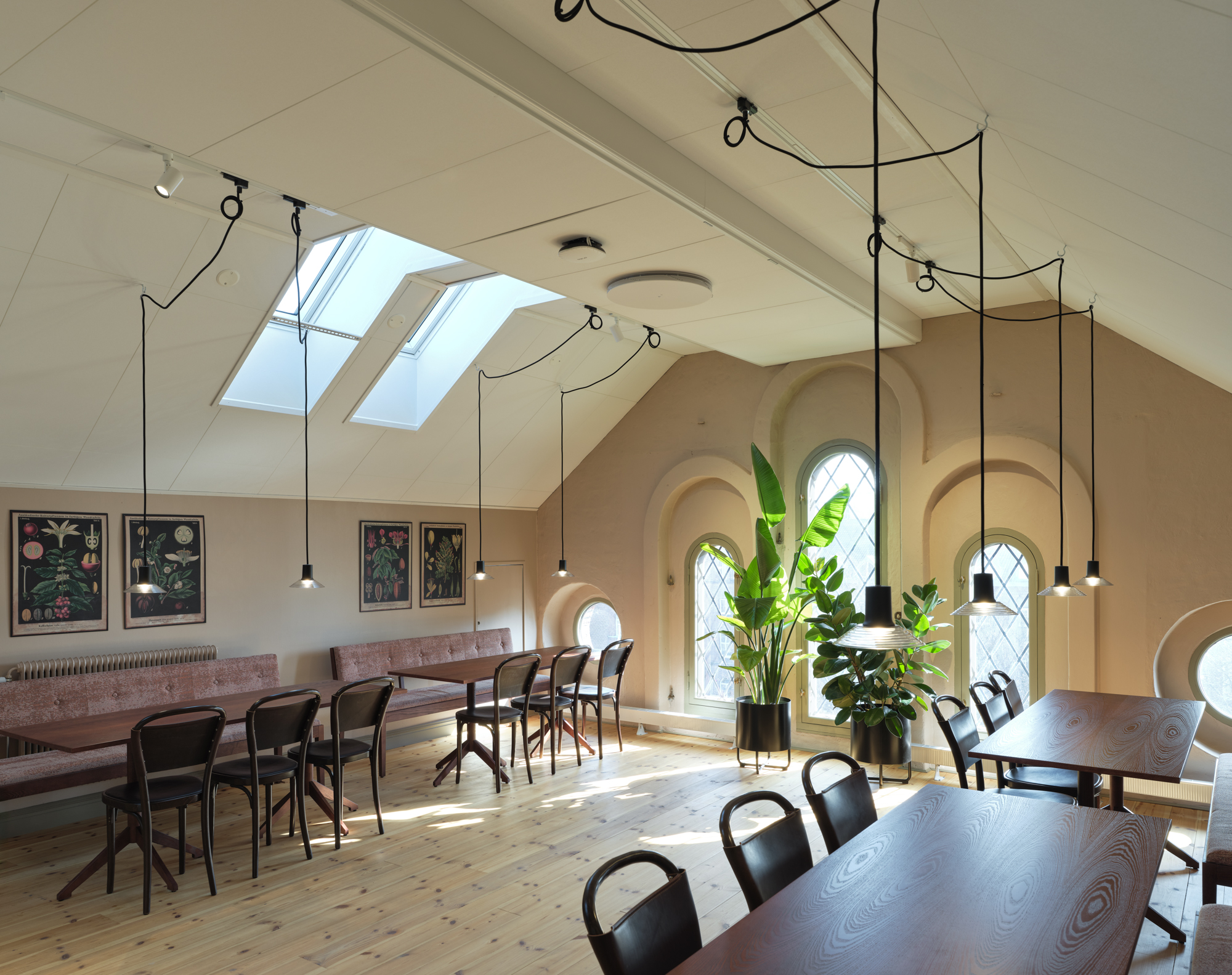
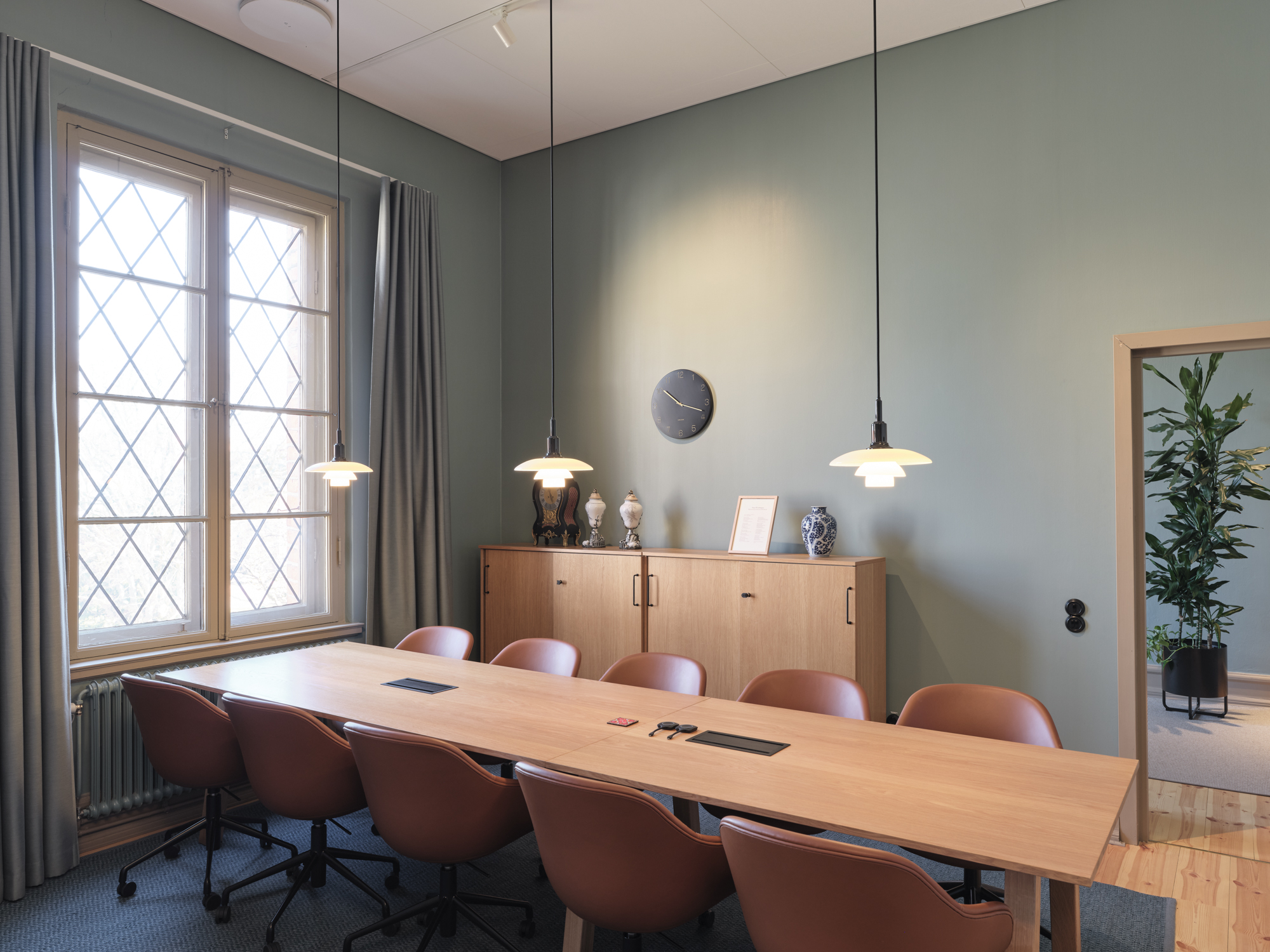
When the Göta Court of Appeal and the National Courts Administration moved out, the culturally significant 19th-century building stood ready for new chapters. The ambition was clear: without erasing the building’s identity, it would be transformed into an upper secondary school. The formerly enclosed office and archive environment would become an open setting for teaching, activity and shared spaces. Naturally, with high demands for functionality, accessibility and a well-functioning everyday environment for students and teachers.

With great anticipation, we embraced the challenge.

Preserve as far as possible!

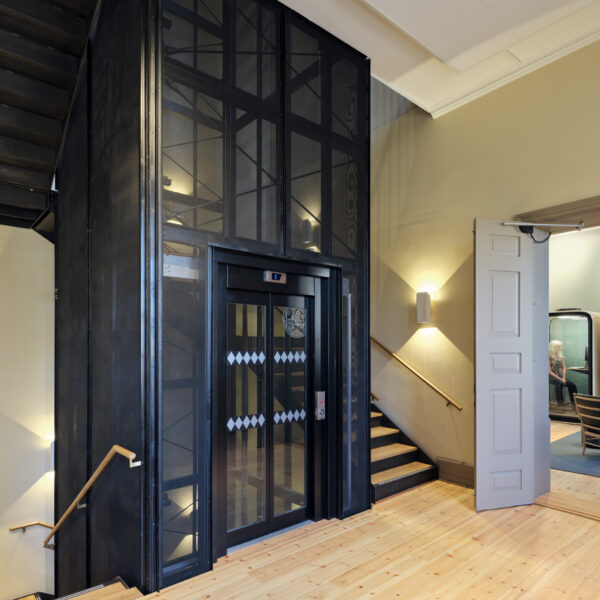
Ämbetsbyggnaden’s character as a “house in park” guided the entire process for both our architects and landscape architects. The exterior was preserved as far as possible, while necessary additions were made to ensure safe access for all. A ramp, new stairways and evacuation solutions were carefully designed to merge with the façade and feel inherent to the site.

House in park

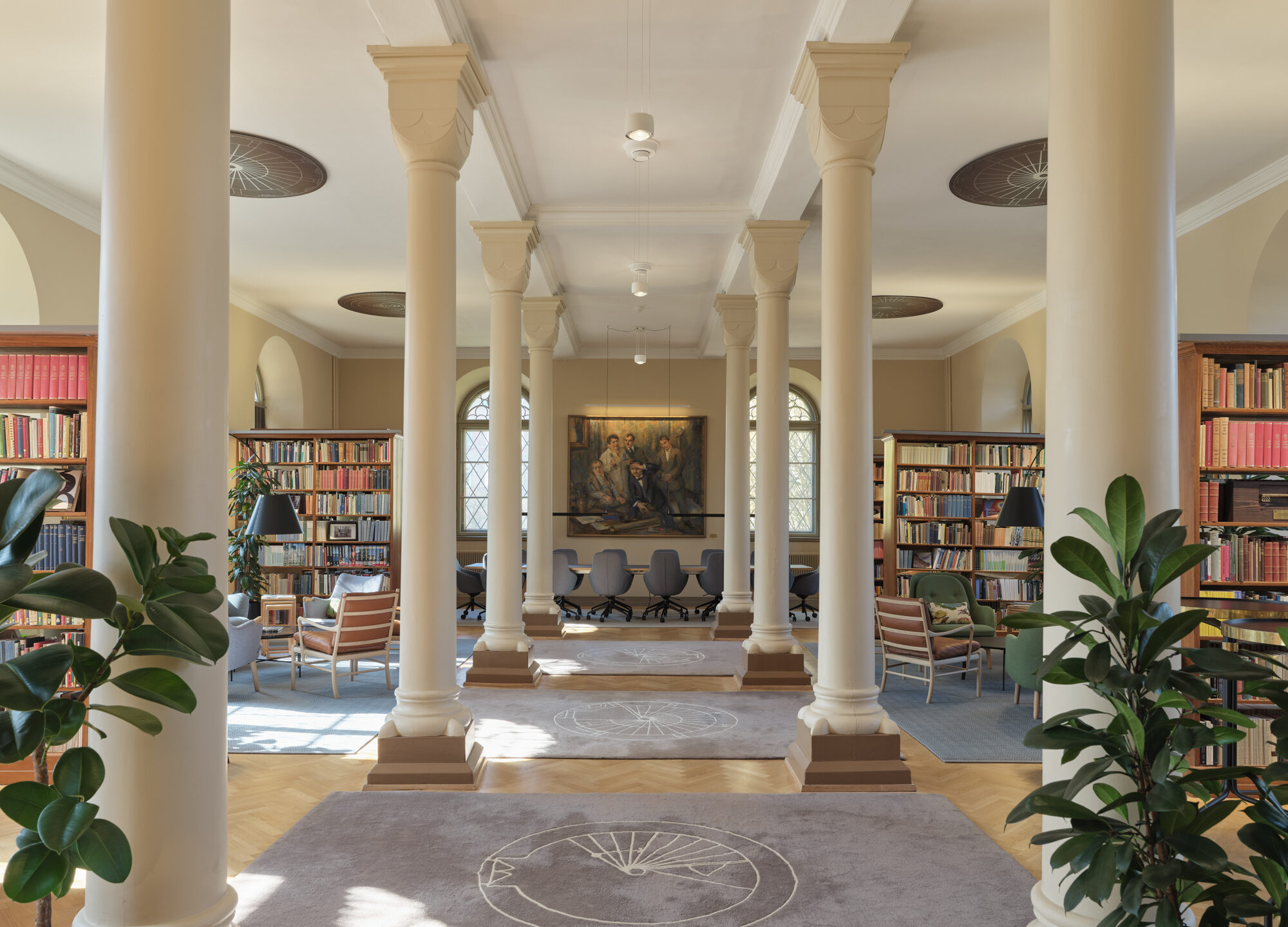
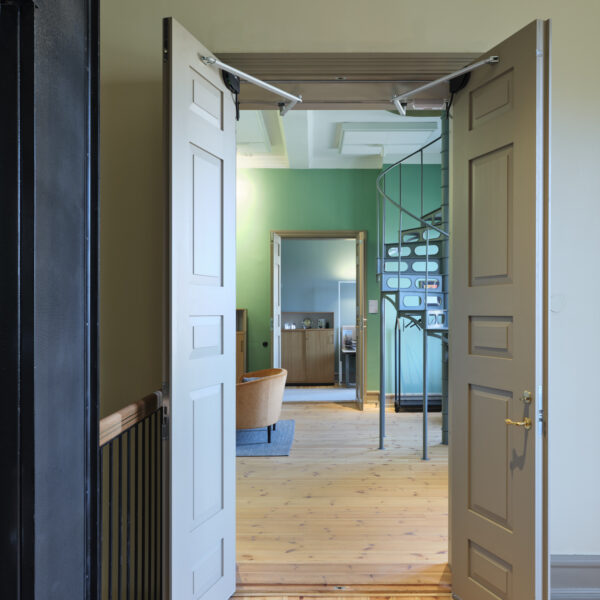
Inside, visitors encounter interiors bearing traces of the 1940s renovation. The entrance hall, stairwells and corridors with plastered ceilings and fixed bookshelves have been left untouched. Here, students move between classes in spaces that still tell the story of the building’s former life.

— The starting point was to preserve the exterior as far as possible, says Gunilla Gustafsson, lead building architect for Statens fastighetsverk at Tengbom in Jönköping. At the same time, the building must function as a school today, which means making the right interventions in the right places.

Thoughtful solutions behind the scenes

Transforming a listed building into a school involves numerous considerations. With the school’s — and self-evident — requirement for good air quality, ventilation became one of the greatest challenges. To avoid extensive interventions in floor structures and exposed ductwork, air-handling units were placed in the basement and attic. The building’s solid brick structure contributes to a calm acoustic environment, complemented by carefully integrated acoustic measures.

— There is often a clash between modern technical requirements and historical values, Gunilla explains. Our task has been to find solutions that work in everyday use without taking over the rooms.

The park that returned

Outside the building, the southern part of the site has been transformed and given new significance. Today, Hovrättsparken once again unfolds here, restored with inspiration from how the site appeared around 1870. For students and teachers, the park is an outdoor room for breaks, conversation and study — and for the city, a green space once again accessible to the public.

— The upper secondary school gives generations of students the opportunity to discover the site’s history and use the park in their daily lives. In addition, the former office parking area has been removed and the park restored to its original condition with new tree and shrub plantings, says Gunilla. The park restoration was carried out by landscape architects Anders Brandstedt and Linda Grimheden at Tengbom in Stockholm.

Ämbetsbyggnaden winner of the urban design award

The work on Ämbetsbyggnaden demonstrates how a listed building can be adapted to contemporary needs with respect, care and precision. It also shows how architecture can provide young people with an environment that both functions well and feels meaningful to inhabit.

— The positive collaborative climate within the consultant team contributed to the excellent final result, with my colleagues Jakob Ideskog, Saskia Jäkel and Hanna Ernlundh forming the core of the team.

Ämbetsbyggnaden is certified according to Miljöbyggnad Silver and was category winner in Good building conservation at the Jönköping Urban Design Award 2025.

Contact person

Matt Patterson

+46 36 440 90 81

Mariedal

Refined conference facility
Architecture, Cultural Heritage, Interior Design
Building Preservation & Restoration, Culture, Hotels & Meetings
Client: Jönköping University & HÖFAB
Location: Jönköping
Project year: 2014–2015
Project type: Conference facility
Developer: Högskolefastigheter i Jönköping AB
Photographer: Patrik Svedberg

On a rise along the eastern shore of Munksjön stands Mariedal – a stately merchant’s villa from the 1850s, today used as a conference facility by Jönköping University. When the time came to refurbish the premises, the ambition was to create an inspiring environment for contemporary needs while carefully preserving and accentuating the building’s historic qualities.

An unpolished gem on historic ground. Högskolefastigheter i Jönköping were fully aware of what they were entrusted with at Munksjön. Mariedal was erected in the 19th century as a country retreat for the merchant Westman and his family. The property is sought after for both its heritage and its location. But time had left its mark, not only through wear, but also through the gradual refurbishments that had taken place over the years, giving the building a patchwork-like character.

When it was once again time for renewal, the intention was to adopt a holistic approach and bring forward the original qualities of the property. Tengbom was commissioned to restore and furnish the premises for modern needs. The assignment presented a challenge, requiring us to adapt the building for accessibility while recreating a classical aesthetic using historic materials and a coherent character.

The goal? To take a firm design approach and, with clear strokes, transform a rather tired and worn interior into a positive experience. We developed many bespoke solutions and also improvised new ones during construction, as the client identified additional needs along the way.

Modern interiors with an aesthetic that looks back

We decided early on to focus on the aesthetic of the period during which the building underwent its most extensive renovation, around 1912. Inspiration was drawn from signatures such as Waldemarsudde and Ellen Key. The rooms were given rich colour palettes and wallpapered with intricate botanical patterns. Based on our colour proposal, Statens konstråd selected appropriate artworks for the interiors. In the hall, for example, hangs an impressionistic oil painting whose expression is heightened by the dark colour scheme.

We gave each room its own character. In the upper salon, calm and cool tones set the mood, with dark blue and plum-coloured textiles. In the kitchen, we painted the walls in terracotta and added a diagonal chequered linoleum floor.

Bespoke details complete the impression

To create the right atmosphere, we designed key pieces like a plant stand, an easel for a digital screen, and a display cabinet with mesh panels. As the project evolved, we added smaller items too — the original candlesticks, waste bins, doorstops and tablecloths didn’t match the concept at all.

Form and function for the future

Sustainability was also a guiding value in the work with Mariedal. In addition to choosing natural materials and eco-labelled furniture, we made a considerable effort to assess what could be reused. We prioritised alterations to prominent public areas and preserved existing building components that were in acceptable condition. From a sustainability perspective, it is not justifiable to remove functioning equipment, ventilation, flooring and similar elements.

One can also speak of sustainability in stylistic terms. Within the university sector, there is neither the budget nor the rationale to continually adopt new design trends. For that reason, we selected products that we believe to be both timeless and functional.

At Mariedal, much of the work centred on refining the old and, with fairly modest means, achieving significant transformation in both aesthetics and functionality.

“We worked closely with the client and the developer throughout the project. It was a creative and exciting process for everyone involved,” says interior architect Ulrika Tjernström.

“Jönköping University had high ambitions for Mariedal but were accustomed to the standard solutions typically used in the university sector. Our interior concept deviated from that, yet they embraced it completely. The developer, in turn, faced the challenge of realising all the crafted details the premises required.”

Tengbom is proud to have contributed to what is hopefully a long refinement process – one that has begun in the remaining historic buildings around the central lake in Jönköping.

Contact person

Matt Patterson

+46 36 440 90 81

Trygg-Hansa-huset

Brutalist stronghold
Architecture, Cultural Heritage
Offices, Renovation & Transformation
Years of Construction: 1972–1977
Architects: Anders Tengbom och Stefan Salamon
Landscape architect: Holger Blom

Brutalist, large-scale and uncompromising. Between 1972 and 1977, Trygg-Hansa-huset took shape on Fleminggatan. Anders Tengbom and Stefan Salamon designed one of Sweden’s foremost Brutalist buildings – a structure that has shaped both the cityscape and architectural debate.

Trygg-hansa-huset
The ETG Group: from left, Anders Tengbom, Léonie Geisendorf and Ralph Erskine.

Stockholm was in the midst of an urban transformation when Trygg-Hansa-huset emerged. The redevelopment of Norrmalm had redrawn the city’s skyline, and the office landscape was undergoing fundamental change. Anders Tengbom, son of the renowned architect Ivar Tengbom (founder of Tengbom), had already designed iconic buildings such as Svenska Dagbladet’s headquarters and Hötorgsskrapa no. 2. With Trygg-Hansa, he gained another opportunity to explore contemporary ideals – this time through an office complex that challenged established conventions.

A new view of the office with Trygg-Hansa-huset

Trygg-Hansa-huset broke with the traditional office format and became a forerunner in workplace design. Here, Tengbom developed an early version of what would later be known as the “combi office” – a hybrid between cellular offices and open-plan environments. Instead of relying solely on either small individual rooms or expansive open floors, he created flexible layouts where employees could move between private workspaces and shared social zones.

It is no coincidence that the Trygg-Hansa building is today given a blue classification by the Stockholm City Museum

Brutal and poetic at once

The building’s expression is as strict as it is poetic. The long, eight-storey brick volume stretches along Fleminggatan, giving the building a massive yet finely articulated presence in the cityscape. In contrast to the compact brick façade, a glass building in the northeast, shaped as three hexagons, and a low pavilion in the southeast complete the composition.

Between the three volumes lies a park – a green lung at the heart of the office complex. Behind its design was none other than the legendary city gardener Holger Blom.

Trygg-Hansa-huset

That the building’s forms and functions were considered down to the smallest detail is evident in its artistic decoration. Sculptures, reliefs and details were integrated into both the interior and exterior. Much of the artwork remains in its original condition and continues to be part of the building’s identity.

Protected yet questioned

Trygg-Hansa-huset has the highest cultural-historical classification granted by the Stockholm City Museum, the blue classification. The building’s architectural and societal value is considered comparable to listed buildings under the Cultural Environment Act.

But as is often the case when a city changes, Trygg-Hansa-huset has been part of discussions about redevelopment and densification. Proposals to transform the block have sparked valuable debates on how Brutalist architecture can be preserved and adapted for the future.

Brutalism today

Brutalism is an architectural style that often provokes strong feelings, and it was never meant to be restrained. It is uncompromising, honest and monumental. Trygg-Hansa-huset is one of Stockholm’s most prominent examples of this movement and demonstrates how architecture can be both rational and grand at the same time.

Today, the building remains a reminder of a period when Swedish architects dared to think in new ways – when the honesty of materials and the function of spaces guided the design. And perhaps that is why it continues to fascinate – a brick-clad time capsule in a constantly changing city.

Trygg-Hansa-huset

Contact person

Josefin Larsson

+46 72 183 02 34

Lilla servicehuset på kyrkogården

An architectural gem for every need
Architecture, Cultural Heritage
Culture
Client: Svenska kyrkan, Kalmar pastorat
Location: Kalmar
Collaborators: WSP
Area: 30 sqm
Year of commission: 2020
Photographer: Jonas Lindström Studio

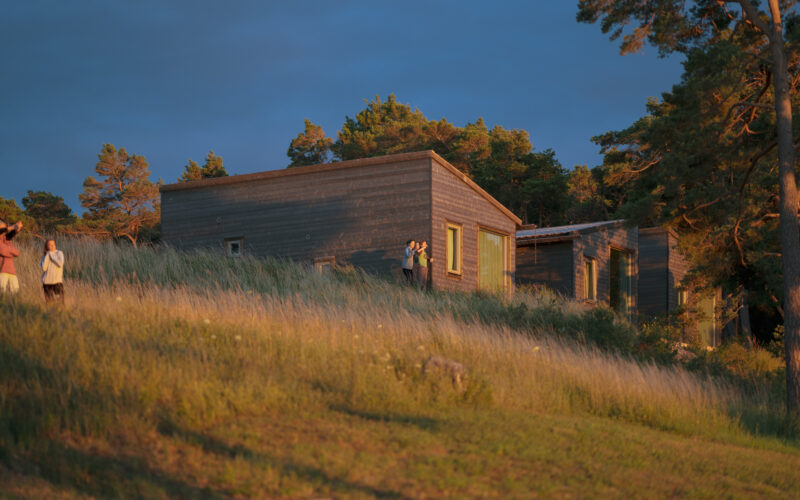
The small service building at the northern cemetery in Kalmar accommodates an information board, a toilet, and gardening tools for the graves. It is also climate-smart and employs a form language and materials that harmonise with the surroundings. A particularly fine example of careful, functional architecture within a sensitive setting.

Cemeteries possess a special atmosphere that many renowned architects have approached with reverence throughout history. When something is to be built on such sensitive ground, it requires instinct and attentiveness. This applies whether the intention is to erect a chapel with world-heritage potential or, in this context, a perhaps more worldly but nonetheless essential toilet.

A discreet guide with the small service building

Tengbom was commissioned by Kalmar pastorat to design a service building for the northern burial ground. The result is an outwardly modest structure in brick and timber that accommodates several functions. In addition to the mentioned WC, it includes an information board, a storage area for gardening tools, and a space for tending plants brought to the graves. Positioned at one of the cemetery’s entrances, it is intended to act as a gathering point towards and from which visitors can orient themselves. With its sharp angles it remains clearly visible in the landscape, while the colours and materials correspond both with the natural surroundings and the adjacent buildings.

“Much of the answer to how this building should be shaped is already found in the environment and in the existing structures. The interesting part is how it relates to its context,” says lead architect Johan Kjellnäs. Johan completed the project in collaboration with landscape architects.

Context with quality

Much of the architectural expression takes its cue from the recently extended crematorium. Timber and vertical slats play a key role there — elements that also define the service building. The rendered brick at the centre of the building reflects a nearby staff facility. Meanwhile, the colour palette draws directly from the surrounding pine forest.

“The most enjoyable aspect is simply being able to work in this environment at all. Both older and newer buildings are of high quality. We applied a long-term perspective to all buildings here,” says a visibly enthusiastic Johan Kjellnäs.

Energy from above

The solar panels on the sloping metal roof, which power the electricity in the small service building and also manage any surplus, are another example of long-term and sustainable thinking. The plan is for the entire pastorate to use the building as a model for constructing several similar facilities. It has been noted that many refrain from visiting cemeteries precisely because of the common lack of a toilet. This is now one concern fewer for visitors to the northern cemetery in Kalmar. And, they also have something beautiful to look at should there be a queue.

Contact person

Elin Lönnbom

+46 708 79 99 12

Lund Cathedral

Timelessness in a new guise
Architecture, Cultural Heritage
Building Preservation & Restoration, Culture
Client: Svenska kyrkan
Location: Lund
Completion: 2023
Collaborators: Building contractor: Thage, project management: Mound Consulting, structural engineer: Restaurera
Awards and nominations: Nomination for the Helgo Prize 2023, winner of Årets bygge 2024

With new roofing sheets and extensive masonry repair, Lund Cathedral regained its characteristic tower caps. After a year of work on the ground, both towers were lifted back into place – in a new, more climate-friendly guise. The restoration was nominated for the Helgo Prize 2023.

Photo: Gunnar Menander

When one of the Nordic region’s most visited landmarks required restoration, there were no shortcuts. The work moved in the borderland between tradition and renewal, where every decision was weighed against both history and sustainability. The result is a piece of craftsmanship executed with precision and long-term durability.

The legacy of Helgo

The restoration honours Helgo Zettervall’s architectural design and the appearance of the tower roofs – even though the lead sheet has now been replaced with a more environmentally conscious tin-coated stainless steel. Yes, Helgo as in the Helgo Prize. In the 19th century, Zettervall carried out an extensive renovation of the cathedral. The Helgo Prize is awarded by the Swedish National Property Board to particularly meritorious restoration projects, and in 1996 Erik Wikerstål of Tengbom received the prize for Alnarp’s barn.

During Zettervall’s restoration in 1860–80, the cathedral’s two towers and west front were rebuilt. The towers were demolished and reconstructed in a form that he believed could have been possible already in the 12th century. The roof structure consisted of steel profiles, pine planks, and three-metre-long cast lead sheets.

Tower roofs in need of renewed care

Problems with the lead sheets arose as early as the beginning of the 20th century. They were large, heavy, and poorly joined. The roofs took in water and needed re-laying – but the new sheets were also too large for the steep roof. Over time, cracks, leaks, rot damage, and rust appeared in the parapet’s embedded iron bars.

After just over 100 years, the tower roofs urgently required new metal cladding and extensive masonry repairs. Lead is also a toxic material that can contaminate water, soil, and air.

“The Cathedral Chapter wanted to do what was necessary to protect our environment for future generations,” says Erik. Purifying the runoff water from Lund Cathedral’s roof would have required a facility whose size and operation were deemed unrealistic.

Traditional in appearance – improved environmentally

Lead has been used as a roofing material since the Middle Ages – beneath the cathedral floor, lead residues have been found showing that the church had a lead roof even before the fire of 1234. To preserve the traditional appearance, a sheet metal resembling lead was therefore chosen, but one far better from an environmental perspective.

The tin-coated stainless steel (Terne-coated Stainless Steel) oxidises and develops a surface that, once aged, resembles lead sheet. Tin-coated sheet metal also has a long historical tradition, similar to galvanised iron plate.

The Cathedral Chapter wanted to do what was necessary to protect our environment for future generations.

Lund Cathedral now with new spires

In March 2022, the two tower roofs were lifted down and placed within a tent structure north of the cathedral. The new cladding was executed with standing seam sheet metal, following the dimensions and seams of traditional lead roofing.

“The finials, or spires, of the tower caps were made from a lead-clad timber and steel construction and were in such poor condition that they had to be newly fabricated,” says Erik.

Photo: Gunnar Menander

The old finials were scanned and exact replicas were produced in sand-cast aluminium – a material that ages in harmony with the tin surface. At the same time, Zettervall’s inner masonry sections in the parapets were chiselled out and replaced with hard-fired brick in cement mortar. The parapet’s natural-stone cornice received new anchoring with stainless-steel clamps, and the tower caps’ rust-damaged fixings were replaced with 52 stainless-steel threaded rods per tower. All were cast into a new concrete structure clad with reused, hand-moulded yellow brick.

The cathedral’s remaining roof surfaces are, for the time being, sealed with wax and nanotechnology while awaiting future re-laying. Lund Cathedral is filled with visitors every day of the year. Well worth a visit to admire these iconic spires.

Photo: Erik Wikerstål

Contact person

Erik Wikerstål

+46 42 19 48 56

Kungshuset

A murmur of centuries
Cultural Heritage, Interior Design
Client: National Property Board of Sweden and Lund University
Location: Lund
Project Years: Design 2015–2023, Renovation 2022–2023
Collaborators: Sweco, Bengt Dahlgren, Structor, Tyréns, Airson Engineering
Gross Floor Area: 1,600 sqm
Photographer: Mads Frederik

The walls echo thick with history in one of Lund’s most iconic buildings, erected in 1580 as a county residence. Today, Kungshuset serves as a functional workplace for the management of Lund University. For us, this meant a renovation characterized by precision and sensitivity – with interiors inspired by the building’s persona.

Just over a hundred years after its construction (1580), Kungshuset became the academic main building for Lund University. Since then, the house has undergone numerous transformations. As general consultant for the National Property Board of Sweden, with Lund University as tenant, we had the opportunity to add another 300 years of use.

With traces from the 11th century

It would be untrue to say this was a small challenge. Requirements for accessibility, installations, and fire safety had to be met, while preserving the layout, materials, and cultural-historical values. By gathering all our specialists, we created solutions that endure over time while respecting the site’s history.

“Working with a building that carries so much of Lund’s and the university’s history requires humility. We removed later additions and highlighted what is truly unique, while carefully weighing each new intervention,” says Maria von Porat, Lead Architect.

During the renovation, remains of 11th-century buildings were discovered beneath the floor level. These findings serve as reminders of the site’s deep historical significance, making the demands for care even clearer.

A building for the 21st century

To avoid major interventions in other parts of the building, we placed the new staircase with elevator, restrooms, and main installation shaft at the core of the structure. Adjacent to it, we transformed a former window opening into a new, accessible main entrance. At the same time, we made a series of smaller but important decisions, from material choices to detailing – solutions that carefully and beautifully bridge old and new.

Home to the university leadership

In close collaboration with the university leadership, the interior design developed with solutions that resonate deeply with the building’s character and history. At the same time, they embody modernity, sustainability, and comfort in a work environment – balancing functionality and aesthetics.

Today, the whole – building and interior – reflects the building’s new role as offices for the university’s leadership. It is a representative, professional, and welcoming workplace where color, light, and furniture complement each other.

Colors with a past

The color scheme of both walls and woodwork is firmly rooted in the historical palette once present in the house. Furniture was carefully selected with attention to detail, materiality, and sustainability – Scandinavian design with substance. Together with the Skissernas Museum, we then selected artwork that ties the interiors to the building’s academic aura.

“We wanted to create a calm and harmonious environment that also feels relevant and contemporary. The acoustics, colors, and furniture truly make it feel like a home for the leadership. And we’ve heard the same from those who work here, which is really gratifying,” continues Anna.

History demands humility

Today, Kungshuset once again pulses with activity. And just as in the past, the university uses the building for representation, meetings, and dialogue. Everyday work unfolds in the open-plan offices, private rooms, and social spaces. Kungshuset is not open to the public, but its presence in Lundagård is proof enough that the site’s history continues to be written – now with yet another compelling chapter in its book.

Contact person

Sandböljan in Malmö

Historic harbor heritage in motion
Architecture, Cultural Heritage
Offices, Renovation & Transformation
Client: Sandböljan AB
Project years: 2020–2024
Location: Malmö
GFA: 1 500 sqm
Collaborators: Sandböljan AB, Agneta Hahne Arkitektkontor
Awards and recognitions: Malmö stadsbyggnadspris 2025

In the shadow of Malmö’s Frihamnsviadukten, at the crossroads of rail tracks, roads, and industrial buildings, lies Sandböljan. This architectural project carefully transformed a former container yard and warehouse into a vibrant hub for creative businesses.

Photographer: Tengbom

At the edge of the city and the harbor, a new district is emerging. Sandböljan shows how a strong idea, deep commitment, and skilled craftsmanship can breathe life into a previously overlooked place. The triangular industrial site has roots going back to the 1920s, when the building was erected to handle Malmö’s import of precious wood from ports around the world. Today, it houses a photo studio, meeting rooms, a showroom, offices, and workshops. Generous windows and open spaces invite the public into an environment of creativity and craft.

An unusual commission

Photographer: Tengbom

Unlike many of our other projects, a private property owner with a very personal commitment commissioned Sandböljan. Furniture maker and developer Christofer Eliasson wanted to create something long-term, sustainable, and contemporary on a site that people had overlooked for decades. After thirty years in Malmö’s harbor, he describes the place as “never forgotten” and explains that he and his team have treated every intervention with great respect for its history.

“I’ve only created the conditions for new life. The tenants are the ones who will leave their mark – the vision isn’t finished,” says Christofer Eliasson.

In close dialogue with the client, Tengbom has shaped a sustainable vision for the large warehouse, providing both planning and construction documents.

“This project shows how far you can go with small resources – as long as you have a clear idea and respect for what already exists,” says Anders Nilsson, lead planning architect at Tengbom.

Dig where you stand

With history at your back

The building, originally a generous warehouse, was given a new load-bearing structure in the 1970s. New entrances and large brick interior walls now offer flexible spaces for creative work. Old and new elements come together in an architecture that plays with light, views, and volume. The graffiti on the entrance façade appeared overnight, before the large openings were made, and has never been removed – it remains part of the building’s expression.

“It’s an honest architecture. Everything has been crafted with care. With precise cuts and attention to detail, the building has gained new life – with daylight, views, spatial richness, and thoughtful material use,” says Jonas Marculescu, lead architect at Tengbom.

Love for patina

Sandböljan marks the beginning of a new district in Malmö. What was once a paved industrial yard has become a social entrance space with replanted greenery and newly planted willow trees. Here, people gather for lunches, events, or simply to spend time together. The on-site carpentry workshop has made it possible to work with local, sustainable solutions and tailor-made details adapted to the place.

Photographer: Tengbom

“I hope more property owners dare to dig where they stand, without rushing to demolish and modernize. Use what already exists – it’s better for the planet, and who doesn’t love patina?” says Christofer Eliasson.

Christofer emphasizes that the project is not complete. Instead, he describes it as the beginning of a process where new businesses will gradually leave their mark. In this way, the place can evolve at its own pace.

Photographer: Tengbom

Contact person

Attic apartments in Kvarteret Generalen

Designed by Ivar Tengbom
Architecture, Cultural Heritage
Accessibility, Building Preservation & Restoration, Housing, Renovation & Transformation
Client: Bostadsbolaget
Location: Göteborg
Year: 2019-ongoing

As Gothenburg continues to grow, so does the demand for housing. There are many ways to address this, but one sustainable solution is to convert existing buildings. In Kvarteret Generalen, unused attic spaces are being transformed into 24 new apartments — preserving history while creating much-needed homes.

In 2019, the municipal housing company Bostadsbolaget received a tip from its staff about unused attic spaces in one of its properties in Haga. A feasibility study soon confirmed that the high ceilings — reaching up to six or seven metres — could accommodate 24 new apartments, while still leaving room for new attic storage areas.

Since then, twelve loft apartments have been completed on Södra Allégatan, and another twelve are on the way.

Original drawing by Ivar Tengbom.

“The attic space our staff noticed in Haga had impressive ceiling heights. The study showed that we could create 24 apartments while still providing new storage areas in the attic”, says Per Orshammar, Project Manager, Bostadsbolaget

Each apartment is unique in layout and size, ranging from 31 to 35 square metres. All feature an open-plan kitchen and living space. The next phase of the project will begin in 2024, with the final twelve apartments set to be available for rent by 2025–2026.

We’ve had to be creative while showing great respect for the building’s cultural and historical values.

Kvarteret Generalen – a historic landmark

Haga is one of Gothenburg’s oldest districts, known for its cobblestone streets, small squares, and historic buildings. It’s a highly desirable area, but new construction is nearly impossible. Instead, the focus is on adapting existing buildings, as seen in Kvarteret Generalen.

Originally built in 1866 as a children’s hospital, the property was designed by architect Frans Jacob Heilborn. In 1910, four additional stone buildings—ranging from four to six storeys—were added, designed by Ivar Tengbom and Ernst Torulf. Today, Haga’s charm attracts both residents and visitors, blending a vibrant café culture with historic character.

Attic conversions in two phases

The first twelve apartments are now complete, marking the first phase of the project. With the second phase underway, another twelve apartments and additional storage spaces are being created.

“What makes this project particularly exciting is the challenge of preserving and enhancing the original architecture while creating modern homes,” says Helena Elisson, architect at Tengbom.

“We approached the project with a solution-driven mindset—balancing creativity with deep respect for the building’s cultural heritage.”

By preserving Ivar Tengbom’s original architectural vision, we have created new living spaces without compromising the historic integrity. Achieving this required careful material selection and thoughtful design. The project began with a feasibility study and a building permit process to ensure a seamless transformation.

Smart and sustainable solutions

By reusing existing structures, the project reduces environmental impact while creating valuable new homes for Gothenburg residents. Helena emphasises that collaboration with Bostadsbolaget was key to solving challenges within the complex structure of the building, especially in areas like ventilation and chimney placement.

“Together, we explored a variety of solutions. In some apartments, we designed skylights, in others dormer windows,” explains Helena.

“One innovative approach was to install a raised floor, making it easier to route plumbing and ventilation systems. The white interiors and light-stained wooden floors further enhance natural daylight and create a modern feel.”

Transforming the future of housing

The Kvarteret Generalen project demonstrates how historical buildings can be preserved and adapted while contributing to the housing market. By creating 24 new homes within an existing structure, the project showcases a sustainable and innovative response to housing shortages.

“While 24 apartments won’t solve Gothenburg’s housing crisis, it’s a great example of how we can rethink and repurpose existing spaces,” says Helena. “It required technical expertise, creativity, and a deep respect for the building’s historic significance.”

Contact person

Kajsa Crona

+46 727 07 79 73

Campus Tensta

A historic revival
Tensta 2
Architecture, Cultural Heritage
Building Preservation & Restoration, Renovation & Transformation
Client:
Location: Tensta, Stockholm
Status: Ongoing
BTA: 15 000 sqm
Collaborators: Byggprojekt, Seveko, Reichmann antikvarier, Projektel
Photographer: Felix Gerlach

The former upper secondary school in Tensta, a heritage-listed building of the highest cultural value, is set to reopen as Campus Tensta under the management of Hemsö. Blending late modernism and brutalism with influences from Asian architecture, the school has been carefully restored by Tengbom, with a strong commitment to preserving its original identity.
Tensta 1 Tensta 2

Designed by Gösta Uddén, the school was inaugurated in 1984. Some call it “the last truly grand school built in Sweden”, while others argue it should be designated a listed building. Since 2018, it has stood empty, with rumours of demolition causing concern among both architectural experts and the public. However, Hemsö’s vision is the opposite: the school will be carefully restored, ensuring its architectural integrity remains intact.

Letting go of the ego

“As an architect, there’s always a desire to make your mark on a project. But when working with heritage buildings, you have to set aside your own vision in favour of preserving the original structure,” says Josefin Larsson, architect and business developer at Tengbom, specialising in restoration, cultural history, and adaptive reuse.

Tensta 7 Tensta 3

A cultural restoration detective story

Tengbom has led the extensive renovation, which aims to bring the school back to its original condition while meeting modern requirements for accessibility, acoustics, and fire safety.

That was then. Photograph: Bo Eriksson

Together with Reichmann Antikvarier, Tengbom has mapped and documented the building’s cultural and historical attributes. As an expert in heritage conservation under Swedish planning law, the antiquarian ensures that all modifications comply with strict preservation regulations.

Patterned concrete and pagoda-inspired roofs

The original complex, designed by Uddén, includes the school, the Tensta Träff community centre, a library, and later a sports and swimming hall. Together, these three buildings form a triangle.

The facades feature high-quality materials such as red brick, patterned cast concrete, laminated wood, and black-painted steel. At the heart of the school, a glass-roofed winter garden floods the interior with natural light. Architectural elements include open-air corridors, diagonally protruding staircases, and dramatically curved roofs inspired by Asian pagodas.

Stockholm’s City Museum has classified the school as a “blue-listed” building—the highest level of heritage protection, meaning it is considered an essential part of Sweden’s cultural heritage.

“For Campus Tensta, this means an absolute prohibition against alterations that could compromise the building’s historic character,” explains Josefin.

Thoughtful additions that blend in

Each space within the school has been assessed for its cultural significance. Architecturally valuable areas are marked as “rooms of special character,” allowing only minimal changes. Other spaces, such as classrooms and restrooms, are being renovated to meet modern standards while preserving the original design.

Tensta 10Campus Tensta’s classrooms are being upgraded with new acoustics, lighting, and accessibility features. Suspended ceilings are being replaced, and all restrooms will receive new tiles, sinks, and toilets. However, in areas such as corridors and the winter garden, everything is being restored to its original state.

“The principle behind the renovation is gentle transformation—we work with the building’s original logic,” says Josefin. “Any additions should blend in rather than stand out, and we prioritise reusing materials whenever possible. New technical systems will be discreetly integrated, and interventions will be minimal yet highly functional.”

Tensta 11 Tensta 8Campus Tensta – reviving the original vision

In 2021, Hemsö acquired both the school and the Tensta Träff community centre. The goal was to create Campus Tensta, a space where education and culture come together.

Tensta 12Their vision is to bring together secondary and adult education, higher education, cultural initiatives, and entrepreneurial ventures under one roof.

“We are truly excited to bring life back to these incredible buildings. Our goal is for Campus Tensta to enrich both the local community and Stockholm as a whole – contributing to education, culture, and creativity,” says Johan Einarsson, project developer at Hemsö.

The first step begins in autumn 2024, when Järva Gymnasium moves in. The newly established foundation-based upper secondary school will mark the start of a new era for Campus Tensta.

Contact person

Josefin Larsson

+46 72 183 02 34

Anna Whitlock’s Upper Secondary School

Honouring history and the future
Architecture, Cultural Heritage
Education, Renovation & Transformation
Client:
Location: Stockholm
Awards and nominations: Stockholm building of the year 2019
BTA: 23 000 sqm
Completed: 2018
Photographers: Åke E:son Lindman, Johan Fowelin

In the former government offices on Kungsholmen, designed by Axel Lindegren in the 1920s, stands Anna Whitlock’s Upper Secondary School. With great care, our architects at MAF (now Tengbom) transformed this historically significant building into an inspiring learning environment for future generations, breathing new life into the neighbourhood.

Welcome in. Photo: Åke E:son Lindman

Originally constructed in 1926, the building was designed as office space for various government agencies, earning it the nickname Ämbetshuset (“The Government Building”). Over the years, it housed institutions such as the National Board of Public Works and the Swedish National Agency for Education, before becoming home to the County Administrative Board in the 1970s, which remained there until 2015.

“We wanted to preserve memories of the building’s past. Leftover door openings became bookshelves or display cases, and forgotten attic spaces were transformed into art studios”, says Amanda LeCorney, architect at Tengbom. “The students have awakened the building from its slumber. It’s more alive and vibrant than ever before.”

Adapting history for modern education

The key challenge in repurposing the building was creating enough classrooms within a structure originally designed for small offices with load-bearing walls.

For a functional learning environment, classrooms need to be around 60 square metres, with proportions that support good acoustics and clear communication. The solution? Removing some of the load-bearing heart walls, but only in the courtyard wings, which were less historically sensitive. This allowed for the larger rooms required for subjects like chemistry and biology, without compromising the building’s heritage.

“It’s amazing to see how the students have made the building their own. Lounging in the seating we designed or working in a window nook,” says Amanda.

More light, more space, more interaction

Originally, the building had dark corridors, with offices lining the façade. By removing the heart walls, the circulation spaces were moved to the courtyard side, bringing in natural light. Unlike newly built schools, which often prioritise teaching spaces over social areas, this adaptation made clever use of existing spaces, turning leftover areas into valuable communal spots.

Moving through the school now, you feel its generosity. Each floor offers study spaces and social areas, creating a more dynamic learning environment.

Photo: Johan Fowelin

A courtyard with identity

The building lacked a large gathering space for its many students, and the existing courtyard was structurally unsound. The solution? A new courtyard design, inspired by the herringbone parquet flooring in the school’s grand rooms.

A soft rubber surface now covers the central space, featuring a Christmas tree stand at its heart. Just like in a traditional living room.

This flexible courtyard serves as a meeting place, a stage for school assemblies, and a celebration space for graduations.

“The pattern has become a symbol of the school on social media. It’s exciting to see how the students have embraced and expanded on our creativity.”

Photo: Johan Fowelin

Dining in rooms, not halls

With no large open space available, the school restaurant was spread across multiple rooms. What started as a necessity became an advantage, creating a quieter, more pleasant dining experience.

Each room has its own lighting and atmosphere, with some playing music, allowing students to find their preferred spot. Furnished for both small and large groups, the restaurant also functions as a study area outside lunchtime.

Dividing the dining area into smaller rooms should be standard in schools. It significantly improves the acoustic environment.

Photo: Johan Fowelin

A debated but forward-thinking design

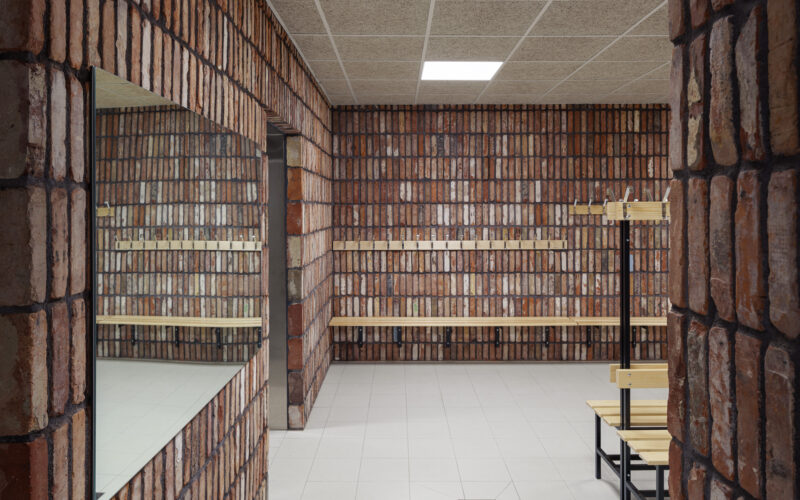
Since the school has no sports hall, students use nearby sports facilities. However, the basement features yoga rooms, a gym, and gender-neutral changing rooms. Here, students change and shower in individual booths, with lockers positioned outside. An inclusive design that sparked debate when first introduced.

“This was likely one of the first gender-neutral changing rooms. Today, it’s the norm. At the time, it caused controversy in local media.”

Given that changing rooms are a common site for school bullying, these enclosed shower booths were designed to prevent any form of invasive photography, with doors sealed from floor to ceiling.

“Ironically, when the building was first constructed, strict gender separation was the norm—many original floor plans include rooms labelled ‘female assistant.’”

Anna Whitlock’s. Photo: Åke E:son Lindman

Anna Whitlock’s – a celebrated and accessible school

Throughout the renovation, many original features were restored, including the limestone staircase in the main entrance. The building was carefully adapted for accessibility while preserving its historical character.

“We were fortunate to work with bold clients who had a high level of ambition and deep respect for the building’s heritage,” says Amanda.

In 2019, Stockholm named Anna Whitlock’s Upper Secondary School Building of the Year. Today, it plays a vital role in Kungsholmen’s vibrant city life.

Contact person

Oskar Eriksson

+46 702 56 27 39