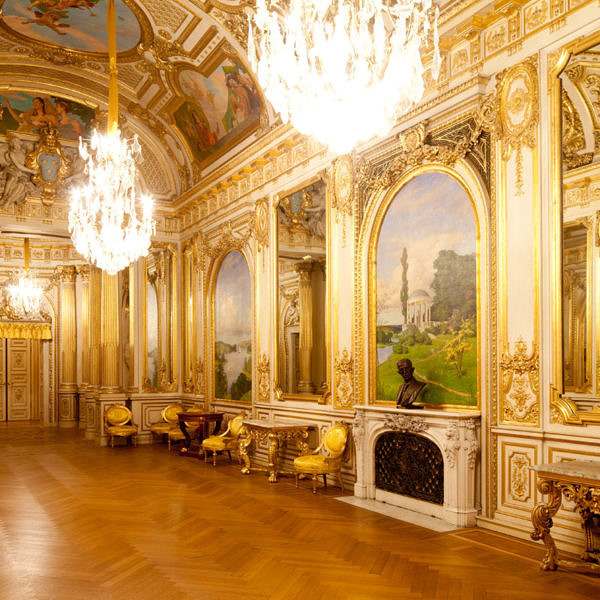
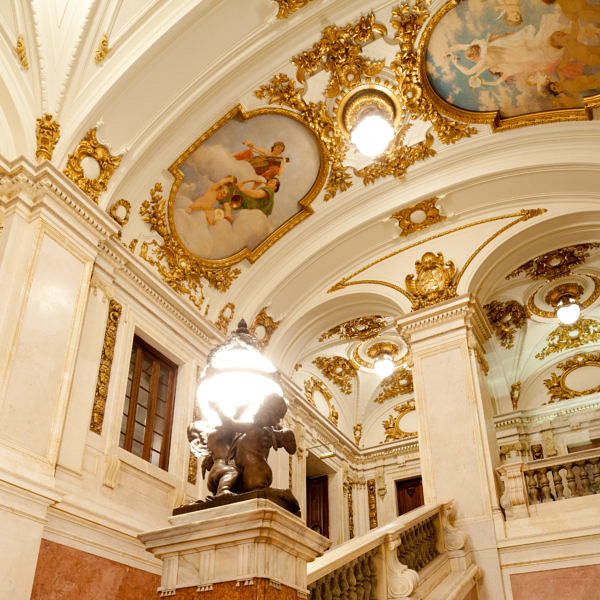
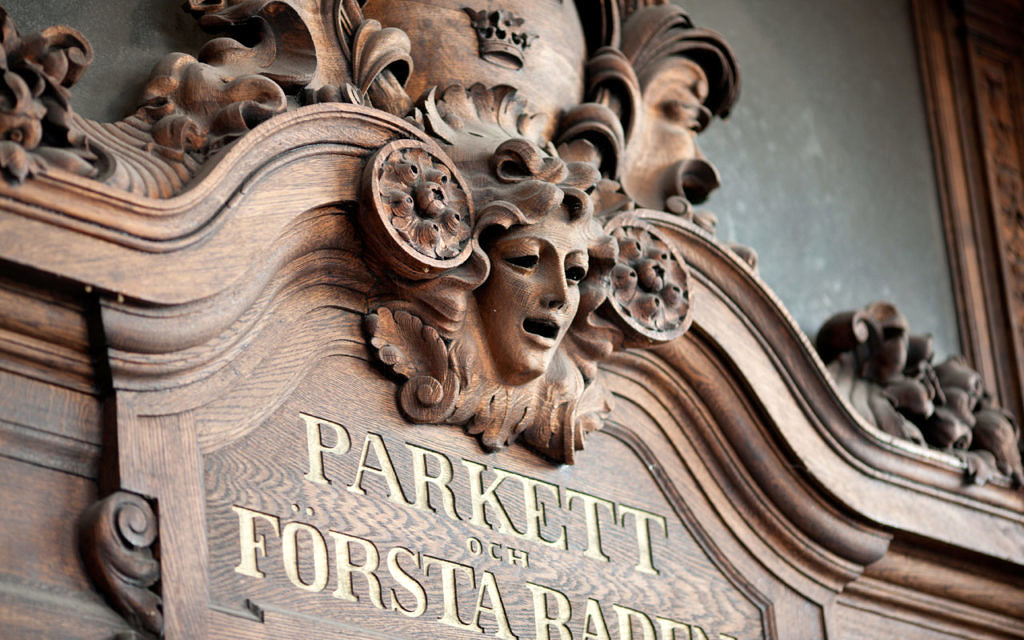
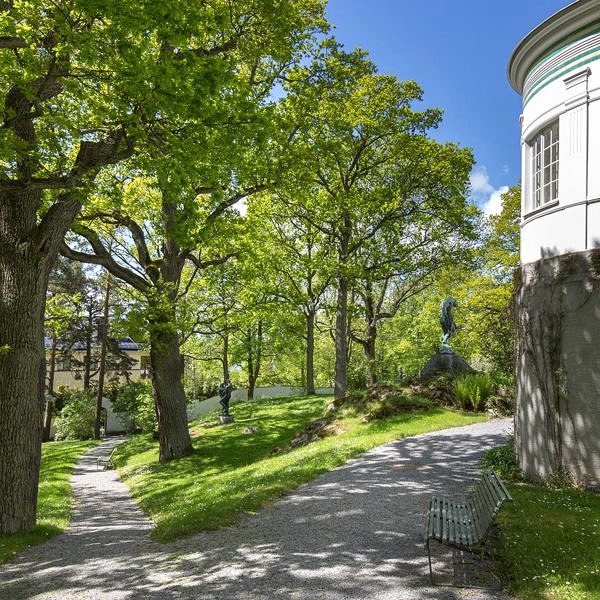
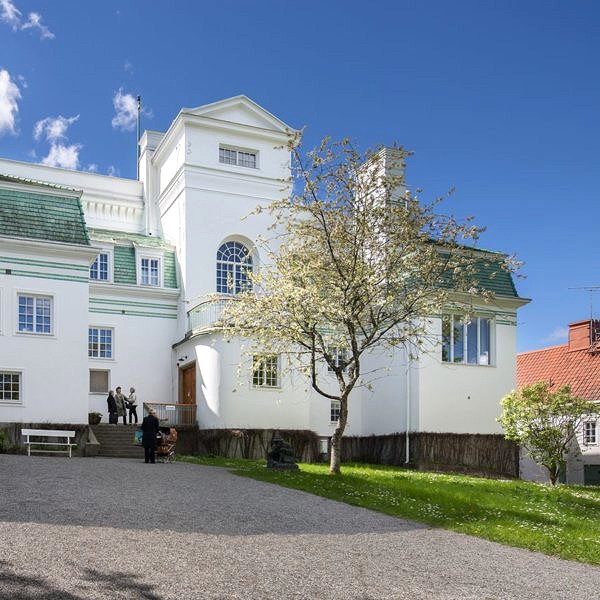
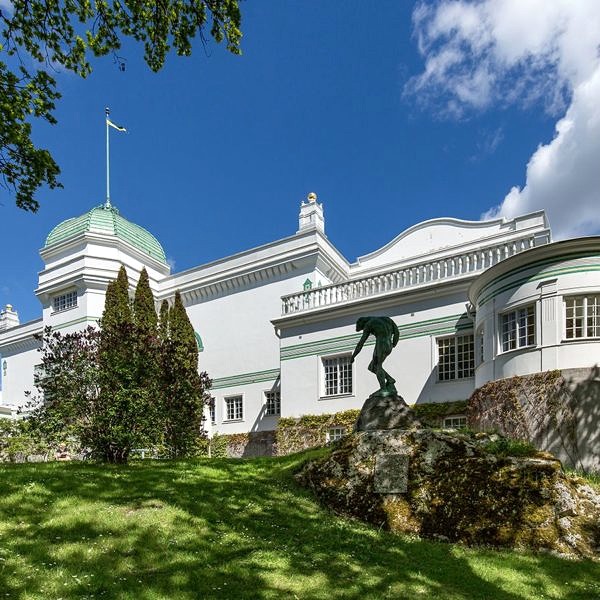
Founded in 1907 and situated in a walled park far out on Djurgården’s Blockhusudden, the Thiel Gallery is one of Sweden’s most beautiful museums. We served as building architect and general consultant for the gallery from 2013 to 2019, providing administrative support and taking responsibility for the listed building’s maintenance and development on an ongoing basis.
The architect Ferdinand Boberg designed the Thiel Gallery. He drew inspiration for the unusual building from the Orient, southern Europe and the late Art Nouveau era. Work on the venue was completed in 1907, realising the dream of financier and patron of the arts Ernest Thiel to create a home and art gallery. After being acquired by the state in 1924, Thiel was converted into a museum, before being conferred national listed building status in 1958. Our work on the museum took place in close collaboration with the National Property Board of Sweden. As well as the venue’s tenants.
Complex projects requiring a highly sensitive approach
Our projects at the Thiel Gallery were often of a complex nature, requiring knowledge and understanding of a range of factors related to climate, technology, logistics and programming within the scope of an art museum. With considerable respect for the cultural-historical values of this listed building, we carried out adjustments and highly skilled design work on a small and large scale. We also handled permit issues, long-term plans for maintenance and restoration as well as acting in an advisory capacity. Among other things, the commission required advanced knowledge of installation techniques both new and old.
Our role in the project is fundamentally underpinned by a holistic approach, awareness and flexibility.
Effective collaboration and close contact
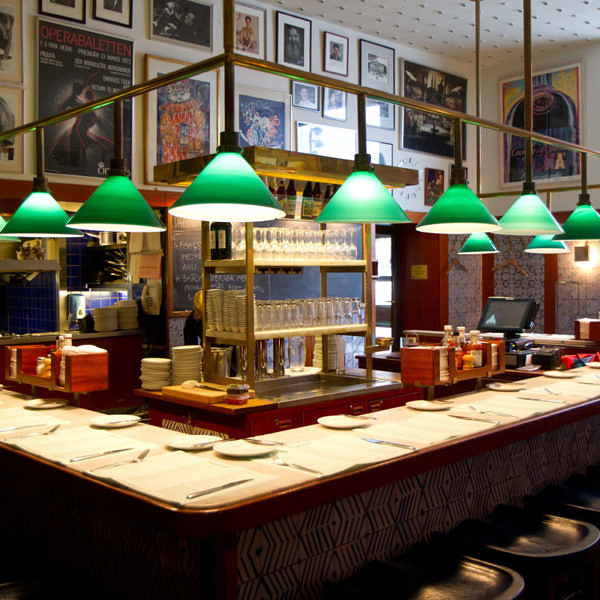
We worked on a range of projects at the Thiel Gallery. We renovated the café kitchen and cafeteria and installed new lighting in the exhibition halls. We also prepared the Annex for the museum’s offices and conferences. To improve accessibility, we conducted a comprehensive survey of the entire venue. This led to the installation of a new lift and the creation of new public areas, including a shop, cloakrooms, and toilets.
Photo: Sten Jansin
Photo: Sten Jansin
Photo: Sten Jansin
Effective and clearly defined partnerships are fundamental to every project. To ensure this, we involve technical consultants and other specialists at an early stage. Close contact and long-term collaboration with administrators, tenants, and authorities remain essential. We also work closely with specialists, craftsmen, and contractors throughout the process. Our role in each project is built on a holistic approach, strong awareness, and flexibility.
Industrial inspiration in an exciting neighbour-hood
Architecture
Residential
Client:Byggnadsfirman Erik Wallin AB
Location:
Norra Djurgårdsstaden, Stockholm
Years of commission:
2004–2008, 2011–2014
Type of project:
Residential
Competences:
Residential, Sustainability
While designing the Abisko neighborhood, we drew inspiration from the beautiful industrial structures of the 1800s in Norra Djurgårdsstaden, known for their high-quality brick and steel. Our client, Erik Wallin, aimed to create solid, high-quality homes with a façade that stood out from the rest of the area. The result is two interconnected seven-story buildings, constructed according to strict environmental standards, housing a total of 42 well-designed flats.
Photo: Michael Perlmutter
Special façade stands out
The façade material that we chose was hard-burnt bricks and shaped bay windows in corten steel – a durable material with a beautiful, rust-coloured patina. The vivid texture and colour variations of the brick, along with the characterful bay windows, create an interesting unity, which enrich the urban space both from a distance and close by.
Attention to detail
We focused on every detail to ensure high-quality flats. Additionally, the design emphasizes connections between rooms and generous views. From the bay windows, residents enjoy stunning views of the beautiful Nationalstadsparken. Meanwhile, towards the courtyard, slanted glass balconies extend from shielding brick walls, creating private patios facing southwest. The design recesses the top floor from the street and shapes it as a maisonette.
Photo: Michael Perlmutter
Illustration
Photo: Michael Perlmutter
Nomination for Årets Bygge
The neighbourhood Abisko in Norra Djurgårdsstaden is a close partnership between five contractors. From a design point of view, it is an exciting development where each contractor worked with their own architect to create an exciting and contrasting unity. Our buildings, along with others in the area, earned a nomination for the award Årets Bygge 2015. This year’s Building of the Year is the civic construction sector’s most prestigious competition. It highlights excellence in quality, project collaboration, finance, and design.
Competences:
Residential, Landscape, 3D illustration, Hotel & Restaurant, Accessibility
Södra Centrum (South Central) is a completely new district that is emerging just outside the centre of Gothenburg. We won two architecture contests during the planning of the area, one of which provided the opportunity to design a new residential building, including commercial street level, for JM. Welcome to Light Factory GBG.
The new inner-city district will be characterized by innovative, sustainable, and urban architecture. Moreover, an important aspect of the design of Södra Centrum is to create a well-thought-out urban environment that connects the new district with Gothenburg’s inner city.
Nyx or Nova – which suits you best?
Light Factory GBG consists of 250 apartments located above street level, including shops, cafés and restaurants. The building is divided into two sections, which we are developing into two distinctive residential concepts.
The goddess of the night according to Greek mythology, Nyx lends her name to the more unrefined part of Light Factory GBG. This section contains open, space-efficient apartments with an industrial character, with the studios containing a galvanised expanded metal partition wall facing the sleeping area, and the larger properties featuring sliding doors between the bedroom and living room.
Nova – star, in Latin – is the name of the lighter, more stylistically clean concept within Light Factory GBG. Most of the apartments feature consistent layouts with light intake from two directions, large window sections and glazed balconies or terraces.
Housing for the future with smart functions
Light Factory GBG provides comfortable, future-orientated housing designed for an urban target audience of young adults and the middle aged. Open, light, and spacious, the properties feature an open-plan layout. Residents benefit from smart functions such as wireless audio systems in the apartments, carpools, and charging stations for electric vehicles. Beyond shops and restaurants, the development includes communal spaces. Loungers and New York-inspired roof terraces create natural meeting places.
High-visibility urban architecture which grabs the attention
Urban architecture and the pulse of the city underpin the entire Light Factory GBG concept. Facing Mölndalsvägen and the E6, the building is 120 metres in length and spans 10 storeys. The objective is to create an intricate, visible exterior which captures the attention. Meanwhile, the building’s lighting is fully integrated, dovetailing with the design.
Between 2007 and 2012, we were the in-house architects of the Royal Opera in Stockholm. An inspiring task filled with responsibility which included making sure that the fantastic opera house from 1898 was developed and taken care of in the best possible way.
The architect Axel Anderberg designed the Royal Opera, Sweden’s national stage for opera and ballet, which opened in 1898. It stands on the same site as Stockholm’s first large opera building from 1782. Anderberg drew much of his inspiration from the Paris Opera. He gave the new opera house a Neo-Renaissance exterior, while designing the staircase, foyer, and salon in a Neo-Baroque style.
From stage technology to Golden Foyer
Today, the Royal Opera is a national monument. The opera house includes a complex mixture of advanced technology and working areas. Richly decorated, representative environments such as the Golden Foyer with its shimmering stucco, brocades and chandeliers. The twelve floors house a thousand rooms and many different activities – from stage technology in the basement via workshops, rehearsal rooms and dance studios, restaurants, dressing rooms, and all the way up to the costume designer’s colourful studio just above the roof of the salon.
An amazing experience we will never forget
Expertise and continuity
Photo: Sten Jansin
To be the in-house architect for something so amazing as an historic opera house is a great responsibility. In our role as renovation architects, we have to be experts on the building, its history, values and requirements. Our task included architectural, artistic, antiquarian, and technical oversight. We also ensured compliance with all regulatory requirements. Additionally, we made sure that every plan and action aligned with both management’s vision and the business requirements.
Photo: Sten Jansin
To take care of the opera house in the best possible way, long term plans need to be established both for maintenance and restoration. One of our most important tasks was to constantly walk the fine line between today’s requirements and the antiquarian requirements as well as qualities of the national monument.
A masterpiece of coordination
To be the in-house architect for the Royal Opera is in many ways a communicative masterpiece from a coordination stand point. The task requires constant communication with clients, managers, tenants, authorities, specialists, various consultants, contractors and craftsmen. There were many of us who worked intensively on the project – an amazing experience we will never forget.
Partners:
Chalmers, HSB, Johannaberg Sceince Park, Akademiska Hus, Bengt Dahlgren, Electrolux, Elfa, Göteborg Energi, Peab, Tieto, Vedum
In this unique living lab, students and researchers share their daily lives while we study their living habits, materials, and technologies shaping the future of housing. The insights we gather guide the changes needed to create better conditions for future generations.
In the autumn of 2013 we made the decision, as the first external partner, to join the project HSB Living Lab. This decision resulted in phase one, which meant that we contributed to a brick-and-mortar location along with our other partners, HSB, Chalmers and Johanneberg Science Park. Today, we are twelve partners. HSB Living Lab pioneers real-life testing of new technological, social, and architectural innovations. For ten years, the house will serve as a living laboratory and home to about 40 students and researchers.
Photo: Felix Gerlach
It is an arena for developing new ways to build and shape the future of housing, as well as a platform for work between collaboration partners. It will feature a residential section with student housing and an exhibition area, including offices, meeting rooms and showrooms for research. The project is one of a kind, as it is the first house where people will live while the research goes on.
Where yesterday’s architects might consider themselves to be finished, we are now continuing to develop our work in the building and its programming
Our role as architects
We designed the building as more than just a physical structure. It functions as a dynamic research platform, adapting both financially and functionally to support ongoing scientific work. Modular construction forms the foundation of the design, making the building itself part of the research. Researchers will evaluate these modules for future housing solutions, testing them as infill projects on streets or as standalone buildings in open areas. Some units could even be placed on rooftops to create three-dimensional properties.
Photo: Felix Gerlach
“Where yesterday’s architects might consider themselves to be finished, we are now continuing to develop our work in the building and its programming. It is a special and exciting situation for us to be working on a project where the goal is not a finished structure, but rather a constantly updated, changing process,” sais project architect Peter Elfstrand.
Why are things the way they are today? How did they get this way? Is there anything we can change, and if so, how? Do things correspond with what we see as the needs of our times?
As architects, we have a great deal of responsibility towards social-centric building and thinking in a broader perspective with a long-term view. What we plan and build today must be adapted for the future, with the largest foundation in reality. But what can we really know about the future? Nothing, many would argue, but our commitment to the HSB Living Lab is a unique opportunity for us to participate in the dialogue on research and housing, both in the present and in the future. Along the way, we have the opportunity to ask questions such as: Why are things the way they are today? How did they get this way? Is there anything we can change, and if so, how? Do things correspond with what we see as the needs of our times?
What (and what not) to do
It is easy to get caught up in what not to do, and hindsight is of course 20-20. For example, many of us agree that it is not a good idea to build homes based on laws and rules derived from the 1940s and 1950s – something the trade still does today.
Photo: Felix Gerlach
This approach hardly creates buildings for the future, tailored to generations with needs and perspectives different from their parents. Researchers have conducted similar studies before, like those we are now exploring with HSB Living Lab. Historical examples include kitchen studies in the People’s Home (Folkhemmet) of the 1930s and the Case Study Houses in post-war America, designed to address the urgent housing shortage. Many of these experiments missed the mark and are now considered failures. So, what suggests that this living lab will succeed?
“We are twelve equally involved and very committed partners; the central focus here is cooperation between academia and industry. Now we have reached a level where we are starting to work together in earnest. The results are hotly anticipated, but the most important thing is perhaps to always focus on people,” says Peter Elfstrand.
We see it as a blank canvas, something that can stand to be rearranged.
Photo: Felix Gerlach
People in focus
The house serves as a technical stronghold, equipped with hundreds of sensors that monitor and analyze residents’ lifestyles and habits. For example, sensors track how often and when windows and refrigerators open to determine optimal cooling times. Researchers focus on electricity and water usage, but without making residents feel monitored. To ensure privacy, all data is coded. Residents should experience the building as a home, while partners have the opportunity to contribute their expertise and research. Democratic design forms the foundation of this approach.
A democratic design
Critics and observers have questioned the building’s aesthetics. No, it does not resemble something out of a sci-fi movie, and for good reason. The design was never meant to create an iconic structure that overshadows its content. Instead, the goal was to build a platform that evolves over time, remaining both dynamic and inclusive. As architects, we do not dictate answers or solutions in advance. Instead, we create the conditions for them to emerge. We see the building as a blank canvas, designed to be rearranged. This approach results in a flexible design with standard dimensions, interchangeable panels, and adaptable systems. The building’s aesthetics align with these fundamental principles.
Photo: Felix Gerlach
Photo: Felix Gerlach
Photo: Felix Gerlach
In this project, we have not been able to take anything for granted. We’ve thrown everything up in the air and tested the boundaries between private, common and public. We have held focus groups with everything from behavioural scientists to sailboat manufacturers with expertise in galleys. Not taking anything for granted has been a great challenge, but it is also the driving force.
A major challenge
As architects, we take full responsibility for driving projects forward—asking questions, pushing boundaries, and ensuring thorough investigation and answers. This approach is challenging and, in some ways, breaks with tradition. At the same time, we see it as a strength to embrace experimentation and conceptual thinking. Through the projects we develop in the house, we expect to learn a great deal—not only from our successes but also from our mistakes.
One of our studies, called the Next Generation Kitchen, has already resulted in a product that students from Rice University in Texas are testing in the prototype phase in the house. It is called BioBlend and it is a waste grinder that creates finely ground compost within a closed system. We are also researching future storage in the house and solar panels on the façade. A lot can happen in ten years, but perhaps what we will learn the most from are the social aspects of how we will, and will want to live in the future. In effect, our participation in the project means that we have clients at arm’s length with which to conduct dialogues.
The greatest advantage for us as architects is perhaps that based on the facts we obtain. We actively shape the changes we envision to create a better environment for future generations. When it comes to building the future of sustainable cities and houses, the architect has an important and decisive role. We are inspecting, analysing and challenging this role now to become even better at what we do.
Sustainable district creates inspiration worldwide
Architecture, Urban Development
Idea & Vision, Plan & programs, Process & Dialogue, Residential, Urban planning
Client:The City of Stockholm
Year of commission:
1997 – 2007, 2013 - 2016
Partners:
Several
Developer:
The City of Stockholm, Erik Wallin, Stockholmshem, Riksbyggen, Einar Mattsson
Skills/studios:
Urban Development, Housing, Helsingborg, among others
Development of the internationally renowned Sustainable City district (Hammarby Sjöstad), one of Stockholm’s largest urban development projects with a strong environmental profile, got under way as early as 1990. We’ve participated on large parts of the project over the years, including work on the in-depth master plan, several zoning plans and many other construction projects.
Sustainable City spans the area around Stockholm’s Hammarby sjö (Lake Hammarby), covering Södra Hammarbyhamnen as well as parts of Södermalm. By 2017, the district will expand to include around 11,000 residences, housing over 25,000 inhabitants. The district forms a natural expansion of Stockholm’s inner city area, something that has influenced its architecture, infrastructure and urban development plan.
Photo: K-A Larsson
The Olympic village dream
From the start, planners envisioned the new district as an Olympic village. The idea was to create a sustainable neighborhood over the worn-down Hammarby harbor and industrial area. This development could have supported Sweden’s bid to host the 2004 Olympic Games. However, events took a different turn. By then, the vision for Hammarby Sjöstad had already taken shape—an environmentally friendly inner-city district offering modern housing for thousands of Stockholmers.
Photo: K-A Larsson
Photo: K-A Larsson
Photo: K-A Larsson
From master plan to GlashusEtt
Our involvement in the development of Sustainable City stretches all the way back to 1997. Among other things, we have worked on the in-depth master plan for the entire area and several zoning plans, including documentation, as well as the detailed planning and configuration programme for over 2,400 apartments as well as public spaces, workplaces, amenities and much more.
We’ve also designed GlashusEtt, the City of Stockholm’s first environmental information centre, which has generated a great deal of attention, both in Sweden and globally, since it was opened in 2002. The centre provides information about the Sjöstad environmental programme, among other ventures, with considerable dedication, and has inspired other cities around the world to follow a similar path.
Photo: Björn Lofterud
A transparent building controls and showcases key elements of the area’s environmental technology. In the cellar, it houses an automated vacuum collection tank and a rectifier station for the Tvärbanan link. The building operates through a complex environmental technology system. It uses impulse-controlled heat pumps, ventilators, convectors, and blinds. A biogas boiler, weather station, and solar cell technology are also integrated into the system.
The ultimate objective was to reduce total environmental impact by 50%, in comparison to a typical area constructed at the start of the 1990s.
Photo: K-A Larsson
The Hammarby model
The development of Sustainable City transformed the vision of a sustainable urban district into a detailed environmental program. The ultimate objective was to reduce total environmental impact by 50%, in comparison to a typical area constructed at the start of the 1990s. However, more stringent environmental demands required a completely new set of solutions. This included a closed-loop system – the Hammarby model – with solutions for energy, waste, water and sewerage.
Kasper Salin Prize winner in 2005
In 2005, Hammarby Sjöstad (Sickla Quay, Sickla Canal and Sjöstadsparterren) received the Kasper Salin Prize, one of the finest distinctions in Swedish architecture. This prize also recognised our involvement in the urban development plan for Sickla Quay. Here is an excerpt from the award statement:
”In recognition of an expertly integrated district in a beautiful city space, where urban intensity contrasts with soothing greenery and water. Through a sound balance between content, scale and infrastructure, a human touch has been harnessed in a large, complex context.”
Furthermore, you can read more about Hammarby Sjöstad at the City of Stockholm website.
Competences:
Hotel & Restaurant, Building preservation
Our collaboration with the Grand Hôtel in Stockholm dates back nearly 100 years. In the 1920s, Ivar Tengbom redesigned the hotel’s façade, lobby, and banquet hall Vapensalen. In 2014, we carried Ivar’s work on the lobby into the next era. And in 2020, it was the entrance’s turn to step into the future.
The lobby is the heart and face of the hotel. Preserving and highlighting details from the hotel’s rich history was of utmost importance to both us and the Grand Hôtel. Our goal was to give the space a contemporary expression and functionality while meeting the high standards of heritage preservation and accessibility adaptation.
“What would Ivar Tengbom do?” became the question that guided the project.”
Karin Hagelberg, architect
Photo: Åke E:son Lindman
“The collaboration with the Grand Hôtel is particularly enjoyable as it dates all the way back to Ivar Tengbom’s time. We’ve worked to recapture the essence of the changes Ivar made in the 1920s while also incorporating new, modern solutions,” says Karin Hagelberg, architect.
Bright and elegant space for everyone
Our concept has transformed the lobby into a bright and elegant space. We seamlessly integrated modern functionality and technology into the historic setting. A new marble floor with large inlaid rugs, along with a concealed sound and lighting system, brings the lobby into a new era.
Photo: Åke E:son Lindman
The beautiful ceiling moldings have been highlighted in a new way, and the hotel’s antiques are artfully combined with modern details. The addition of new ramps and railings ensures that the lobby is now accessible to everyone.
Carefully updated hotel rooms
Since 2010, we have continuously revitalized a large portion of the hotel rooms, most recently on the second floor and the third floor of the Royal Building. We have designed many rooms for flexible use, adding classic double doors to allow seamless connections. To enhance natural light, we have also introduced new French balconies in some rooms and clad the bathrooms in Carrara marble for a refined finish.
New era – new entrance
Foto: Per Kallstenius arkitektkontor
When Grand Hôtel updated its iconic entrance in 2020, Ivar Tengbom’s influence remained present throughout the process. The team replaced the revolving door with two glass panels, creating a sense of openness while keeping cold winds at bay. Inside, the space once dominated by the revolving door became a grand transitional zone between outdoors and indoors. The outer canopy was redesigned to improve the view from within. Custom-designed lanterns, recessed light wells, and gold-toned metal in the entrance ceiling now cast a warm, welcoming glow. In the lobby, the staircase was moved further into the room, returning to its original position from Ivar Tengbom’s time. His pattern design from the elevator doors was also revived, now adorning the new accessibility lift and the railings.
Influencer: Ivar Tengbom
Karin Hagelberg explains, “We built on what already existed. With great respect for history and a sensitive approach, we drew inspiration from timeless details and environments.”
Helsingborg Central Station has gotten a new southern entrance. But Södra entrén – “The South Entrance” in Swedish – is far more than just a shortcut to the tracks.
As well as a new passenger flow and a bicycle hub, the new entrance is also a landmark and a destination that strengthens the city’s commercial ties.
The Municipality of Helsingborg has witnessed a sharp increase in traffic to and from the city. Looking forward to 2020, it is estimated that daily visitors will increase from the current figure of 22,000 to 32,000. This is a pressure that Knutpunkten – which was designed by Ivar Krepp in 1984–1991 – could not handle in its current state, which is why the decision was made to create a new exit and approach at the root of the track’s southern extension. Furthermore, the southern entrances were in a worse condition than the northern ones, which affected the flow of pedestrian traffic. Knutpunkten is currently undergoing a transformation and renovation, yet another task that fell on us.
Photo: Felix Gerlach
“The new entrance is in a way a natural result of the long platforms underground. An important aspect of the project is to reinforce Knutpunkten’s connection with the southern part of the city, with the campus and the future H+ area. The new traffic flows, more activity and vibrancy in the area will hopefully contribute to reduced segregation in the town”, says the architect in charge Patrik Ekenhill.
A competition that was won
Photo: Felix Gerlach
In 2013, the Municipality of Helsingborg arranged a competition for architects relating to the new entrance, a pre-qualification with tenders. Tengbom Helsingborg won the tender in collaboration with Tyréns, an urban planning consultancy company. We were general consultants during the entire project phase, with all other consultants working under us.
“We designed the building as a sculptural element to stand out in an area where so many people head south every day”, says Linda Raimosson, former office manager at Tengbom in Helsingborg.
Below is one extract from the competition entry: We regard the area as a transition point between various ways of travel and movement in the city, but also as a transition between different parts and rooms of the city. It will be a dramatic change from today’s dominating and yet anonymous multi-storey car park to an attractive component in the cityscape that contributes to increased activity and pulse.
“We designed the building as a sculptural element.”
– Patrik Ekenhill, Architect
The back became the front
In other words, the new entrance transformed an anonymous backside of the station into another front entrance. This has also contributed to increased traffic safety, as pedestrians walking to the campus area previously had to cross the bus terminal, which has been avoided with the new flow of traffic. A new pedestrian crossing over Järnvägsgatan, which leads onto Bollebrogatan, also adds to a more direct link to the local Stadsparken park and the south district of the city. A further aim is to promote cycling in the city. A total of 450 bicycle spaces have been created between the entrance steps and freely on an open platform. There are also other facilities such as a pump, a repair station and lockers.
Photo: Felix Gerlach
A prominent landmark
In addition to solving many of the problems the city was experiencing, the entrance has become the landmark that we proposed and were hoping for.
“Our main architectural idea of a collective roof builds on a sequence between the top and bottom. The characteristic roof has a neutral, square plan shape. Each section is carefully modified to create variation. A vaulted bottom meets a curved top in the direction of the tracks. This combination evokes a sense of motion and echoes the softly undulating topography of the City Park,” says Patrik Ekenhill.
Photo: Felix Gerlach
Photo: Felix Gerlach
Photo: Felix Gerlach
Photo: Felix Gerlach
Photo: Felix Gerlach
Two slate-clad wall plates rise from the track area, supporting the sculptural timber roof. Glass panels provide extra protection against the elements while maintaining an open feel. Lighting plays a key role in shaping the atmosphere. Indirect and hidden fixtures illuminate the bike rack roof, creating a soft and seamless effect. To enhance the space, we removed two emergency stairways and transformed the shafts into circular openings that channel daylight onto the platforms. At ground level, benches invite travelers to pause and take in the light-filled space.
The new entrance transformed an anonymous backside of the station into another front entrance.
A metaphor for travelling
Just like the act of travelling, the new entrance is very much about transitions, both physically and architecturally, as well as metaphorically. Physically, it’s about understanding the flow of traffic and people. Architecturally, we are talking about open encounters – heavy meets light and geometry meeting organic forms. Metaphorically, you might say that the South entrance is a symbol for the transition to a new travel area, ready for the future.
“This is fantastic architecture on a small scale. We are incredibly proud that a relatively small project can make such a great impression”, says Linda Raimosson.
Health, Parks, Play & Public Spaces, Sports, Sports & Health
Client:Kungälv Kommun
Years of commission:
2013-2015
Location:
Kungälv
Contractor:
Kungälvs kommun / Ängegärde Bygg
Collaborative partners:
CMC Byggkonsult, Norconsult, Andersson och Hultmark, SLN Elkonsult, Fast Engineering Göteborg
Competences:
Culture & Sport, Interior Design, Landscape, BIM & 3D illustration, Hotel & Restaurant, Accessibility
From the first sketch to the opening. That is how involved newly qualified Christofer Ödmark got to be in the project Kotte, a sports center in the woods – a competition that landed on his desk during his internship at Tengbom´s in Gothenburg.
Kotten – the Pine Cone – is in our humble opinion a real gem of a story. Not only that actually, because the mere sight of the structure in the clearing in the nature reserve Fontin is enough to give you goose bumps. The project is a happy story in many ways both because it was the winning entry from a young and promising talent in our office called Christofer Ödmark, and also because the project has become a viral success internationally and received enormous attention. Again, in our humble opinion.
Photo: Ulf Celander
The story began in 2013 when Christofer Ödmark, fresh from his studies at Chalmers, started an internship at Tengbom’s Gothenburg office. One day, a competition landed on his desk—to design a new sports center in Kungälv after the old one was tragically lost in a fire. With guidance from his mentor, Hans Lindgren, he developed a complete proposal. The result was an oval building made entirely from organic materials. Its wooden modules, arranged in a pattern reminiscent of a pine cone, and its sedum-covered roof caught the jury and Kungälv’s council by surprise. They had hoped for something out of the ordinary—and that’s exactly what they got. The rest, as they say, is history.
Illustration: Tengbom
”I worked on Kotten from the very first sketch to the opening of the finished building two years later. During the project, I was given a lot of responsibility and was really able to develop as an architect in all areas from detailed design to customer relationships”, says Christofer Ödmark.
Our ambition was to create an iconic building that would stand as a symbol for the great outdoors and exercise.
The function of the building
In many ways, Kotten is a classic cabin in the woods of which there are many in the Swedish countryside. A place where you can shower, have a sauna, get changed and have a cup of coffee or eat a picnic. Our ambition was to create an iconic building that would stand as a symbol for the great outdoors and exercise. Christofer Ödmark says that the competition gave him free reins even if the council wanted full control of the construction process as well as the end result. Therefore the choice was made to work with a general contractor and the one that won the tender was the local construction company Ängegärde Bygg with 23 employees. The lowest price was the deciding factor during the bidding process.
Photo: Ulf Celander
Photo: Ulf Celander
Photo: Ulf Celander
“Yes! we thought when we won the bid. It is fun to create a monument that even my grandchildren will get to see. This has been really important to us. We come from the area so this sports centre belongs to us as much as it belongs to the other members of the community”, says Stefan Johansson who is a partner in Ängegärde Bygg to Byggindustrin in the article Kotten was created by a young, untried fountain of ideas (3 Feb 2016).
Illustration: Tengbom
A vision that stayed intact
”Sometimes, as an architect, you pass on a job to somebody else and then things happen along the way that turns it into something completely different from what you had in mind. That wasn’t the case here. All parties involved have kept the lines of communication open during the entire construction period”, says Hans Lindgren at Tengbom in the same article.
Looking back at the proposal we presented in the competition a few years ago, we see a result that remains strikingly similar. One small but beneficial change emerged through collaboration with all involved—the decision to use a vaulted roof. This adjustment simplified the installation while also enhancing the building’s shape.
Photo: Ulf Celander
The oval shape was a challenge
An oval building is a rare sight, making it a unique design challenge. Kotten’s façade features approximately 170 wooden “scales,” produced in modules and assembled on-site. Tengbom developed a model to create the modules, enabling Ängegärde Bygg to install them in a way that gives the illusion of an oval shape. In reality, the structure consists of 50 sides. Even the rafters were individually designed to fit the building’s distinctive form.
Wood for the sake of the environment
Ecological thinking has been a constant during the work on Kotten. The overall material is wood, with an outer façade of pine and interior linings made from birch plywood. The façade material OrganoWood is a silicon-treated lumber that does not emit any hazardous chemicals, but still allows the wood to age and become grey naturally. The price tag was a factor throughout the process but Kotten is a proud example of how to build in an environmentally friendly and sustainable way with lots of character without the costs sky-rocketing. The total budget for Kotten was 23 million kronor.
Photo: Ulf Celander
Partnership and local strength
Kotten is also the result of a successful local partnership with no less than 90 percent local partners.
”The partnership with Ängegärde Bygg has met all the criteria we have as architects. We kept in contact continuously during the entire process and it is clear that they have made a real effort to achieve our common vision”, says Christofer Ödmark.
Tengbom’s landscape architects played a key role in the project. They focused on creating an environmentally friendly construction, ensuring that only a few trees were felled. The team also designed the surrounding landscape. In that space, we created a playground, an outdoor gym, and a swimming dock.
” I have put the bar quite high for myself.”
Christoffer Ödmark, Architect
Photo: Ulf Celander
Out of the ashes into the trail
The Kungälv people have finally got their much awaited sports centre and it is yet again full steam ahead for all outdoor fanatics, young families and retired people to enjoy the nature around Svante Mosse. A proof of our appreciation was an opening party around Lucia time that attracted a very large and engaged group of people. The cherry on the cake was Kotten’s nomination for Building of the Year, Årets Bygge 2016. Christofer Ödmark and the rest of us feel both proud and honored by this recognition.
”It makes you want to do more projects now. But I have put the bar quite high for myself.”
How much do we see of you in Kotten?
Christofer Ödmark explains, “I believe in honesty, both in shape and material. Unnecessary complexity has never made sense to me. While the façade’s geometry may seem intricate, it follows a rational system. Even though Kotten is based on my design ideas, more than 10 colleagues at the office contributed to the project. Together, we brought this building to life.”
We have designed an extension to the Alingsås District Court from 1899, clad entirely in zinc. The jury for the PLÅT prize considered that it was so spectacular and unique that they gave us the award. What do you zinc?
Architect Adrian Crispin Pettersson designed the District Court in Alingsås, a classic brick building from 1899. It stands a few blocks from the town centre, surrounded by large villas and a school from the early twentieth century. In the late 1950s, a brick wing was added. Just over half a century later, Tengbom designed the next extension. Another milestone in Alingsås District Court’s history came in 2016 when we won the PLÅT prize for the new zinc-clad addition. The annual PLÅT seminar is a major event dedicated to metal sheeting and architecture.
Photo: Felix Gerlach
We joined the project after it was already underway, when a brick extension by architect Börje Falemo had been proposed. The District Court, however, wanted to explore alternative facade solutions, giving us the opportunity to present a design based on the existing floor plan. Drawing inspiration from the surrounding buildings with their steep roofs, we proposed a structure with a saddle roof and curved bay windows. With a compact plot and thin walls, it made perfect sense to extend the zinc sheeting from the roof down the facade, creating a sleek, protective outer layer.
“This design gave us both flat and steep roofs, so we needed a material that could handle both — leading us to zinc. The old building has thick, solid walls, while the extension relies on thinner curtain walls. Here, zinc sheeting worked perfectly as exterior cladding. We could wrap the entire building in a single material, making it clear what was new and what was old,” says architect Fritz Olausson.
The result, a monolith in zinc, cannot be ignored. The sheeting accentuates the building’s shape and shows its own annual ring at the same time as it ages with dignity — much like a grey and wise judge.
Photo: Felix Gerlach
Photo: Felix Gerlach
Photo: Felix Gerlach
A contemporary take on traditional craftsmanship
“Zinc is a fine old classic material which was used extensively as roofing during the last century. We simply brought in down onto the facade and it fits beautifully with the granite foundation wall which is a common denominator for both buildings,” says architect Magnus Almung.
Even with its expressive form, the building maintains a restrained volume to avoid crowding the old one.
“The design represents our time, perhaps primarily thinking of the expressive volume. Monolithic buildings are typical these days with the same material for walls and roof. You can even see buildings without eaves. In the same way saddle roofs have come back into fashion in the past few years, something we didn’t see much of previously. The difference is perhaps that this building is constructed using craft techniques that are the same as at the beginning of the twentieth century. All the sheets are put up with great care and precision,” continues Olausson.
A living facade
The roof is clad with standing seam sheeting while the facades are covered with sheets of different widths placed in a set “random pattern” from base to ridge. Variation provides a living facade and by working with four different widths we could work round the predetermined window locations which were dictated by the internal functions. The entrance doors are also clad in zinc and fall into the pattern.
Photo: Tengbom
“Over time the facade will age as beautifully as the adjacent brick buildings. That´s when runnels and patination make their mark on the sheeting,” says Almung.
The team carefully chose the grey zinc sheeting, valuing its robust and confidence-inspiring aesthetic. Alingsås District Court emphasized the need for a dignified environment. Since the Court handles sensitive and serious cases, the surroundings must both show respect and instill confidence in visitors.
“A good client is key to a successful result. The requirements of the Swedish National Courts Administration and the District Court were decisive for the building’s appearance.”
Fritz Olausson, architect
Photo: Felix Gerlach
Metaphors and problem solving
Raising the roof wasn’t just a metaphor — it was a real challenge. High ceilings weren’t part of the original plans, but they allowed for two new courtrooms with a height matching the large courtroom in the old building. We refused to compromise on this. Some suggested lowering the ceilings to improve acoustics and recording conditions. Instead, skilled acousticians tackled the challenge together with sound and light engineers. Otherwise, the building’s exterior and interior would have clashed. Something we were determined to avoid.
Designed-in stories
Another aspect which the presiding judge liked was a building that told stories. Tengbom has also designed the interior and Carl Olofsson saw an opportunity to incorporate the courthouse’s history in the interior. There was an existing decision that the courtroom doors should be of walnut with elements of oak. Olofsson’s solution was a striped pattern with references to the five key years for the building. At the bottom of the doors is a code with lines that form the year. Tengbom has a frame contract with the Swedish National Courts Administration and designs interiors for courts throughout Sweden. Karin von Geijer designed the interiors of Alingsås District Court.
“We started in both the original and new buildings when we designed the courtroom furniture. The rooms are characterised by wood-panelled walls and floors. We wanted to get a feeling that the tables were growing out of the wooden floor. It was like a jigsaw getting the tables right bearing in mind the mass of technical equipment such as cameras and recording equipment that they contain. The interiors need to be beautiful and dignified since life-changing events will take place here. The rooms must be perceived as neutral as much by the public as by the parties and witnesses,” she says.
Furniture that elevates the space
The generous ceiling height made even higher demands on the technical installation, which influenced the furniture. The courtrooms have a lovely sense of space which must be reinforced, not supressed, by the furniture required. One solution to this, among others, is office chairs with semi-transparent backs which make the back wall behind the Court’s bench visible. The wooden frontals of the furniture have references to the facades in brick and zinc. Another unusual detail in the context of courtrooms is that they have direct daylight. If hearings are in camera then curtains can be drawn across the windows.
Now and then
The jury for the PLÅT prize stressed among other things that Alingsås District Court is “a building that arouses feelings (…) The designers have been insistent in their choice of material which shows a very good understanding for materials. A familiarity which has provided the finest details as well as space for great craftsmanship. Alingsås residents should confidently follow each annual ring on this solid building.”
Photo: Felix Gerlach
The District Court officially opened in September 2016.



 future-orientated