Archives

Kroatorpet

Updated coffee gem
Interior Design
Building Preservation & Restoration, Restaurants
Client: Huskvarna Hembygdsförening
Years: 2020-2021
Awards: Diploma for Good Building Conservation, Jönköping Urban Design Prize
Developer and partners: Huskvarna Hembygdsförening & Pålssons Bygg
Photographer: Jansin & Hammarling

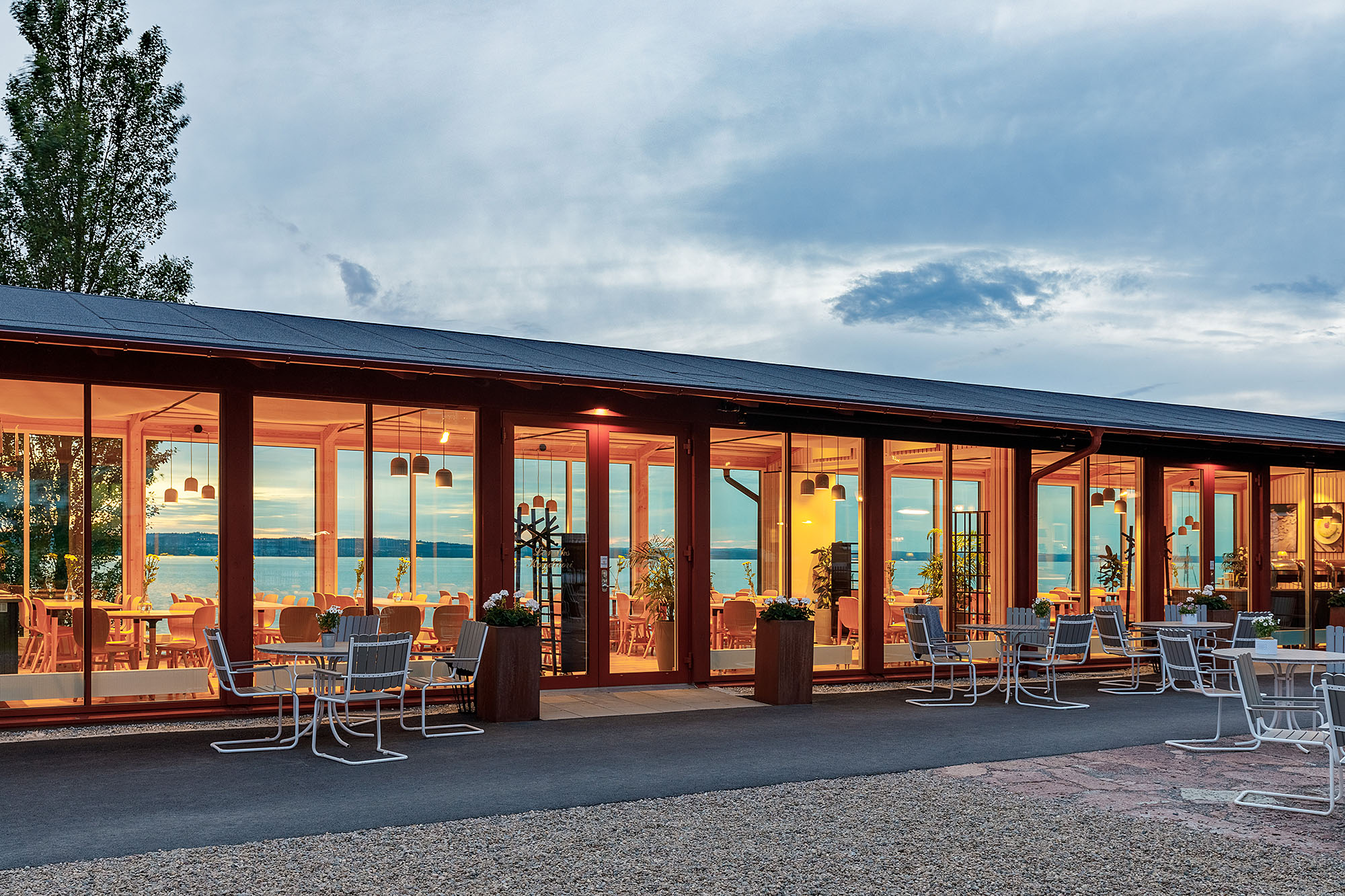
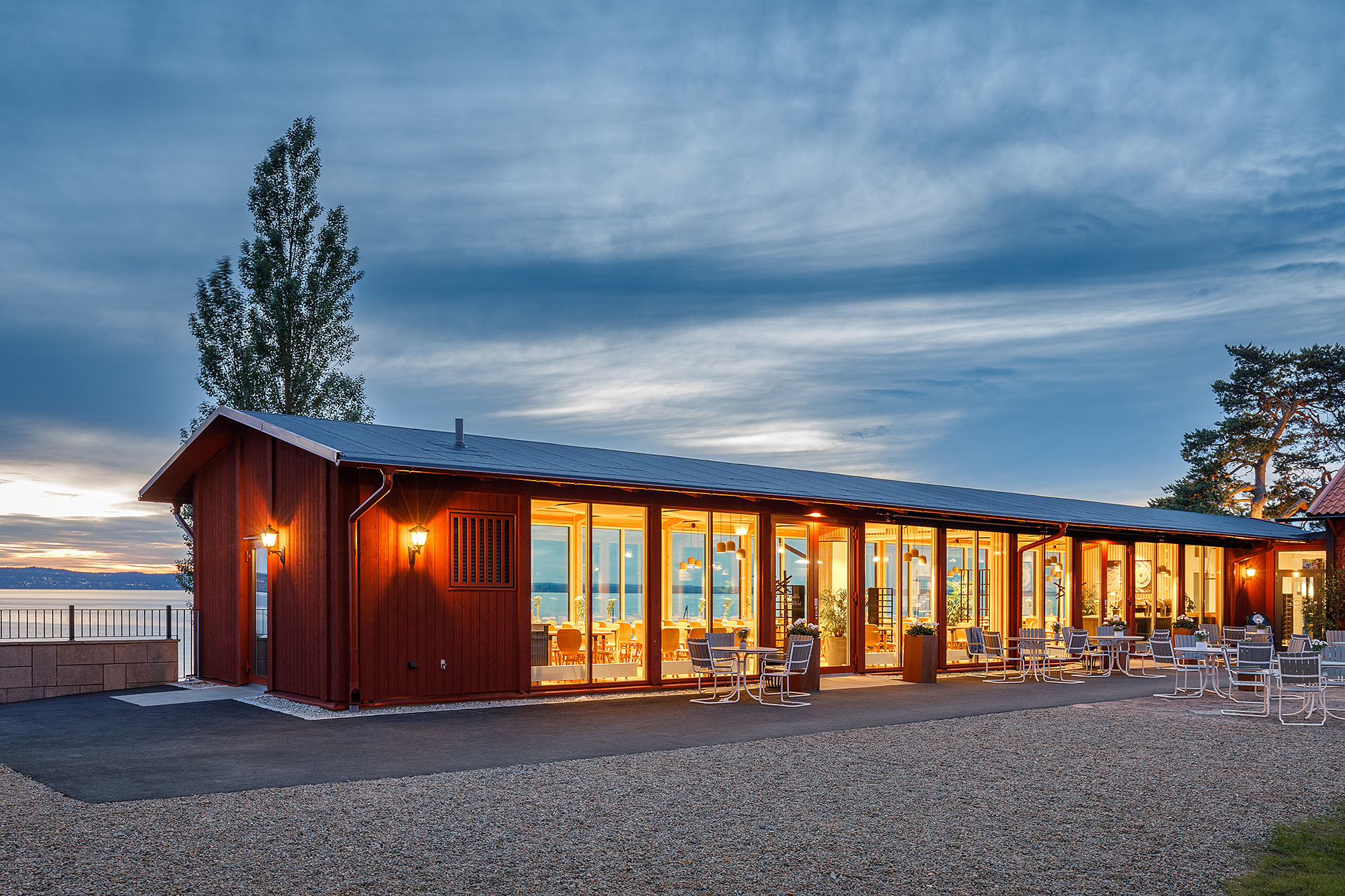
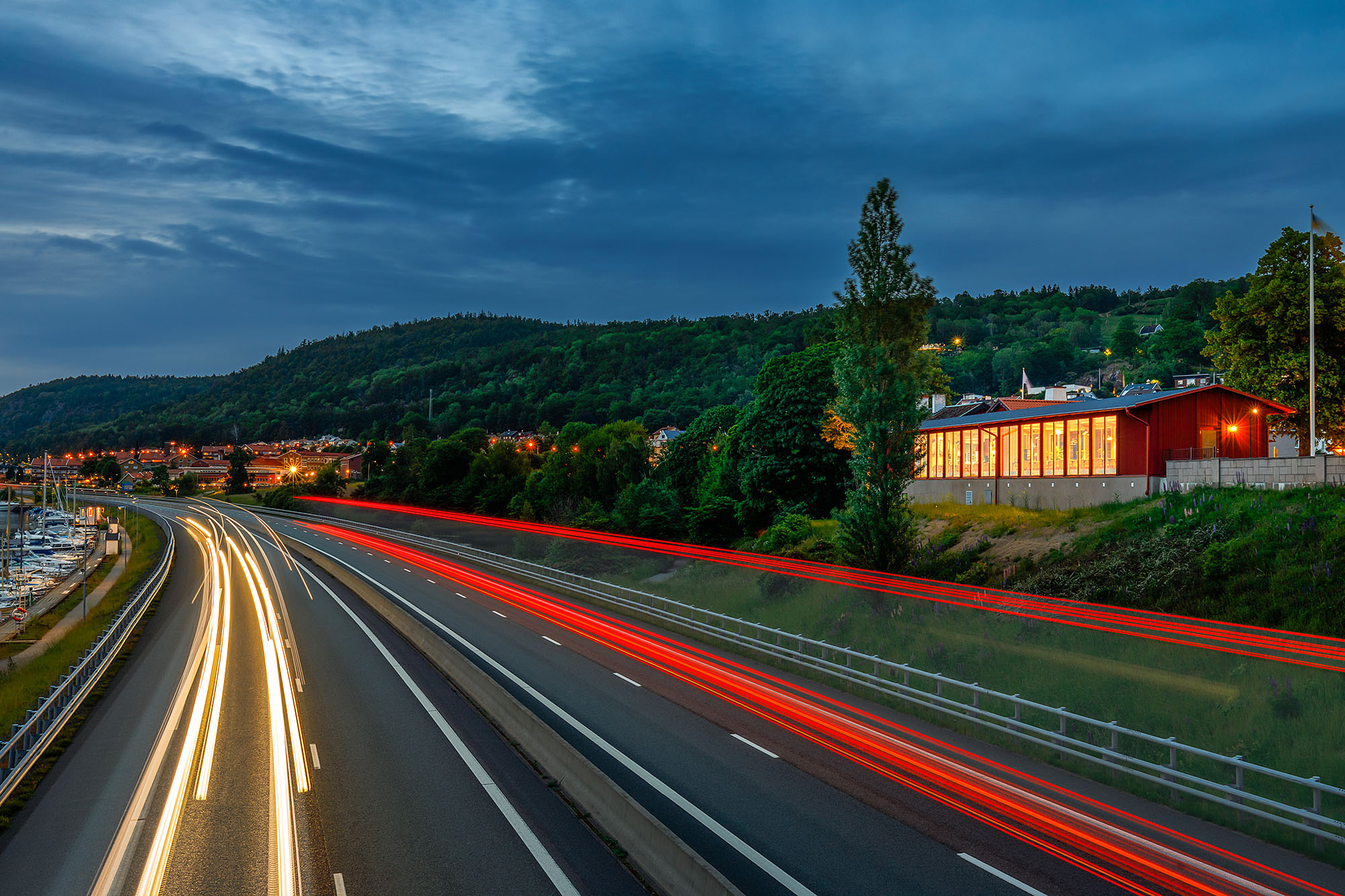
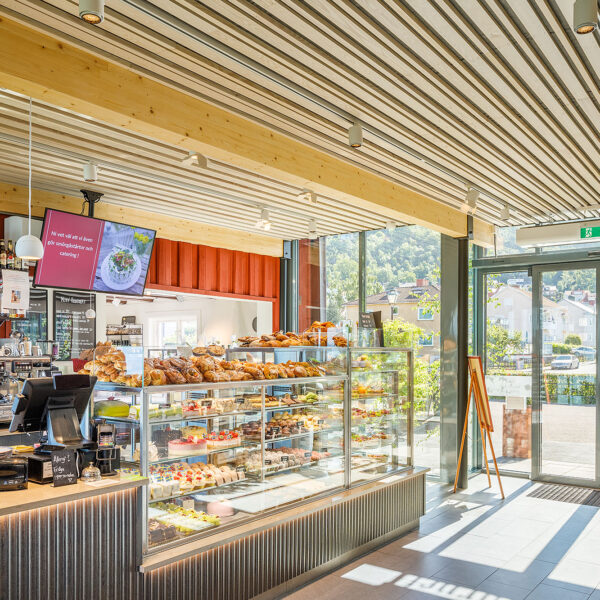
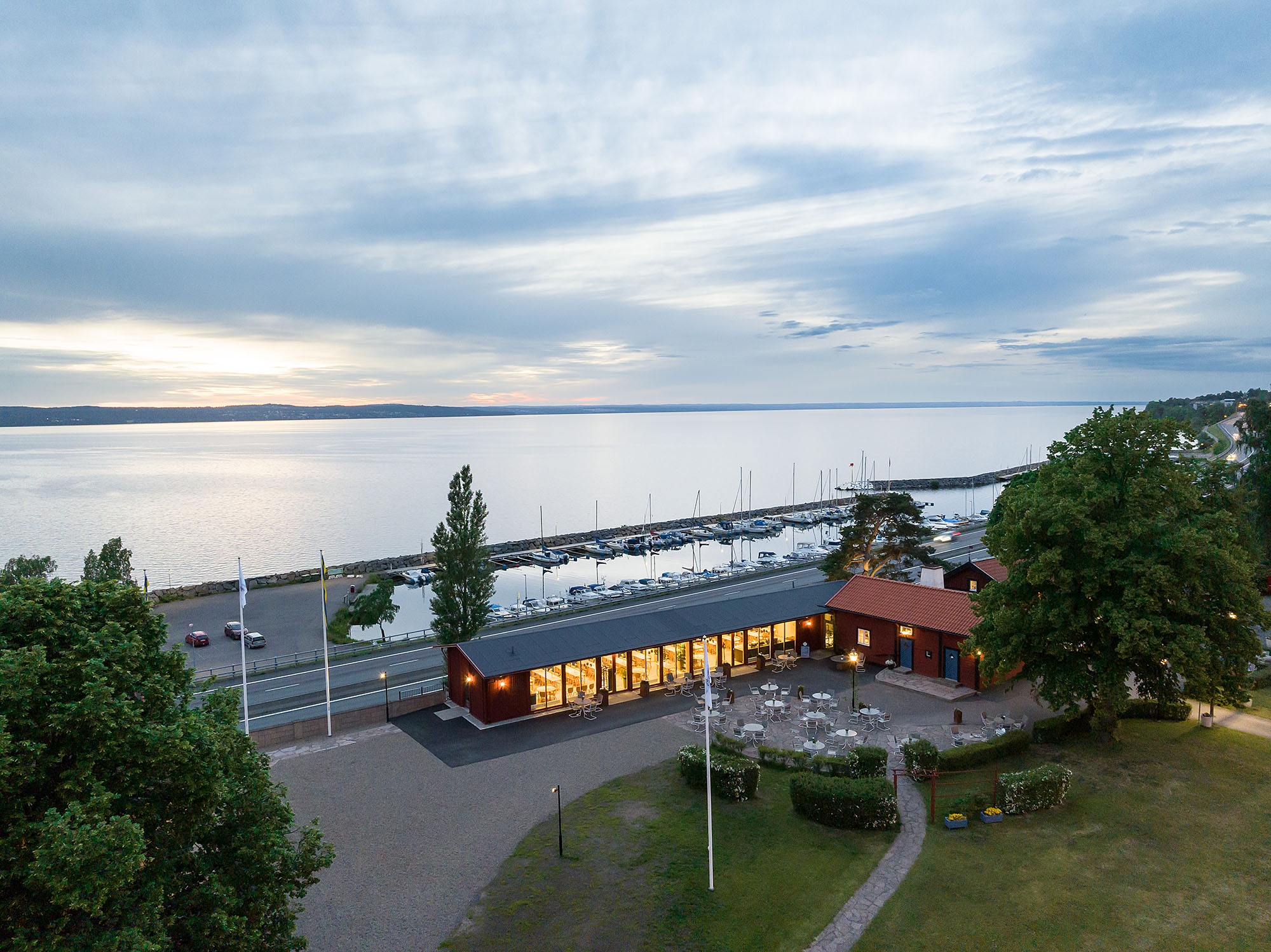
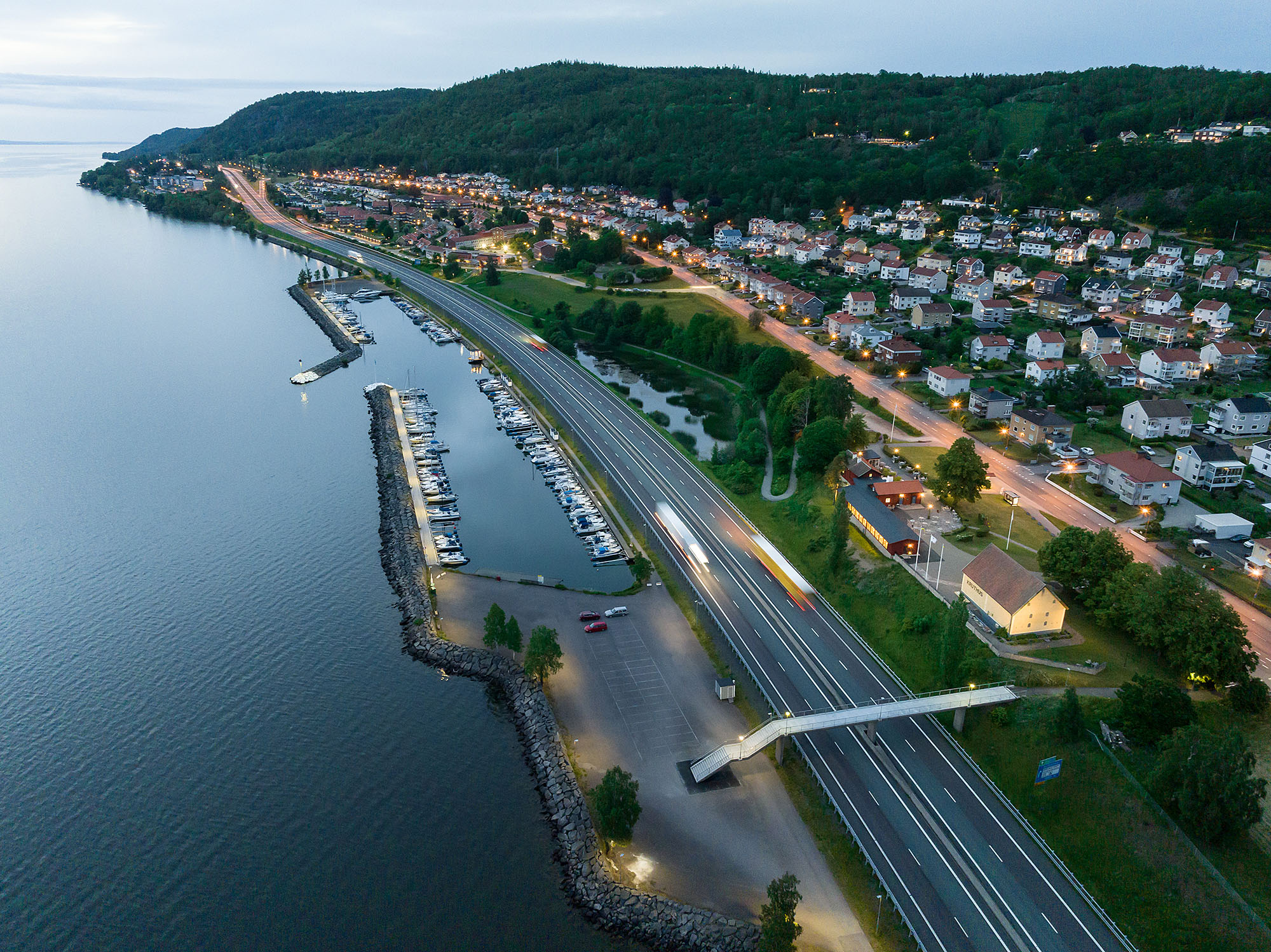
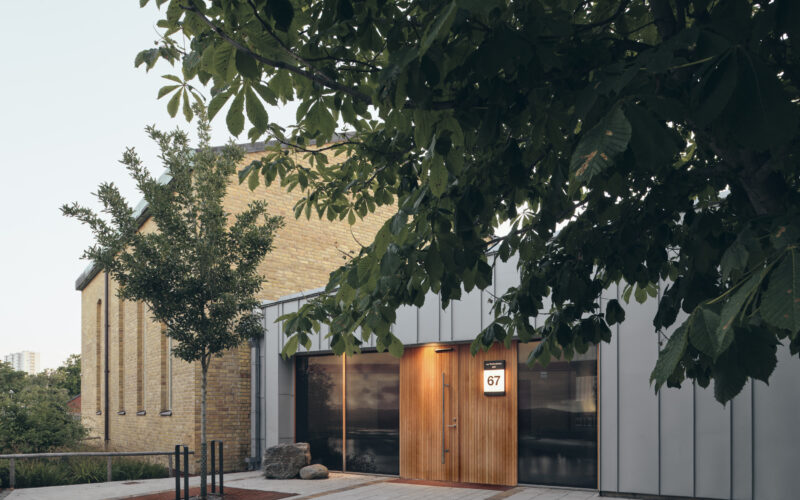
Halfway along the E4 motorway between Stockholm and Malmö lies the classic rest stop Kroatorpet, with roots dating back to the 18th century. In a bold initiative by Huskvarna Hembygdsförening, we have updated the building with a new restaurant section, improving both the staff’s work environment and the guest flow.

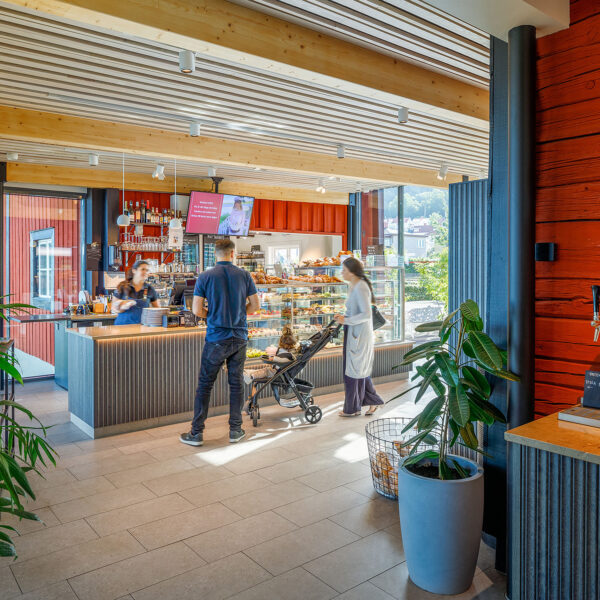
Kroatorpet originally dates from the 18th century. When the motorway was built in the 1960s, it was moved a few hundred meters from its original location and became a coffee cottage for passing travelers and local Huskvarna residents. Today, it houses Landhs konditori, which serves both motorists and locals with meals and pastries.

“While carefully preserving the original buildings, we’ve improved the staff’s work environment and the flow for guests. The new extension with glass walls functions both as a barrier to the motorway and as an opening toward Huskvarna’s most beautiful feature. The view over Lake Vättern.”

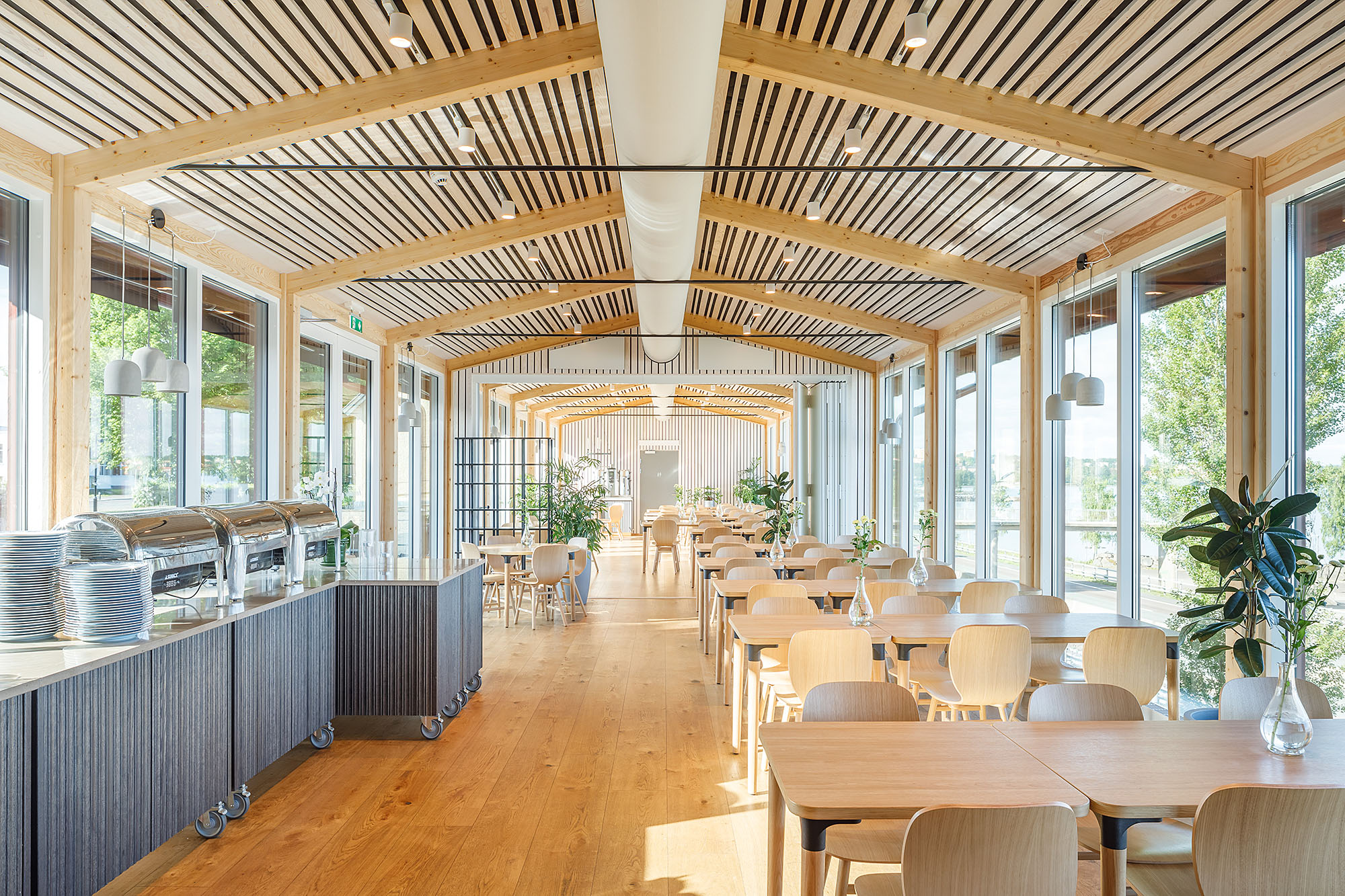
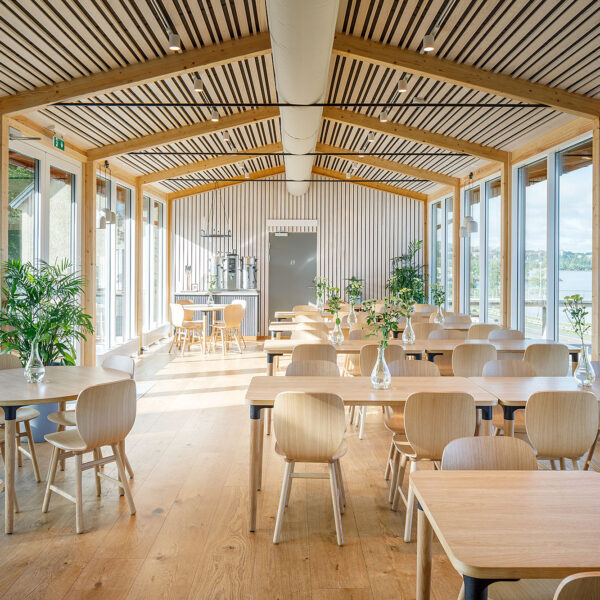
The new dining room offers views — free from motorway noise

Because the two older main buildings were to be preserved, the most significant change took place between them. Here, a completely new restaurant section now connects the buildings, with a transparent dining room that captures the view while shielding against noise. Even outdoor café guests are now protected from motorway sounds thanks to the new section. This improvement makes it possible to host more events during the warmer months.

“We worked with wood interiors to retain the cozy and warm atmosphere, using white-stained wooden slats, panels, and glulam beams,” says architect Håkan Albeman. “The exterior façades of the older houses remain visible as interior walls. And despite the large glass surfaces, we managed to create a good acoustic environment.”

We love courageous investments

Local collaborations

Several local companies were involved in the transformation. The furniture, for example, comes from Karl Andersson & Söner’s furniture factory, located just a few minutes’ walk from Kroatorpet.

“The new dining hall has created a space that gives the business an entirely different economic foundation,” says Anna. “It was a courageous investment by the local heritage association, and now we can attract many more visitors. Many are travelers passing by, but we’ve also managed to strengthen an important meeting place for us Huskvarna residents.”

Kroatorpet awarded for building conservation

The design of the new section complements the older buildings. While it is clearly a modern addition, the gabled roof and classic Småland wooden construction—with its fine proportions—enhance the original houses and harmonize with the rich cultural setting.

In 2022, the city of Jönköping awarded the renovation of Kroatorpet the Urban Design Prize. The jury selected it in the category “Good Building Conservation.”

Contact person

Matt Patterson

+46 36 440 90 81

Fyris Cinema

For film lovers and culture enthusiasts
Interior Design
Building Preservation & Restoration, Culture
Client: Uppsala Akademiförvaltning
Location: Uppsala
Year: 2021
Photographer: Tim Meier

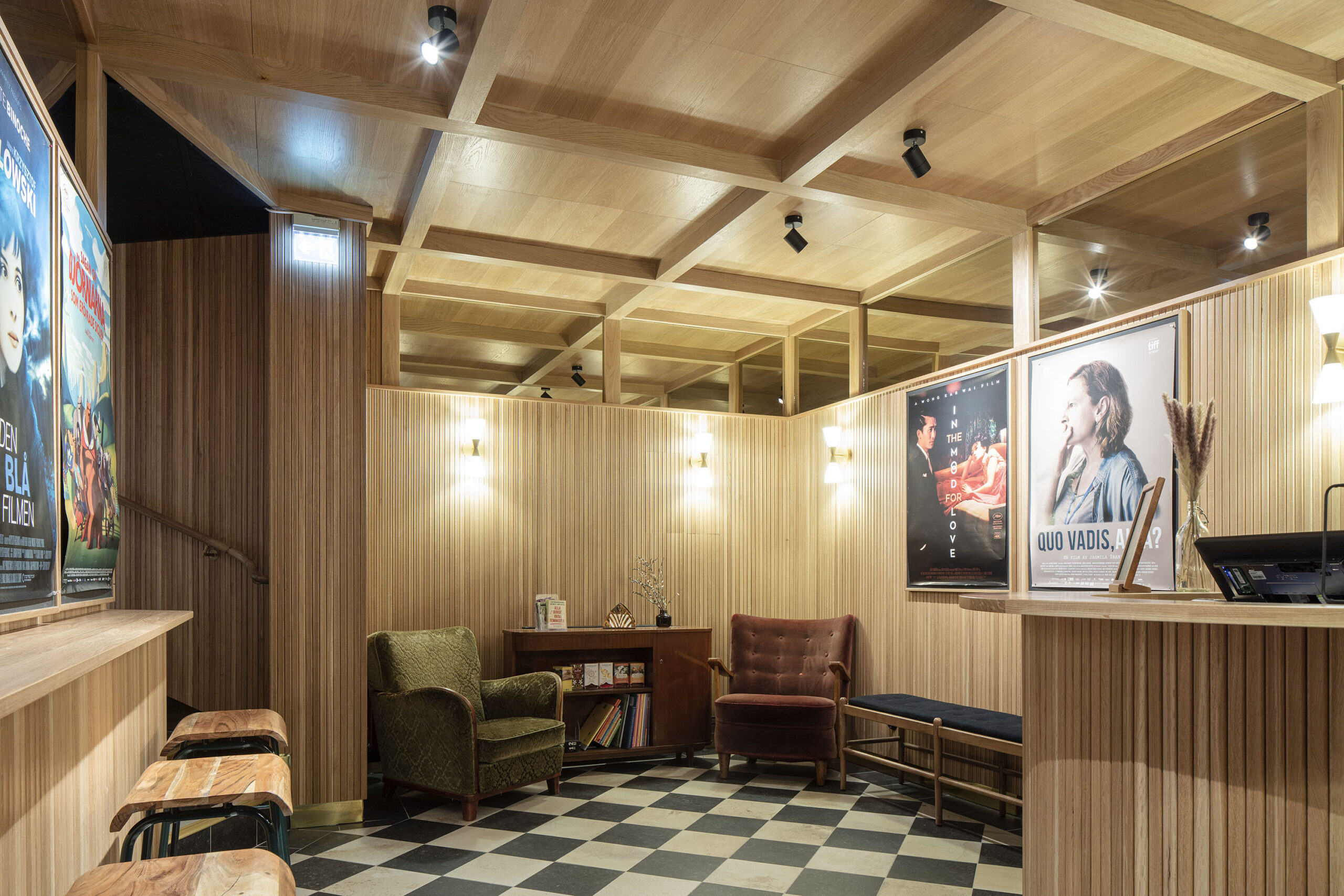
Do you remember when you didn’t want to miss the commercials at the cinema? Neither do we – until we stepped into Fyrisbiografen in Uppsala. This cultural treasure, one of Sweden’s oldest and most charming cinemas, was in need of an update. By cleverly reimagining the limited space, we recreated a cinematic environment now ready to once again become a palace of entertainment for the people of Uppsala.

Photo: Ojan, Wikimedia

Fyrisbion is one of Sweden’s oldest cinemas. With roots dating back to 1911, this classic cinema, located in the historic Skandalhuset building, has been an important part of Uppsala’s cultural life for over a century – a timeless symbol for film and culture enthusiasts alike.

Creative play with space

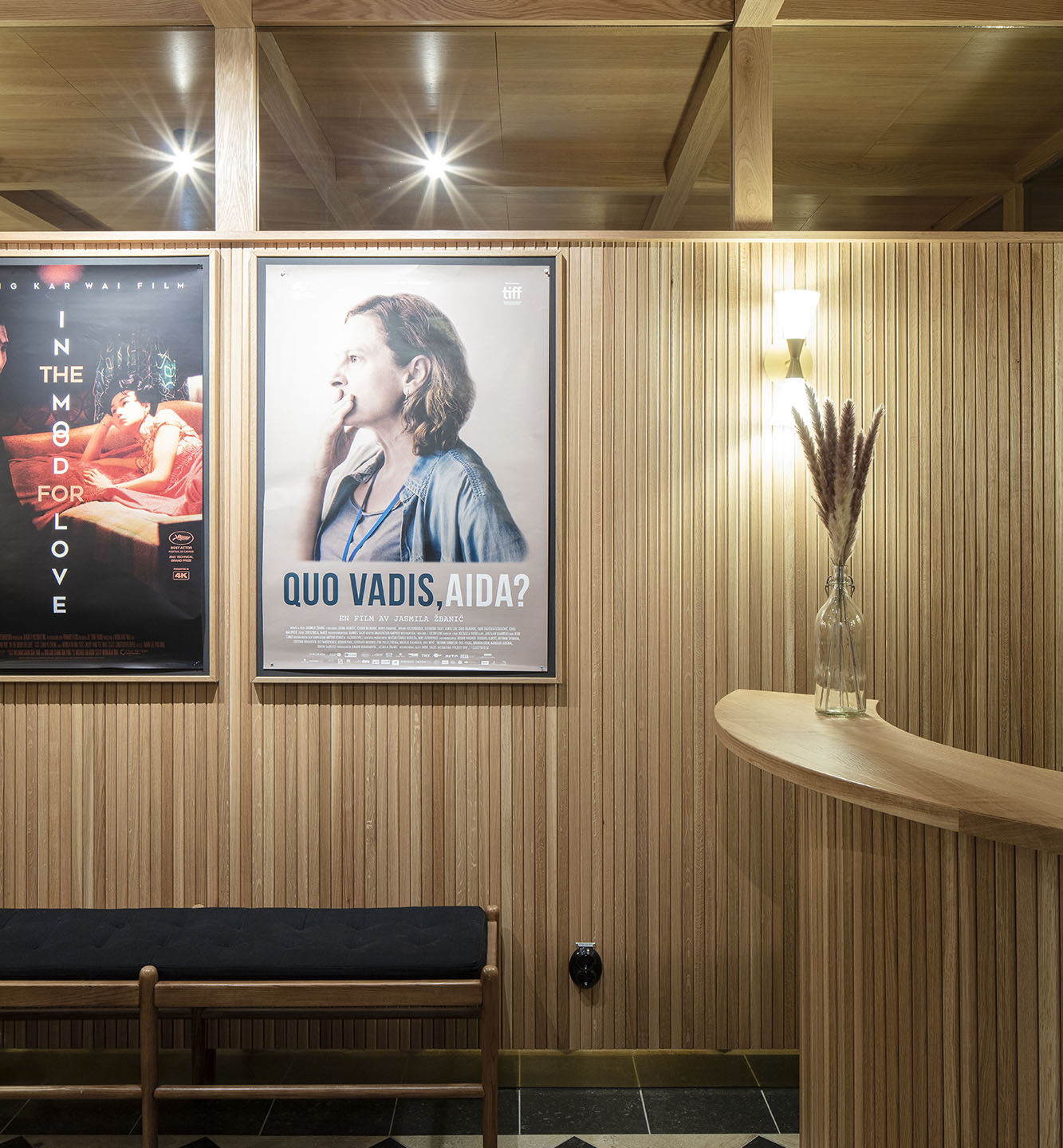
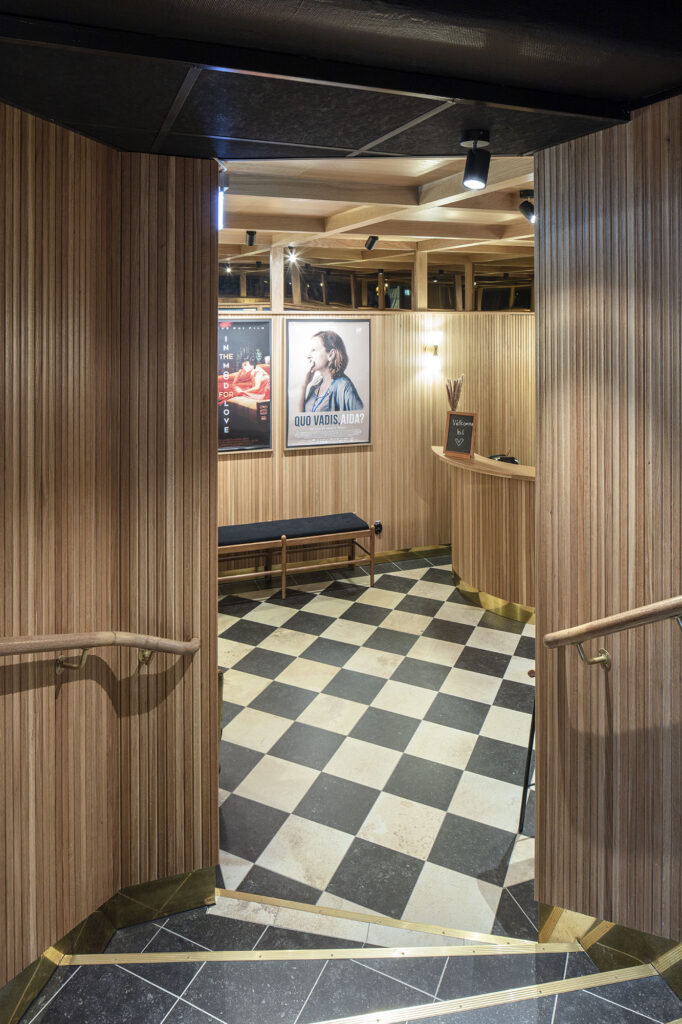
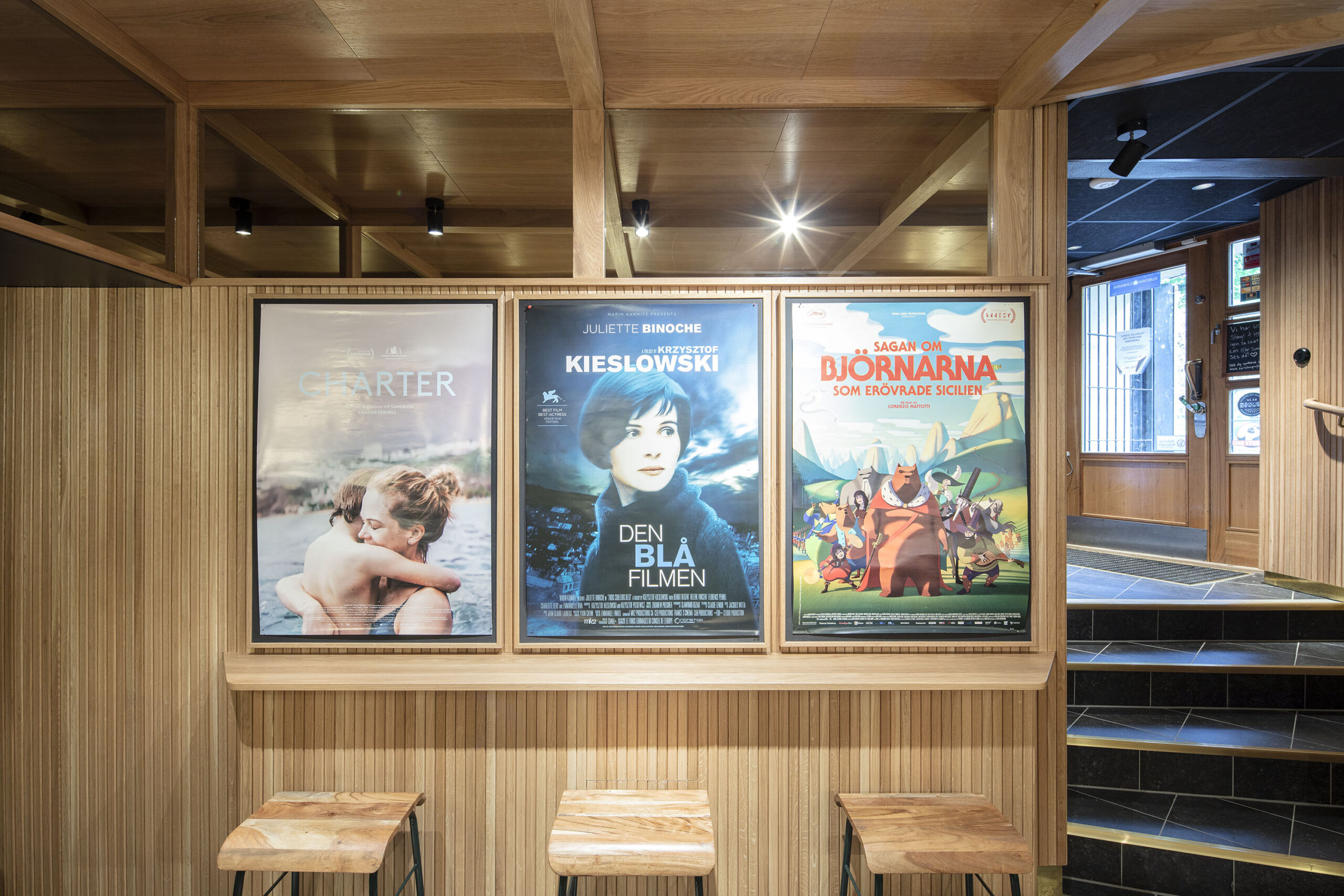
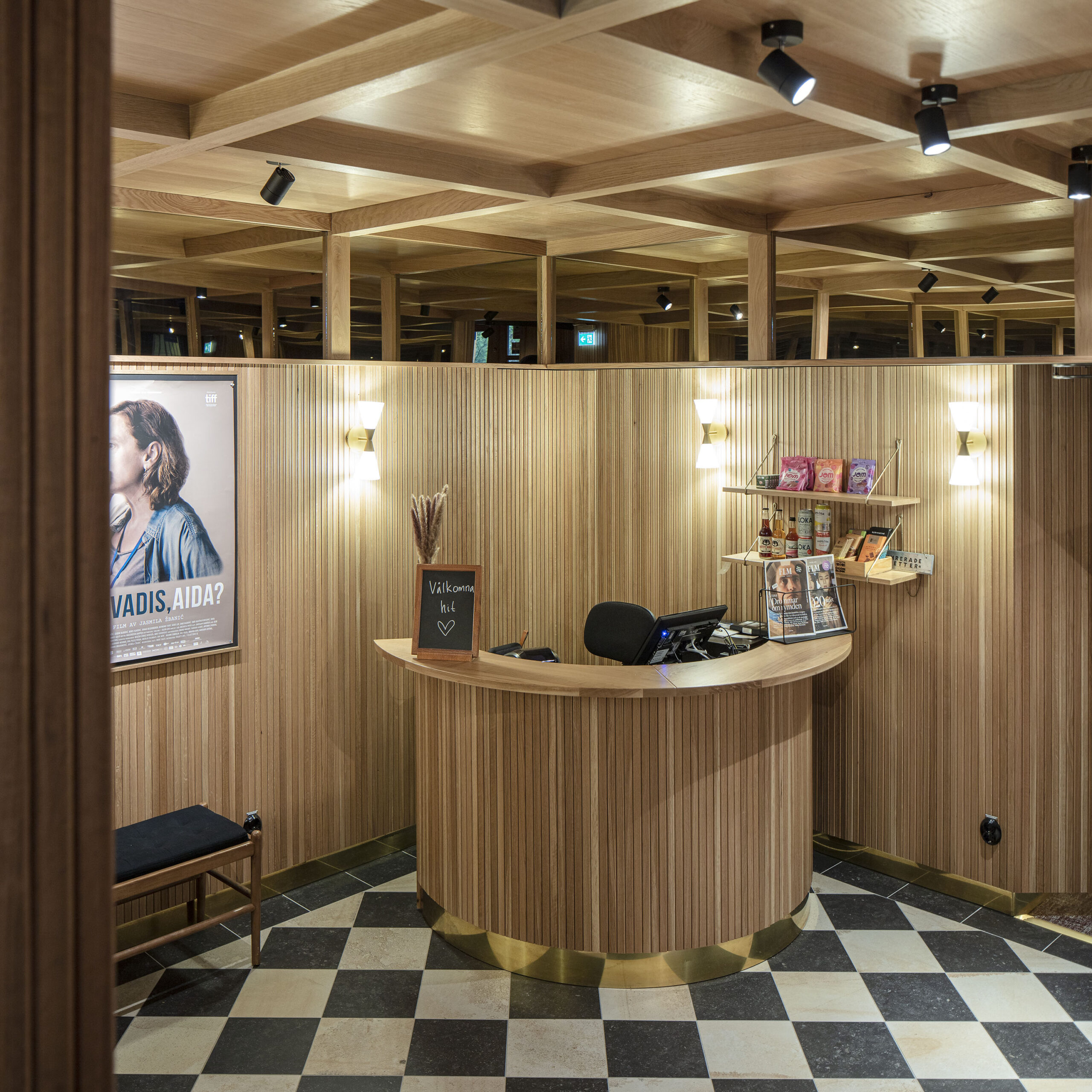
Despite its modest size, we managed to transform Fyrisbion into an inviting and functional meeting place – especially in the small foyer. By installing mirrors in the ceiling angle, visitors are given an illusion of space and light, creating the sense of a larger, more open room. Materials such as oak, stone, and brass were carefully selected to combine durability with timeless aesthetics. The classic paneling is a nostalgic nod to the era when cinemas were true palaces of entertainment.

Accessible film enjoyment

A central part of the renovation was making the cinema more accessible to all visitors. New restrooms and connections to the lift now allow wheelchair users to easily enjoy everything Fyrisbion has to offer. The working environment for staff has also improved through the addition of a new office and kitchenette.

The classic paneling is a nostalgic nod to the era when cinemas were true palaces of entertainment.

From Plengiér’s vision to a modern cultural hub

In 1911, cinema pioneer Hugo Plengiér founded Fyrisbion – a central figure in Uppsala’s early cultural scene. In the 1930s, David Annell took over, shaping the cinema’s profile by screening European films of high artistic quality – a repertoire that stood apart from the larger cinemas. Today, Fyrisbion is run by the non-profit association Föreningen Fyrisbiografen, a member of Folkets Bio. Thanks to dedicated members and volunteers, this venerable cinema continues to offer the people of Uppsala a place for film and cultural experiences.

The renovation of Fyrisbion was about more than preserving the past. We also wanted to create a modern and accessible environment for the film lovers of the future. With respect for history and an eye on what’s to come, Fyrisbion can now continue to shine – as a center for film art and culture in the heart of Uppsala.

Contact person

Josefin Larsson

+46 72 183 02 34

Bicycle house Ekonomikum

A safer campus with a lantern in the park
Architecture
Infrastructure
Client: Akademiska hus
Location: Uppsala
Area: 68 sqm
Project years: 2020–2021
Partners: IR-Bygg (Contractor), Sweco (Lighting)
Photographer: Tim Meier

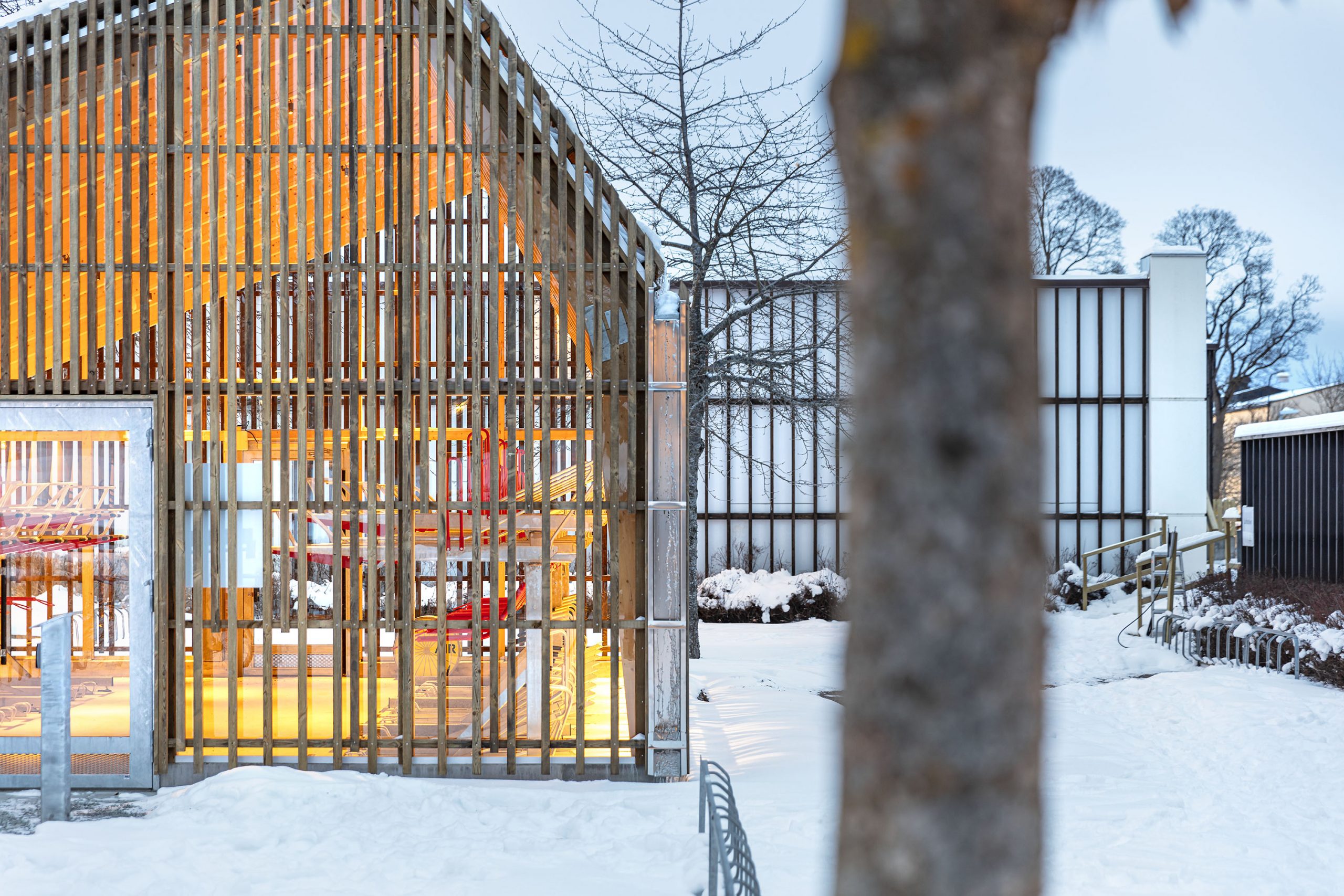
Uppsala’s students can now commute more safely and sustainably. The new Ekonomikum Bicycle House on campus casts light over the surrounding cycle paths thanks to the careful placement of the structure’s wooden slats. A sustainable expression in itself, the simple yet distinctive design has the potential to become a hallmark of the entire area.

Uppsala University and Akademiska Hus wanted to encourage more people to cycle to campus. To support this goal, they gave Tengbom creative freedom to design a new bicycle house. As a result, the project led to a meticulously crafted timber building that now acts as a pilot project. In the long term, it’s meant to inspire more bicycle houses, along with outdoor study spaces and gyms at other university campuses.

A safe path towards enlightenment

The ambitions were high: those who choose to cycle should be able to park safely and comfortably – not leave their bikes in a flimsy rack on some forgotten back lot. Sustainable, low-maintenance materials and an architectural expression that harmonizes with the existing environment were also crucial. Located at Ekonomikum, the building takes inspiration from the trellises on the original façade. Its defining feature is the vertical wooden slats, positioned to balance visibility and screening. On dark evenings, the building becomes a small beacon, making the surrounding park feel safer. Good infrastructure is always key.

Durable materials stand the test of time

Behind the slatted façade, glass panels protect the timber structure from weather and wind. The wood, treated with Kebony, will gradually develop a beautiful grey patina over time. The material requires minimal maintenance, and the all-important lighting is designed for long lifespan and low energy use. Tengbom’s involvement spanned the entire process. From concept sketch to final construction plans – in close collaboration with contractor IR-Bygg and lighting consultants from Sweco.

The result is a compact yet spacious structure accommodating 72 bicycles on two levels beneath a staggered gabled roof, partially covered with sedum. The rhythm of the slatted walls evokes an old barn, where light seeps gently through the gaps, creating a sense of warmth without enclosure. This simple expression holds the potential to become a recurring motif in the university’s long-term development of the area.

“We always start from the site’s conditions. But the form will be recognizable,” says Marianna Klinga, Lead Architect at Tengbom’s former Uppsala office.

Contact person

Mark Humphreys

+46 8 412 53 43

Rödaberg School

A new chapter on the hill
Architecture
Education
Client: Skolfastigheter i Stockholm AB, SISAB
Project years: 2014–2023
Scope: Renovation, architectural extension, new sports hall, fixed interiors
Photographer: Felix Gerlach

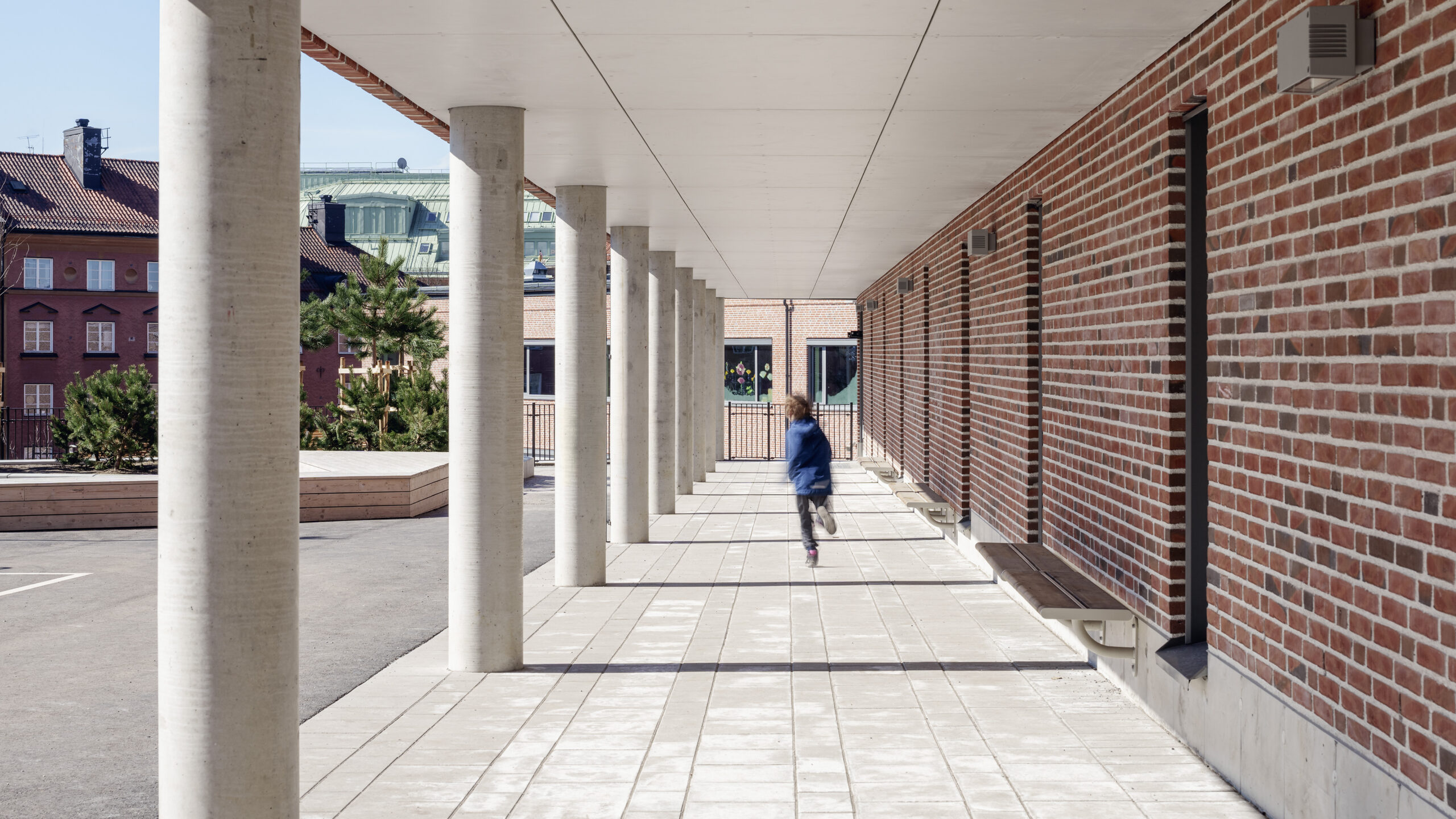
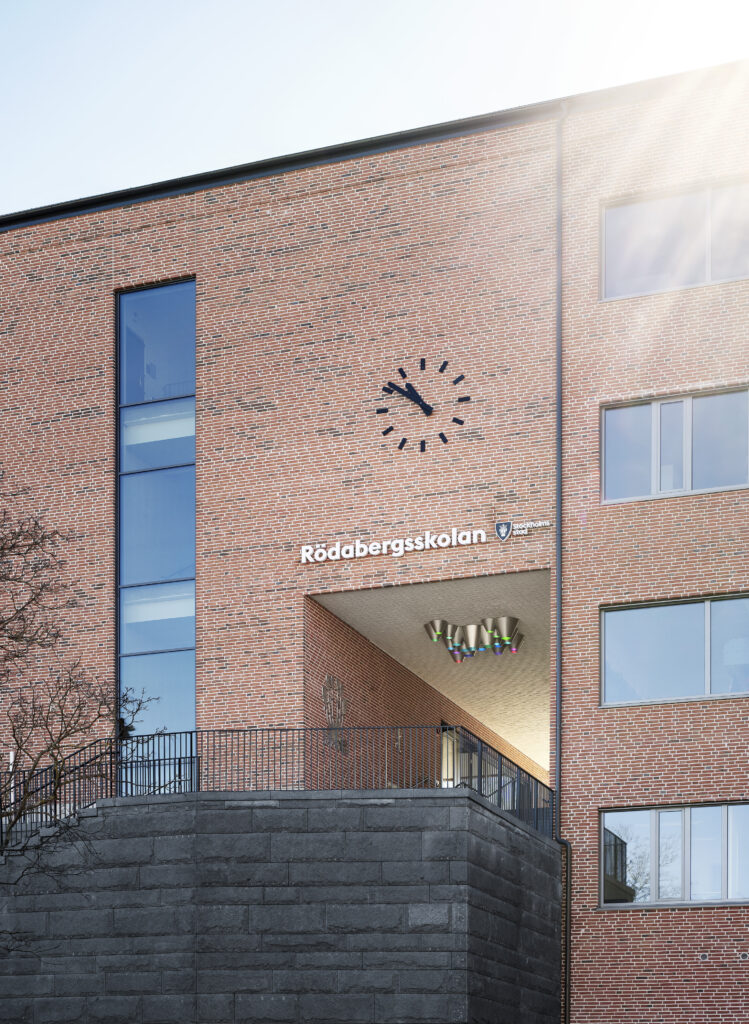
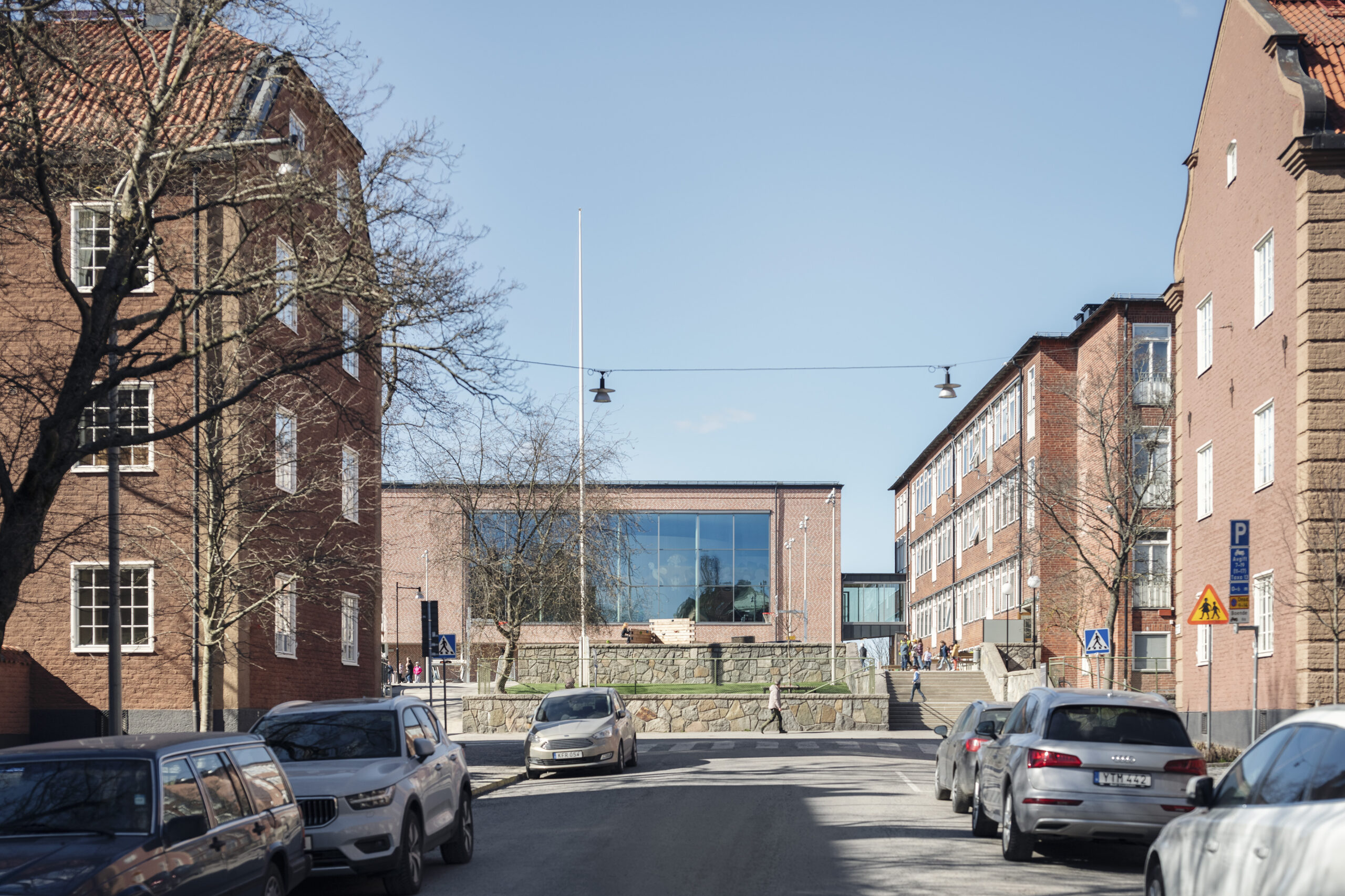
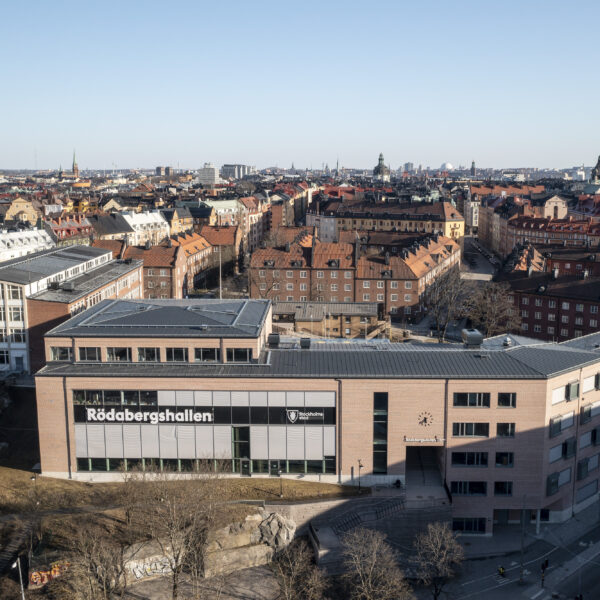
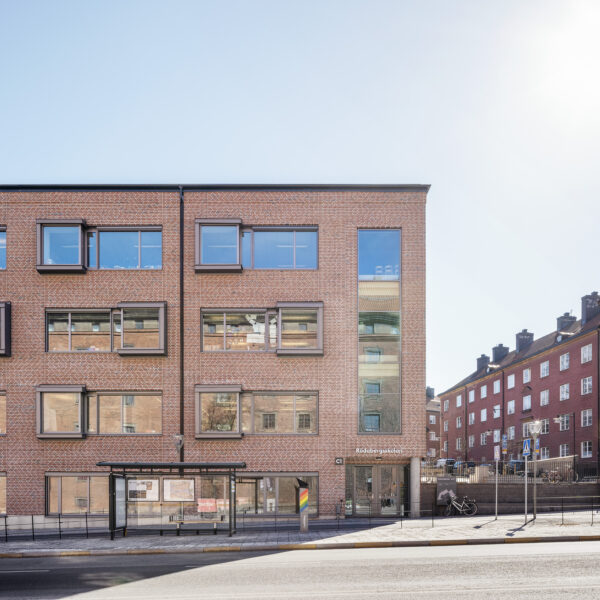
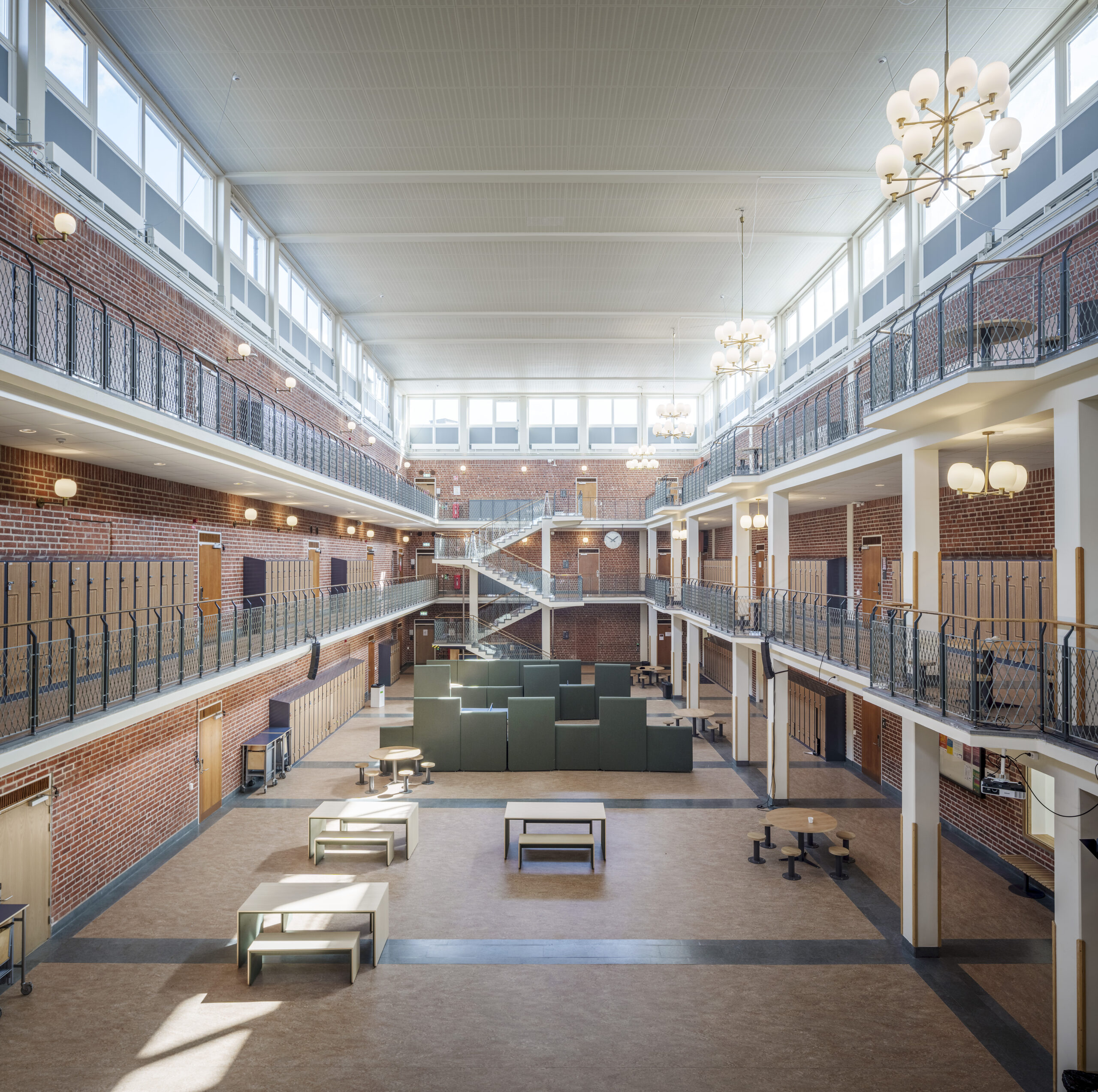
The first thing you notice is the brick. Warm and red, in shades ranging from dark brown to light burnt tones. Rödaberg School has stood here since 1953, designed by Paul Hedqvist – one of the architects who most clearly shaped post-war Stockholm. When we continued developing the school, our goal was to preserve its historic legacy while also creating new environments where children can grow, learn, and feel safe.

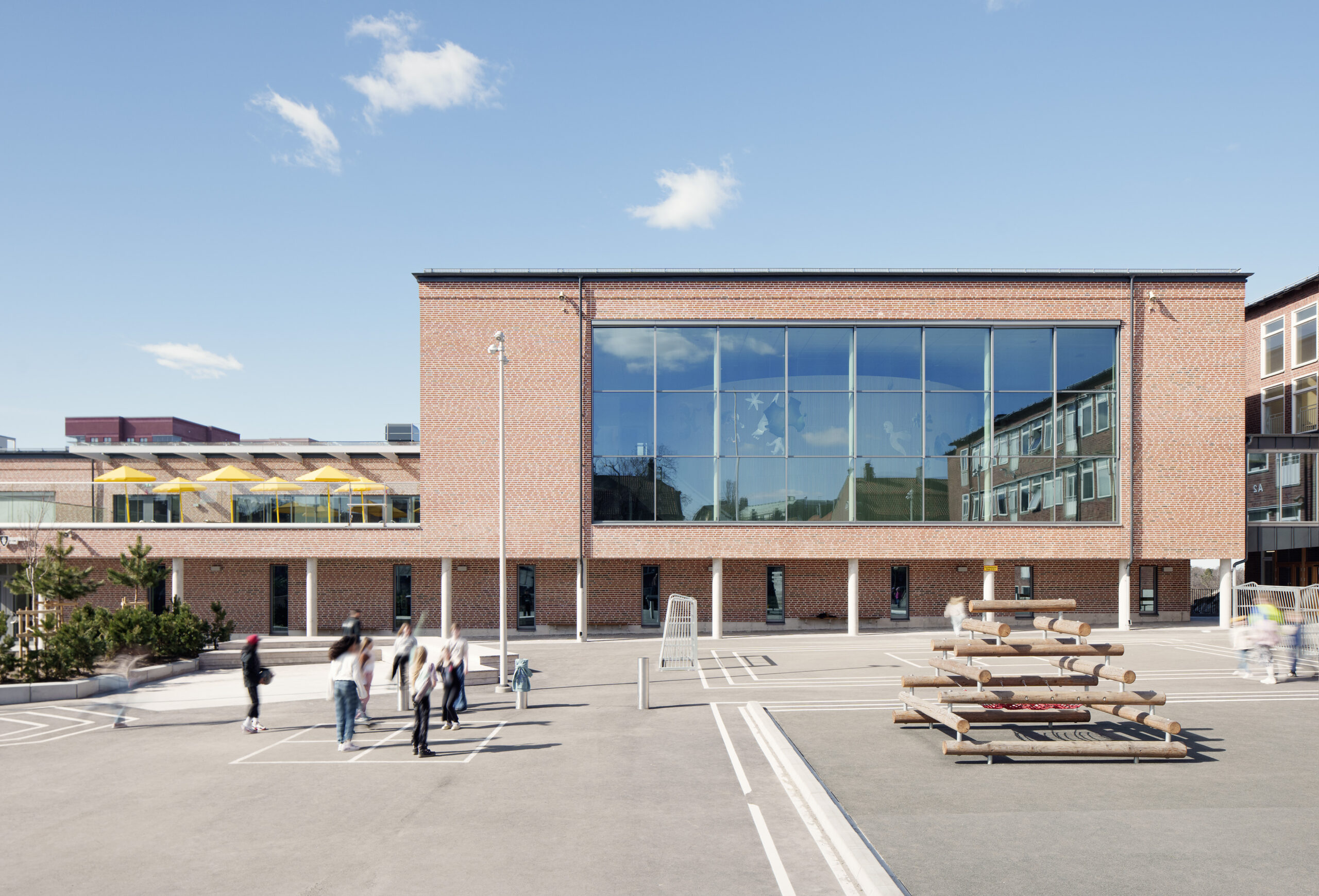
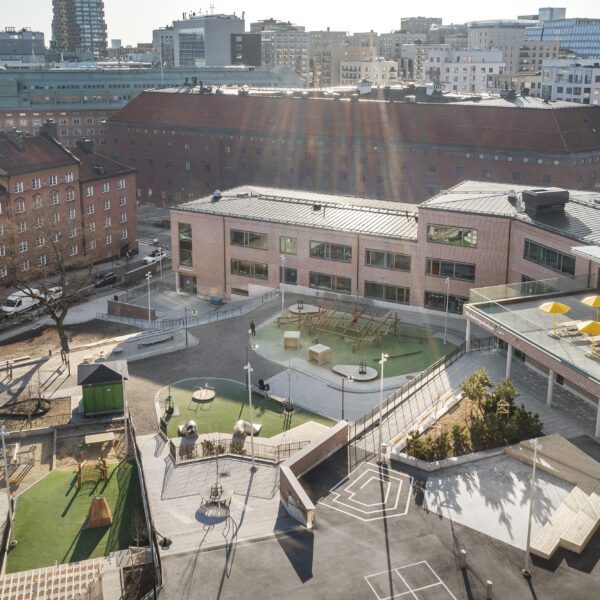
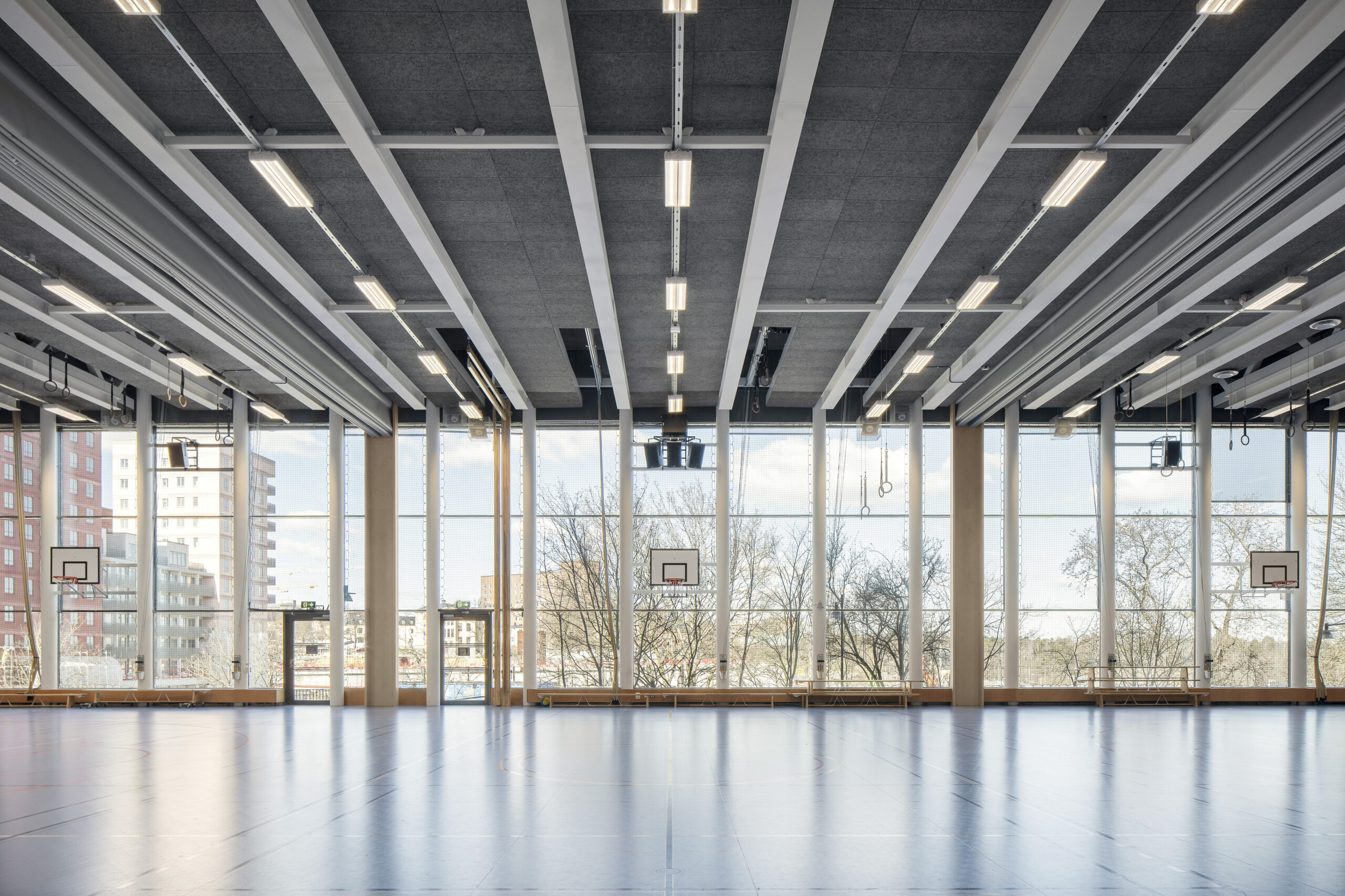
The expansion increased the school’s capacity from 640 to 1,040 students. It gained new specialist classrooms, learning environments for younger children, and a pedagogical outdoor space. We also designed a new large-scale kitchen, an expanded dining hall, and a full-size sports hall – today an important resource for the entire district. Adjacent to the school lies Rödaberg Park, which serves as the schoolyard.

An embracing school in the heart of the city

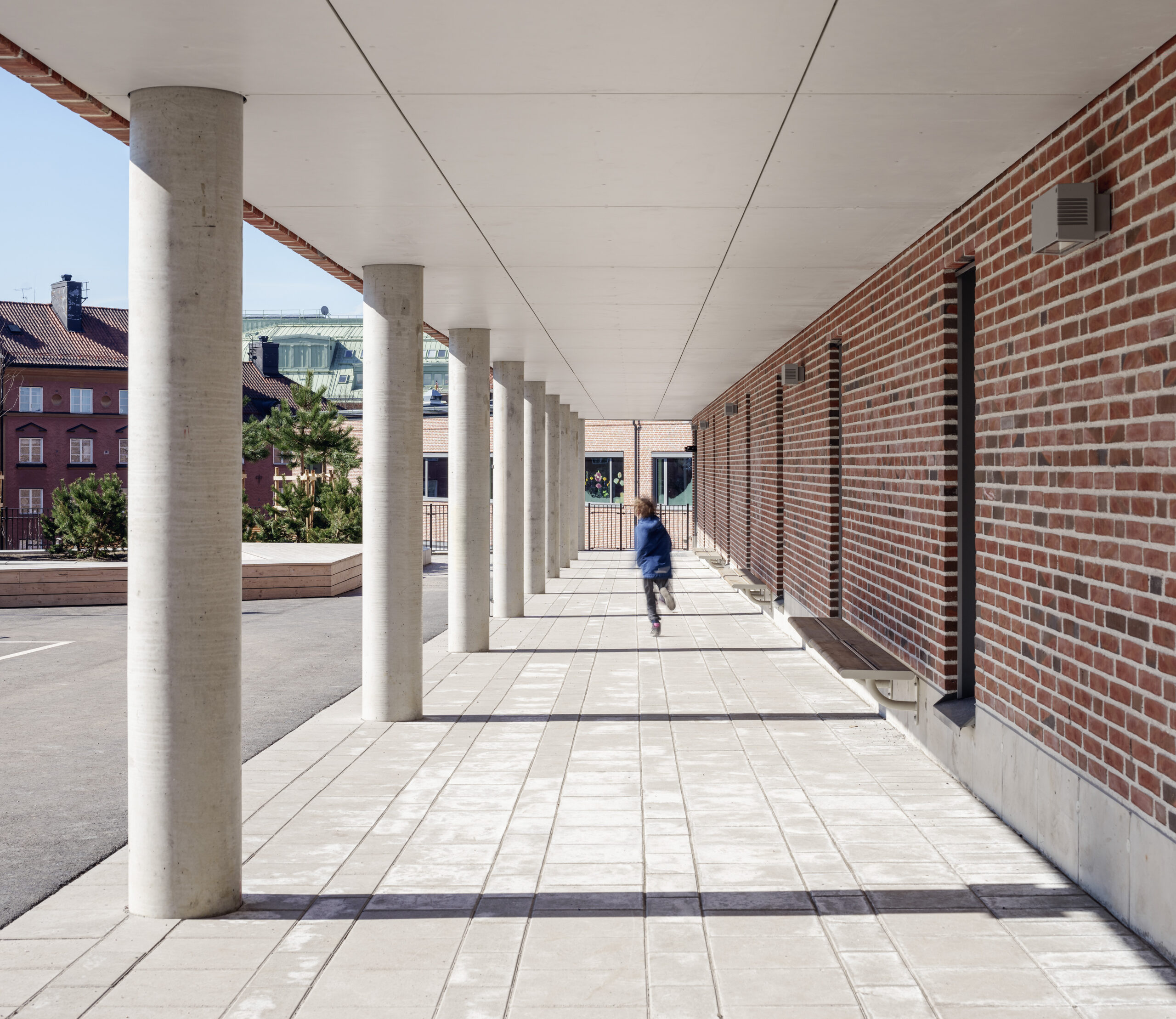
Brick, volumes, and light were key elements in Hedqvist’s design, and these became our starting points. The new building volumes frame a courtyard that functions as the heart of the school – a place for play, movement, and calm. Outside, S:t Eriksgatan buzzes with life, but within the ring of buildings, children encounter a safe and sheltered environment. In the evenings, the courtyard becomes a neighborhood park for local residents.

Hedqvist’s French windows

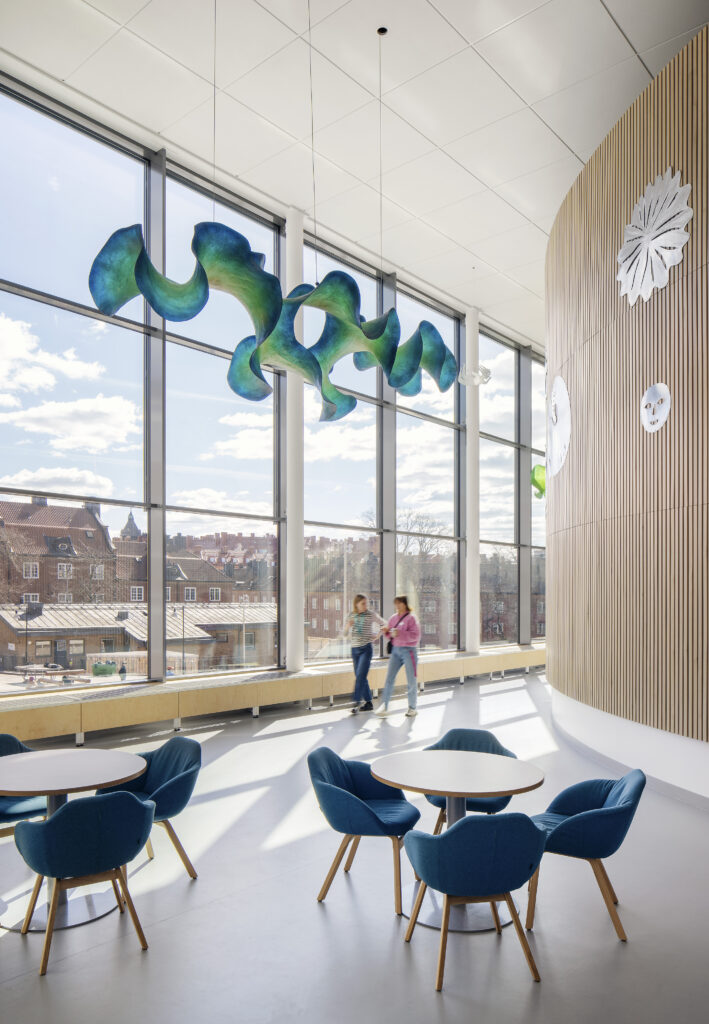
In the new section facing S:t Eriksplan, classrooms are broken up by bay windows – small glazed alcoves where students can retreat for a moment while still being part of the community. Their form references Hedqvist’s French windows, while at the same time pointing forward toward new ways of thinking about learning environments.

A sports hall of glass and light

The new sports hall rises to the north, where Hagastaden meets the E4 motorway. Almost the entire long side is glazed. During the day, light floods the courts; in the evening, the hall glows like an eye in the cityscape. It is both a space for body and movement and a clear signal to the city: here, there is life, here, things are happening.

The hall echoes the art room at the top floor of the original school building, which has a large panoramic window letting in daylight.

Above the sports hall sits the library, designed as a half rotunda – a quiet space for reading and reflection. Higher still are the science classrooms, bright and spacious rooms where knowledge and city views share space.

Brick that carries time

It’s hard to imagine Rödaberg School in any material other than brick. Robust, beautiful, and timeless. The original façades have strong character, bearing the kiln marks of their making. To carry the heritage forward while adding our own imprint, we chose, together with the City Planning Office, a red brick façade that ties together the old and the new.

“We wanted the same material expression around the park that serves as the schoolyard, incorporating both Paul Hedqvist’s building and the old brick building across from it. The new buildings needed to echo that same character,” says Karolina Lorentzi.

Contact person

Karolina Lorentzi

Practice Director Linköping och Kalmar
+46 841 03 54 36

Stockholm School of Economics

Florence in exile
Architecture
Education
Client: Stockholm School of Economics Association
Architect: Ivar Tengbom
Completed: 1925
Cultural Status: Blue-listed by the Stockholm City Museum
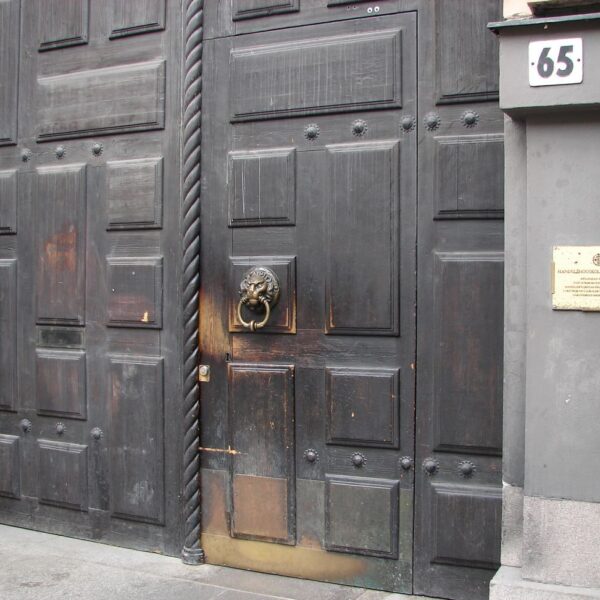
Location: Sveavägen 65, Stockholm

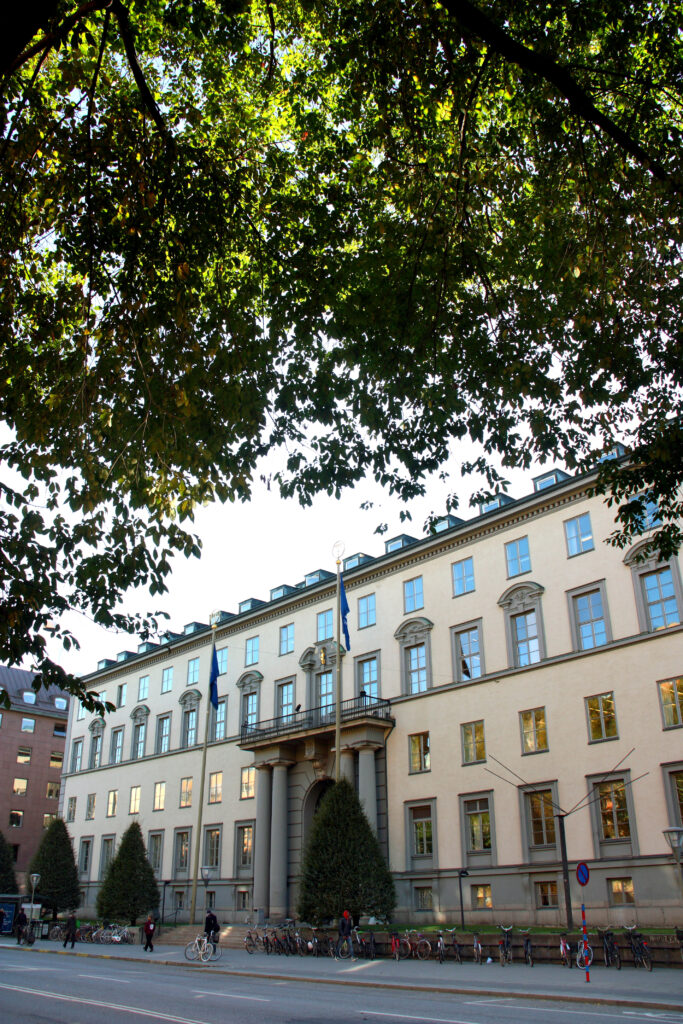
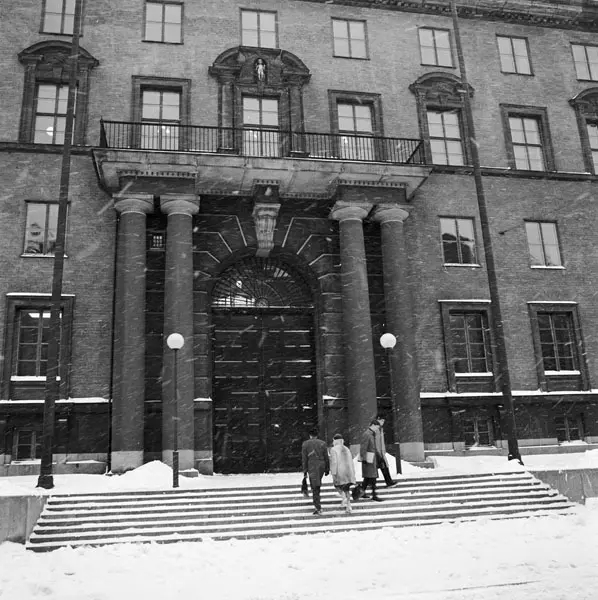
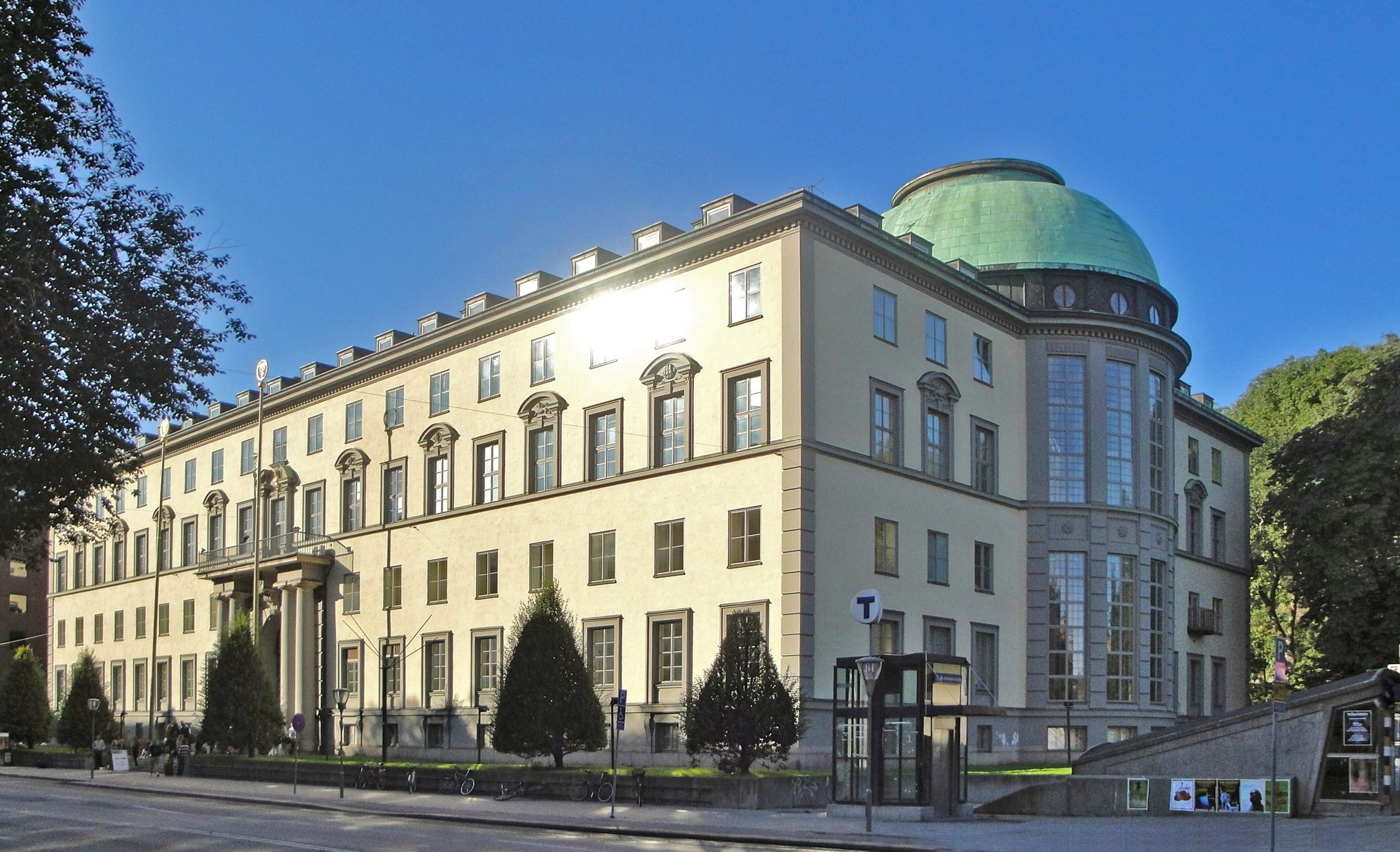
When the Stockholm School of Economics was inaugurated in 1925, it marked a new statement in academic architecture. Behind the drawings stood Ivar Tengbom, one of the most influential Swedish architects of the 20th century. With influences from the Italian Renaissance and a desire to anchor the expression in Swedish tradition, he shaped a building that still today sets the tone for higher education in Sweden.

Stockholm School of Economics (SSE).
Photo: Peter Nordahl / IBL Picture Agency

The move from Brunkebergstorg to Sveavägen signaled a new chapter for the young institution – and a great responsibility for Ivar Tengbom. Here, the ambitions of the education would take physical form. The school was meant to inspire confidence, stand firmly in its time, and signal both seriousness and international presence. Tengbom saw architecture as a way to show the way forward. The new building became more than a school. It became a silent, yet clear, expression of faith in the future.


Renaissance inspiration with a Swedish sensibility

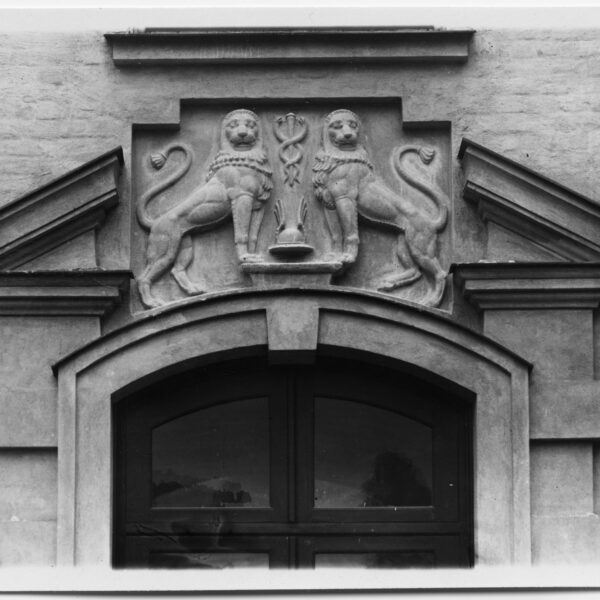
The design drew inspiration from Florentine palaces, with a tripartite façade – base, middle, and crown – giving the building rhythm and stability. However, Ivar was no nostalgist. He wanted to interpret, not copy. By carefully selecting materials and proportions, he found balance between the classical and the contemporary. Accordingly, the façade was built in brown-red Helsingborg brick with details in sandstone, limestone, and black granite. Furthermore, the column arcades on the corners and the monumental portal with limestone intarsia create a solemn entrance: sober yet welcoming.


An environment for future leaders

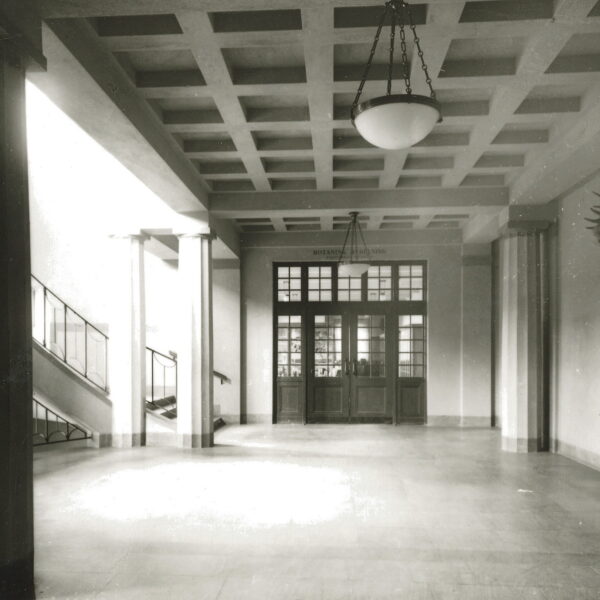
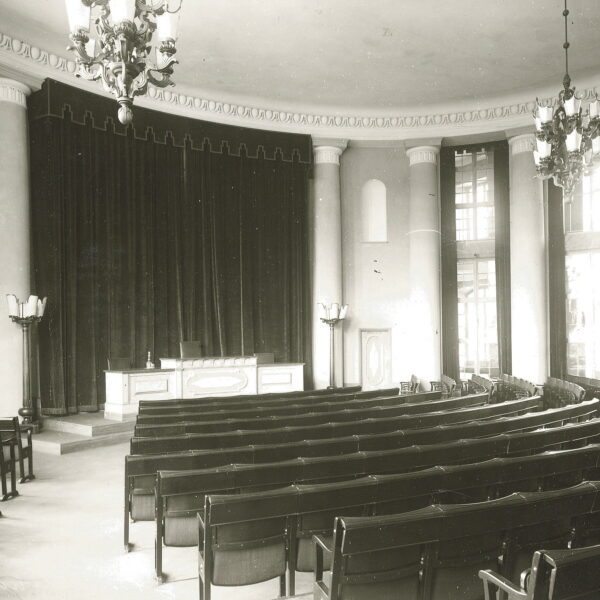
The interior carries the same thought: uniting tradition with function. With its dark wooden panels and tall windows, the auditorium remains one of the highlights of the building. Everything from furniture to lighting was carefully selected to create an environment that fosters concentration and respect for knowledge. Tengbom knew that the environment shapes behavior. Here, he wanted to establish a place that would form not only academics, but also future leaders.

Echoes of Florence – with roots in Swedish granite

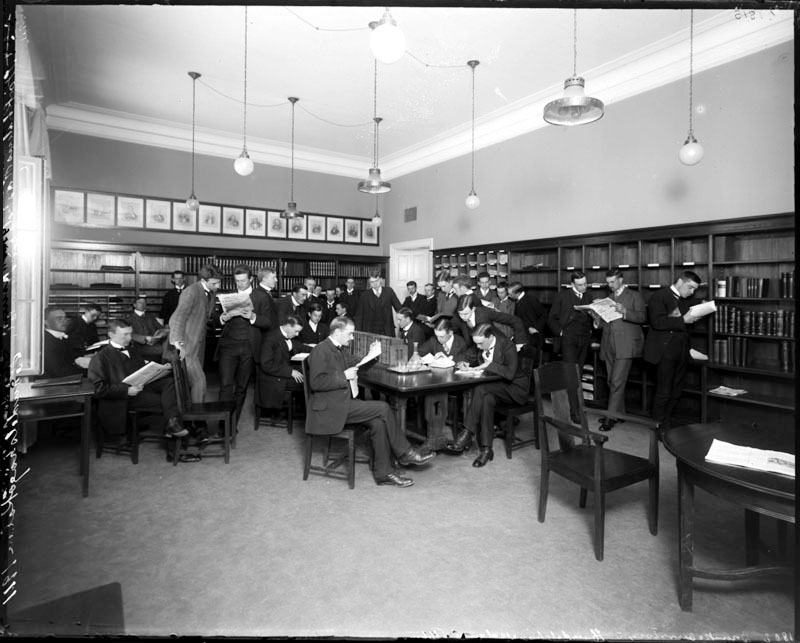
Unknown photographer. Created: 1911. Object ID: Stockholm City Museum, photo number C 1815.

A house that holds both history and future

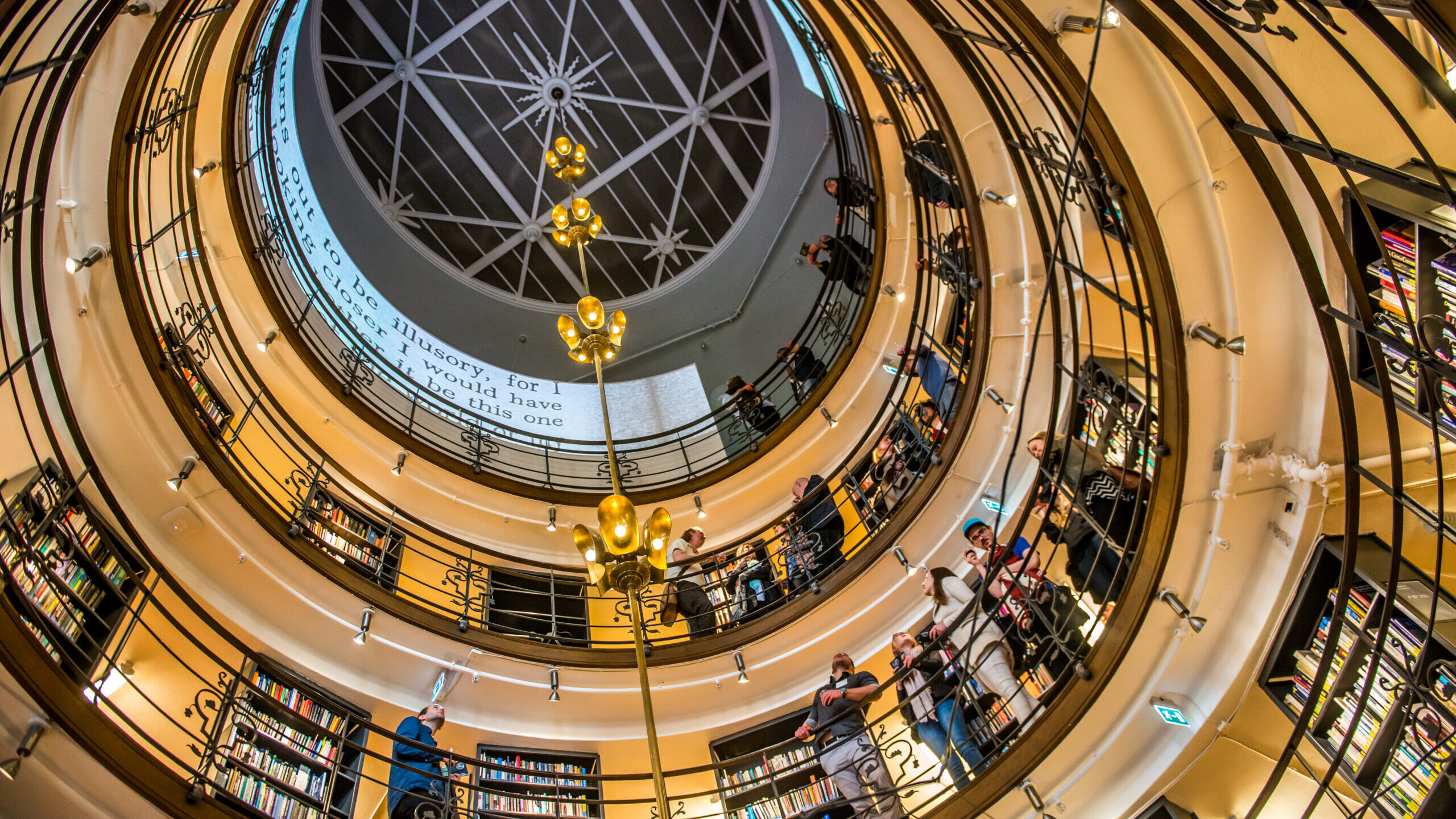
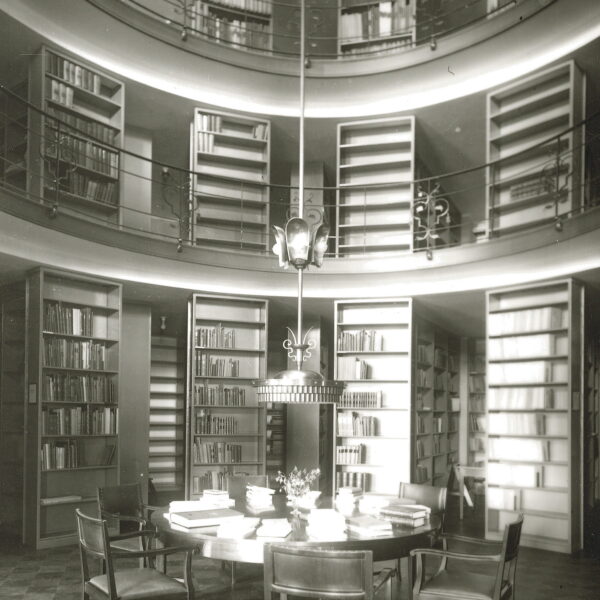
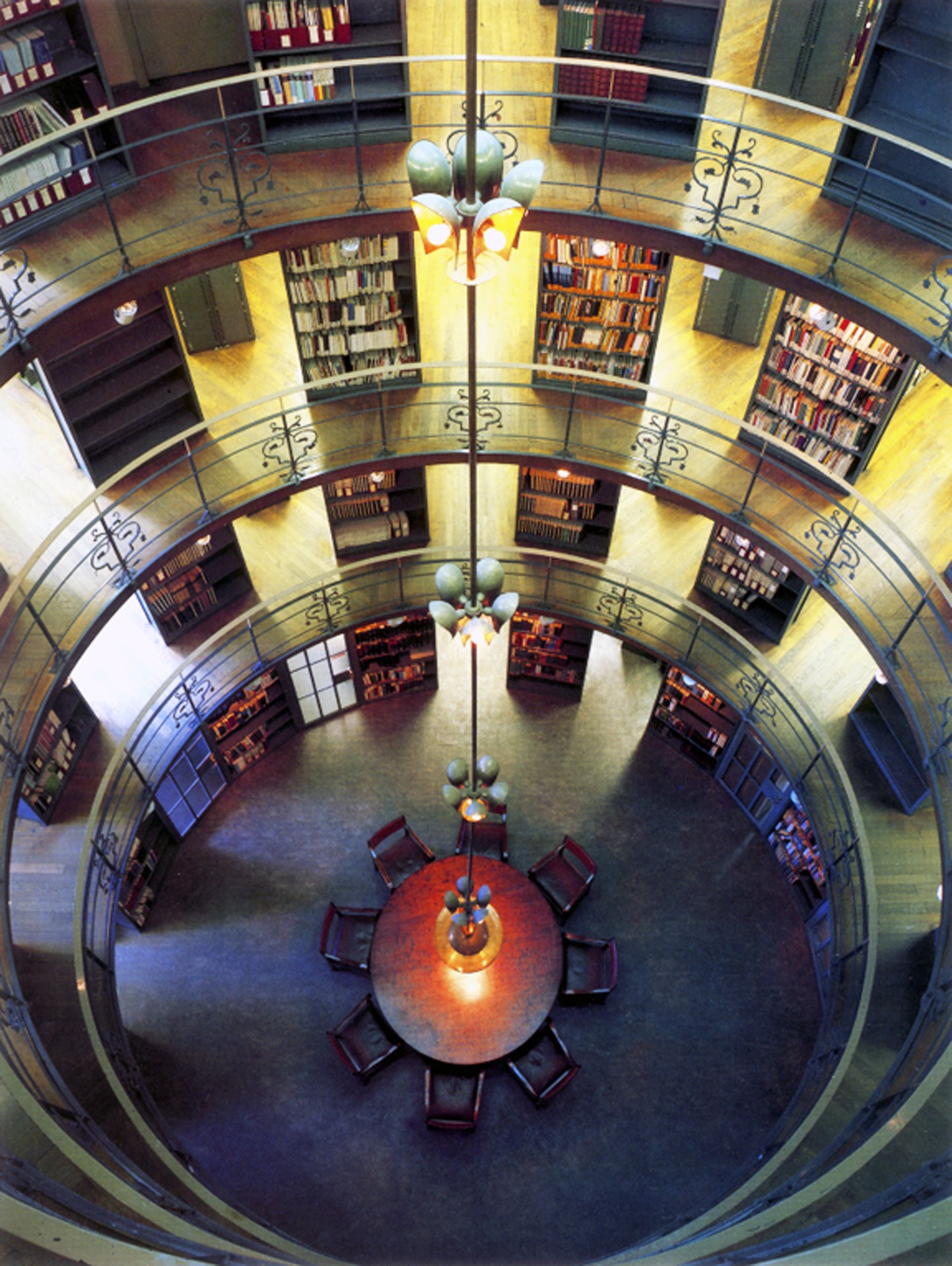
Perhaps the building’s most striking feature – the bay window and dome facing Observatorielunden – speaks volumes about Tengbom’s sense of spatiality. The cylindrical auditorium, flanked by Doric columns, seats 300 listeners. It is a solemn space where light, acoustics, and materials meet in careful balance. Above the auditorium rises the library’s book tower with four circular floors inside the dome. Custom-designed bookshelves and study spaces with views of the city contribute to an environment where knowledge can grow in multiple directions at once. The spiral staircase linking the floors reinforces the sense of moving through a microcosm of concentrated study.

Respectful extensions

Over the years, the building has been developed, always with respect for the original. Over the years, architects have extended the building — always with respect for the original. In the 1970s, architect Åke Ahlström (1918–2001) added a new southern wing. Then in 1976, a western wing took shape toward the northern part of Saltmätargatan. This extension brought in a modern auditorium and the technically advanced KAW lecture halls. Interestingly, Tengbom also designed this addition — now under the name Tengbom Architects, Sweden’s oldest architectural office and a direct continuation of the practice Ivar Tengbom founded in 1906. That the same office shaped both the original and its later development nearly a century apart says something rare. It shows how architecture can become a conversation across generations — built not just in brick and wood, but in ideas.


Between tradition and progress

Although the Stockholm School of Economics is often associated with classicism, Tengbom’s interpretation is far from dogmatic. He worked in a time of change. Functionalism was just around the corner, and in the tension between the tried-and-true and the new, he found the building’s particular strength. Today, the Stockholm School of Economics remains one of Tengbom’s most significant works. A building that did not choose between past and future, but held both in its hand.

Contact person

Mia Lindberg

+46 8 410 354 93

Sandböljan in Malmö

Historic harbor heritage in motion
Architecture, Cultural Heritage
Offices, Renovation & Transformation
Client: Sandböljan AB
Project years: 2020–2024
Location: Malmö
GFA: 1 500 sqm
Collaborators: Sandböljan AB, Agneta Hahne Arkitektkontor
Awards and recognitions: Malmö stadsbyggnadspris 2025

In the shadow of Malmö’s Frihamnsviadukten, at the crossroads of rail tracks, roads, and industrial buildings, lies Sandböljan. This architectural project carefully transformed a former container yard and warehouse into a vibrant hub for creative businesses.

Photographer: Tengbom

At the edge of the city and the harbor, a new district is emerging. Sandböljan shows how a strong idea, deep commitment, and skilled craftsmanship can breathe life into a previously overlooked place. The triangular industrial site has roots going back to the 1920s, when the building was erected to handle Malmö’s import of precious wood from ports around the world. Today, it houses a photo studio, meeting rooms, a showroom, offices, and workshops. Generous windows and open spaces invite the public into an environment of creativity and craft.

An unusual commission

Photographer: Tengbom

Unlike many of our other projects, a private property owner with a very personal commitment commissioned Sandböljan. Furniture maker and developer Christofer Eliasson wanted to create something long-term, sustainable, and contemporary on a site that people had overlooked for decades. After thirty years in Malmö’s harbor, he describes the place as “never forgotten” and explains that he and his team have treated every intervention with great respect for its history.

“I’ve only created the conditions for new life. The tenants are the ones who will leave their mark – the vision isn’t finished,” says Christofer Eliasson.

In close dialogue with the client, Tengbom has shaped a sustainable vision for the large warehouse, providing both planning and construction documents.

“This project shows how far you can go with small resources – as long as you have a clear idea and respect for what already exists,” says Anders Nilsson, lead planning architect at Tengbom.

Dig where you stand

With history at your back

The building, originally a generous warehouse, was given a new load-bearing structure in the 1970s. New entrances and large brick interior walls now offer flexible spaces for creative work. Old and new elements come together in an architecture that plays with light, views, and volume. The graffiti on the entrance façade appeared overnight, before the large openings were made, and has never been removed – it remains part of the building’s expression.

“It’s an honest architecture. Everything has been crafted with care. With precise cuts and attention to detail, the building has gained new life – with daylight, views, spatial richness, and thoughtful material use,” says Jonas Marculescu, lead architect at Tengbom.

Love for patina

Sandböljan marks the beginning of a new district in Malmö. What was once a paved industrial yard has become a social entrance space with replanted greenery and newly planted willow trees. Here, people gather for lunches, events, or simply to spend time together. The on-site carpentry workshop has made it possible to work with local, sustainable solutions and tailor-made details adapted to the place.

Photographer: Tengbom

“I hope more property owners dare to dig where they stand, without rushing to demolish and modernize. Use what already exists – it’s better for the planet, and who doesn’t love patina?” says Christofer Eliasson.

Christofer emphasizes that the project is not complete. Instead, he describes it as the beginning of a process where new businesses will gradually leave their mark. In this way, the place can evolve at its own pace.

Photographer: Tengbom

Contact person

Tietokuja 2

The 80s tech giant awakens
Tietokuja 2
Architecture, Interior Design
Client: Nordika
Location: Helsinki
Year: 2024
GFA: 6,000 sqm (first renovation phase) (of a total: approx. 36,000 sqm)
Photo: Anders Portman, Kuvio Oy

How do you transform a monofunctional headquarters from the techy 80s into a modern workplace? In Helsinki, we’ve gradually highlighted the qualities of this culturally classified building, adapted it to new needs, and let its history play along with the future. Tietokuja 2 has now come back to life.

Tietokuja 2
The office building, completed in the early 1980s, was designed by Osmo Lappo and has been owned by IBM.

The office building was designed by architect Osmo Lappo and opened in the early 1980s as IBM’s Finnish headquarters. With its 36,000 m², it was a giant of its time – but eventually, one that became too large for a single company. During the 2010s, parts of the property were rented out, and eventually, it was time for more substantial changes. Tengbom has worked with the property since 2012.

“A characteristic waffle slab roof in concrete, typical of Lappo’s constructivist design language.”

Tietokuja 2
The first phase of the renovation of the office building at Tietokuja 2 in Munkkiniemi, Helsinki, included the main entrance, lobby, and restaurant

An upgraded lobby with respect for the original

The main entrance has received a new design with a wider staircase and a new roof – elements that make the space more welcoming and intuitive. The staircase now serves as a natural guide to the meeting rooms on the upper floor.

Otherwise, the lobby has been carefully modernized. Only minor structural interventions were needed, while surfaces, furnishings, and lighting have been updated. Beneath the new floors, the original tiling remains.

Waffle ceiling in a new color

During the renovation of the restaurant, we discovered a hidden design element: a characteristic waffle ceiling in concrete, typical of Lappo’s constructivist style. We chose to make it visible and painted it orange – a color that emphasizes the detail’s unique character.

The design team reintegrated the ceiling into the restaurant environment to give the room a strong identity. They used the same ceiling in the bicycle parking area, pairing it with social functions such as bike service and changing rooms.

A building in constant development

In addition to the restaurant and meeting areas, we’ve designed a new commercial gym (Ole.Fit Munkka gym), improved staff facilities – and ensured that the functions support a smoother everyday life and a more attractive work environment.

— At the same time, the new zoning plan has protected the building with an SR-3 classification. This means we preserve the historical values while bringing the building into the future, says Petrus Laaksonen, lead architect.

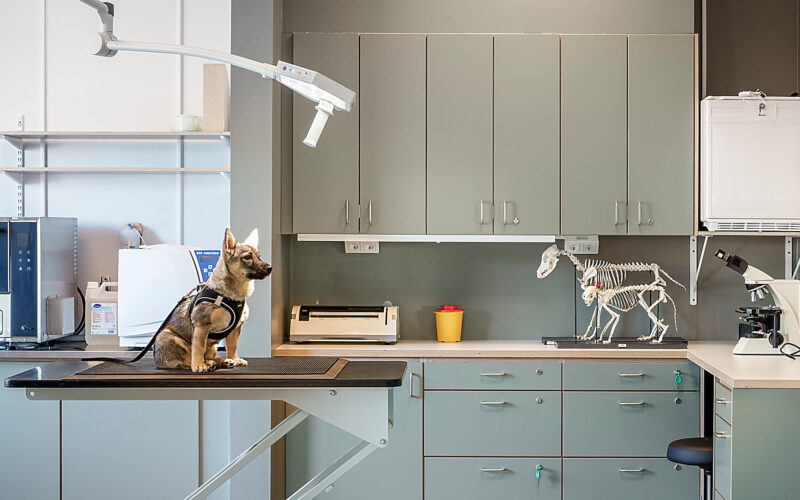
And the development continues: a veterinary clinic has already opened, and work is underway to transform other parts of the building into a hospital, a care facility for people with dementia, and an upper secondary school. We follow the transformation of Tietokuja 2 with curiosity.

Facts about Tietokuja 2

  • Architect: Osmo Lappo
  • Construction years: 1980–1987 (in two phases)
  • Origin: IBM’s Finnish headquarters
  • Protection status: SR-3 (zoning plan 2024)
  • Previous uses: Temporary schools and preschool
  • Ongoing transformation: From office to community property with high school, care home, and hospital
  • First renovation phase completed in 2024 (approx. 6,000 m²): entrance, lobby, restaurant, gym, bicycle parking. Focus on preservation and reuse
  • Upcoming phase: Facade renovation and new functions on the office floors

Contact person

Milla Lindroos

CEO Tengbom Finland
+358449769164

The glass veranda at Vreta Golf Club

On the site's terms
Vreta Golf Club
Architecture, Landscape
Client: Vreta Kloster Golf Club
Location: Ljungsbro
Project Year: 2023–2024
Collaborating Partner: Structural Engineer Patrik Samuelsson, Conlink
Photographer: Patrik Ekenblom

There’s something special about old barns. Especially when they’re allowed to remain exactly what they are – but with new possibilities. At Vreta Golf Club outside Linköping, a heritage-listed barn was joined by a new glass veranda. A discreet addition that leaves the barn untouched.

Vreta Golf Club

Adding something new to something old is a balancing act. When Vreta Golf Club wanted to develop its clubhouse, the goal wasn’t to change it, but to enhance what was already there. With careful interventions and sustainable material choices, the clubhouse has now gained an addition that connects to the building’s history and the surrounding nature.

Understand first, then draw

This is a project born from close collaboration with both the client and local craftsmen. The aim was never to design everything in detail, but to create a building permit document suited to the sensitive environment. Much of it then took shape on site, through conversations and moments of shared inspiration.

Vreta Golf Club

— This wasn’t about designing a new building. It was about understanding what already existed, and making the additions needed – as gently as possible – to create more space for dining and socializing, says Helena Hasselberg, lead landscape architect at Tengbom Linköping.

The clubhouse, a historic barn, is the heart of the facility. By adding a glass-enclosed veranda and an outdoor seating area with a 180-degree view of the golf course, it has undergone a natural evolution. The character of the barn still leads the way, while the new additions blend in seamlessly.

Vreta Golf Club
Illustration by Helena Hasselberg

Old materials with new stories

The material choices pay tribute to the site and its history. The brick floor stretches from the interior out onto the terrace, creating a natural transition between indoors and out. The roof is covered with sedum and also contributes to biodiversity.

Vreta Golf Club
Custom designed fireplace. Photo: Tengbom

Thanks to copper sheeting from Linköping Cathedral, the new bar counter gleams — the client reclaimed and reused the material during the church’s renovation. The beautifully aged metal sparks curiosity. The staircase is also repurposed, built from reclaimed planks from the farm, and the rustic tables carry marks of previous lives. These are the kinds of details that make the new outdoor room feel lived-in rather than brand new.

— The fact that the bar counter is clad in copper that sat on the cathedral for hundreds of years… it really affects the atmosphere here. And it says a lot about the kind of client we worked with, where every detail mattered, and nothing was done halfway, says Helena.

A custom-designed hood hangs above the fireplace in the room, also clad in the reclaimed copper sheeting.


A meeting place for more than golfers

The outdoor room is bright, warm, and faces the course. But it’s also meant for those who just want to have a coffee, spend time together, or gaze out over the landscape. In winter, ski tracks run across the fields, and the barn stands as a steady centerpiece all year round.

— We wanted this to be a place where people would want to stay a while. Whether or not they play golf, Helena explains.

Vreta Golf Club Vreta Golf Club

New, yet self-evident

The extension is discreet but changes the whole house. It creates more places to gather, better flow, and a greater sense of community. The barn remains the main character, but now with company that amplifies rather than alters.

Inside, the raw brick floor forms a solid foundation alongside robust furniture, chosen to be used. An acoustic ceiling lowers the sound level and makes the space just as suitable for a glass of wine as for a meeting after nine holes.

New, yet self-evident. As if it had always been part of the whole.

Contact person

Helena Hasselberg

+46 13 35 55 34

Competition proposal for a mortuary

Day by day
Architecture
Culture
Client: Markaryd Parish
Location: Markaryd
Project Type: Competition proposal, Mortuary
Year: 2024

A farewell is often a delicate moment. How can architecture support and frame the dignity it requires? In our competition proposal for the mortuary at Markaryd Church, we let architecture and landscape intertwine. Inspired by nature and the church’s design, we proposed a building that becomes a natural part of its surroundings — calm, respectful, and timeless in its expression.

The selected site is a key part of the proposal. Here, oak and pine meet, open grasslands transition into the forest, and the gently sloping land leads down to the lake. We drew from the site’s natural layers and existing landscape elements—such as stone walls and circular gathering places—to design a building that both embraces what is already there and enhances the character of the place.

Robust and timeless architecture that resonates

The building is carefully placed to maintain its connection to the viewing house while establishing its own identity. A subdued material palette of concrete, wood, and zinc conveys a sense of permanence and warmth. The cast-in-place concrete, with exposed aggregate, creates a living surface where shadows shift across the façade throughout the day. Vertical wooden panels in heat-treated pine provide a soft contrast to the concrete, while the sedum roof and solar panels add sustainable qualities.

A place to meet and say goodbye

The building was designed to provide clear yet discreet guidance through its spaces. Visitors arrive via a tranquil walkway and are welcomed by a distinct entrance with an arched canopy that conveys a sense of security and presence. The farewell room has sacral qualities, with generous daylight filtering through curtains, wooden walls, and granite flooring. An intimate outdoor space offers visitors the opportunity to say their goodbyes embraced by nature, with a view extending towards the lush forest and the lake.

“Help me then to rest securely and calmly, relying solely on Your promises, dear Lord. Let me neither lose my faith nor the comfort preserved for me in Your Word. Help me, Lord, to accept whatever comes from Your faithful fatherly hand, day by day, one moment at a time, until I reach the promised land.”

Psalm 249, Verse 3, Day by Day and With Each Passing Moment

Sustainability and longevity

By working with prefabricated concrete elements, we aimed to ensure high precision and a shorter construction time. At the same time, the structure provides good insulation and a long lifespan with minimal maintenance. We optimized the roof drainage at three points to simplify upkeep. We also integrated a smart solar panel system that supports a long-term sustainable energy supply.

A project we are proud of

Even though our proposal did not win the competition, we see it as an important and beautiful project worth highlighting. We show our ambition to create architecture that is deeply rooted in its site through a respectful and well-thought-out design. A design where every detail contributes to the whole, always considering the budget and constraints in place.  Markaryd Church deserves a new mortuary building that honors the significance of farewells with care. We are proud to have had the opportunity to contribute our thoughts and ideas. Congratulations to SESAM Arkitekter for winning the competition!

Contact person

Matt Patterson

Practice DirectorJönköping
+46 36 440 90 81

Djupängen care home

A social and homely care environment
Architecture
Health, Life Science
Client: Hammarö kommun
Location: Hammarö, Värmland
Type of project: Elderly housing
Completed year: 2020
Photographers: Felix Gerlach and Mia Hernell Blomquist, Helena Christersdotter

Djupängen Care Home in Värmland was developed through close collaboration, where everyone. From dementia nurses and social directors to electricians, technical consultants, and, most importantly, the residents had a voice in the design. From start to finish, attentiveness and care for the residents’ well-being were at the heart of the project.

When a party approaches, of course the guitar comes out. Photo: Mia Hernell Blomquist

“The environment should feel like a home, not an institution,” explains Anki Haasma, lead architect at Tengbom in Karlstad. “We designed Djupängen to provide a comfortable living and working environment, improve orientation for both staff and residents, and accommodate individual needs.”

To ensure a positive living experience, the project followed a partnering model, with workshops allowing all perspectives to be heard throughout the process. From the initial sessions defining values and goals to the final review moderated by an external party, engagement was high. The result? A care home where everyone is satisfied, especially the residents and their families.

“We focus on creating activities that give people purpose and joy, and it’s a huge advantage to work in such fantastic spaces. Visitors often say, ‘Wow, can a care home look like this?’ And the answer is – absolutely!”, says Mia Hernell Blomquist, Development Coordinator, Hammarö Municipality

Join in a dance, have coffee at the café, share a glass of wine with a friend, stack firewood in the garden, or enjoy a good book in the library.

There are 120 carefully designed homes here – it should feel like home. Photo: Felix Gerlach

A homely feel, close to nature

At  Djupängen Care Home, residents are truly the focus. The home consists of 120 apartments, spread across three wings surrounding two smaller courtyards and one larger central courtyard. This main courtyard is designed to create a safe and pleasant outdoor space, easily accessible to all residents via paths leading from the entrance.

Inside, the warm and welcoming interior enhances the homely atmosphere. Inspired by its natural surroundings, the care home is themed around meadows, with colour schemes and symbols reflecting this connection. Each unit is named after a wildflower, and common areas like the spacious lounge are designed in inviting, earthy tones. The fireplace and lounge seating give the space the feel of a café rather than a traditional care facility.

Balancing privacy and social life

Anki Haasma explains that staff involvement, from practical functions to interior details, was key in shaping the design of Djupängen. Positioned between meadow and forest, yet connected to the town, the care home creates a sense of both security and inclusion.

“A modern care home should reflect life, both inside and outside its walls,” says Anki.

Each apartment is a private home, offering residents the option to retreat for solitude. Meanwhile, common areas provide opportunities to socialise with neighbours.

Residents join in a variety of activities, from hairdresser visits and singing sessions to gardening, coffee breaks, and reading in the library. Staff and residents share laughter and companionship, filling Djupängen’s Instagram feed with moments of joy.

Soft shapes and textures for a sense of calm

Tengbom was also responsible for the interior design, ensuring a warm and functional indoor environment. The team carefully considered colours, lighting, and furniture, following the same collaborative process as the rest of the project. They selected furniture that offers comfort, support, and safety, with rounded shapes and pleasant textures that create a soft and welcoming feel.

“There are spaces for socialising, but also places for quiet moments with a view of the surroundings,” says Anki. “The materials create a warm and inviting feel. At the same time, they are durable and easy to maintain. It’s a balance between aesthetic quality and practicality.”

Contact person

Anki Haasma

+46 54 400 50 68