Archives

Prästhöjden Senior Housing

The kind house
Prästhöjden
Architecture
Residential
Client: Fristadbostäder AB
Assignment years: 2021-2023
Type of housing: Rental apartments
General contractor: Olofsson Bygg
Photographer: All images, except those in the last gallery, were taken by Åke E Lindman
Awards and nominations: Winner of the 2024 Public Housing Best Construction Award. Nominated for the 2024 Construction of the Year Award and the 2024 Swedish Red Paint Prize

Showy? No. Kind to both people and the environment? Absolutely. From start to finish, and in close collaboration with Fristadbostäder AB, the Prästhöjden senior living facility in Fristad, outside Borås, took shape under the mantra “The right material in the right place.” This energy-efficient building, with refined architecture and meticulous attention to detail, is built to last.

At Tengbom, we often say that a successful project results from good collaboration where architects are involved every step of the way. That was certainly the case with Prästhöjden. From the drawing board to follow-up, we worked hand-in-hand with Fristadbostäder AB, a client as passionate as we are about long-lasting design and cost-effective property management achieved through well-chosen materials.

Prästhöjden senior living

The result: just as we imagined

“Taking a long-term perspective is highly beneficial for us,” says Kjell-Ove Sethson, CEO of Fristadbostäder AB. “By focusing on lifecycle costs instead of fixating on construction costs, Prästhöjden will generate economic benefits for generations to come.”

Magnus Almung, the project’s lead architect, adds:

“It’s rare in Sweden to be both the architect and the project leader, from sketching the initial lines to preparing tender documents and construction plans, attending every site meeting, and overseeing the entire process. But in this case, I was involved in every phase, and the result is a building I am especially proud of—a building that turned out exactly as I envisioned.”

For quality of life and community

Prästhöjden senior living. Foto: Åke E:son Lindman

The building features three stories, a centrally located glass stairwell, and a terraced floor on one side. The apartments are high-quality, with bright interiors, large windows that let in ample natural light, and solid ash parquet flooring. Kitchens are functional and well-equipped, and each unit includes a balcony or patio. Accessibility is a priority, with ample space for walkers. The top floor offers communal spaces to encourage interaction between neighbors, including a rooftop terrace for sunny days. Residents enjoy proximity to nature, essential services, and excellent outdoor areas for families and visiting children to gather.

Prästhöjden senior living

Sustainable craftsmanship and smart energy

Prästhöjden is designed and built to stand the test of time, with massive wooden frames supporting the structure and a facade painted in classic Swedish Falu red. The property is energy-efficient, with optimized energy use and solar panels on the roof. Both material choices and functionalities were carefully selected to ensure longevity.

Following the principle of “the right material in the right place,” the design places the concrete structure underground in the terraced floor, while the above-ground sections use wood. Sustainability and environmental considerations drove the extensive use of wood, not just for structure but also as a key aesthetic feature. Exposed wood adds character to the apartments, stairwells, entrances, and facade.

Prästhöjden senior living Prästhöjden senior living

“We aimed to create a functional building that’s also rich in beautiful materials and detailed craftsmanship,” Magnus continues. “Even the construction workers appreciated building something that stands out from standard prefab projects, which is evident in the final result.”

Prästhöjden senior living

Prästhöjden senior living“Wood through and through”

The team selected a simple half-lapped spruce panel to create a harmonious yet varied facade. They mounted a specially milled 50-mm deep cover strip on alternating joints. For the bottom floor, a smooth finish provides a well-proportioned base for the facade. Fire sprinklers throughout the building make it possible to have exposed wood interiors and a fully wooden facade.

Prästhöjden senior living

“This gave us great freedom to design the building around our concept, ‘Wood through and through,’” says Magnus.

However, as Magnus emphasizes, this is no “showy” house. It is a kind, sustainable home of thoughtful architecture, high quality, and practical functionality.

“We are proud and delighted with the overwhelmingly positive feedback from our satisfied tenants,” concludes Kjell-Ove Sethson.

Photographs in the gallery were taken by Ulf Celander.

Prästhöjden senior living received a nomination for Construction Project of the Year in 2023. In 2024, Public Housing recognized it as a contender for Best Building, along with a nomination for the Red Paint Prize (Rödfärgspriset).

Contact person

Magnus Almung

Lead Architect
+46 31 708 38 01

Preschools in Varberg

A scalable concept surrounded by nature
Architecture, Interior Design
Education
Client: Varbergs Fastighets AB
Year: 2021
Entreprenuer: MTA
BTA: 2 105 sqm
Photographer: Kalle Sanner & Carl Ander

Tengbom’s environmentally friendly preschool concept is behind three new preschools in Varberg. Wood, playful colours and proximity to the outdoors will give the children a positive experience of nature, even inside. Cherries, lingonberries and butterflies inspired the colour palette, which was chosen based on research.

The preschools Stenen in Tvååker, Klapperstenen in Breared and Bua Preschool are all the result of the preschool concept that Tengbom developed with the idea that it should be possible to apply and adapt to different locations. The design concept is based on the vision “in a forest, on a stone,” and the aim is for users to experience natural elements and colours from the outdoors even while inside the preschools.

“All of these preschools are close to nature and surrounded by green areas. They should blend in with their surroundings naturally,” explains Amanda Karlberg, who was the designer on the project at Tengbom. “Working with a scalable concept for preschools is a smart and sustainable approach. These three schools differ slightly, but incorporate the same basic concept of nature and wood as a material.

“We’re really happy with our beautiful, inspiring new preschool,” says Linda Persson, principal at the Stenen preschool. “The teachers, children and administrative staff all feel good in the space. We like the light, the high ceilings and the colours. The school’s floorplan really allows teachers to teach in a varied and interesting way. We also have great opportunities to split the kids into smaller groups, which is a winning concept of our teaching. Because each home area has several rooms, we also have the opportunity to use and enjoy inspiring, adapted and changing learning environments. The focus and materials in a room can change frequently.”

Visible wooden framework

One of the project goals was to build with wood using an economical and environmentally friendly approach. Two of the preschools are built on a wooden framework and wood appears throughout both the interior and exterior. Wood is also a highly tactile material – the kids can see it, feel it and experience it. The result harmonizes with the calm and playful colour palette that is reminiscent of the forest.

Preschool concept: outdoor naptime

Time spent outdoors is an important part of being in preschool. Each school has a freestanding pergola – an outdoor space made with wooden slats. The pergola provides shelter from the sun in the yard and has the same rural-inspired design as the preschool building, but at a child’s scale. The wooden slats and natural setting call to mind a retreat or a spa. As light falls through the slats, it casts shadows that enhance the atmosphere and bring vibrancy to the yard. The children and the teachers play here, and naptime also takes place outside on the patio.

“Before naptime at the preschool, the children and teachers gather mattresses and blankets from a heated room nearby,” says Amanda. “The children rest or sleep outdoors every day. This is also consistent with the well-being concept that we wanted to convey.”

Nature’s colour palette

The visual design concept inspired by stones and the forest is carried indoors through the colour palette, which offers a nod to nature. Instead of the frequently used palette of whites on preschool walls, the colour scheme in this preschool concept incorporates soft and natural hues. The idea comes from research on colour theory, with inspiration from a blossoming summer meadow. Cherries, lingonberries and butterflies are among the colourful details that provide contrast to the even greenery of the forest or the gray hues of the mountains.

“We don’t have bright colours all over the place, but rather a colourful balance that makes people feel good. It stimulates the brain and keeps spirits high,” explains Amanda. “Kids and adults alike need colour.”

The preschool rooms all put different educational activities in focus. There is a construction room, a sensory room and a studio – each with its own colour scheme.

“Imagine a winter landscape where everything is black, white and gray,” continues Amanda. “In that setting, bold colours would be a warning to the brain. I think our colour concepts might have initially been perceived as too bright and dominant, but the result is far from loud or alarming. It feels soft and warm and works incredibly well with the wood that’s also visible inside.”

Preschool concept: creative and flexible yards

The preschools also have large, varied and creative yards outside, with playground equipment for all ages. The spaces in the yard can be delineated and scaled up or down to give the younger children their own area.

“We’re feeling at home now that the new preschool has been operating for a year and a half,” says Linda Persson. “We all love it and we’re very proud of our preschool. That includes the building and the teaching that we do here!”

Contact person

Kajsa Crona

Practice Director Gothenburg
+46 727 07 79 73

Multi-activity center in Gällivare

Where an arctic municipality gathers
Architecture
Culture, Sports & Health
Client: Gällivare Municipality, Samhällsbyggnads- och teknikförvaltningen (SAMT)
Completion year: 2024
BTA: 24 000 sqm
Assignment: Program design, Systems management, Final collaborative project design
Developer and collaborators: MGA Michael Green Architecture a Katerra Design Partner in collaboration with MAF Arkitektkontor AB
Illustrations: MGA Michael Green Architecture

The town of Gällivare, north of the Arctic Circle, is going through changes. Two centers will merge into one as much of the neighboring area of Malmberget moves due to mining. Following extensive preliminary work in dialogue with local residents, the municipality has developed a vision for a “small Arctic town of world renown.” Among other things, we have created a multi-activity center here.

Multiaktivitetshuset

The multi-activity center is part of the new Gällivare, which also includes Kunskapshuset, Vassara square, the Ice and Events Arena and the new athletics center. The building will be a hub for people of all ages and with interests of all kinds. The multi-activity center will be ready in 2024 and was designed by Michael Green Architecture in Canada. We were in charge of the program design, systems management and final collaborative project design.

“The municipality wanted a welcoming landmark building with architecture that has a link to the area,” says Mats Jakobsson, our lead architect on the assignment. “It should be a unique center that makes Gällivare an attractive small town to live in, and that spreads interest well beyond the municipality’s borders.”

Multiaktivitetshuset

Warm and flexible with local materials

We have gathered culture, a library, a pool, youth center and an indoor sports center inside this complex building that occupies an entire block. The underlying idea is based on the concept of the unifying space – a meeting place for residents, pathways through the building, and a division into comprehensible spaces that match the scale of the region.

The heart of the project is a central space for the community to gather, called the hearth. The multi-activity center is designed to be a shared space for all seasons. In winter, the central area turns inward to create a warm and welcoming environment, which is transformed in summertime and reaches out toward the city. An important part of the design was to connect people inside the building and create opportunities to socialize through a central gathering space between the building’s various areas of use (sports, art and the library). A restaurant, café and bar surround the hearth.

Pavilions for the people

To fit the building into its surroundings, the design team divided the complex structure into a series of small pavilions. This choice of smaller building blocks helps the architecture blend naturally with the town setting, making it feel both unassuming and accessible. Furthermore, the layout creates cozy spaces alongside larger areas for gatherings.

The pavilions are designed to respond to local environmental factors such as sunlight, wind, and scenery. Varying spaces between them provide diverse options for light and air. They also differ in size and height, with two identified as “lighthouses.” The library lighthouse stands outside the southern square, while the pool lighthouse marks the northern square. Both are long and transparent, featuring glowing signs that welcome and guide visitors to the building’s core.

Where nature and landscaping meet

Landscaped areas of different sizes and orientations create diverse outdoor spaces beside the building. By integrating the landscape, nature becomes part of the entire space. This design also ensures direct access to fresh air and natural light.

Contact person

Peter Häggmark

Practice Director North
+46 070 342 58 04

Floraskolan

A place for kids to bloom
Architecture
Education
Client: Skellefteå Municipality
Year: 2020
BTA: 14 600 sqm
Assignment: Program design, Sketches, Systems management, Final collaborative general contracting
Certification: Miljöbyggnad silver
Photographer: Anders Bobert

Floraskolan is a newly built school for preschoolers up to year nine. The goal was to create premises, interiors, equipment and a schoolyard that promote multidisciplinary education for students of varying ages. Our motto when designing the new school in Skellefteå was: “from mine to ours.”

Floraskolan

Built in Skellefteå on a former industrial site, Floraskolan is a new school with a new teaching concept and organization.

“We focused on making the school a place where all students and educators would find fertile ground for achieving their full potential and being able to bloom,” says Mats Jakobsson, lead architect on the assignment.

Floraskolan

Experimental workshops and arenas

To give students and educators the best possible conditions, the new school is divided into various arenas. Like experimental workshops, each one has its own specific content. We have home arenas that belong to a specific group of students and teachers, as well as project arenas with shared premises and equipment. The arenas are linked together by spaces for common and support functions.

Glass and galvanized steel sheeting

From outside, the school rises up with a solitary shape that gives the site renewed purpose and content. The arenas stand out through their height, curved design and the organic material of the façade. Wide brown-glazed glulam panels also add a striking visual quality. The shorter building structures housing the support functions are visually quieter, with a façade in non-organic materials: hot galvanized steel sheeting and plenty of glass.

Plants and inspiration from Monet

Inside, many elements depart from the traditional school in terms of their pedagogic design. This includes the sizes and organization of classrooms, as well as creative room functions and an effort to avoid hallways that are merely hallways.

A plant-inspired palette brings vibrancy and identity to the interior. Monet’s garden and paintings inspired the various arenas, while the entrances and support functions feature colours from Sweden’s nature and materials that refer back to the exterior.

Floraskolan Floraskolan

Contact person

Peter Häggmark

Practice Director North
+46 070 342 58 04

Fornudden School

Building in a park
Architecture, Landscape
Education
Client: Tyresö Municipality
Location: Tyresö, Stockholm
Assignment years: 2015-2021
BTA: 11 000-12 000 sqm
Photographer: Felix Gerlach

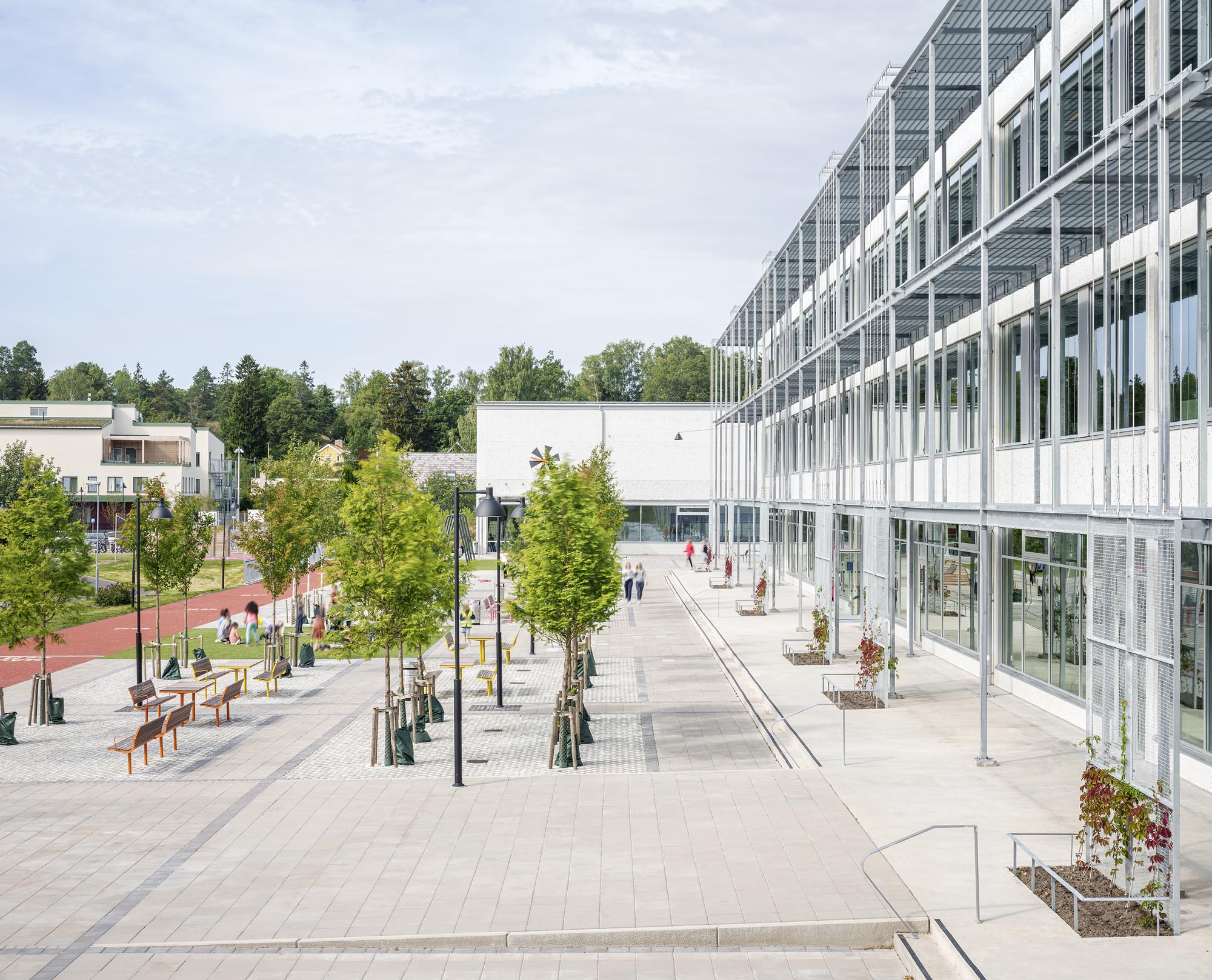
Access to the park and flexible spaces on the ground floor that can be used by the general public add a distinctive touch to the new Fornudden School. We combined landscape architecture and pedagogy to design the building and site at the north end of Fornuddsparken in Tyresö, southern Stockholm.

Fornudden
The stairs to the second story double as a gathering place with bleacher-style seating. This feature is part of the scaffolding and sunshade that runs along the building’s southern side.

Tyresö is growing and becoming denser, making a new school essential. Fornudden’s new school and schoolyard opened in fall 2021. Children from preschool to year nine now have access to a full-sized athletics center. The design of the ground floor and athletics center allows for use by the wider community, even outside school hours.

Fornudden

Blending into the park

The school is a backdrop and clear delineation point to Fornuddsparken.

Fornudden School and the separate athletics center are situated in the heart of Fornuddsparken. We aimed to weave the building, schoolyard and park together with a more rigid design near the houses and street that loosens up as it merges with the park. Among other ways, this is evident through the precision of the trees lining the street and the checkered pattern on the ground. Planted areas meander from the park into the schoolyard. The sunken areas between the retaining walls have playground equipment, while the understated spaces encourage spontaneous socializing among older students. To prevent the parking lots from disturbing other activities, they are partially concealed behind short walls and planted areas. A lighting designer developed the lighting concept to create a welcoming atmosphere and an enhanced sense of safety.

“Getting the building to blend in with the park was a major design task,” explains Lina Swanberg, Studio Director Education/Heritage at Tengbom. Part of the solution was the visual scaffolding out toward the park, which breaks up the scale and dissolves the boundary between indoors and outdoors. It also serves as a trellis for climbing plants, which helps the school merge with the park setting and provides some sun protection outside. The school provides a backdrop and a clear stopping point where the park borders Gärdesvägen road.

Good athletics centers are valuable

Fornudden
Large glass panels in the classrooms have kid-friendly windowsills that welcome in the green surroundings – outside moves in, and inside moves out.

Education indoors and out

The pedagogical design facilitates education in several ways. The teaching spaces vary in size, from traditional classrooms to smaller group rooms and study spaces. There is also a mini auditorium with a stage and riser seating where students can perform and present to one another, or gather in large groups for film screenings as an after-school activity.

The team planted a school garden with fruit trees and berry bushes facing the park. The garden and outdoor stage serve as examples of outdoor educational features.

Fornudden
Common functions and spaces, like the cafeteria and the library, are located on the first floor and near the main entrance.

A safe setting for kids and adults

“So much of designing a school is about creating a safe work environment for staff and kids,” explains Lina. “We’ve focused on safety, with the presence of adults near the entrance, where we’ve located the library, cafeteria and administration. Glass panels offer transparency and safety, and make it easy to see which rooms are available and which are occupied.”

The materials are robust and simple. Inside, the false ceiling consists of aluminum slats. The terrazzo concrete exterior with black diabase creates a soft, friendly façade and entryway. This look is echoed in the speckled painted walls indoors. Birch plywood and industrial parquet cover the walls and floors. Pops of yellow, red, and pink add accent colours. The floors are soft for tumbling children. Low windowsills offer views of the park’s treetops from the classroom.

Fornudden
View towards the entrance and the café.

Flexible use

Flexibility has guided the project from the start. The design allows the ground floor to function beyond school hours. The library, mini auditorium, and craft rooms welcome the general public and other organizations when needed.

“In particular, the full-size athletics center needed to be accessible outside school hours,” explains Lina. Afternoons, weekends, and holidays should provide opportunities for use. Many municipalities benefit from good athletics centers, but some remain empty because their design doesn’t support independent use.

Contact person

Mark Humphreys

Practice Director Stockholm
+46 8 412 53 43

Campus Vasastan

One building - many lives
Architecture
Building Preservation & Restoration, Education
Client: Hemsö Fastighets AB
Location: Vasastan, Stockholm
Assignment years: 2019-2022
BTA: 11 000 sqm
Photographer: Felix Gerlach

With the ROT Award-nominated Campus Vasastan on Karlbergsvägen 77 in Stockholm, we transformed a charcuterie factory facing possible demolition into a modern, vibrant campus with three upper-secondary schools in one building.

The building was constructed at some point between 1954 and 1971. It was a charcuterie factory first and later became an office. Today, it is a downtown upper-secondary school for 1,800 students and part of the solution to Stockholm County’s need for 15,000 new upper-secondary places by 2027. In 2019, a courageous Hemsö acquired Kadetten 29, which is now run by education company AcadeMedia.

Campus Vasastan
From a charcuterie factory to an office block – to three upper-secondary schools in one.

“There weren’t any tenants at first. With extensive experience under our belts, and expertise in upper-secondary schools, we worked with Hemsö to develop a detailed plan, a concept and an idea for an attractive school that they could show to potential tenants. Almost like working with branding,” says Karolina Lorentzi, a Tengbom architect with extensive experience in educational settings.

Stockholm’s future: reduced climate impact

Transforming a large building and giving it a new purpose requires significant effort from many players. Care for the environment is evident in the project through reuse, recycling, and high energy targets to contribute to a lower impact on the climate. But of course, the greatest environmental gain comes from the carbon dioxide emissions avoided by not tearing down a building. The on-site greenhouse is built with recycled materials, as is the carcass of the building.

“Reusing an existing structure while creating good settings isn’t just true sustainability. It’s also an efficient use of time – and an incredibly exciting project,” explains Karolina.

Many technical challenges

A reuse project on the scale of Campus Vasastan means facing one technical challenge after the next. The depth of the building presented a challenge for working with daylight, while a low ceiling in several areas required both extensive technical installations and space. Securing solutions for emergency exits and escape routes in a building with many people posed another technical challenge. Additional zones enabled us to make adaptations for accessibility.

Like an archeological dig

Demolition inside an older building that has undergone multiple updates is a bit like an archeological dig. Problems arise as you progress and innovative construction solutions must be found quickly.

Campus Vasastan
Campus Vasastan encompasses around 12,000 square meters on seven stories. Arranging the puzzle of logistics, flows, acoustics, light and structure is a complex process.

“For example, as we cleared off the framework, we found it was in really bad shape. A pillar was broken and construction had to stop. It was hanging, as if by a thread, and we had to call in an engineer. We didn’t have all the blueprints from earlier renovations, and so much of the steel was affected. Novogruppen did an incredible job as general contractors here,” explains Charles Davis, lead architect for the assignment.

Efficient flows and structure in every detail

What makes a school well-functioning? Well, among other things, it comes down to the handling and planning of larger spaces, acoustics, social areas, large-scale flows and logistics, accessibility, air, daylight, fire protection and safety. Campus Vasastan has an area of about 12,000 square meters on seven stories, both above ground and basement and semi-basement levels. It has 53 classrooms and three athletics rooms.

Campus Vasastan
A natural hub that serves many purposes. Presentations, events, studying, or simply a place to hang out.

What was once the garage entrance now serves as the main entry point and leads directly into the heart of campus — the welcoming atrium. From here, visitors get a clear view of all four lower levels, stretching from floor -1 up to floor 2. At street level, the atrium connects to the reception, café, library, student health center and open lounge areas. Meanwhile, the cafeteria, large kitchen, recycling and waste room, athletics center and changing room on floor -1 are also easily accessed from this central space

Campus Vasastan
Construction began in 2021 and the school welcomed its first students in fall 2022.

The upper floors contain light-filled classrooms designed for concentration, along with study spaces, administration offices, a teachers’ lounge, common areas, and flexible subject-specific classrooms. The team designed the open spaces to allow zoning and adaptable furnishings, creating rooms within rooms.

The third-story outdoor space, covering approximately 1,000 square meters, features a greenhouse. Students and staff can use this educational space as an extension of lab work, for gatherings, or simply as a lush green retreat.

How did we do it?

“Campus Vasastan was a success thanks to an open partnership with plenty of momentum from all players involved, with an open-minded approach and a clear common goal,” says Karolina. “Tengbom brought in expertise from an early stage and we were able to be on site throughout the project.”

Contact person

Mark Humphreys

Practice Director Stockholm
+46 8 412 53 43

Tampen

A seaside setting
Architecture
Residential
Client: CA Fastigheter AB
Location: Varvsholmen, Kalmar
Year: 2022
Photographer: Jansin & Hammarling and Felix Gerlach

Tampen, on the island of Varvsholmen in Kalmar, combines remarkable natural scenery, high-quality architecture and evidence-based design. Something above and beyond the ordinary, in other words. It’s no coincidence that the association is called Fyren (“The Lighthouse”).

Tampen
At the tip of the island, with expansive views, you will find the Tampen residential area.

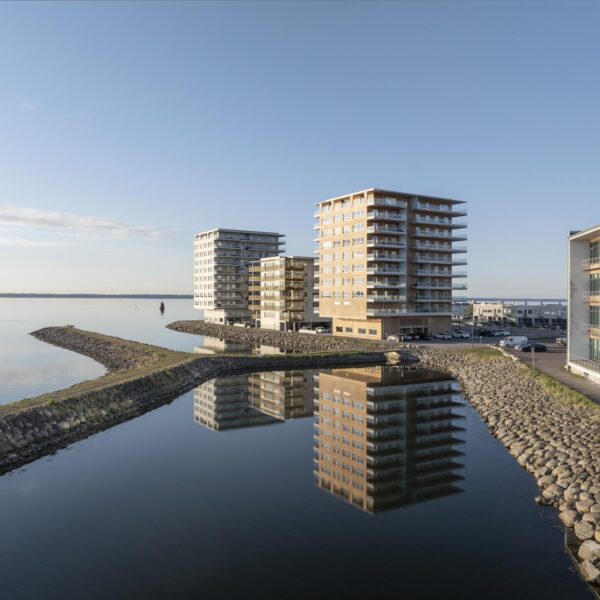
The Tampen residential area is situated at the tip of the island, with expansive views and beautiful natural scenery. Tengbom has completed three buildings – two bigger, one smaller. The island was once home to an old industrial shipyard, where ships were still built 50 years ago. Now the area offers housing for about 2,000 people who enjoy daily life beside the ocean’s waves. They are all within comfortable cycling distance of Kalmar’s city center.

Tampen
Large balconies extend the airy rooms of the apartments.

Harmonious architecture and engineering

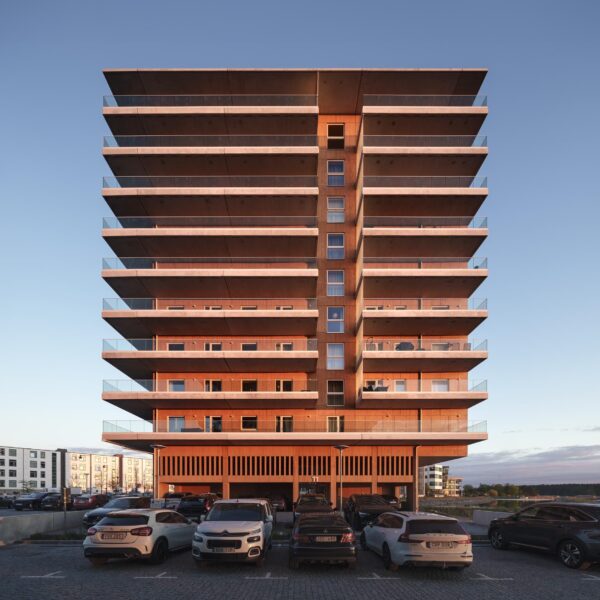
The residential area offers wide-open views in every direction and showcases natural beauty year-round. Many corner units in the large building allow light to enter from multiple sides. The design features elegant, tactile façades finished in terrazzo with crushed white marble stones. Large balconies complement this material, demonstrating how architecture and engineering can work in harmony.

The balconies provide shade and wind protection, drawing inspiration from Japanese engawas, spaces that connect indoors and outdoors to enhance contact with nature. At 2.5 meters wide, they create uninterrupted views from the inside, free from distracting elements. Throughout the process, architects, landscape architects, and interior architects have prioritized visual freedom, ensuring a seamless flow between indoor and outdoor spaces.

An ode to concrete and a tribute to its aesthetic

Maximizing the experience of nature via algorithm

To make the most of the sea views and natural light, the architects collaborated with Tengbom’s digital studio. They analyzed the views from every angle, considering building positions, wind conditions, and light exposure. This approach maximized daylight while ensuring the façade provided shelter from strong winds.

The result? Bright rooms with windows and balconies offering over 80 percent uninterrupted views. It’s about as close to a lighthouse as one can get.


Concrete as a statement

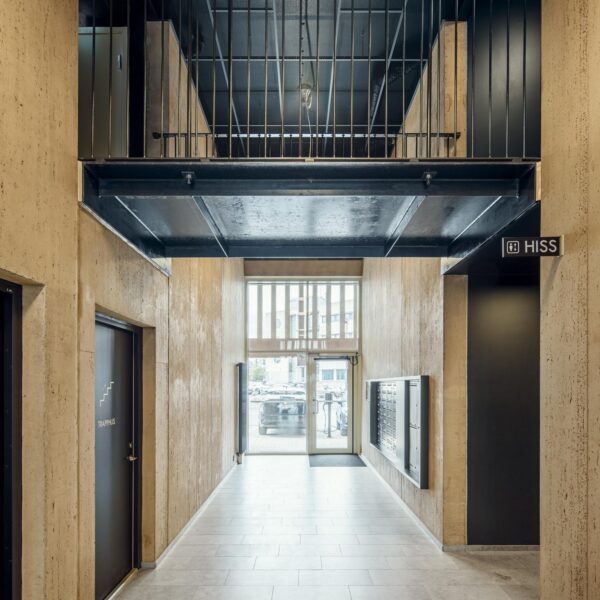
Concrete plays a central role in both buildings, shaping their style and flexibility. The design emphasizes details, replacing ordinary concrete walls with 45° angles for a seamless integration of structural elements. The completed buildings draw inspiration from brutalism, serving as both an ode to concrete and a tribute to its aesthetic.

The structure is simple, exposing its raw construction while incorporating intricate details. The appearance of the concrete shifts depending on the viewer’s distance, adding depth to the design. To minimize visual noise, the team removed unnecessary components and toned down materials and colours, allowing the raw beauty of concrete to take center stage.

Tampen
Tampen
The light gray terrazzo façade of Tampen blends seamlessly with the surrounding colour tones.

Contact person

Joao Pereira

Practice Director Linköping och Kalmar
+46 708 79 99 38

Vidhave in Visby

A holiday village with an eco mindset
Architecture
Hotels & Meetings
Client: Vidhave
Location: Snäckgärdet, north of Visby, Gotland
Project: 60 houses á 50 sqm and more to come
Assignment years: 2021–2023 and ongoing
Photographer: Jens Hjelte, Vidhave

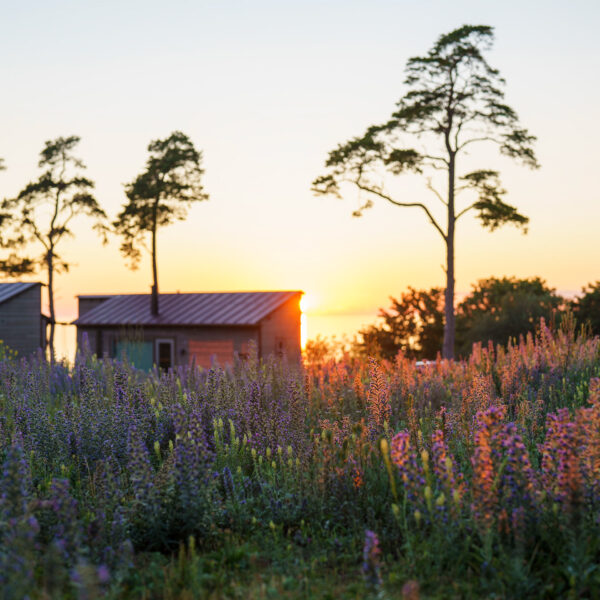
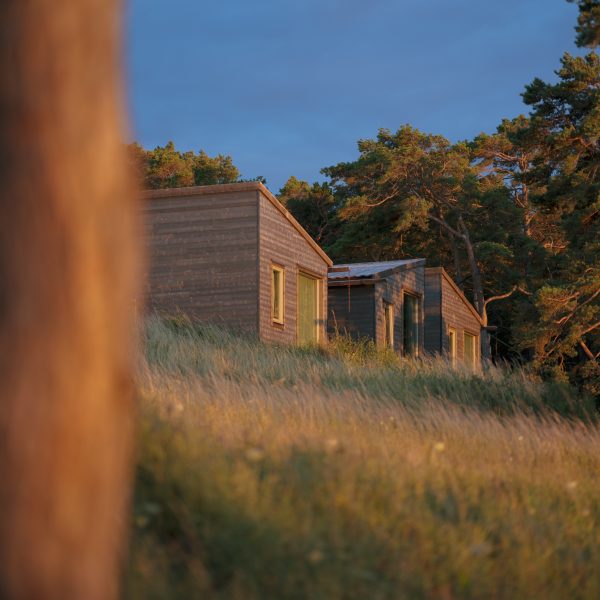
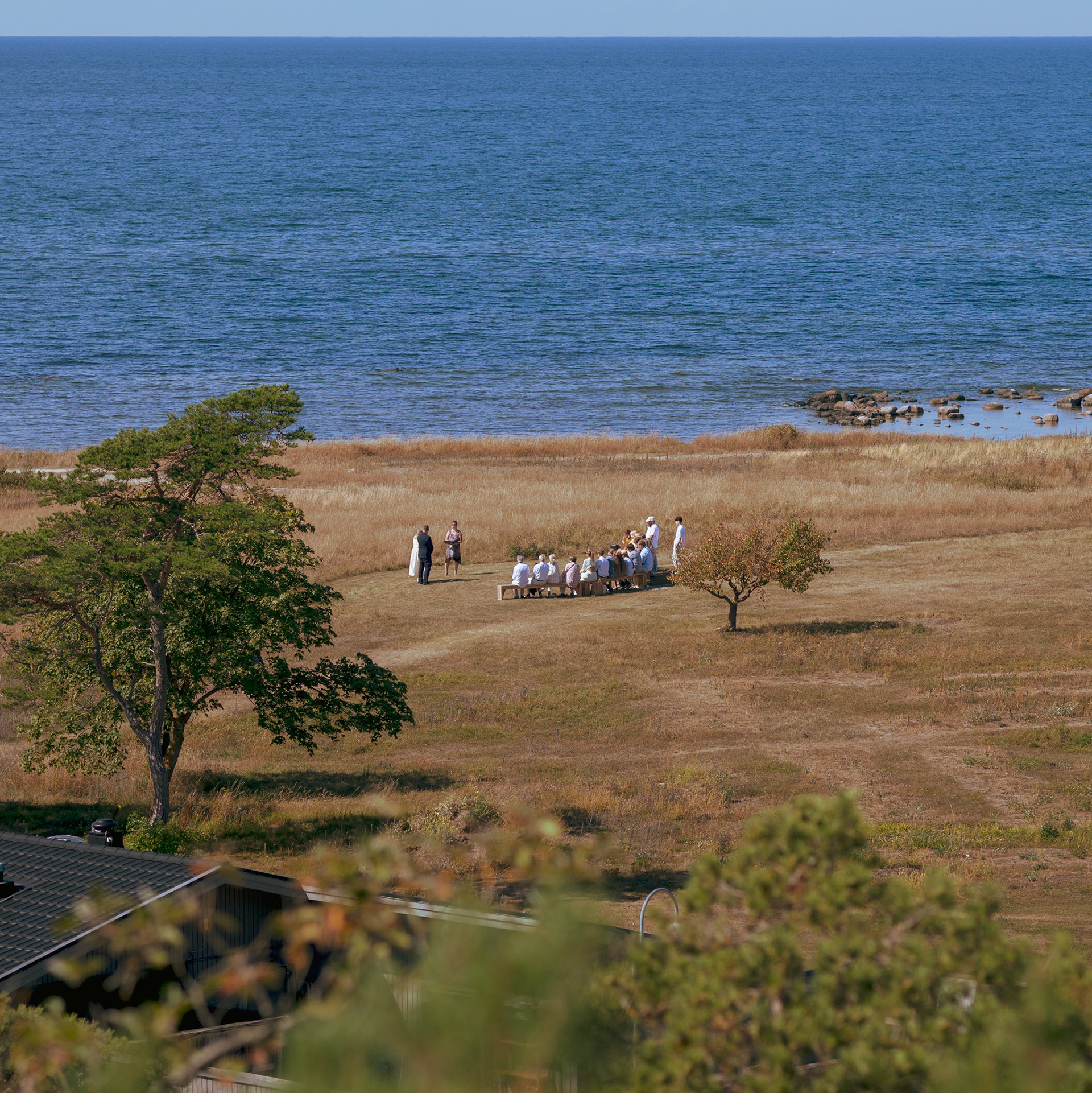
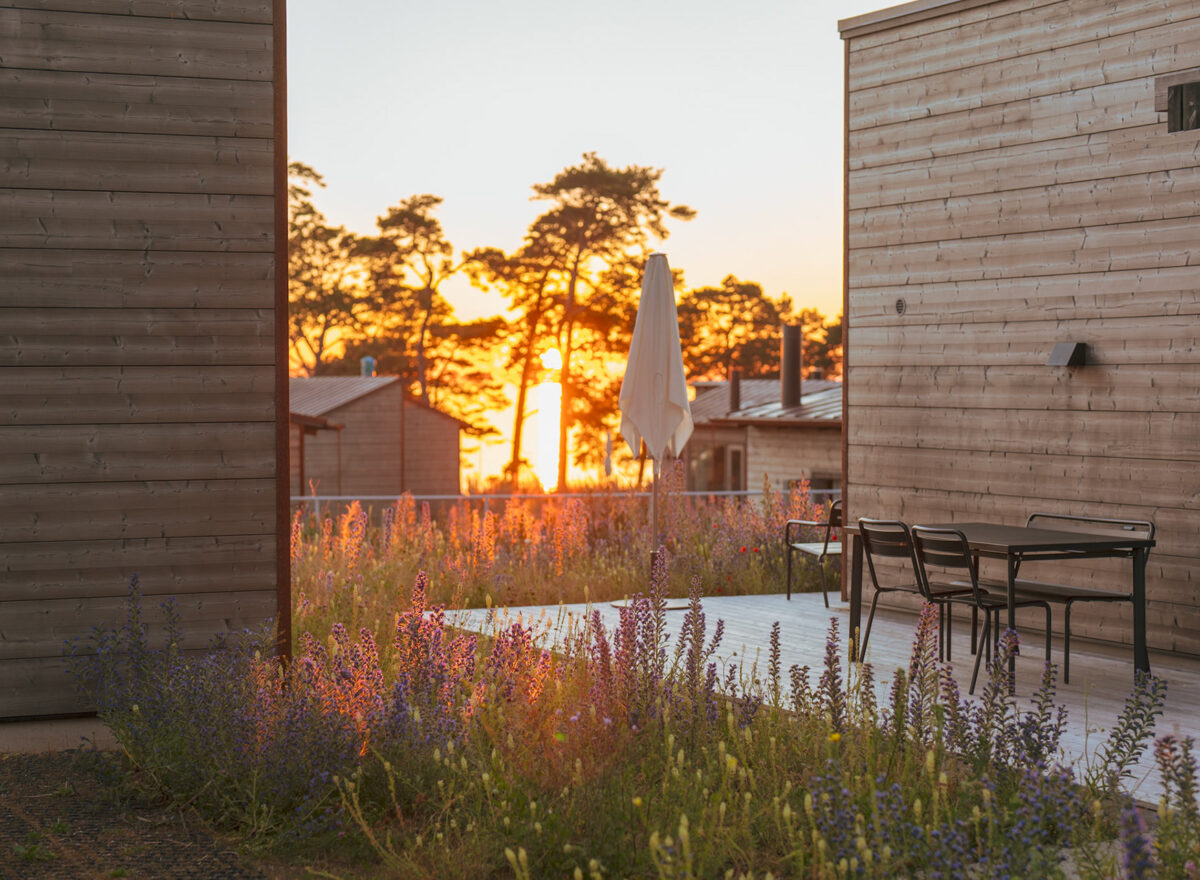
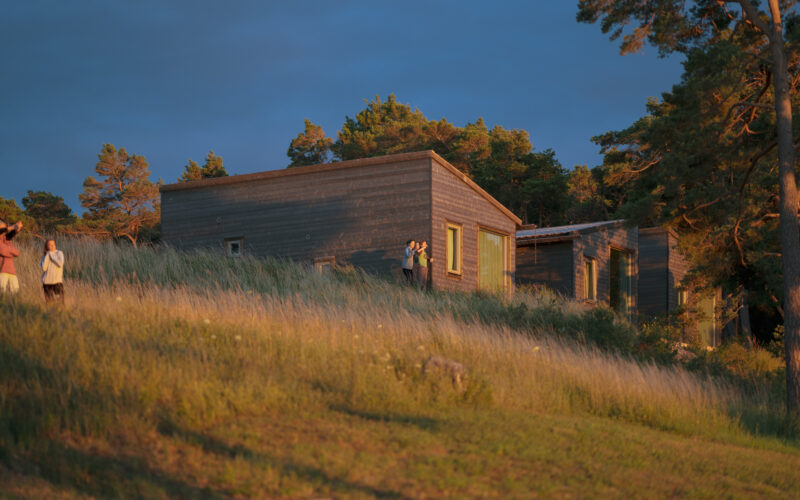
A modern twist on the rustic historic architecture of Gotland. This sums up the new holiday village of Vidhave, located near Snäck Camping, just outside Visby. We believe that buildings should last for centuries – which is why they are built in solid wood on a recycled concrete slab and recover heat. And the closest neighbor? The sea.

Vidhave Gotland
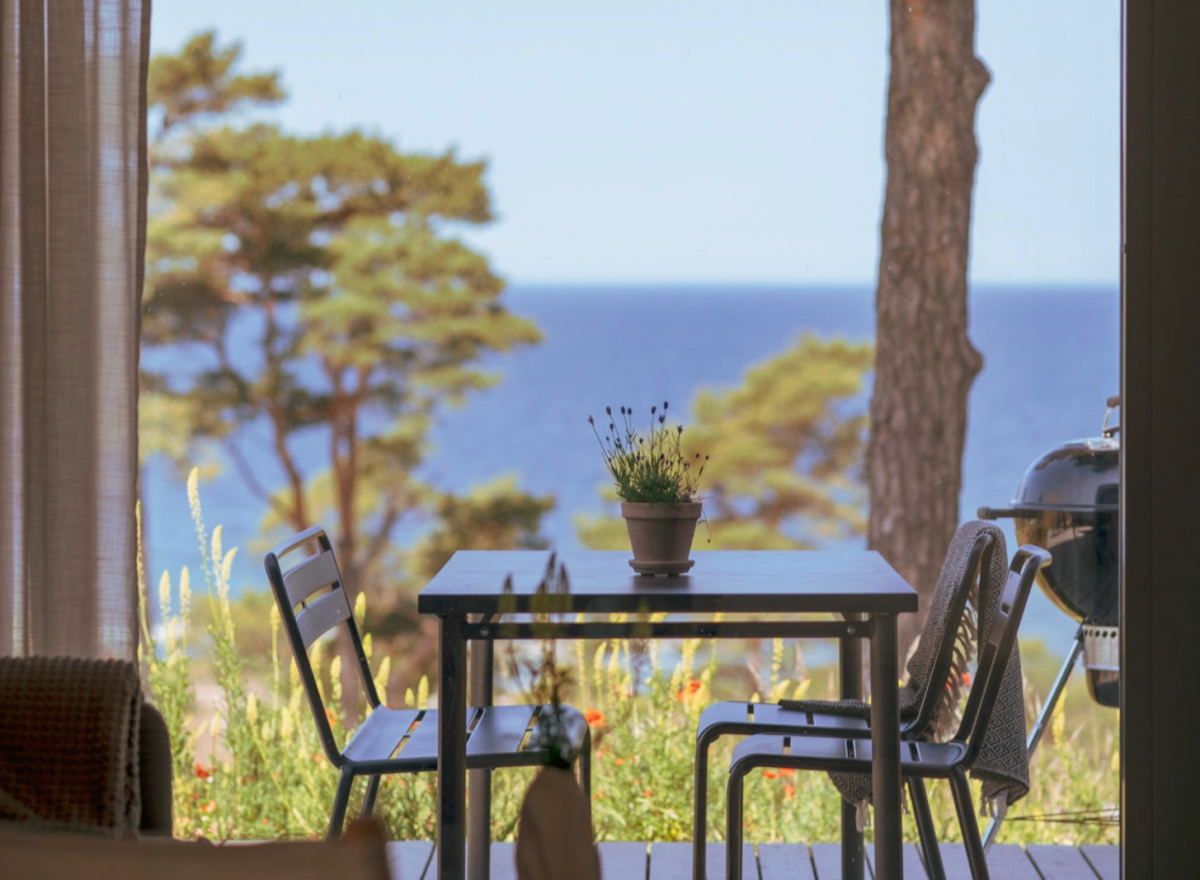
The buildings are situated with an ever-present view of the water.

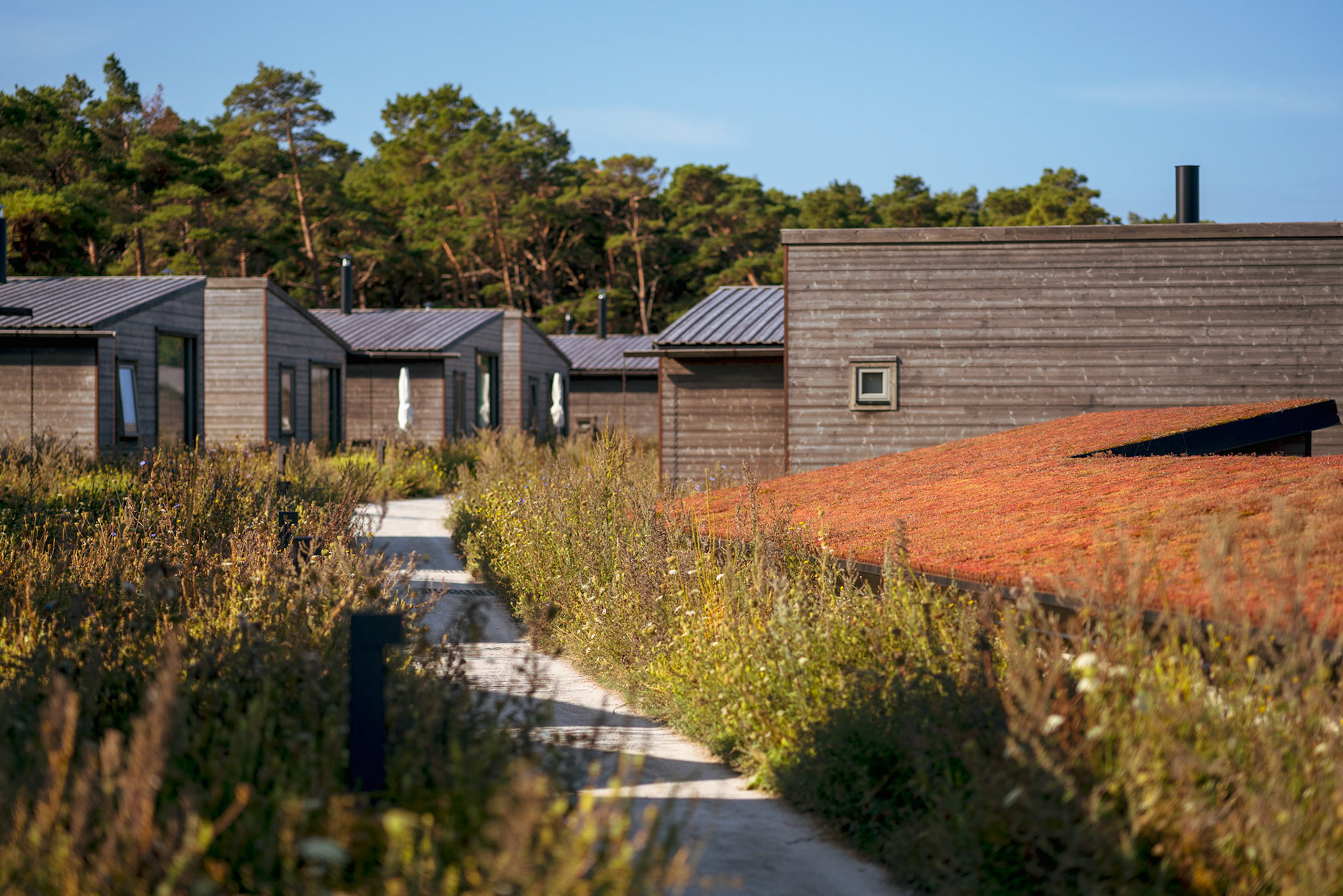
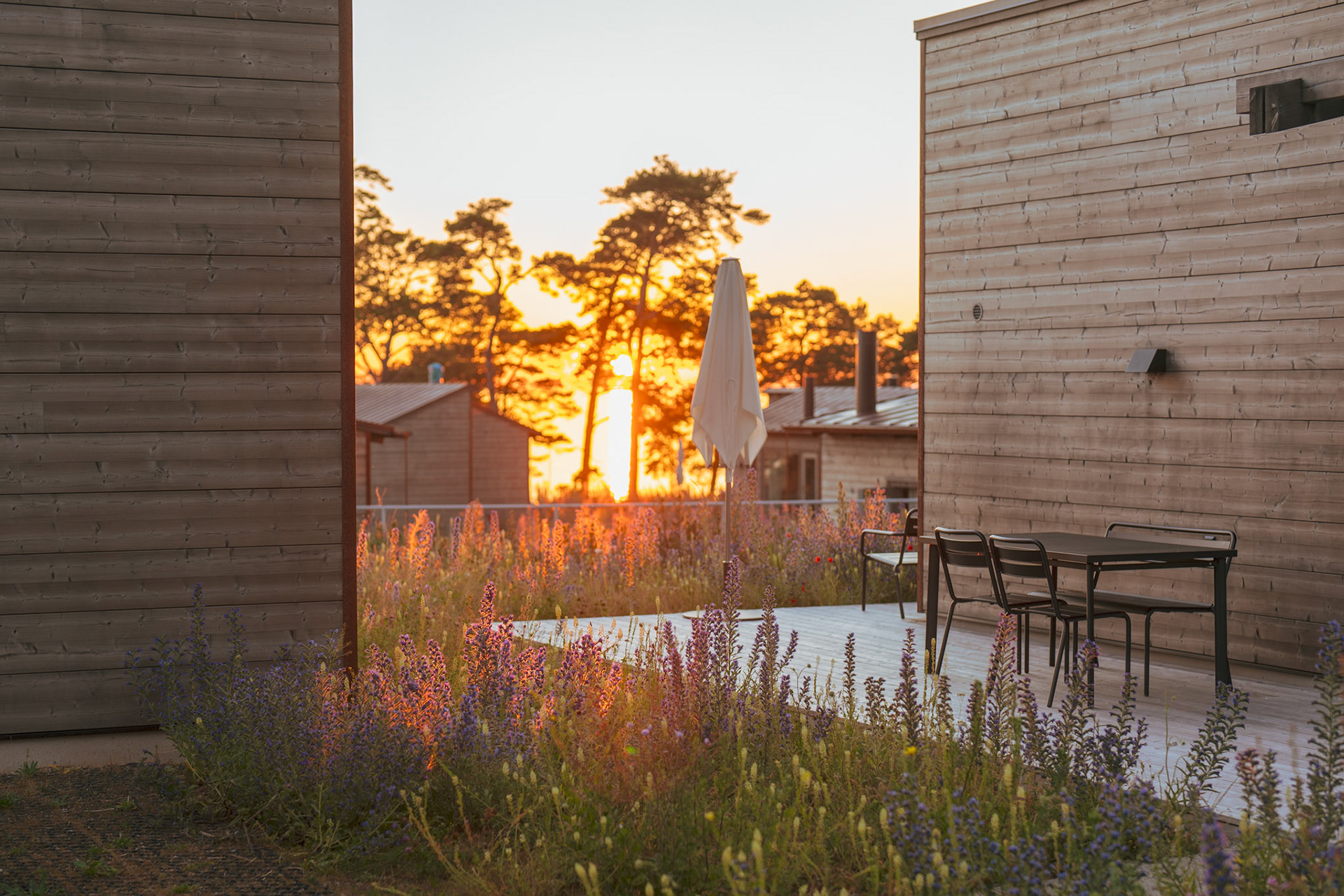
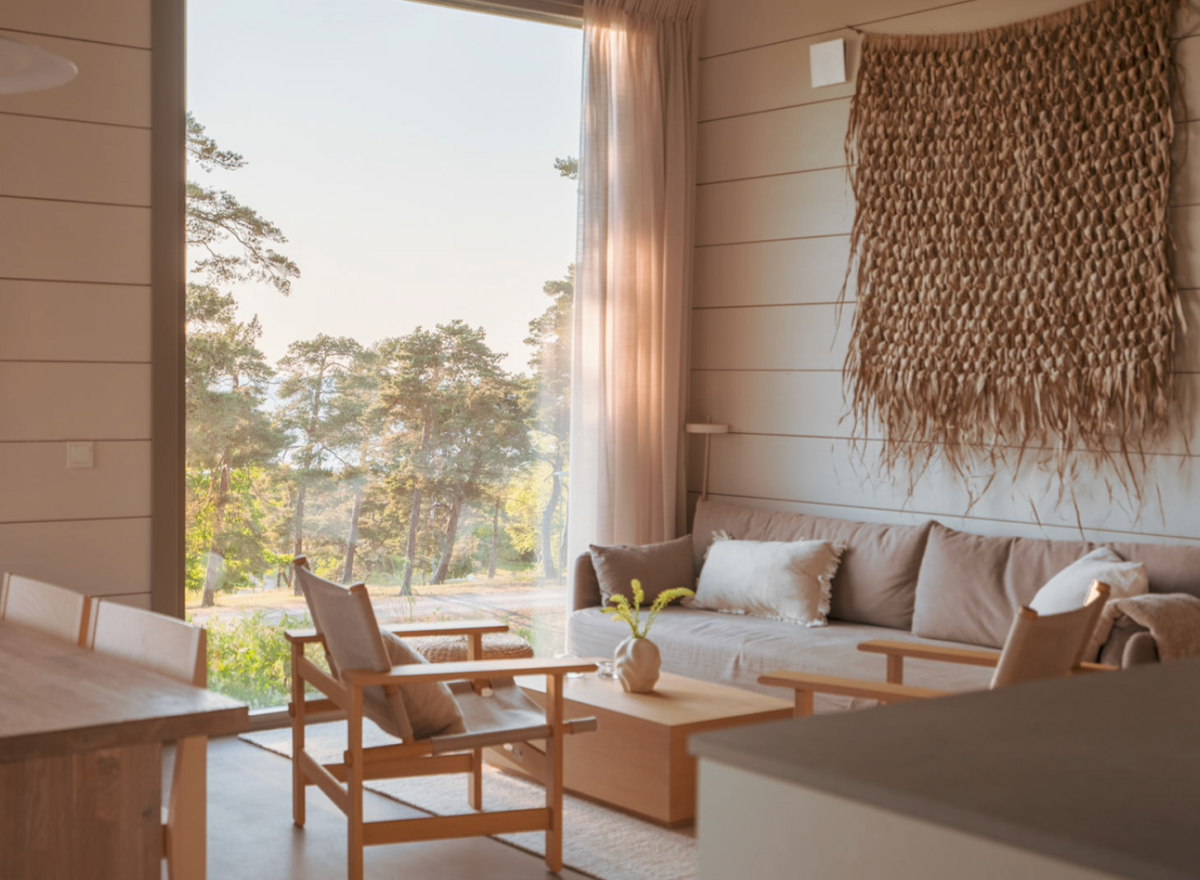
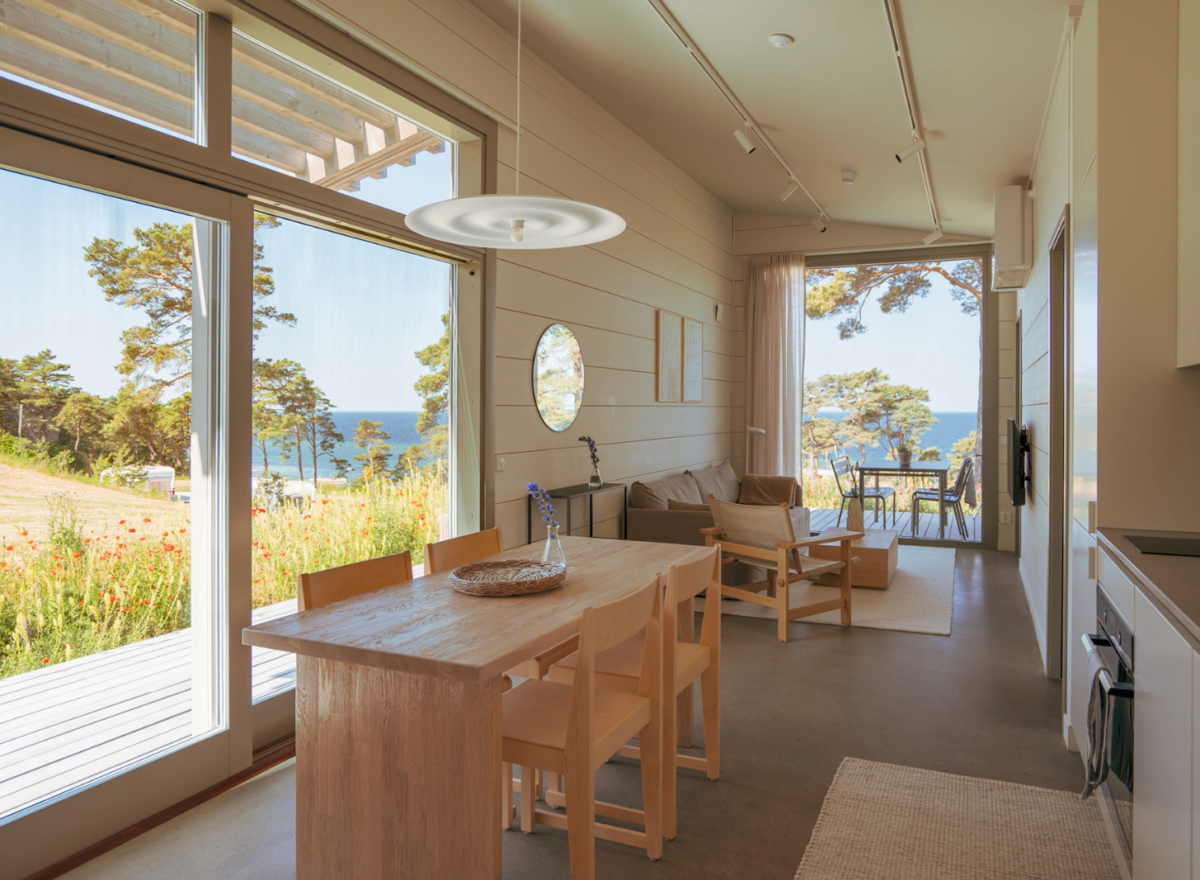
The first 22-home holiday village is now complete and more are underway. Like a traditional fishing village in Gotland, the cottages follow the natural topography. As a result, the natural setting was spared an excavation process. The smooth-planed spruce panels are treated with iron vitriol, allowing the cottages to meld in with the scenery even more. Glass panels inside frame the view, which opens up to the sea and the sunset to the west.

Vidhave Gotland
The team positioned the buildings with careful consideration for the topography. They also incorporated visible stormwater management as an architectural feature.
The old mare pines live on and continue to give Vidhave and the area its classic Gotland character.

Year-round homes

“We’ve chosen to give care to the location,” says Jens Hjelte, co-owner of Vidhave, the new destination emerging on the site of the former Snäck Camping. “So we’re taking things one step at a time, which allows us to adapt to how people use the area. We can be bold and learn as we go.”

The destination lies just a few kilometers from the Visby City Wall. The buildings support year-round living. Soon, the site will also welcome groups of up to 400 conference guests — making it a fully equipped meeting place.

Sustainability has been important throughout the project – environmentally, economically and socially,” says Stefan Rydin, Tengbom’s lead architect for this client. “We have considered the environment in our inclusion of solar cells, water reuse and our choice of wood construction for the buildings. In terms of economic and social sustainability, we’ve opted for local labor and we’re contributing to a thriving Gotland in wintertime, too.”

Winner of Gotland’s Architecture Prize 2025

Generating its own water

Inside, we painted the walls with egg oil tempera in soft colors and installed custom-built furniture. A fireplace enhances the atmosphere as summer fades. The team chose local concrete for the floor, polishing it to achieve a beautiful, easy-to-maintain finish. While the design embraces a natural aesthetic, it also integrates modern technology. Gotland’s limited water supply made conservation a key focus. The buildings feature recirculating showers from Swedish company Orbital, which analyze, clean, and reuse water. They are also equipped for future alternative solutions for non-potable water.

Shortcuts for everyone

Islanders and tourists alike enjoy strolling through this area, and they will continue to do so.

“We wanted to maintain the site’s availability to everyone moving forward,” says Jens Hjelte. “So we designed shortcuts through the area. By making it possible to walk straight through the village instead of using nearby paths, we avoid the exclusionary feeling that some holiday facilities have.”

Vidhave Gotland
Proximity to the water, sandy beaches and a beach club are all elements of the project. This is a unique place for Gotland.

Contact person

Erik Gardell

Architect
+46 8 410 354 72

Elite Stadshotellet Karlstad

A historic heart
Stadshotellet Karlstad
Architecture
Hotels & Meetings
Client:
Developer: Elite Stadshotellet Karlstad
BTA: 2000 sqm, 45 rooms + spa
Collaborators: AB Gunnar Svensson (interior decor hotel rooms + spa)
Years: 2019-2021
Photographer: Lasse Olsson

Elite Stadshotellet in Karlstad is one of the city’s most famous and historic buildings. So when it was time to modernize the hotel, with modifications for accessibility and an expansion, we pulled out all the stops and built Karlstad’s first rooftop bar.

Elite Stadshotellet
Sweden’s city hotels (Stadshotell) were built in conjunction with the railway expansion of the late nineteenth century. The hotels became historic symbols for many small and medium-sized towns.
Elite Stadshotellet
Karlstad’s Stadshotellet has always been a dominant element of the downtown area. Accordingly, it was especially important for the architecture of the new construction to complement the neighborhood.

The hotel opened in 1870 on the shore of the Klarälven River in downtown Karlstad. In 2017, Tengbom was tasked with renovating the hotel, culminating in the Karlstad Municipality Architecture Prize of 2021.

From the nomination: “With the hotel’s new extension, after 60 years of updating, the Vågen neighborhood has finally been realized. The new extension has skillfully merged classic design principles with a clearly functional and contemporary approach in the heart of town.”

The new extension, with 45 new rooms, opened in July 2021. The hotel now has a total of 183 rooms.

“Many Karlstad residents have ties to the hotel; after all, it’s been here since 1870. For example, they may have relatives who got married here,” says Anna Björkenstam Wedberg, General Manager at Elite Stadshotellet in Karlstad. “So it’s fun that we could take another step and update the hotel with that in mind.”

Elite Stadshotellet
The nuanced yellow brick provides a tone-on-tone element in concert with the original structure.

Seamless expansion

Stadshotellet has always been a dominant element of downtown Karlstad. Accordingly, it was especially important for the new construction’s architecture to complement the hotel’s neighborhood. The expansion naturally harmonizes with the main building through a classic form with a distinctive ground floor and horizontally arranged windows.

“We’ve connected old and new, and linked the buildings together,” says Anki Haasma, Architect and Practice Director at Tengbom in Karlstad. “At the same time, we improved accessibility. Before, people in wheelchairs couldn’t access the entire hotel.”

The nuanced yellow brick provides a tone-on-tone element in concert with the original structure and several buildings along Älvpromenaden (the River Walk). The mosaics over the windows and custom-designed iron railings emphasize the green of the windows on the main building. The materials used in the expansion are classic and connected to the area and nearby nature – brick, stucco, natural stone, steel and glass.

Reused items from the past provide new details

The entire project has emphasized sustainability and reuse. Anki and the architecture team found interior design objects in the hotel attic, like lamps and old elevator doors, which have now been moved back into the hotel.

One of Anna’s favorite places in the hotel is the garden, which now has a bocce court. Here, we reused the old balustrade, which is now linked to the new building.

“Even though we have both old and new elements, it all harmonizes well both inside and out,” says Anna Björkenstam Wedberg.

Karlstad’s first spa and rooftop bar

A bonus of the project was that Karlstad now has its first rooftop bar and a spa with a hamam – a Turkish bath. There is also a heated rooftop pool that spa guests can enjoy under the open sky. This makes the hotel a place not only for out-of-town guests, but also for Karlstad residents.

Elite Stadshotellet
Rooted in history, but upgraded to meet contemporary needs, with the addition of places for spontaneous gatherings and enjoyment.
Elite Stadshotellet
A hamam for relaxation.

“The project’s biggest challenge was to preserve old values while meeting today’s needs for modernity and accessibility,” says Anki. “So it feels like an added bonus to receive a great prize for that – but also that we’ve created a social hub for Karlstad residents who want to gather.”

Contact person

Elin Larsson

Practice Director Karlstad
+46 702 75 67 66

Vendelsömalm School Building A

From the 1960s, now in new garb
Architecture, Cultural Heritage
Accessibility, Building Preservation & Restoration, Education, Renovation & Transformation
Client:
Location: Haninge Municipality
BTA: 8000 sqm
Assignment years: 2017-2021
Photographer: Felix Gerlach

In an understated concrete and wooden structure that is typical of its era, Vendelsömalm School opened in Haninge in 1966. With an aim to “preserve and reuse as much as possible,” the school has now been updated to meet contemporary needs and requirements. 

The original Vendelsömalm School consisted of a robust building with a few distinctive and sturdy materials, like untreated concrete and pine, brown linoleum and terrazzo. A minium red accent colour added contrast and recurred in the windows and wooden doors. Several renovations and technology installations were then carried out.

Vendelsömalm School
The 110-meter-long main hall and the stairway system link the building together.
Vendelsömalm School
The team made the main entrance and two schoolyard entrances accessible and replaced the entryways.

A return to the original quality

Vendelsömalm School has 600 students from preschool to ninth grade. In 2018, the school underwent an extensive and necessary renovation, replacing the ventilation and electricity. Tengbom was tasked with renovating and upgrading the main building and modernizing the accessibility and functionality of the floor plan.

“We wanted to retain the feel of the original, with cast concrete on three half-levels,” explains Tove. The 110-meter-long main hall, with its beautiful stairway, holds everything together. At the same time, we wanted to restore the former look of natural materials and recreate them in conversation with a contemporary style.

Greater security with a new floorplan

When we adapted the premises for their purpose, we moved the reception and principal’s office closer to the main entrance. The break room was also moved to improve student safety. The special education classroom, student health, library and teachers’ lounge were all placed centrally in the building.

“Vendelsömalm School isn’t a listed building. However, we brought in one of our restoration architects early on to document and analyze the building,” says Tove. “That study was the basis for several decisions.”

We let in more light

The team installed energy-efficient windows with transoms that resemble the originals, along with awnings and natural-coloured facade panels. They also made the main entrance and two schoolyard entrances accessible and replaced the entryways. Inside, they updated all installations and converted the cellar into a fan room. A new elevator now provides access down to the basement floor.

For more light, accessibility and safety, the new doors are glazed. The doors are all orange once again, like the original colour. A total renovation of the surfaces entailed new floors, a new false ceiling, acoustic solutions and fresh paint. There is now also a garbage room and a loading yard.

Vendelsömalm School
The tables and benches have an open design that neither cements roles nor determines who sits where.
Vendelsömalm School
The facades now have energy-efficient windows with transoms reminiscent of the original windows, awnings, and natural-coloured facade panels.

Renewal from historic walls

“The goal was to clean and restore the concrete in the main hall,” says Tove. “We decided to remove the old murals, which students painted with latex paint in the 90s. Unfortunately, it was hard to carry out such an extensive restoration of concrete. Instead, it was painted in concrete-like colours with the preserved rough texture of boards at the base. Old dents and the history on the walls can add a lot of beauty and invigoration.”

The false ceiling in the big main hall features untreated wood, restoring the room’s original concept. The walls in the combined assembly hall and cafeteria now have untreated wood panels, enhancing both aesthetics and acoustics.

Vendelsömalm School
A restful space.

Sound is subdued by the building – not the kids

In the open student areas, the team refreshed the original wooden furniture with modern, inviting seating and tables. They designed the adaptable module system for easy adjustments.

“The design of the tables and benches allows students to move freely without fixed roles or assigned seats,” says Tove. “The space adapts to different needs and situations. A school should be welcoming to all.”

Contact person

Mark Humphreys

Practice Director Stockholm
+46 8 412 53 43