Archives

Malmö Central Station food court

New on the menu, since 1872
Architecture
Infrastructure, Restaurants
Client: Jernhusen
Opened: 2026
LOA: 2,000 m²
Location: Malmö
Photographer: Mads Frederik

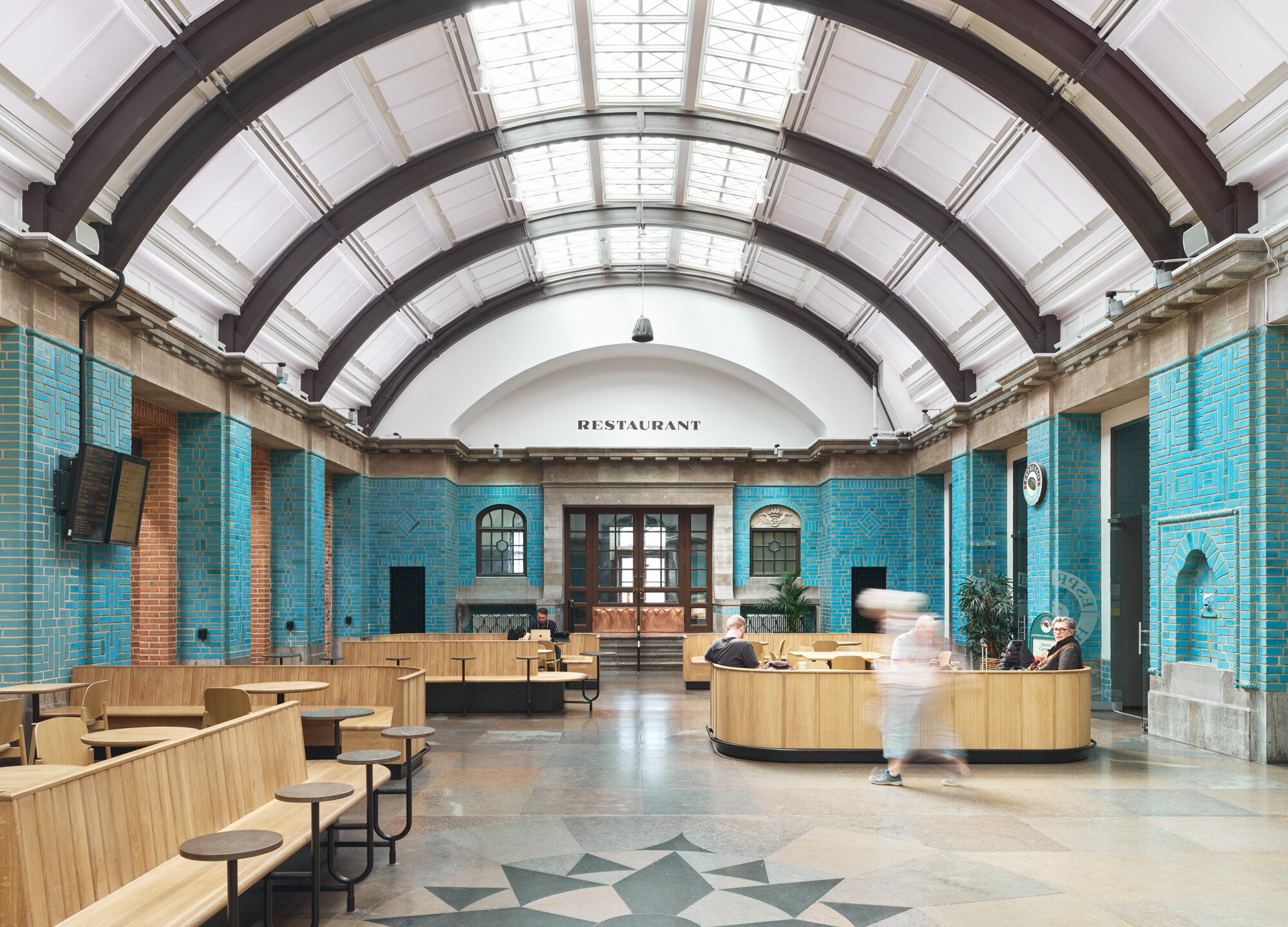
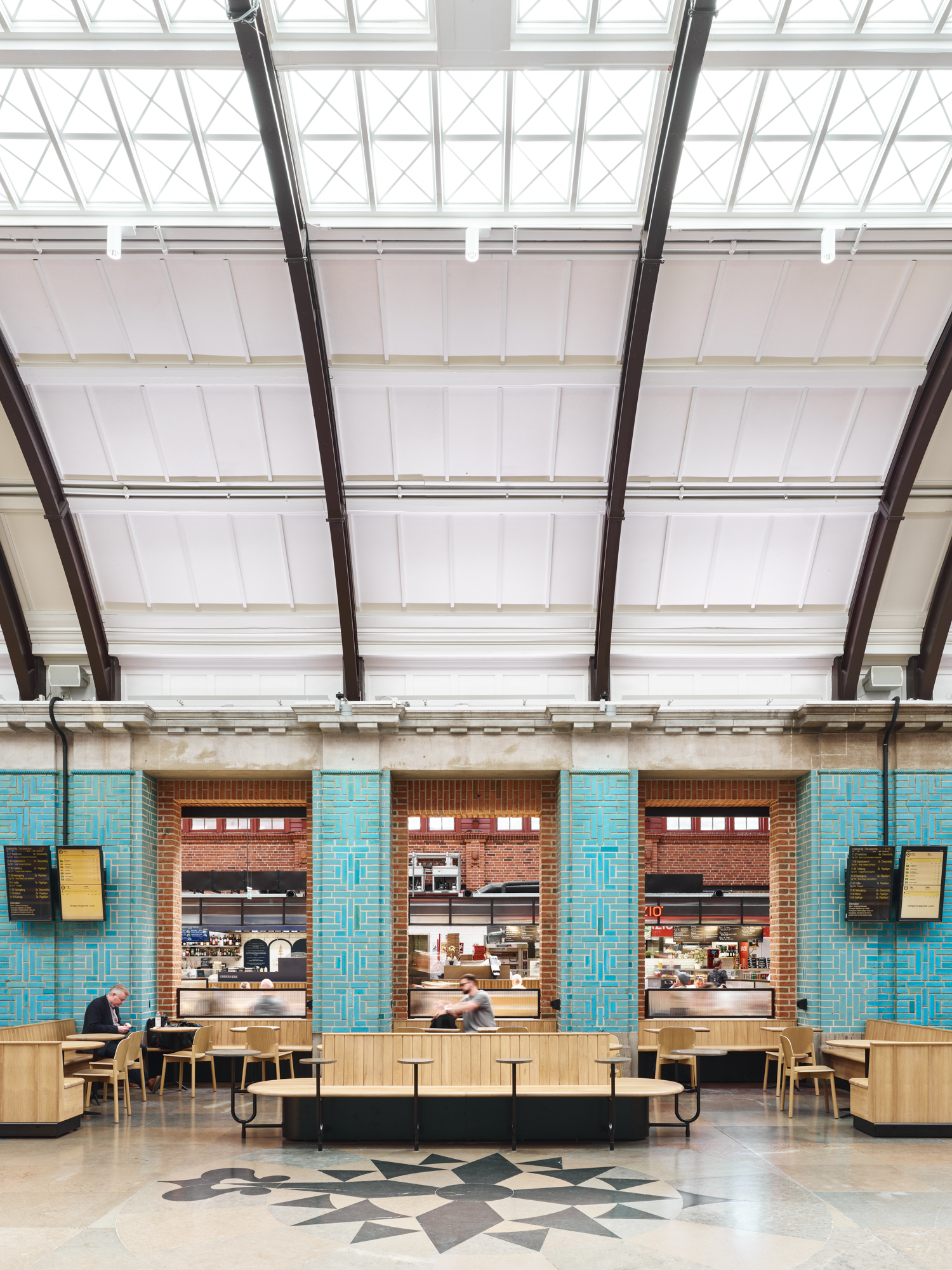
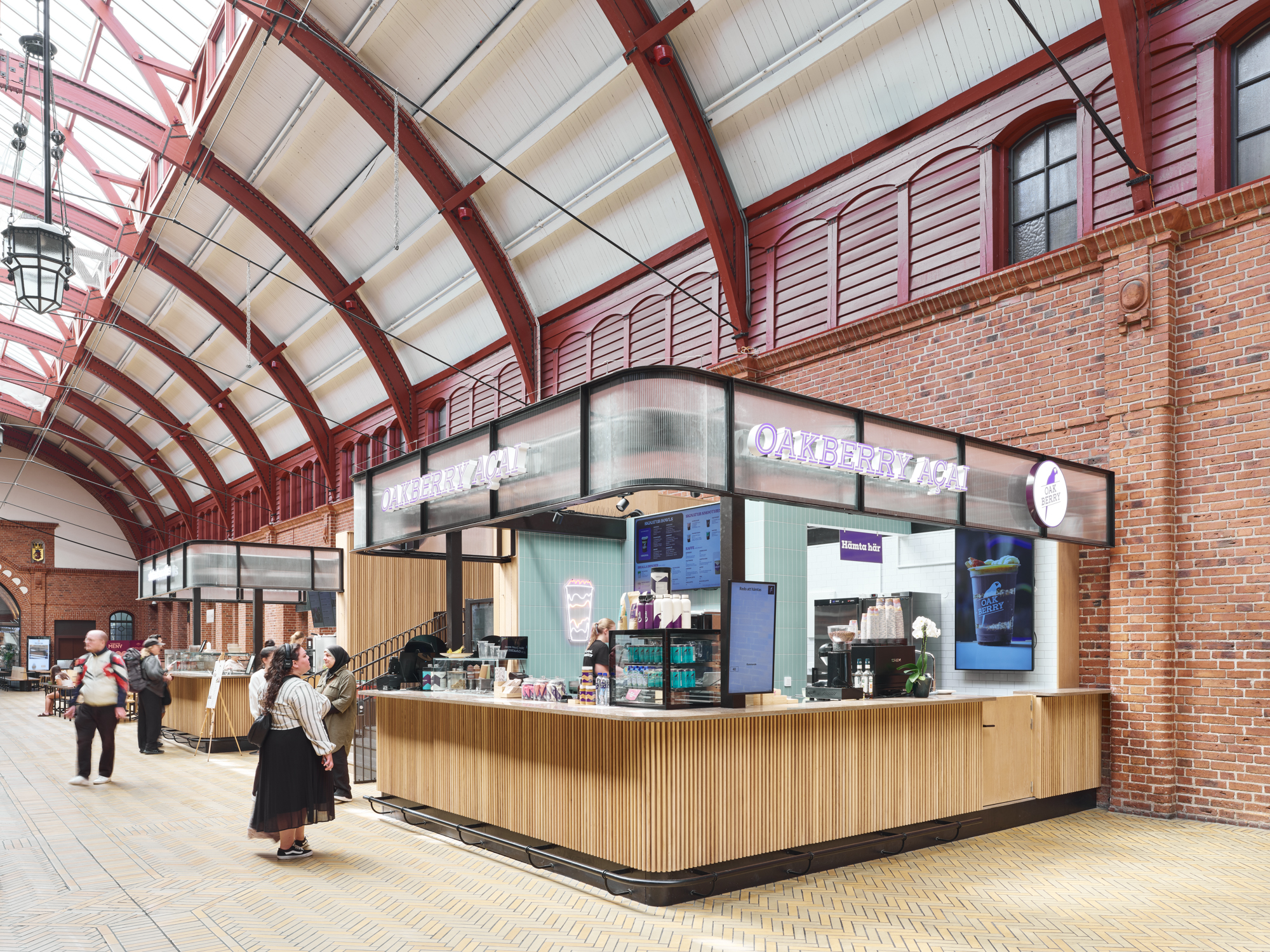
When Malmö Central Station was to get a new food court, we had to turn back the pages. And in the listed station building, we found the structure that could give today’s travellers clearer routes, better sightlines and a more comfortable wait. We designed a timeless and welcoming restaurant environment for travellers, passers-by and hungry stomachs.
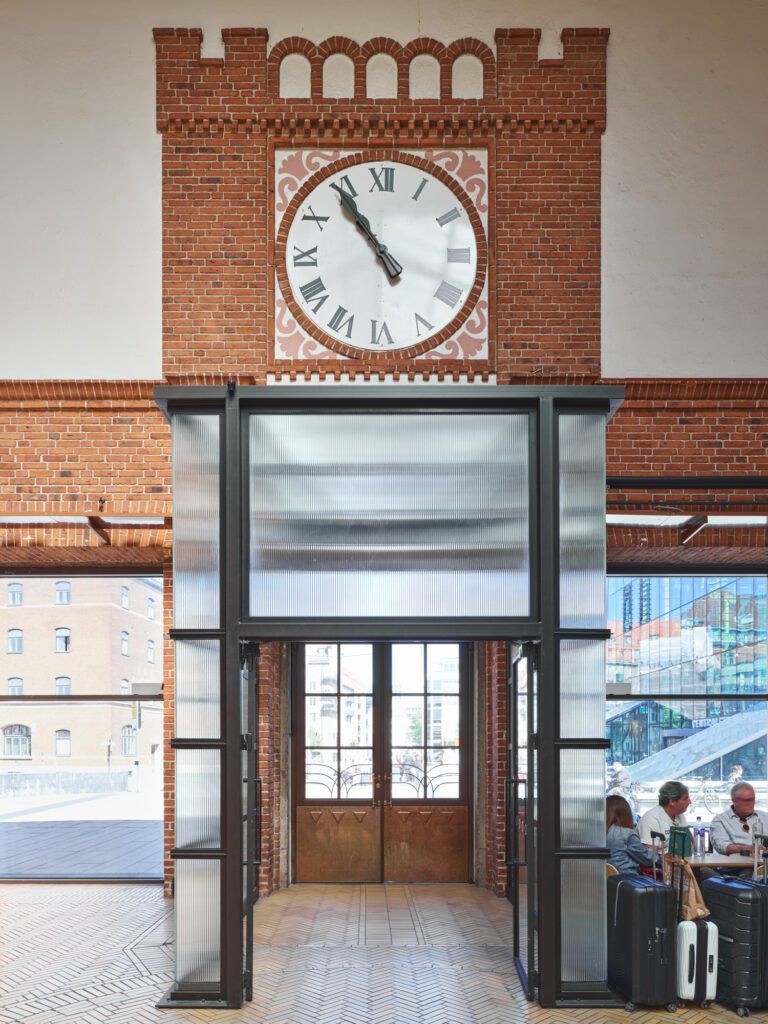
Malmö Central Station has undergone many changes over the years. Its history therefore became one of our most important tools when we began working on the new restaurant environment. The original station had a clear central axis running through the hall – a structure that had gradually been built over.

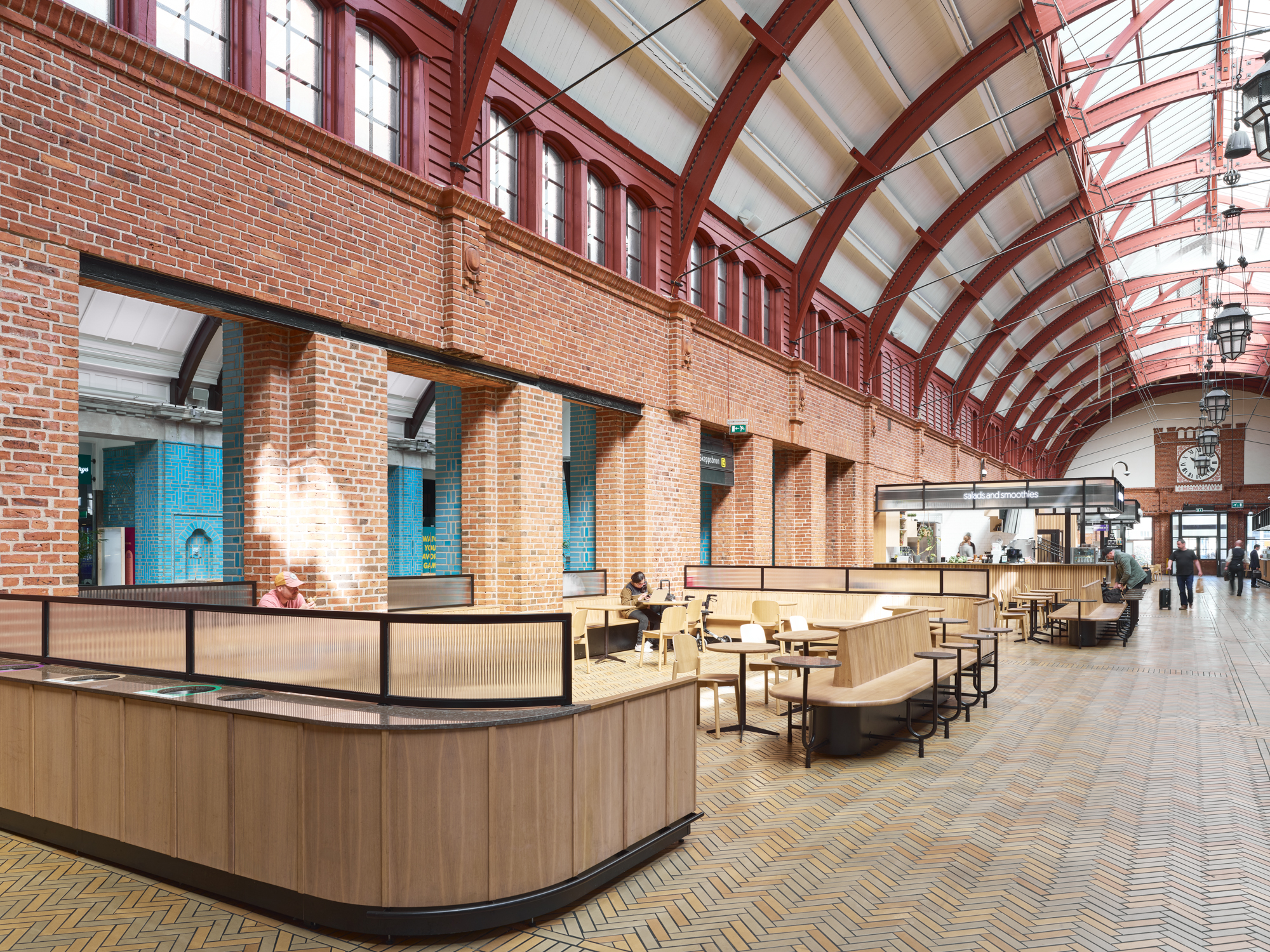
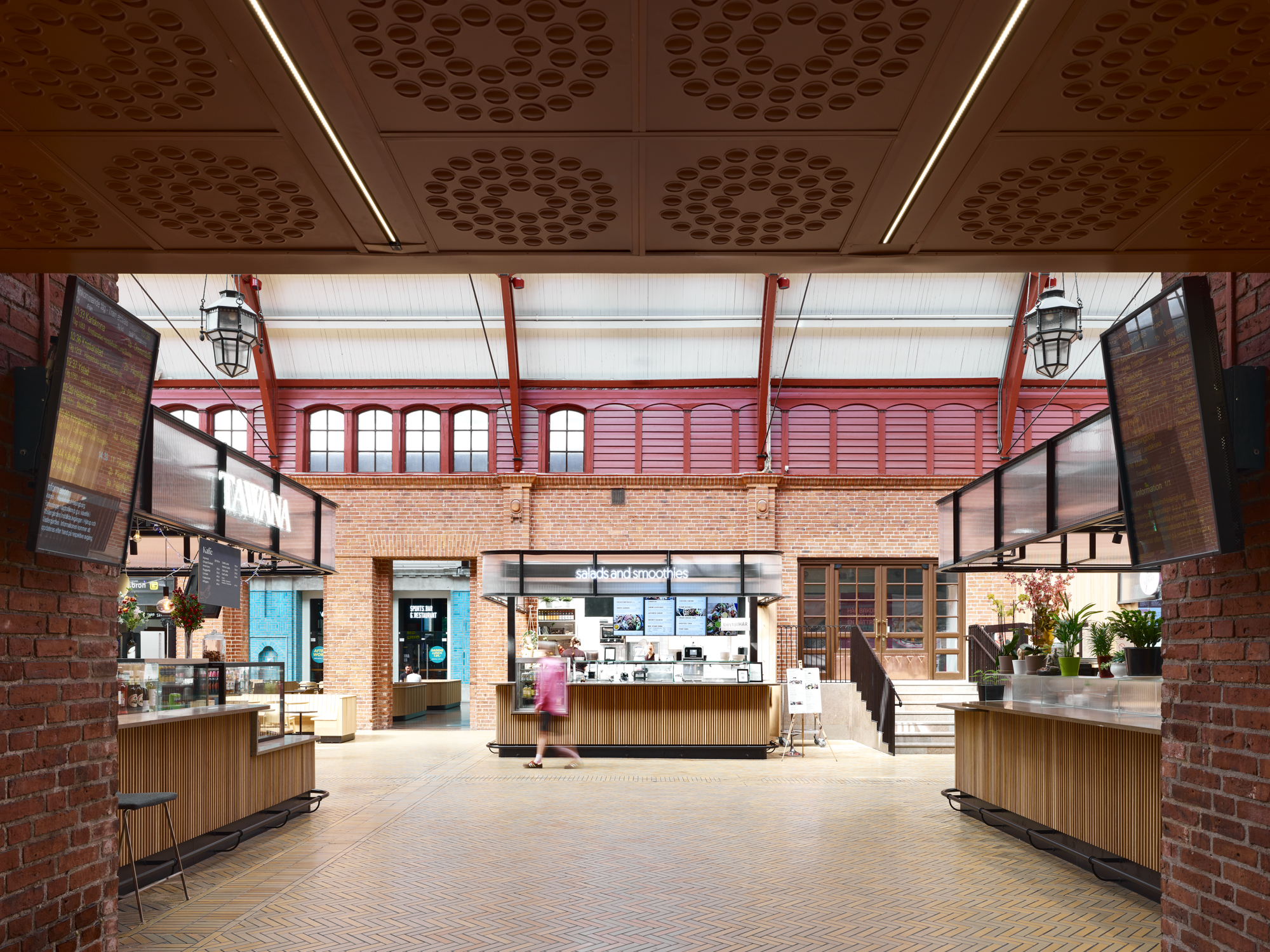
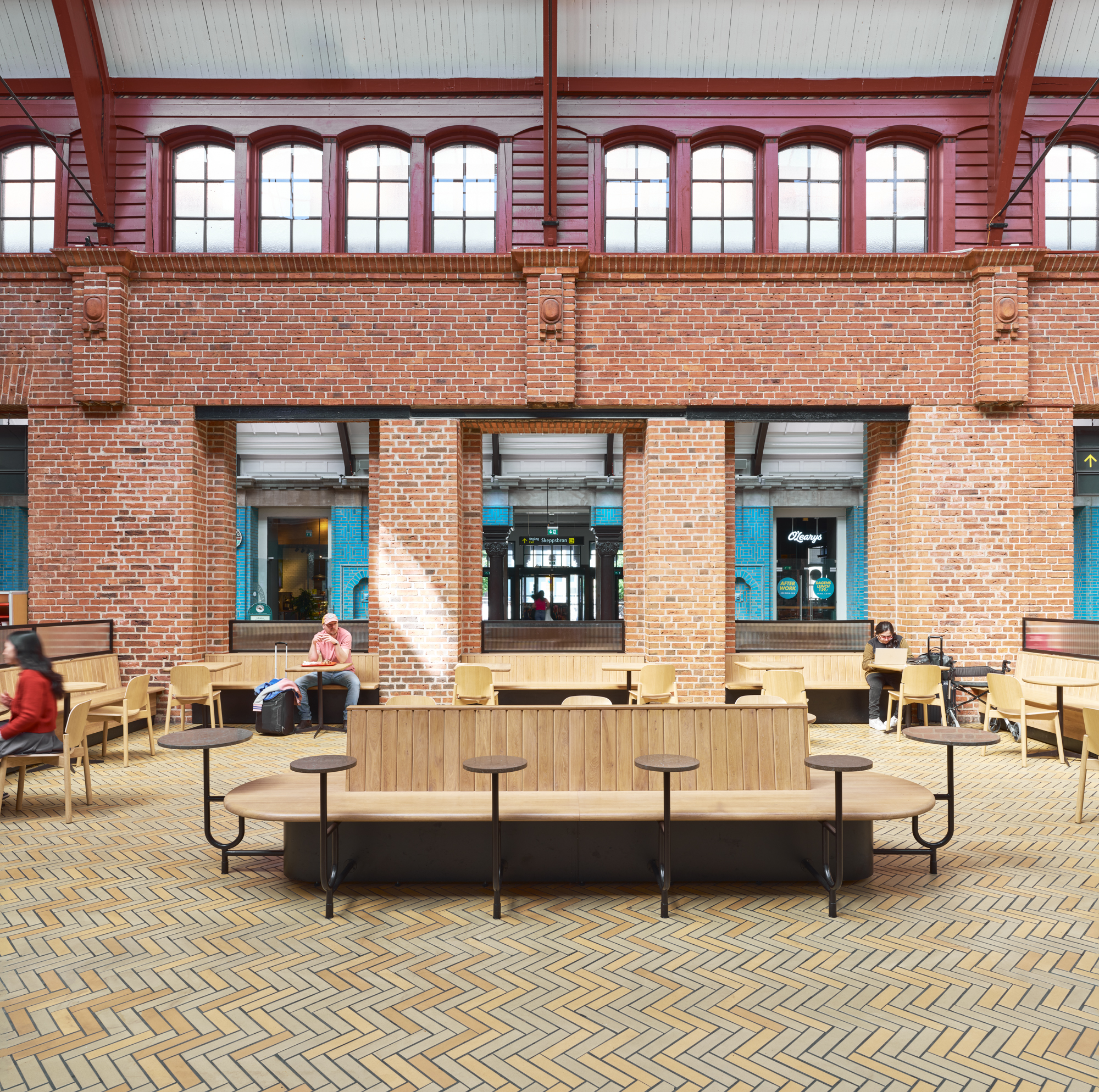
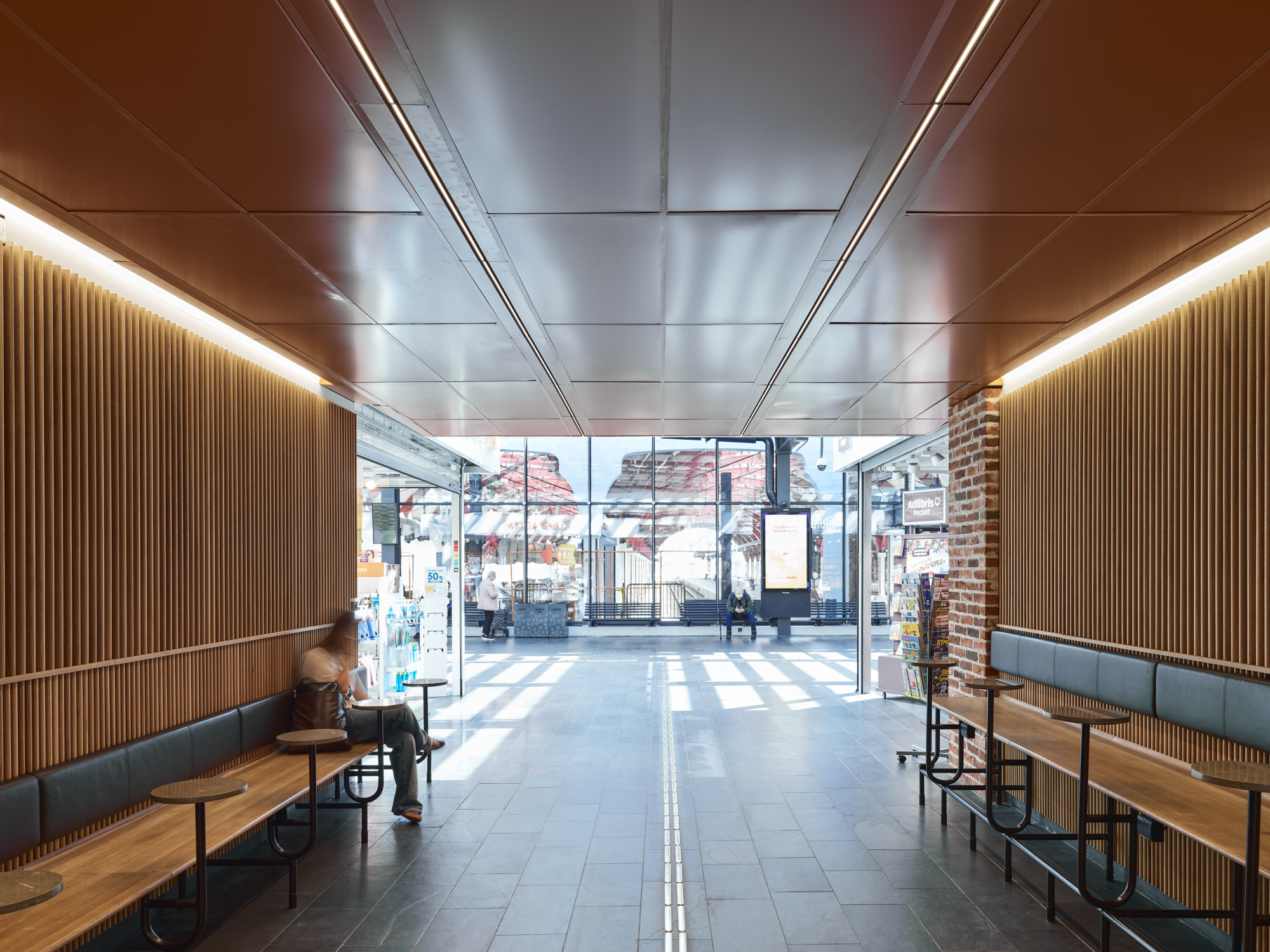
We reinstated the central axis and moved the northern entrance back to its original position. The restaurants were placed along the walls, opening up the circulation routes and providing better sightlines through the hall. Together with new lighting and a variety of seating options, this has made the station more spacious and easier to navigate.
“We delved deep into the building’s history to find a solution that preserves the setting as much as it enhances it. Designing a contemporary restaurant environment in a listed building is, of course, about function, but also about allowing the timeless qualities to remain visible and live on,” says Josefin Klein, lead architect at Tengbom.

Architecture for dining and waiting

Since opening this spring, all restaurant premises have found tenants, and the food court has become a well-visited part of the station. The reinstated northern entrance is frequently used, and the new passages between Centralhallen and Glashallen are working as intended.

Long live reuse!

At a central station, a pause can last almost any length of time. This guided the variety of seating – it needs to work equally well for someone stopping briefly and for someone who, voluntarily or otherwise, has three hours to while away.

At the same time, Gröna hallen became a generous dining hall. Here, visitors can sit together regardless of which restaurant they have chosen. The spaces also serve as waiting areas and meeting points for the station as a whole.
Reuse in a bistro vocabulary

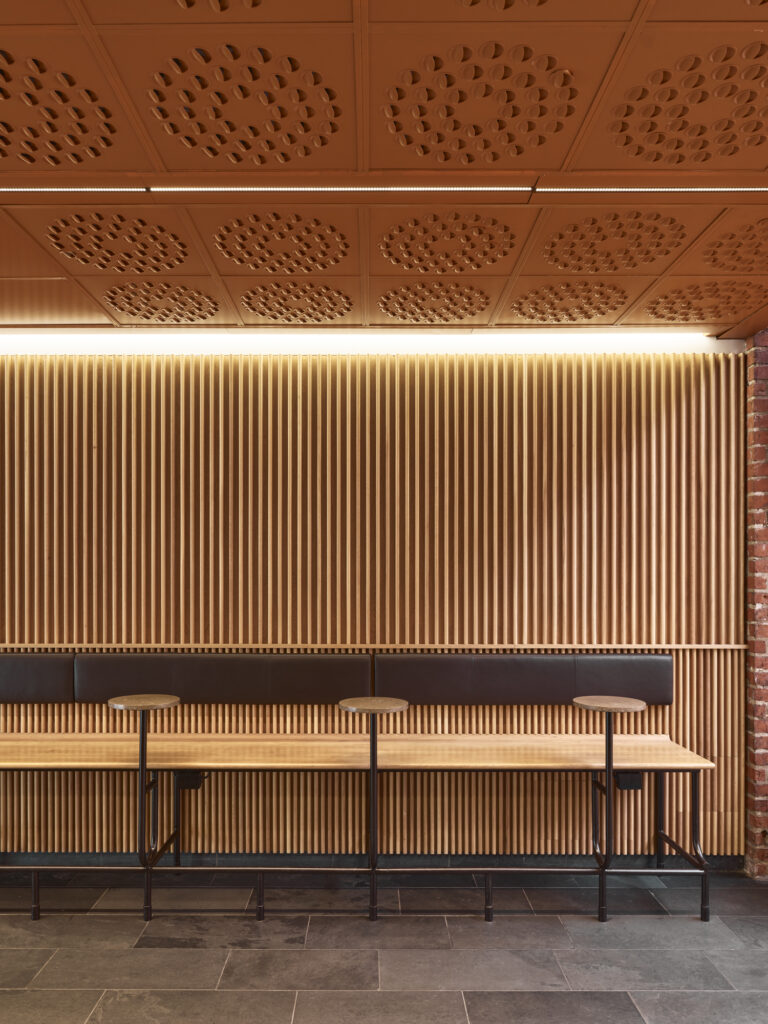
In the refurbishment, we retained as much of the existing material as possible. The white tiles were preserved, while steel from the former restaurants was reused in the new interiors. The mix of materials, including ribbed glass, timber panelling and reused steel, gives the food court a light and warm bistro character that connects with the building’s history.
Together with Jernhusen, we are now continuing the work to develop Gröna hallen for evening use.

“Our task is to make the hall even more attractive and turn it into a destination in its own right. After all, we want people to spend time here rather than simply pass through on their way to the train,” Josefin concludes.

In parallel, we are working on new office environments in the listed Terminusbyggnaden. Here, we are developing concepts for the workplaces of the future in a location with excellent commuter connections.
Contact person

Josefin Klein

+46 40 641 31 18

Magasinen

A natural gathering place in Jönköping
Architecture, Interior Design
Restaurants, Retail
Client: Tolust AB
Year of commission: 2009–2010
Location: Central Jönköping
Project type: Restaurant, café, design shops, services
Photographer: Sten Jansin

Bauers brygga in Jönköping faces south and has become a favourite spot for many residents. The journey started with an early urban design proposal, continued with a winning competition entry, and led to a long-awaited realisation in 2009. Together with our client Tolust AB, we brought the vision to life. This is Magasinen.

At last, the eastern city centre reconnected with the water. As a result, the warehouses transformed into a new commercial block and created a natural setting for people to meet. After completion, the project received the City Planning Prize in 2010.

Today, the three warehouses are an integral part of Jönköping for shopping and social life. It now seems almost impossible that this area was not always full of people. The three buildings stand in a row along the northern Munksjökajen, offering southern exposure for those who wish to enjoy the sun or have a coffee on the timber deck outside.

Cedar cladding and the reuse of stormwater

The narrow strip of development draws inspiration from the historical wooden buildings that once stood along this shoreline. An atmosphere we have preserved in the three Tengbom-designed warehouse buildings. They are clad in cedar panels with large glazed sections and a plinth floor in polished black granite. Green roofs filter stormwater slowly on its way out into Lake Munksjön.

Trade in the front row of central Jönköping

The warehouse buildings form the link between the eastern city centre and the water. Our challenge was to provide welcoming and transparent façades in all directions to unify the district and attract people to gather. A challenge we believe was truly successful. The commercial activities housed in the buildings today enjoy an inviting environment on Jönköping’s front row. This is a hallmark project in which the building materials, the programme, and the interactions between people embody resilience and long-term quality.

Magasinen also received the City Planning Prize in 2010. The motivation reads: “This newly built part of Jönköping’s city centre contributes in an excellent way to a high-quality living environment in Jönköping.”

Contact person

Matt Patterson

+46 36 440 90 81

Kitchen & Table Kungsholmen

Africa meets grandmother on Manhattan
Interior Design
Restaurants
Client: Choice Hotels
Year: 2013
City: Stockholm

As part of the commission to give the entire Clarion Hotel Amaranten in Stockholm a new identity, we developed the interior concept for the new restaurant Kitchen & Table. Here you encounter a wonderfully creative mix of flavours and cultures in a vibrant, bustling and relaxed environment.

Kitchen & Table is run by the Swedish master chef Marcus Samuelsson. The inspiration for the restaurant concept stems from Samuelsson’s own background and his present life in Manhattan. Culinary experiences from many different international kitchens, created with local Swedish ingredients, offer a distinctly unique experience further enhanced by the atmosphere.

With the starting point “Africa meets grandmother”, we truly wanted to embrace the multicultural blend also within the interior concept

Africa + grandmother Helga + New York = true

Marcus Samuelsson grew up in Sweden but has his roots in Africa. With the starting point “Africa meets grandmother”, we truly wanted to embrace the multicultural blend also within the interior concept. The environment is warm and rich in detail, with many specially designed features, including tables with African-inspired patterns.

With a little flexibility, you get far

Restaurant projects often have a short timeline, as our work progresses in parallel with the development of the premises. This was also the case at Kitchen & Table, where we began in January 2014 and the restaurant was ready for its opening already in May 2014.

We often encounter unexpected challenges, which we find creative ways to resolve together with the client and suppliers as we go.

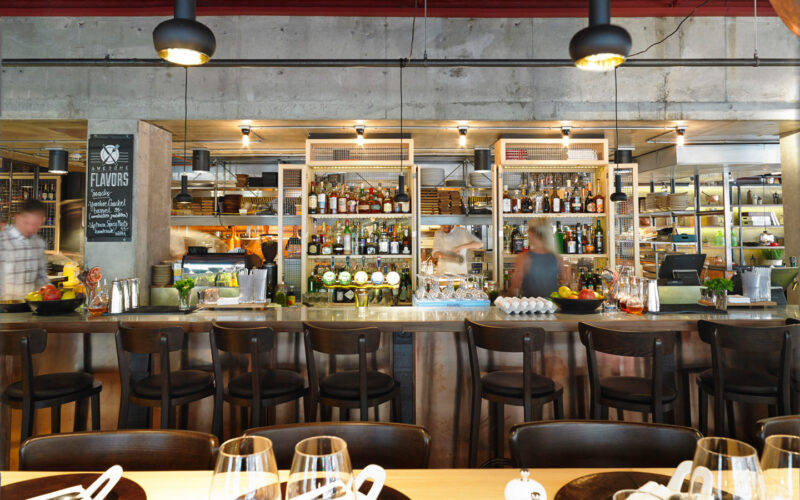
Amaranten is a building from the 1960s, with old drawings that did not always prove entirely accurate. The large concrete fan room above the bar and kitchen area is one example. It appeared when we opened up the ceiling and instead became a striking, defining feature in the environment. Two columns that turned out to contain nothing but air were removed to make way for a large community table, reinforcing the relaxed atmosphere.

Closer to Malmö than to Stockholm?

Since the restaurant on Kungsholmen was inaugurated, we have also developed the concept for Kitchen & Table at the new Clarion Hotel & Congress Malmö Live. There we have also created a new restaurant concept, Eatery Social Taquería.

Contact person

Kristina Jonasson

+46 708 23 14 33

Carousel

A magical atmosphere that sends shivers down your spine
Interior Design
Restaurants
Client: Christopher Ellertsson, Lukas Moderato, Robin Moderato
Location: Gustavs Adolfs Torg, Stockholm
Year: 2015
Project type: Restaurant
Competences: Interior & Design, Hotel & Restaurant

In magnificent premises opposite the Royal Opera on Gustavs Adolfs Torg lies Carousel, a new Stockholm restaurant. Since its opening, the restaurant, its cuisine, and the captivating atmosphere have all drawn considerable attention.

This was how Viggo Cavling described Carousel in his review for SVD Perfect Guide. The lively yet relaxed setting has breathed new life into both the premises and the historic surroundings of Gustavs Adolfs Torg. Behind Carousel stand restaurateurs Christopher Ellertsson, and Lukas and Robin Moderato. Robin is part of the trio behind Vassa Eggen and Boquería – popular Stockholm restaurants for which we also developed the interior concepts.

Close collaboration with the restaurateurs

As before, we worked closely with the restaurateurs to shape the concept for Carousel, guided by their personal vision. Through an engaging and efficient design process, we were able to reuse a large portion of both the fixed and loose furnishings.

An old feature became a colourful carousel

Our aim was to create an environment that both embraced the building’s historic character and brought a fresh vibrancy to the area. Old and new, solid materials and rich detailing in an inspiring blend.

The characteristic carousel canopy above a chairtable half a level up in the restaurant was inspired by an existing ceiling recess, a remnant from when the premises housed Naglo, the previous restaurant. The carousel has since become a natural focal point – and lent its name to the entire venue. It is always rewarding to work with existing features and give them new – and sometimes unexpected – life.

Art at Carousel adds to the atmosphere

Since opening, Carousel has maintained a clear ambition to let its environment evolve continuously by exhibiting artworks from various artists and galleries. A passion for art has been part of the project from the start and remains a cornerstone of our concept – we recognised early on the potential of art to elevate a space. For this reason, we worked carefully with the wall surfaces and exhibition areas, ensuring they possessed their own character while still serving as a subtle backdrop that highlights the artworks.

The initiative is a true win-win: it provides a platform for artists to reach a wider audience while enriching the atmosphere at Carousel. Each new piece adds a fresh dimension to the space, keeping the environment vibrant and inspiring for both visitors and staff. It creates an experience that always feels current while supporting and showcasing creative talent.

Contact person

Kristina Jonasson

+46 708 23 14 33

Villa Foresta

A playful fairytale
Interior Design
Hotels & Meetings, Restaurants
Client: Stockholm Meeting Selection
Location: Lidingö, Stockholm
Year: 2023–2024
Scope: Interior design. Entrance, reception, bars, and restaurant.
Photographer: Yannick Lagher

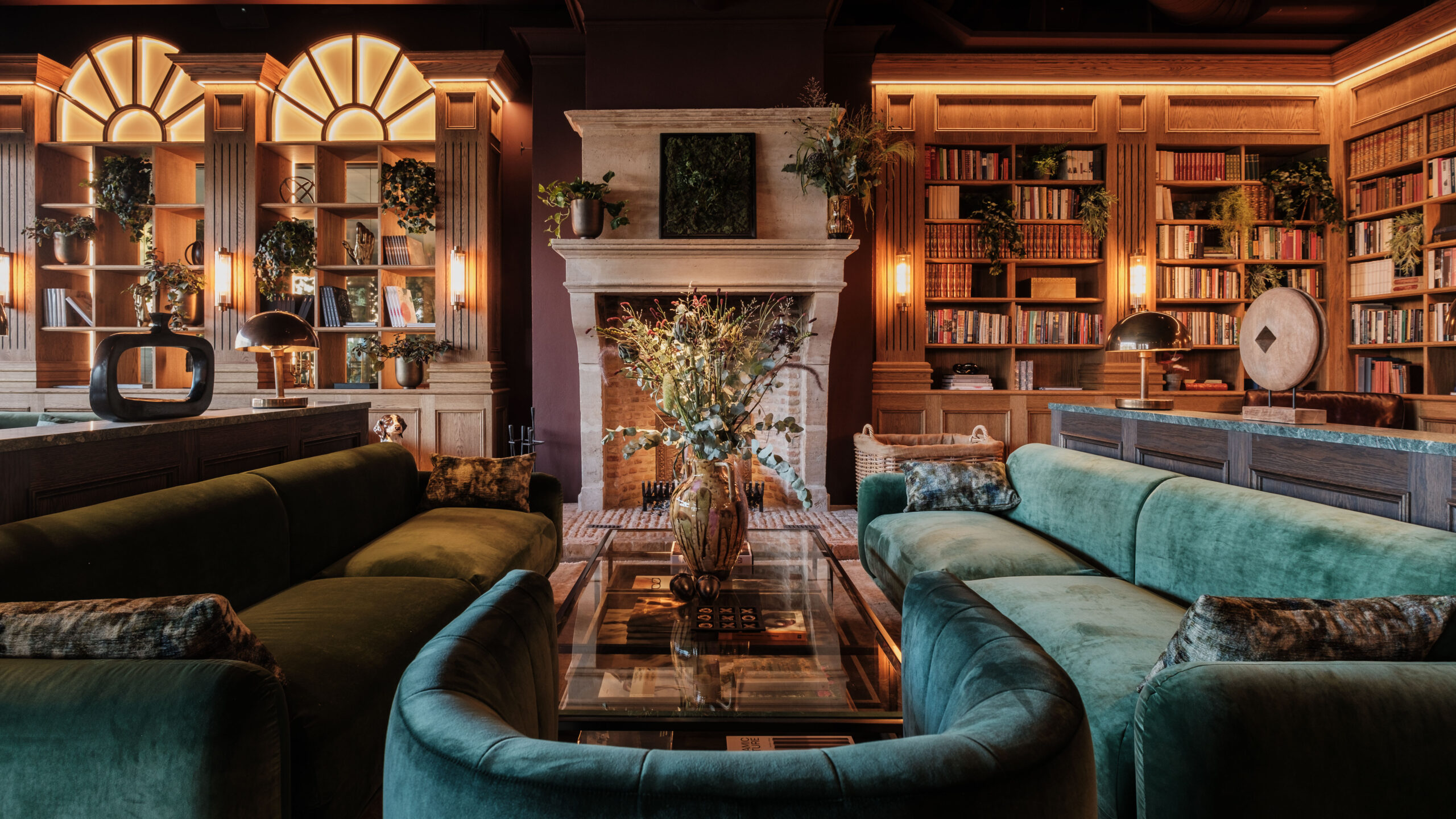
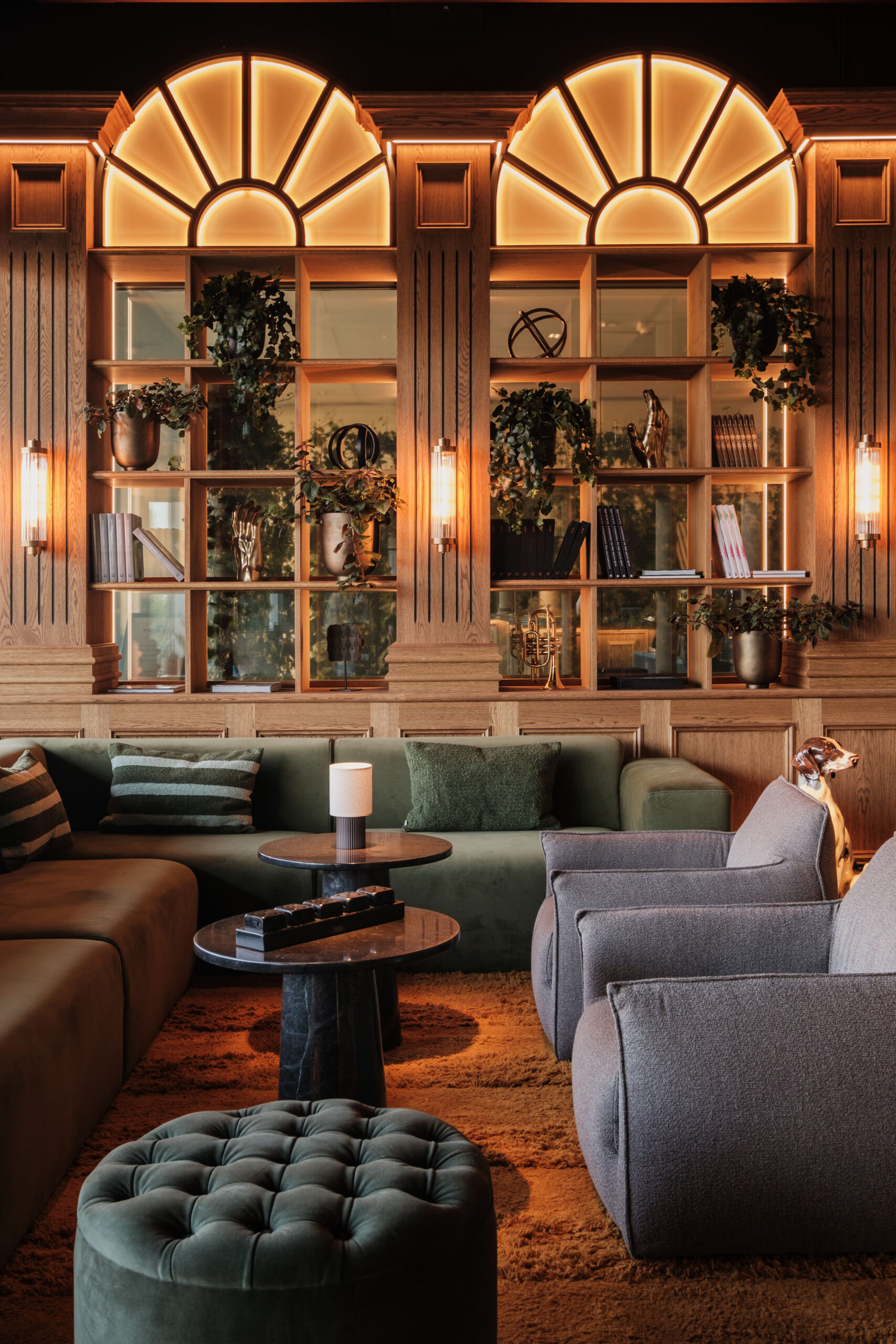
The serene time capsule Villa Foresta on Lidingö has undergone a Cinderella transformation. Our interior architects took this historic building under their wings and turned a rather neglected character into a setting brimming with warmth, personality, and unexpected contrasts. A place where every room tells its own story.

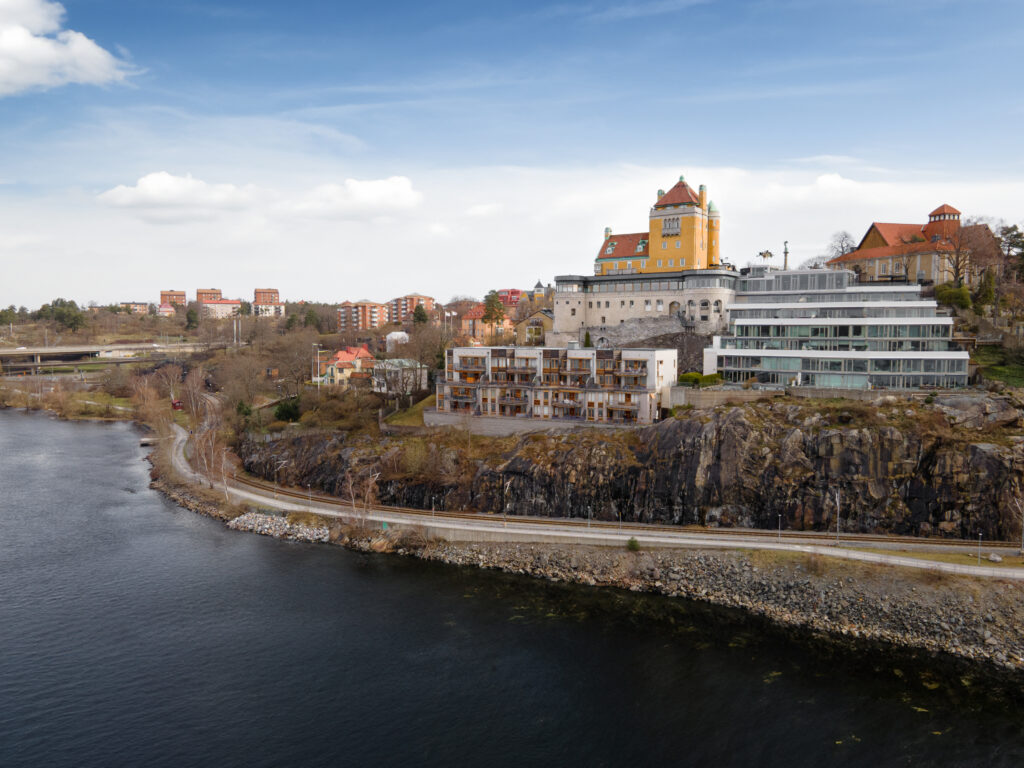
Perched high on a hill across the water, the castle-like Villa Foresta is hard to miss when crossing the Lidingö Bridge. Built in 1910 as a private residence in the National Romantic style, it was commissioned by Wilhelmina Skogh – one of Sweden’s most influential figures in hospitality and tourism at the time. In the decades that followed, the building became known as a hotel and conference venue. More recently, Villa Foresta re-emerged with a fresh identity. A vibrant and characterful design concept now ties together its rich history with a contemporary spirit.

Bold barception and intimate mezzanine

One of the first changes was to highlight a beautiful but previously hidden original staircase. At the same time, we transformed an anonymous meeting room into an intimate mezzanine — a new gathering spot for guests. Next, we designed a strikingly unapologetic “Barception,” a combined bar and hotel reception. The inspiration came from the castle’s four corner towers, whose rough-hewn proportions are echoed in the design.

“We wanted to create contrasts while maintaining a cohesive atmosphere,” says Katya Högberg, project lead interior architect at Tengbom. “By mixing various materials and textures, we aimed to strike a balance between elegance and comfort.”

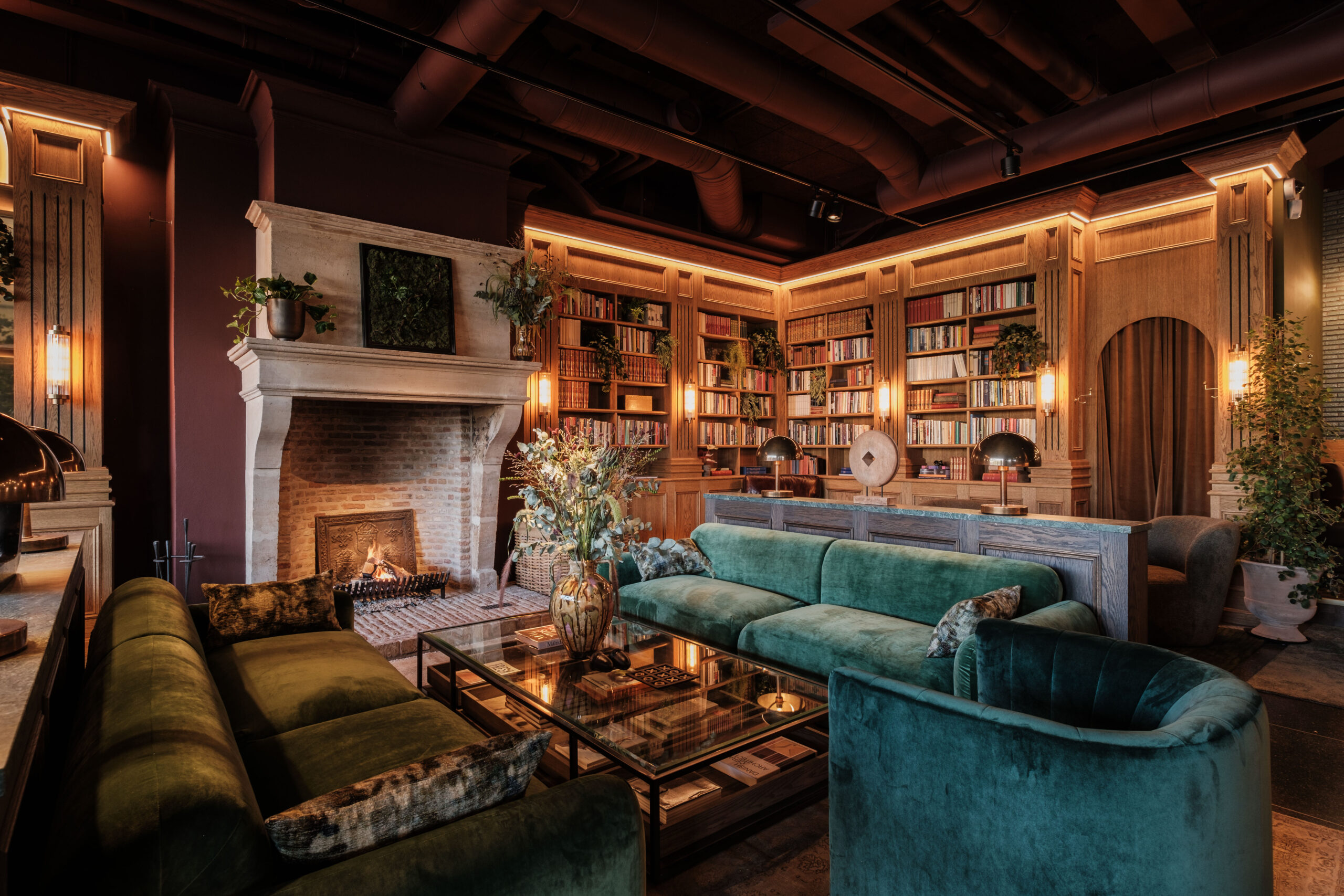
In the lower bar, guests are greeted by a hand-crafted stucco lustro wall with gold accents, adding to the space’s elegance and sophistication. The wall stands in sharp contrast to soft velvet fabrics in shades of green, ochre, and lion yellow that dress the room. The combination of textures and colors is both timeless and inviting.

The interplay of raw brass, glossy glass, coarse ceramics, and delicately pleated feminine lampshades adds variation and a mood-rich atmosphere.

Ornate details and a sense of play

Our team also designed new wrought iron railings and gave the two bars many unique elements, such as playful glass overhangs, carved profiles, glass fronts, and intricate solid wood decorations. Every detail was carefully chosen to harmonize with the whole and enhance the character of each room.

“Another strength in our design is the dramatic contrast between rooms and elements. The grand antique fireplace serves as a striking central feature, while the cozy board game corners create an intimate, green oasis for social interaction,” says Nadia.

Reused materials blended with personal style

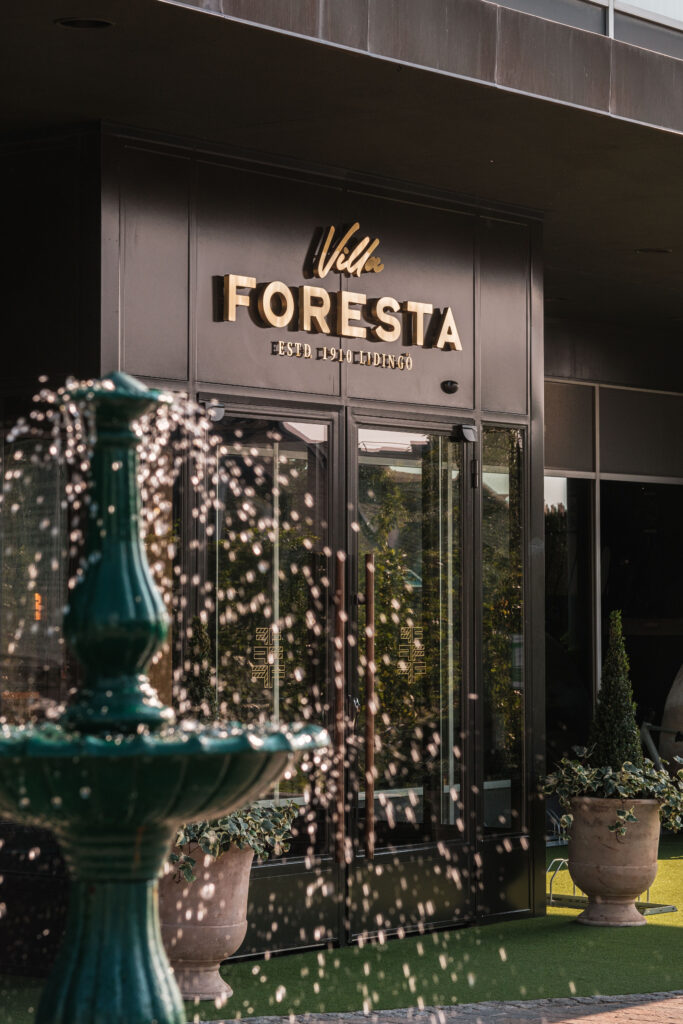
How often do you, as an interior architect, get to incorporate an antique fountain into a project? Well, we did at Villa Foresta. The new interior is a mix of carefully selected vintage pieces that create an eclectic and personal style. The carpets are inspired by nature, with materials that evoke moss, autumn leaves, and marshland. They also provide sound-absorbing foundations and frame the seating groups and comfortable armchair pairs. Lighting fixtures were hand-picked to offer warm, subdued, and indirect illumination. Each fixture serves a purpose but also holds aesthetic value.

“The combination of raw brass, glossy glass, coarse ceramics, and delicately pleated feminine shades contributes to variation and a moody ambiance,” says Katya.

With Wilhelmina’s courage behind us

With Villa Foresta, our architects have managed to balance drama and warmth throughout the interior. Transforming the building’s more modern parts into a welcoming and playful environment demanded a great deal of creativity. But also smart and sustainable solutions.

“Thanks to close collaboration with Stockholm Meeting Selection, we managed to shape a place and an interior that is both visually appealing and functional for a broad audience and a variety of events,” says Nadia. “The tight schedule meant we had to continuously test and adjust our ideas on-site.”

Villa Foresta was transformed into a place where history met the future. It once again became a vibrant hub for culture and conversation on Lidingö.
Contact person

Kristina Jonasson

+46 708 23 14 33

Kroatorpet

Updated coffee gem
Interior Design
Building Preservation & Restoration, Restaurants
Client: Huskvarna Hembygdsförening
Years: 2020-2021
Awards: Diploma for Good Building Conservation, Jönköping Urban Design Prize
Developer and partners: Huskvarna Hembygdsförening & Pålssons Bygg
Photographer: Jansin & Hammarling

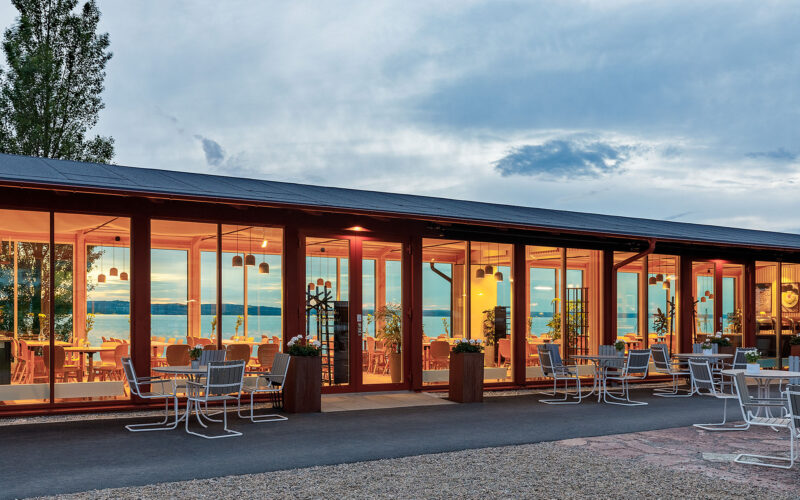
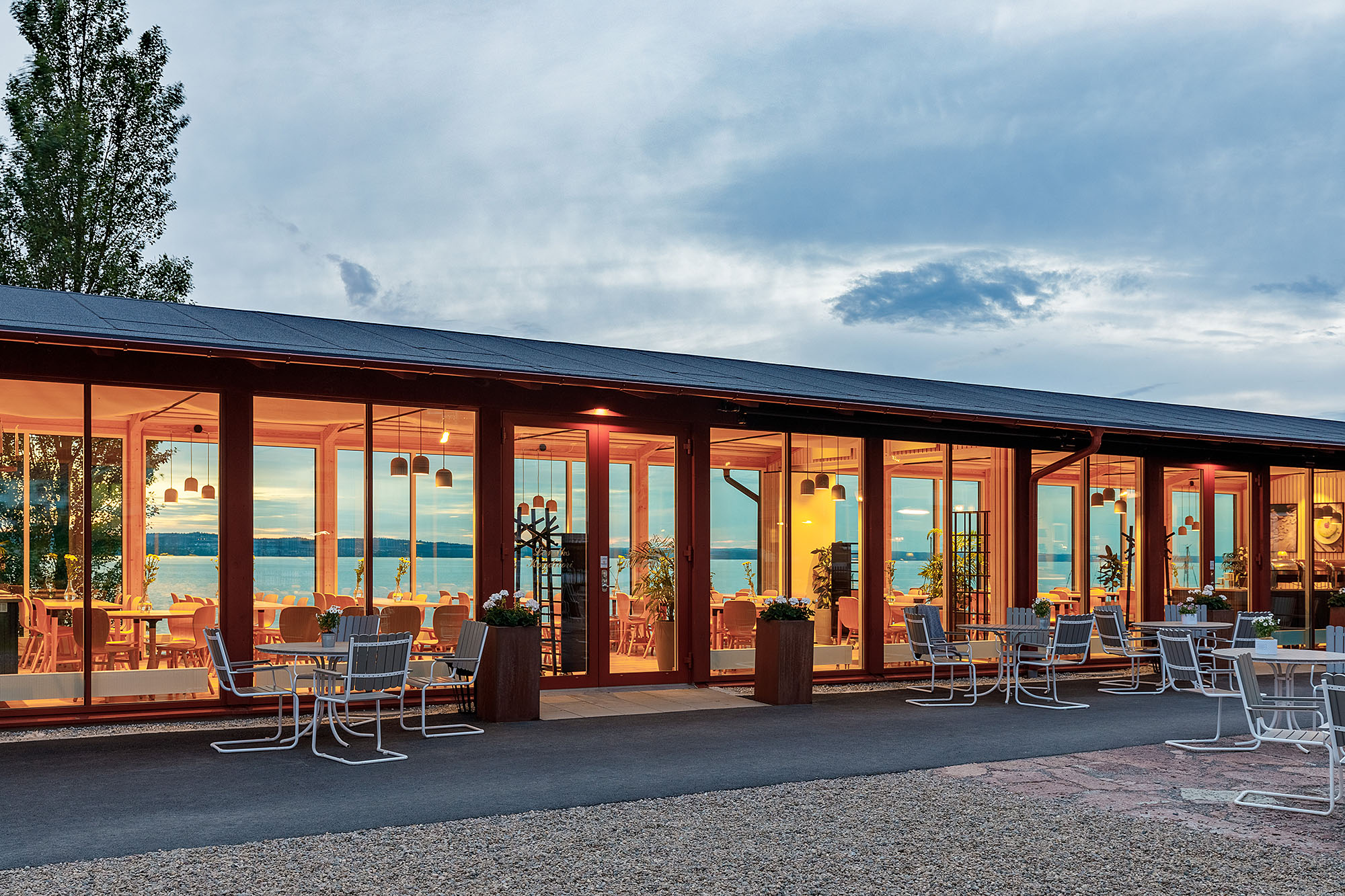
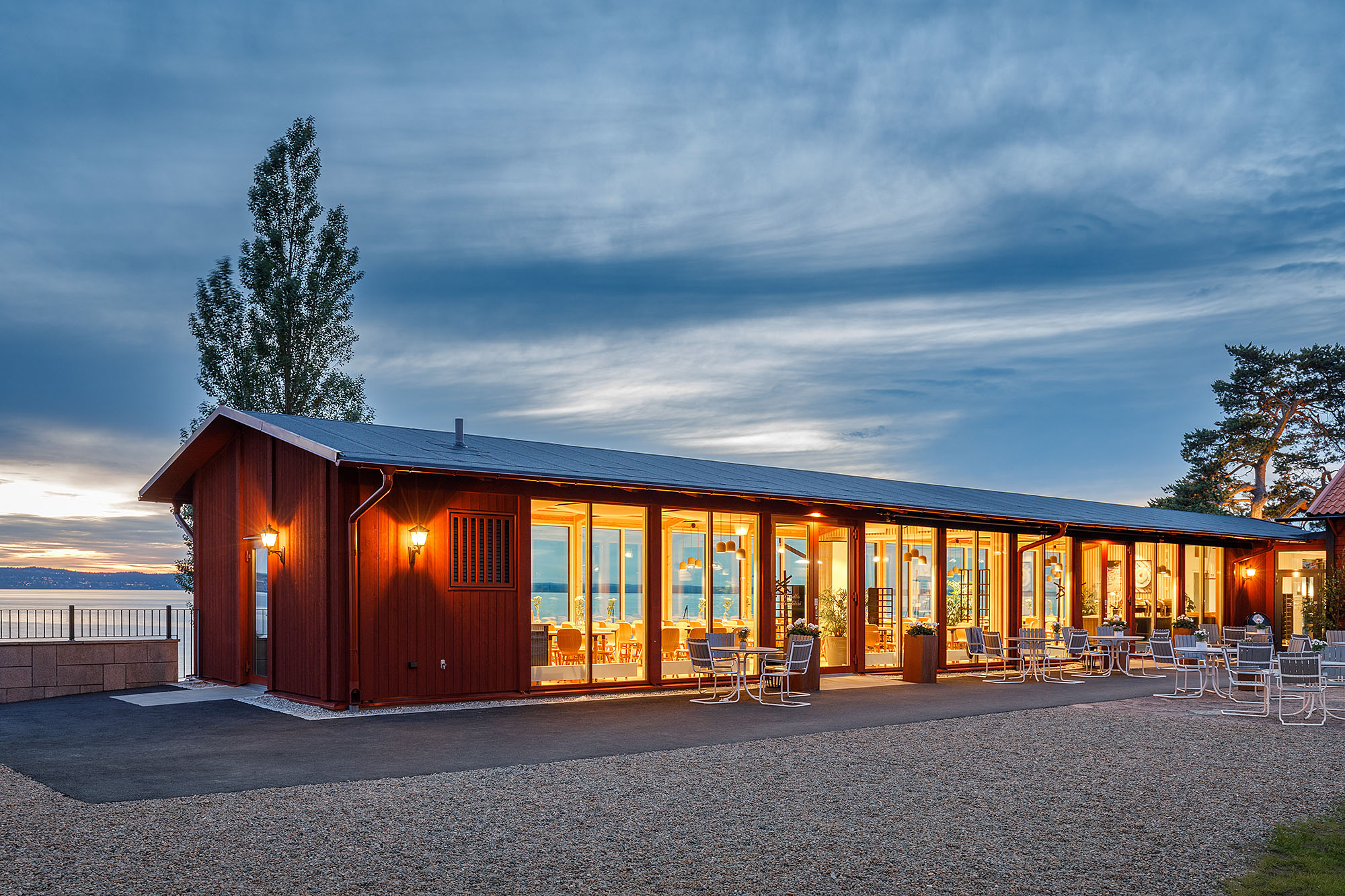
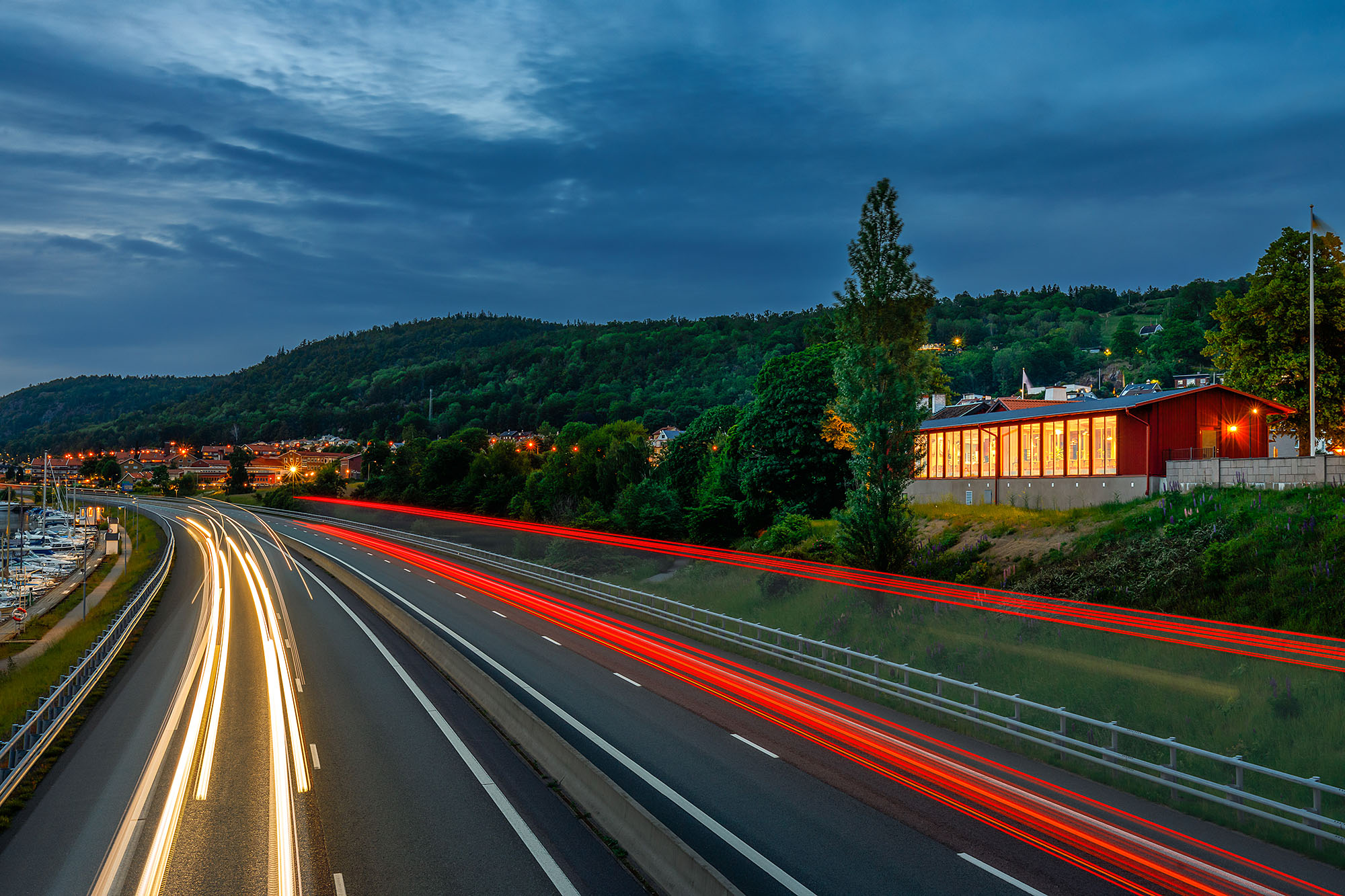
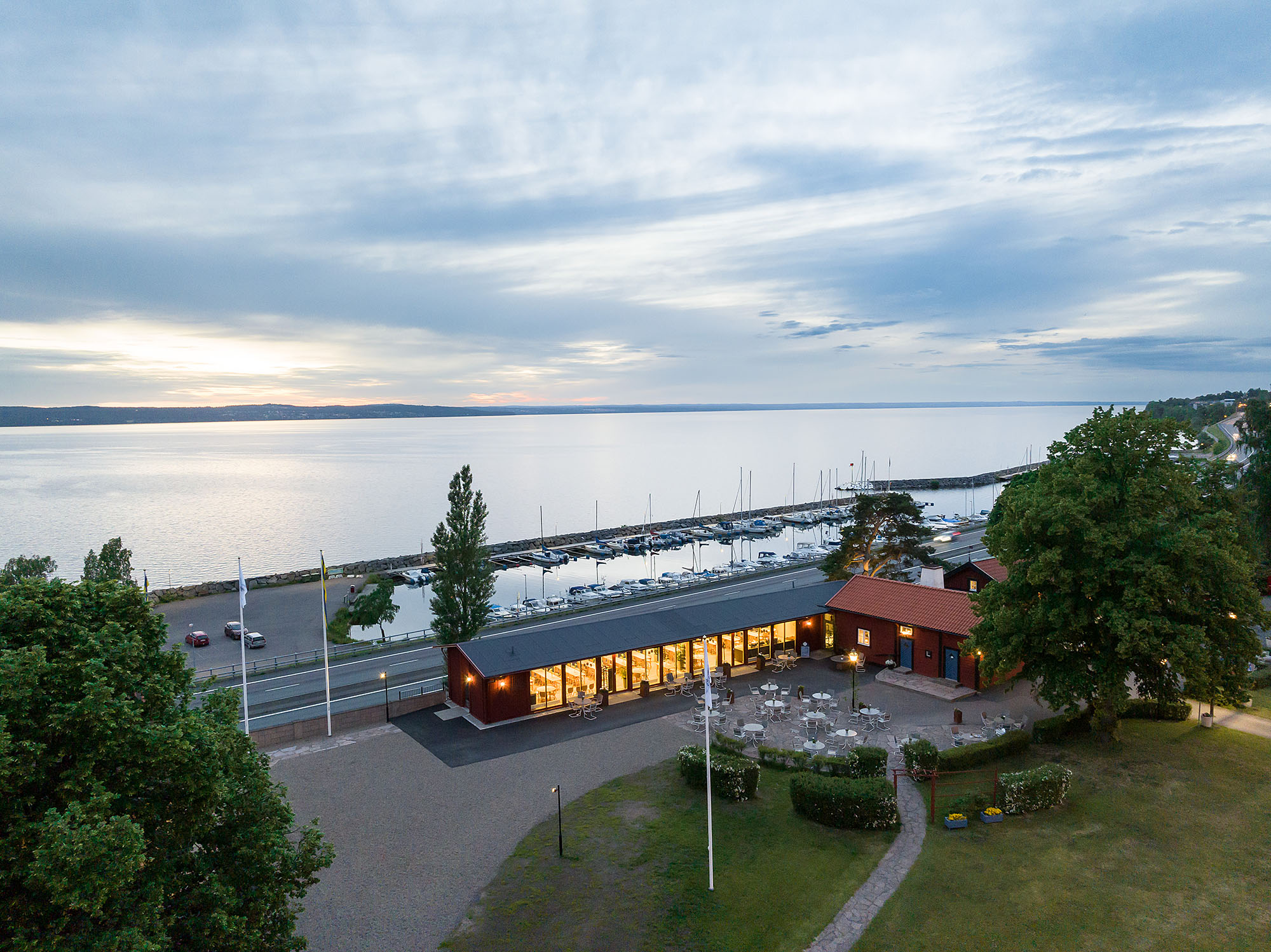
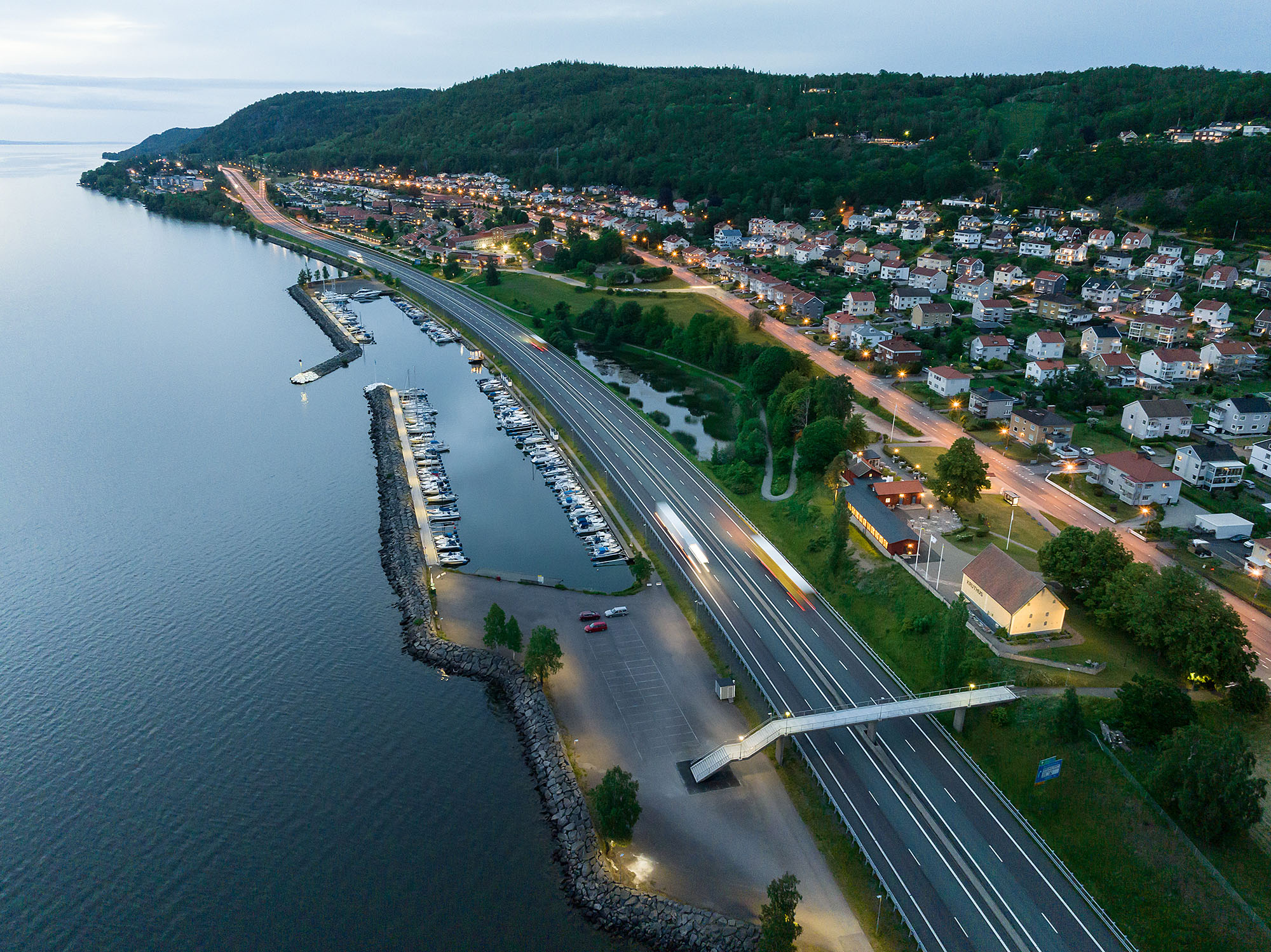
Halfway along the E4 motorway between Stockholm and Malmö lies the classic rest stop Kroatorpet, with roots dating back to the 18th century. In a bold initiative by Huskvarna Hembygdsförening, we have updated the building with a new restaurant section, improving both the staff’s work environment and the guest flow.

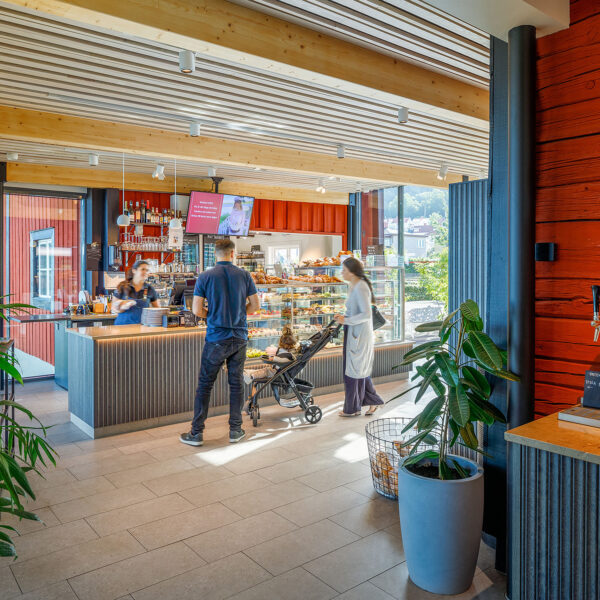
Kroatorpet originally dates from the 18th century. When the motorway was built in the 1960s, it was moved a few hundred meters from its original location and became a coffee cottage for passing travelers and local Huskvarna residents. Today, it houses Landhs konditori, which serves both motorists and locals with meals and pastries.

“While carefully preserving the original buildings, we’ve improved the staff’s work environment and the flow for guests. The new extension with glass walls functions both as a barrier to the motorway and as an opening toward Huskvarna’s most beautiful feature. The view over Lake Vättern.”

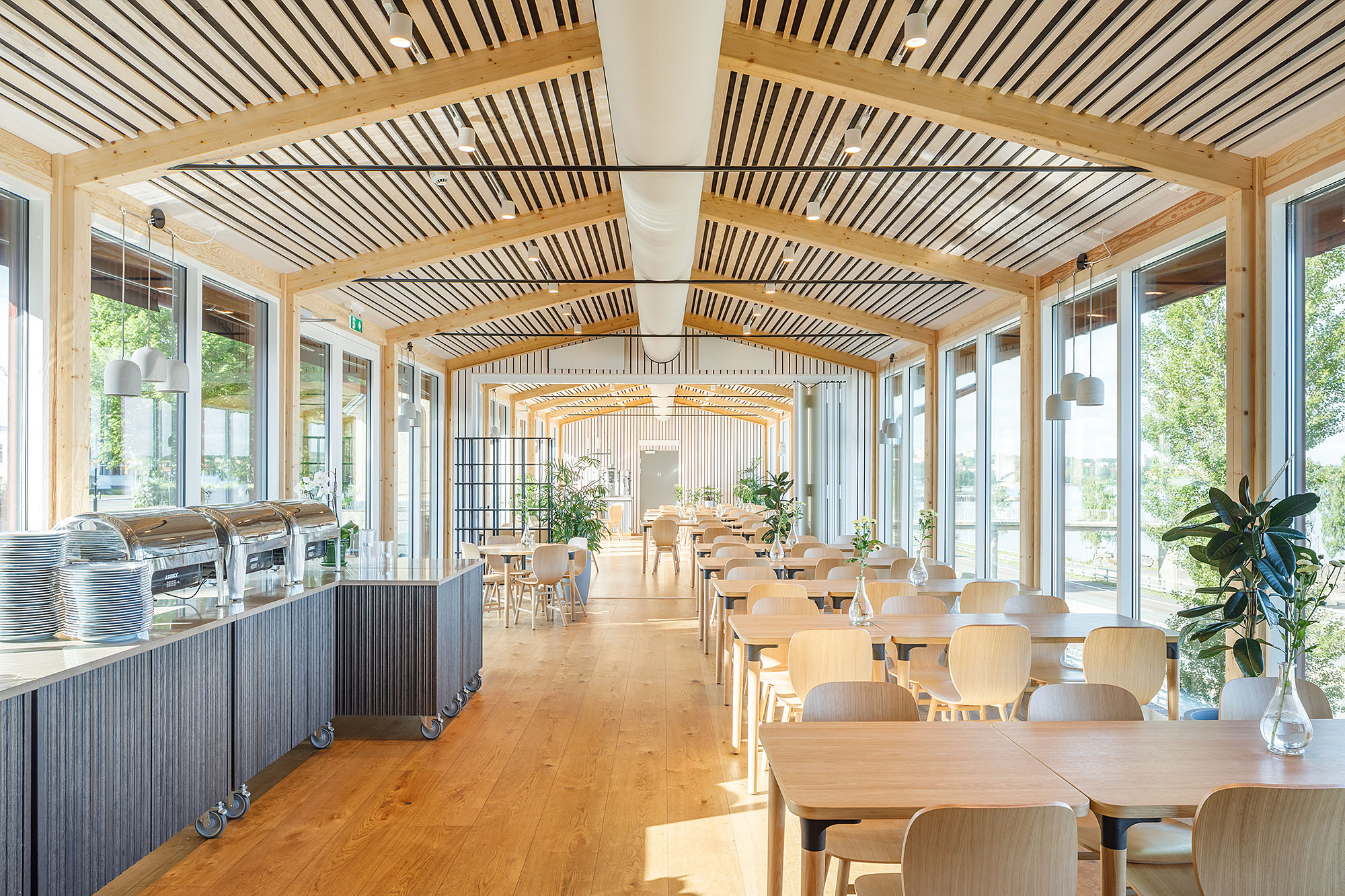
The new dining room offers views — free from motorway noise

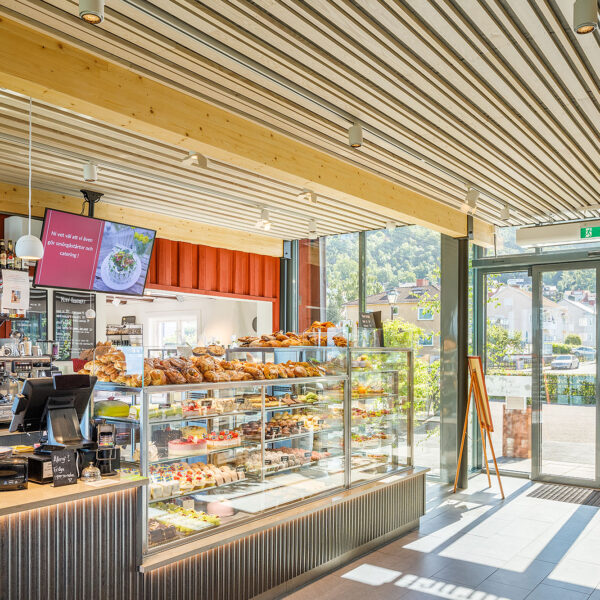
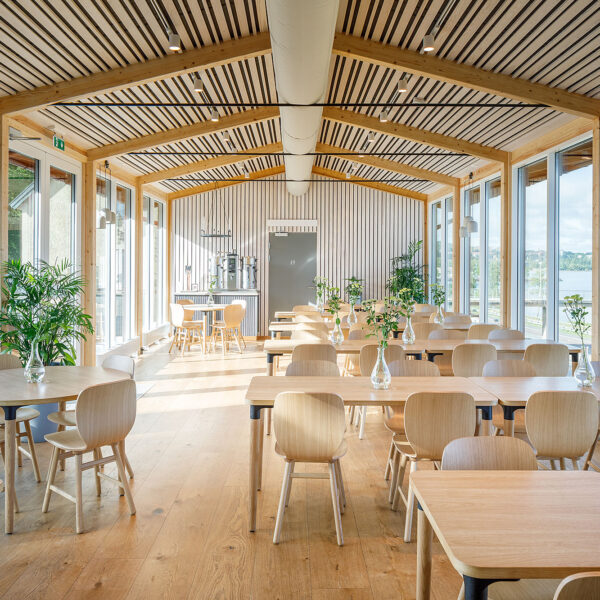
Because the two older main buildings were to be preserved, the most significant change took place between them. Here, a completely new restaurant section now connects the buildings, with a transparent dining room that captures the view while shielding against noise. Even outdoor café guests are now protected from motorway sounds thanks to the new section. This improvement makes it possible to host more events during the warmer months.

“We worked with wood interiors to retain the cozy and warm atmosphere, using white-stained wooden slats, panels, and glulam beams,” says architect Håkan Albeman. “The exterior façades of the older houses remain visible as interior walls. And despite the large glass surfaces, we managed to create a good acoustic environment.”

We love courageous investments

Local collaborations

Several local companies were involved in the transformation. The furniture, for example, comes from Karl Andersson & Söner’s furniture factory, located just a few minutes’ walk from Kroatorpet.

“The new dining hall has created a space that gives the business an entirely different economic foundation,” says Anna. “It was a courageous investment by the local heritage association, and now we can attract many more visitors. Many are travelers passing by, but we’ve also managed to strengthen an important meeting place for us Huskvarna residents.”

Kroatorpet awarded for building conservation

The design of the new section complements the older buildings. While it is clearly a modern addition, the gabled roof and classic Småland wooden construction—with its fine proportions—enhance the original houses and harmonize with the rich cultural setting.

In 2022, the city of Jönköping awarded the renovation of Kroatorpet the Urban Design Prize. The jury selected it in the category “Good Building Conservation.”

Contact person

Matt Patterson

+46 36 440 90 81

Coup d’état

A peaceful palace coup
Interior Design
Restaurants
Client: Cou AB, Sharam Vahidtary, Lise Weinberg
Location: Stockholm
Year: 2021
Photographer: Felix Gerlach

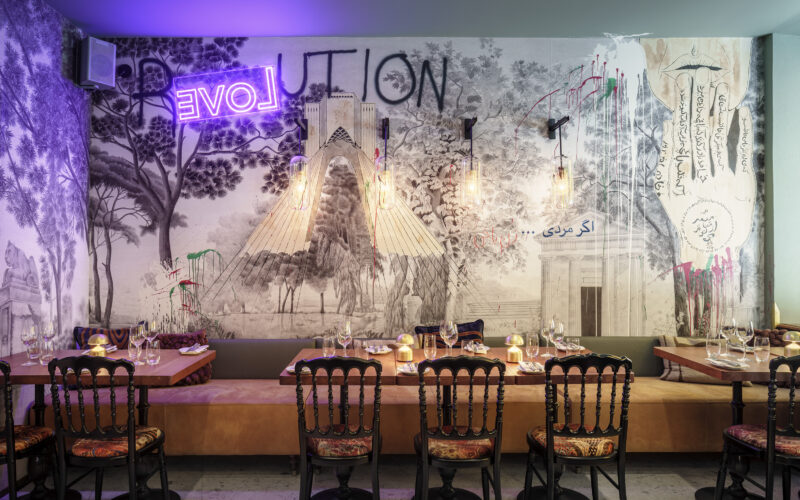
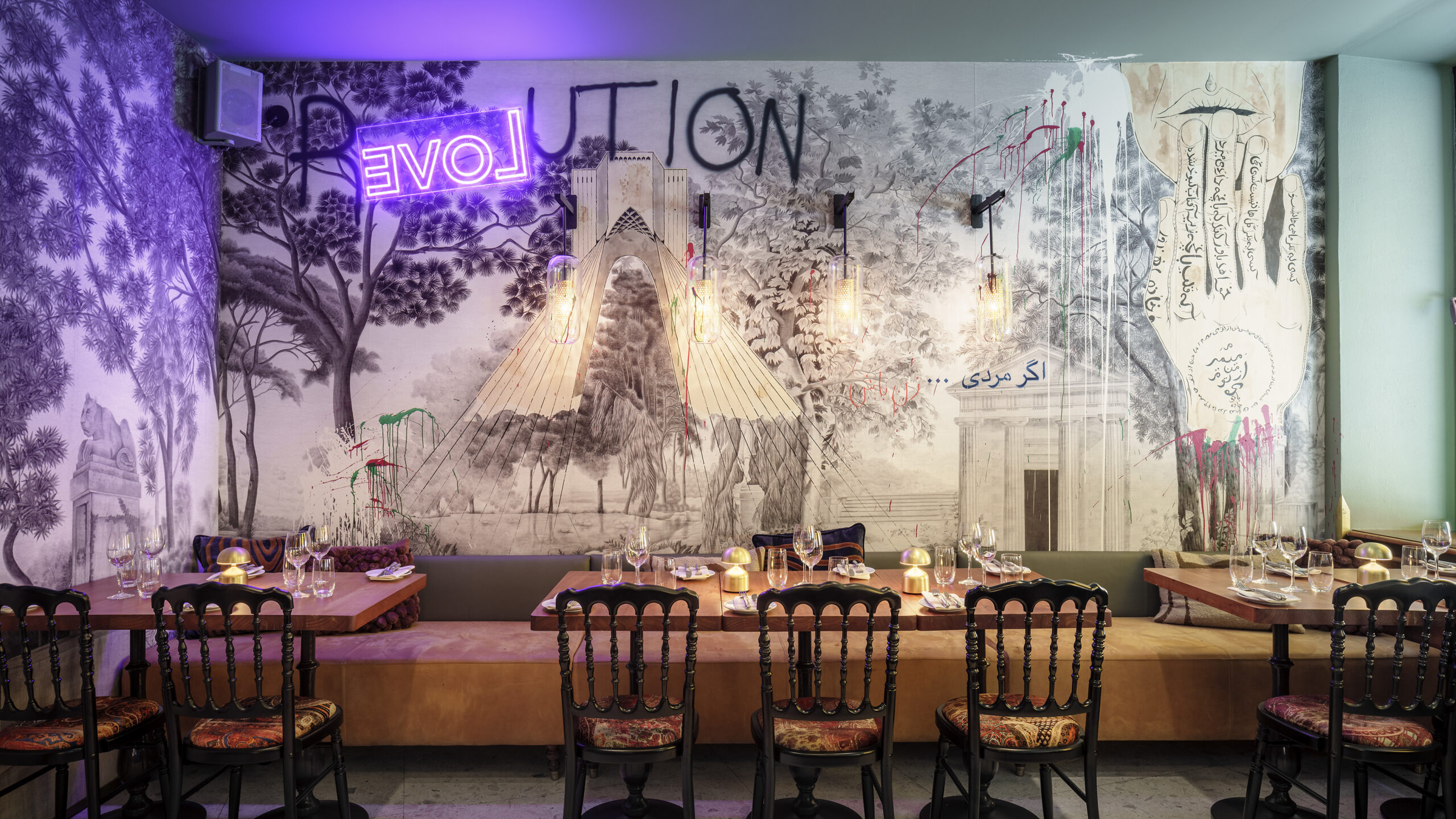
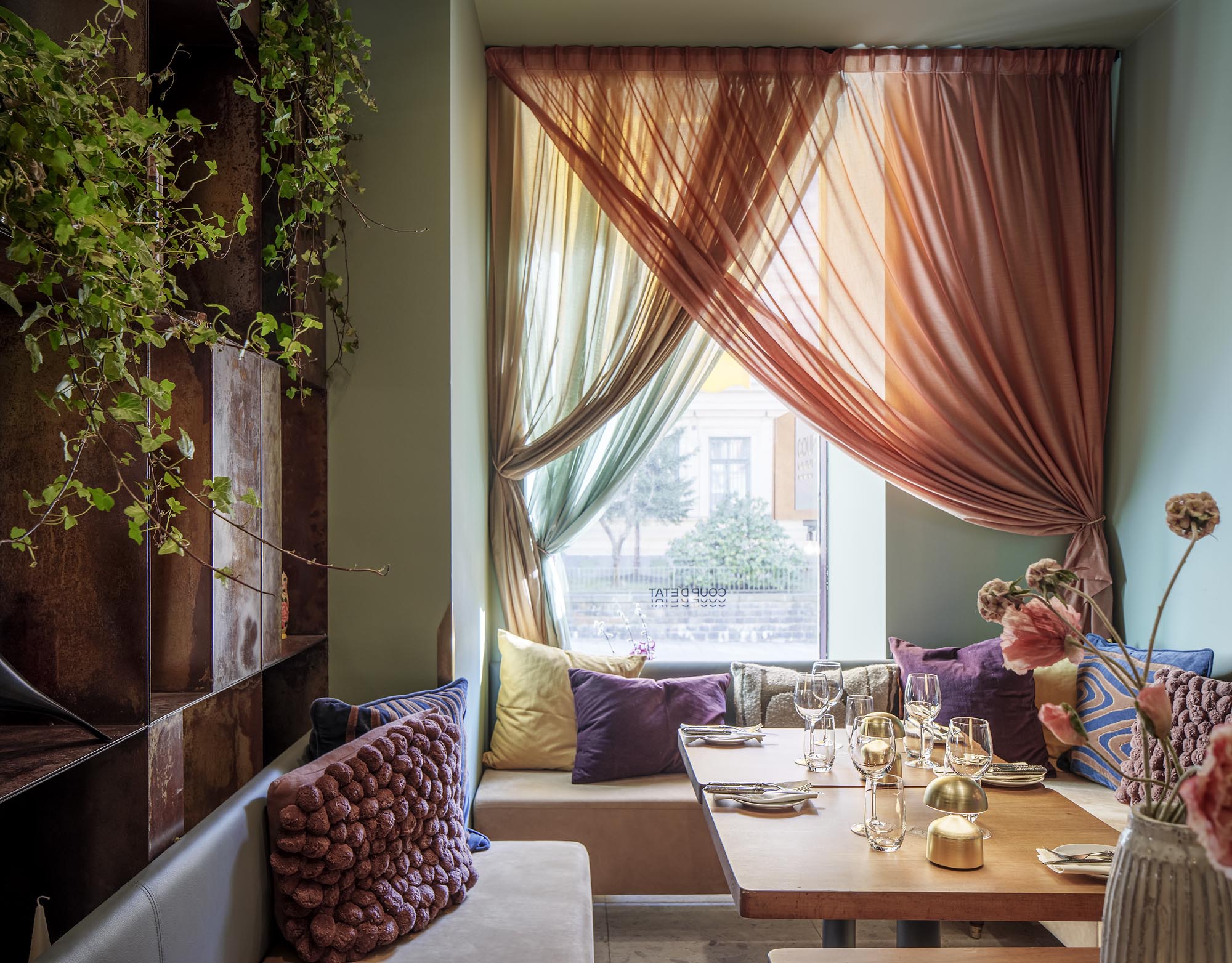
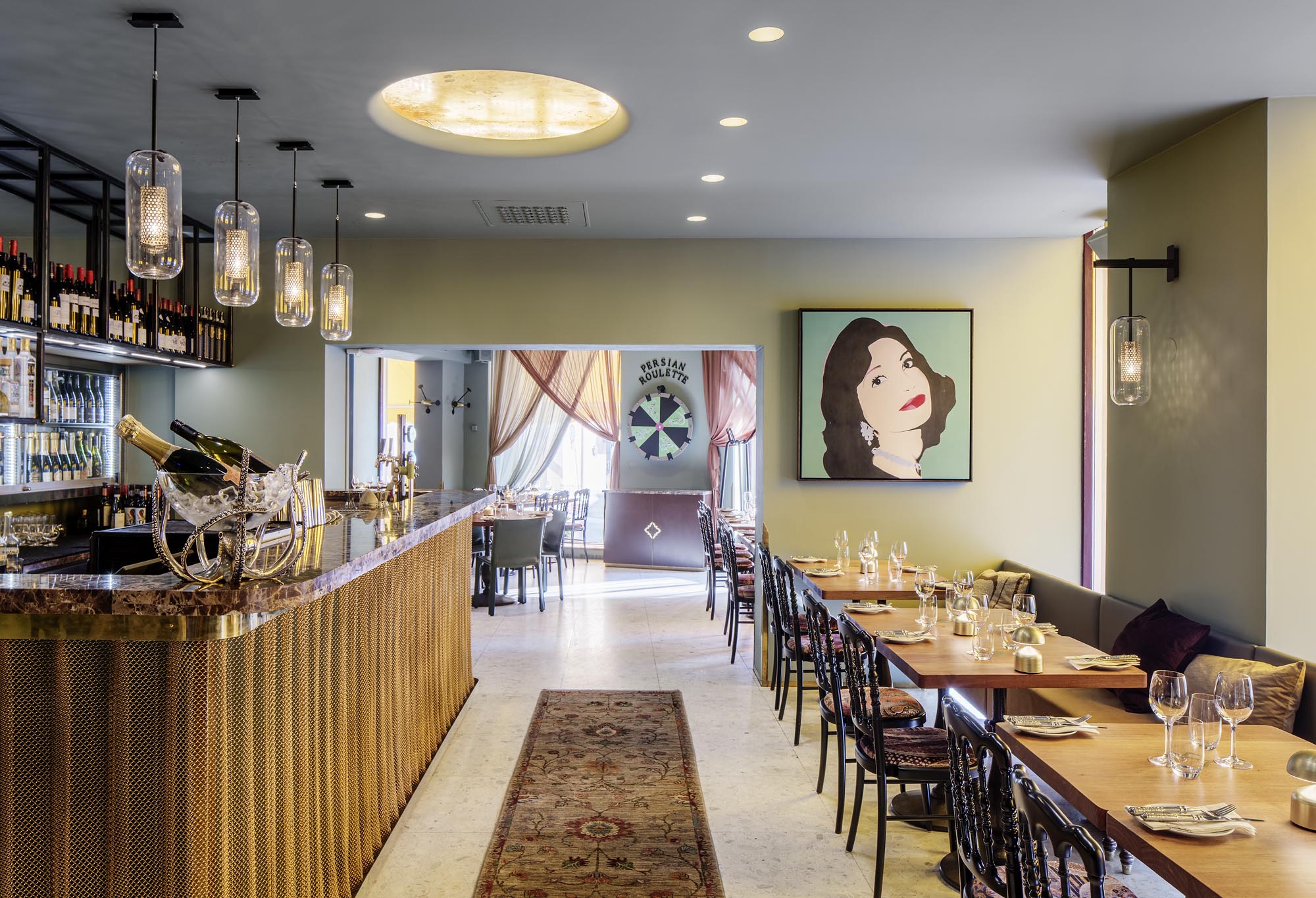
At the Persian restaurant Coup d’état, raw and refined elements were fused for a peaceful coup. In both interiors and cuisine. In a creative collaboration with restaurateurs, artists, and graffiti artists, Tengbom designed the interior.

Food was the starting point when Tengbom crafted the interior for the new Persian restaurant Coup d’état in Östermalm, Stockholm. Just as classic saffron rice, lamb, and aubergine purée meet modern oysters with sorbet and an extensive cocktail list, the interior reflects the loving palace coup. Persian green meets neon and street art.

Learn Farsi in an unexpected setting

An intercontinental mix

Coup d´etat

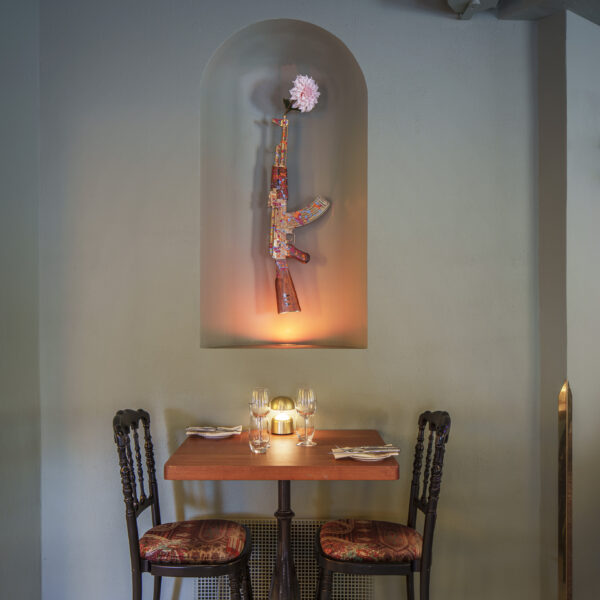
Persian cuisine with French and Scandinavian influences is on the menu at Coup d’état – French for “state coup.” The nations referenced in the kitchen are echoed in Tengbom’s interior concept. This is a restaurant that aims to shake things up, even if the weapons on the walls have had flowers tucked into their barrels.

“To carry out a palace coup by elevating Persian cuisine was something I appreciated,” writes star restaurateur Erik Videgård, who developed the menu. “I want to evolve modern Persian cuisine into something new, something luxurious, something everyone can relate to.”

Creative (artistic) collaboration with Coup d’état

The restaurant spans two floors. A dinner club at street level, and in the basement, a bar and a cinema showing black-and-white Iranian films from before the revolution. In the restroom, a looped language course in Farsi plays, adding an unexpected layer to the experience.

“We created the interiors through a creative collaboration between us as architects and the restaurateurs. Two of whom are artists themselves,” says project lead architect and design director Katya Högberg from Tengbom.

The space previously housed a Lebanese restaurant, which made it possible to reuse some of the existing chairs and tables. The team also rebuilt and repurposed the bars to suit the new concept. As a bonus, the kitchen and logistical functions were already in place, allowing the new operations to get off to a smooth start.

Among others, partners and artists involved in the project included Jacob Erixon, Ali S, and Arman Sultani.
Contact person

Kristina Jonasson

+46 708 23 14 33

Clarion Hotel Helsinki Airport

Not a single white wall
Interior Design
Hotels & Meetings, Restaurants
Client: Strawberry
Location: Vantaa, Helsingfors
GFA: Approximately 25,000 sqm
Completion: 2024
Architect: Sarc + Sigge
Photographer: Felix Gerlach

Jet-lagged and exhausted, you check into an airport hotel. Whatever expectations you may have, if you’re staying at Clarion Hotel Helsinki Airport, you’re stepping into a world where modern Scandinavian design meets Asian mystique. Here, Japanese carp and Finnish perch share space. With a bold and distinctive interior concept, the goal was to make Finland’s largest hotel anything but “a necessary stop on the journey.”

Helsinki Airport is often nicknamed “Gateway to Asia,” with over 80 direct flights to Asian destinations weekly. The hotel’s architecture reflects Scandinavian rhythm and minimalist aesthetics, with crisp and clean lines. Inside, however, it’s anything but minimalist.

“You won’t find a single white wall in the hotel,” says Claes Pereswetoff-Morath, the lead architect at Tengbom.

A memorable stay

The Clarion Hotel Helsinki Airport is Finland’s largest hotel, conveniently connected to the terminal via an indoor walkway and just steps away from airport check-in counters. A quick 30-minute commute connects you to Helsinki city center via public transport. The hotel boasts a state-of-the-art conference center, a spa, and a top-floor restaurant offering sweeping views of the runways.

“What does a traveler expect from an airport hotel? That question was at the forefront of our minds throughout the project,” shares Claes.

We wanted to create a cozy oasis amidst terminals, parking garages, and logistics buildings.

Japanese carp and Finnish pike

Airport hotels are often perceived as transient places where one stays only due to inconvenient flight times, and the memory of the stay fades quickly. But Clarion Hotel Helsinki Airport is a destination in its own right, offering surprises in every room.

“Scandinavia meets Asia in a blend of clean, modern Scandinavian design and classic Asian aesthetics,” Claes explains. The concept, dubbed JAPANDI, is embodied by the iconic koi carp and Finland’s national fish, the perch.

You can watch a plane take off and disappear into the clouds on the horizon.

Clarion Hotel Helsinki Airport Clarion Hotel Helsinki Airport

Breakfast under Japanese maple trees

The hotel’s restaurants and bars feature robust materials such as stone floors, solid wood details, and Scandinavian design furniture, creating a welcoming atmosphere. Combining matte and glossy textures, dark and light tones, the design achieves a balance of exclusivity and inclusiveness.

Daylight filters through four skylights in the breakfast hall, casting magical light on the 5-meter-tall Japanese maple trees amid the morning rush. Varied seating arrangements, pendant lights, and upholstered furniture create a dynamic setting for social interactions.

Clarion Hotel Helsinki Airport

Plane-spotting on the rooftop terrace

The spa and wellness area provides a serene retreat. Guests can also enjoy a courtyard terrace with a heated pool, perfect for experiencing a Finnish winter.

“The hotel offers a relaxing spa, a rooftop restaurant, and a terrace bar with stunning views of the runways,” Claes says. “You can watch a plane take off and disappear into the clouds on the horizon.”

Clarion Hotel Helsinki Airport

Tech meets tradition

The hotel’s guest rooms exude intimacy, with genuine wooden floors and earthy tones for a cozy feel. Smart solutions integrate service functions into the interior, optimizing the relatively small standard rooms.

Clarion Hotel Helsinki Airport also features a high-tech conference facility with 20 meeting rooms and a congress hall accommodating over 1,000 attendees. The luxurious wool carpets contribute to a soft acoustic environment, complementing the contrast between advanced technology and plush materials.

“Every corner of the hotel is designed to offer a holistic experience. Guests should leave with a memorable impression and a strong desire to return,” hopes Claes.

Clarion Hotel Helsinki Airport

Contact person

Claes Morath

Lead Architect
+46 8 412 53 47

Kämpasten Conference Center

From ash to aurum
Kämpasten
Architecture, Interior Design
Hotels & Meetings, Restaurants
Client: Stockholm School of Economics Executive Education
Location: Kämpasten, Sigtuna
Completion year: 2024
Gross Aaea: Approximately 2,000 sqm
Photographer: Erik Lefvander

Nestled on a forest-clad northern slope by Lake Mälaren, not far from Sigtuna and Arlanda, lies the Kämpasten Conference Center. This is where business leaders from the Stockholm School of Economics’ Executive Education program come to further their knowledge. After the kitchen and dining hall were destroyed in a fire, Johan Sundberg Architects, in collaboration with Tengbom, were commissioned to design a new main building – one that exudes strength and presence.

Kämpasten
Kämpasten

Initially, the project involved developing a master plan for the facility. The center is organized around a “bygata” or village street, a concept originating from the original competition proposal in the 1980s. The plan emphasizes preserving the character of the site, its forest and water, while enhancing the sensory experience of Kämpasten.

“Spatial experiences, materiality, connection to nature, the interplay of light, and other architectural elements were to combine to create an atmosphere that fosters a deep connection to the place, enhancing participants’ sense of presence,” explains Johan Sundberg, lead architect.

Vision and a client that values architecture

Before the fire, the only building deemed worth preserving without significant renovation was the communal kitchen and dining hall. Tragically, this building burned to the ground in summer 2020, just before the new plan was set to be presented. The assignment expanded to include designing a completely new main building. After multiple visits to the ruins, the placement of the new structure was adjusted accordingly.

“Every building is a new prototype and requires flexibility and ongoing dialogue. But the project’s success is also due to the Stockholm School of Economics’ understanding and appreciation of architecture,” says Johan Sundberg. “Our vision was to create a destination that highlights the unique qualities of the site, making Kämpasten a special place for executive education.”

A respectful collaboration to achieve excellence

After Johan Sundberg developed the architectural concept for the new main building, Erik Gardell from Tengbom joined the project to take it from design development through construction.

“Our backgrounds differ, but our perspectives on architecture are similar,” says Erik Gardell. “We’re both generalists who can adapt our roles depending on project needs. For Kämpasten, structure and role clarity were crucial to the collaboration and contributed to the excellent results.”

“Erik’s team clarified and refined the concept,” says Johan. “Our collaboration strengthened and improved the project rather than simplifying it. With our shared language and reference framework, we successfully enhanced the inherent quality of the project.”

A building in harmony with nature

The new building deviates from the footprint of its predecessor, creating views over a terraced square where the old structure once stood. Built into the slope with three varying floor levels, the design follows the natural contours of the landscape. The interior captures the surroundings with a shift in the floor plan’s angle. A large hipped roof ties the new structure to the rest of the campus while remaining below the treetops. A central spine wall separates the guests’ dining and conference areas from the large kitchen. The slight misalignment of the roof lines introduces skylights that channel daylight into the building’s core.

“It was obvious that the structural frame should be made of wood, visible as a post-and-beam system. Not as a series of walls with openings,” Johan notes.

The upper floor is open, offering sweeping views of the forest and lake, while the ground floor is more intimate, with enclosed spaces, smooth timber ceilings, carpets, and a direct connection to the earth.

Vision and a client that values architecture

Kämpasten

Before the fire, the only building deemed worth preserving without significant renovation was the communal kitchen and dining hall. Tragically, this building burned to the ground in summer 2020, just before the new plan was set to be presented. The assignment expanded to include designing a completely new main building. After multiple visits to the ruins, the placement of the new structure was adjusted accordingly.

“Every building is a new prototype and requires flexibility and ongoing dialogue. But the project’s success is also due to the Stockholm School of Economics’ understanding and appreciation of architecture,” says Johan Sundberg. “Our vision was to create a destination that highlights the unique qualities of the site, making Kämpasten a special place for executive education.”

A respectful collaboration to achieve excellence

After Johan Sundberg developed the architectural concept for the new main building, Erik Gardell from Tengbom joined the project to take it from design development through construction.

“Our backgrounds differ, but our perspectives on architecture are similar,” says Erik Gardell. “We’re both generalists who can adapt our roles depending on project needs. For Kämpasten, structure and role clarity were crucial to the collaboration and contributed to the excellent results.”

“Erik’s team clarified and refined the concept,” says Johan. “Our collaboration strengthened and improved the project rather than simplifying it. With our shared language and reference framework, we successfully enhanced the inherent quality of the project.”

Kämpasten

A building in harmony with nature

The new building deviates from the footprint of its predecessor, creating views over a terraced square where the old structure once stood. Built into the slope with three varying floor levels, the design follows the natural contours of the landscape. The interior captures the surroundings with a shift in the floor plan’s angle. A large hipped roof ties the new structure to the rest of the campus while remaining below the treetops. A central spine wall separates the guests’ dining and conference areas from the large kitchen. The slight misalignment of the roof lines introduces skylights that channel daylight into the building’s core.

“It was obvious that the structural frame should be made of wood, visible as a post-and-beam system. Not as a series of walls with openings,” Johan notes.

Kämpasten

Movement and light in Kämpasten’s floor plan

Kämpasten

Between the timber columns, glass panels dominate, with filled sections only where necessary. The roof structure, resembling the veins of a leaf when viewed from below, adds a natural touch. Concrete is used for the foundation and stabilizing walls, clearly delineating these elements. To meet the span and technical requirements of the kitchen, a cast-in-place intermediate floor was implemented.
The building layout encourages movement and circulation between dining halls, lounges, and conference rooms. A centrally located staircase channels daylight to the lower level.

Sensory and natural

The team used untreated pine and spruce for the façade, structure, and ceilings, while finishing the interiors with ash and oak. Limestone flooring and exposed concrete complement the material palette. The building’s façade elements, metalwork, and fittings feature lacquered metal. Designer Pierre Sindre added tactile furnishings and textiles made from natural materials.

“We’ve remained true to the project’s narrative and shared vision throughout,” says Erik. “The collaboration has taught us much—not least the importance of clear communication and the courage to follow one’s ideas.”

“Trusting each other’s reasoning was immensely valuable,” Johan adds. “One must dare to discuss and reveal ideas to create the best architecture.”

Awards and nominations

Kämpasten was nominated for the EUmies Award 2026 – Mies van der Rohe. Since its launch in 1988, the EUmies Awards have highlighted architecture that strengthens the connection between culture, society and creativity across Europe. The prize celebrates projects that unite the built, the human and the natural — and in doing so, raise the quality of the environments we live in. In addition, Kämpasten was also a nominee for the 2025 Sigtuna Municipality Architecture Prize. Featured in Dezeen 2026.

Contact person

Erik Gardell

Lead Architect
+46 8 410 354 72

Clarion Hotel Sundsvall

Escapism à la Norrland
Interior Design
Hotels & Meetings, Restaurants
Client: Nordic Property Management / Nordic Choice Hotel
Location: Sundsvall
Assignment years: 2018-2021
BTA: 14 350 sqm and 270 hotel room
Property owners, Entrepreneur, Architect: Diös, Serneke, Krook & Tjäder
Certifications: BREEAM-SE Very Good

Can a hotel expand a city center? We think it can. With the opening of the new Clarion Hotel in Sundsvall, the “The Stone City” has gotten a fresh and shiny add-on.

The hotel’s unique location along the Selånger river. Photo: Lasse Olsson

The perfect spot to enjoy a glass of wine. Attend conferences, relax, celebrate or simply escape. With “stone” and “jewel” as its keywords, the new Clarion Hotel in Sundsvall combines traditional and contemporary, bringing life and movement to a block that used to be just a parking lot.

Clarion Hotel Sundsvall
A spectacular street-level bar embellishes the hotel’s center. Suspended above the bar counter as if floating in mid-air, the bar’s overhang perfectly completes the space. Photo: Lasse Olsson

Warm, fresh and dramatic

The Selånger river, Norrland’s rugged nature, and Sundsvall’s industrial past were all sources of inspiration behind the design concept. Playing on the keywords stone and jewel, the decor is a far cry from your classic hotel style.

“As our jumping-off point, we used contrasts like polished and raw, glowing and cool, dark and light. Together, we created an interior design that feels human but still exciting,” says Nadia Tolstoy, design lead at Tengbom.

Clarion Hotel Sundsvall
Warm textiles and shiny brass glow in the cosmopolitan rooftop bar, complete with expertly designed lighting, materials and acoustics. Photo: Lasse Olsson
Clarion Hotel Sundsvall
The countertop of the rooftop bar is inspired by the Alnöite stone found in Sundsvall. Photo: Lasse Olsson

More than a hotel

In 2017, a jury named Sundsvall Sweden’s most beautiful city. People often describe it as a Phoenix rising from the ashes, a nod to the great fire of 1888. With Clarion Hotel Sundsvall, the city takes another step forward. The hotel welcomes guests with a warm and inviting lounge. It features an inspiring conference area, a rooftop restaurant with a terrace, an international spa, and rooms designed for long, lazy weekends. To create the perfect atmosphere, we combined polished brass detailing, natural stone, smoked oak, limestone hues, and wood paneling. We also wove motifs inspired by the Stone City into everything—from the patterns in the carpets to the textures in the bathrooms.

“We wanted to create the exact opposite of traditional hotels’ sterile decor. Using timeless, yet classic materials, with an emphasis on a welcoming design, we’ve created a fresh, lively meeting space for Sundsvall residents and long-distance travelers alike,” explains Claes Pereswetoff-Morath, project manager at Tengbom.

Clarion Hotel Sundsvall
The sun sets over the rooftop bar’s terrace. Photo: Lasse Olsson

Contact person

Claes Morath

Interior Architect
+46 8 412 53 47