Our founder, Ivar Tengbom, designed the Sundbyberg Water Tower, which was completed in 1912. This early concrete structure is fully clad in Helsingborg brick, featuring cross-bond patterns and bold ornamentation that reflect the national romantic ideals of the time. Nearly a century later, in 2009, we took on the challenge of adapting the tower for public use, bringing new life to a landmark that had long stood without a clear function.
Sundbyberg water tower is remarkably well-preserved and holds great architectural and historical value. It is a prime example of the utility and industrial buildings constructed around the turn of the 20th century.
As Sundbyberg’s most iconic landmark, its distinctive, monumental character remains a striking presence in the cityscape. When it was first built in 1912, the tower stood as a symbol of Sundbyberg’s rapid modernisation.
Photo: Sten Jansin
Sundbyberg’s most important landmark
A careful transformation
The renovation respected the building’s cultural heritage, using historically accurate materials and methods.
Photo: Sten Jansin
Externally, the design team preserved the tower’s original silhouette by making only minimal changes. Inside, they carefully maintained the original layout and built-in features. They meticulously cleaned and repainted the grand wooden staircase, all windows, and other carpentry details with linseed oil paint in their original colour. Additionally, they designed and crafted a new entrance door to match the original design.
Today, parts of the tower serve the public, now housing a café and exhibition spaces.
A breathtaking view from Sundbyberg’s water tower
If you haven’t visited yet, we highly recommend stopping by for a bite to eat, stunning architecture, and a panoramic view over Sundbyberg from the top of Tornparken.
If you share our passion for restoration and heritage conservation, we invite you to explore more of our work. Take a look at some of our other projects [HERE].
Project type:
New construction of garbage collection terminal
Photographer:
Sten Jansin
Collaborators:
Sweco, ACAD, ACC, Envac
Modern, sustainable waste management is a given in the rapidly growing Barkarbystaden. With Järfälla waste collection terminal, Tengbom has designed a facility that integrates seamlessly into the urban fabric.
A new district means new waste, and planning for its management must start early. Instead of hiding the problem, Järfälla’s terminal uses an efficient underground vacuum system, transporting waste discreetly beneath the streets. But this is more than just a technical solution — it’s a building that earns its place in the ambitious Barkarbystaden.
Järfälla Municipality wanted a facility that matched the high standards of the surrounding architecture. As lead consultant, Tengbom ensured a thoughtful design, with quality materials and careful attention to detail.
Timeless details built to last
The result is a pared-down brick building, where faceted bricks form subtle patterns along the long façades. Some of the recesses remain open, while others are filled with mortar, creating either a smooth grid effect or striking diagonal patterns when snow settles in the cavities during winter.
The terminal was designed to blend naturally into its residential surroundings while still having its own distinct identity. Through careful detailing, it signals the importance of waste management in a modern city.
“Managing waste properly is crucial today. In a way, this building is like the church at the centre of the village.”
Krister Bjurström, Lead architect
With room for future expansion, the terminal is built to serve the district for years to come. But longevity is about more than just capacity — it’s also about material choices and timeless design. Achieving an elegant, simple form requires a deep understanding of the underlying technology, making close collaboration with industry experts essential.
A shared vision for the city of tomorrow
There’s no manual for designing a facility like Järfälla waste collection terminal. Instead, it was a journey taken together with the client, ensuring a clear vision from the start — one that shaped the end result and kept costs in check.
With shared ambitions and a commitment to sustainability, something as unglamorous as a waste collection terminal has become a landmark for the neighbourhood. Winning Järfälla Municipality’s honorary award seems like proof of that.
Client:Hellasvägen Invest AB through Daniel Svensson at Energy Service Management
Location:
Höör, Skåne
Assignment years:
2019-2020
Phase:
Ongoing
Collaborators:
Oevis
Imagine designing an entire neighbourhood around a single oak tree — and naming it after that tree. That’s exactly the vision for Ekstaden, a new district in Höör, Skåne. Tengbom has developed a proposal that transforms an industrial area into a thriving residential community.
Ekstaden creates a small-scale, dense, and green neighborhood where social sustainability holds high importance. The street space and other public areas support walking, play, and relaxation through thoughtful design.
Once a hub for metalworking industries, the Hällbo area is transforming into a vibrant part of Höör, with social sustainability at its core. The district’s varied small-town character will feature open green spaces and intimate streets, encouraging interaction, strolls, and play.
“Children should be able to kick a ball just outside their door. Here, you can enjoy small-town life without moving to a suburban villa.”
Anders Nilsson, Urban planner
In the heart of Ekstaden, a green and leafy urban park sits at the center of a pedestrian-friendly strip with residential entrances and commercial spaces. In the southern section, townhouses with small outdoor areas line the park, allowing residents to step directly into the greenery. This thoughtful framing creates a secure and vibrant atmosphere. Illustration: Olof Eriksson, Oevis.
Small-town charm in every detail
The design of Ekstaden draws inspiration from central Höör, ensuring it feels like a natural extension of the surrounding landscape. Existing streets and pathways will seamlessly continue into the new district, leading to inviting public spaces and green areas.
To maintain a human-scale environment, buildings will range from two to four storeys, with the top floors set back to create a softer skyline. Historic trees are carefully integrated into the design, enhancing the district’s leafy character. With its proximity to the historic Gästis area and the Kolljungabäcken stream, Ekstaden is more than just built around an oak — it extends and enriches the region’s cultural and natural heritage.
With its location near the train station, Ekstaden is the perfect home for young families commuting from Malmö and Lund.
Lower buildings to the south provide better light in the courtyards.The houses have a varied design to create a varied, lively feeling.The elevated ground floors in particular will be perfect premises for shops and restaurantsIn order to create a greener urban environment and a visual connection between the street and the courtyard, green areas are placed in each block.
Collaborators:
PEAB, Räddningstjänsten, Grums kommun
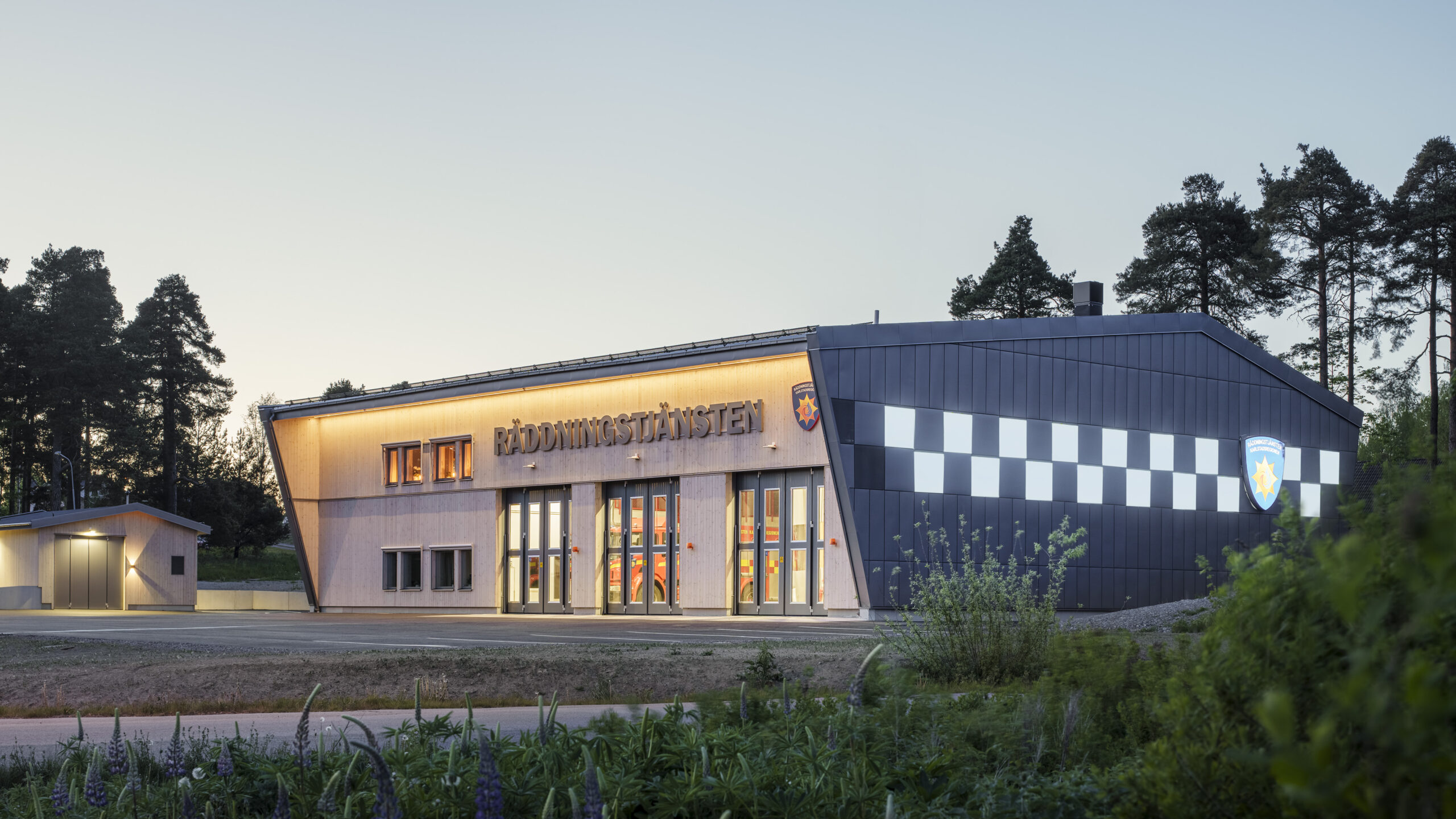
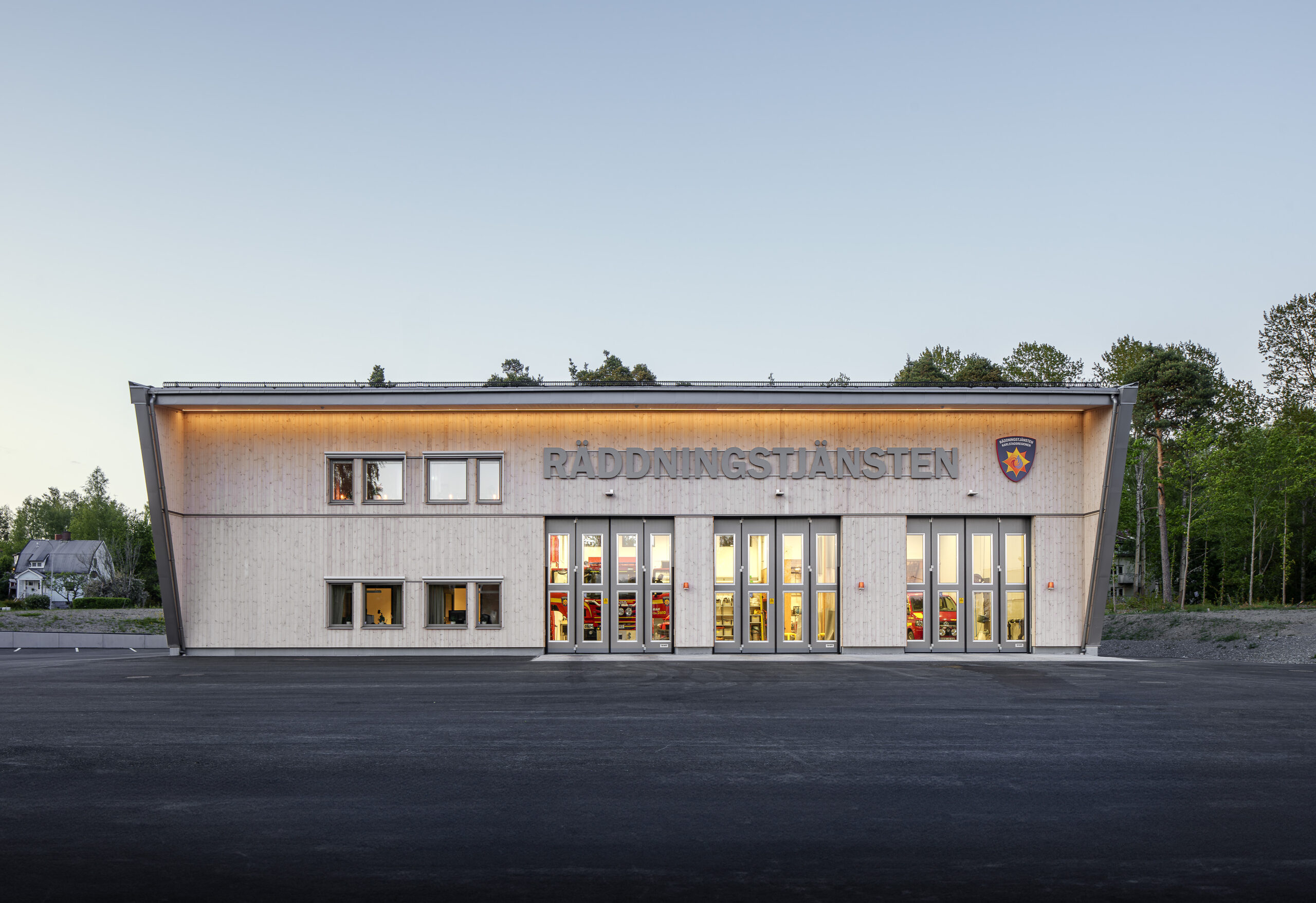
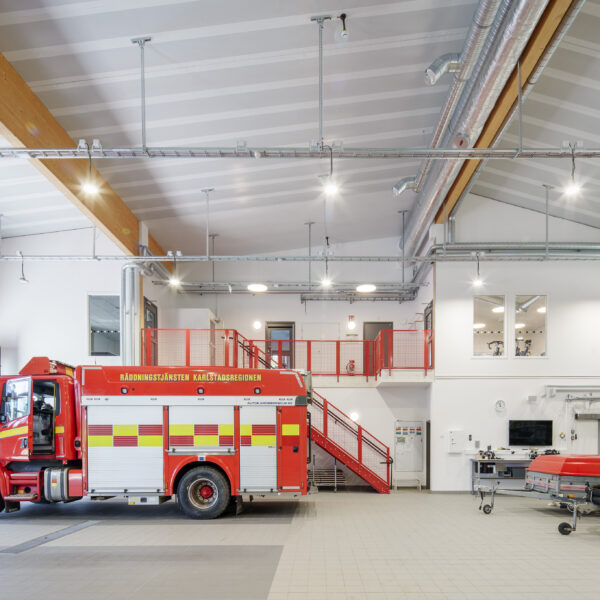
With around 240 emergency calls per year, the fire station in Grums is the busiest part-time station in the region. We designed a new facility that is safer, more visible, and better suited to those who work there.
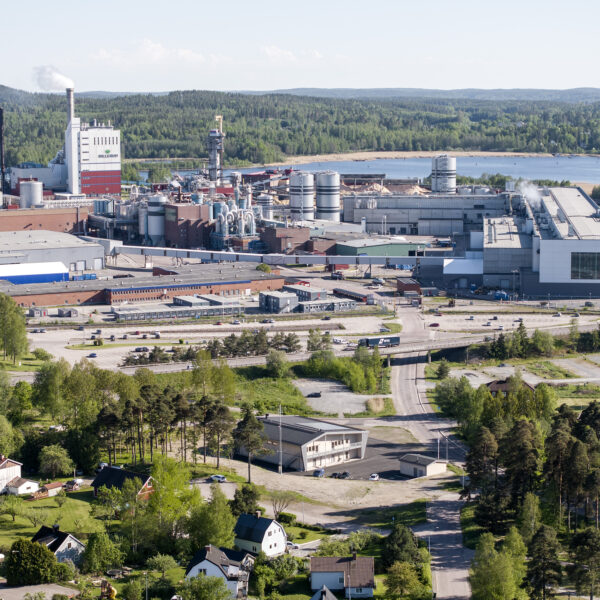
Many of the station’s callouts involve traffic accidents on the E18, incidents at Gruvön’s mill, or emergency operations on Lake Vänern. The existing station is in poor condition, and the new facility will not only improve working conditions for firefighters but also provide a more strategic location for emergency response.
“The new fire station ensures faster response times and creates an attractive workplace,” says Elin Larsson, office manager at Tengbom Karlstad. “Fire and rescue services play a crucial role in society, and this new location enhances safety for the community. We’ve had a great collaboration with Peab, the fire service, and the municipality.”
Safe, visible, and inclusive
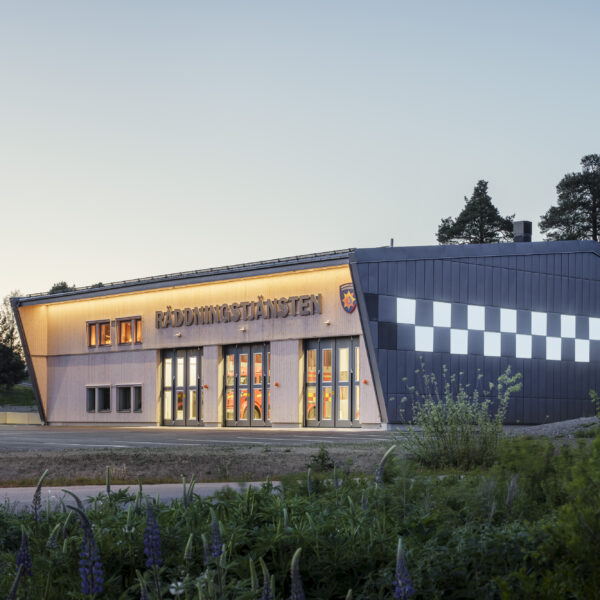
The new fire station is strategically located for quick access to the town center, industrial sites, the E18, and Lake Vänern. Situated along a major route, it will be highly visible. An illuminated gable façade, inspired by the glow of emergency services, enhances its presence. The design prioritizes modern technology, a safe working environment, and inclusivity.
A new location that brings greater safety to the community
Sustainable design with solar power and treated wood
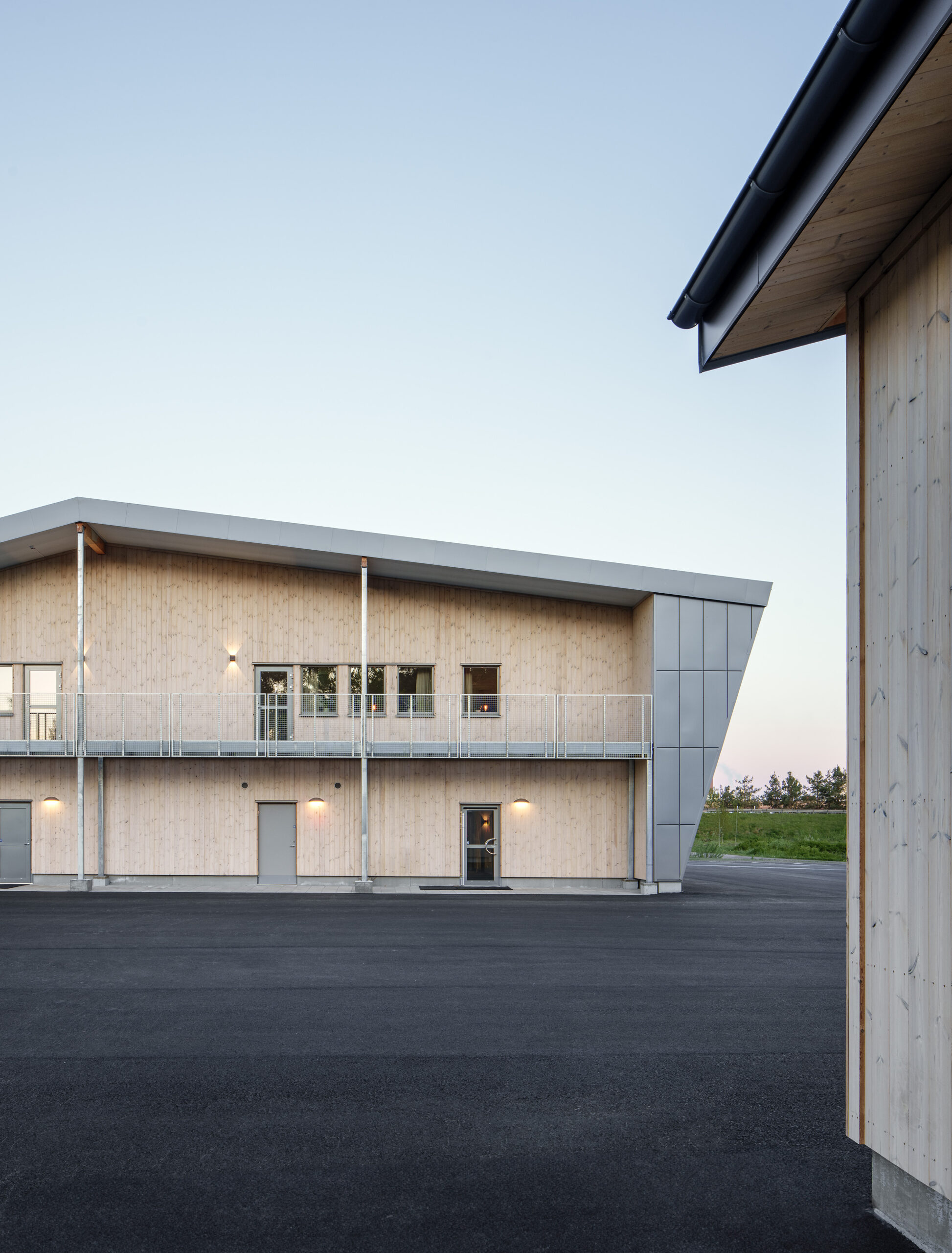
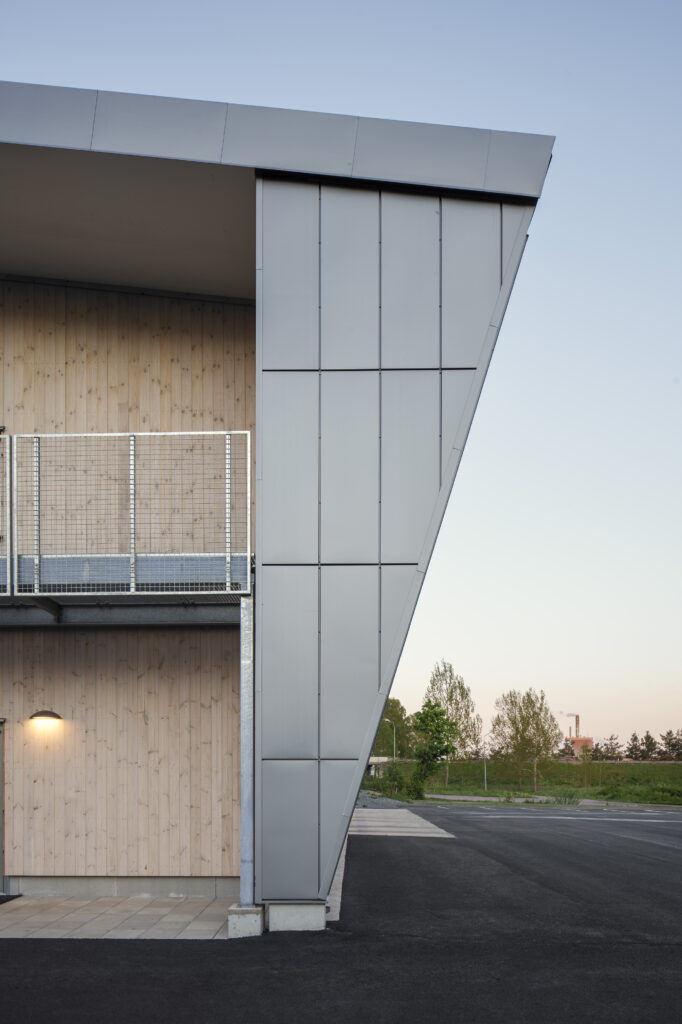
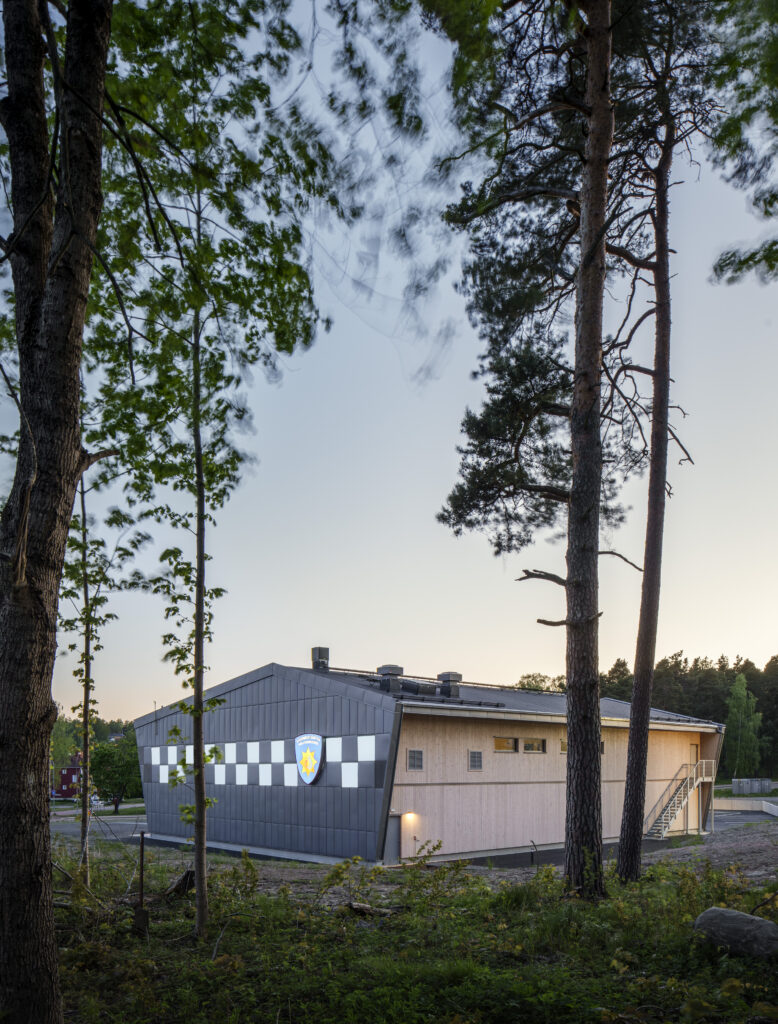
The station’s long side faces southwest, optimising roof space for solar panels. The façade combines heat-treated wood and perforated metal, while the gables are clad in sleek, unadorned metal to create a clean silhouette. Recessed sections of the façade feature warm brown, pigmented heat-treated wood, blending durability with aesthetic appeal.
Most of the roof faces southwest to optimize solar panel installation. The northeast-facing slope holds other technical installations, keeping them less visible from the surroundings.
Both the fire service and the municipality have eagerly awaited the new fire station. The official inauguration took place in February 2024. Full operation will begin in 2025, providing a state-of-the-art home for some of Sweden’s most essential emergency responders.
Client:Riksbyggen, MIdroc, Nordr, Lunds kommun, LKF, LKP
Location:
Margretedal, Lunds kommun
Project years:
2017-ongoing
Assignment:
Parallel mission for the Margretedal quarter
Can the warmth of home life be extended into the streets? Tengbom’s proposal for Margretedal reimagines the urban space — creating entirely new social arenas.
Tengbom and Margretedal go way back. In 1999, we won an architectural competition to transform this former industrial area in Lund into a residential neighbourhood. Nearly 25 years later, the city has evolved, and so have the needs of its residents. Increased traffic on Södra Vägen and an open structure that no longer serves the area mean it’s time for a new approach.
The vision? Bold and compact. Three architecture firms, including Tengbom, joined the challenge of proposing a new structure. The goal was to create central-city living with high residential quality, striking architecture, lush greenery, and a rich cultural environment.
The park houses feature lightweight materials and sit among abundant greenery, creating an experiential and varied urban space. The block remains open while maintaining a sense of enclosure through the surrounding street areas. Hardebergastråket transforms into a scenic promenade that enlivens the neighborhood.
Architecture that fosters new connections
As a city with a constant influx of visitors, Lund demands a strong contextual approach. Our ambition is to create a district with great social qualities — a place that actively encourages encounters between people.
“It’s about finding architecture that solves multiple challenges at once. We don’t want to compete with the old town centre; we want to contribute something with its own identity. A forward-thinking concept that brings added value to the neighbourhood”.
Ulrika Lundquist, Business Developer, Skåne
A street that invites life
Our proposal makes the city more accessible — imagine a lively, green street where paths cross, dogs play, and neighbours stop for a coffee. The urban environment is designed with variety in mind: a vibrant social thoroughfare, intimate alleyways, and private retreats.
The building scale in the alleys and the generous forecourt area create space for spontaneous encounters and interactions among neighbors.
Neighbourhood life, designed for well-being
Developed in close collaboration with Lund Municipality and the developers, our design prioritises quality of life. A mix of housing sizes creates diverse living opportunities, while varied building heights and a carefully designed roofscape enrich the overall experience. Many buildings will also feature private or shared rooftop terraces — perfect for gardening or spontaneous gatherings.
The angled and narrowing alleys reduce noise from the south while creating a comfortable scale and climate within the streets. In the park buildings, private balconies pair with a shared rooftop terrace, keeping outdoor space always within reach.
Harmonious tones of brown and beige define the neighborhood. Shared outdoor areas blend with private residential courtyards, terraces, and individual outdoor spaces.
Accessibility, Building Preservation & Restoration, Culture, Renovation & Transformation
Client:Svenska kyrkan
Location:
Linköping
Assignment years:
Was inaugurated 2019
Construction period:
Monastery house 13th century, Church stable 19th century, storage 2019
Collaboration for exhibition design:
Archaeologist Göran Tagesson
Awards and recognitions:
Nominated for Helgopriset 2023
Some buildings are fortunate enough to enjoy long and eventful lives. Over time, they may change functions, adapting to new needs while retaining their essence. When we developed Vreta Kloster, our aim was to create a vibrant and inviting destination — one that would open up Klosterhuset to all.
At the entrance to Berg’s locks outside Linköping lies Sweden’s first monastery, originally founded as a Benedictine convent. Today, only the ruins and Vreta Kloster Church remain. But there is also Klosterhuset — the former grain storehouse of the nuns. The site has long been a popular destination, drawing visitors for both religious and cultural experiences.
“For historic buildings like this, the key to longevity is meaningful use. When they serve a purpose, they stand a greater chance of being cared for and developed over time,” says Magnus Almung, lead architect at Tengbom.
Revealing Klosterhuset
Upon arrival, visitors are first greeted by the impressive church and its ruins — a natural focal point in the landscape. Behind the towering trees, Klosterhuset was once barely visible. There was no clear approach to the building, and when visitors finally found their way there, they were met with closed doors, unable to experience the beautiful vaulted interiors.
“The goal of the renovation was to enrich Vreta Kloster as a visitor destination with engaging exhibitions—sparking curiosity about the site’s architecture, archaeology, and history, all leading up to a well-earned café break,” Magnus explains.
Now, Klosterhuset is more visible. Carefully pruned trees allow glimpses of the building from the gravel square between the church and Klosterhuset. A winding path leads visitors between the trees and along the building’s long side, guiding them through a newly created opening in the old stone wall, directly opposite the church entrance. At the southern gable, a gravel courtyard connects to the historic stone walls.
We preserved history while making it accessible for the future
Photo: Åke E:son Lindman
Restored with care
Klosterhuset, dating back to the 13th century, was already in good condition. Some minor cracks in the masonry were repaired, and the roof — recently re-laid with traditional wooden shingles—was left untouched. To ensure year-round use, we carefully adapted the building, adding glazed doors within the existing openings.
The four wooden doors on the eastern side, remnants of Sigurd Curman’s early 20th-century restoration, were likely part of the original structure. “To improve the indoor climate, we added slim steel-framed glass doors behind the wooden ones,” Magnus explains.
The challenge was balancing functionality with preservation — enhancing comfort without compromising the historic wooden doors or the building’s unique, atmospheric light.
Thoughtful accessibility
Photo: Åke E:son Lindman
With ground levels already nearly flush with the thresholds, accessibility improvements required minimal intervention. To ensure inclusivity, a reversible modification allowed for step-free entry, and the automatic door mechanism was discreetly embedded in the floor. Meanwhile, the southern hall was designed as a flexible space, suitable for concerts, lectures, confirmation classes, exhibitions, and even a café. Additionally, a discreet wire system along the walls enables flexible lighting and display arrangements.
“With materials and patina this rich, our approach had to be careful—installing heating, lighting, and electrical systems in a way that respected the building’s integrity,” says Magnus.
Hidden technology, visible heritage
The large limestone slabs covering the floors had been loosely laid in sand, making it possible to lift them, conceal wiring beneath, and put them back without damage. In the northern hall, now home to the stone museum, the team carefully leveled the original flooring. In the southern hall, where the floor was more uneven, they added a new layer of limestone. The stone museum also received upgrades, including improved display cases, signage, and lighting.
“We wanted Klosterhuset to be open to visitors during the day,” Magnus adds. “But even when it’s closed, its beauty remains on display. Subtle lighting highlights the interiors, making them visible through the glass doors.”
A glimpse inside
We added an interior glass bay window to the stone museum, allowing visitors to peek inside even when the building is locked. The nearby red-painted stable now serves as a visitor facility with toilets, a preparation kitchen, and staff spaces. A simple serving hatch offers coffee straight into the monastery garden.
Photo: Åke E:son Lindman
The project also introduced a new storage facility for churchyard management near the southern visitor car park. Designed as a traditional agricultural building, it complements the surrounding 19th-century structures. A timber frame supports the structure, while horizontal laminated wood panels create the exterior. Carefully crafted details enhance the façade, corners, and eaves. Painted in Falu red, the building seamlessly blends into its historic setting.
As a result, Klosterhuset reopened to the public in spring 2019 — ready to continue its long and remarkable story.
Awards and recognitions:
Nominated for the Red Paint Award 2020
Photographer:
Sten Jansin
Säby Gård is situated next to Säby lake in western Järvafältet’s nature reserve. The farm is listed, of great historical value and an important destination for visitors in Järfälla municipality. Today, the farm is used as a riding school among other things. For this project, we developed proposals both for a new stable block and a preservation and maintenance plan for the long-term management of the listed monument.
Säby Gård‘s manor house was erected in the 17th century from drawings by Nicodemus Tessin senior. The beautiful farm comprises of two wings from the 17th century as well as outbuildings and warehouses from the 19th century. The manor also features a baroque park with a pond and a tree-lined avenue. The facility houses horse riding stables, a pre-school, a home and a café.
Modern stables with a foot in the past
We planned the project and prepared work descriptions for the restoration of several key areas. The work included the old stables and the factor’s house. As antiquarian consultants, we also guided the replacement of pipes. In addition, we oversaw the restoration of the gallery and the stone portals of the manor house. To support the farm’s future management, we developed a preservation and maintenance plan. This plan covers the entire historical environment.
To preserve but also to develop
We planned the project and prepared work descriptions for the restoration of the old stables and the factor’s house. As antiquarian consultants, we also guided the replacement of pipes and oversaw the restoration of the gallery and stone portals of the manor house. To support future management of the farm, we developed a preservation and maintenance plan for the entire historical environment.
Preserving the historical building in the best way is a complex task. At the same time, developing it to meet today’s requirements and challenges requires both knowledge and experience.
Our project leaders and specialists in building preservation and antiquarian services worked closely throughout the project.
In the new Eddan and Emblan blocks in Linköping, modernism and tradition meet. Together, they form a vibrant neighborhood with a diverse range of housing options for everyone.
Living in the city center is highly sought after – we know this. However, increasing housing supply to match demand can be a challenge. Nevertheless, it is possible to create attractive new homes through smart space utilization, sensitivity to the existing environment, and bold, innovative architectural expressions.
The central location of Eddan gives the neighborhood a modern yet familiar character.
A stone’s throw from Linköping Cathedral and the Garden Society, Tengbom designed the award-winning Eddan and Emblan blocks. The project consists of two interconnected blocks where tradition meets modernism.
Eddan’s eleven floors
The Eddan project began in 2005 when a parking garage was proposed for the last vacant lot in the city center. The solution became a circular building that harmonized with the surrounding architecture. After several years of planning and zoning, the blocks were transferred to the municipally-owned housing company Stångåstaden, and the parking garage was transformed into housing.
Creating residential buildings might seem easier to blend into an existing older environment than a parking garage, but here, the challenge was to achieve a high development density on a limited site. Architect Jan Izikowitz, who has been involved since the project’s inception, recalls how a proposal for a 14-story building faced significant opposition. The final plan allowed for up to eleven stories, approved after workshops and dialogue with neighbors before the formal consultation process.
Stacked volumes provide contrast
Building tall structures in the city center is, as one might expect, a delicate task.
“It is challenging from an urban planning perspective since high-rises stand out and can appear imposing, says Jan Izikowitz. By stacking different volumes, the building creates a smaller-scale, nuanced, and varied impression despite its size compared to the adjacent lower high-rises.”
Brick creates harmony
The taller buildings in the Eddan and Emblan blocks are divided into volumes with proportions similar to the surrounding architecture. The dynamic forms contrast with the more traditional houses nearby, which have classic gabled roofs and plastered facades. At the same time, handmade brick creates a natural connection between the two blocks and the traditional buildings.
“We aimed for different identities: one modernist and one more traditional, with familiar elements. That’s why the beautiful handmade brick is featured in both blocks.”
Jan Izikowitz, architect
Handmade brick establishes a conceptual harmony with the surrounding traditional buildings.
A lively city for everyone
Most ground floors in the blocks feature shops and offices, adding to urban life and expanding Linköping’s city center westward. The project follows high environmental ambitions, guided by Miljöbyggnad Silver standards. Social sustainability was also a key factor. Apartment sizes range from 23 to 150 square meters.
“The hope is that everyone can live here—young and old. People with substantial means, as well as those with less, should feel welcome”, says Jan Izikowitz.
What:
Winning entry in a land allocation competition
Location:
Vaggeryd, Östra Strand
Collaborators:
Landscape architects from MARELD
You stand in the center of the clearing. Pines rise around you like guardians of the sky – between the trunks, sunlight dances across the moss. Here, where the forest meets the hand of humanity, a new residential area will take shape. With the proposal “Between the Trees,” we, together with MARELD and GBJ Bygg, won the land allocation competition for Östra Strand in Vaggeryd.
At the residential courtyard Gläntan in Vaggeryd, community is key, but so is the freedom to choose. Here, you’ll find both private and shared outdoor spaces. Visualization: 3Design
The winning proposal, “Between the Trees,” is rooted in preserving the natural values of the site, creating a coexistence between humans and nature. The vision is a residential environment where the forest is not merely a backdrop but becomes an integral part of everyday life. The winning design consists of four buildings grouped around a shared courtyard with a common house. The buildings – one with four floors, two semi-detached houses, and one row of townhouses – will comprise 33 apartments.
Living in the forest’s embrace
Here, you truly encounter the forest. The buildings almost seem to have sprouted from the ground. Their wooden facades and balconies with sturdy columns reflect the strength and resilience of the trees. Glades are formed between the buildings, where greenery winds its way into the courtyard, becoming part of daily life. Large glass sections blur the boundaries between indoors and outdoors, and the balconies are not just places to rest – they are small gardens in the air. Lift the wooden floor and grow herbs, tomatoes, or berries directly in the balcony’s structure.
The competition team worked on the idea of a living environment where people and animals can coexist, and where the forest’s presence is felt in every detail.
Lift the wooden floor and grow herbs, tomatoes, or berries directly in the balcony’s structure
“Living with the forest doesn’t just mean living near nature but being part of its ecosystem,” says Annelie Drackner, architect at Tengbom in Gothenburg. “Creating architecture that lives with the forest required constant reflection from us: How can we adapt to the forest’s conditions while preserving its integrity?”
Gather in the courtyard house
The heart of the neighborhood is the courtyard “Gläntan,” a place for play, relaxation, and community. Here, children can build forts, jump between stones, and explore small paths. Behind the glazed doors of the courtyard house lies a flexible common space for everything from gardening to birthday parties or crafting on a rainy day.
The landscape architects from Mareld have preserved the existing natural terrain and ecosystems as much as possible. Forest paths connect the neighborhood to the surrounding nature, and the plantings in the clearings are chosen to support biodiversity.
“With the competition theme ‘Living with the Forest,’ we started from the site’s existing values and character, which we want to preserve, let guide, and dictate the terms for the design,” says Åsa Setterby Modeus, project lead landscape architect at Mareld.
The tall pine trunks of the courtyard are echoed in the multi-family building’s courtyard facade, with sturdy wooden posts that, together with wire mesh, create an outer layer on the balconies. Visualization: 3Design
But it’s not just people who will live here. In the forest and on the facades, there are bird and bat houses, insect hotels to protect vital pollinators, and perhaps even buzzing beehives. Here, there is a balance between humans and nature that feels as natural as it is enchanting.
Resilience for climate change
By preserving the existing natural terrain, a foundation is created for established ecosystems to remain in place.
The proposal prioritizes preserving as much of the existing green structure and ecosystems as possible. The mature forest provides natural shade, protection against extreme heat and wind, and slows down stormwater. The buildings are also designed with sustainability in focus. Green roofs on the apartment building, courtyard house, and storage units help manage stormwater and improve the microclimate. Gardens by the semi-detached and row houses provide natural shade and promote biodiversity. The green balconies function both as cultivation spaces and sun protection during hot days.
“We want to build an environment where the sound of the pines is never far away,” explains Annelie. “Using natural materials and knowledge about the site’s life forms, we can create something that feels both harmonious and alive.”
Annelie Drackner
Part of something bigger
The plan is to begin construction in 2026. “Between the Trees” will be part of the larger Östra Strand area. The development will also include a preschool and a shared forest park. This project envisions a future where sustainability, community, and nature go hand in hand.
Description:
A 330-meter-long enclosed volume has been added in front of the current Terminal 5, containing security checkpoints and areas for retail and dining.
With Project Porten, Stockholm Arlanda Airport and Terminal 5 have undergone a transformation. A streamlined security checkpoint, improved wayfinding, a bright and airy atmosphere, and Scandinavian design are key elements of our solution. The most striking addition is a 330-meter-long extension – part of Terminal 5’s new outward-facing facade.
An airport is, in many ways, its own universe. A threshold filled with anticipation. Special transportation brings you there, and perhaps your to-do list includes buying sunscreen or grabbing a pre-flight beer. Stockholm Arlanda Airport is no exception.
The challenge was to make the large, closed facade contribute positively to the public realm—creating something relevant for the site and engaging for visitors arriving by car or bus.At the marketplace at Stockholm Arlanda Airport, both the shopping and dining experiences are thoughtfully designed. It should also be easy for travelers to quickly navigate their way to the gates.
Navigating with precision
We carefully analyzed all the functions and interests present at the site. Passenger flows, security, and shopping impose diverse spatial requirements. Calling Project Porten both an architectural and logistical challenge is no exaggeration.
Thoughtful and harmonious spaces.
Our design approach focused on creating a functional yet aesthetically appealing framework that unifies various areas. We also sought to harmonize with the existing buildings, each reflecting the era of its construction.
Arlanda aims to inspire commerce and connection. Travelers should feel welcomed and inclined to spend time here. Clean, distinct, and curved forms paired with carefully chosen materials convey reliability, warmth, and hospitality.
“In designing the security checkpoint and marketplace, we employed a cohesive palette of white and gray tones, metal, glass, wood, and concrete. Transparency and outward views became integral design features,” says Rebecca Andersson, architect at Tengbom and Project Manager for Arlanda.
The design also considers existing airport buildings, like the 1970s Terminal 5 with its rounded stainless-steel cladding and the glass-clad Passagen with its distinct grid pattern.
Bold yet respectful
Tengbom’s most visible contribution to Terminal 5 is a 330-meter-long extension that houses the security checkpoint alongside retail and dining areas. The new building, a closed rectangular volume, is situated in front of the entrance hall, with its geometric character carried over into the new facade. Dynamic variations are created through light and shadow play on the facade’s panels.
“The main functions, security and marketplace, require facades without windows for security reasons. Daylight, however, was crucial, making this a challenge, but we achieved a great result. The facade exudes an intriguing sense of closure,” Rebecca Andersson explains.
Forms inspired by aviation
“Our goal was to give the facade an aircraft aesthetic – a material and shape reminiscent of airplane wings,” Rebecca explains. The curved aluminum panels are perforated underneath, creating a contrast with the smooth, curved upper surfaces.
Timeless interiors and high security
Inside, the design employs neutral, warm tones referencing past eras, such as birch panels and limestone floors from the airport’s oldest building, constructed in 1976. A continuous, transparent metallic ceiling conveys airiness and lightness. Horizontal elements—typical in airports—are prominent here as well. The result? A timeless design built to endure.
The two previous security checkpoints in Terminal 5 have been consolidated into one modern facility. Key considerations included effective lighting, clear flows, and high navigability. Durable and timeless materials imbue the space with a distinctly Scandinavian character. Architectural elements like columns, floors, and ceilings establish order and rhythm.
“To accommodate future operations and changing needs, flexibility was crucial. The new sections are essentially a platform built for future transformations.”
Rebecca Andersson
Clear and welcoming entrance to the new security checkpoint.
Smart processes for holistic success
Project Porten was complex, requiring clarity in the underlying processes. Collaboration was the golden thread throughout. Adapting to new security standards and other changes demanded robust and communicable concepts.
“Our goal was to find rational architecture that meets stringent functional and security demands while making Arlanda a vibrant 24/7 destination,” Rebecca concludes. “The renovation aimed to enhance travelers’ experiences and provide the best possible start to their journey. The additions strengthen the overall impression for travelers and those who work at or pass through the airport.”




 But there is also


 Horizontal elements—typical in airports—are prominent here as well. The result? A timeless design built to endure.


