Archives

Vortex, Södra Centrum

Urban, sustainable and innovative
Architecture
Housing
Client: SKANSKA
Location: Gothenburg
Project type: Residential area
Commission year: 2015

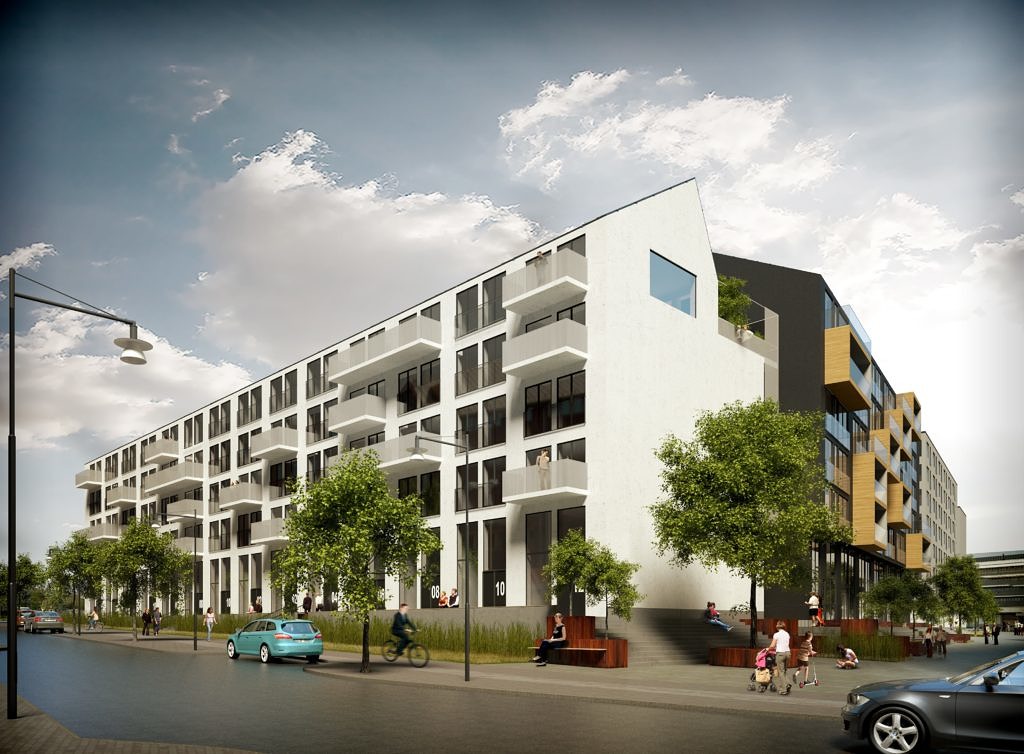
Södra Centrum is an entirely new district currently emerging just outside the centre of Göteborg. We won two architectural competitions in the run-up to the area’s planning, one of which offered the opportunity to design 255 homes for Skanska within the Vortex project.

The new inner-city extension will be characterised by forward-looking, sustainable and urban architecture. An important aspect of shaping Södra Centrum is to create a carefully considered urban environment that links the new district with Göteborg’s city centre.

Illustration: Tengbom

Sharpened expression and conceptual solutions in Vortex

Are you a young adult, without children, wanting to live centrally and close to the pulse of the city? Then Vortex is for you. Here, together with Skanska, we focus on shaping an urban atmosphere with refined expressions, welcoming homes with an innovative character and efficient layouts.

The project comprises 255 space-efficient apartments for young urban residents, featuring challenging material choices and conceptual solutions. Among other things, we developed a specially designed functional wall that runs through the entire dwelling.

Illustration: Tengbom

Making full use of the volume

Most of the apartments here are one- or two-room units. We have worked extensively to maximise the dwellings’ volume, thereby freeing up floor area. The layout principle is streamlined and recurs in all apartments, regardless of size. On street level there are urban duplex units with their own entrance and double ceiling height. Duplex penthouses are also located on the top floor.

No need for your own car

The project also includes an investment in a car-sharing scheme and cargo bikes available for loan – a forward-looking solution that makes it possible to reduce the number of parking spaces in the area. Car-sharing schemes are a remarkable and innovative concept which, over time, can lead to fewer cars and thus reduced environmental impact in our cities.

Curious about more of Tengbom’s residential projects?

Have a look HERE.

Contact person

Kajsa Crona

+46 727 07 79 73

Österåkers gymnasium

A modern 1950s gem
Architecture
Education
Client:
Location: Åkersberga
Developer: Ebab i Stockholm AB
Commission year: 2009-2010
Project type: Upper secondary school

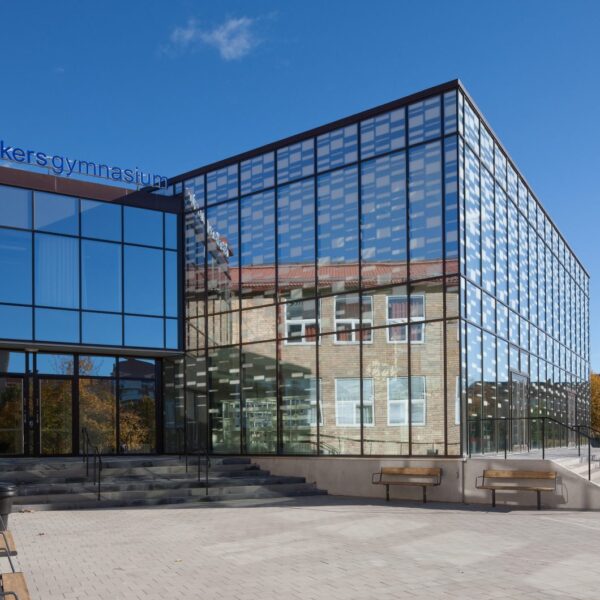
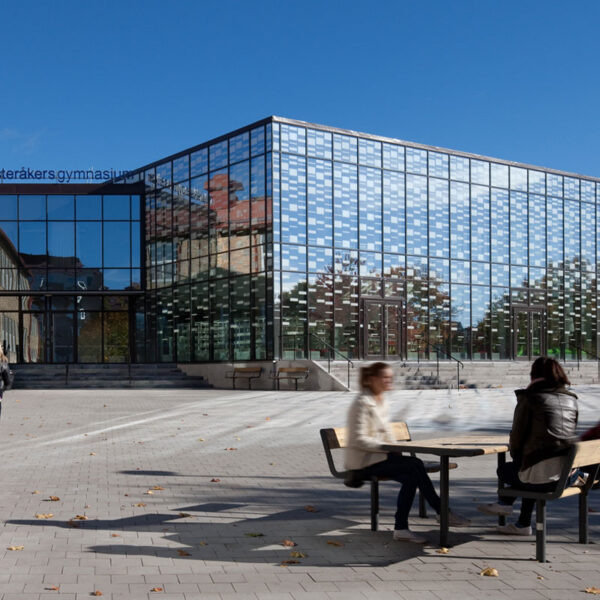
In 2009 we were commissioned to transform the 1950s Berga högstadieskola into a modern upper secondary school. The project involved both refurbishment and extension, carried out in close collaboration between our architects in education, interior design and landscape. Meet: Österåkers gymnasium.

The existing main building had architectural and functional qualities worth preserving. The brick façade was one of them – a period-defining and timeless material. To honour the building’s history and at the same time give the school a contemporary feel, we added modern elements and details. These contrast with the 1950s architecture and bring it into a new light.

Socialising and study in the glass pavilion at Österåkers gymnasium

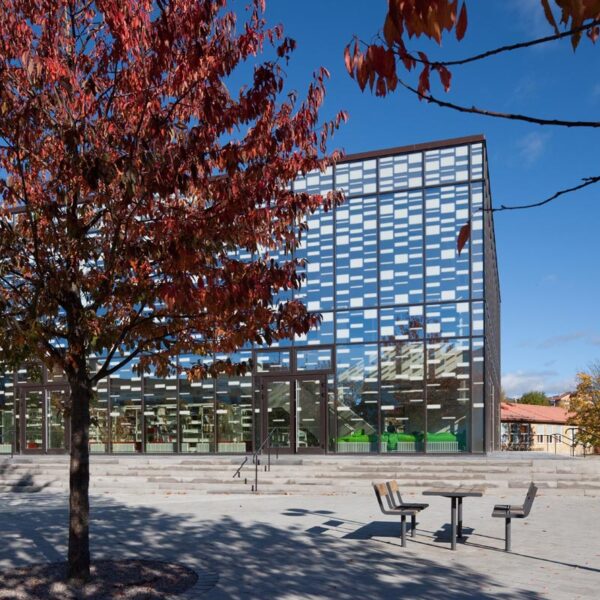
The new heart of the school is an entirely new building containing the media centre, library and cafeteria. We aimed to give students an inspiring and bright environment where they would want both to socialise and to study. The building we designed is a freestanding glass pavilion, where one part of the interior spans two levels, while the other is an open, airy space with a double-height ceiling. Around the building we placed seating areas and created the possibility for an outdoor theatre.

We aimed to give students an inspiring and bright environment where they would want both to socialise and to study

Forward-leaning architecture – an innovative school

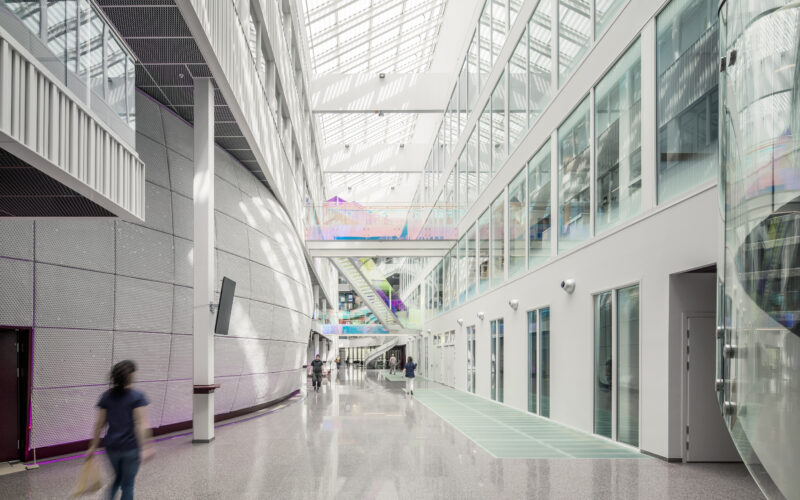
Österåkers gymnasium was selected in 2011 to become a leading school, a so-called Pathfinder School under Microsoft’s innovation programme for schools. According to the school management, the architecture is one of the factors driving the school’s development. Guided by principles such as openness and light, we have developed transparent environments that encourage interaction between both students and teachers.

At Tengbom we have completed an impressive number of schools and educational projects. Feel free to explore our education portfolio for a selection of them!

Contact person

Lina Swanberg

+46 8 412 53 36

Skogskyrkogården staff building, Mönsterås

In fertile pine forest
Architecture, Landscape
Offices, Parks, Play & Public Spaces
Client: Svenska kyrkan
Location: Mönsterås
Year of completion: 2023
Photographer: Felix Gerlach

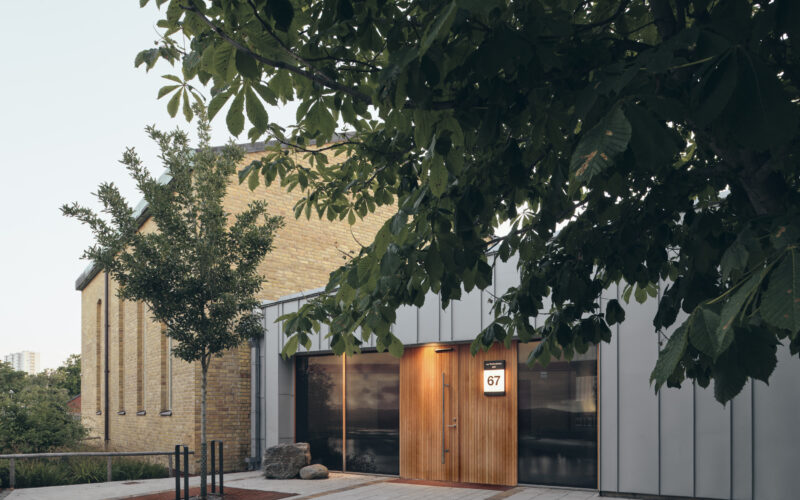
In the quiet pine forest just outside Mönsterås, Skogskyrkogården gained a new staff building — a restrained response to practical needs, shaped in dialogue with the landscape and the chapel’s white silhouette. A place for everyday work, and for calm.

When the old staff building had done its time, Mönsterås-Fliseryd parish seized the opportunity to create a new workplace. At the same time, they wanted to strengthen the overall character of the cemetery. Their goal was to build something modern and functional — yet still in harmony with the surrounding landscape.

The new building is designed as an enclosing volume around a sheltered glade – a robust, light-filled courtyard for the practical aspects of the work. The concrete walls bear the imprint of the timber formwork, a tactile memory of the site. The green roof follows the gentle contours of the ground, allowing the building to merge with the landscape.

Calm for work and mind

Against the backdrop of the pine forest, the small woodland chapel glows white – the main building that, despite its modest scale, commands presence. The new structure accommodates staff facilities, workshop, and storage, as well as a more public section connected to the ceremonial area. Throughout, our architecture is guided by the people who work here – their need for efficient spaces and a safe, pleasant work environment.

The adjacent ceremonial area is a new addition, conceived as a dignified and simple outdoor space for farewells. Here, forest and building meet in a quiet choreography.

“We designed a special screen for the ceremonial area that frames the space and opens towards the tall pines. The gaps in the slats catch the light and let visitors rest their gaze in the forest” explains Amanda Berggren, project landscape architect.

Nature first

Our architects and landscape architects worked closely together throughout the process, united by the intention that the building should reflect the rhythm of the forest – in the vertical rhythm of the timber façades, in the varying heights of the surrounding treetops, and in the interplay of light and shadow.

The glade, the upward-reaching, warmly greying pines, the softly undulating terrain, the heather, the bilberry undergrowth

“The untouched nature is powerfully present and provides a meditative, peaceful backdrop” says Johan. Around the entrances, visitors encounter a clear yet understated design. Shrubs and ground cover plants reinforce the character of the site without disturbing its tranquillity. The inner courtyard has a more functional and pared-back character.

Practical and dignified

With the new staff building, Skogskyrkogården in Mönsterås has gained an addition that embodies the essence of the place. It now offers both a space for work and a setting for ceremony – the practical and the dignified, united in one context.

In 2024, the building received the Mönsterås Timber Architecture Prize. The award highlights the importance of creating architecture that cares. Not just for the natural environment, but also for the people who use it. Ultimately, it’s a recognition of thoughtful design.

Contact person

Elin Lönnbom

+46 708 79 99 12

Water tower

Thought exercise
Architecture
Industry
Client: NSVA
Location: Helsingborg
Developer: NSVA, City of Helsingborg
Commission year: 2016

Designing a water tower is among the more uncommon tasks for architects. It was therefore a distinctive assignment to prepare a proposal for Helsingborg’s expanded water supply. The result is a landmark that is at once monumental and subtle.

We do not design water towers every day. That is to say, not nowadays. When Patrik Ekenhill and his colleagues began working on the contribution to a parallel commission for Helsingborg’s new facility, they dug a little into the past. It turned out that Ivar Tengbom, around a hundred years ago, appears to have been something of a market leader in precisely this building type. Constructions of that era differ from the towers we have become accustomed to seeing in today’s cityscape. Before the functionalist mushroom profile made its entrance, water towers were generally square brick structures. One example is Ivar’s water tower in Sundbyberg, which to our eyes resembles a small fortress.

It turned out that Ivar Tengbom, around a hundred years ago, appears to have been something of a market leader in precisely this building type.

Looking back for balance

The team found inspiration in these older towers with their staircases and internal voids, even though the resulting form is radically different.

“The idea began to appeal to us, as we identified a major challenge in balancing the water reservoirs. According to the programme requirements, the new water tower would in fact contain a greater total water volume in the two low-level reservoirs than in the high-level reservoir. Yet the client still wanted a tower. That is where our idea was born: through a coherent and efficient facility, we could combine them into a single volume, loosely following this older principle,” explains Patrik Ekenhill.

The siting of the tower was also a challenge. The landscape is distinctive — a field bordered by a major road on one side and a nature reserve and apple orchards on the others.

The new water tower (right) in relation to the old ones (left).

“It creates a clear niche, a spatial room along the road. By placing it centrally in the middle of the field, we established a sense of monumentality while maintaining sensitivity towards the adjacent farmland. It also reinforces the impression of a freely placed landmark as an independent object, one of the typical characteristics of water towers,” he continues.

Flowing form

A water tower differs fundamentally from a residential or office building.

“We received very concrete input on the technical aspects. We chose to work with cylindrical tanks, but we wanted to wrap them in a contemporary envelope and create an atmosphere of something delicate and open,” says Patrik.

With perforated, shiny stainless steel sheeting, the tower gains a reflective surface that shifts with the weather. For inspiration for the form, we went to the source itself: the water.

“It is incredibly complex and multifaceted. The water reservoirs at the base form a triangle, while the high-level reservoir is a circle at the top. By following these geometries with the external skin, the outer form generated a transformative twist. The twist conveys a sense of dynamism and a gentle rotational experience — a dialogue between both traffic movements and the water flows within the reservoirs.”

Thanks to its twisted form, the tower changes character as one walks around it or approaches from different directions along the road.

Homely

A classic formal device, also seen for example in vases, notes Patrik Ekenhill. And the water tower sits a little like a vase on the yellow field. Grain is grown there, though the architects would gladly see it become a field of sunflowers. Owing to its twisted form, the tower changes appearance as one moves around it, or approaches from various directions. The tower is also illuminated from within, and in the evening becomes something of a gentle lampshade, possibly making passers-by long for the warmth of home and a glass of clean water.

Contact person

Josefin Klein

+46 40 641 31 18

Trygg-Hansa-huset

Brutalist stronghold
Architecture, Cultural Heritage
Offices, Renovation & Transformation
Years of Construction: 1972–1977
Architects: Anders Tengbom och Stefan Salamon
Landscape architect: Holger Blom

Brutalist, large-scale and uncompromising. Between 1972 and 1977, Trygg-Hansa-huset took shape on Fleminggatan. Anders Tengbom and Stefan Salamon designed one of Sweden’s foremost Brutalist buildings – a structure that has shaped both the cityscape and architectural debate.

Trygg-hansa-huset
The ETG Group: from left, Anders Tengbom, Léonie Geisendorf and Ralph Erskine.

Stockholm was in the midst of an urban transformation when Trygg-Hansa-huset emerged. The redevelopment of Norrmalm had redrawn the city’s skyline, and the office landscape was undergoing fundamental change. Anders Tengbom, son of the renowned architect Ivar Tengbom (founder of Tengbom), had already designed iconic buildings such as Svenska Dagbladet’s headquarters and Hötorgsskrapa no. 2. With Trygg-Hansa, he gained another opportunity to explore contemporary ideals – this time through an office complex that challenged established conventions.

A new view of the office with Trygg-Hansa-huset

Trygg-Hansa-huset broke with the traditional office format and became a forerunner in workplace design. Here, Tengbom developed an early version of what would later be known as the “combi office” – a hybrid between cellular offices and open-plan environments. Instead of relying solely on either small individual rooms or expansive open floors, he created flexible layouts where employees could move between private workspaces and shared social zones.

It is no coincidence that the Trygg-Hansa building is today given a blue classification by the Stockholm City Museum

Brutal and poetic at once

The building’s expression is as strict as it is poetic. The long, eight-storey brick volume stretches along Fleminggatan, giving the building a massive yet finely articulated presence in the cityscape. In contrast to the compact brick façade, a glass building in the northeast, shaped as three hexagons, and a low pavilion in the southeast complete the composition.

Between the three volumes lies a park – a green lung at the heart of the office complex. Behind its design was none other than the legendary city gardener Holger Blom.

Trygg-Hansa-huset

That the building’s forms and functions were considered down to the smallest detail is evident in its artistic decoration. Sculptures, reliefs and details were integrated into both the interior and exterior. Much of the artwork remains in its original condition and continues to be part of the building’s identity.

Protected yet questioned

Trygg-Hansa-huset has the highest cultural-historical classification granted by the Stockholm City Museum, the blue classification. The building’s architectural and societal value is considered comparable to listed buildings under the Cultural Environment Act.

But as is often the case when a city changes, Trygg-Hansa-huset has been part of discussions about redevelopment and densification. Proposals to transform the block have sparked valuable debates on how Brutalist architecture can be preserved and adapted for the future.

Brutalism today

Brutalism is an architectural style that often provokes strong feelings, and it was never meant to be restrained. It is uncompromising, honest and monumental. Trygg-Hansa-huset is one of Stockholm’s most prominent examples of this movement and demonstrates how architecture can be both rational and grand at the same time.

Today, the building remains a reminder of a period when Swedish architects dared to think in new ways – when the honesty of materials and the function of spaces guided the design. And perhaps that is why it continues to fascinate – a brick-clad time capsule in a constantly changing city.

Trygg-Hansa-huset

Contact person

Josefin Larsson

+46 72 183 02 34

Oasen

Where the hospital meets the city
Landscape
Health, Parks, Play & Public Spaces, Squares & Streets
Client: Skåne Region
Location: Malmö
Completed: 2019
Project Type: Landscape
Photographer: Nille Leander

Oasen is part of the new hospital district in Malmö, NSM, where Tengbom has designed both an entrance square and reshaped a culturally significant park. The green park environment is located in the northeastern corner of the area and is connected by a beautiful old avenue of linden trees. From concept sketch to completion, we have been involved from the outset, and the visions for both places are now a reality.

An old wall that once enclosed parts of the area has been demolished, creating light and a visual link to the city. This is particularly evident at the intersection of Södra Förstadsgatan–Carl Gustavs väg, where the new healthcare centre facing the entrance square is located. Large flows of buses and cars pass constantly, as do pedestrians and cyclists who move through and around the area. The space in front of the healthcare centre at the hospital district in Malmö offers rest and calm, with newly planted pear trees, refined ground grilles, and bicycle bollards in a geometric pattern. The new pear trees have been provided with a drained and aerated planting bed to give them optimal conditions for establishment and growth.

Trees as a connecting theme in the hospital district in Malmö

Large existing trees have been essential to preserve and have formed the basis for the design of the projects. The trees are old, tall, and contribute much-needed greenery and pleasant shade. Both the square and the park are intended to offer patients and staff restorative experiences beneath the tree canopies. Tengbom has worked deliberately with evidence-based design that emphasises the importance of greenery for patient recovery as well as for staff wellbeing and recuperation. The trees have therefore been the first priority.

Part of the city

The goal is to make the hospital district in Malmö feel like a natural and welcoming part of the city. A diagonal gravel path cuts through the heritage-protected park. Meanwhile, low granite walls in varying heights frame the green spaces. By lifting the planted areas, we raise their status and reduce wear. As a bonus, the surrounding walls also work as seating. In the southern part of the park, two large bicycle buildings with varied timber façades now stand. Most importantly, they meet the staff’s wish for safe bike parking in this busy area.

Green spaces across Malmö’s hospital district have now been carefully restored. Newly planted trees, shrubs and perennials bring visual richness to the area. Near the old main building, classic pairings like roses and lavender create a familiar yet refined atmosphere. Three older sculptures — two of them once part of the park — have also found new, thoughtfully chosen homes. Each one engages with water, through gently trickling fountains or still reflecting pools. Framed by fresh plantings, they create a quiet dialogue between past and present.

“In the Oasen project, we focused on a careful and sustainable design in an existing setting,” says Malin Ingemarsdotter Jönsson, former lead landscape architect. “Clear guidelines shaped how we handled the spaces between buildings and outdoor areas. These documents had a strong influence on our design. We also had to plan for complex logistics – above ground and below. With culverts, utility lines and everyday movement through the area.”

Consideration for logistics – core business

Art creates encounters

The project also involved relocating a large existing artwork, GAP. We found a natural new site in the southwestern part of the hospital district, beside a main pathway lined with large plane trees. Today, the sculpture stands on a granite terrace. It has already become a place for both encounters and quiet reflection.

Contact person

Josefin Klein

+46 40 641 31 18

Magasinen

A natural gathering place in Jönköping
Architecture
Retail
Client: Tolust AB
Year of commission: 2009–2010
Location: Central Jönköping
Project Type: Restaurant, café, design shops, services
Photographer: Sten Jansin

Bauers brygga in Jönköping faces south and has become a favourite spot for many residents. The journey started with an early urban design proposal, continued with a winning competition entry, and led to a long-awaited realisation in 2009. Together with our client Tolust AB, we brought the vision to life. This is Magasinen.

At last, the eastern city centre reconnected with the water. As a result, the warehouses transformed into a new commercial block and created a natural setting for people to meet. After completion, the project received the City Planning Prize in 2010.

Today, the three warehouses are an integral part of Jönköping for shopping and social life. It now seems almost impossible that this area was not always full of people. The three buildings stand in a row along the northern Munksjökajen, offering southern exposure for those who wish to enjoy the sun or have a coffee on the timber deck outside.

Cedar cladding and the reuse of stormwater

The narrow strip of development draws inspiration from the historical wooden buildings that once stood along this shoreline. An atmosphere we have preserved in the three Tengbom-designed warehouse buildings. They are clad in cedar panels with large glazed sections and a plinth floor in polished black granite. Green roofs filter stormwater slowly on its way out into Lake Munksjön.

Trade in the front row of central Jönköping

The warehouse buildings form the link between the eastern city centre and the water. Our challenge was to provide welcoming and transparent façades in all directions to unify the district and attract people to gather. A challenge we believe was truly successful. The commercial activities housed in the buildings today enjoy an inviting environment on Jönköping’s front row. This is a hallmark project in which the building materials, the programme, and the interactions between people embody resilience and long-term quality.

Magasinen also received the City Planning Prize in 2010. The motivation reads: “This newly built part of Jönköping’s city centre contributes in an excellent way to a high-quality living environment in Jönköping.”

Contact person

Matt Patterson

+46 36 440 90 81

Lilla servicehuset på kyrkogården

An architectural gem for every need
Architecture, Cultural Heritage
Culture
Client: Svenska kyrkan, Kalmar pastorat
Location: Kalmar
Collaborators: WSP
Area: 30 sqm
Year of commission: 2020
Photographer: Jonas Lindström Studio

The small service building at the northern cemetery in Kalmar accommodates an information board, a toilet, and gardening tools for the graves. It is also climate-smart and employs a form language and materials that harmonise with the surroundings. A particularly fine example of careful, functional architecture within a sensitive setting.

Cemeteries possess a special atmosphere that many renowned architects have approached with reverence throughout history. When something is to be built on such sensitive ground, it requires instinct and attentiveness. This applies whether the intention is to erect a chapel with world-heritage potential or, in this context, a perhaps more worldly but nonetheless essential toilet.

A discreet guide with the small service building

Tengbom was commissioned by Kalmar pastorat to design a service building for the northern burial ground. The result is an outwardly modest structure in brick and timber that accommodates several functions. In addition to the mentioned WC, it includes an information board, a storage area for gardening tools, and a space for tending plants brought to the graves. Positioned at one of the cemetery’s entrances, it is intended to act as a gathering point towards and from which visitors can orient themselves. With its sharp angles it remains clearly visible in the landscape, while the colours and materials correspond both with the natural surroundings and the adjacent buildings.

“Much of the answer to how this building should be shaped is already found in the environment and in the existing structures. The interesting part is how it relates to its context,” says lead architect Johan Kjellnäs. Johan completed the project in collaboration with landscape architects.

Context with quality

Much of the architectural expression takes its cue from the recently extended crematorium. Timber and vertical slats play a key role there — elements that also define the service building. The rendered brick at the centre of the building reflects a nearby staff facility. Meanwhile, the colour palette draws directly from the surrounding pine forest.

“The most enjoyable aspect is simply being able to work in this environment at all. Both older and newer buildings are of high quality. We applied a long-term perspective to all buildings here,” says a visibly enthusiastic Johan Kjellnäs.

Energy from above

The solar panels on the sloping metal roof, which power the electricity in the small service building and also manage any surplus, are another example of long-term and sustainable thinking. The plan is for the entire pastorate to use the building as a model for constructing several similar facilities. It has been noted that many refrain from visiting cemeteries precisely because of the common lack of a toilet. This is now one concern fewer for visitors to the northern cemetery in Kalmar. And, they also have something beautiful to look at should there be a queue.

Contact person

Elin Lönnbom

+46 708 79 99 12

Lund Cathedral

Timelessness in a new guise
Architecture, Cultural Heritage
Building Preservation & Restoration, Culture
Client: Svenska kyrkan
Location: Lund
Completion: 2023
Collaborators: Building contractor: Thage, project management: Mound Consulting, structural engineer: Restaurera
Awards and nominations: Nomination for the Helgo Prize 2023, winner of Årets bygge 2024

With new roofing sheets and extensive masonry repair, Lund Cathedral regained its characteristic tower caps. After a year of work on the ground, both towers were lifted back into place – in a new, more climate-friendly guise. The restoration was nominated for the Helgo Prize 2023.

Photo: Gunnar Menander

When one of the Nordic region’s most visited landmarks required restoration, there were no shortcuts. The work moved in the borderland between tradition and renewal, where every decision was weighed against both history and sustainability. The result is a piece of craftsmanship executed with precision and long-term durability.

The legacy of Helgo

The restoration honours Helgo Zettervall’s architectural design and the appearance of the tower roofs – even though the lead sheet has now been replaced with a more environmentally conscious tin-coated stainless steel. Yes, Helgo as in the Helgo Prize. In the 19th century, Zettervall carried out an extensive renovation of the cathedral. The Helgo Prize is awarded by the Swedish National Property Board to particularly meritorious restoration projects, and in 1996 Erik Wikerstål of Tengbom received the prize for Alnarp’s barn.

During Zettervall’s restoration in 1860–80, the cathedral’s two towers and west front were rebuilt. The towers were demolished and reconstructed in a form that he believed could have been possible already in the 12th century. The roof structure consisted of steel profiles, pine planks, and three-metre-long cast lead sheets.

Tower roofs in need of renewed care

Problems with the lead sheets arose as early as the beginning of the 20th century. They were large, heavy, and poorly joined. The roofs took in water and needed re-laying – but the new sheets were also too large for the steep roof. Over time, cracks, leaks, rot damage, and rust appeared in the parapet’s embedded iron bars.

After just over 100 years, the tower roofs urgently required new metal cladding and extensive masonry repairs. Lead is also a toxic material that can contaminate water, soil, and air.

“The Cathedral Chapter wanted to do what was necessary to protect our environment for future generations,” says Erik. Purifying the runoff water from Lund Cathedral’s roof would have required a facility whose size and operation were deemed unrealistic.

Traditional in appearance – improved environmentally

Lead has been used as a roofing material since the Middle Ages – beneath the cathedral floor, lead residues have been found showing that the church had a lead roof even before the fire of 1234. To preserve the traditional appearance, a sheet metal resembling lead was therefore chosen, but one far better from an environmental perspective.

The tin-coated stainless steel (Terne-coated Stainless Steel) oxidises and develops a surface that, once aged, resembles lead sheet. Tin-coated sheet metal also has a long historical tradition, similar to galvanised iron plate.

The Cathedral Chapter wanted to do what was necessary to protect our environment for future generations.

Lund Cathedral now with new spires

In March 2022, the two tower roofs were lifted down and placed within a tent structure north of the cathedral. The new cladding was executed with standing seam sheet metal, following the dimensions and seams of traditional lead roofing.

“The finials, or spires, of the tower caps were made from a lead-clad timber and steel construction and were in such poor condition that they had to be newly fabricated,” says Erik.

Photo: Gunnar Menander

The old finials were scanned and exact replicas were produced in sand-cast aluminium – a material that ages in harmony with the tin surface. At the same time, Zettervall’s inner masonry sections in the parapets were chiselled out and replaced with hard-fired brick in cement mortar. The parapet’s natural-stone cornice received new anchoring with stainless-steel clamps, and the tower caps’ rust-damaged fixings were replaced with 52 stainless-steel threaded rods per tower. All were cast into a new concrete structure clad with reused, hand-moulded yellow brick.

The cathedral’s remaining roof surfaces are, for the time being, sealed with wax and nanotechnology while awaiting future re-laying. Lund Cathedral is filled with visitors every day of the year. Well worth a visit to admire these iconic spires.

Photo: Erik Wikerstål

Contact person

Erik Wikerstål

+46 42 19 48 56

K1 Riding Hall

Kavallerikasern in Falu red
Architecture
Culture, Sports & Health
Client: Fortifikationsverket
Years: 2012–2014
Location: Riding hall
Photographer: Sten Jansin

In 2014, Fortifikationsverket’s new riding hall, K1 Ridhus (Kavallerikasern 1), was inaugurated. Later the same year, the project received Fortifikationsverket’s own architecture award. In the Falu-red timber building – the result of a winning architectural competition held under intense competition – symmetry is a deliberate strategy that relates to the listed military buildings surrounding it.

Today, the Life Guards, the Mounted Royal Guard and the Police Mounted Unit use Kavallerikasern 1 for training and education. They also host public demonstrations and competitions on the grounds. We took on the roles of both design architect and general consultant during the project planning.

A symmetrical architectural language in the gates, horizontal window bands and roof lanterns lends the building a distinctly military character – order and clarity.

Modern barn with a symmetrical concept

The 105-metre-long riding hall contrasts with the surrounding brick buildings through its Falu-red timber façade, evoking a modern barn. Yet a symmetrical architectural language in the gates, horizontal window bands and roof lanterns gives the building a military identity – order and clarity.

“Our idea was to create a riding hall that is both functional and well attuned to its culturally and historically significant setting. The design concept is a symmetry axis that runs through the entrance gate of the main building and cuts across the parade ground. A fitting approach for a military building,” says Jan Izikowitz, lead architect at Tengbom.

Inside K1 there is seating for 750 spectators. The space is bright and airy, thanks to a slender roof-truss structure with large glazed sections that admit daylight without dazzling either horses or riders. The interior surfaces are clad in stained birch plywood.

“Elegant adaptation and high-quality coherence”

Every three years, Fortifikationsverket presents its architecture award to promote military building traditions and inspire high-quality design in defence properties. For the 2014 ceremony, the jury nominated three projects — and K1 claimed first prize.

The jury’s motivation included the following. “The building is awarded Fortifikationsverket’s Architecture Prize 2014 for its elegant adaptation to both the National City Park and the barracks environment, and for a high-quality coherence in which the contemporary exterior is carried through into the interior.”

Contact person

Kajsa Crona

+46 727 07 79 73