Archives

Partille Arena

An arena for everyone
Architecture
Sports & Health
Client: Partillebo
Location: Partille
Years of Commission: 2010–2016
Type of project: Multi-use Arena
Competences: Culture, Sports, Interior Design, Display manual
Photography: Felix Gerlach

How do we create a functional and welcoming meeting place for everyone in the city? “With an arena,” came the reply from Partille Municipality. While this answer might surprise some people, it is actually a completely natural consequence of today’s desire to spend time around culture, sports and other types of entertainment. With Partille Arena, residents have been given a meeting place that is open from early in the morning until late in the evening.

Partille Arena
Photographer: Felix Gerlach

The exciting thing about this city is that it is constantly evolving and changing. And so does our need for meeting places. A long time ago, we might have met in church every Sunday. Where do we meet and spend time together today? One answer to that question is arenas.

For Partille Municipality, it was important to offer residents places to meet. The arena is one way to achieve it. Not only does it contain event spaces, it will also serve as the hub of a brand new city district that is currently emerging.

Partille Arena
Photographer: Felix Gerlach

Function and logistics are important when large numbers of people come together

Of course, an arena does not just spring up overnight. Careful analysis and research work are prerequisites for both form and content here. Proximity to the motorway and major logistical challenges form the basis for the building design and structure; it features a closed end towards the road but opens into the city. And “open” was indeed the watchword during this project, with large spaces and lots of glass to facilitate encounters and attract people into the building while maintaining a connection with the city and with life outside.

Several public features such as restaurants, cafes, offices, and a gym on the top floor mean the stadium can be open from early morning to late evening. And, even on days when there are no major events taking place.

“I have designed many venues. One of the major challenges is always to pair logistic functionality with an amazing visitor experience. There is so much that has to come together, both inside and outside the building. And the arena must be able to function in one way at events and in another in everyday life,” says Christer Blomqvist.

Photographer: Felix Gerlach

Accessible and welcoming to all

Photographer: Felix Gerlach

The idea was, together with the municipality, to help create a building that works for all audiences. The flexible Arena venue is home to everything from sports to concerts and theatre productions.

“Since the idea was to create a meeting place for the residents of the city, it was important that everyone feel welcome. We worked hard to make the building accessible and gathered the various features around a central foyer that also serves as the entrance. We were especially pleased with that part. 3,500 people pass through here every day. It is the heart of the building.”

We worked hard to make the building accessible.

Opening up new opportunities

It can hardly have escaped anyone’s notice that there have been many arenas built in Sweden over the past few years. And the pendulum of fashion has swung from the closed, sealed buildings that were popular in the seventies, to open spaces with an inclusive feeling. Now the goal is to advertise content and attract people to come closer. If you take a look at Partille Arena, you can see that it works. The residents embrace the new addition. Regardless of whether they are coming for a morning Pilates class before work or for a dose of Shakespeare after dinner.

Contact person

Josefin Klein

Practice Director Skåne
+46 40 641 31 18

Technology and Health

Where ideas ignite
Technology and Health
Architecture
Education, Health, Life Science
Client: TKV (SveaNor Fastigheter & Hemsö)
Location: Huddinge
Years of Commission: 2012–2016
Contractor: Veidekke/arcona
Area: 22 000 sqm
Competences: Health and Life Science, Education, BIM, ArchTech & Future

Can we change the world by bringing people together? Of course we can. The Technology and Health building in Flemingsberg was built with that very ambition in mind. This is where scientists and students from several universities meet to exchange experiences and knowledge. They are also in close proximity to the University Hospital and Karolinska Institute. One step closer to better health for us all.

Technology and Health_Tengbom
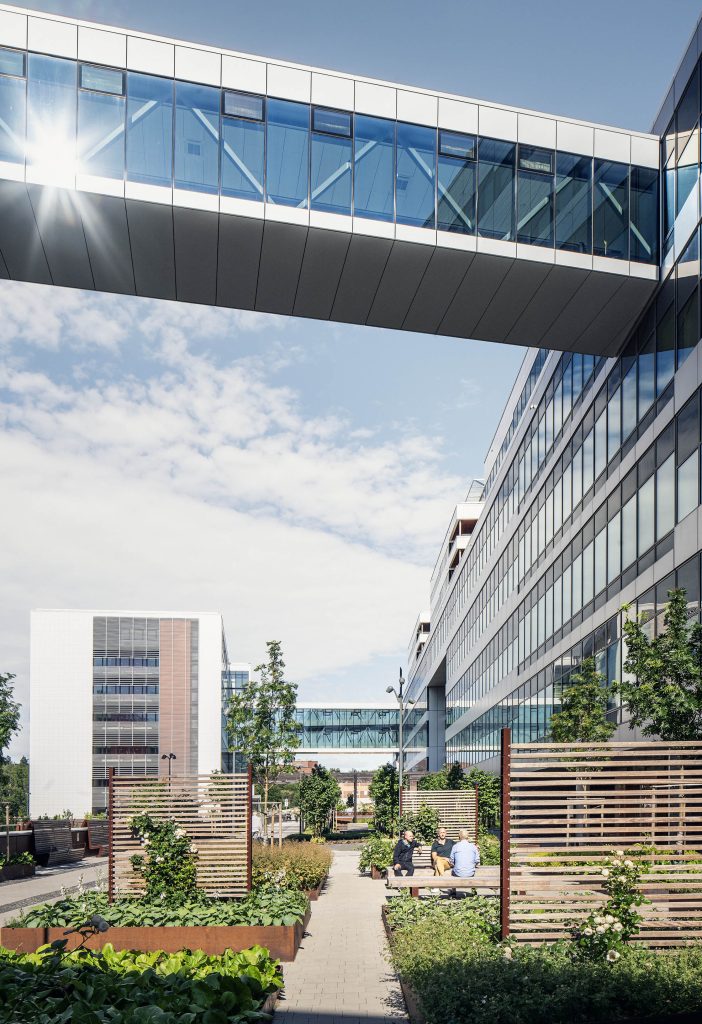
Photographer: Felix Gerlach

We all want to have good neighbours, and to be one – both at home and in the workplace. But how do you create a building that facilitates human connections as much as possible? That’s the question we asked ourselves when starting our work on Technology and Health (TAH) in Flemingsberg. Here, the KTH School of Technology and Health will mingle with Karolinska Institute, Camst (The Center for Advanced Medical Simulation and Training), the Red Cross University College and its nursing programme. It is all part of a bigger project, a centre for Life Science in conjunction with the University Hospital in Huddinge. The idea is to meet and learn from each other – in an environment that does its best to help.

Technology and Health_Tengbom
Photographer: Felix Gerlach

Technology from the outside in

The Technology and Health building, which is the first of two in the new centre, is located on top next to the university hospital. The location encourages encounters and serves as the perfect starting point for the appearance of the building.

“We wanted to work with something that felt modern in the exterior and had an ease of expression, contrasting with the heavy hospital building on the side,” says Anna Morén Sahlin, one of the architects responsible for the project.

“So, we went with the metaphor that the outside is technology and the inside is health; so the outside is minimalist, made of aluminium and glass, while the interior features accent colours, plus wood and natural light,” says Krister Bjurström, another architect on the project.

Technology and Health_Tengbom
Photographer: Felix Gerlach

Watchword: encounters

No doubt it was a huge project. The TAH building measures in at 22,000 square metres, and its neighbour NEO, which will be inaugurated next year, boasts 26,000 square metres (the latter will house the researchers from the Karolinska Institute). Between the two buildings is a plaza that serves as a meeting place and common main entrance.

The TAH building has everything that is needed for a functioning university environment. Lecture rooms, reception, custodian, a lunchroom, clubroom, staff room and two large auditoriums, specially adapted for the various needs of KTH and the Red Cross. Plus, there are more exotic elements, like rooms where students can operate on lifelike dolls and a research apartment in which the home environment is under the microscope.

Technology and Health_Tengbom
Photographer: Felix Gerlach

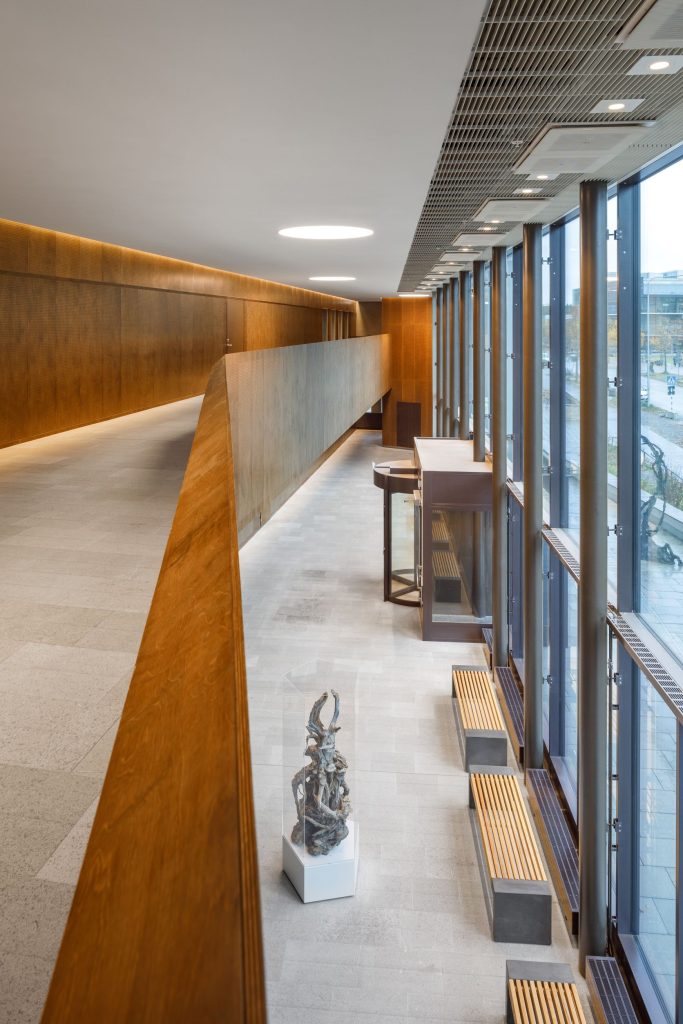
The interior was inspired by the notion of a city or town. You should be able to meet in the avenues and alleys. There will be many small intersections and corners where you can hang out.

Technology and Health_Tengbom
Photographer: Felix Gerlach

“In addition to working with the ‘technology/health’ pair, we worked with ‘meetings’ as a key word. The interior was inspired by the notion of a city or town. You should be able to meet in the avenues and alleys. There will be many small intersections and corners where you can hang out. We tried to create vibrant atrium,” Anna says Morén Sahlin.

Technology and Health
Photographer: Felix Gerlach

Defines Huddinge as a Life Science hub

TAH was inaugurated in October 2016, with students, teachers and researchers already flooding in – and hanging out along the streets and boulevards just as was envisioned. Might this lead to a completely unique approach to both health and technology in the future?

“This project brings together a wide range of activities. It also creates opportunities for crossover encounters between different educational programs and research,” says Krister Bjurström. “Even more impressive is how it has attracted businesses to Huddinge. Many of them were previously based in the city center.”

Awards and Recognitions

TAH received a nomination for the Huddinge Urban Design Prize in 2017.

Contact person

Mark Humphreys

Practice Director Stockholm
+46 8 412 53 43

Skarpåkersskolan

Flexible learning environment inspired by nature
Skarpåkersskolan Tengbom 2014
Architecture, Interior Design
Education
Client: Krambo
Location: Kramfors
Years of commission: 2011–2014
Competences: Education, Interior Design, Accessibility

At the foot of Skuleberget’s steep cliff sides of almost three hundred meters, to the west of the Ångerman river, is Kramfors. In this town, we designed Skarpåkersskolan – a school, inspired by the dramatic landscape of the region. The local enthusiasm for the new school has turned it into a central meeting place for the area.

Forestry and modern architecture in the shadows of Skuleberget

Kramfors breathes the dramatic presence of Skuleberget. Its striking silhouette, the rich colours of the landscape, the surrounding pine forests, and the mysterious caves have inspired myths and stories for centuries. The town carries a deep connection to the sawmill industry. It takes its name from Christopher Kramm, who founded the area’s first sawmill in the 1700s. Wood craftsmanship remains a source of pride for Kramfors’ 6,000 residents. Since 2007, the town has entered a new era of construction, its first major development since the mid-20th century. Today, modern architecture stands side by side with its industrial heritage, shaping a new chapter in Kramfors’ story.

Skarpåkersskolan Tengbom 2014
Photo: Torbjörn Bergkvist

Creative collaboration with enthusiastic Krambo

In 2011, the municipal housing company Krambo Bostads AB gave us the task of designing a new school for years K-3 in the area of Skarpåkern, with twice the capacity of the outdated primary school from 1972. The local council wanted to create an attractive school and were inspired by our vision of flexibility and design inspired by the dramatic forest all around. In September 2014, Skarpåkersskolan was completed. The school stretches over 3,240 sqm, has room for 240 students and is one of the largest construction projects in Kramfors in modern times. The most important success factor was Krambo’s enthusiasm for the architectonic vision. We have loved the creative partnership, and been impressed by their courage, desire and responsiveness.

Skarpåkersskolan Tengbom 2014
Foto: Torbjörn Bergkvist

Skarpåker’s school – forest, mountain and magic

We chose a wooden façade for Skarpåker’s school, using local wood that reflects the changing colours of the mountain. A broken roofline creates movement in the building’s silhouette, mirroring the ups and downs of Ådalen’s mountain landscape.

The entrances take inspiration from the caves in Skuleberget. Inside, wood from Kramfors was used for both the construction and surface layers. The layout of the interior spaces follows a natural flow. Ceiling light in the heart of the school—the square—mimics the way sunlight filters through the tree canopies in the surrounding forest.

We also wanted to capture the magic of the mountain. Colours, materials, and patterns reflect this idea, especially in details such as the glass sections.

We chose to cover Skarpåker’s school in a wooden façade from local wood, with the changing colours of the mountain.

Architecture against bullying in tomorrow’s learning environments

Local builders and craftsmen stayed highly engaged throughout the project. As a result, their dedication played a key role in achieving a high-quality result. Consequently, Skarpåkersskolan has become a central meeting place and a great source of pride in the area. In addition, the rooms provide flexible solutions tailored to the needs of future learning environments. They not only support various activities for students but also serve other purposes outside school hours. This ensures that the space remains active and valuable to the community at all times.

The architecture reflects openness, playfulness, and transparency. It encourages collaboration while reducing vulnerability and bullying among students.


Contact person

Mark Humphreys

Practice Director Stockholm
+46 8 412 53 43

NKS – Nya Karolinska Solna

A world-class hospital
Architecture, Interior Design
Health, Life Science
Client: Skanska & Skanska Health Care
Location: Stockholm
Years of commission: 2009–2018
Contractor: Stockholms Läns Landsting & NKS
Partners: White, Reflex & Dot arkitekter among others
Environmental rating: Miljöbyggnad Gold, LEED Gold

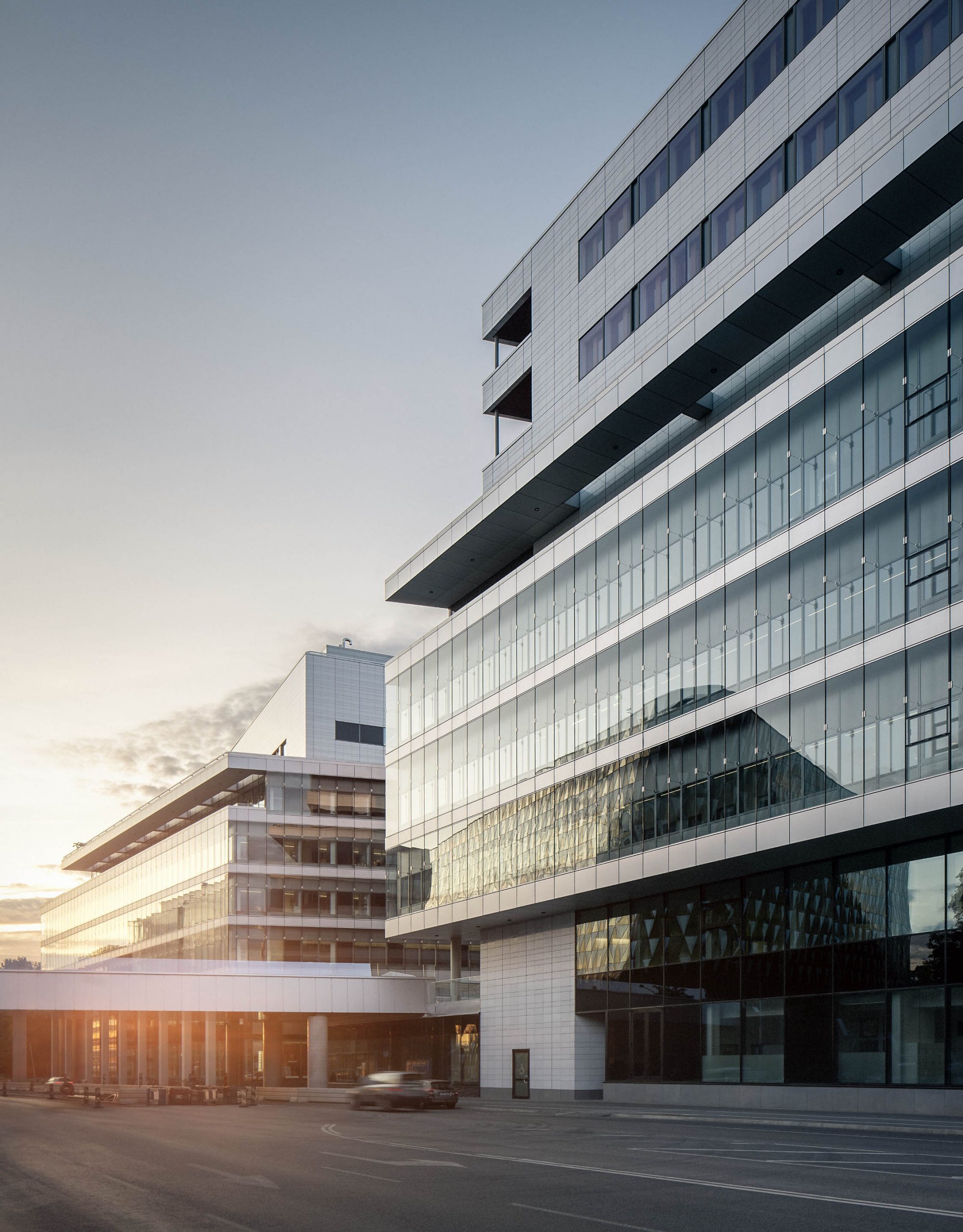
Welcome to one of the world’s most sustainable university hospitals and number seven in the ranking of the world’s best hospitals. Perhaps Sweden’s most extensive project of its kind, New Karolinska Solna is also a major driving force in the development of Hagastaden, a new urban district and Scandinavian centre for Life Science.

Nya Karolinska
Photo: Felix Gerlach
Nya Karolinska Solna
Photo: Felix Gerlach

A great investment to meet the care challenges of the future

Stockholm County is growing rapidly. Between 2010 and 2020, the population is expected to increase by 350,000 people. At the same time, the number of children and older adults is rising faster than other age groups, and our lifespan will continue to grow.

Most of today’s hospitals were planned in the 1960s and 70s. They are not designed for today’s or tomorrow’s rapid developments in, for example, medical technology, pharmaceuticals, new treatment methods, or working practices. Neither do they meet the expectations of the modern patient. As in many other sectors, healthcare increasingly depends on interdisciplinary environments, not least to enable knowledge exchange between medicine, research, and education—so-called Life Science operations.

To meet future healthcare needs, the Stockholm County Council is making one of its largest investments ever. The NKS project is a central component of this initiative. The hospital welcomed its first patients in 2016 and is now fully operational.

Nya Karolinska Solna

Photo: Fredrik Sweger

Collaboration in the White Tengbom Team

With a total area of around 330,000 m², including 630 patient rooms, 35 operating theatres, advanced technology for highly specialised care, and stringent environmental requirements, the NKS project presents immense challenges for all parties involved. It is Sweden’s largest project carried out as a Public–Private Partnership (PPP) and the country’s most advanced BIM project. The hospital is also the first to be environmentally certified according to both Swedish and international standards.

To address the architectural complexity, we formed White Tengbom Team in 2010—a project-specific company through which we collaborated with architecture firm White to jointly design the hospital. Around sixty of our architects, engineers, and project managers have worked on the assignment over the eight years the project has been ongoing. Follow-up work continues until the final phase is handed over in 2018.

Flexible environments for sustainable development

The hospital is designed to function for up to one hundred years—even though we cannot predict what healthcare will look like then. We anticipate rapid medical progress and exciting technological advances. The facility is planned with a high degree of generality and flexibility. The building can be adapted over time as research, treatment methods, working processes, or technology evolve and demand new solutions.

Generous floor-to-floor heights, robust floor structures, and substantial capacity in infrastructure and technical systems are examples of important investments. These enable the hospital operations to develop sustainably over time.

The patient in focus

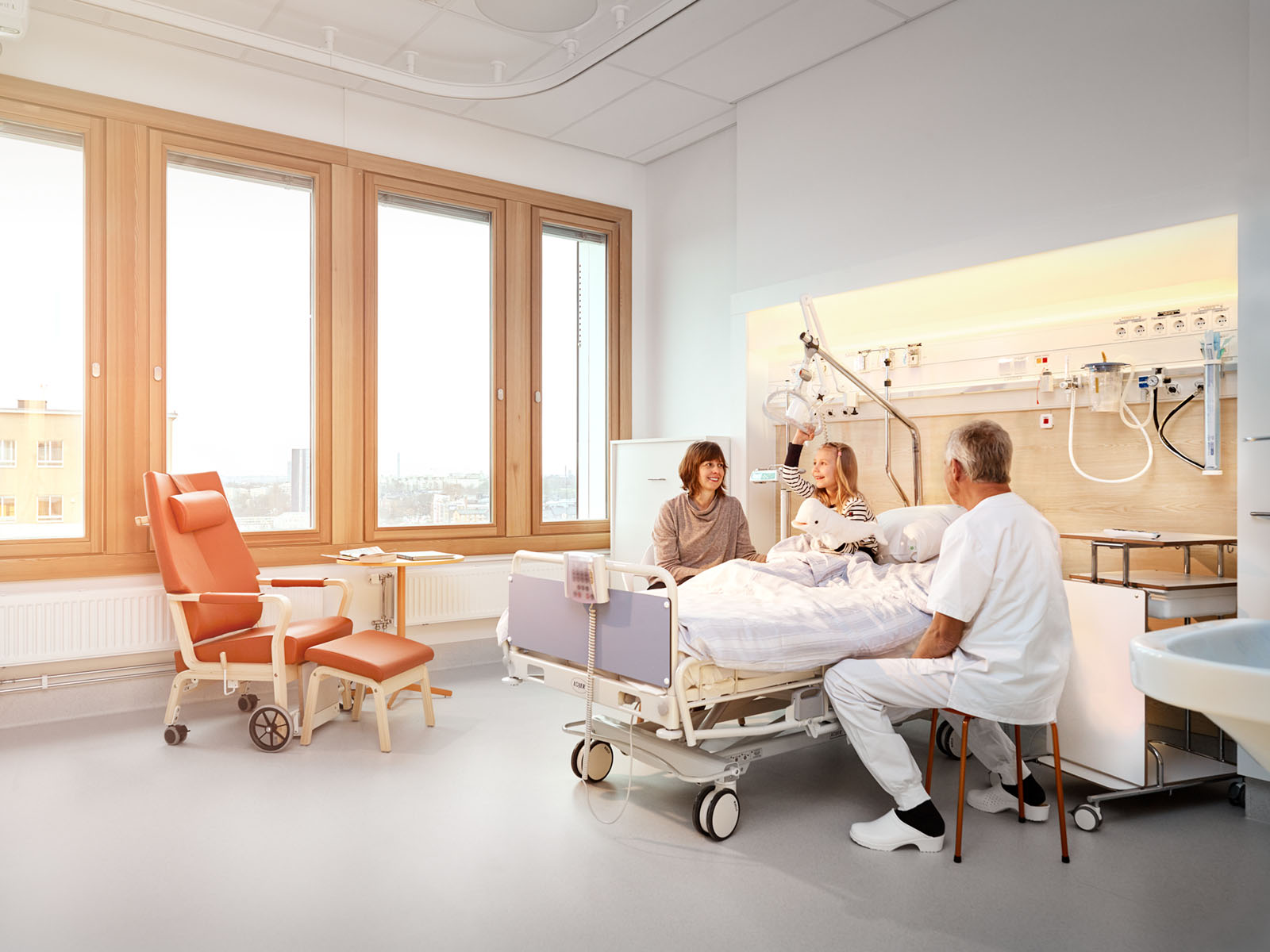
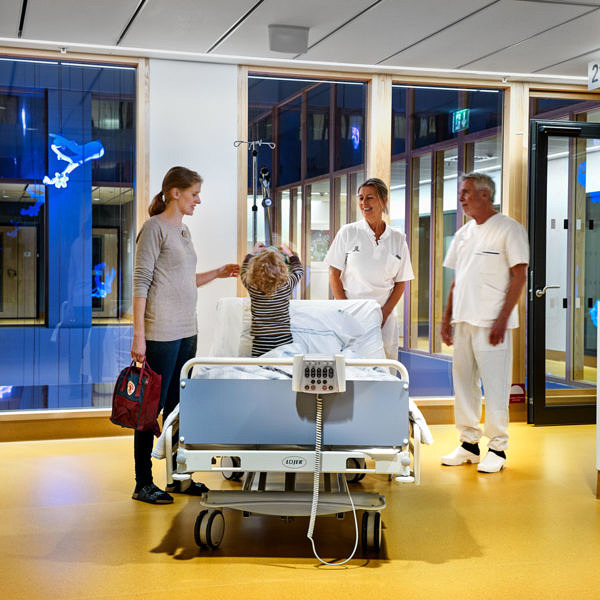
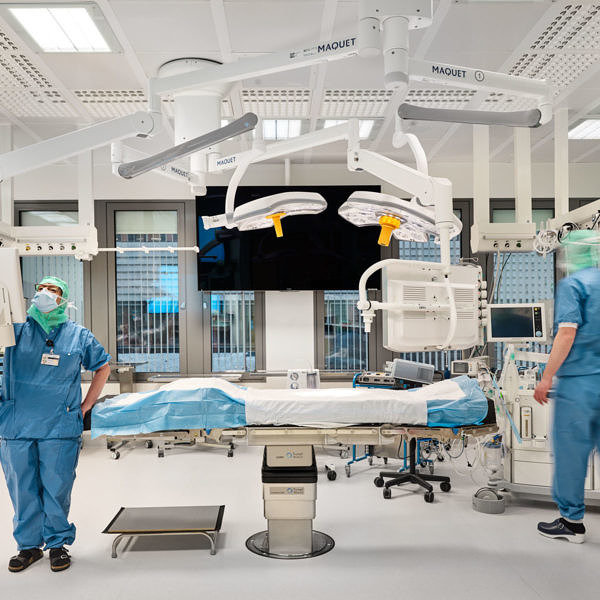
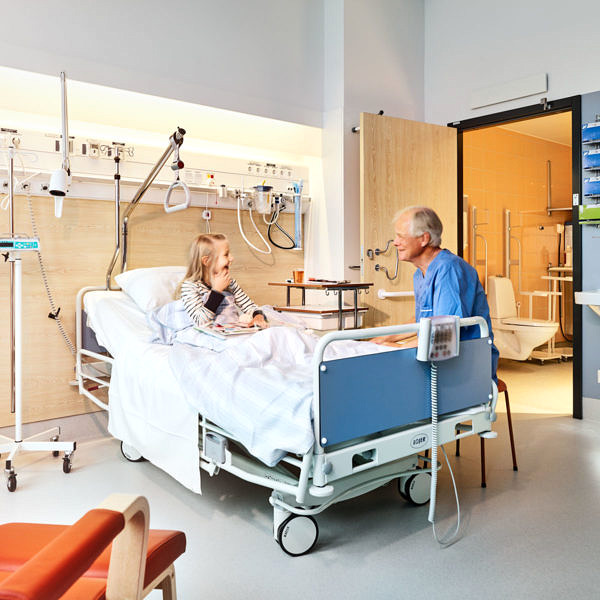
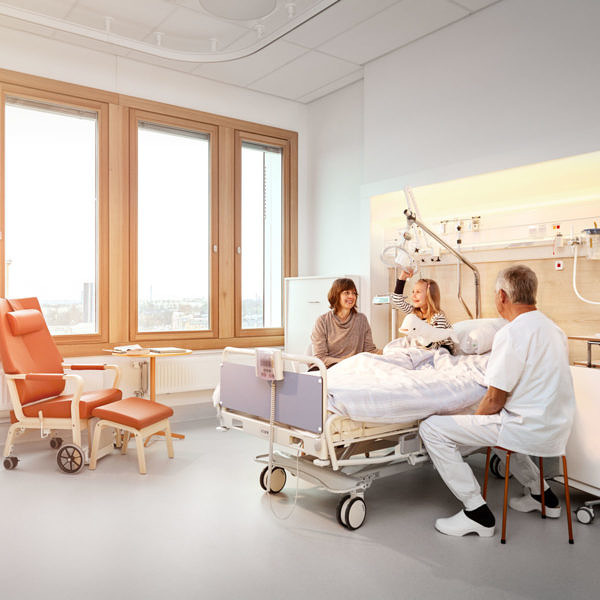
The guiding principle for the entire NKS project is “the patient always first.” All planning and design have been based on the patient’s safety, privacy, and comfort. Each patient is cared for in a private room with an associated hygiene room. Single rooms provide greater privacy and security and reduce the risk of infection and medication errors. Their design also enables care teams to work together at the patient’s bedside and facilitates close collaboration with researchers and students, who can visit in new ways. In this way, care moves closer to the patient.

A healing atmosphere within Nya Karolinska Solna

Nya Karolinska
Photo: Felix Gerlach

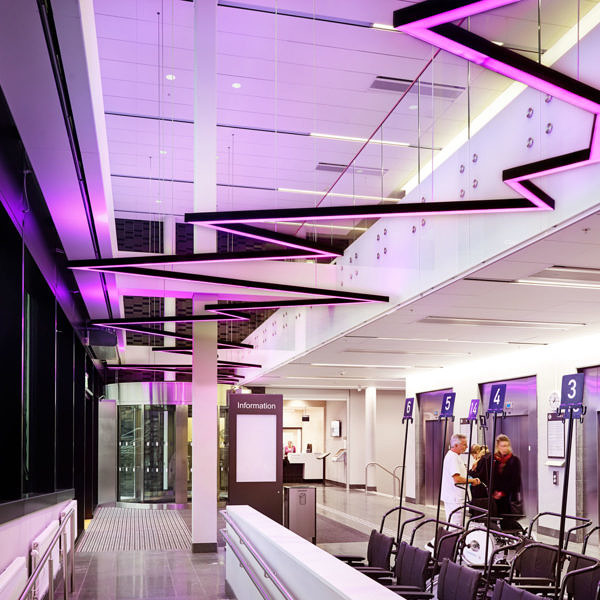
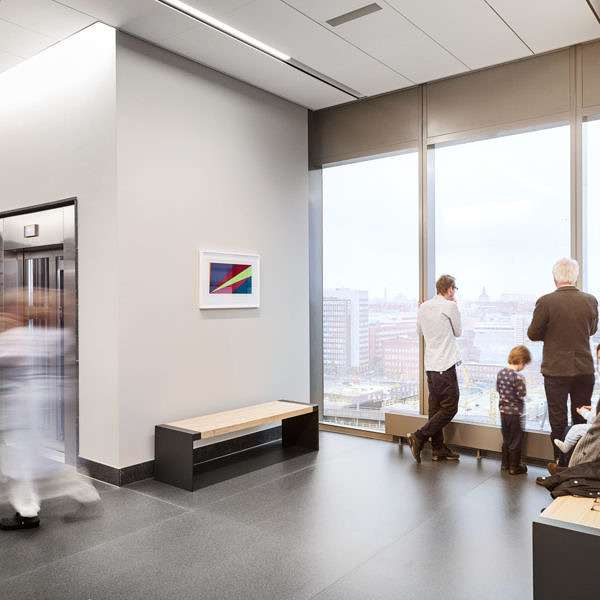
We have carefully shaped care environments that have a positive impact on patients. The interior atmosphere is characterised by generous public spaces and numerous meeting places where people can gather. Externally, New Karolinska Solna features a façade of glass, steel, and white tiles. The building follows a rectilinear block structure that continues the pattern of the traditional stone city. Five building volumes are tied together by a glass-clad mantle structure. Entrances and functions maintain the most open relationship possible to surrounding streets and squares.

The care quarters connect to the research buildings to the north and to Karolinska Institutet’s new laboratory to the west. Between the care and research functions runs the Academic Promenade, which links the hospital with Karolinska Institutet and bridges Solnavägen via a new pedestrian and cycle bridge.

World leading Life Science cluster in Hagastaden

Stockholm aims to be a Scandinavian centre and catalyst within Life Science—a place where industry, academia, and clinical care and research meet and collaborate. This is the vision expressed by Karolinska Institutet, KTH, Stockholm University, the City of Stockholm, the City of Solna, and the Stockholm County Council in the joint “Vision 2025 – Science City.” Consequently, collaboration between healthcare, research, and education has been a fundamental architectural premise in the NKS project.

The New Karolinska Solna project will ultimately be a key driver in the development of Hagastaden, where the cities of Solna and Stockholm meet. Once fully developed, the area will offer around 6,000 new homes and 50,000 workplaces. A science district for world-leading education and research is being created here under the collective name Stockholm Life. The hospital’s main building will form the backdrop at Hagaplan, the district’s new urban square.

Photo: Felix Gerlach
Nya Karolinska
Photo: Felix Gerlach

Nya Karolinska Solna will also be the single most important motor behind the development of Hagastaden – the new district where Solna and Stockholm meet, and which when completed will offer approximately 5,000 new homes and 50,000 jobs of which just over 6 000 at NKS. We are creating a science city for cutting edge education and research under the common name Stockholm Life. The main building of the hospital will form the focal point of Hagaplan, the new town square.

Nya Karolinska
Illustration: Tengbom

Awards and Recognitions

The World Architecture Festival nominated NKS in 2019 in the Completed Buildings: Health category. In 2025, Newsweek ranked it fifth globally.

Contact person

Mark Humphreys

Practice Director Stockholm
+46 8 412 53 43

The Police School

New uniform for synergy and safety
Architecture
Education
Client: Akademiska Hus, Skanska
Contractor: Akademiska hus
Years of commission: 2014–2017
Location: Södertörn University
Competences: Education, Landscape, 3D Illustration
Photographer: Sten Jansin

To be integrated with other humanities education programs and thereby participate to a greater degree in the civic development, the Police School will move from Sörentorp to Södertörn’s institute of further education. Here we are focusing on new teaching environments with a focus on synergy and safety.

Just in time for Södertörn’s institute of higher education’s 20th anniversary, we are completing the Police School’s new premises on campus. The project includes both renovation and new construction. It began with a request from Akademiska Hus to adapt ANA 12. We originally designed this building in the 90s when Södertörn’s institute of higher education was founded.

The Police School

An open but safe environment

We quickly realized that housing all 800 police students and meeting the program’s specific requirements would require a new building. The existing building with large windows was hard to adapt due to the security required.

The solution was a new building, ANA 14, right next door, developed specifically for the police school. Here, we have had the opportunity to design a modern teaching environment that feels open and light despite the closed systems according to protection class 2.  Here, there are classrooms inside a lock function. In a large sports hall that can be divided into three parts, self-defence is taught. The building is constructed so that it can be certified according to Eco-building, ‘Miljöbyggnad Silver’.

The architecture is created both with security and the future tenants in mind.

Rooms with a large span

A small number of materials enhances the expression. The façade consists of prefabricated concrete elements  embossed vertically. A foyer of glass opens the building towards the campus and contrasts with the closed exterior. The interior environments give a warmer impression thanks to stained plywood on some walls

”Rooms with a large span and special features have posed been a challenge in the design. In particular, the angled entrance façade with its canopy has required great focus from the project group and the pre-fab contractor “, says Katrin Fagerström.

The Police School The Police School

Another challenge was to adapt the existing premises in ANA 12 to new safety levels where there needs to be room for both openness and closeness in the same building. In this place, auditoria for the entire institute are combined with specific training facilities for the police school.

Open dialogue

After the project application stage, the University House and Skanska carried out the entire project in partnership. Through an open dialogue between the client, the contractor and other consultants, together we were able to develop a very solution based and educational process.

”We are very much looking forward to the result and the official moving-in ceremony in the autumn of 2017. Our common goal is of course that the Police school at Södertörn be the best police school in all of Sweden”, says Anna Moren Sahlin.

Contact person

Mark Humphreys

Practice Director Stockholm
+46 8 412 53 43

Freja school

A new school and a meeting place
Architecture, Interior Design, Landscape
Education, Parks, Play & Public Spaces
Client: Göteborgs stad
Location: Tynnered, Göteborg
Main usable area: Ca 11 300 sq m
Type of project: School with gymnasium
Estimated moving-in-date: 2017/2018
Competences: Education

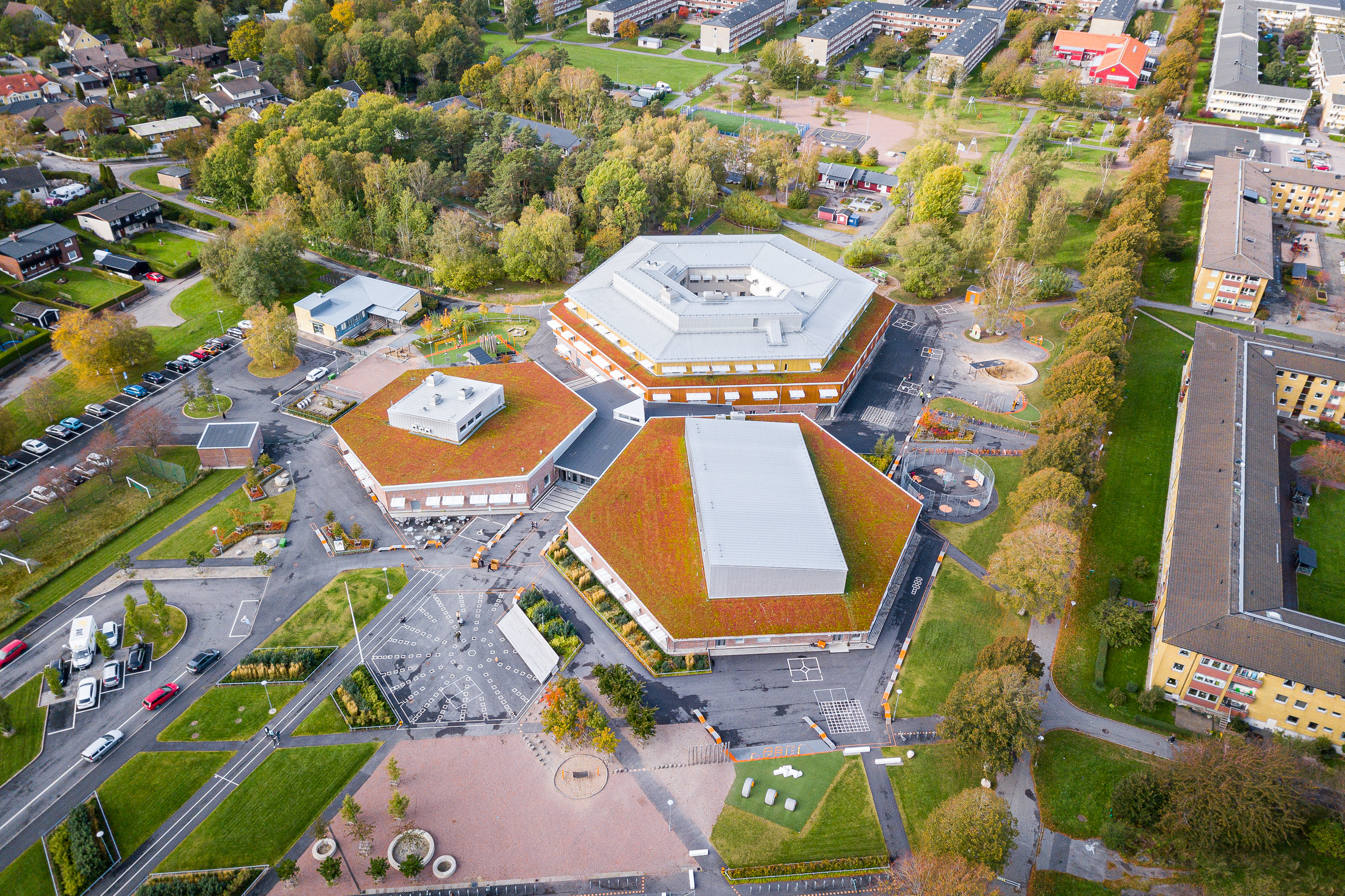
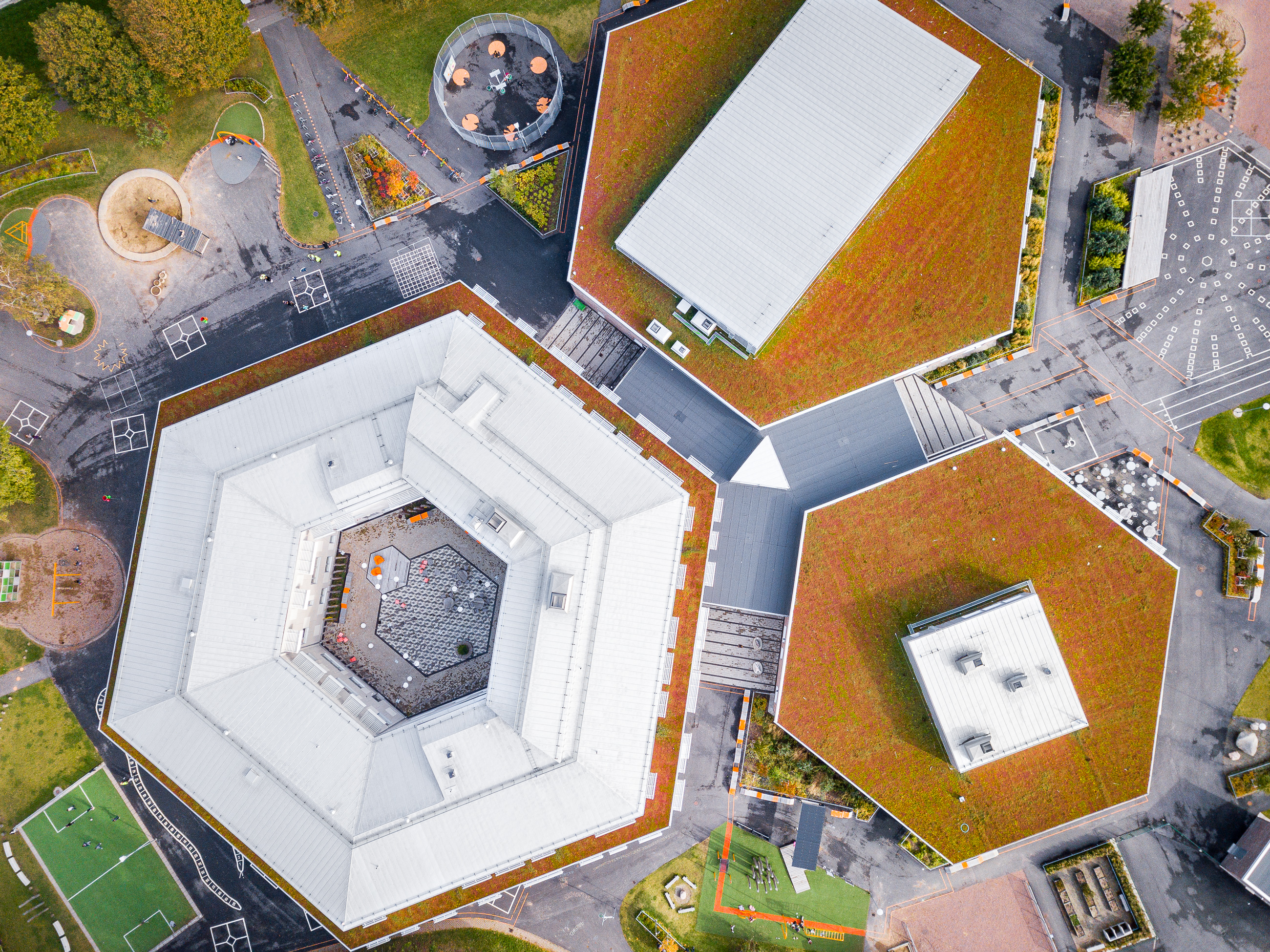
Freja school is unique in both form and function. Three hexagon-shaped buildings create a diverse outdoor environment while enriching the urban space. The school building is oriented to face all directions on the large site.

Frejaskolan – a competition win

In 2014, Tengbom won the commission to design the new Grevegårdsskolan, now called Frejaskolan, through a competition organized by Lokalförvaltningen in Gothenburg. Over two years, we worked closely with the school staff and client to create a new school for approximately 650 students and 100 educators. Freja school (Frejaskolan) is one of the largest new construction projects for our client and a long-awaited upgrade for the educators and students who had eagerly anticipated their new school.

A school without a backside

The competition proposal, named Mångsida, addressed everything from traffic solutions and outdoor environments to logistics, phased construction, and contributing to playfulness in the surrounding urban area. The concept of three hexagon-shaped buildings connected by an entrance hub is designed to create diverse outdoor spaces for children. But as well enrich the existing urban fabric, and face all directions on the large site. Together, the buildings form a school without a backside.

Frejaskolan


We wanted to create something both enduring and adaptable, designed to withstand use

Freja school

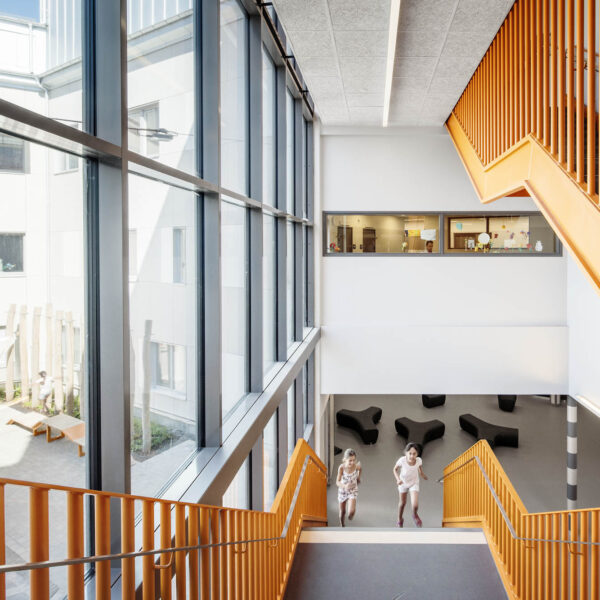
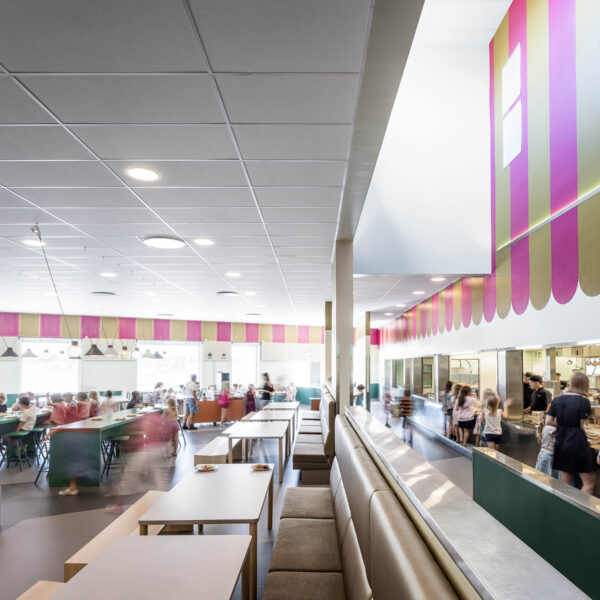
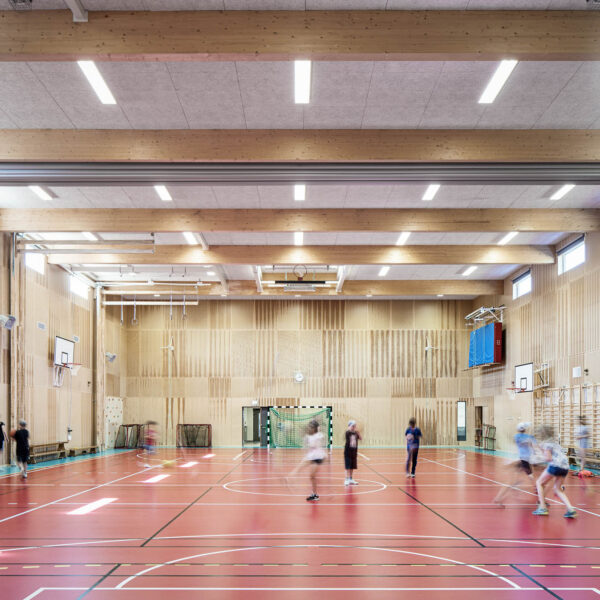
Externally, the school is both strict and playful, a design approach that also defines the interior concept. Just as the school appears different from various distances, the interior scale also shifts. A variety of room shapes create spaces that foster safety, community, playfulness, and inspiration. We carefully chose the materials, both inside and out, to ensure they endure and improve over time.

The school stands at the center of the district, serving as a hub for the area. It provides new meeting places for diverse activities and creates arenas for interaction.

Freja school Freja school

Contact person

Kristina Jonasson

Studio Manager Interior Design
+46 708 23 14 33

Brunnshög

Living rather than consuming
Architecture, Landscape, Urban Development
Idea & Vision, Parks, Play & Public Spaces, Residential, Residential environments, Squares & Streets
Client: Coop Utvecklingsfastigheter AB
Location: Brunnshög, Lund
Year of commission: 2015
Type of project: Sustainable neighbourhood
Partners: WSP (Innovativ projektledning)
Competences: Urban planning, Landscape, Residential, Retail, Sustainability, Infrastructure

As part of the contest for land allocation in a new district for housing and daily consumer goods, the aim was to create a future-orientated, urban, mixed-use district fully adapted to its surroundings in Brunnshög. The objective is to develop the Brunnshög district, based in Lund, into the world´s leading environment for innovation and research and a showcase for world-class urban development. By adopting a sensible, responsible approach to planning, we envisage a fantastic place in which to live, work and spend time. The vision is to make Brunnshög sufficiently appealing to attract visitors from all over the world. But how?

Situated in the north east of Lund, the new district of Brunnshög is emerging around the two research facilities of MAX IV and ESS. It is envisaged that the area will be home to around 40,000 residents and workers.

Illustration: Tengbom

Our vision of a sustainable community

As our society grows increasingly urbanised, we face the considerable challenges posed by climate change, more stringent demands on sustainability, constant time pressure and ill health. Although much of what makes us feel good costs nothing – chatting with our neighbours, daily exercise and a good night’s sleep – this is typically what many of us are lacking. Climate change is posing new, increasingly demanding challenges on the robustness of developments in relation to heat and water. Global warming is an issue many people find difficult to comprehend. What difference does it make if I take a holiday on the local hiking trail rather than travelling to Thailand?

Although much of what makes us feel good costs nothing – chatting with our neighbours, daily exercise and a good night’s sleep – this is typically what many of us are lacking.

Architecture which maximises sensory impression

When devising the concept for the district in proximity to the future square and tramway stop in Brunnshög, it was imperative that its functions and ambitions would meet the high standards encompassed by the Brunnshög vision. Our proposal involves creating a living environment for people and animals, which encourages taking the time to live and breathe, rather than consuming products. Minimising environmental impact by sharing, renting, borrowing or exchanging items. Maximising sensory impression through appealing architecture, which emphasises cultivation, food and dialogue.

Illustration: Tengbom

A district focused on the dining area

Our new district, the dining area of the future, focuses on the entire life cycle of food. It covers everything from cultivation to sales, preparation, and food waste management. The area is deeply connected to food and the dialogue around its role in the future of the city. A robust flexibility allows various participants to contribute and interpret food’s significance in different ways.

Our vision with the district is to create a diverse range of urban spaces of different sizes, functions and green structures. We want the buildings constructed here to stand for a hundred years. That is why we chose bricks for the façade, symbolising safety, warmth, identification, power and authority. Steel, wood and glass elements were also added as a clear compliment to the central brickwork. Over time, vines will grow over façades and balconies, becoming an integrated part of the design. The structures withstand use, reuse, and the test of time.

Contact person

Kajsa Crona

Practice Director Gothenburg
+46 727 07 79 73

Stockholm Concert Hall

Ivar’s legacy lives on
Tengbom
Architecture, Cultural Heritage
Culture
Client: Amongst others The Concert Hall Foundation through Locum
Location: Stockholm
Year of commission: 1926-
Type of project: Concert Hall
Competences: Culture & Sport, Heritage

The Stockholm Concert Hall, which opened in 1926, stands as one of our most renowned creations. Ivar Tengbom, a pioneer of Swedish architecture, designed the building. Over the years, we have returned several times to preserve Ivar’s legacy. Each effort ensures that new generations of visitors can continue to experience the hall.

On April 4 1920, a competition was announced in the journal Arkitekten for the design of Stockholm Concert hall. At the time of the announcement, Ivar Tengbom together with two other architects, Torben Grut and Lallerstedt, had already received a special invitation from the Concert hall committee.

Ivar threw himself into his competition entry in partnership with his assistant Birger Jonson. He later highlighted Birger’s contribution and meant that ever since the first tentative sketches of the competition entry, he had provided ‘invaluable support during the planning and execution of the project’. Our partnership is crucial for the architecture that we create even today – which is why we are so very happy about this. That this is a tradition that goes all the way back to when Tengbom was founded.

Fotograf: Sten-Åke Stenberg

The red heart

The competition entry ‘The red heart’ was based on the Greek and Roman theatre. The design of the great concert hall was a deciding factor in the competition and according to Ivar, it became the core from which the entire building was created around. When Ivar imagined the hall as a Roman courtyard, a peaceful festive area where the parquet is framed by stands with slender columns. Behind the podium – the room’s focal point – he saw a false perspective that implied a continuation towards the imagined Greek landscape. Above this, the white ceiling opened up like a sky from which the lighting would give the feeling of an eternal, mild sunshine.

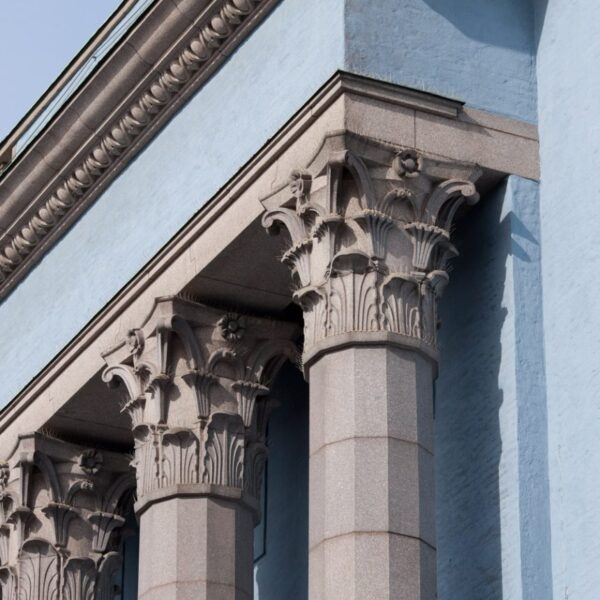
Outside, there was a decorative row of columns as a portal between the outer and the inner room – a reflection of the great hall’s ancient character. For the rest, Ivar Tengbom distributed the program within a strictly coherent, cubic and undecorated concrete block. A contemporary approach which the curator of the National Museum at the time, Erik Wettergren, described at the opening ceremony later as ‘the new architecture’s hallmark’. In the proposal, Ivar Tengbom gave his Stockholm Concert hall an unusual blueish façade.

Stockholm Concert Hall
Photo: Sten Jansin

The description that accompanied our entry was written by hand and full of exciting, rhetorical expressions. In several places Ivar Tengbom talks directly to the jury to explain his thoughts. He appears to have had a sense of humour, our Ivar – when defending the columns on the exterior, he says: ”The judge is asking, columns, what are you doing?”. The press preferred the end quote which was often repeated with glee:

”And now, Mr Executioner, do your duty!”

A symbol for the future

The jury received thirty-four proposals. Initially, they awarded first prize to both The Red Heart and Erik Lallerstedt’s proposal, The Wings. After an intensive process and further development of the original idea, we finalized the planning and brought Ivar’s vision to life.

In retrospect, Stockholm’s Concert hall became a distillation of different currents in the Swedish architecture debate from the beginning of the 1900s.

The interest in town construction issues, the importance of a rational approach to the materials and construction, and the desire to once again unite the architecture and the liberal arts, all played a part in the end result. As a public building, the Concert Hall became a symbol of the cultural intentions of the Swedish society alongside the development of the modern civilization.

Stockholm Concert Hall
Photo: K-A Larsson
Stockholm Concert Hall
Photo: K-A Larsson

Stockholm Concert Hall full of invaluable art treasures

The Concert Hall holds many important works of art, both inside and outside the building. Carl Milles’ famous sculpture, the Orpheus Group, stands by the stairs to Hötorget. Inside, Isaac Grünewald’s incredible ceiling and wall paintings adorn the Grünewald Hall. Explore more about the art around the building on the Concert Hall’s website.

New generations take over

Over the years, we have continued to preserve Ivar’s legacy, ensuring that it lives on for future generations of visitors. In the early 1970s, Ivar’s son, Anders Tengbom, led a major renovation and expansion of the house. He rebuilt the wall behind the podium, which later made way for a magnificent concert hall organ. He also had the ceiling painted in a dark colour to accommodate new technology and acoustic aids, creating an atmosphere reminiscent of a Mediterranean night.

The restoration of the Concert Hall’s exterior brought back its bold original blue colour, once hidden by years of pollution. The local population once again admired its striking appearance.

Preserving historic buildings requires ongoing attention, especially to meet changing accessibility standards and integrate modern technology. In recent years, we have improved acoustics and installed new technical systems. We have also designed a new rehearsal hall, the Aulin Hall, which features flexible seating areas.

Contact person

Mia Lindberg

Head of Communications
+46 8 410 354 93

Thiel Gallery

Preserving a listed art museum
Thiel Gallery
Architecture, Cultural Heritage, Interior Design
Accessibility, Building Preservation & Restoration, Culture, Heritage Expertise, Renovation & Transformation
Client: The National Property Board of Sweden
Location: Djurgården, Stockholm
Years of commission: 2013-2019
Partners on GK commission: Tyréns (K), LEB, Allmänna VVS-byrån (V), Projektel (E), Brandskyddslaget, Geosigma, Storköksbyrån i Stockholm, Sjögrens hus.
Type of project: House architect
Competences: Historic Preservation, Interior design, Landscape, Accessibility, Project management, Sustainability

Founded in 1907 and situated in a walled park far out on Djurgården’s Blockhusudden, the Thiel Gallery is one of Sweden’s most beautiful museums. We served as building architect and general consultant for the gallery from 2013 to 2019, providing administrative support and taking responsibility for the listed building’s maintenance and development on an ongoing basis.

The architect Ferdinand Boberg designed the Thiel Gallery. He drew inspiration for the unusual building from the Orient, southern Europe and the late Art Nouveau era. Work on the venue was completed in 1907, realising the dream of financier and patron of the arts Ernest Thiel to create a home and art gallery. After being acquired by the state in 1924, Thiel was converted into a museum, before being conferred national listed building status in 1958. Our work on the museum took place in close collaboration with the National Property Board of Sweden. As well as the venue’s tenants.

Complex projects requiring a highly sensitive approach

Our projects at the Thiel Gallery were often of a complex nature, requiring knowledge and understanding of a range of factors related to climate, technology, logistics and programming within the scope of an art museum. With considerable respect for the cultural-historical values of this listed building, we carried out adjustments and highly skilled design work on a small and large scale. We also handled permit issues, long-term plans for maintenance and restoration as well as acting in an advisory capacity. Among other things, the commission required advanced knowledge of installation techniques both new and old.

Our role in the project is fundamentally underpinned by a holistic approach, awareness and flexibility.

Effective collaboration and close contact

We worked on a range of projects at the Thiel Gallery. We renovated the café kitchen and cafeteria and installed new lighting in the exhibition halls. We also prepared the Annex for the museum’s offices and conferences. To improve accessibility, we conducted a comprehensive survey of the entire venue. This led to the installation of a new lift and the creation of new public areas, including a shop, cloakrooms, and toilets.

Effective and clearly defined partnerships are fundamental to every project. To ensure this, we involve technical consultants and other specialists at an early stage. Close contact and long-term collaboration with administrators, tenants, and authorities remain essential. We also work closely with specialists, craftsmen, and contractors throughout the process. Our role in each project is built on a holistic approach, strong awareness, and flexibility.

Contact person

Mark Humphreys

Practice Director Stockholm
+46 8 412 53 43

Abisko

Industrial inspiration in an exciting neighbour-hood
Architecture
Residential
Client: Byggnadsfirman Erik Wallin AB
Location: Norra Djurgårdsstaden, Stockholm
Years of commission: 2004–2008, 2011–2014
Type of project: Residential
Competences: Residential, Sustainability

While designing the Abisko neighborhood, we drew inspiration from the beautiful industrial structures of the 1800s in Norra Djurgårdsstaden, known for their high-quality brick and steel. Our client, Erik Wallin, aimed to create solid, high-quality homes with a façade that stood out from the rest of the area. The result is two interconnected seven-story buildings, constructed according to strict environmental standards, housing a total of 42 well-designed flats.

Abisko
Photo: Michael Perlmutter

Special façade stands out

The façade material that we chose was hard-burnt bricks and shaped bay windows in corten steel – a durable material with a beautiful, rust-coloured patina. The vivid texture and colour variations of the brick, along with the characterful bay windows, create an interesting unity, which enrich the urban space both from a distance and close by.

Attention to detail

We  focused on every detail to ensure high-quality flats. Additionally, the design emphasizes connections between rooms and generous views. From the bay windows, residents enjoy stunning views of the beautiful Nationalstadsparken. Meanwhile, towards the courtyard, slanted glass balconies extend from shielding brick walls, creating private patios facing southwest. The design recesses the top floor from the street and shapes it as a maisonette.

Nomination for Årets Bygge

The neighbourhood Abisko in Norra Djurgårdsstaden is a close partnership between five contractors. From a design point of view, it is an exciting development where each contractor worked with their own architect to create an exciting and contrasting unity. Our buildings, along with others in the area, earned a nomination for the award Årets Bygge 2015. This year’s Building of the Year is the civic construction sector’s most prestigious competition. It highlights excellence in quality, project collaboration, finance, and design.

Contact person

Mark Humphreys

Practice Director Stockholm
+46 8 412 53 43