Archives

Gunsta stormwater pond

Water as a resource
Landscape
Parks, Play & Public Spaces
Client:
Assignment years: 2022-2023
Collaborators: WSP

In recent years, heavy rainfall and flooding have become increasingly common, causing a wide range of problems — for both people and nature. Our landscape architects in Uppsala have developed a solution where Gunsta stormwater pond not only manages extreme weather but also creates a beautiful, inviting space for the community.

The proposal for the Gunsta stormwater pond utilizes the park area for both stormwater management and recreation. The water level and surface area change with the flow, shaping the experience of the park space.

Intense rainfall, driven by climate change, can have severe consequences. It erodes the ground, washing away roads and damaging building foundations, while also overloading drainage systems, allowing pollutants to enter lakes and rivers. This increases the risk of waterborne diseases affecting both humans and wildlife.

So how do we prevent this?

“We need to become better at treating water as a resource,” says Linnea Bohlin, landscape architect at Tengbom. “Many municipalities and water authorities are now recognising the benefits of stormwater ponds. Not only as efficient drainage solutions but also as attractive public spaces where people can interact with water in a meaningful way.”

When designing the pond, it was essential for us to see water as a resource.

Strengthening the natural landscape

Our landscape architects at Tengbom Uppsala worked on the design and planning of Gunsta stormwater pond, located east of Uppsala. The area is set to become a key recreational space as part of a broader development that includes 1,500 new homes.

The design carefully integrates the pond into the natural landscape, supporting biodiversity by creating diverse aquatic environments.

“We wanted to introduce a flowing body of water that would preserve, or even enhance, the openness of the existing landscape while also adding value for the people who live here,” Linnea explains.

The permanent water surface has a distinct meandering shape with peninsulas and opportunities to move around and stay on the curved grassy areas and the slopes of the pond. During a 5-year rainfall event, the pond fills to its maximum capacity, leaving only the surrounding embankment with the walkways dry.

Balancing technical demands with natural beauty

The project includes a pedestrian and cycling path with a bridge, offering panoramic views to the south and connecting residential areas on either side of the pond. Additional walking trails and seating areas invite people to stop, explore, and enjoy the surroundings.

“There were strict operational requirements, such as ensuring vehicle access around most of the facility,” Linnea explains. “To maintain the feeling of a nature path while still allowing for maintenance traffic, we covered half of the service road with grass. This makes it blend into the landscape while remaining functional for work vehicles.”

Planting for variety

To keep construction costs down and reduce resource use, we chose smaller plants and repurposed local stone blocks.

For rainfall events larger than a 5-year storm and up to a 10-year storm, the pond can flood into the northern football field, partially submerging it for short periods.

Sustainable water management despite unstable ground

The geotechnical conditions in Gunsta posed a significant challenge, with an increased risk of landslides. Additionally, the pond had to handle large volumes of water while delaying runoff to prevent flooding.

By designing the permanent water surface in a meandering shape, the pond helps slow down water movement, improving its natural filtering function. The system is designed to manage stormwater from a five-year rainfall event, while excess water from a ten-year event can be temporarily stored on nearby sports fields.

A nature-based design

The pond’s gentle, organic shape allows it to blend seamlessly with the surrounding landscape, creating a diverse experience for visitors moving through the park. The design also enhances the pond’s purification function, as the winding form forces water to move more slowly through the system.

“We’re incredibly proud to have contributed to a project that improves the local environment while promoting sustainable stormwater management,” says Linnea. “It reduces the burden on drainage systems and treatment plants, and by sharing space for multiple functions, less land is required overall. Multifunctionality for the win!”

Contact person

Jenny Söderling

+46 8 412 53 95

Järfälla waste collection terminal

A sustainable facility with finesse
Architecture, Landscape
Industry, Parks, Play & Public Spaces
Client: Järfälla kommun
Location: Barkarby
Assignment years: 2012-2014
Project type: New construction of garbage collection terminal
Photographer: Sten Jansin
Collaborators: Sweco, ACAD, ACC, Envac

Modern, sustainable waste management is a given in the rapidly growing Barkarbystaden. With Järfälla waste collection terminal, Tengbom has designed a facility that integrates seamlessly into the urban fabric.

A new district means new waste, and planning for its management must start early. Instead of hiding the problem, Järfälla’s terminal uses an efficient underground vacuum system, transporting waste discreetly beneath the streets. But this is more than just a technical solution — it’s a building that earns its place in the ambitious Barkarbystaden.

Järfälla Municipality wanted a facility that matched the high standards of the surrounding architecture. As lead consultant, Tengbom ensured a thoughtful design, with quality materials and careful attention to detail.

Timeless details built to last

The result is a pared-down brick building, where faceted bricks form subtle patterns along the long façades. Some of the recesses remain open, while others are filled with mortar, creating either a smooth grid effect or striking diagonal patterns when snow settles in the cavities during winter.

The terminal was designed to blend naturally into its residential surroundings while still having its own distinct identity. Through careful detailing, it signals the importance of waste management in a modern city.

With room for future expansion, the terminal is built to serve the district for years to come. But longevity is about more than just capacity — it’s also about material choices and timeless design. Achieving an elegant, simple form requires a deep understanding of the underlying technology, making close collaboration with industry experts essential.

A shared vision for the city of tomorrow

There’s no manual for designing a facility like Järfälla waste collection terminal. Instead, it was a journey taken together with the client, ensuring a clear vision from the start — one that shaped the end result and kept costs in check.

With shared ambitions and a commitment to sustainability, something as unglamorous as a waste collection terminal has become a landmark for the neighbourhood. Winning Järfälla Municipality’s honorary award seems like proof of that.

Contact person

Mark Humphreys

+46 8 412 53 43

St Eriks memorial grove

Swinging towards the sky
Landscape
Culture, Parks, Play & Public Spaces
Client: Svenska kyrkan
Location: Sollentuna, Stockholm
Project years: 2014 - 2017
Photography: Tengbom

“I just want to swing my sorrow away,” said a child during the impact assessment we conducted before designing the memorial grove at St Eriks Church in Sollentuna, just outside Stockholm. These words stayed with us as we created a space for reflection and peace.

A room within the room.

A room within a room

Nestled in a quiet residential area of Tureberg, St Eriks Church has stood on the crest of a hill overlooking Edsviken since 1927. Surrounded by meadows and offering sweeping views of the water, it is a place rich in history – but until recently, it lacked a burial ground. In collaboration with the Church of Sweden, we changed that by creating a memorial grove.

A place for everyone

The vision for the site was clear. It was to be more than just a final resting place. The church wanted a space that could accommodate ceremonies of all kinds – weddings, funerals, and christenings.

Accessibility was key, as was the decision to keep the space free from religious symbols, making it open to people of all backgrounds, beliefs, and ages. A shared space for contemplation and connection.

A place for reflection.
The circular wall encloses the cremation grave site.

Designed with children in mind

To understand how children might experience the space, the Church of Sweden conducted an impact assessment, inviting them to share their thoughts and drawings. In one of the interviews, a child simply said, “I just want to swing my sorrow away.” And so, the idea of a swing was born – a secluded place to sit, suspended between sky and water.

Swedish granite and black steel

The design centres around Swedish granite, shaped into strong geometric forms, complemented by black steel. These materials not only blend seamlessly with the historic setting but also mirror the granite elements of the church itself.

A circular stone wall encloses the memorial grove, creating an intimate and sheltered atmosphere. Flowerbeds and seating areas invite visitors to pause, while the view towards the water remains ever-present. From the outside, the structure resembles a fortress – solid and protective.

A raised granite water channel, with a gentle cascading flow, symbolises eternity and the cycle of life

A swing to the heavens

One of the first things you notice upon arrival is the swing. Framed like a gateway to the sky, it becomes a focal point of the site. Sitting on it, legs dangling, the view stretches out over the water. A playful yet profound element in a space of remembrance. One that has also become a popular spot for wedding photos.

More than just design

Our role was not only to design a meaningful and welcoming landscape but also to navigate the complexities of creating a memorial grove in a heritage-protected area. This involved extensive planning, documentation, and applications to regional authorities. From illustrations to formal approvals, we guided the process every step of the way – combining design with project management.

In 2017, Reverend Lasse Svensson officially inaugurated St Eriks Memorial Grove.

St. Erik’s Church in Sollentuna dates from 1927.

Contact person

Anders Brandstedt

+46 704 02 79 60

Söraskolan

From asphalt to play and greenery
Landscape
Education, Parks, Play & Public Spaces, Sports
Client:
Location: Åkersberga, Österåker, Stockholm
Year: 2015
Area outdoor environments: About 4 hectares
Photographer: Sten Jansin

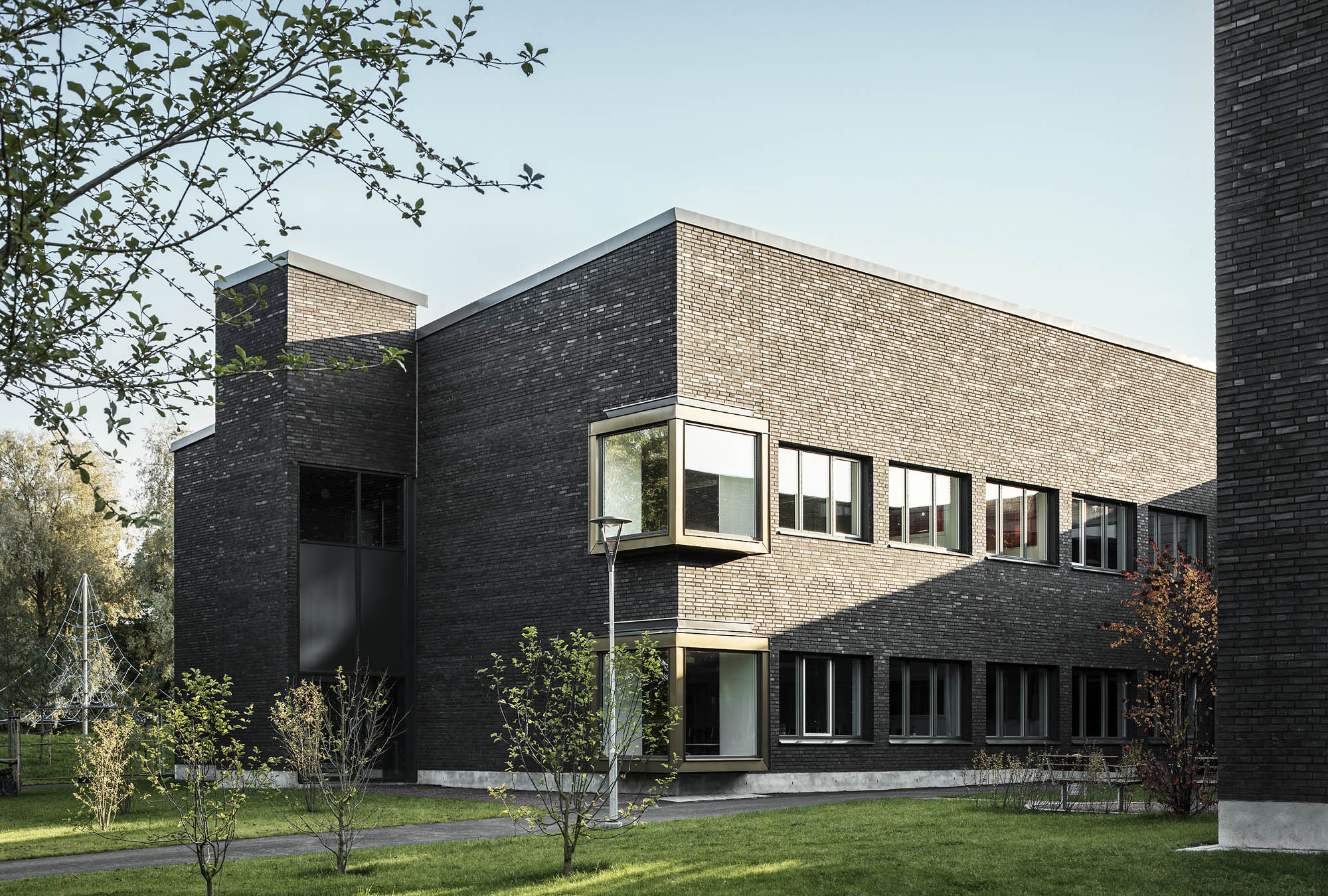
In collaboration with Tengbom, Armada Bostäder has revitalised the surroundings of Söraskolan in Åkersberga. What was once a worn-out, asphalt-covered schoolyard has been transformed into vibrant, green play and activity areas for the school’s 750 students and the wider community.

Stretching across four hectares, the upgraded schoolyard offers a diverse mix of activities for children of all ages, from preschoolers to secondary school students. The new outdoor space includes playgrounds, a synthetic turf field, a skate park, a street basketball court, social spaces, ping-pong tables, climbing structures, trampolines, and ball walls. These elements bring energy and movement to the school’s outdoor environment.

A unified and welcoming environment

To create a cohesive and inviting identity, Tengbom has worked with carefully selected materials, clear and welcoming entrances, and characterful steel and wood details. Thoughtful lighting design also enhances orientation and safety.

“It was inspiring to see how ambitious our client was, both in terms of the school building and its outdoor spaces. The focus has been on social sustainability, ensuring that both children and residents feel comfortable and happy where they spend their time.”
— Jessica Henriksson, Landscape Architect

A place for learning, play, and community

The schoolyard is designed as more than just a space for students. Durable, engaging, and varied environments make the area appealing and accessible to the entire neighborhood. Safety has been a top priority. Play areas are built to withstand heavy use while remaining secure and inclusive.

Since a school also brings traffic for pick-ups, deliveries, and waste collection, the project has carefully integrated safe and structured routes for pedestrians, cyclists, and vehicles, ensuring a well-organised and secure flow throughout the area.

“A social worker was involved early in the project to help create safe and inclusive spaces within the play environment.”

Spaces for connection and belonging

Each class at Söraskolan has its own dedicated outdoor gathering zone for group activities and lessons. These areas feature protective pergolas, curved wooden decks, and tiered seating. Social spaces encourage both learning and informal interaction.
“It’s all about understanding how children use and move through different spaces. They need to be able to play freely, feel safe, and make the most of their time outdoors.”
Jenny Söderling, Landscape Architect

Contact person

Jenny Söderling

+46 8 412 53 95

Älvpromenaden

A waterfront to enjoy
Landscape
Parks, Play & Public Spaces, Squares & Streets
Client: Karlstad
Location: Museigatan, Karlstad
Assignment Years: 2019-2020
Project Type: Design program, request documents for procurement of contractors and construction documents
Photography: Tengbom

When Karlstad Municipality set out to revitalise one of the city’s finest locations, the Älvpromenaden along the Klarälven river, parking spaces and traffic lanes were transformed into an inviting waterfront. A place where people, history, and the river meet. And where you can let your feet dangle from one of the piers.

Stretching between Stadshotellet and Sandgrundsparken, the long quays of central Karlstad tell the story of both past and present. Once a bustling marketplace, the area had gradually turned into asphalt, car parks, and tourist bus stops. Now, the Älvpromenaden was about to reclaim its charm – roads and parking spaces would make way for public squares and pedestrian-friendly streets.

A place to pause and unwind

Our goal was to bring people back to this beautiful waterfront. We wanted to create a space where anyone could stop and enjoy the surroundings – at sunrise or sunset, whether arriving by foot, bike, or car. A peaceful setting that works just as well for quiet moments alone as for spontaneous gatherings.

The piers encourage visitors to get close to the water, while the pergolas offer a sense of shelter and a place to socialise. The seating islands? They’re yours to use however you like.

We put people back at the heart of Museigatan and brought history into the present.

Inspired by timber rafting

The history of timber rafting and the former marketplace, where uniform paving once stretched from the building façades to the quays, served as the foundation for Älvpromenaden’s design.

A cohesive surface was created, unifying cyclists, pedestrians, and vehicles under the same conditions, with a shared speed limit of 5 km/h. Square timber beams were incorporated into the paving, piers, pergolas, and seating areas, symbolising the floating logs of Karlstad’s past. Seen from a distance, they almost appear to drift across the shimmering stone surface.

Bringing stone to life

Speaking of shimmer, the team selected granite paving in varying sizes and finishes to reflect light and mirror the movement of the river. High-fired brick restored the pavement, creating a link to old Karlstad. This material choice seamlessly connects the Stadshotellet with the early 20th-century villas along the quay while also defining the boundary between the residential area and public spaces.

History, reimagined

Cultural heritage requires care and consideration. Preserving the biotope-protected pyramidal elms, originally planted in the 1930s, was a key aspect of the Älvpromenaden’s design. The historic cast-iron water pump, once a vital water source for the community, was reimagined as a modern feature. Now, it serves as a playful element for children.

And the statue of Sola i Karlstad? She was given a new, more dignified location.

The story doesn’t end here. We’ve also designed an extension for the historic Karlstad Stadshotell, currently under construction. And just like with the waterfront, the ambition is the same – to honour history while shaping it for today.


Contact person

Anders Brandstedt

+46 704 02 79 60

Bellevuegården

Living room between courtyards
Landscape
Parks, Play & Public Spaces
Client: Stena Fastigheter
Location: Malmö
Year built: 2019
Photographer: Mads Frederik

At Tengbom, we excel in transforming courtyards into green, multifunctional spaces. For Stena Fastigheter in Malmö, we revitalized two 1970s courtyards in Bellevuegården, creating lush, sustainable environments where residents can thrive for years to come.

The mature greenery in the courtyards is both essential and guiding – it helps visitors discover new inviting spots for play, exercise, gardening, and relaxation. Photo: Mads Frederik

With thoughtful planning and design, the outdoor spaces near residences become an extended living room for both residents and passersby. These outdoor environments play a crucial role in residents’ health and well-being. They enhance safety and comfort and can also help reduce turnover in housing areas.

“A well-designed residential and outdoor environment is a profitable investment—socially, ecologically, and economically,” says Cecilia Parin, project lead and landscape architect at Tengbom.

The color scheme of the residential buildings served as inspiration and a starting point for the orange hue that recurs in the outdoor furniture, structures, and even the blooming plants. Photo: Tengbom

Dialogue and collaboration with residents

“Our design for the two courtyards began with a resident dialogue and the existing spatiality, greenery, and topography,” explains Cecilia Parin. “Collaborating closely with Stena Fastigheter’s property managers, project managers, and the contractor, we devised smart, sustainable solutions”.

“Focus on greenery, cultivation, exercise, socializing, and play.” That was the brief from Stena Fastigheter when transforming the courtyards of the Svansjön and Hålsjön blocks in Bellevuegården. The work began with an in-depth dialogue as part of Stena’s relationship management. Residents, interest groups, and experts in exercise, accessibility, and cultivation were invited to develop ideas collaboratively.

“We’ve had a great and close collaboration with Tengbom,” says Anette Simonsen, property manager at Stena Fastigheter. “By listening to residents, we’ve created courtyards where people want to spend time. They know best what their courtyards need.”

We put great care into integrating the courtyards with the existing environment, allowing the characteristic hills to be revitalized and preserved. Photo: Mads Frederik

A park of possibilities

The renovated courtyards retained their expansive lawns and hills, elements that define the blocks’ identity and were highly appreciated by residents during the dialogue. Each courtyard, shaped by its distinct built environment, topography, and vegetation, has been thoughtfully enhanced to offer two unique spaces with varied features and experiences.

Residents can play ball games and organize events on the lawns, while the public is invited to join exercise sessions led by local associations. A gravel exercise track connects the two courtyards, with activity nodes along the way for gardening, play, exercise, and social interaction—all enveloped in both existing and new greenery. Improved lighting enhances safety.

From dialogue to design: crafting courtyards where communities thrive.

A community hub around cultivation

Spacious courtyards offer plenty of room for larger gatherings or quiet moments in the sun or shade. Shrubs and perennials complement mature vegetation, creating inviting seating areas. Each courtyard also has a designated space with garden boxes available to residents, fostering a vital social hub that promotes beauty, joy, and ecosystem services.

The cultivation area in Bellevuegården, where residents can apply to tend a garden box, also enriches the green courtyards. It’s an important meeting place, complete with seating and a grill in the perfect spot to enjoy the evening sun. Stena Fastigheter hosts harvest gatherings and gardening workshops here. Photo: Mads Frederik

“Today, residents use the cultivation boxes. Stena Fastigheter has even organized harvest gatherings and inspirational events with gardeners,” Cecilia notes. “It’s gratifying to see the residents utilizing ideas we developed together.”

Equal outdoor environments

The goal was to create outdoor spaces that encourage activity and social interaction—an essential aspect of enhancing the design of neighborhoods facing socio-economic challenges. The measures contribute to attractive, functional, equitable, and safe environments. The project was conducted in collaboration with Svenska Landskap AB.

“As landscape architects at Tengbom, we combine technical and artistic expertise. Whether working on new construction or renovating outdoor environments, we take a comprehensive approach. We tackle challenges like stormwater management, planting beds, lighting, traffic, and waste management. At the same time, we create inviting places where people want to be. Bellevuegården is a prime example,” Cecilia concludes.

Contact person

Cecilia Parin

Landscape Architect
+46 406 41 31 16

The National Archives in Härnösand

A place for democracy and cultural heritage
Architecture, Landscape
Offices, Parks, Play & Public Spaces
Client: Specialfastigheter
Area: 35 000 sqm
Project duration: 2020 – ongoing
Collaborators: PEAB
Sustainability certification: Miljöbyggnad Guld
Photographer: Felix Gerlach

Set amidst the blue-tinged heights of Höga Kusten, the National Archives in Härnösand draws its identity from the surrounding landscape of pine forests, red granite, and wood. This new landmark is not just a repository of records but a bastion of democracy and a celebration of cultural heritage.

The artwork Behållarna by Salad Hilowle is carved into the wooden walls.

Located in Saltvik, north of Härnösand, the site boasts a commanding view of Älandsfjärden. Approximately 100 employees will work here alongside 258,000 shelf meters of archived material.

“Our vision revolves around timelessness,” says Pontus Eriksson, lead architect at Tengbom. “Sustainability and openness are core values in this project. We designed a timeless structure linking the archival section with an office building through an atrium and a welcoming visitor area.”

A historical site modeled in 3D

The exterior design combines classical aesthetics with a modern touch. The archive section, constructed of concrete, ensures compliance with fire and climate control requirements and allows for future expansion.

“This is a substantial building set in a sloping natural landscape,” explains landscape architect Jenny Söderling. “We used 3D modeling extensively to ensure it integrates harmoniously and sustainably with its surroundings.”

The interplay between the building and the landscape is further emphasized in the facade design and the patterned paving.

Höga kusten’s red granite

The concrete incorporates Ångermanland’s red native stone, Nordingrå granite. Its red hue is visible from a distance, guiding visitors to the right place. The surrounding landscape is reflected in the interplay between the building and nature, both in the facades and the repetitive patterns on the ground.

“Incorporating local stones into the paving brings Höga Kusten’s rugged cliffs to life,” adds Jenny. “Irregular stone slabs were used in the paving, evoking a sense of nature breaking through the structured surfaces.”

Warmth in wood and greenery

Contrasting the concrete archive section, the office portion features wooden construction with a glulam facade stained in reddish tones.

“Tengbom has beautifully captured the essence of our natural surroundings,” says Håkan Viklund, Project Manager at the National Archives. “It’s a landmark for both Härnösand and the entire region.”

The exterior features a diverse range of natural elements and vegetation, with green spaces around the building designed to mimic nature. Rain gardens—lush, soft areas—will manage stormwater and provide contrast to the harder surfaces used for heavy transport and deliveries. A layer of crushed stone and gravel softens the parking area.

Climate-smart and high-tech at the National Archives

Solar panels, green roofs, and the aim to certify the National Archives under the Miljöbyggnad Guld standard are key components of its sustainability ambitions. High-tech solutions ensure optimal indoor climate control and fire safety. The Swedish Tax Agency will also share the premises, allowing two government agencies to work flexibly under one roof. The public area on the ground floor includes an auditorium, conference rooms, and a four-story reading room.

“This is a response to the pandemic. Many government agencies are now rethinking their spaces to accommodate hybrid meetings, hybrid work models, and the ability to offer remote work,” explains Håkan Viklund. “Personally, I’m glad we can still meet in person, and Tengbom has made that possible for us.”

A democratic memory bank

Archives may seem outdated today—are we really still collecting paper? Yet, under Swedish constitutional law, archives are a vital tool for ensuring public transparency. Making materials accessible and digitized also supports research and development.

“In today’s world, where democracy is under pressure in many places, an archive is a democratic institution,” says Pontus Eriksson. “It preserves the world, serving as a cornerstone of democratic society.”

Contact person

Pontus Eriksson

+46 8 412 52 60

Inre Hamnen pergola

37 meters of room within a room
Landscape
Parks, Play & Public Spaces, Residential environments
Client: HSB Östra
Assignment: Residential courtyard, Inre Hamnen, Norrköping
Construction years: 2023-2024
Contractors: Tegelstaden, Bygg & Schakt
Photography: Jansin & Hammarling

Can a pergola define an entire courtyard? In Inre Hamnen, Norrköping, a playful 37-meter-long wooden pergola now stretches across a residential courtyard. Acting as a central feature, it connects different parts of the courtyard and encourages festivities, relaxation, gardening, and long evenings filled with conversation. Simply a shared green room.

As one of Norrköping’s newest neighborhoods, Inre Hamnen is rapidly taking shape. Among the first completed buildings, Tengbom’s landscape architects in Linköping designed a verdant courtyard situated four meters above ground, overlooking a park and water. At the heart of this courtyard stands a 37-meter-long pergola made of solid pinewood. A striking centerpiece that serves as both a privacy shield and a meeting place.

The core of courtyard life

“Our aim was to create a unifying element for the courtyard that provides privacy between the houses but also serves as an obvious gathering spot for the residents,” explains Helena Hasselberg, lead landscape architect. “The pergola is a playful addition inviting various activities, from parties to relaxation and gardening.

Eastern end: a greenhouse in use

The pergola’s eastern section is enclosed in glass, functioning as a greenhouse. Residents have already begun cultivating and harvesting crops. The structure also houses a long table for communal meals and courtyard parties. The western end concludes with a balcony offering scenic views of Inre Hamnen’s waterways.

A playful visual experiment

Constructed from untreated pinewood and treated with tung oil to maintain its warm tone, the pergola’s design plays with proportions. Its saddle roof gradually rises, becoming taller and narrower towards the west, creating a captivating visual effect while blending seamlessly with the courtyard’s architecture.

“Working with a design without right angles was a fascinating challenge,” says Helena. “We collaborated with a structural engineer for calculations, especially for the intricate glass sections of the greenhouse. Almost every part of the pergola is unique.”

Bringing the sketch to life

The courtyard itself features lush greenery and winding paths made of clay bricks, leading to seating areas and play zones. Children can jump on wooden stumps, explore small hideouts, or watch adults tending plants in the greenhouse. Ground-floor apartments with private patios add to the lively atmosphere, encouraging neighborly interaction over garden beds and outdoor coffee breaks.

“The elevated courtyard with the pergola is a unique selling point of the project,” says Per Nordin, Head of Construction and Real Estate at HSB Östra. “It’s an aha moment for first-time visitors. The pergola shapes the courtyard into a social space while providing privacy for individual entrances and patios. Tengbom has done a fantastic job designing a courtyard that adds significant value to the entire project.”

With sustainable materials and a thoughtful design addressing both scale and function, the pergola sets a new standard for future courtyards in Inre Hamnen.

Contact person

Helena Hasselberg

+46 13 35 55 34

Lindö Strand

Nature-inspired recreation
Lindö strand
Landscape
Parks, Play & Public Spaces
Client: Norrköping Municipality
Years: 2018–2021
Contractor: Svevia
Construction period: 2020–2021
Awards and recognitions: Nominated for Östergötlands Arkitekturpris 2024
Photographer: Patrik Ekenblom

Lindö Strand in Norrköping is expanding with new housing, making it the perfect time to revitalize and enhance the area. With Tengbom’s landscape architects, the site has transformed from forgotten play equipment and abandoned football fields into a beloved recreation area for people of all ages and during every season.

Lindö Strand is a popular destination for both visitors and residents of Norrköping. It’s where the city meets the sea. The beach and marina invite activities and relaxation, and it’s easily accessible from Norrköping’s city center.

“Our mission for Lindö Strand encompassed the development of the park, square, and beach, with a particular focus on play and activity values,” says Helena Hasselberg, lead landscape architect.

By working with the natural conditions and qualities of the site, the ambition was to integrate the old and the new in an exciting yet natural way. A new town square connects to the pier. The park has gained new play and sports areas as well as additional trees and greenery.

Community engagement delivered results

The design of public spaces greatly affects how people perceive and navigate a city. Input from community dialogues led to the integration of new functions at Lindö Strand, aiming for a cohesive experience prioritizing accessibility, safety, and inclusivity. A key aspect of accessibility was avoiding special solutions specifically for individuals with disabilities.

“We wanted to make the entire area as accessible as possible for everyone,” Helena explains. “The goal was to create activities for all ages, along with quiet spaces for rest and recovery. Everyone should find their place, regardless of gender, age, or interests.”

Safe environments with improved lighting

Good lighting with illuminated activity zones and walkways was also crucial for accessibility. Clear sightlines and visibility create safe environments.

“Often, we work with perceived insecurity—how people feel about moving through an area,” says Helena. “An area can statistically have low crime rates but still feel unsafe to many.”

By using gradients of light, we avoided harsh contrasts between lit and unlit areas.

Strong contrasts between light and dark make it harder to see in darker areas, creating a sense of insecurity.

A new square brings the area together

The new square by the water serves as a hub linking the area’s different parts. The hope is that Lindö Square will become a gathering place where people can meet, enjoy a coffee, buy ice cream, or simply sit and take in the view. The square features a raised, star-shaped stage for events.

“When there’s no event on the stage, it becomes a generous seating area where you can sit facing different directions depending on what you want,” Helena adds.

Grill, train, or relax on the docks? You decide

From the square, the pier stretches northward, forming a boundary between the marina and the beach. Along the waterfront, the Stråket walkway passes the marina, the square, and continues eastward. Along the way, you’ll find sports areas for basketball, floor hockey, boules, and beach volleyball. The beach features a dock now accessible to everyone. Further east, the walkway leads to outdoor gyms and barbecue spots, where new circular docks invite rest and socialization.

“It was important to use materials that harmonize with the site, such as wood, galvanized steel, and mulch,” says Helena. The turquoise accents also recur in structures within the marina.

Find solitude in the treehouse

The play area is located on the edge of the open grassy field and forest in the southeast. Its maritime theme with lighthouses, boats, docks, and boathouses connects to the seaside location. Larger trees provide shade and create “islands” between the play features.

“You can swing, climb, slide, or crawl up into a treehouse for some quiet and privacy,” Helena shares.

The ground materials include sand, mulch, and rubber asphalt. Wooden walkways link or separate these materials. In the water play area, water is pumped and channeled through a stone-lined creek back to the sea, connecting play to the beach.

At the forest’s edge, enticing trails with birdhouses, insect hotels, and balance paths encourage natural play, such as building dens or other adventures.

Lindö strand lekyta

Insects and greenery for biodiversity

West of the play area lies Lind-ön, a raised circular area with five species of linden trees, tying the space to its name.

To enhance biodiversity, birdhouses, insect hotels, and deadwood have been added.

“During a visit to Lindö Strand for a photo session, we met a family from outside the area who were grilling by the dock. They shared how they often come here because it’s so pleasant now,” Helena recalls. “That’s exactly what we hoped for – it’s very rewarding.”

Contact person

Helena Hasselberg

+46 13 35 55 34

Bergius Botanic Garden

A chlorophyll-filled assignment
Cultural Heritage, Landscape
Accessibility, Culture, Heritage Expertise, Parks, Play & Public Spaces, Renovation & Transformation
Client:
Year: 2019 -
Area: 60 hectare
Assignment type: General consultant assignment
Builder and partners: Statens Fastighetsverk
Photography: Felix Gerlach

A plant museum. That’s one way to describe Stockholm’s Bergius Botanic Garden, where Katarina Enekvist at Tengbom is in-house architect on behalf of the National Property Board of Sweden. Here, you can visit the giant Victoria water lily, learn about everything from Nordic to tropical plants, or simply give your eyes a momentary break from the asphalt.

The Italian terrace gives space to Mediterranean flora.
View of Brunnsviken from the Italian terrace, one of the garden’s most important vantage points.

Science, botany and relaxation. The beautiful scenery of Bergius Botanic Garden is located near Brunnsviken beach in Stockholm. Visitors can discover plants from around the world: fruit and berry orchards, as well as plant taxonomy areas that show how the plants are related.

In-house architect who puts valuable environments to use

Katarina Enekvist, Restoration Architect at Tengbom, has been an in-house architect for Bergius Botanic Garden since 2019. She has many years of experience leading complex assignments in environments of cultural-historic value. As an in-house architect, it is not enough simply to be skilled in design, or to have knowledge of cultural history. It is also important to balance the historic environment with today’s demands.

Since the year 1900, the Victoria House has vaulted its glass dome over an imaginative tropical world.

Preserve and improve with subtlety

The world’s largest water lily comes from the Amazon but now also has a home in the pool in the Victoria House.

The assignment of in-house architect entails long-term responsibility. And a great deal has already happened since 2019. The team has developed the old Utsiktstornet lookout tower to bring the authentic nineteenth-century environment to life. At Victoria House, they have reviewed the construction and carried out maintenance on the glass. They will restore the garden director’s overgrown garden by the Bleket building. Workers have made difficult-to-access areas of the garden accessible by installing new, specially made iron railings and restoring the stairs and walkways. The team has created a project plan for Naturens Hus in Finnstugan, an educational space for schools and kids. Designers will clarify Bergius Botanic Garden’s various entryways with a new design, and sketches are in the works.

Builders constructed the old orangery in 1926 for the garden’s tropical plants. Today, it houses a popular restaurant.

Maintenance of the grounds and wooden buildings

In addition, working in collaboration with tradespeople and painting conservators, Katarina Enekvist has carried out antiquarian reviews and consultation on the restoration and maintenance of all wooden buildings at Bergius Botanic Garden. This work has resulted in an important knowledge base, including a care program for the grounds and buildings.

“The garden should be a place for everyone, with a connection to both the past and the present. I look forward to continuing to contribute to developing this place,” says Katarina Enekvist.

Bergius Botanic Garden and Brunnsviken seen from above.
Bergius Botanic Garden, the Stockholm Botanical Garden and the Royal National City Park.

Contact person

Mark Humphreys

Practice Director Stockholm
+46 8 412 53 43