Archives

Havoteket Pavilion

Care for the ocean
Havoteket
Architecture, Urban Development
Education, Temporary, Urban planning
Client:
Year: 2022
Coillaborators: Serneke, Helsingborg City
Location: Oceanhamnen, Helsingborg
Photographer: Felix Gerlach

Maybe you got to pet the fish at the petting aquarium? Maybe you read or did a science experiment and learned more about underwater flora and fauna? For the H22 City Expo, we created the Havoteket Pavilion in Helsingborg, a sustainable place to learn for anyone who is curious about the sea.

Helsingborg’s H22 City Expo, held from May 30 to July 3, 2022, focused on urban development and innovative solutions for the smart and sustainable city. Hemsöthe City of Helsingborg, Tengbom, Serneke and the Port of Helsingborg opened the Havoteket Pavilion here.

Havoteket
During the H22 City Expo, around forty school and preschool classes booked lessons with a marine educator. Here, students got to take a closer look at oceanic micro life and create their own food webs.

Havoteket – an urban ocean space for the public

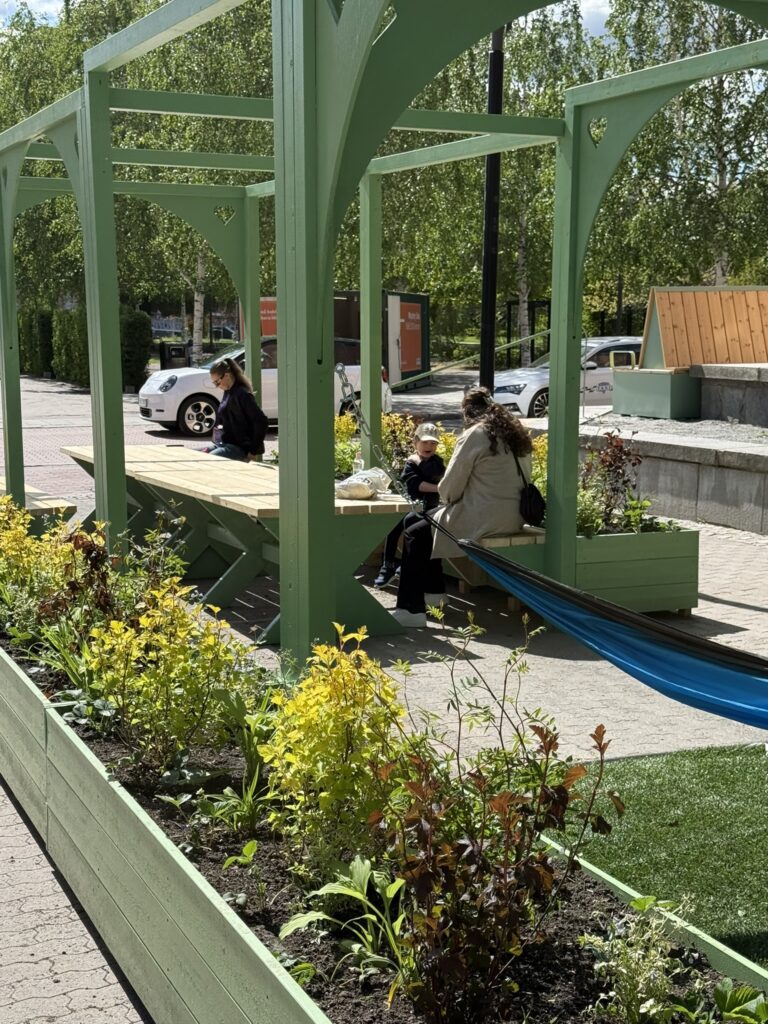
The pavilion served as a prototype for tomorrow’s inclusive educational environment, with outdoor learning and activities for people of all ages. Visitors got to learn about the ocean from a sustainable perspective. Kids of all ages got to meet up, read, conduct science experiments and learn, as well as pet fish at the petting aquarium. The concept was based on a clear perspective of inclusivity – everyone should feel welcome at Havoteket.

“Together, we wanted to create an urban venue to gather and learn, where visitors could be amazed by marine life and see how important it is to take care of it, both every day and as part of urban development,” says Berit Christenson, Regional Manager at Hemsö.

Havoteket
Havoteket was created as a partnership between the City of Helsingborg, Hemsö community properties, Tengbom architects, Serneke and the Port of Helsingborg.

Eco-friendly architecture

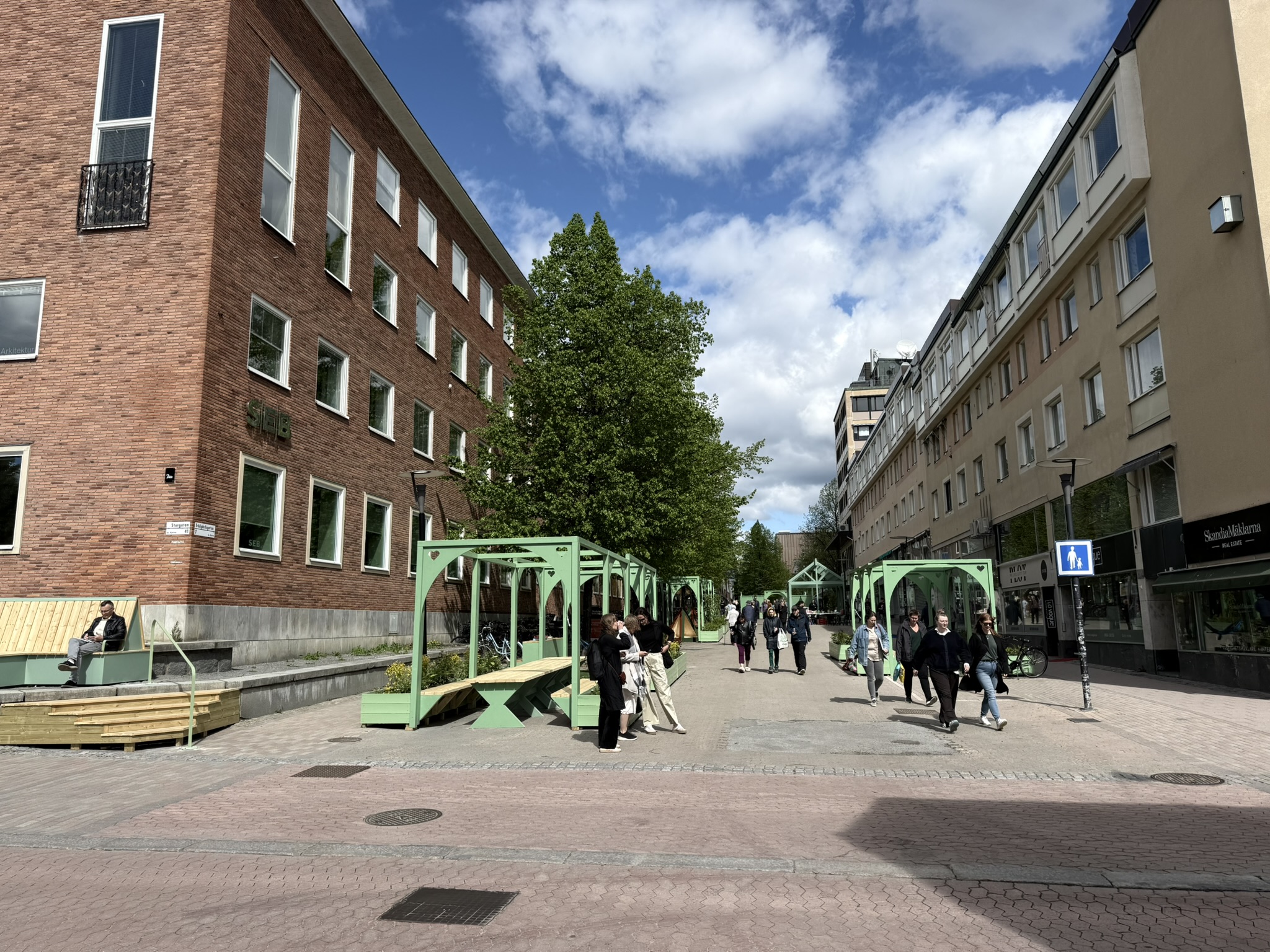
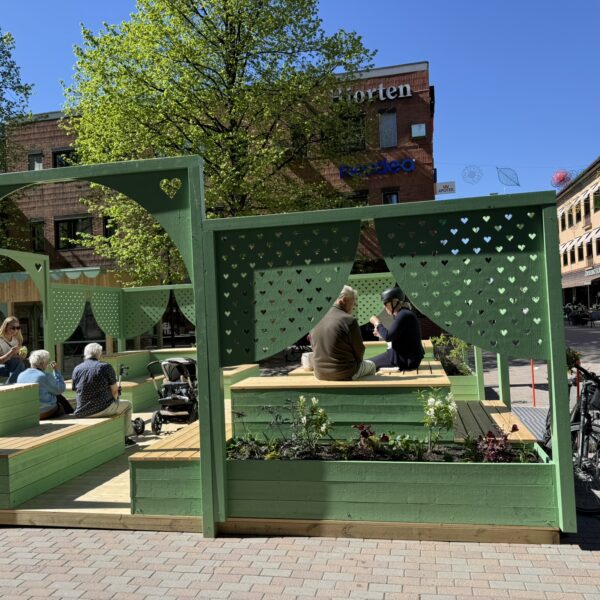
The architecture of Havoteket reflected the ocean and wind, with elements of sustainability and circular solutions. The largely reusable pavilion was nine meters tall and built with scaffolding, wooden planks, plywood sheets and scaffold netting. The billowing fabric along the facade is intended to be reminiscent of waves on the ocean. The open exhibition space totaled 185 square meters and visitors came in and out via three entrances.

The concept was based on a clear perspective of inclusivity – everyone should feel welcome at Havoteket

Havoteket
The open exhibition space totaled 185 square meters and visitors came in and out via three entrances.

Designing eco-friendly architecture that is equal, inclusive, and accessible requires a creative and incisive collaboration. Havoteket is a great example of this approach. Hopefully, more initiatives like this will emerge. When professionals work across boundaries and titles, they create new spaces that benefit people, society, and the environment.

After the H22 City Expo, the team dismantled Havoteket. Following a circular approach, they will reuse both the land and building materials.

Havoteket
The design mimics ocean waves with billowing fabric.

Contact person

Josefin Klein

Practice Director Skåne
+46 40 641 31 18

Vision Norra Djurgårdsstaden

A sustainable world class district
Urban Development
Plan & programs, Urban planning
Client: City of Stockholm, City Planning
Location: Stockholm
Year of commission: 2013
Type of project: Urban Development, Process support
Competences: Urban Planning

Norra Djurgårdsstaden is one of Europe’s largest areas of urban development, with plans to construct 12,000 new homes and 35,000 new jobs among other things. In 2013, we were given the task by Stockholm City to be the process support for the development of a new vision and urban construction strategies for the development of a world class sustainable neighbourhood.

Stockholm is on track to become a city with a million inhabitants as early as 2024. To accommodate both new and existing residents, the city must continue to evolve. To meet the growing demand for homes, jobs, services, public transport, kindergartens, green spaces, culture, and sports, Norra Djurgårdsstaden is taking shape as a new district with a strong environmental profile.

Norra Djurgårdsstaden
Illustration: Tengbom

Development over thirty years

Norra Djurgårdsstaden runs all the way from Husarviken to the north, over a large port area to Loudden to the south. If you had been here during the last few years, you would not have been able to miss the vibrant creativity we are experiencing. The planning of the new area started at the beginning of the 2000s and the development will continue in stages up until approximately 2030. In addition to 12,000 new homes and 35,000 jobs, a modern port and other strategic infrastructure such as a new tramline is created.

Support for the development of vision and strategy

Early in 2013, we were given the task by Stockholm City to  be the process support for the development of a new  vision and urban construction strategies for the development of Norra Djurgårdsstaden. Urban development processes are often both long and complex particularly when it comes to large projects such as this. A clear vision helps increase the quality and experience of the city. Just like other large cities, Stockholm has an important task to present solutions for a growing population. At the same time, it must reduce energy and resource consumption.

Through the dialogue, we find the answers together

To run processes in collaboration with our clients is amongst the most fun and rewarding things we know – it is through the dialogue that we together can develop and define both targets and strategies. In this case, we organized several large workshops and dialogue sessions both with participants from Stockholm city and invited guests including industry colleagues from OMA (Netherlands) and Gehl Architects (Denmark). Together, we tested the usability of the defined urban construction strategies and developed the vision for Norra Djurgårdsstaden.

No two projects are the same – and the same goes for the process to reach the goal. To engage the participants and drive the project forward in the best possible way and also to develop as useful a material as possible. We developed several new workshop exercises during the course of the project.

No two projects are the same – and the same goes for the process to reach the goal.

Working towards the same goal

Out of the process and our collaboration with Stockholm city, a fantastic vision emerged with concrete urban construction strategies for Norra Djurgårdsstaden. Based on the material, we developed vision documents, illustrations, graphic documentation and workshop materials. In conjunction with this, we also worked on a renewed environment and sustainability program. With great care we continuously insured that the two projects could be woven together in a common direction and a well-established vision.

Norra Djurgårdsstaden
Illustration: Tengbom

Vision Norra Djurgårdsstaden

Norra Djurgårdsstaden will be developed into a vibrant and sustainable world class port city. A city which attracts the most skilled people and the most successful companies in the world. The vision for a sustainable and climate-smart urban environment will drive the development of innovative environmental technologies. This will transform Norra Djurgårdsstaden into a hub for the businesses of the future.

The five overriding urban construction strategies

  • A living city
    New homes and jobs are coexisting side by side with new construction, adjacent districts and infrastructure. Our city– 24 hours a day – every day.
  • Accessible and close by
    Here, we are creating a dense and accessible city that provides the basis for sustainable modes of transport. Both on foot, by bicycle or public transport.
  • Responsible for climate and resources
    Contribute to the development and market Swedish environmental technology in Stockholm, Sweden and abroad. Just like other large cities, Stockholm has an important task to present solutions for a growing population. At the same time, it must reduce energy and resource consumption.
  • Let nature do its job
    Improved existing and new green areas offers human well-being and an effective circulation. Thoughtful green spaces provide a functioning ecosystem, year after year.
  • Enthusiasm and learning
    When citizens engage in various forums, they become motivated, which in turn strengthens place attachment and identity.

Contact person

Mark Humphreys

Practice Director Stockholm
+46 8 412 53 43

Hammarby Sjöstad/Sustainable City

Sustainable district creates inspiration worldwide
Architecture, Urban Development
Idea & Vision, Plan & programs, Process & Dialogue, Residential, Urban planning
Client: The City of Stockholm
Year of commission: 1997 – 2007, 2013 - 2016
Partners: Several
Developer: The City of Stockholm, Erik Wallin, Stockholmshem, Riksbyggen, Einar Mattsson
Skills/studios: Urban Development, Housing, Helsingborg, among others

Development of the internationally renowned Sustainable City district (Hammarby Sjöstad), one of Stockholm’s largest urban development projects with a strong environmental profile, got under way as early as 1990. We’ve participated on large parts of the project over the years, including work on the in-depth master plan, several zoning plans and many other construction projects.

Sustainable City spans the area around Stockholm’s Hammarby sjö (Lake Hammarby), covering Södra Hammarbyhamnen as well as parts of Södermalm. By 2017, the district will expand to include around 11,000 residences, housing over 25,000 inhabitants. The district forms a natural expansion of Stockholm’s inner city area, something that has influenced its architecture, infrastructure and urban development plan.

Hammarby Sjöstad
Photo: K-A Larsson

The Olympic village dream

From the start, planners envisioned the new district as an Olympic village. The idea was to create a sustainable neighborhood over the worn-down Hammarby harbor and industrial area. This development could have supported Sweden’s bid to host the 2004 Olympic Games. However, events took a different turn. By then, the vision for Hammarby Sjöstad had already taken shape—an environmentally friendly inner-city district offering modern housing for thousands of Stockholmers.


From master plan to GlashusEtt

Our involvement in the development of Sustainable City stretches all the way back to 1997. Among other things, we have worked on the in-depth master plan for the entire area and several zoning plans, including documentation, as well as the detailed planning and configuration programme for over 2,400 apartments as well as public spaces, workplaces, amenities and much more.

We’ve also designed GlashusEtt, the City of Stockholm’s first environmental information centre, which has generated a great deal of attention, both in Sweden and globally, since it was opened in 2002. The centre provides information about the Sjöstad environmental programme, among other ventures, with considerable dedication, and has inspired other cities around the world to follow a similar path.

Hammarby Sjöstad
Photo: Björn Lofterud

A transparent building controls and showcases key elements of the area’s environmental technology. In the cellar, it houses an automated vacuum collection tank and a rectifier station for the Tvärbanan link. The building operates through a complex environmental technology system. It uses impulse-controlled heat pumps, ventilators, convectors, and blinds. A biogas boiler, weather station, and solar cell technology are also integrated into the system.

The ultimate objective was to reduce total environmental impact by 50%, in comparison to a typical area constructed at the start of the 1990s.

Photo: K-A Larsson
Photo: K-A Larsson

The Hammarby model

The development of Sustainable City transformed the vision of a sustainable urban district into a detailed environmental program. The ultimate objective was to reduce total environmental impact by 50%, in comparison to a typical area constructed at the start of the 1990s. However, more stringent environmental demands required a completely new set of solutions. This included a closed-loop system – the Hammarby model – with solutions for energy, waste, water and sewerage.

Kasper Salin Prize winner in 2005

In 2005, Hammarby Sjöstad (Sickla Quay, Sickla Canal and Sjöstadsparterren) received the Kasper Salin Prize, one of the finest distinctions in Swedish architecture. This prize also recognised our involvement in the urban development plan for Sickla Quay. Here is an excerpt from the award statement:

”In recognition of an expertly integrated district in a beautiful city space, where urban intensity contrasts with soothing greenery and water. Through a sound balance between content, scale and infrastructure, a human touch has been harnessed in a large, complex context.”

Furthermore, you can read more about Hammarby Sjöstad at the City of Stockholm website.

Contact person

Mark Humphreys

Practice Director Stockholm
+46 8 412 53 43

Borstahusen

Modern village spurs on development
Urban Development
Idea & Vision, Urban planning
Client: City of Landskrona
Location: Landskrona
Years of commission: 2009-2012
Contractor: City of Landskrona
Type of project: City Building Mission - Vision Programmes
Competences: Urban Planning, Landscape

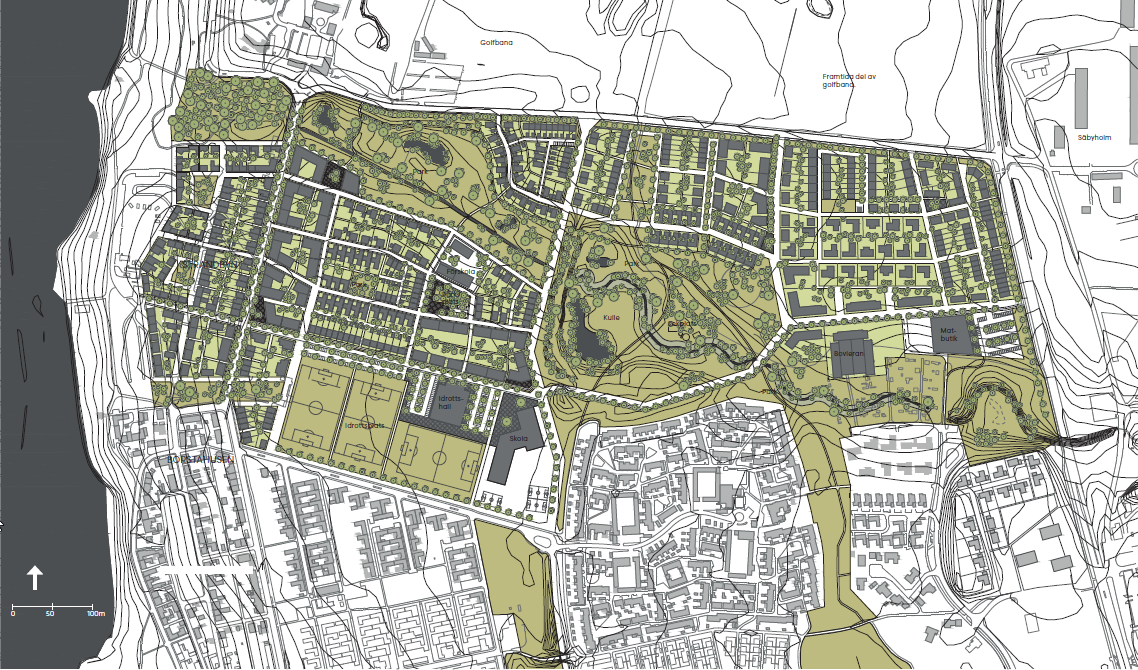
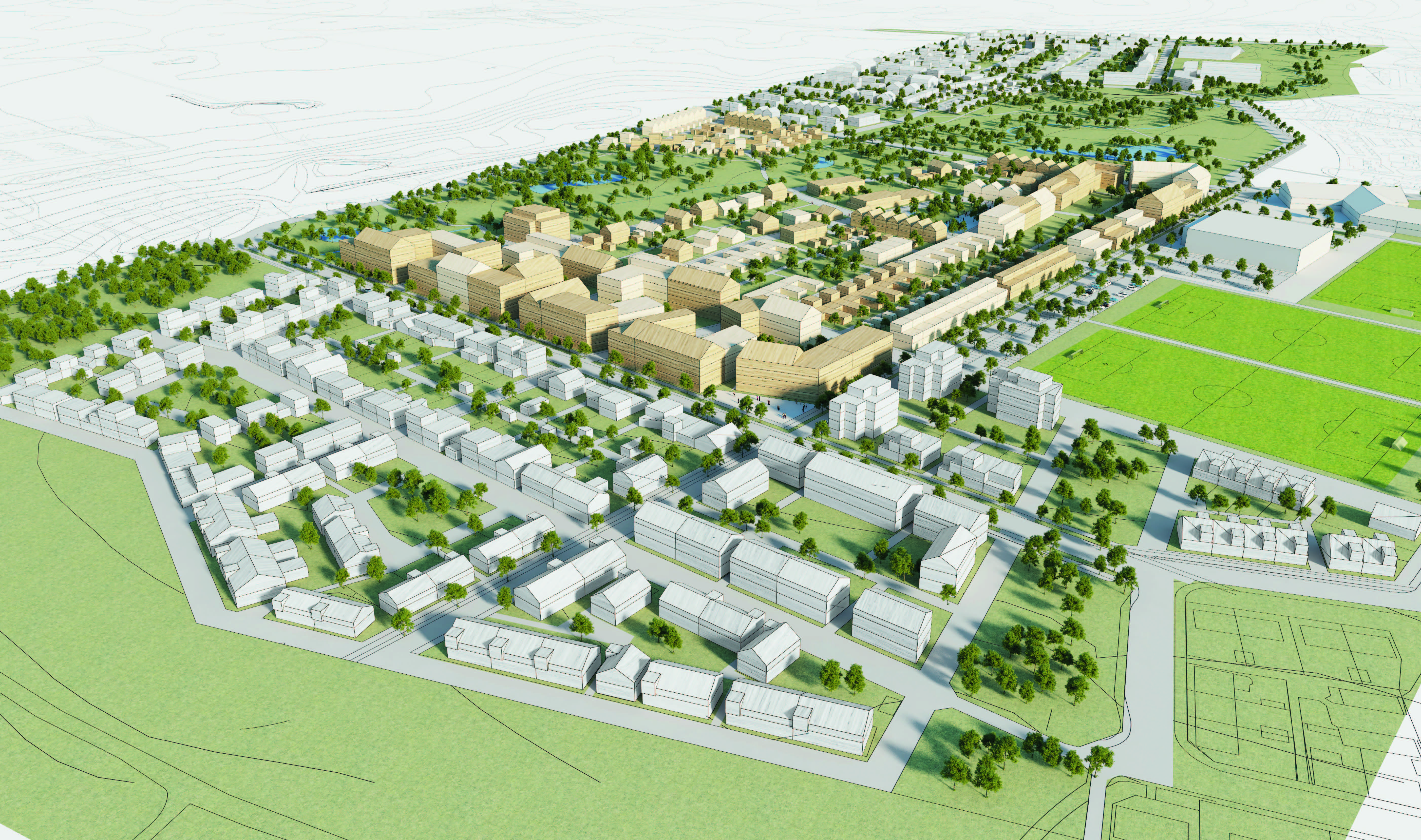
At Borstahusen, a fishing village from the 1770s in north west Landskrona, we have developed a visionary programme for an entirely new neighbourhood including approximately 1,200 homes. The project is part of Landskrona local authority’s plans to attract new target groups and harness the development capacity of Öresund.

Borstahusen is one of four focus areas that Landskrona local authority have chosen to take a closer look at from a development perspective. Right next to the old fishing village, there is a larger area with a campsite, golf course and a sports track. By finding alternative locations for these, there is the opportunity to release a large area for the development of a new neighbourhood right by the water – a unique position in Skåne county.

What is an interesting urban environment?

A visionary programme of this type requires both experience and a large dose of creativity. And maybe above all – many a conversation about what really good urban planning actually means. The ambition for the project was to create something so interesting that it attracts entirely new target groups such as business leaders and innovators. We wanted to design something completely new and different.

Illustration: Tengbom

A modern fishing village

Based on our discussions, a modern interpretation of a traditional Skåne fishing village emerged with similar structural features but to a new scale and with different architecture. From the public beach and in towards land, we wanted to create an environment where the views of the water were the most beautiful and available to all. Closest to the beach, we dared design low volumes and then increase the scale the further in towards the neighbourhood we got. Today, it is often standard to design high-rise blocks near the water to give more residents a nice view. We are trying to offer a view of the water to more parts of the city. The beach environment in an area based on a smaller scale will also become more enjoyable to the public.

A living neighbourhood with views of Öresund

We have worked hard to develop a visual contact between the city and the water. On some streets that lead straight to the beach, you can step outside the door of your terraced house quite a long way away from the beach and still see all the way to the island of Ven. The many green spaces feature narrow footpaths that also run in the direction of the water. Another challenge is to create a living environment with functions, services and flows that work naturally and that create a social community. We have focused intensively on both details and unity so that neither streets nor green areas feel like forgotten places.

We have carefully created principles and typologies that are functional so that the qualities of the vision are not lost on the way to realisation.

A vision about to be realised

Borstahusen is a large area and we have carefully created principles and typologies that are functional so that the qualities of the vision are not lost on the way to realisation. Landskrona local authority liked our proposal and today, the development process has started in Strandbyn closest to the sea where a few construction projects have begun. Strandbyn is divided into ten subareas split between five builders. The principles of the programme for structure, construction and scale offer a creative freedom that appears to stimulate a high architectural level in the new projects, which makes us both happy and full of expectations when it comes to future development of the area.

Contact person

Josefin Klein

Practise Director Skåne
+46 40 641 31 18