Awards and recognitions:
Winner of the Architecture Award, Karlstad Municipality 2017 & 2018
Contractor:
Löfbergs fastigheter/SPG Bostad
Bryggudden, Karlstad’s newest district, sits right on the water, just a stone’s throw from the city center. The gentle sounds of boats in the Inner Harbour fill the air. The rich aroma of Löfberg’s Coffee Roasters drifts through the streets. Historic harbor warehouses stand beside modern housing, creating a vibrant and timeless waterfront atmosphere.
Bryggudden is growing! The number of homes is increasing at a steady pace and is filled with people who want to live here, where classic landmarks and old buildings meet new. Bryggudden is surrounded by water on two sides. All the apartments in the new buildings have balconies and if you look east, there is a view of Pråmkanalen. When Löfbergs moved their warehouse, the ambition of Löfberg Fastigheter AB was to fill the area with more apartments, a large food store, a preschool and a multi storey car park. Today, Bryggudden is an area full of life.
New residential area surrounded by water
On the south-west side of Bryggudden there is a quay area where you can walk along the jetties, cafes, and outdoor restaurants. If you turn east, there is a canal area where the sides of the buildings are facing the street. These two areas meet at the Redaretorget at the southernmost tip of the area. This is where the city’s newest landmark can be found, in the shape of Karlstad’s tallest building: a 20-storey high apartment complex housing 62 flats with a view of Karlstad and Vänern.
600 high quality homes
Tengbom has been involved in Bryggudden since the project began. The team has developed seven phases. Four completed, two underway, and one still on the drawing board.
In recent years, several large construction projects have finished, with more on the way. These include both rental and privately owned apartments. So far, Tengbom has designed over 600 modern, high-quality homes in Bryggudden.
Our vision for Bryggudden has been to create exclusive residences inspired by the character of the old harbor warehouses in the area
A touch of the old warehouse
The classic 1950s buildings with light brick across Pråmkanalen inspired the latest phases of Bryggudden. The upcoming phases maintain the same volume and scale but take on colors from surrounding buildings. Dark red brick and black detailing create a strong connection to the harbor warehouses.
“We use a lot of bricks and solid materials,” says Anki Haasma, architect and office manager. “The client, Löfberg Fastigheter, wants to preserve the marina feel.”
Well-known landmarks in Karlstad frame the new area, and many residents enjoy views of Karlstad’s water tower.
Flexible, urban, and sustainable accommodation for the modern family with small children? “No problem!”, we sunk our teeth into the problem right away. With Ikano Bostad we designed town houses in partnership, after winning a competition.
The target audience is the modern family, which can take a number of different forms. Some parents live as couples, while others are single parents, have a baby on the way or look after their child every other week. This can obviously place high demands on the house. We think that it is important to focus on everyday needs, designing houses to suit people – not the other way round.
Our vision was to create smart, flexible, personal housing, and our aim was to make it adaptable, enabling smart choices, as well as sustainable. We feel we’ve succeeded.
Ears to the ground
So what do families demand nowadays? That is where we started. How do we make life easier for the people who live in the house, so that they have time left for things other than cleaning, doing the dishes, the washing, stressing – the big question, right?
Of course, the home should be cosy and inviting. That’s why we used high-quality materials, both inside and outside, offer a pleasant fireplace, the opportunity to include a greenhouse, and have designed a well-thought-out floor plan where the lower floor is more open and social, while the upper floors give the feeling of separation.
Another more basic, but well-functioning, solution to at least some of these problems lay in storage. A tidy everyday life requires proper wardrobes, this much is clear. We therefore designed extra opportunities for tucking things away. And as the cherry on the cake, we have customised them to Ikea’s popular wardrobe series.
“The concept is based on a small number of components which can be joined together – like Lego in a way – into various configurations, dependin on the individual, community and location.”
Stefan Rydin, Business Developer
Flexibility a matter of honour
This type of reality anchoring and flexibility has been a golden thread throughout the project, both from us and Ikano Bostad.
These are combined to create different types of houses, providing a system that can be altered and developed over time for different locations. Urban characteristics such as varying heights, displacements, open ground floors, private upper floors and renewable materials create a diverse environment, reinforcing the city feel.
A better world for everyone with Ikano Bostad
But if you want to make the world better, you have to think even bigger — and that’s exactly what we did. It’s not just families’ everyday lives that should be versatile and sustainable, but the entire neighbourhood. By building small, flexible houses, we can use sites that are otherwise hard to develop. At the same time, we unlock attractive locations near the city that have long stood unused.
Creating housing that works on several levels is essential.
Many young families want to live climate-smart but are unwilling to compromise on the emotions and aesthetics tied to their home. We have listened to these needs. Homeowners can customize many aspects of their house while the buildings maintain a shared design language. This balance creates a strong visual relationship and a popular urban look. Smart solutions also make sustainable living easier. Zero-maintenance façades, solar panels, garbage sorting, and car pools help parents meet their environmental ambitions with less effort.
First to be completed are the town houses in Vikhem in Staffanstorp and Elinegård in Malmö. But the point is that the houses can be adapted to numerous locations. For example, Ikano Bostad has now bought land in Nacka to build 100 homes.
Partners:
Antunovich Associates, West 8, BCT Architects
Year of Commission:
2016-2020
500 apartments and amenity spaces were on the wish list when Tengbom was flown to Washington DC to create exclusive Scandi interiors that will attract design-savvy Americans to the new residential area on 1st Street at Buzzard Point.
– I love it! – We love you! – Bring forth the lobster! – And the cappuccino!
That’s the sound of excitement when Scandinavian architecture makes an entrance in the United States. Tengbom has been commissioned to design 500 apartments with adjacent amenity spaces, which include a spa area, gym and a rooftop terrace with a pool in a property in the Buzzard Point area of Washington DC.
The project, which covers a total of 100,000 square meters, is scheduled to start in January 2018 and will be completed in 2020. There is a lot going on in the area – the entire district is being raised from the ground under the skilled eyes of renowned architect firms, including West 8 – whom we collaborate with in this project.
The whole story begins in Stockholm, where one of the American clients was staying briefly. One day, as he was walking in the city, he stumbled upon The Temporary Market Hall at Östermalmstorg, one of Tengbom’s most praised projects in recent years. It was love at first sight, and on the spot, he decided that he wanted to hire the company behind it for his new residential project at Buzzard Point.
Straight into the heart
The US Coast Guard previously occupied the building, but it will now transform into housing inspired by Nordic design. On-site in Washington, Johanna Munck of Rosenschöld and Stefan Rydin detailed their approach to the project. They presented the theoretical foundation and explained their material choices. The theme, The Scandinavian Way of Living, received standing ovations.
“Yes, it was totally unexpected but great fun. It is very rare to get standing ovations at meetings in Sweden”
says Stefan Rydin
The love of light and nature
The idea is to create something completely new in Washington DC’s dense residential flora. Going the other direction than the trending “industrial chic”, we proposed light wood, natural materials such as leather, terrazzo and stone – all with great attention to high-quality material compositions. Top quality and meticulous finishes are be-all and end-all when it comes to environments based on clean lines.
“Industrial chic wasn’t even an option for us. Instead, we’ve tried to grasp the essence of Scandinavian design with its simplicity and clarity. In order to create an appealing and functional environment, the performance needs to be top-notch. We make very high demands on materials and the meeting points between them. The floor we choose is a wooden floor, but only the best quality will do, and this has been our approach to every detail, “says Stefan Rydin.
The new residential building’s design focuses on access to natural light and provides a lot of space for social gatherings.Winning expertise
Our housing and interior architects won the commission in tough competition with three New York offices. For this project, Tengbom collaborates with local architects on-site, Antunovich Associates, but will have the main responsibility for the design. The team has already launched the project and expects to complete it in 2020.
As part of the contest for land allocation in a new district for housing and daily consumer goods, the aim was to create a future-orientated, urban, mixed-use district fully adapted to its surroundings in Brunnshög. The objective is to develop the Brunnshög district, based in Lund, into the world´s leading environment for innovation and research and a showcase for world-class urban development. By adopting a sensible, responsible approach to planning, we envisage a fantastic place in which to live, work and spend time. The vision is to make Brunnshög sufficiently appealing to attract visitors from all over the world. But how?
Situated in the north east of Lund, the new district of Brunnshög is emerging around the two research facilities of MAX IV and ESS. It is envisaged that the area will be home to around 40,000 residents and workers.
Illustration: Tengbom
Our vision of a sustainable community
As our society grows increasingly urbanised, we face the considerable challenges posed by climate change, more stringent demands on sustainability, constant time pressure and ill health. Although much of what makes us feel good costs nothing – chatting with our neighbours, daily exercise and a good night’s sleep – this is typically what many of us are lacking. Climate change is posing new, increasingly demanding challenges on the robustness of developments in relation to heat and water. Global warming is an issue many people find difficult to comprehend. What difference does it make if I take a holiday on the local hiking trail rather than travelling to Thailand?
Although much of what makes us feel good costs nothing – chatting with our neighbours, daily exercise and a good night’s sleep – this is typically what many of us are lacking.
Architecture which maximises sensory impression
When devising the concept for the district in proximity to the future square and tramway stop in Brunnshög, it was imperative that its functions and ambitions would meet the high standards encompassed by the Brunnshög vision. Our proposal involves creating a living environment for people and animals, which encourages taking the time to live and breathe, rather than consuming products. Minimising environmental impact by sharing, renting, borrowing or exchanging items. Maximising sensory impression through appealing architecture, which emphasises cultivation, food and dialogue.
Illustration: Tengbom
A district focused on the dining area
Our new district, the dining area of the future, focuses on the entire life cycle of food. It covers everything from cultivation to sales, preparation, and food waste management. The area is deeply connected to food and the dialogue around its role in the future of the city. A robust flexibility allows various participants to contribute and interpret food’s significance in different ways.
Our vision with the district is to create a diverse range of urban spaces of different sizes, functions and green structures. We want the buildings constructed here to stand for a hundred years. That is why we chose bricks for the façade, symbolising safety, warmth, identification, power and authority. Steel, wood and glass elements were also added as a clear compliment to the central brickwork. Over time, vines will grow over façades and balconies, becoming an integrated part of the design. The structures withstand use, reuse, and the test of time.
Industrial inspiration in an exciting neighbour-hood
Architecture
Residential
Client:Byggnadsfirman Erik Wallin AB
Location:
Norra Djurgårdsstaden, Stockholm
Years of commission:
2004–2008, 2011–2014
Type of project:
Residential
Competences:
Residential, Sustainability
While designing the Abisko neighborhood, we drew inspiration from the beautiful industrial structures of the 1800s in Norra Djurgårdsstaden, known for their high-quality brick and steel. Our client, Erik Wallin, aimed to create solid, high-quality homes with a façade that stood out from the rest of the area. The result is two interconnected seven-story buildings, constructed according to strict environmental standards, housing a total of 42 well-designed flats.
Photo: Michael Perlmutter
The façade material that we chose was hard-burnt bricks and shaped bay windows in corten steel – a durable material with a beautiful, rust-coloured patina. The vivid texture and colour variations of the brick, along with the characterful bay windows, create an interesting unity, which enrich the urban space both from a distance and close by.
Attention to detail
We focused on every detail to ensure high-quality flats. Additionally, the design emphasizes connections between rooms and generous views. From the bay windows, residents enjoy stunning views of the beautiful Nationalstadsparken. Meanwhile, towards the courtyard, slanted glass balconies extend from shielding brick walls, creating private patios facing southwest. The design recesses the top floor from the street and shapes it as a maisonette.
Photo: Michael Perlmutter
Illustration
Photo: Michael Perlmutter
Nomination for Årets Bygge
The neighbourhood Abisko in Norra Djurgårdsstaden is a close partnership between five contractors. From a design point of view, it is an exciting development where each contractor worked with their own architect to create an exciting and contrasting unity. Our buildings, along with others in the area, earned a nomination for the award Årets Bygge 2015. This year’s Building of the Year is the civic construction sector’s most prestigious competition. It highlights excellence in quality, project collaboration, finance, and design.
Competences:
Residential, Landscape, 3D illustration, Hotel & Restaurant, Accessibility
Södra Centrum (South Central) is a completely new district that is emerging just outside the centre of Gothenburg. We won two architecture contests during the planning of the area, one of which provided the opportunity to design a new residential building, including commercial street level, for JM. Welcome to Light Factory GBG.
The new inner-city district will be characterized by innovative, sustainable, and urban architecture. Moreover, an important aspect of the design of Södra Centrum is to create a well-thought-out urban environment that connects the new district with Gothenburg’s inner city.
Nyx or Nova – which suits you best?
Light Factory GBG consists of 250 apartments located above street level, including shops, cafés and restaurants. The building is divided into two sections, which we are developing into two distinctive residential concepts.
The goddess of the night according to Greek mythology, Nyx lends her name to the more unrefined part of Light Factory GBG. This section contains open, space-efficient apartments with an industrial character, with the studios containing a galvanised expanded metal partition wall facing the sleeping area, and the larger properties featuring sliding doors between the bedroom and living room.
Nova – star, in Latin – is the name of the lighter, more stylistically clean concept within Light Factory GBG. Most of the apartments feature consistent layouts with light intake from two directions, large window sections and glazed balconies or terraces.
Housing for the future with smart functions
Light Factory GBG provides comfortable, future-orientated housing designed for an urban target audience of young adults and the middle aged. Open, light, and spacious, the properties feature an open-plan layout. Residents benefit from smart functions such as wireless audio systems in the apartments, carpools, and charging stations for electric vehicles. Beyond shops and restaurants, the development includes communal spaces. Loungers and New York-inspired roof terraces create natural meeting places.
High-visibility urban architecture which grabs the attention
Urban architecture and the pulse of the city underpin the entire Light Factory GBG concept. Facing Mölndalsvägen and the E6, the building is 120 metres in length and spans 10 storeys. The objective is to create an intricate, visible exterior which captures the attention. Meanwhile, the building’s lighting is fully integrated, dovetailing with the design.
Awards and nominations:
Winner of World in Property Award 2020
Partners:
Chalmers, HSB, Johannaberg Sceince Park, Akademiska Hus, Bengt Dahlgren, Electrolux, Elfa, Göteborg Energi, Peab, Tieto, Vedum
In this unique living lab, students and researchers share their daily lives while we study their living habits, materials, and technologies shaping the future of housing. The insights we gather guide the changes needed to create better conditions for future generations.
In the autumn of 2013 we made the decision, as the first external partner, to join the project HSB Living Lab. This decision resulted in phase one, which meant that we contributed to a brick-and-mortar location along with our other partners, HSB, Chalmers and Johanneberg Science Park. Today, we are twelve partners. HSB Living Lab pioneers real-life testing of new technological, social, and architectural innovations. For ten years, the house will serve as a living laboratory and home to about 40 students and researchers.
Photo: Felix Gerlach
It is an arena for developing new ways to build and shape the future of housing, as well as a platform for work between collaboration partners. It will feature a residential section with student housing and an exhibition area, including offices, meeting rooms and showrooms for research. The project is one of a kind, as it is the first house where people will live while the research goes on.
Where yesterday’s architects might consider themselves to be finished, we are now continuing to develop our work in the building and its programming
Our role as architects
We designed the building as more than just a physical structure. It functions as a dynamic research platform, adapting both financially and functionally to support ongoing scientific work. Modular construction forms the foundation of the design, making the building itself part of the research. Researchers will evaluate these modules for future housing solutions, testing them as infill projects on streets or as standalone buildings in open areas. Some units could even be placed on rooftops to create three-dimensional properties.
Photo: Felix Gerlach
“Where yesterday’s architects might consider themselves to be finished, we are now continuing to develop our work in the building and its programming. It is a special and exciting situation for us to be working on a project where the goal is not a finished structure, but rather a constantly updated, changing process,” sais project architect Peter Elfstrand.
Why are things the way they are today? How did they get this way? Is there anything we can change, and if so, how? Do things correspond with what we see as the needs of our times?
As architects, we have a great deal of responsibility towards social-centric building and thinking in a broader perspective with a long-term view. What we plan and build today must be adapted for the future, with the largest foundation in reality. But what can we really know about the future? Nothing, many would argue, but our commitment to the HSB Living Lab is a unique opportunity for us to participate in the dialogue on research and housing, both in the present and in the future. Along the way, we have the opportunity to ask questions such as: Why are things the way they are today? How did they get this way? Is there anything we can change, and if so, how? Do things correspond with what we see as the needs of our times?
What (and what not) to do
It is easy to get caught up in what not to do, and hindsight is of course 20-20. For example, many of us agree that it is not a good idea to build homes based on laws and rules derived from the 1940s and 1950s – something the trade still does today.
Photo: Felix Gerlach
This approach hardly creates buildings for the future, tailored to generations with needs and perspectives different from their parents. Researchers have conducted similar studies before, like those we are now exploring with HSB Living Lab. Historical examples include kitchen studies in the People’s Home (Folkhemmet) of the 1930s and the Case Study Houses in post-war America, designed to address the urgent housing shortage. Many of these experiments missed the mark and are now considered failures. So, what suggests that this living lab will succeed?
“We are twelve equally involved and very committed partners; the central focus here is cooperation between academia and industry. Now we have reached a level where we are starting to work together in earnest. The results are hotly anticipated, but the most important thing is perhaps to always focus on people,” says Peter Elfstrand.
We see it as a blank canvas, something that can stand to be rearranged.
Photo: Felix Gerlach
People in focus
The house serves as a technical stronghold, equipped with hundreds of sensors that monitor and analyze residents’ lifestyles and habits. For example, sensors track how often and when windows and refrigerators open to determine optimal cooling times. Researchers focus on electricity and water usage, but without making residents feel monitored. To ensure privacy, all data is coded. Residents should experience the building as a home, while partners have the opportunity to contribute their expertise and research. Democratic design forms the foundation of this approach.
A democratic design
Critics and observers have questioned the building’s aesthetics. No, it does not resemble something out of a sci-fi movie, and for good reason. The design was never meant to create an iconic structure that overshadows its content. Instead, the goal was to build a platform that evolves over time, remaining both dynamic and inclusive. As architects, we do not dictate answers or solutions in advance. Instead, we create the conditions for them to emerge. We see the building as a blank canvas, designed to be rearranged. This approach results in a flexible design with standard dimensions, interchangeable panels, and adaptable systems. The building’s aesthetics align with these fundamental principles.
Photo: Felix Gerlach
Photo: Felix Gerlach
Photo: Felix Gerlach
In this project, we have not been able to take anything for granted. We’ve thrown everything up in the air and tested the boundaries between private, common and public. We have held focus groups with everything from behavioural scientists to sailboat manufacturers with expertise in galleys. Not taking anything for granted has been a great challenge, but it is also the driving force.
A major challenge
As architects, we take full responsibility for driving projects forward—asking questions, pushing boundaries, and ensuring thorough investigation and answers. This approach is challenging and, in some ways, breaks with tradition. At the same time, we see it as a strength to embrace experimentation and conceptual thinking. Through the projects we develop in the house, we expect to learn a great deal—not only from our successes but also from our mistakes.
One of our studies, called the Next Generation Kitchen, has already resulted in a product that students from Rice University in Texas are testing in the prototype phase in the house. It is called BioBlend and it is a waste grinder that creates finely ground compost within a closed system. We are also researching future storage in the house and solar panels on the façade. A lot can happen in ten years, but perhaps what we will learn the most from are the social aspects of how we will, and will want to live in the future. In effect, our participation in the project means that we have clients at arm’s length with which to conduct dialogues.
The greatest advantage for us as architects is perhaps that based on the facts we obtain. We actively shape the changes we envision to create a better environment for future generations. When it comes to building the future of sustainable cities and houses, the architect has an important and decisive role. We are inspecting, analysing and challenging this role now to become even better at what we do.
Sustainable district creates inspiration worldwide
Architecture, Urban Development
Idea & Vision, Plan & programs, Process & Dialogue, Residential, Urban planning
Client:The City of Stockholm
Year of commission:
1997 – 2007, 2013 - 2016
Partners:
Several
Developer:
The City of Stockholm, Erik Wallin, Stockholmshem, Riksbyggen, Einar Mattsson
Skills/studios:
Urban Development, Housing, Helsingborg, among others
Development of the internationally renowned Sustainable City district (Hammarby Sjöstad), one of Stockholm’s largest urban development projects with a strong environmental profile, got under way as early as 1990. We’ve participated on large parts of the project over the years, including work on the in-depth master plan, several zoning plans and many other construction projects.
Sustainable City spans the area around Stockholm’s Hammarby sjö (Lake Hammarby), covering Södra Hammarbyhamnen as well as parts of Södermalm. By 2017, the district will expand to include around 11,000 residences, housing over 25,000 inhabitants. The district forms a natural expansion of Stockholm’s inner city area, something that has influenced its architecture, infrastructure and urban development plan.
Photo: K-A Larsson
The Olympic village dream
From the start, planners envisioned the new district as an Olympic village. The idea was to create a sustainable neighborhood over the worn-down Hammarby harbor and industrial area. This development could have supported Sweden’s bid to host the 2004 Olympic Games. However, events took a different turn. By then, the vision for Hammarby Sjöstad had already taken shape—an environmentally friendly inner-city district offering modern housing for thousands of Stockholmers.
Photo: K-A Larsson
Photo: K-A Larsson
Photo: K-A Larsson
From master plan to GlashusEtt
Our involvement in the development of Sustainable City stretches all the way back to 1997. Among other things, we have worked on the in-depth master plan for the entire area and several zoning plans, including documentation, as well as the detailed planning and configuration programme for over 2,400 apartments as well as public spaces, workplaces, amenities and much more.
We’ve also designed GlashusEtt, the City of Stockholm’s first environmental information centre, which has generated a great deal of attention, both in Sweden and globally, since it was opened in 2002. The centre provides information about the Sjöstad environmental programme, among other ventures, with considerable dedication, and has inspired other cities around the world to follow a similar path.
Photo: Björn Lofterud
A transparent building controls and showcases key elements of the area’s environmental technology. In the cellar, it houses an automated vacuum collection tank and a rectifier station for the Tvärbanan link. The building operates through a complex environmental technology system. It uses impulse-controlled heat pumps, ventilators, convectors, and blinds. A biogas boiler, weather station, and solar cell technology are also integrated into the system.
The ultimate objective was to reduce total environmental impact by 50%, in comparison to a typical area constructed at the start of the 1990s.
Photo: K-A Larsson
The Hammarby model
The development of Sustainable City transformed the vision of a sustainable urban district into a detailed environmental program. The ultimate objective was to reduce total environmental impact by 50%, in comparison to a typical area constructed at the start of the 1990s. However, more stringent environmental demands required a completely new set of solutions. This included a closed-loop system – the Hammarby model – with solutions for energy, waste, water and sewerage.
Kasper Salin Prize winner in 2005
In 2005, Hammarby Sjöstad (Sickla Quay, Sickla Canal and Sjöstadsparterren) received the Kasper Salin Prize, one of the finest distinctions in Swedish architecture. This prize also recognised our involvement in the urban development plan for Sickla Quay. Here is an excerpt from the award statement:
”In recognition of an expertly integrated district in a beautiful city space, where urban intensity contrasts with soothing greenery and water. Through a sound balance between content, scale and infrastructure, a human touch has been harnessed in a large, complex context.”
Furthermore, you can read more about Hammarby Sjöstad at the City of Stockholm website.
We know wood. We like to use wood in construction. Therefore, when a municipality with high environmental ambitions and a great need for new construction told us of their vision for Åsbovägen in Fristad, our contemporary apartment buildings constructed from wood was the answer they were looking for.
In the spring of 2015, two high-rise blocks built from wood appeared, nicely situated in a small forest on a hill outside of Borås. The apartment blocks with a contemporary character, featuring vaulted roofs and a façade made from wood chips certainly attract people’s attention. But attention or bragging was never the goal for the flats in Fristad. Instead, the people Borås municipality spoke about focusing on wood due to its excellent environmental qualities.
Åsbovägen. Foto: Bert Leandersson
The public housing company Fristadbostäder, Fribo, had not built anything new since 1991, so there was a great need for new apartments in Fristad and when the time came to invest, they wanted to do it and still have as little impact on the environment as possible. The procurement was given to the local company Fristad Bygg – experts in industrial construction in wood for 75 years.
“We really did not want to see anyone else construct wooden buildings in our own backyard”, says Daniel Lyckvik, project manager at Fristad Bygg, to Byggindustrin in the article ‘Wood frames resulted in a better live cycle analysis’ (24 Feb 2016).
To build and construct in wood
Fribo elected to construct houses with wooden frames to reduce the impact on the environment.
“In conjunction with the contractor, we made a life cycle analysis which showed that based on a life cycle of 50 years, we will have reduced the carbon dioxide emissions from the buildings by half simply by choosing a wood frame, compared with if we had built the same buildings with a concrete frame”, says Kjell-Ove Sethsson, CEO at Fribo, to Byggindustrin.
The architects at Tengbom, Magnus Almung and Jan Izikowitz, fired on all cylinders when presented with the municipality’s ambitions and worked according to the motto ‘wood all the way’. Contrary to popular belief, constructing from wood does not necessarily lead to high production costs, and then to high rents which in turn leads to segregation and exclusive dwellings. Instead, our architects tried to think outside the box and focused on a very rational construction.
“The buildings have been erected using industrial methods with a high level of prefabrication.”
Jan Izikowitz, Architect
Åsbovägen. Foto: Bert Leandersson
Smart, efficient, and sustainable construction
“The buildings have been erected using industrial methods with a high level of prefabrication. For example, the up to 16-metre long solid wood elements were prepared with milled grooves for electrical installations and window openings. Building using wood shortens the construction time on site because there aren’t any drying times to wait for which you have to do if you construct from concrete.
Åsbovägen. Foto: Bert Leandersson
The low weight of the wood also facilitates transports and foundations so there are many advantages”, says Jan Izikowitz.
By working with wood all the way, from frame to internal top layers, a small carbon dioxide footprint is guaranteed since wood is such a durable material. In addition, it ages well and at the end, it can be recycled as fuel. Solid wood can also store energy and air humidity. The wood chip façade is also an economical option since it consists of waste from the manufacturing of cedar façades in Canada. As we were saying, the price is also an advantage. Let’s do some calculations; the price per m2 for a home in Fristad is on average SEK 1,450, which means that a two room flat of 60 m2 costs roughly SEK 7,500 a month.
The feeling of being surrounded by natural materials is hard to put a price on
Quality of life
That’s all very well, but what is it like to live in these environmentally optimised, low-energy buildings? The quality of life that you experience when you live and spend time in wooden houses is a bonus included in the price. The feeling of being surrounded by natural materials is hard to put a price on.
Even indoors, wood surrounds the residents, creating a warm and cosy atmosphere. The internal walls, stained white, enhance this feeling. See-through stairwells, daylight from multiple angles, and views in two directions make the apartment blocks in Fristad truly special. And it’s not just us who think so—the residents themselves praise the project.
Åsbovägen. Foto: Bert Leandersson
“We haven’t put up any pictures yet—the wooden walls are far too beautiful to cover,” says Rickard Harvonen to GP Bostad in the article “The apartment block raises wood to new heights” (1 Feb 2016).
The same article features interviews with several residents who highlight the sound insulation as another key advantage. Sound travels easily in wooden buildings, but architects Magnus Almung and Jan Izikowitz solved this by designing each flat as a separate, sound-insulated box. These boxes are then stacked on top of each other. We never settle for existing solutions if they don’t meet our standards. This approach posed an economic challenge, but we found a way to make it work—at a cost comparable to a standard apartment block. Once again, we proved that building with wood doesn’t have to be more expensive.
“It is very motivating to construct flats of high quality. These houses stand out in more ways than one”, says Magnus Almung at Tengbom.
Åsbovägen. Foto: Bert Leandersson
Praised and loved by all
Praise has been coming from many directions when it comes to the apartment blocks in Fristad. Our proudest moment was when we won Borås Town Construction award 2015 for the category Residential building. The prize is awarded every three years to showcase good examples in architecture and city construction in the municipality. The jury focused on ours and our partners’ way of thinking out of the box. The clear character of the buildings and the fact that they help making the central parts of Fristad more dense.
Leif Josefsson who lives in Fristad says the following to GP Bostad (1 Feb 2016):
“The houses have style, they are a little different. Everybody appreciates them so I think that we may see many more of these in the future.”
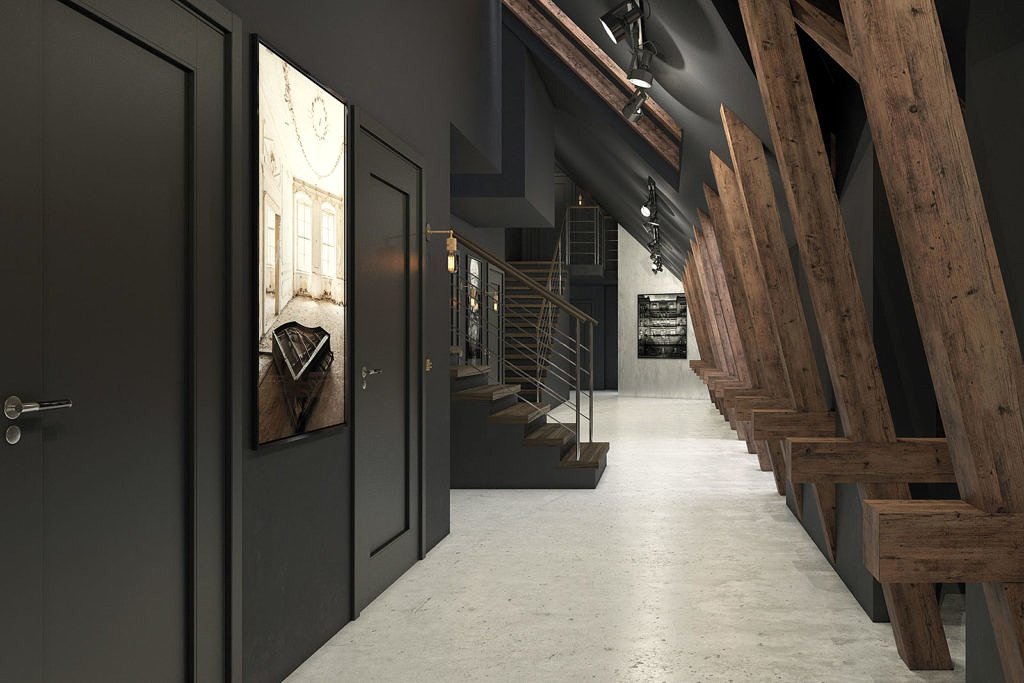
Centrally located in Uppsala, in the venerable and beloved district Luthagen, there is a remarkable turn of the century mansion. The building goes under the name Vasahuset but is locally known as the “blue house” due to its rare, dark-blue colour. The tall building lies directly opposite the vibrant Vasaparken and facing two of Uppsala’s most well-known landmarks – the cathedral and the castle. Many people harbour a dream of living in Vasahuset and it is easy to see why.
New law – new possibilities
In the university city Uppsala, there is a constant lack of housing. However, this is not unique to Uppsala. The fact is that more than half of the municipalities in the country don’t have enough housing for the young. To increase the ability to build smaller dwellings, certain changes and easements to the Planning and Building Act came into effect on 1 July 2014. In connection with these new rules, a dormant idea to use the lofts of the Vasahuset was rekindled with our client, Setune. Suddenly, there was an opportunity to turn the idea into reality.
Vasahuset. Photo: Setune Fastigheter
We developed a complete concept with a clear goal: to create a series of optimally planned 35 m² studio flats, ready for move-in during the first quarter of 2017. In autumn 2014, we signed a joint project with Setune and looked forward to an exciting challenge.
At Tengbom, we have a long-standing tradition of caring for, and improving upon, historically and culturally important buildings. We know culture!
Photo: Setune Fastigheter
Photo: Setune Fastigheter
Photo: Setune Fastigheter
We know culture!
The notable and well-known Vasa building is centrally located, in an area that is difficult to densify. To be able to enrich the area with many small interesting apartments featuring a fine view of Uppsala is an important aspect of the project. Since the house is important from a historically and culturally perspective, we have had quite a few challenges. There has for example been a long discussion concerning how best to add daylight to the flats. We consulted with the municipality and an architectural antiquarian to make this possible without destroying the character of the building. Tengbom have completed several projects before when it comes to renovating buildings that are historically and culturally important. We know culture!
Innovative possibilities
The existing loft offered us a challenge that you don’t come across very often. We have worked well with Setune who have been curious and open to new ideas the whole time. The volume of the loft spread over two levels made it possible to create no less than 29 apartments of approximately 35 m2 each. The flats can be reached from a common gallery.
The project is a concrete example of a sustainable solution to ease the pressure on accommodation in central Uppsala and in other Swedish cities.
The changes to the Planning and Building Act gave us the opportunity for innovation, by utilising the potential in a previously unused construction volume. The project is a concrete example of a sustainable solution to ease the pressure on accommodation in central Uppsala and in other Swedish cities. Now, the dream of living in the blue house can now become reality for a few more people.


 Winning expertise


 future-orientated