Archives

Swedish National Museum of Art

Eye-opening architecture - National Museum
Architecture, Cultural Heritage
Accessibility, Building Preservation & Restoration, Culture, Heritage Expertise, Renovation & Transformation
Client: National Property Board
Years of commission: 2013-2018
Architects: Wingårdhs with Tengbom as subcontractor
Awards and recognitions: Årets Betongarkitekter, Stenpriset, nominated for Kasper Salin

Through Erik Wikerstål, formerly Wikerstål Architects, Tengbom, as a sub-consultant to Wingårdhs, has carried out restoration, renovation, and updating of the Swedish National Museum of Art. On October 13, 2018, the doors were reopened to the public, and it is in every way a lighter museum that is met by the visitors.

It took five years with much respect, finesse, and expertise to dismantle the Swedish National Museum of Art and then reassemble it in an updated, modern, and accessible version. For 150 years, the museum has been rebuilt time and time again based on various prevailing ideals. They have built windows, lowered ceilings, and changed the floor plan. Now, on behalf of the National Property Board of Sweden, Tengbom, in collaboration with Wingårdhs, metaphorically opened the museum’s eyes, let in the light and re-established contact with the city and world outside.

Above all, the work has entailed a major technical renovation focusing on personal safety, fire safety, climate, and accessibility. The result is a museum that is better for the visitor, better for the art, and better for the staff who work there.

All the light in the courtyards 

The team raised the courtyard floor to accommodate new ventilation equipment placed in Blasieholmensberg. They then lowered the church hall floor to its original level, creating an accessible entrance on the same plane. To improve accessibility, they also converted eight windows around the courtyards into doorways.

The southern courtyard has received an expressive addition in the form of a lift tower. It is designed to be a large sound-absorbing box with the function of an altar cabinet where the screens and technology for seminars are hidden behind two large doors.

Swedish National Museum of Art
Erik Wikerstål in front of the elevator tower.

“The only new form we have introduced is essentially a wickerwork structure on the lift tower,” Erik says. “We also added a small concrete service building at the back of the museum.”

Swedish National Museum of Art
The concrete servicebuilding.

Both courtyards now open up to the museum’s interior and the sky. New glass roof domes let in daylight and improve the acoustics. Sound travels up into the ceiling, where small glass pyramids on the walls help distribute it. Stained acoustic plaster absorbs the sound, preventing it from bouncing back.

In 2013, Wingårdhs and Wikerstål Architects won the contract for the National Museum on behalf of the National Property Board of Sweden. Wikerstål Architects became part of Tengbom in 2017. The project has already received several award nominations, including Stenpriset 2018, Betongpriset (extension), and Construction of the Year.

Contact person

Josefin Larsson

Business Dreveloper
+46 72 183 02 34

Gasometer

Industrial heritage repurposed for the arts
Architecture, Cultural Heritage
Accessibility, Building Preservation & Restoration, Culture, Heritage Expertise, Renovation & Transformation
Client: Stockholms Stad
Assignment year: 2017-
Where: Hjorthagen, Norra Djurgårdstaden
Project type: For musicals, concerts, events, conferences, televised galas, and more
Awards and recognitions: Nominated for the World in Property Award 2024

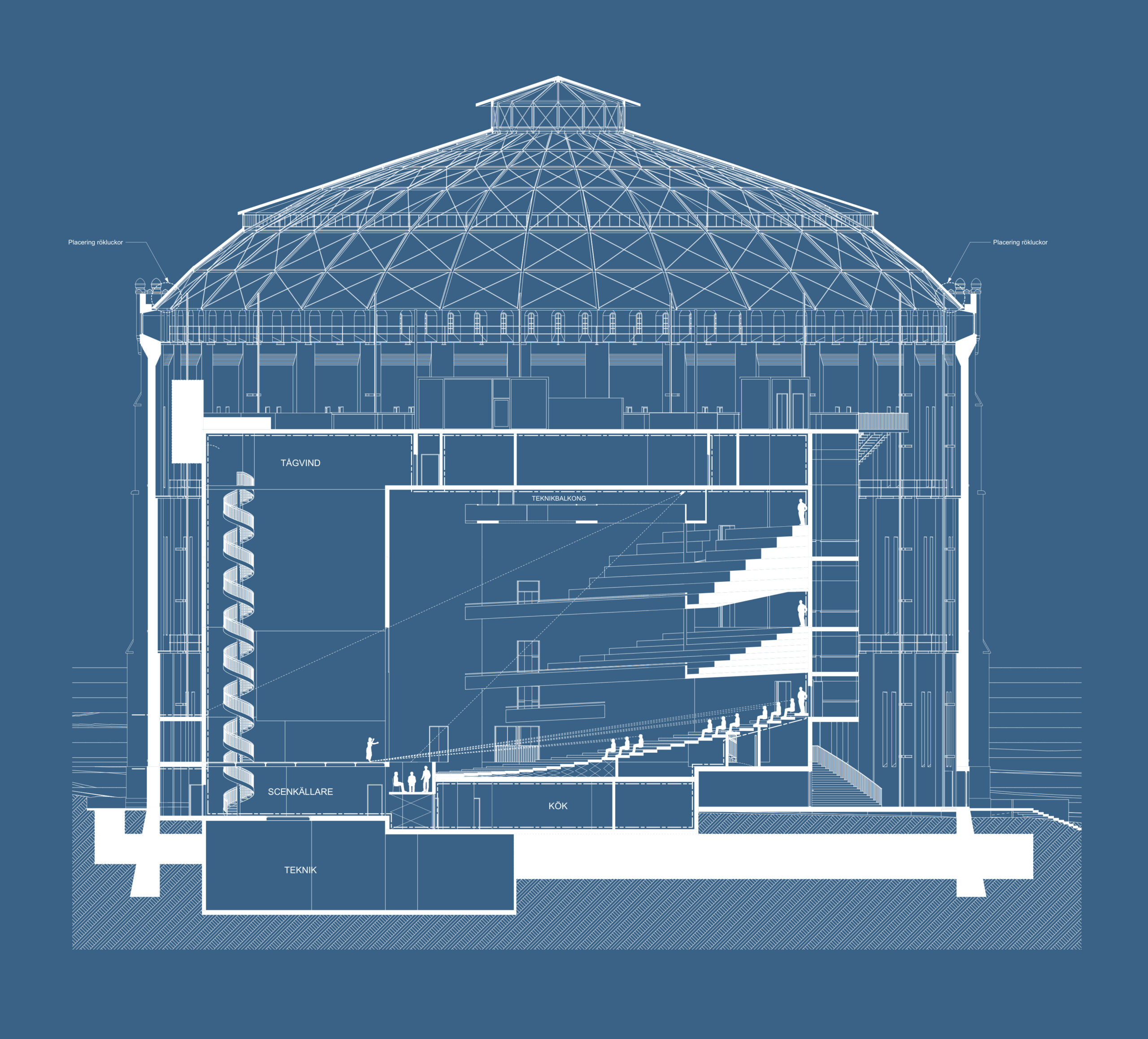
Commissioned by the City of Stockholm’s Development Office, Tengbom has proposed transforming Gas Holder 2 in Hjorthagen into a state-of-the-art cultural venue with a banquet hall. The concept for the Gasometer – a “box within a box” – offers future visitors a spatial experience like no other.

Hjorthagen undergoing major development

Located just outside Stockholm, Hjorthagen is an area undergoing large-scale transformation. Once an inaccessible industrial zone, it will soon become home to around 15,000 new residents. The broader development includes approximately 6,000 apartments and 100,000 square meters of commercial space.

From gas holder to Gasometer

Gas holder no. 2

In 2017, Tengbom won a tender and we were entrusted with designing an international performance venue within Gas Holder 2. Now known as the Gasometer, the venue will host up to 2,300 guests, offering world-class concerts, musicals, and theater productions. At the top of the inner “box,” there will also be a banquet hall accommodating 1,000 seated guests.

Ferdinand Boberg designed the unique and historically listed gas holder in 1899. The exterior will remain in its original state, while the interior will transform into a space with spectacular spatial experiences. The performance hall will float within the larger structure, encapsulated by an outer shell.

Gas holder no. 2

Optimized for audience and acoustics

By stacking the audience over three levels, the design maximizes capacity while ensuring the best possible acoustics. Visitors will undoubtedly experience something extraordinary. The project is led by Tengbom architect Jan Izikowitz, whose previous work includes the Gothenburg Opera House.

Gasometer in the larger context of Gasverket Västra

Gas Holder 2 is part of the Gasverket Västra development plan, which also includes a museum, school, preschool, sports hall, and office spaces.

Royal Swedish Opera moves in

In October 2024, it was announced that the Royal Swedish Opera would temporarily relocate to the Gasometer while the Opera House undergoes renovation.

Contact person

Elin Larsson

Project Lead
+46 702 75 67 66

Färs & Frosta Bank

A rich history inspires a modern office
Cultural Heritage, Interior Design
Offices, Renovation & Transformation
Client: Färs & Frosta Savings Bank Foundation
Location: Sjöbo
Years of Commission: 2015–2016
Type of project: Office
Contractor: Byggom AB
Competences: Interior Design, Concept development, Lighting, Building preservation

When the Banking foundation Färs & Frosta in Sjöbo were about to move into new premises with dark wood and brown carpets from the 1970s, there was an urgent need for a new start. Our interior designers created a modern interpretation of the foundation’s venerable activity in a palace environment.

The Sparbank foundation is faithful to the Sjöbo area and supports youth activities, sports and culture in the area. The foundation has its roots in the two Scania regions Färs and Frosta, with a direct connection to the castles Övedskloster in Sjöbo and Fulltofta in Hörby. A rich and varied history that has inspired our interior architects in their work on the premises of the Sparbank foundation.

Inspired by the salon of the castle

FärsFrosta_Tengbom

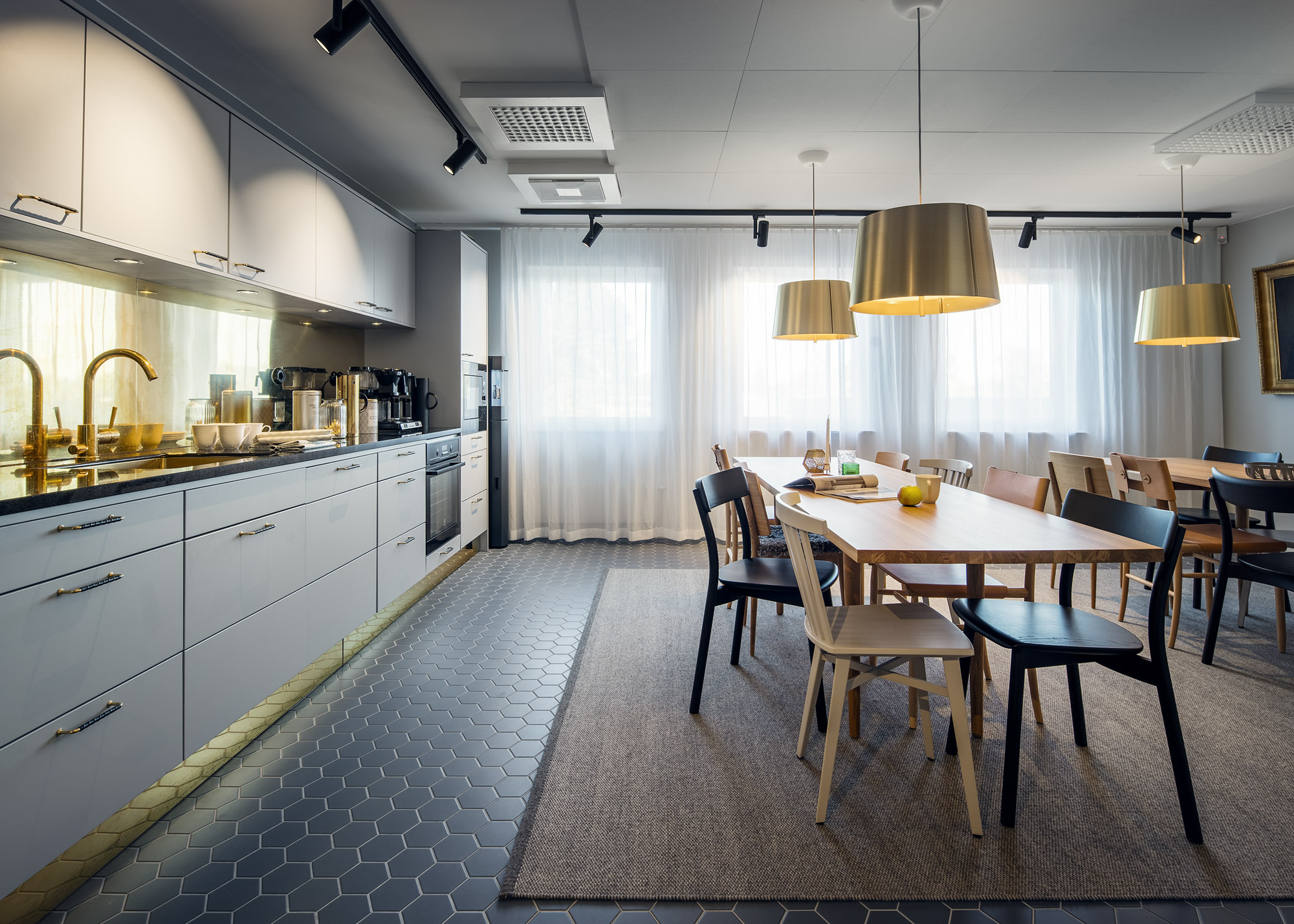
The offices have room for four employees and a board of 16 people. There is an office, a boardroom, a kitchenette and a lounge. Out went the brown fitted carpets, the dark-stained wood materials and plastic mats. Instead, we made a colour scheme of blue and grey, inspired by the Blue salon at the castle at Övedskloster, and tried and tested materials such as un-tanned leather – a nod to the rustic leather covers and horse husbandry of the old castle environment. Brass and copper details bring warmth and contrast to the rooms.

Sparbanksstiftelsen

The project

Patrik has a personal connection to the area. He knows the castles and farms that shape the foundation’s history.

Photographer: Felix Gerlach

“We have received great trust from the Sparbank Foundation Färs & Frosta,” he says. “Our task is to preserve something historic while making it modern, representative, and functional. I am very proud of the results.”

Contact person

Josefin Klein

Practice Director Skåne
+46 40 641 31 18

The Solliden Stage

Modern expansion in historic environment
Architecture, Cultural Heritage
Accessibility, Building Preservation & Restoration, Culture, Heritage Expertise, Renovation & Transformation
Client: The Skansen Foundation
Location: Stockholm
Competences: Building preservation, Interior Design
Years of commission: 2002–

Our specialists in building preservation have assisted in the restoration and construction of the The Solliden Stage, on the basis of Skansen’s ambition to create Northern Europe’s most modern outdoor stage. The fairground was also improved through renovations and additions. We weighed various qualities in the project, such as the location’s view of the entrance to Stockholm and the historic building value of the original stage, against expectations of modern stagecraft and acoustics.

The Solliden Stage
The Solliden Stage. Photographer: Tove Falk Olsson
The Solliden Stage
Photographer: Tove Falk Olsson

Perhaps you yourself have sat at this classic location and gazed out over one of Stockholm’s most beautiful views. Or at least heard of the popular outdoor TV show Allsång på Skansen?

The Solliden stage (Sollidenscenen) was designed by Nils Einar Eriksson in 1938. It was at that time technically and acoustically of a very high quality. The audience sat facing the view and listened to acoustic music that was amplified through the spiral form of the stage.

But today’s concert situations and stagecraft, especially for TV broadcasts, place new demands on the stage environment. To meet these needs, we designed a completely new stage. We also developed related ancillary buildings in cooperation with the Stockholm Beauty Council and Skansen’s own curators.

Solliden stage side sketch_TengbomThe team carefully restored the original stage, Snäckan (“The Shell”), preserving its cultural value and keeping it at the centre. They designed the new stage around it, raising and deepening the stage floor while extending the roof to cover the entire stage. Built with thin ship-building plate on a steel structure, the roof enhances both function and form. The new annexes feature façades of untreated oak, which will naturally age over time to match the adjacent Öland Windmill.

New and better audience space

We redesigned the fairground to offer more and better space for the audience. Seats now stand centrally in front of the stage, framed by wooden benches made from Skansen’s own oaks. To improve accessibility, dedicated spaces for wheelchair users were added at an elevated spot near the mills. More spaces are also available beside selected rows at Sollidenplan. Removing the front row at the stage opened up the view towards Stockholm’s entrance, creating a more inviting experience.

The Solliden StageThe Solliden Stage and its new stage and fairground debuted in 2013 during Skansen’s National Day of Sweden celebration on June 6th. The following weekend, a dedication concert featured Radio Sweden’s Symphony Orchestra, Tommy Körberg, and Amanda Sedgwick.

The Solliden Stage
Photographer: Tove Falk Olsson

Several Skansen projects by Tengbom

  • Ironmonger’s building: The ironmonger’s building in the town quarter was completed in keeping with Skansen’s ambitions as a copy of an existing building from the 1880s in Hudiksvall.
  • The Skansen Shop: In 2010-2011, we renovated The Skansen Shop, previously the Alhambra restaurant, in order to create more appropriate premises for office, storage and accommodation rooms.
  • Lill-Skansen: We participated in a parallel engagement for a new Lill-Skansen children’s zoo.
  • New buildings for wild boar and European bison: We designed a new building in 2007 for two wild boar families and a building for European bison.
  • Dressing-room building: Design of a new dressing-room building at the Galejan dance pavilion is under way in 2016.

Contact person

Josefin Larsson

Business Developer
+46 72 183 02 34

Stockholm Concert Hall

Ivar’s legacy lives on
Tengbom
Architecture, Cultural Heritage
Culture
Client: Amongst others The Concert Hall Foundation through Locum
Location: Stockholm
Year of commission: 1926-
Type of project: Concert Hall
Competences: Culture & Sport, Heritage

The Stockholm Concert Hall, which opened in 1926, stands as one of our most renowned creations. Ivar Tengbom, a pioneer of Swedish architecture, designed the building. Over the years, we have returned several times to preserve Ivar’s legacy. Each effort ensures that new generations of visitors can continue to experience the hall.

On April 4 1920, a competition was announced in the journal Arkitekten for the design of Stockholm Concert hall. At the time of the announcement, Ivar Tengbom together with two other architects, Torben Grut and Lallerstedt, had already received a special invitation from the Concert hall committee.

Ivar threw himself into his competition entry in partnership with his assistant Birger Jonson. He later highlighted Birger’s contribution and meant that ever since the first tentative sketches of the competition entry, he had provided ‘invaluable support during the planning and execution of the project’. Our partnership is crucial for the architecture that we create even today – which is why we are so very happy about this. That this is a tradition that goes all the way back to when Tengbom was founded.

Fotograf: Sten-Åke Stenberg

The red heart

The competition entry ‘The red heart’ was based on the Greek and Roman theatre. The design of the great concert hall was a deciding factor in the competition and according to Ivar, it became the core from which the entire building was created around. When Ivar imagined the hall as a Roman courtyard, a peaceful festive area where the parquet is framed by stands with slender columns. Behind the podium – the room’s focal point – he saw a false perspective that implied a continuation towards the imagined Greek landscape. Above this, the white ceiling opened up like a sky from which the lighting would give the feeling of an eternal, mild sunshine.

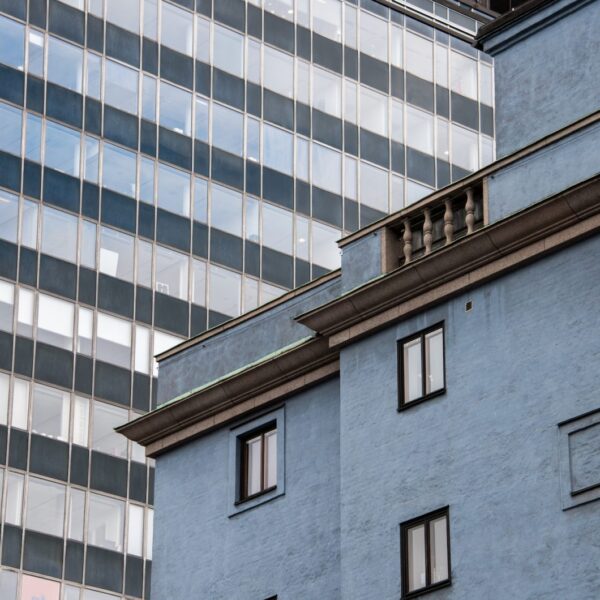
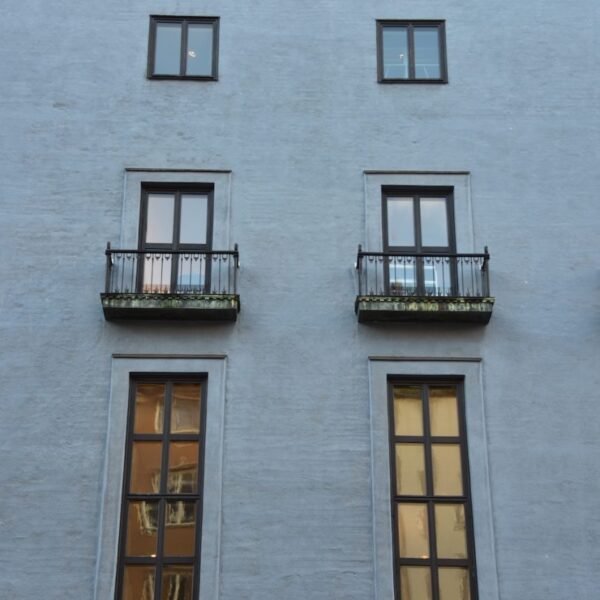
Outside, there was a decorative row of columns as a portal between the outer and the inner room – a reflection of the great hall’s ancient character. For the rest, Ivar Tengbom distributed the program within a strictly coherent, cubic and undecorated concrete block. A contemporary approach which the curator of the National Museum at the time, Erik Wettergren, described at the opening ceremony later as ‘the new architecture’s hallmark’. In the proposal, Ivar Tengbom gave his Stockholm Concert hall an unusual blueish façade.

Stockholm Concert Hall
Photo: Sten Jansin

The description that accompanied our entry was written by hand and full of exciting, rhetorical expressions. In several places Ivar Tengbom talks directly to the jury to explain his thoughts. He appears to have had a sense of humour, our Ivar – when defending the columns on the exterior, he says: ”The judge is asking, columns, what are you doing?”. The press preferred the end quote which was often repeated with glee:

”And now, Mr Executioner, do your duty!”

A symbol for the future

The jury received thirty-four proposals. Initially, they awarded first prize to both The Red Heart and Erik Lallerstedt’s proposal, The Wings. After an intensive process and further development of the original idea, we finalized the planning and brought Ivar’s vision to life.

In retrospect, Stockholm’s Concert hall became a distillation of different currents in the Swedish architecture debate from the beginning of the 1900s.

The interest in town construction issues, the importance of a rational approach to the materials and construction, and the desire to once again unite the architecture and the liberal arts, all played a part in the end result. As a public building, the Concert Hall became a symbol of the cultural intentions of the Swedish society alongside the development of the modern civilization.

Stockholm Concert Hall
Photo: K-A Larsson
Stockholm Concert Hall
Photo: K-A Larsson

Stockholm Concert Hall full of invaluable art treasures

The Concert Hall holds many important works of art, both inside and outside the building. Carl Milles’ famous sculpture, the Orpheus Group, stands by the stairs to Hötorget. Inside, Isaac Grünewald’s incredible ceiling and wall paintings adorn the Grünewald Hall. Explore more about the art around the building on the Concert Hall’s website.

New generations take over

Over the years, we have continued to preserve Ivar’s legacy, ensuring that it lives on for future generations of visitors. In the early 1970s, Ivar’s son, Anders Tengbom, led a major renovation and expansion of the house. He rebuilt the wall behind the podium, which later made way for a magnificent concert hall organ. He also had the ceiling painted in a dark colour to accommodate new technology and acoustic aids, creating an atmosphere reminiscent of a Mediterranean night.

The restoration of the Concert Hall’s exterior brought back its bold original blue colour, once hidden by years of pollution. The local population once again admired its striking appearance.

Preserving historic buildings requires ongoing attention, especially to meet changing accessibility standards and integrate modern technology. In recent years, we have improved acoustics and installed new technical systems. We have also designed a new rehearsal hall, the Aulin Hall, which features flexible seating areas.

Contact person

Mia Lindberg

Head of Communications
+46 8 410 354 93

Thiel Gallery

Preserving a listed art museum
Thiel Gallery
Architecture, Cultural Heritage, Interior Design
Accessibility, Building Preservation & Restoration, Culture, Heritage Expertise, Renovation & Transformation
Client: The National Property Board of Sweden
Location: Djurgården, Stockholm
Years of commission: 2013-2019
Partners on GK commission: Tyréns (K), LEB, Allmänna VVS-byrån (V), Projektel (E), Brandskyddslaget, Geosigma, Storköksbyrån i Stockholm, Sjögrens hus.
Type of project: House architect
Competences: Historic Preservation, Interior design, Landscape, Accessibility, Project management, Sustainability

Founded in 1907 and situated in a walled park far out on Djurgården’s Blockhusudden, the Thiel Gallery is one of Sweden’s most beautiful museums. We served as building architect and general consultant for the gallery from 2013 to 2019, providing administrative support and taking responsibility for the listed building’s maintenance and development on an ongoing basis.

The architect Ferdinand Boberg designed the Thiel Gallery. He drew inspiration for the unusual building from the Orient, southern Europe and the late Art Nouveau era. Work on the venue was completed in 1907, realising the dream of financier and patron of the arts Ernest Thiel to create a home and art gallery. After being acquired by the state in 1924, Thiel was converted into a museum, before being conferred national listed building status in 1958. Our work on the museum took place in close collaboration with the National Property Board of Sweden. As well as the venue’s tenants.

Complex projects requiring a highly sensitive approach

Our projects at the Thiel Gallery were often of a complex nature, requiring knowledge and understanding of a range of factors related to climate, technology, logistics and programming within the scope of an art museum. With considerable respect for the cultural-historical values of this listed building, we carried out adjustments and highly skilled design work on a small and large scale. We also handled permit issues, long-term plans for maintenance and restoration as well as acting in an advisory capacity. Among other things, the commission required advanced knowledge of installation techniques both new and old.

Our role in the project is fundamentally underpinned by a holistic approach, awareness and flexibility.

Effective collaboration and close contact

We worked on a range of projects at the Thiel Gallery. We renovated the café kitchen and cafeteria and installed new lighting in the exhibition halls. We also prepared the Annex for the museum’s offices and conferences. To improve accessibility, we conducted a comprehensive survey of the entire venue. This led to the installation of a new lift and the creation of new public areas, including a shop, cloakrooms, and toilets.

Effective and clearly defined partnerships are fundamental to every project. To ensure this, we involve technical consultants and other specialists at an early stage. Close contact and long-term collaboration with administrators, tenants, and authorities remain essential. We also work closely with specialists, craftsmen, and contractors throughout the process. Our role in each project is built on a holistic approach, strong awareness, and flexibility.

Contact person

Mark Humphreys

Practice Director Stockholm
+46 8 412 53 43

The Royal Opera

To preserve a historic national stage
Architecture, Cultural Heritage
Accessibility, Building Preservation & Restoration, Culture, Heritage Expertise, Renovation & Transformation
Client: The National Property Board of Sweden
Location: Stockholm
Years of commission:: 2007-2012
Type of project: House architect
Competences: Culture & Sports, Interior Design, Historic Preservation

Between 2007 and 2012, we were the in-house architects of the Royal Opera in Stockholm. An inspiring task filled with responsibility which included making sure that the fantastic opera house from 1898 was developed and taken care of in the best possible way.

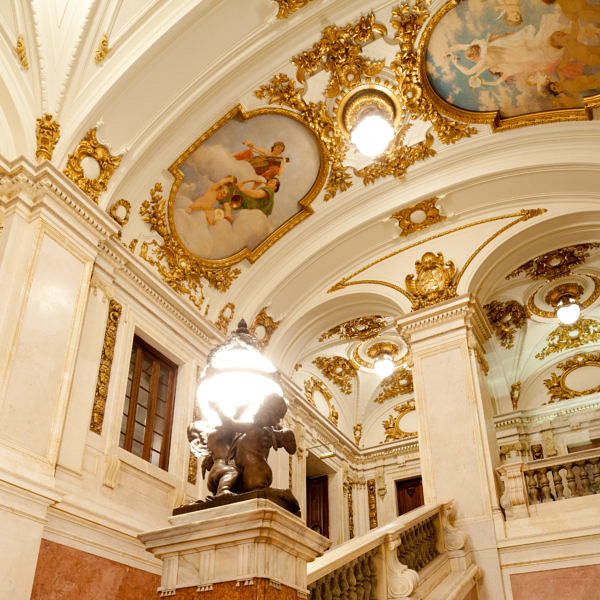
The architect Axel Anderberg designed the Royal Opera, Sweden’s national stage for opera and ballet, which opened in 1898. It stands on the same site as Stockholm’s first large opera building from 1782. Anderberg drew much of his inspiration from the Paris Opera. He gave the new opera house a Neo-Renaissance exterior, while designing the staircase, foyer, and salon in a Neo-Baroque style.

From stage technology to Golden Foyer

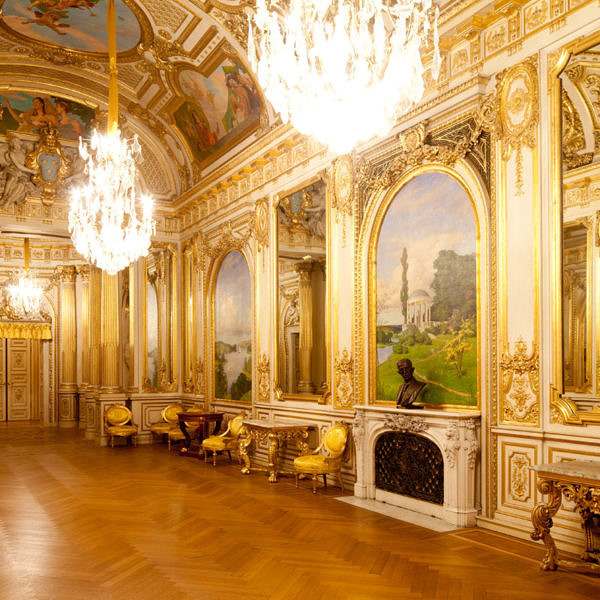
Today, the Royal Opera is a national monument. The opera house includes a complex mixture of advanced technology and working areas. Richly decorated, representative environments such as the Golden Foyer with its shimmering stucco, brocades and chandeliers. The twelve floors house a thousand rooms and many different activities – from stage technology in the basement via workshops, rehearsal rooms and dance studios, restaurants, dressing rooms, and all the way up to the costume designer’s colourful studio just above the roof of the salon.

An amazing experience we will never forget

Expertise and continuity

Photo: Sten Jansin

To be the in-house architect for something so amazing as an historic opera house is a great responsibility. In our role as renovation architects, we have to be experts on the building, its history, values and requirements. Our task included architectural, artistic, antiquarian, and technical oversight. We also ensured compliance with all regulatory requirements. Additionally, we made sure that every plan and action aligned with both management’s vision and the business requirements.

Photo: Sten Jansin
Photo: Sten Jansin

To take care of the opera house in the best possible way, long term plans need to be established both for maintenance and restoration. One of our most important tasks was to constantly walk the fine line between today’s requirements and the antiquarian requirements as well as qualities of the national monument.

A masterpiece of coordination

To be the in-house architect for the Royal Opera is in many ways a communicative masterpiece from a coordination stand point. The task requires constant communication with clients, managers, tenants, authorities, specialists, various consultants, contractors and craftsmen. There were many of us who worked intensively on the project – an amazing experience we will never forget.

Contact person

Mark Humphreys

Practice Director Stockholm
+46 8 412 53 43

Grand Hôtel

Collaboration in classic setting spanning a century
Architecture, Cultural Heritage, Interior Design
Accessibility, Building Preservation & Restoration, Heritage Expertise, Hotels & Meetings, Renovation & Transformation
Client: Vectura fastigheter, Grand Hôtel
Location: Stockholm
Developer: Pefo Bygg, Skanska, Kungsfiskaren
Years of commission: 2010-2016
Competences: Hotel & Restaurant, Building preservation

Our collaboration with the Grand Hôtel in Stockholm dates back nearly 100 years. In the 1920s, Ivar Tengbom redesigned the hotel’s façade, lobby, and banquet hall Vapensalen. In 2014, we carried Ivar’s work on the lobby into the next era. And in 2020, it was the entrance’s turn to step into the future.

The lobby is the heart and face of the hotel. Preserving and highlighting details from the hotel’s rich history was of utmost importance to both us and the Grand Hôtel. Our goal was to give the space a contemporary expression and functionality while meeting the high standards of heritage preservation and accessibility adaptation.

Foto: Åke E:son Lindman
Photo: Åke E:son Lindman

“The collaboration with the Grand Hôtel is particularly enjoyable as it dates all the way back to Ivar Tengbom’s time. We’ve worked to recapture the essence of the changes Ivar made in the 1920s while also incorporating new, modern solutions,” says Karin Hagelberg, architect.

Bright and elegant space for everyone

Our concept has transformed the lobby into a bright and elegant space. We seamlessly integrated modern functionality and technology into the historic setting. A new marble floor with large inlaid rugs, along with a concealed sound and lighting system, brings the lobby into a new era.

Foto: Åke E:son Lindman
Photo: Åke E:son Lindman

The beautiful ceiling moldings have been highlighted in a new way, and the hotel’s antiques are artfully combined with modern details. The addition of new ramps and railings ensures that the lobby is now accessible to everyone.

Carefully updated hotel rooms

Since 2010, we have continuously revitalized a large portion of the hotel rooms, most recently on the second floor and the third floor of the Royal Building. We have designed many rooms for flexible use, adding classic double doors to allow seamless connections. To enhance natural light, we have also introduced new French balconies in some rooms and clad the bathrooms in Carrara marble for a refined finish.

New era – new entrance

Foto: Per Kallstenius arkitektkontor

When Grand Hôtel updated its iconic entrance in 2020, Ivar Tengbom’s influence remained present throughout the process. The team replaced the revolving door with two glass panels, creating a sense of openness while keeping cold winds at bay. Inside, the space once dominated by the revolving door became a grand transitional zone between outdoors and indoors. The outer canopy was redesigned to improve the view from within. Custom-designed lanterns, recessed light wells, and gold-toned metal in the entrance ceiling now cast a warm, welcoming glow. In the lobby, the staircase was moved further into the room, returning to its original position from Ivar Tengbom’s time. His pattern design from the elevator doors was also revived, now adorning the new accessibility lift and the railings.

Influencer: Ivar Tengbom

Karin Hagelberg explains, “We built on what already existed. With great respect for history and a sensitive approach, we drew inspiration from timeless details and environments.”

Foto: Per Kallstenius arkitektkontor

Contact person

Josefin Larsson

Business Developer
+46 72 183 02 34

Waldemarsudde

The legacy of Prince Eugen
Waldemarsudde 2015
Architecture, Cultural Heritage, Interior Design, Landscape
Accessibility, Building Preservation & Restoration, Culture, Heritage Expertise, Renovation & Transformation, Residential environments
Client: The National Property Board of Sweden
Location: Djurgården, Stockholm
Years of commission: 2013–2015
Type of project: House architect
Collaborative partners: LEB, Tyréns, Projektel, Brandskyddslaget
Areas of expertise: Heritage, Landscape

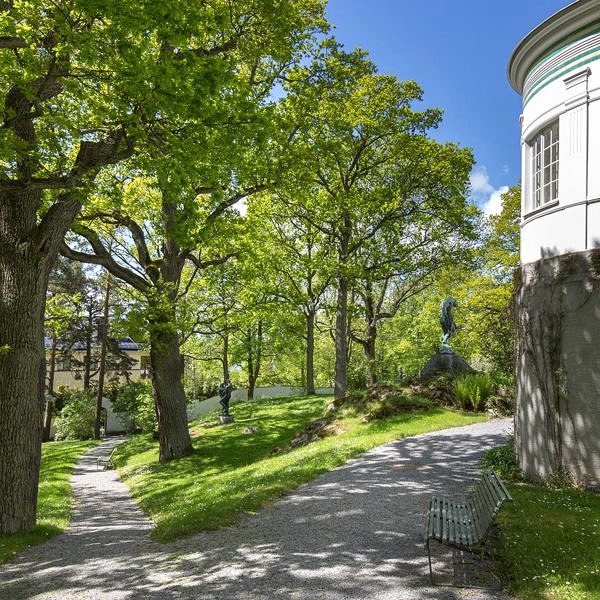
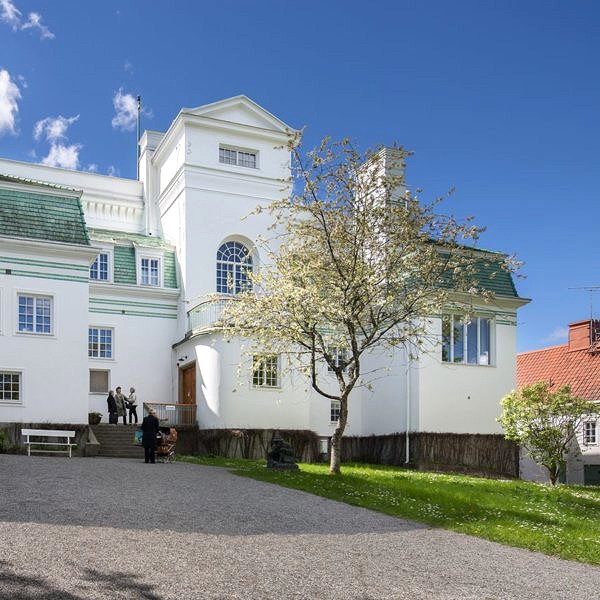
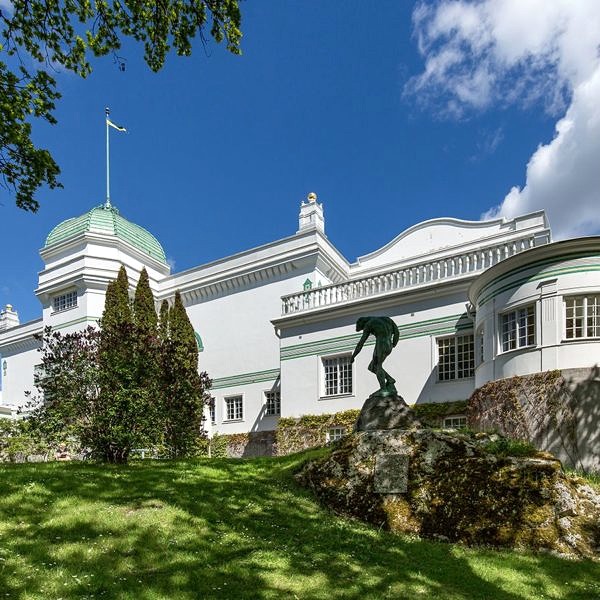
Waldemarsudde is a unique environment filled with great experiences. It has beautiful countryside, fascinating historical buildings and fantastic art. Waldemarsudde is primarily associated with Prince Eugen – botanist, landscape painter and art collector – who lived here in the early 1900s.

The legacy of Prince Eugen

The palace was commissioned by Prince Eugen and designed by the architect Ferdinand Boberg, and was built between 1903 and 1905. The gallery building was added in 1913 to house the Prince’s extensive art collection. Upon Prince Eugen’s death, the entire Waldemarsudde estate was bequeathed to the state, which was to manage it as a museum. Waldemarsudde is one of Sweden’s best known and most visited art museums and has been a listed building since 1993.

Waldemarsudde Tengbom 2015
Photo: Nina Broberg

Responsibility for maintenance and development

Tengbom had the framework agreement as building architect and general consultant for Waldemarsudde between 2013-2015. This meant that we were responsible for the listed building’s maintenance and development, in collaboration with the National Property Board of Sweden and the Prins Eugens Waldemarsudde Museum. We primarily worked in the areas of architecture, conservation and technical matters, as well as regulatory requirements. In conjunction with the consultant group, as building architect we carried out project planning as well as investigative assignments. We were consultants and handled such things as permit issues and long-term plans for maintenance and restoration.

Adaptation and visions for the future

One of the projects we worked on at Waldemarsudde was the extensive rebuilding of the museum shop and entrance hall, including improvements to accessibility at the main entrance, both inside and out. We focused on environmental aspects, lighting, acoustics, and both interior and exterior maintenance. The park and gardens was also part of our work. Additionally, we developed a proposal to open the old linseed oil mill to the public.

A complex project with specific challenges

The project at Waldemarsudde presented constant challenges. Working in an art museum means tackling environmental, technical, logistical, and programming demands. The focus was on adapting and refining the design to meet today’s needs while carefully preserving Waldemarsudde’s cultural value.

Close collaboration is essential

Collaboration was key throughout the process. Technical consultants and specialists joined early on. Each project within cultural environments involves close contact with managers, tenants, and authorities. Craftsmen, contractors, and other consultants also play a vital role. This demands flexibility, coordination skills, initiative, and a keen sense of the bigger picture.

Contact person

Josefin Larsson

Business Developer
+46 72 183 02 34