Archives

Hornsberg Blocks, Block 2

From country estate to urban block
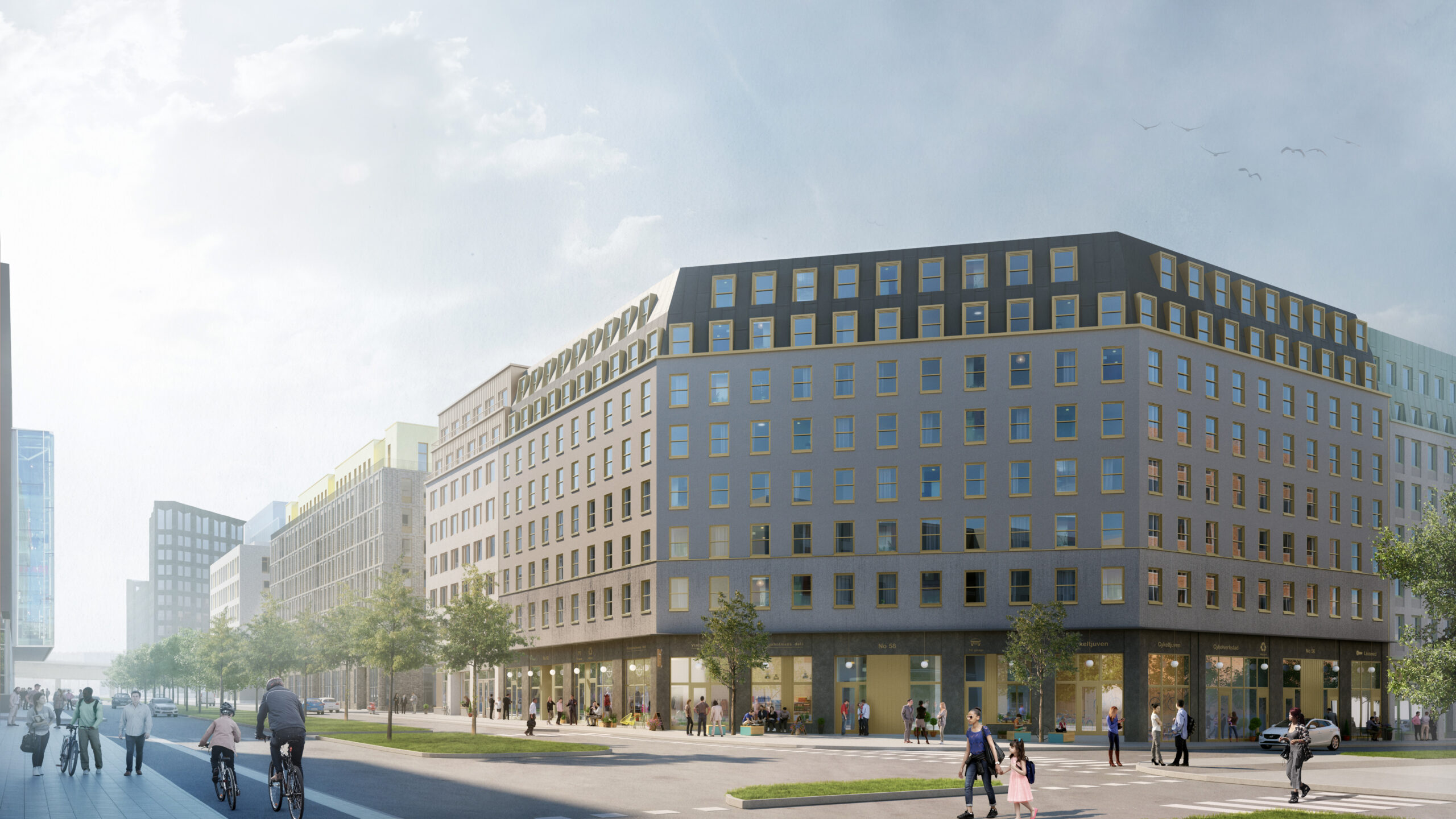
Architecture
Residential
Client: Ikano-Bostad
Assignment year: 2015 and several years onwards
Project type: New-build multi-family housing
Location: Hornsberg, north-western Kungsholmen

With its varied history, the growing district of Hornsberg is a unique place to build. Here, we developed the idea of the modern perimeter block – a well-received concept that won a parallel commission! Meet Hornsberg Blocks.

Today, Hornsberg on western Kungsholmen in Stockholm is a diverse and fragmented district. It is separated from Kristineberg’s 1930s Functionalist architecture by sports grounds and industrial buildings. Newly built residential buildings stretch along the waterfront, while in the other direction there is a bus depot, also dating from the 1930s, opposite a vast supermarket. A new residential block is planned precisely here, and Tengbom’s urban proposal has been successful, distinguished in part by the care given to the ground floors.
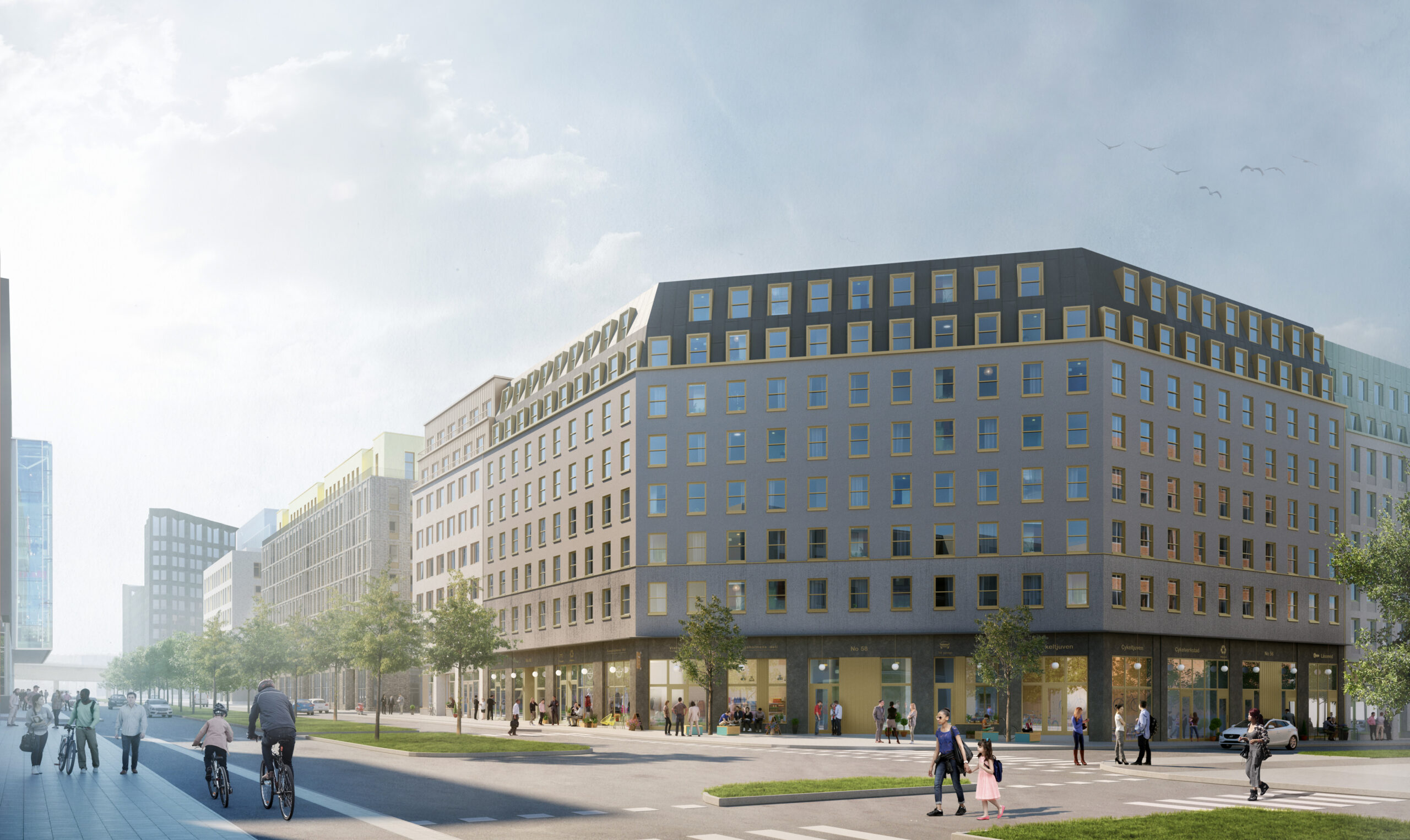
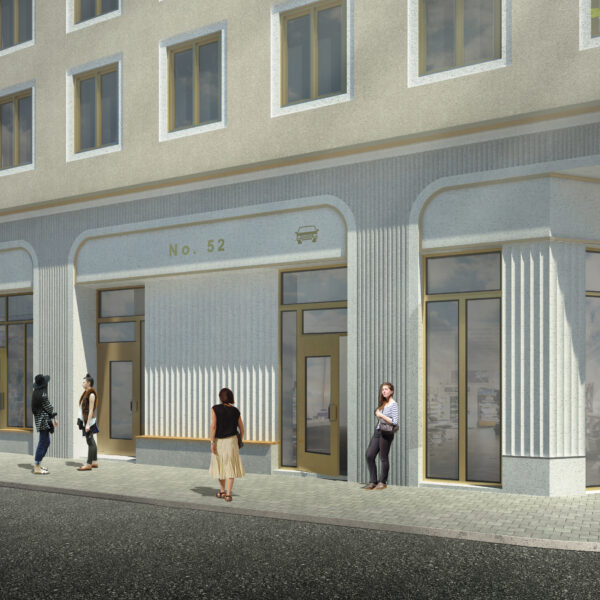
An urban block with an active street level

“The City Planning Office was very pleased with how we had approached the block as a whole,” says architect Lisa Westin. “It suited Kungsholmen very well.”

“It has a lot to do with Kungsholmen as a place,” says architect Nina Aidas. “The grid city should continue into this area – it is not the industrial district that should spill over into the rest of Kungsholmen.”

We want the block to relate more closely to the older parts of Kungsholmen. Sometimes you can walk past a building and immediately see that it was built in the 1990s. But some buildings can have a classical elegance even though they are new – they blend in with the older architecture.

Metamorphosis

The Hornsberg Blocks site occupies a corner – towards which the building will be chamfered – looking out towards the supermarket on one side and an older brick industrial building on the other. Tenants may even catch a glimpse of the waters of Ulvsundasjön in the distance. For an area with such a multifaceted character, and one that is undergoing considerable change, a classical approach may be appropriate.
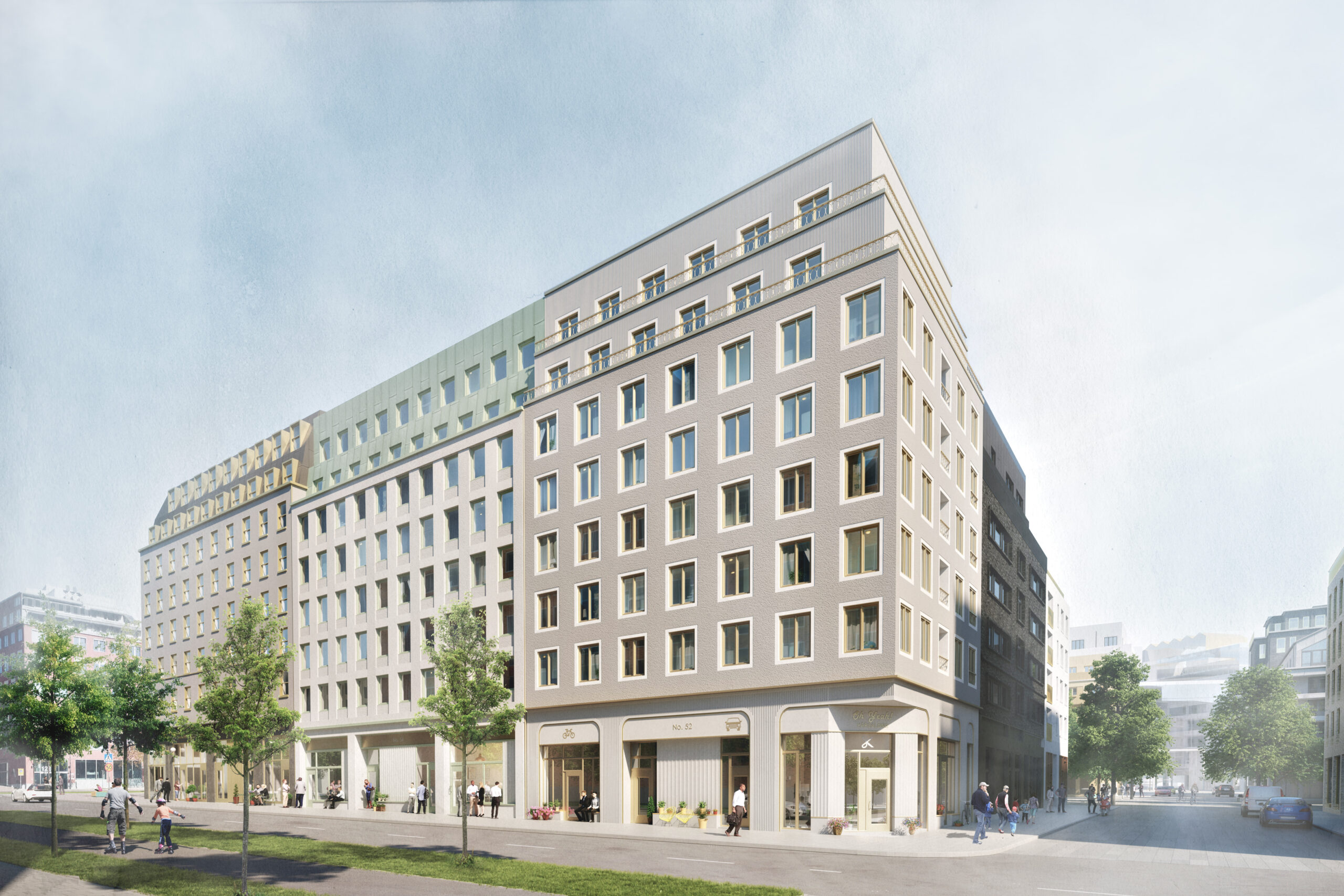
The design of the block aims to capture the historic spirit of Kungsholmen

“What we are trying to do with our block is to relate more closely to the older parts of Kungsholmen,” says Lisa Westin. “Sometimes you can walk past a building and immediately see that it was built in, say, the 1990s. But some buildings can have a classical elegance even though they are new – they blend in with the older architecture. We wanted to capture the spirit of the place.”

To this end, the team studied the history of Hornsberg. Its diversity appears to be something of a tradition: in the 17th century, the area consisted of manor houses with adjoining parks. This splendour was followed by country estates, a brewery and other industries, joined in the early 20th century by allotment gardens and a velodrome (!).
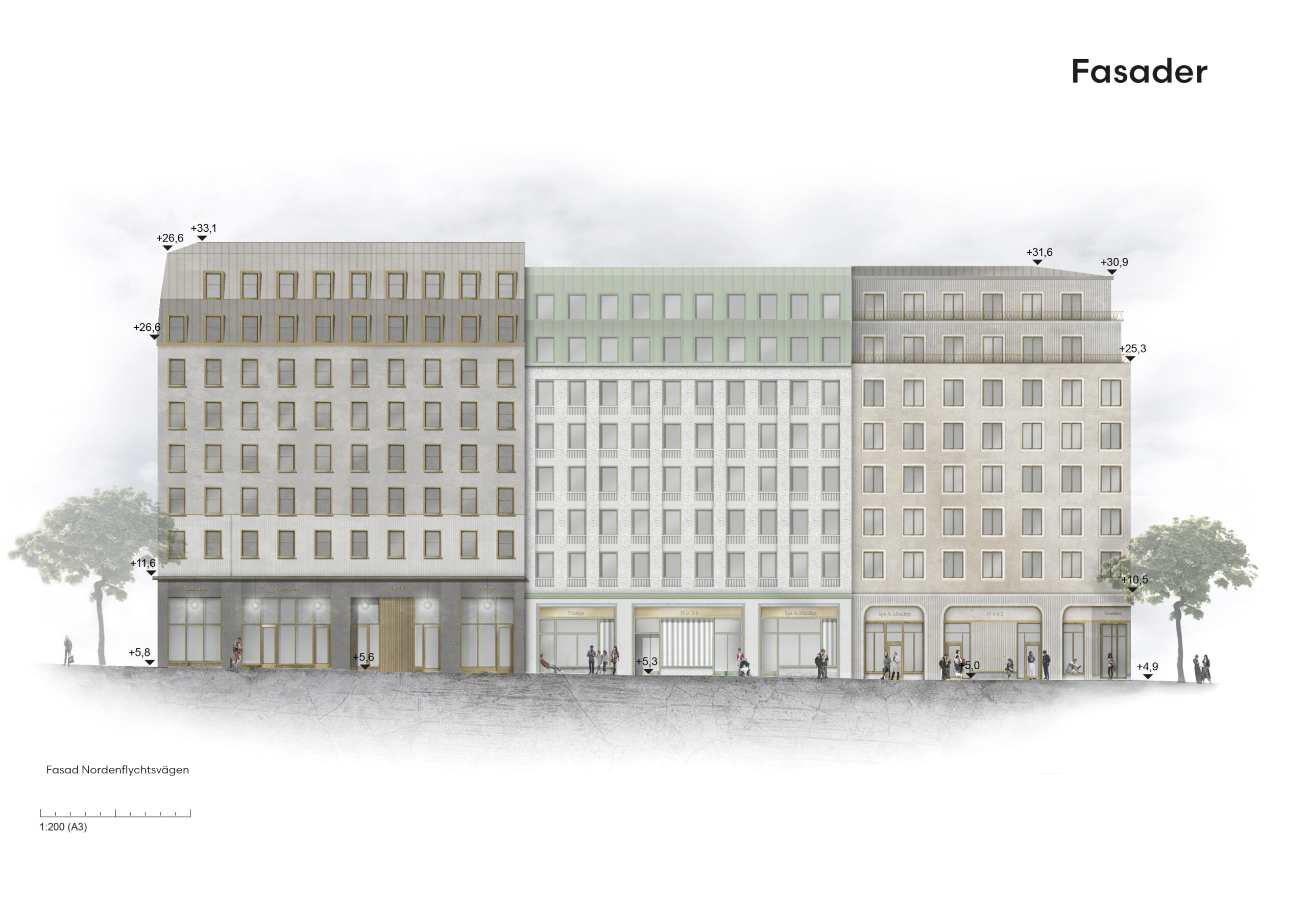
Elegant structure

Perhaps not the most obvious sources of inspiration for residential buildings. Instead, we looked at the older architecture elsewhere on Kungsholmen, particularly blocks built in the 19th century.

“We studied the façades, but more in terms of their underlying structure,” Lisa explains. “We then tried to analyse that system and work with it in a more contemporary way, using materials that partly reflect our own time.”
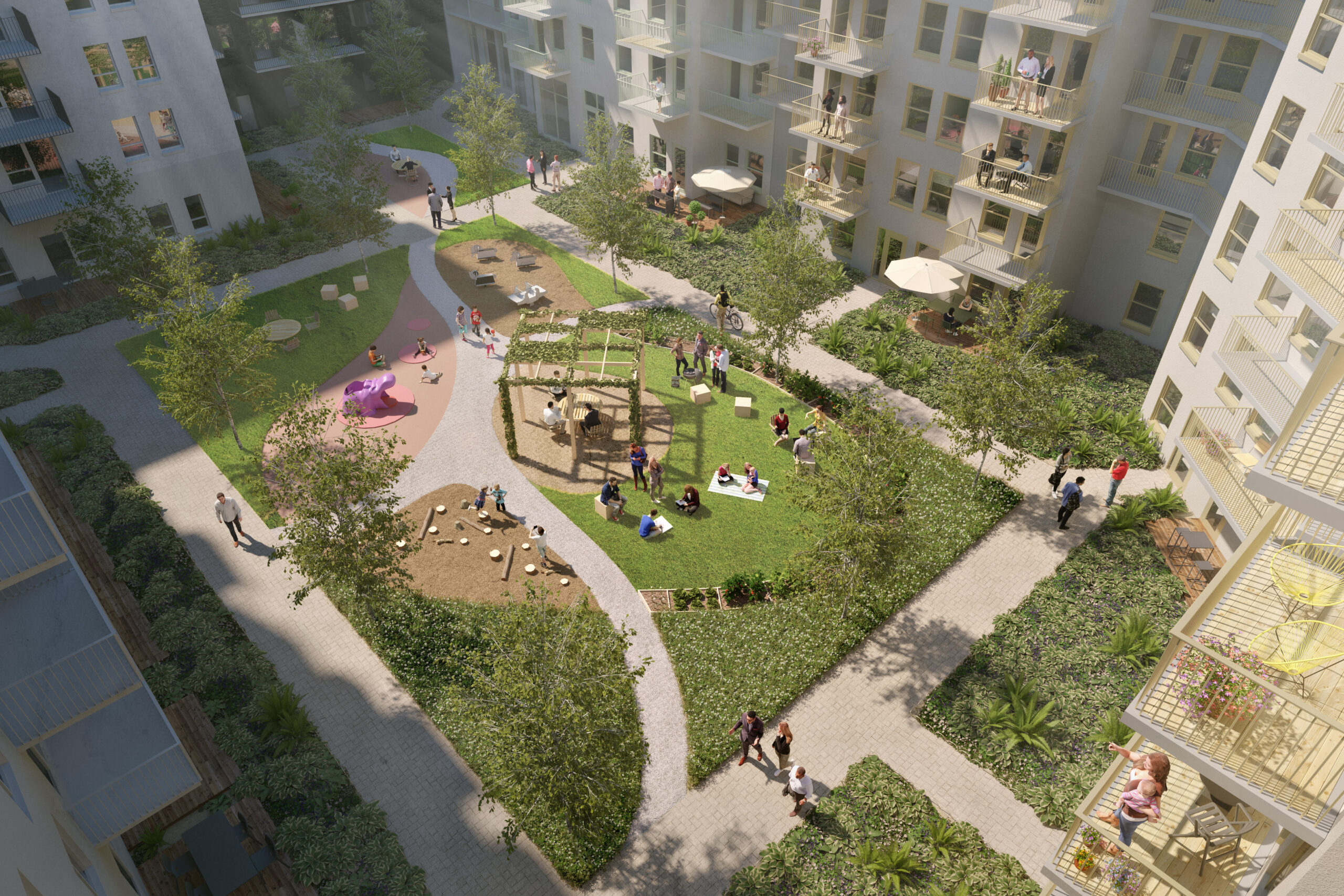
The courtyard becomes the block’s own meeting place

In the courtyard, the somewhat restrained architecture is combined with organic elements in the form of a lush, green square. There was an ambition to create a meeting place of the block’s own, with subtle references to the urban spaces outside, explain architects Nina Aidas and Lisa Westin. Each stairwell has been given its own distinctive character through unique entrances and variations in façade materials. At the same time, a common thread runs through the overall design and colour palette.

High-quality ground floors in Hornsberg Blocks

The ground floors are an important part of the building. They are often treated as an afterthought, but here we have paid careful attention to the details.

“It is important to maintain a human perspective at all times,” says Lisa. “You should not design buildings from a bird’s-eye view. Instead, you should always consider what you see, experience and feel at eye level.”
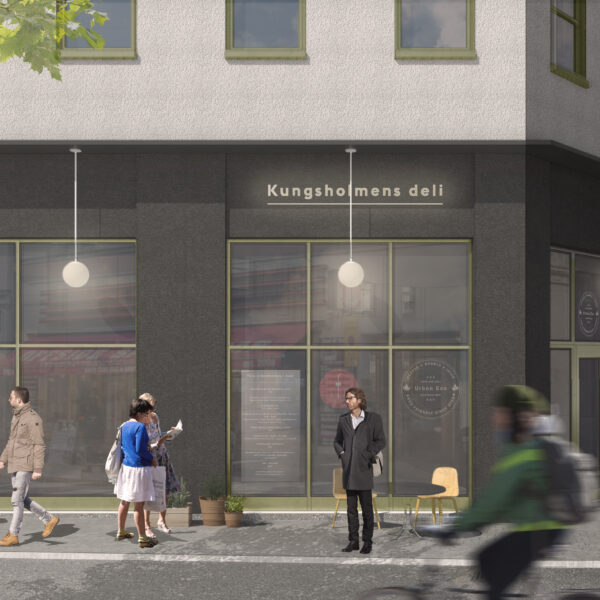
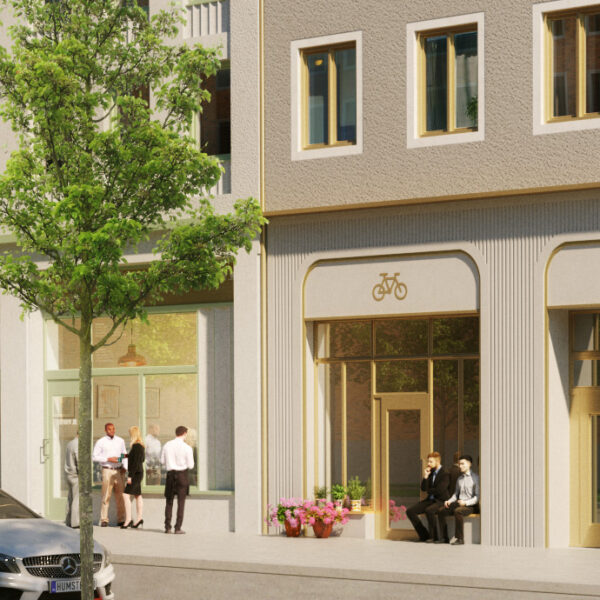
Nina suggests imagining yourself taking a walk: how often should something change along the route? Integrated signage locations and benches are other considerations. In this way, the façade can also function as a piece of furniture in the urban space and create a more personal character.

With its heterogeneous history and the diversity of its built environment, Hornsberg has a strong identity – its mix is its strength. The conditions are all here to create a district for everyone – Hornsberg Blocks!

Contact person

Niklas Svensson

+46 8 410 354 54

Aurora Village in Luleå

Home sweet module
Interior Design
Residential
Client: Adapteo
Location: Storporsön, Luleå
Move-in: 2026
Scope: 39 buildings, including 37 residential buildings as well as service and activity buildings

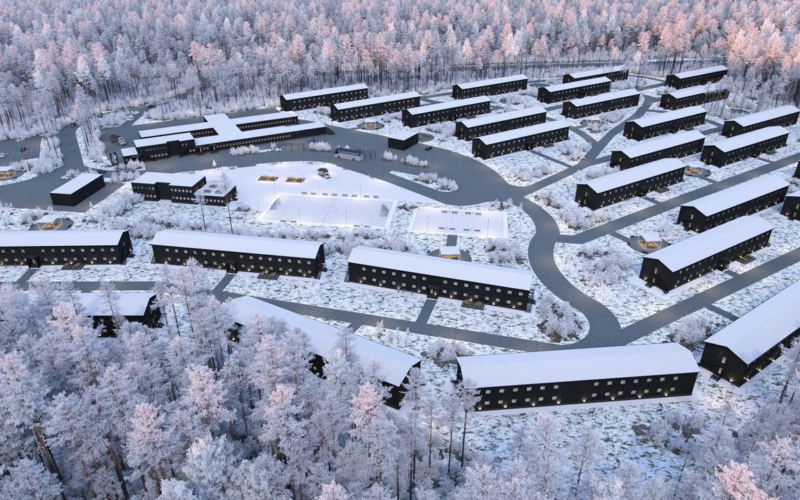
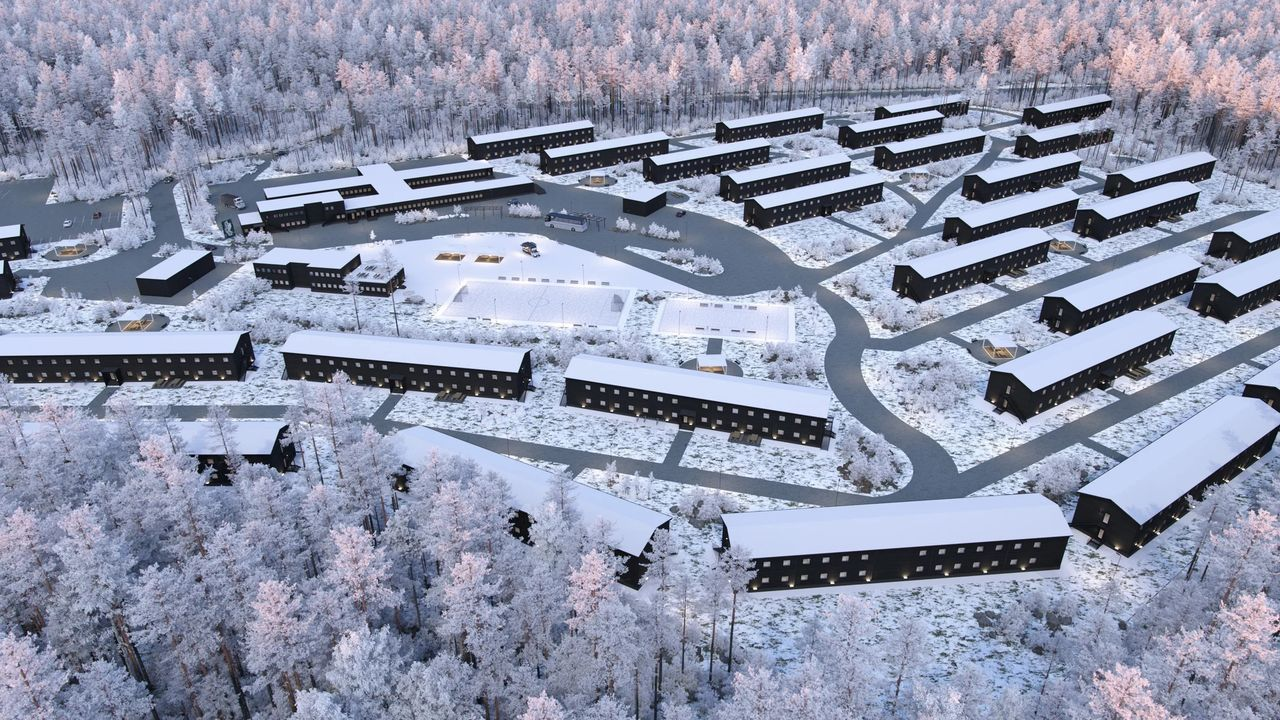
Living far from home is one thing. Doing so during intensive work periods alongside 2,000 others is another. At Aurora Village, we have pushed the fixed boundaries of modular construction, using neurodesign and northern Swedish nature as tools. Creating space for time together, moments alone and an everyday life that feels a little more like home.

Aurora Village is being built on Storporsön in Luleå by Adapteo and Strawberry Living for the people working on SSAB’s transition to fossil-free steel production. With 39 buildings and a capacity equivalent to the largest hotel in the Nordic region, this is workforce accommodation on an unusually large scale.

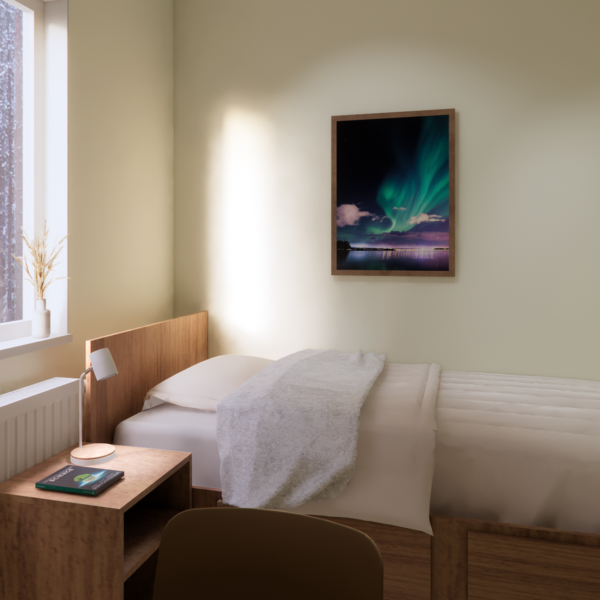
We developed the interior design concept for the residential rooms, entrance and reception, dining halls, gym and activity buildings, including a sauna, cinema, games room and library. The starting point was simple but important: temporary accommodation does not have to feel temporary.

Fixed dimensions. Free thinking.

Modular construction comes with standardised dimensions from the outset. Functions and logistics also follow clearly defined parameters. This can, of course, be perceived as a limitation, but for us it instead became a creative starting point – and a considerable challenge.

Materials, colours, lighting, furnishings and carefully considered details bring warmth and variation to the rational systems. The environments need to work in everyday life and feel good to come home to after the working day, whether you want to spend time with others or retreat for a while to recover. The aim is to create a sense of security and togetherness.

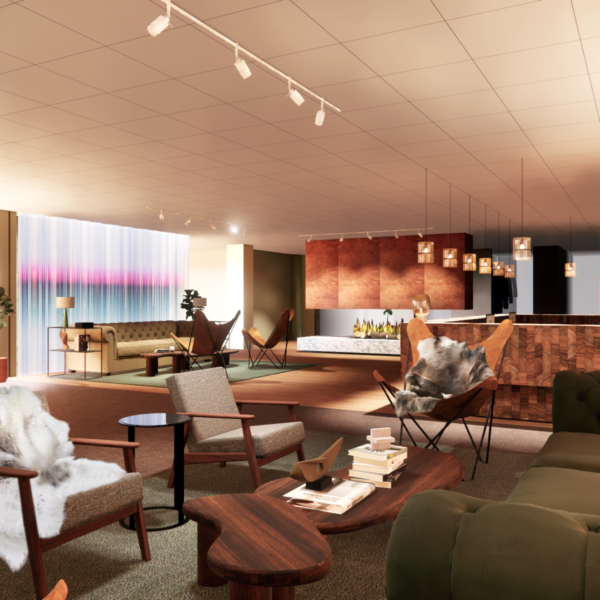
Northern forests indoors

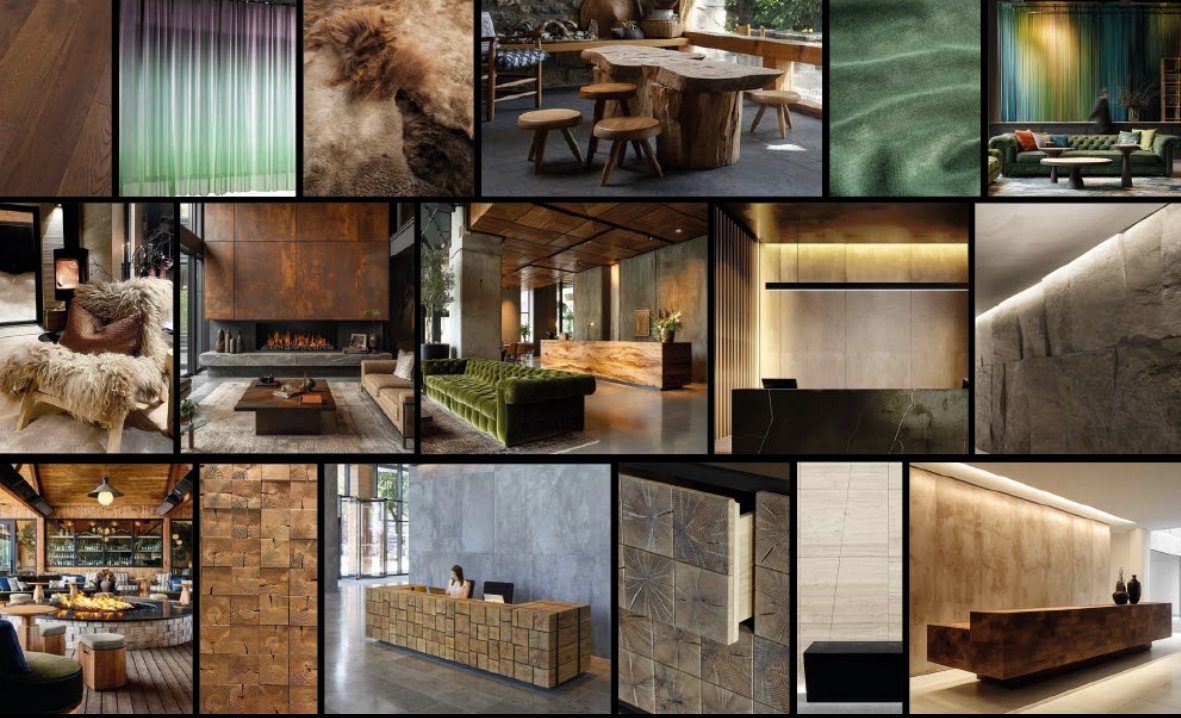
The interior design builds on two previous concepts we developed for Adapteo. This time, we have ventured deeper into the northern Swedish landscape. Pine trunks, bark and deep forest tones find their way into the materials and colour palette, with natural materials, walnut tones, deep green and rust red recurring throughout. The result is a warm, rich Scandinavian expression that connects the interior to its setting.

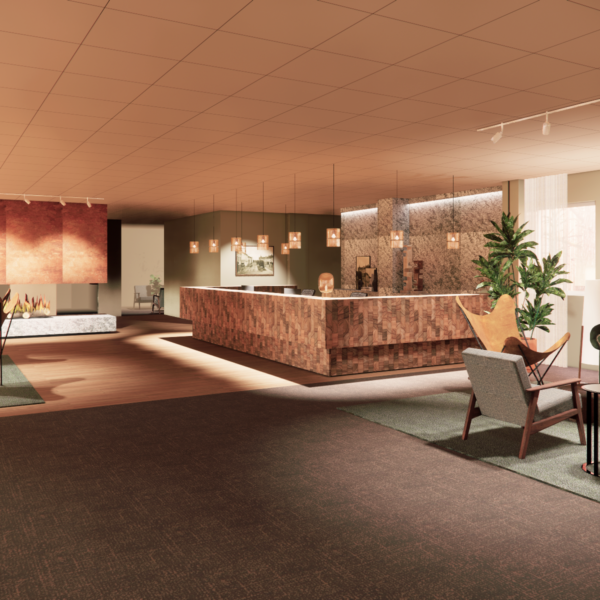
The expression shifts between the different environments, each of which has been given its own distinct identity. The gym is darker and more urban. In the hotel-inspired reception area, soft carpets meet Chesterfield sofas and a water-vapour fireplace. A bespoke reception desk and a feature wall of thinly cut genuine natural stone veneer give the space tactility and weight.

Neurodesign for 700 voices

How does a room feel after a long working day? What happens when hundreds of conversations are taking place around you? How stressed do you become in a particular environment? Through neurodesign, we have worked with factors that the brain registers long before we consciously put them into words. Sound, light, colour, materials and variation influence how we experience an environment and play a role in both our sense of security and our ability to recover. In a large facility where many people live during intensive periods of work, avoiding an institutional atmosphere is particularly important.

In the dining hall, this becomes very tangible. Up to 700 people need to be able to eat and talk here at the same time. Acoustics have therefore been an important part of the design. A lively murmur is welcome – it is part of sharing a meal. But you still need to be able to hear the person on the other side of the table.

Quick facts

Contents: 2000 residential rooms, reception and lounge, dining halls, gym and activity buildings including a sauna, cinema, games room and libraryTengbom’s assignment: Interior design concept and preparation of building permit documents ahead of the development

Interior design for the next cycle

Aurora Village is based on Adapteo’s circular model, in which modular buildings can be relocated, adapted and reused for new needs. This approach also extends to the interiors. Here, the focus is on materials and long-term usability. Thanks to robust solutions, carefully considered environments and a design in which people enjoy spending time, the buildings can continue to be used and adapted over time.

“When modular buildings are designed with care and a sense of home, they last longer, are used more and can meet a wider range of needs. Our work becomes a human complement to Adapteo’s circular ambitions,” Nadia explains.

Neurodesign helps us understand and shape environments that give the senses a little less to process once the working day is over

Life between shifts

A large part of life at Aurora Village begins when the working day ends. At that point, it should be simple and easy to retreat, exercise, eat together, watch a film, read or simply sit down for a while. Different rooms accommodate different needs and different degrees of social interaction.

“Many people will live here, far from home, during an intensive period of work. In that situation, you need more than a bed and a door you can close behind you. You need warmth, security and environments that feel thoughtfully designed. We want to create a place where people can genuinely feel well and at home. Even if they are only here temporarily,” says Nadia.

Contact person

Kristina Jonasson

+46 708 23 14 33

Sandhagen, Fjällbacka

Functionalism and salty swims
Architecture, Interior Design
Residential
Client: Brixly
Building type: Multi-family residential building
Tenure: Condominium apartments
Residential floor area: 150–170 m²
Completed: 2024
Photographer: Felix Gerlach

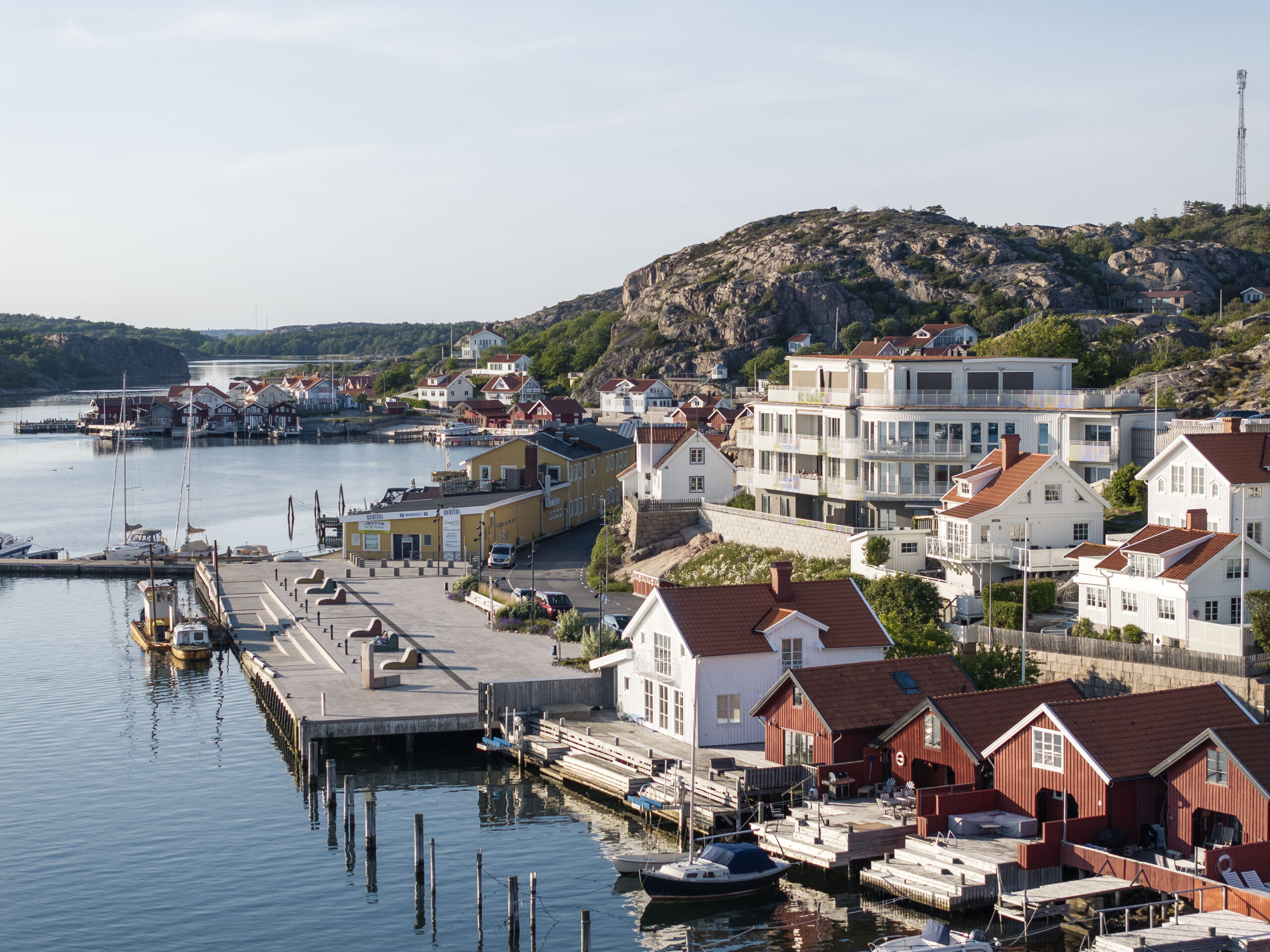
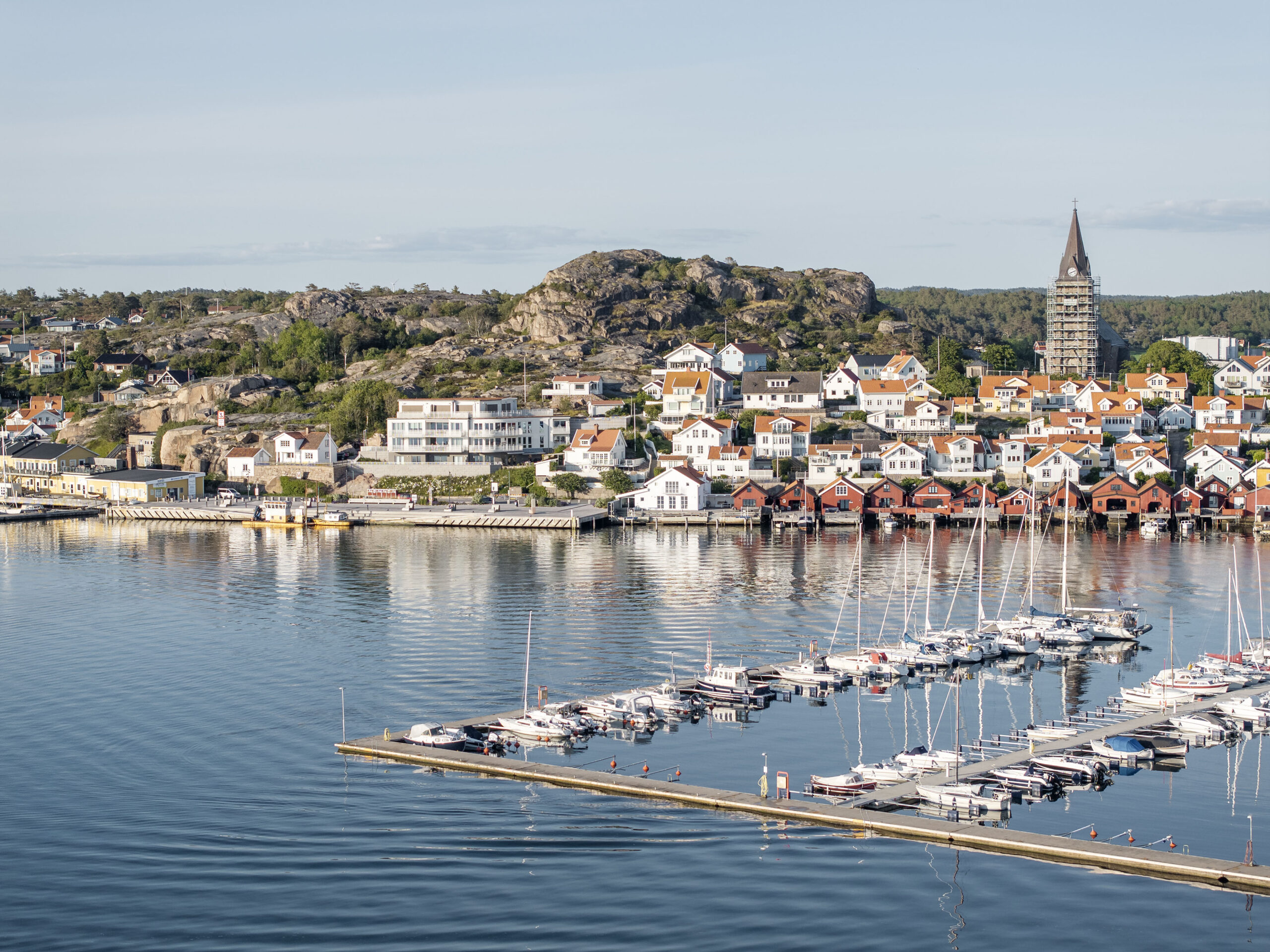
From iconic seaside restaurant to residential building rooted in the functionalism of the 1930s. We designed seven apartments on the site once occupied by the well-frequented Badis. But traces remain — in the architecture, in the volumes, and in the relationship to the sea. Now the Fjällbacka archipelago comes alive again.

Badis was built in 1937 and for a long time was a natural meeting place in Fjällbacka. The restaurant attracted both local residents and summer visitors from afar. Perhaps you have heard the stories of Ingrid Bergman’s summers on Sweden’s west coast.

“We wanted to design a building that feels entirely at home in Fjällbacka while also bearing traces of the site’s history. By interpreting the functionalist architecture of the 1930s, we were able to connect to Badis without copying it,” says Annelie Drackner, lead architect at Tengbom’s Gothenburg office.

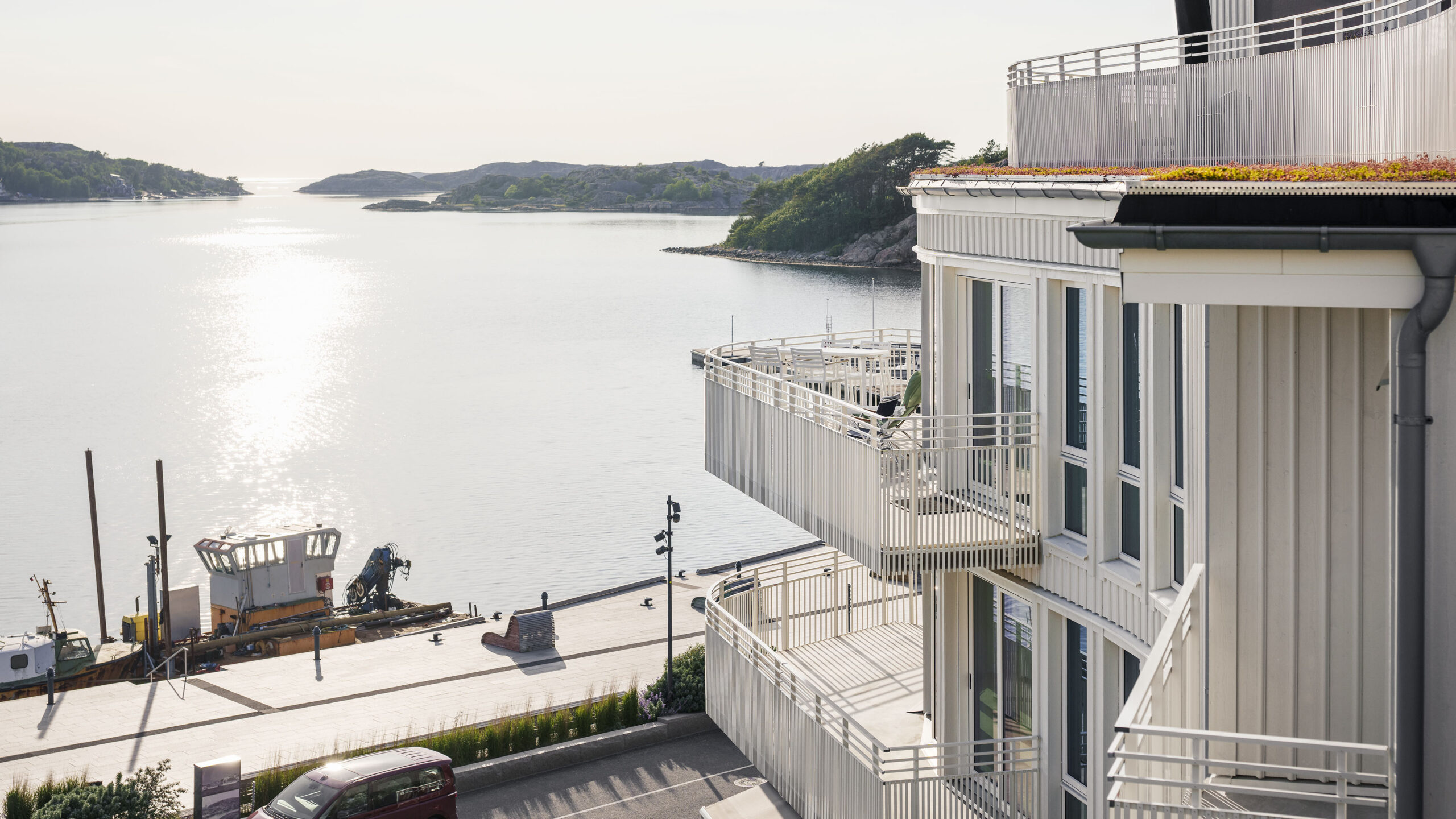
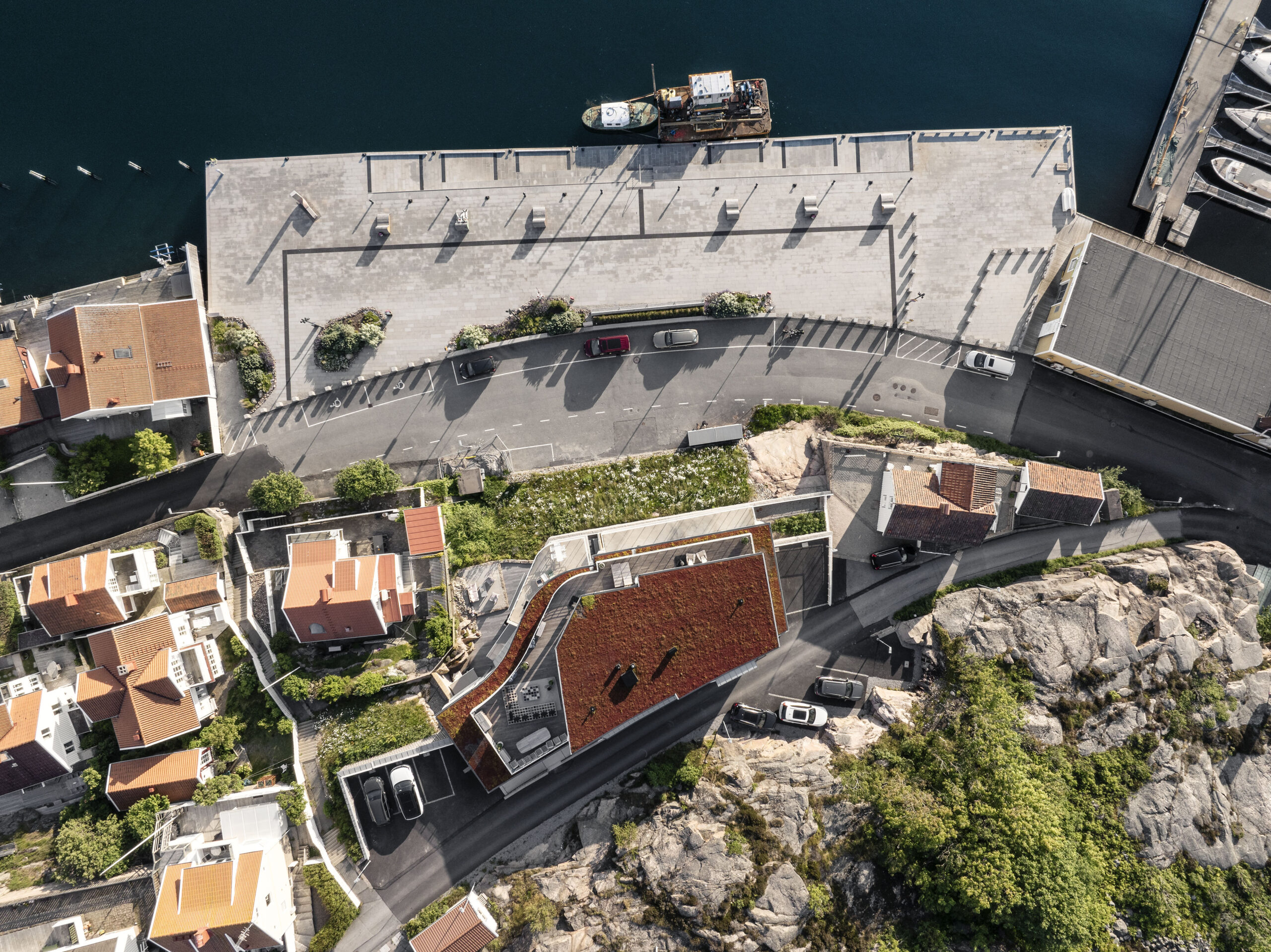
When the area was to be developed again, the ambition was to build on what characterizes Fjällbacka in particular. The new building is located directly by the quay at the harbour entrance, with sweeping views of the archipelago and the community’s distinctive buildings.

Recast functionalism

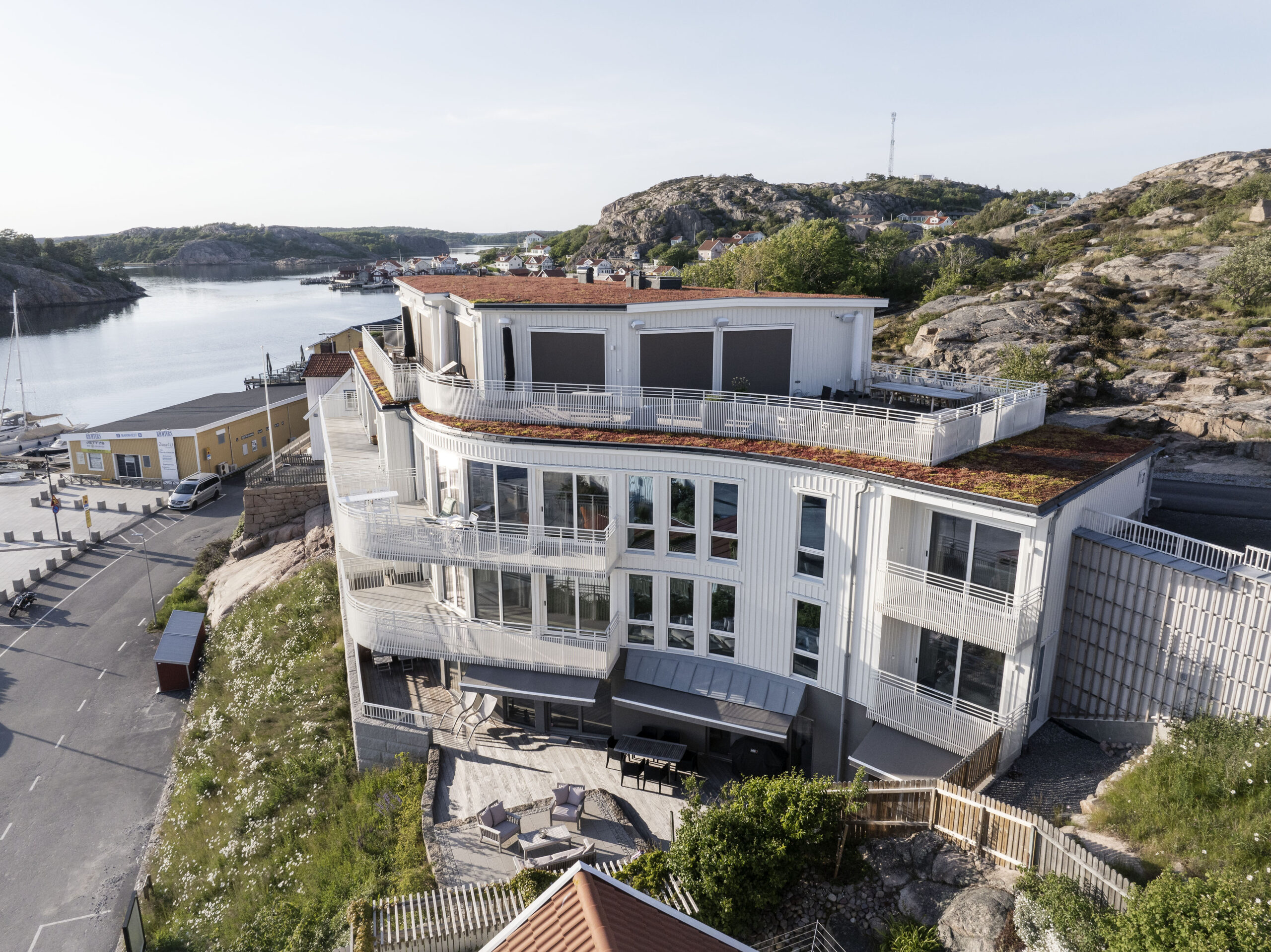
The design draws on the architecture that defined the original seaside restaurant. The vertical rhythm of the timber façades, large expanses of glazing free from muntins, and shallow roofs all clearly reference functionalism, though in an interpretation that belongs here and now.

The division into two volumes also remains in the new building. The southern part is marked by a rounded central section —a form that echoes Badis’s distinctive silhouette.

Architecture facing the sea

The apartments are planned to make the most of the views over the harbour entrance and the archipelago. The building’s first floor is located just over seven meters above sea level, providing unobstructed sightlines towards the water from every level. Each apartment has its own boat berth directly adjacent to the newly laid quay below.

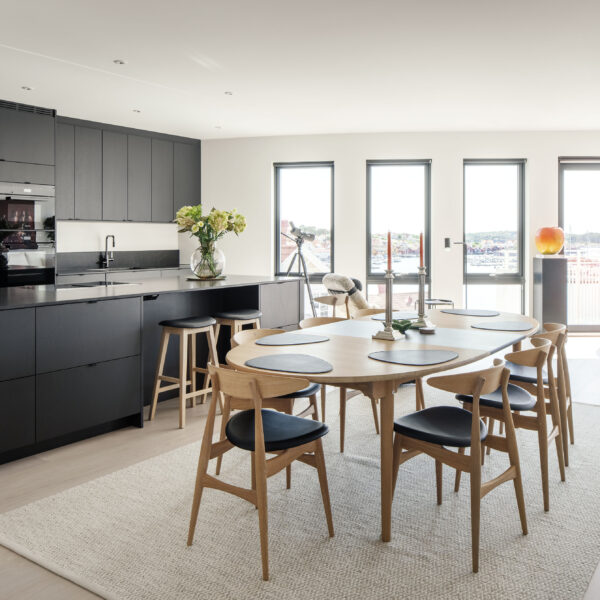
The materials have been selected for quality and long service life. Kitchens and storage solutions are custom designed and crafted in solid materials, with each home adapted to the needs of its residents.

The timber façades, large expanses of glazing free from muntins, and shallow roofs all clearly reference functionalism

A building that carries on

Designing something new on a site that many people already have a relationship with requires sensitivity to what was there before, but also the courage to carry it forward in a new way. For us, Sandhagen became exactly that, a project in which the memories of Badis were allowed to accompany something new. Where life now continues to move between house and sea.

Contact person

Annelie Drackner

+46 708 88 20 91

Brf Prima

Harbor life with a view
Architecture
Residential
Client: Lillskär AB
Location: Sundsvall
Area: Approx. 7,000 m² GFA, 63 apartments
Completed: 2018

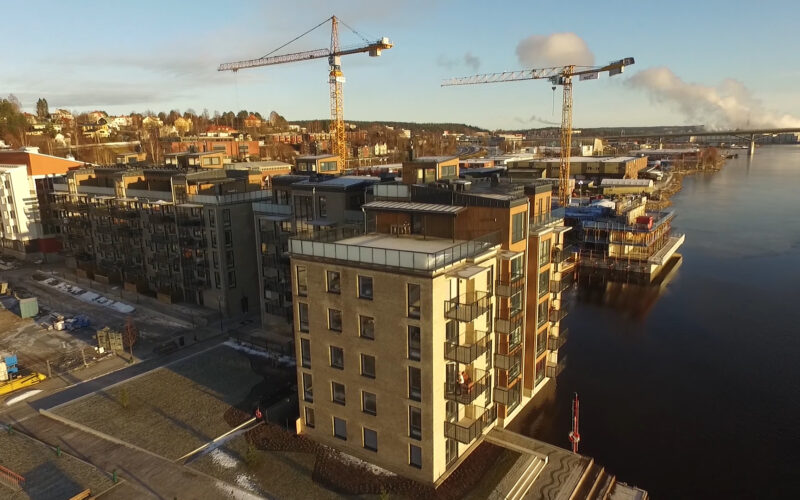
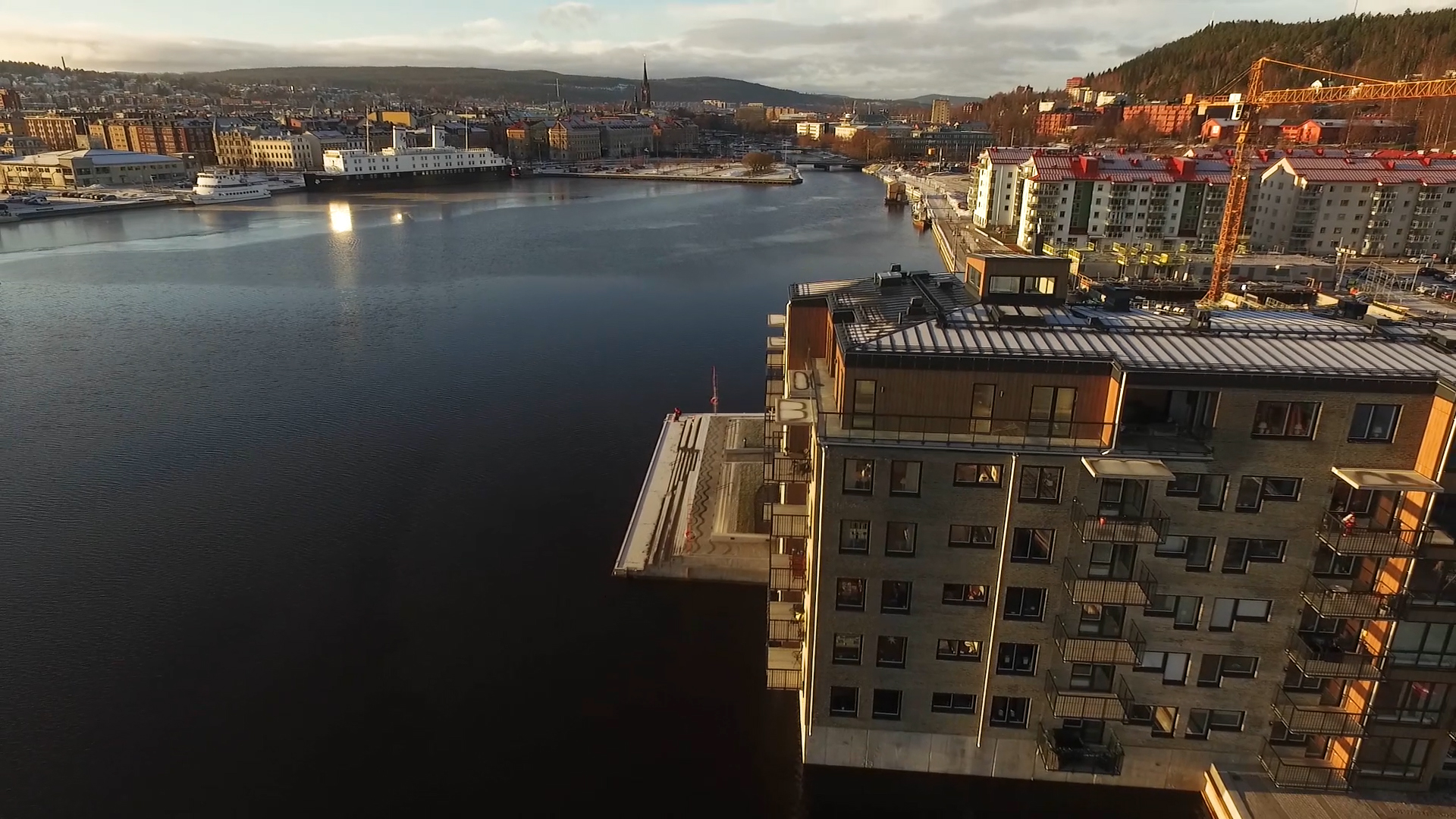
At Sundsvall’s northern quay, new homes now rise where an old industrial area once stood. We designed two residential buildings offering generous views and balconies, inspired by harbor cities such as Amsterdam. In short – welcome to Brf Prima.

Brf Prima

Brf Prima consists of two blocks, one of which was completed in the spring of 2018. The buildings are defined by their generous terraces and bright, open floor plans that invite light and flow. The apartments vary in size, from two to four rooms with kitchens, and all offer calming views over the water – a feature that brings a strong sense of place and presence to each home.

The surrounding landscape plays an important role in the design. Orangeries, balconies, and rooftop terraces create seamless transitions between indoors and outdoors, making nature a part of everyday life.

Because the block doesn’t have a traditional courtyard, the sense of community finds expression elsewhere. Residents share a large communal rooftop terrace that faces southwest, protected from the wind and with an open view over the bay and Sundsvall’s scenic city center – a place for spontaneous meetings, evening sun, and connection.

Generous terraces and open layouts

Brf Prima draws inspiration from harbor cities like Amsterdam. Narrow building volumes stand side by side, each with its own identity. We brought that idea to life by giving every structure a distinct expression. Together, they create variation and rhythm along the block. Open stairwells and orangeries break through the brick façade, adding light, texture, and a sense of movement – small details that bring the whole to life.

Contact person

Niklas Svensson

+46 8 410 354 54

Atlas, Southern Center in Gothenburg

Modern roots
Architecture
Residential
Client: JM
Location: Gothenburg
Project years: 2017–2020
GFA: Approx. 17,000 m²
Photographer: Felix Gerlach

In what was once a classic industrial area just outside central Gothenburg, you’ll find Södra Centrum. When we set out to develop new housing here, it was important to preserve the area’s industrial character – roots should never be neglected. At the intersection between 1950s buildings and old factory structures, we designed the residential block Atlas.

Where Södra Centrum is now taking shape, there once stood a brewery. Later came a carpentry workshop and several car repair garages. It is these latter 1950s buildings that formed the basis for the color and material palette of Atlas. Inspiration for the industrial character of the buildings was drawn from the site’s history, the client’s vision, and the neighboring former industrial quarters. This is clearly reflected in the exteriors – not least in the hand-laid brick façades.

“The houses have a simplicity that is consistent, allowing the material to speak for itself,” says Jesper Kryander, project director at Tengbom. “The few details that exist were developed through the brickwork, with reliefs, continuous glass partitions in the stairwells, and unpainted metal elements.”

The old factory buildings had a warm sandy yellow tone, a hue that we carried into the new brick. It also harmonizes with the surrounding 1950s and 1960s buildings. The block follows the local development plan, forming a slightly curved horseshoe shape.

Tall portals for evening sun

To reduce the overall scale of the Atlas block and define three distinct building volumes, we raised the portals to create generous entry spaces leading into the courtyard. Together with lighting designer Simon Malmström, we designed the entrance lighting to reinforce the spatial character and evoke a sense of security. The buildings vary in height from six to eight stories. They contain 146 apartments ranging from one to four rooms with kitchen. The lowest building to the west allows extra afternoon and evening sunlight to reach the balconies and patios of the inner courtyard. On the ground floor facing the street, there are commercial spaces.

A playful nod to numbers

One slightly unconventional feature of Atlas is its unified signage design at the entrances. Instead of traditionally mounted signs, there is a designated area beside each door where tenants paint their logo or address number.

“It’s a small nod to the old industries where companies painted their names directly on the brick,” says Jerker. “The brick surface is smoothed with sack-spackling, making it easy to repaint with a primer when the premises change tenants.”


From space-efficient homes to garden houses and guest rooms

Although much attention was given to the façades, the apartments certainly weren’t left behind. On the contrary, they are carefully designed, space-efficient, and offer generous storage. The block includes several smaller apartments to meet demand, as well as larger terrace apartments on the top floor. For residents in smaller units, the housing association offers a shared guest apartment for overnight visitors. Adjacent to the block is also a garden house with a sauna and a small gathering space that residents can book. Outside the garden house, a shared pergola-covered patio invites relaxation.

Powered by VR

VR to communicate the vision

An important takeaway from the project was the collaboration with JM in using VR sketches. Weekly sketch meetings helped the project move forward without misunderstandings or the need to backtrack.

“We used VR early in the process, involving the client’s project leaders, design coordinators, marketing team, and interior design lead in the creative work,” explains Jerker. “By working together from the start, we avoided later revisions. Often, ideas have to be scaled down or compromised in later stages. But since everyone was included from the beginning, we didn’t have to.”

One example is the two-story-high portals facing the courtyard.

“Usually, this type of portal is only one story high,” says Jerker. “We knew we’d be removing some apartments by increasing the height, but when we presented the proposal in VR, the spatial experience we wanted to convey became clear. Without the digital tools, before materiality is introduced, it can be harder to communicate the sense of volume. Here, we could identify the value early.”

Contact person

Jerker Kryander

+46 735 24 90 28

Margretedal

A living room in street form
Urban Development
Idea & Vision, Plan & programs, Residential
Client: Riksbyggen, MIdroc, Nordr, Lunds kommun, LKF, LKP
Location: Margretedal, Lunds kommun
Project years: 2017-ongoing
Assignment: Parallel mission for the Margretedal quarter

Can the warmth of home life be extended into the streets? Tengbom’s proposal for Margretedal reimagines the urban space — creating entirely new social arenas.

Tengbom and Margretedal go way back. In 1999, we won an architectural competition to transform this former industrial area in Lund into a residential neighbourhood. Nearly 25 years later, the city has evolved, and so have the needs of its residents. Increased traffic on Södra Vägen and an open structure that no longer serves the area mean it’s time for a new approach.

The vision? Bold and compact. Three architecture firms, including Tengbom, joined the challenge of proposing a new structure. The goal was to create central-city living with high residential quality, striking architecture, lush greenery, and a rich cultural environment.

The park houses feature lightweight materials and sit among abundant greenery, creating an experiential and varied urban space. The block remains open while maintaining a sense of enclosure through the surrounding street areas. Hardebergastråket transforms into a scenic promenade that enlivens the neighborhood.

Architecture that fosters new connections

As a city with a constant influx of visitors, Lund demands a strong contextual approach. Our ambition is to create a district with great social qualities — a place that actively encourages encounters between people.

A street that invites life

Our proposal makes the city more accessible — imagine a lively, green street where paths cross, dogs play, and neighbours stop for a coffee. The urban environment is designed with variety in mind: a vibrant social thoroughfare, intimate alleyways, and private retreats.

The building scale in the alleys and the generous forecourt area create space for spontaneous encounters and interactions among neighbors.

Neighbourhood life, designed for well-being

Developed in close collaboration with Lund Municipality and the developers, our design prioritises quality of life. A mix of housing sizes creates diverse living opportunities, while varied building heights and a carefully designed roofscape enrich the overall experience. Many buildings will also feature private or shared rooftop terraces — perfect for gardening or spontaneous gatherings.

The angled and narrowing alleys reduce noise from the south while creating a comfortable scale and climate within the streets. In the park buildings, private balconies pair with a shared rooftop terrace, keeping outdoor space always within reach.

Harmonious tones of brown and beige define the neighborhood. Shared outdoor areas blend with private residential courtyards, terraces, and individual outdoor spaces.

Contact person

Josefin Klein

Practice Director Skåne
+46 40 641 31 18

Between the trees

Living with the forest
Architecture
Residential
Client: GBJ Bygg
What: Winning entry in a land allocation competition
Location: Vaggeryd, Östra Strand
Collaborators: Landscape architects from MARELD

You stand in the center of the clearing. Pines rise around you like guardians of the sky – between the trunks, sunlight dances across the moss. Here, where the forest meets the hand of humanity, a new residential area will take shape. With the proposal “Between the Trees,” we, together with MARELD and GBJ Bygg, won the land allocation competition for Östra Strand in Vaggeryd.

Vaggeryd
At the residential courtyard Gläntan in Vaggeryd, community is key, but so is the freedom to choose. Here, you’ll find both private and shared outdoor spaces. Visualization: 3Design

The winning proposal, “Between the Trees,” is rooted in preserving the natural values of the site, creating a coexistence between humans and nature. The vision is a residential environment where the forest is not merely a backdrop but becomes an integral part of everyday life. The winning design consists of four buildings grouped around a shared courtyard with a common house. The buildings – one with four floors, two semi-detached houses, and one row of townhouses – will comprise 33 apartments.

Living in the forest’s embrace

Here, you truly encounter the forest. The buildings almost seem to have sprouted from the ground. Their wooden facades and balconies with sturdy columns reflect the strength and resilience of the trees. Glades are formed between the buildings, where greenery winds its way into the courtyard, becoming part of daily life. Large glass sections blur the boundaries between indoors and outdoors, and the balconies are not just places to rest – they are small gardens in the air. Lift the wooden floor and grow herbs, tomatoes, or berries directly in the balcony’s structure.

The competition team worked on the idea of a living environment where people and animals can coexist, and where the forest’s presence is felt in every detail.

Lift the wooden floor and grow herbs, tomatoes, or berries directly in the balcony’s structure

“Living with the forest doesn’t just mean living near nature but being part of its ecosystem,” says Annelie Drackner, architect at Tengbom in Gothenburg. “Creating architecture that lives with the forest required constant reflection from us: How can we adapt to the forest’s conditions while preserving its integrity?”

Mellan stammarna Mellan stammarna

Gather in the courtyard house

The heart of the neighborhood is the courtyard “Gläntan,” a place for play, relaxation, and community. Here, children can build forts, jump between stones, and explore small paths. Behind the glazed doors of the courtyard house lies a flexible common space for everything from gardening to birthday parties or crafting on a rainy day.

The landscape architects from Mareld have preserved the existing natural terrain and ecosystems as much as possible. Forest paths connect the neighborhood to the surrounding nature, and the plantings in the clearings are chosen to support biodiversity.

Östra strand Vaggeryd

“With the competition theme ‘Living with the Forest,’ we started from the site’s existing values and character, which we want to preserve, let guide, and dictate the terms for the design,” says Åsa Setterby Modeus, project lead landscape architect at Mareld.

Vaggeryd
The tall pine trunks of the courtyard are echoed in the multi-family building’s courtyard facade, with sturdy wooden posts that, together with wire mesh, create an outer layer on the balconies. Visualization: 3Design

But it’s not just people who will live here. In the forest and on the facades, there are bird and bat houses, insect hotels to protect vital pollinators, and perhaps even buzzing beehives. Here, there is a balance between humans and nature that feels as natural as it is enchanting.

Resilience for climate change

Vaggeryd
By preserving the existing natural terrain, a foundation is created for established ecosystems to remain in place.

The proposal prioritizes preserving as much of the existing green structure and ecosystems as possible. The mature forest provides natural shade, protection against extreme heat and wind, and slows down stormwater. The buildings are also designed with sustainability in focus. Green roofs on the apartment building, courtyard house, and storage units help manage stormwater and improve the microclimate. Gardens by the semi-detached and row houses provide natural shade and promote biodiversity. The green balconies function both as cultivation spaces and sun protection during hot days.

Part of something bigger

The plan is to begin construction in 2026. “Between the Trees” will be part of the larger Östra Strand area. The development will also include a preschool and a shared forest park. This project envisions a future where sustainability, community, and nature go hand in hand.

Contact person

Annelie Drackner

Lead Architect
+46 708 88 20 91

Prästhöjden Senior Housing

The kind house
Prästhöjden
Architecture
Residential
Client: Fristadbostäder AB
Assignment years: 2021-2023
Type of housing: Rental apartments
General contractor: Olofsson Bygg
Photographer: All images, except those in the last gallery, were taken by Åke E Lindman
Awards and nominations: Winner of the 2024 Public Housing Best Construction Award. Nominated for the 2024 Construction of the Year Award and the 2024 Swedish Red Paint Prize

Showy? No. Kind to both people and the environment? Absolutely. From start to finish, and in close collaboration with Fristadbostäder AB, the Prästhöjden senior living facility in Fristad, outside Borås, took shape under the mantra “The right material in the right place.” This energy-efficient building, with refined architecture and meticulous attention to detail, is built to last.

At Tengbom, we often say that a successful project results from good collaboration where architects are involved every step of the way. That was certainly the case with Prästhöjden. From the drawing board to follow-up, we worked hand-in-hand with Fristadbostäder AB, a client as passionate as we are about long-lasting design and cost-effective property management achieved through well-chosen materials.

Prästhöjden senior living

The result: just as we imagined

“Taking a long-term perspective is highly beneficial for us,” says Kjell-Ove Sethson, CEO of Fristadbostäder AB. “By focusing on lifecycle costs instead of fixating on construction costs, Prästhöjden will generate economic benefits for generations to come.”

Magnus Almung, the project’s lead architect, adds:

“It’s rare in Sweden to be both the architect and the project leader, from sketching the initial lines to preparing tender documents and construction plans, attending every site meeting, and overseeing the entire process. But in this case, I was involved in every phase, and the result is a building I am especially proud of—a building that turned out exactly as I envisioned.”

For quality of life and community

Prästhöjden senior living. Foto: Åke E:son Lindman

The building features three stories, a centrally located glass stairwell, and a terraced floor on one side. The apartments are high-quality, with bright interiors, large windows that let in ample natural light, and solid ash parquet flooring. Kitchens are functional and well-equipped, and each unit includes a balcony or patio. Accessibility is a priority, with ample space for walkers. The top floor offers communal spaces to encourage interaction between neighbors, including a rooftop terrace for sunny days. Residents enjoy proximity to nature, essential services, and excellent outdoor areas for families and visiting children to gather.

Prästhöjden senior living

Sustainable craftsmanship and smart energy

Prästhöjden is designed and built to stand the test of time, with massive wooden frames supporting the structure and a facade painted in classic Swedish Falu red. The property is energy-efficient, with optimized energy use and solar panels on the roof. Both material choices and functionalities were carefully selected to ensure longevity.

Following the principle of “the right material in the right place,” the design places the concrete structure underground in the terraced floor, while the above-ground sections use wood. Sustainability and environmental considerations drove the extensive use of wood, not just for structure but also as a key aesthetic feature. Exposed wood adds character to the apartments, stairwells, entrances, and facade.

Prästhöjden senior living Prästhöjden senior living

“We aimed to create a functional building that’s also rich in beautiful materials and detailed craftsmanship,” Magnus continues. “Even the construction workers appreciated building something that stands out from standard prefab projects, which is evident in the final result.”

Prästhöjden senior living

Prästhöjden senior living“Wood through and through”

The team selected a simple half-lapped spruce panel to create a harmonious yet varied facade. They mounted a specially milled 50-mm deep cover strip on alternating joints. For the bottom floor, a smooth finish provides a well-proportioned base for the facade. Fire sprinklers throughout the building make it possible to have exposed wood interiors and a fully wooden facade.

Prästhöjden senior living

“This gave us great freedom to design the building around our concept, ‘Wood through and through,’” says Magnus.

However, as Magnus emphasizes, this is no “showy” house. It is a kind, sustainable home of thoughtful architecture, high quality, and practical functionality.

“We are proud and delighted with the overwhelmingly positive feedback from our satisfied tenants,” concludes Kjell-Ove Sethson.

Photographs in the gallery were taken by Ulf Celander.

Prästhöjden senior living received a nomination for Construction Project of the Year in 2023. In 2024, Public Housing recognized it as a contender for Best Building, along with a nomination for the Red Paint Prize (Rödfärgspriset).

Contact person

Magnus Almung

Lead Architect
+46 31 708 38 01

Tampen

A seaside setting
Architecture
Residential
Client: CA Fastigheter AB
Location: Varvsholmen, Kalmar
Year: 2022
Photographer: Jansin & Hammarling and Felix Gerlach

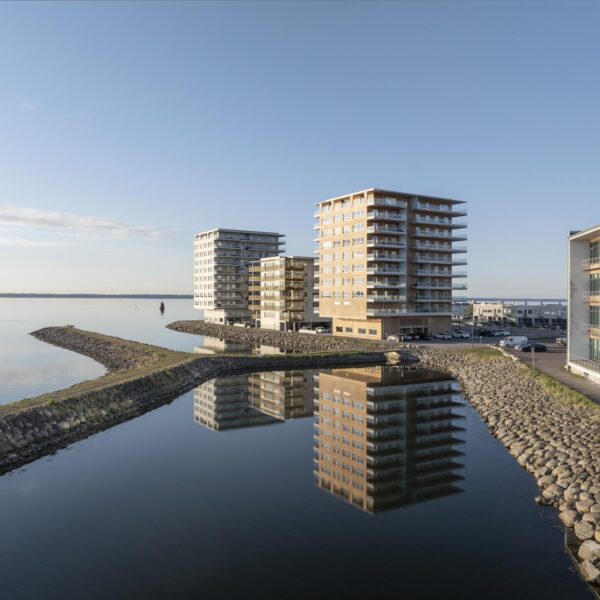
Tampen, on the island of Varvsholmen in Kalmar, combines remarkable natural scenery, high-quality architecture and evidence-based design. Something above and beyond the ordinary, in other words. It’s no coincidence that the association is called Fyren (“The Lighthouse”).

Tampen
At the tip of the island, with expansive views, you will find the Tampen residential area.

The Tampen residential area is situated at the tip of the island, with expansive views and beautiful natural scenery. Tengbom has completed three buildings – two bigger, one smaller. The island was once home to an old industrial shipyard, where ships were still built 50 years ago. Now the area offers housing for about 2,000 people who enjoy daily life beside the ocean’s waves. They are all within comfortable cycling distance of Kalmar’s city center.

Tampen
Large balconies extend the airy rooms of the apartments.

Harmonious architecture and engineering

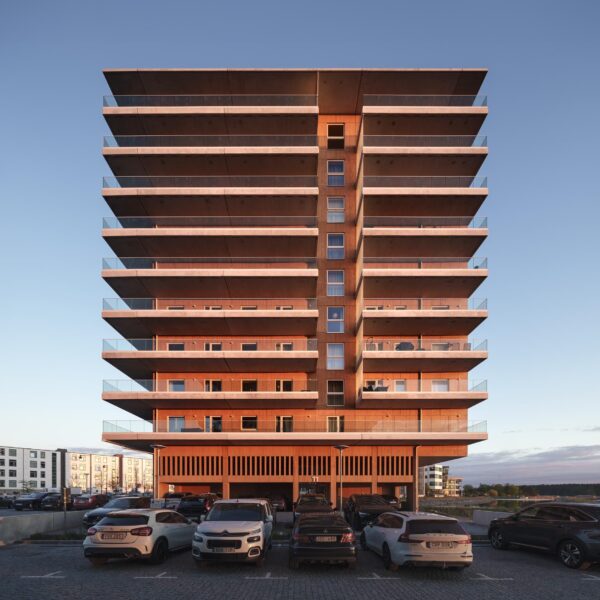
The residential area offers wide-open views in every direction and showcases natural beauty year-round. Many corner units in the large building allow light to enter from multiple sides. The design features elegant, tactile façades finished in terrazzo with crushed white marble stones. Large balconies complement this material, demonstrating how architecture and engineering can work in harmony.

The balconies provide shade and wind protection, drawing inspiration from Japanese engawas, spaces that connect indoors and outdoors to enhance contact with nature. At 2.5 meters wide, they create uninterrupted views from the inside, free from distracting elements. Throughout the process, architects, landscape architects, and interior architects have prioritized visual freedom, ensuring a seamless flow between indoor and outdoor spaces.

An ode to concrete and a tribute to its aesthetic

Maximizing the experience of nature via algorithm

To make the most of the sea views and natural light, the architects collaborated with Tengbom’s digital studio. They analyzed the views from every angle, considering building positions, wind conditions, and light exposure. This approach maximized daylight while ensuring the façade provided shelter from strong winds.

The result? Bright rooms with windows and balconies offering over 80 percent uninterrupted views. It’s about as close to a lighthouse as one can get.


Concrete as a statement

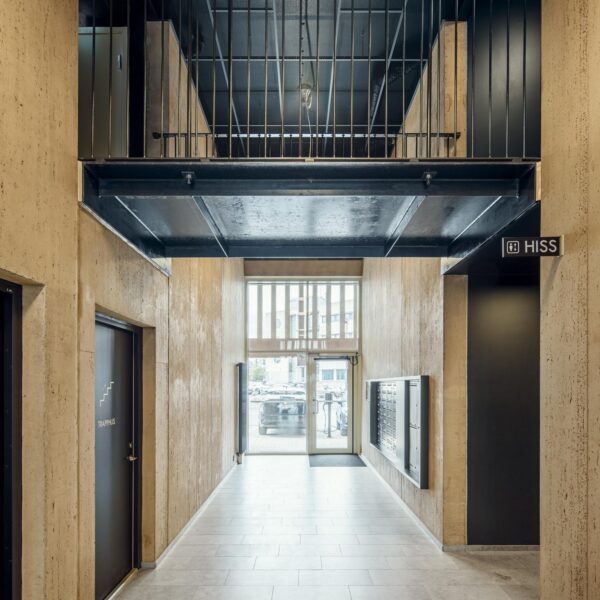
Concrete plays a central role in both buildings, shaping their style and flexibility. The design emphasizes details, replacing ordinary concrete walls with 45° angles for a seamless integration of structural elements. The completed buildings draw inspiration from brutalism, serving as both an ode to concrete and a tribute to its aesthetic.

The structure is simple, exposing its raw construction while incorporating intricate details. The appearance of the concrete shifts depending on the viewer’s distance, adding depth to the design. To minimize visual noise, the team removed unnecessary components and toned down materials and colours, allowing the raw beauty of concrete to take center stage.

Tampen
Tampen
The light gray terrazzo façade of Tampen blends seamlessly with the surrounding colour tones.

Contact person

Joao Pereira

Practice Director Linköping
+46 708 79 99 38

High6

High, sustainable and innovative living
Architecture
Residential
Client: Obos Sverige AB
Location: Kalmar
Years of commission: 2016-2019
Contractor: Obos/Myresjöhus
Partner: Smart Housing Småland

High6 is the name of both the research project aimed at finding an efficient way to construct quality prefabricated apartment buildings and the actual result: a pleasant, human-scaled high-rise built in a factory. The six-story building is set to be completed in 2020.

You can summarise the research project High6 which Tengbom is a part of as a new way of building multi-family houses, High6. Modular buildings are not a novelty in of themselves, as villas have been manufactured in the factory and sold turnkey for a long time, but most higher buildings are designed and produced in other ways. Now this is changing. The project makes it both more sustainable and easier to plan housing construction.

The company Obos has been building homes since 1927, among other brands such as Myresjöhus and Smålandsvillan. But they were interested in developing their business, investing in a new market and exploring alternative ways of building, which is where the collaboration with Tengbom got its start. Next year, the six-storey building High6 will be erected in Kalmar.
“It is a positive development that architects have started to approach the industry, and vice versa. Everyone benefits from it. In the end, it gives a better result and better housing. This is an important trend and we are one of the architectural firms leading the way”, says architect Joao Pereira.

High6

The best of both worlds

The project required using Obos’ existing factory and working with module dimensions of 4 x 12 meters. This approach allows for efficient manufacturing and easy transportation of the apartments to their final location. The development includes 31 apartments, assembled from 64 units. Wood serves as the dominant material, creating a warm and inviting atmosphere. The team maximized available technology to enhance the manufacturing process. In addition to housing, the project features communal spaces, including a bicycle workshop, a greenhouse, and a shared roof terrace.

The factory as a lab

For architects, this is in part a new way of working. The modules are manufactured in their entirety in the factory, complete with a refrigerator, freezer, and a washing machine, and then driven just over 10 miles to the place where they are to be placed. To assemble the entire six-storey house then only takes one working week. The advantage of the close cooperation between the manufacturers and the architects is that the development work has been able to continue throughout the project period.
“The factory works in this case as a laboratory. Since the modules are completely built on the conveyor belt, you can enter the apartments before they are in place. We can see how things work before everything is finished and make improvements before the modules are assembled”, says Joao Pereira.

The vision was a final product of high quality, well-functioning construction, and respect for both the residents and the surrounding environment

High quality is the be-all and end-all

One challenge with the project has been to design a building that makes everyday life better for people while at the same time having to meet strictly given manufacturing templates. Design and function are the focus, rather than technical specifications. What do people want a home to offer? What is needed for a family? These needs have been analysed, and the responses and desires shown there have been adapted to the given frameworks.
“The vision was to deliver a high-quality, well-functioning building while respecting both residents and the surrounding area,” Joao Pereira said. “We have now reached that point.”

Contact person

Joao Pereira

Practice Director Kalmar and Linköping
+46 708 79 99 38