Archives

Oasen

Where the hospital meets the city
Landscape
Health, Parks, Play & Public Spaces, Squares & Streets
Client: Skåne Region
Location: Malmö
Completed: 2019
Project Type: Landscape
Photographer: Nille Leander

Oasen is part of the new hospital district in Malmö, NSM, where Tengbom has designed both an entrance square and reshaped a culturally significant park. The green park environment is located in the northeastern corner of the area and is connected by a beautiful old avenue of linden trees. From concept sketch to completion, we have been involved from the outset, and the visions for both places are now a reality.

An old wall that once enclosed parts of the area has been demolished, creating light and a visual link to the city. This is particularly evident at the intersection of Södra Förstadsgatan–Carl Gustavs väg, where the new healthcare centre facing the entrance square is located. Large flows of buses and cars pass constantly, as do pedestrians and cyclists who move through and around the area. The space in front of the healthcare centre at the hospital district in Malmö offers rest and calm, with newly planted pear trees, refined ground grilles, and bicycle bollards in a geometric pattern. The new pear trees have been provided with a drained and aerated planting bed to give them optimal conditions for establishment and growth.

Trees as a connecting theme in the hospital district in Malmö

Large existing trees have been essential to preserve and have formed the basis for the design of the projects. The trees are old, tall, and contribute much-needed greenery and pleasant shade. Both the square and the park are intended to offer patients and staff restorative experiences beneath the tree canopies. Tengbom has worked deliberately with evidence-based design that emphasises the importance of greenery for patient recovery as well as for staff wellbeing and recuperation. The trees have therefore been the first priority.

Part of the city

The goal is to make the hospital district in Malmö feel like a natural and welcoming part of the city. A diagonal gravel path cuts through the heritage-protected park. Meanwhile, low granite walls in varying heights frame the green spaces. By lifting the planted areas, we raise their status and reduce wear. As a bonus, the surrounding walls also work as seating. In the southern part of the park, two large bicycle buildings with varied timber façades now stand. Most importantly, they meet the staff’s wish for safe bike parking in this busy area.

Green spaces across Malmö’s hospital district have now been carefully restored. Newly planted trees, shrubs and perennials bring visual richness to the area. Near the old main building, classic pairings like roses and lavender create a familiar yet refined atmosphere. Three older sculptures — two of them once part of the park — have also found new, thoughtfully chosen homes. Each one engages with water, through gently trickling fountains or still reflecting pools. Framed by fresh plantings, they create a quiet dialogue between past and present.

“In the Oasen project, we focused on a careful and sustainable design in an existing setting,” says Malin Ingemarsdotter Jönsson, former lead landscape architect. “Clear guidelines shaped how we handled the spaces between buildings and outdoor areas. These documents had a strong influence on our design. We also had to plan for complex logistics – above ground and below. With culverts, utility lines and everyday movement through the area.”

Consideration for logistics – core business

Art creates encounters

The project also involved relocating a large existing artwork, GAP. We found a natural new site in the southwestern part of the hospital district, beside a main pathway lined with large plane trees. Today, the sculpture stands on a granite terrace. It has already become a place for both encounters and quiet reflection.

Contact person

Josefin Klein

+46 40 641 31 18

NEO & Technology for Health

A foundation for innovation
Architecture
Education, Health, Life Science
Client: Hemsö
Project duration: 2013–2017
Developer: TKV AB (SveaNor and Hemsö)
Area: TFH – 22,000 sqm, Neo – 26,000 sqm

NEO and Technology for Health are part of the Stockholm region’s ongoing Life Science initiative. These two new buildings at Karolinska Huddinge in Flemingsberg are designed as an education and research center, with a transparent environment that fosters creativity and synergy. Through our commission to design the entire center, we are actively contributing to a fertile ground for future innovation.

Life Science is a complex concept, and an exciting field of the future. It encompasses disciplines such as medicine, biology, chemistry, technology, informatics, and materials science. It is also a collective term for the sector that includes private and public healthcare, pharmaceuticals, patient and medical organizations, education, research, and much more.

Stockholm’s commitment to Life Science

The Stockholm region is actively investing in Life Science. The focus lies in building meeting places where institutions can collaborate and exchange knowledge. One example is the Life Science cluster near New Karolinska Solna in Hagastaden. Another is the new education and research centre taking shape next to Karolinska University Hospital in Huddinge. We play an active role in both projects — and together, they signal a strong commitment to innovation in healthcare and science.

Photo: Felix Gerlach

A gathering place that fosters knowledge and innovation

Transparency creates synergy

The new education and research center at Karolinska Huddinge will be housed in two entirely new buildings – NEO and Technology for Health. Both are owned by SveaNor and Hemsö through their joint company TKV Fastighets AB. Our vision for the center is based on their ambition to create synergy between education, research, and the business sector. We are designing an open and transparent environment that promotes spontaneous encounters between various activities, with close proximity to workplaces, learning environments, the hospital, and Södertörn University nearby.

Technology and Health

Two buildings – one vision

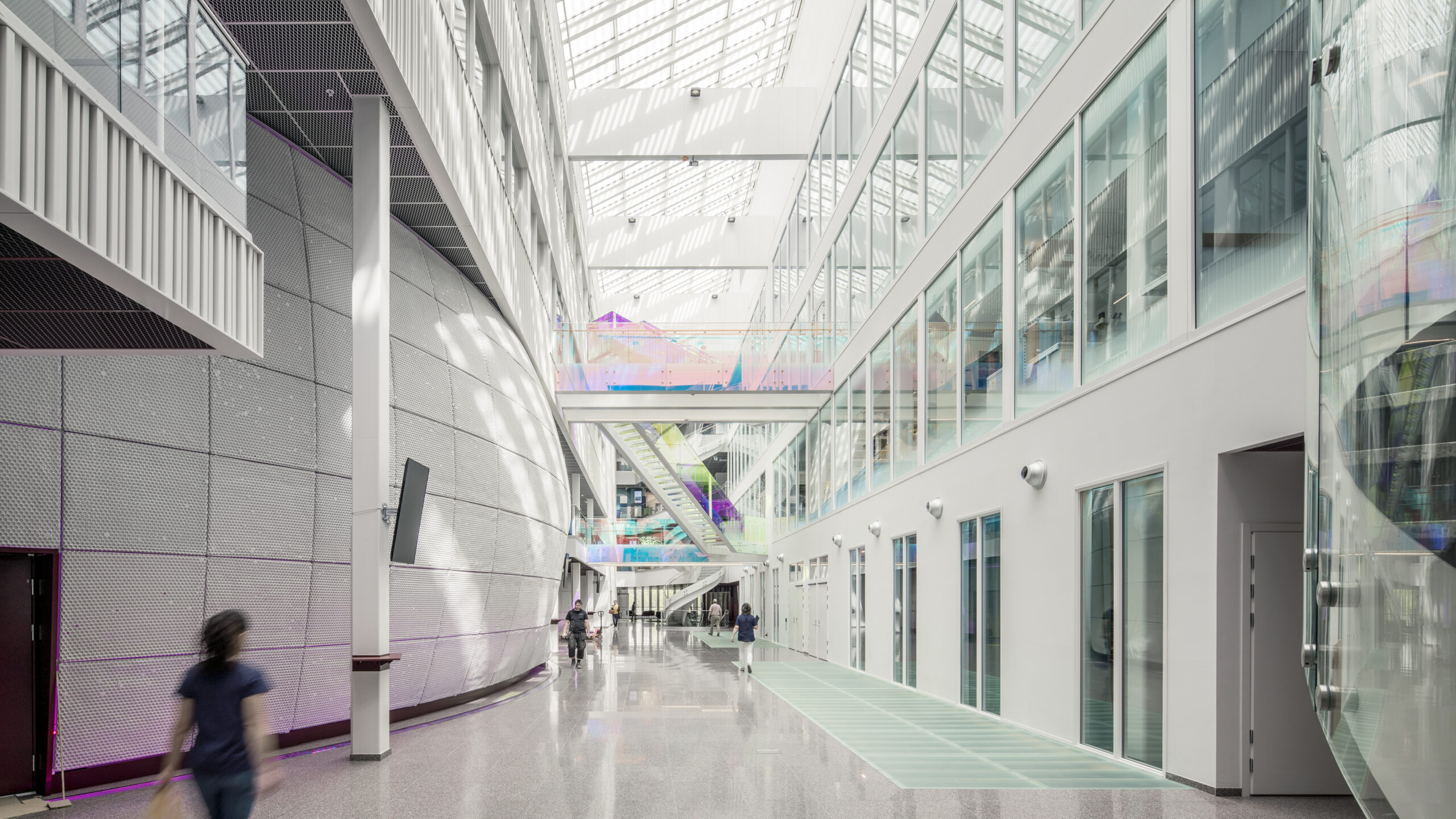
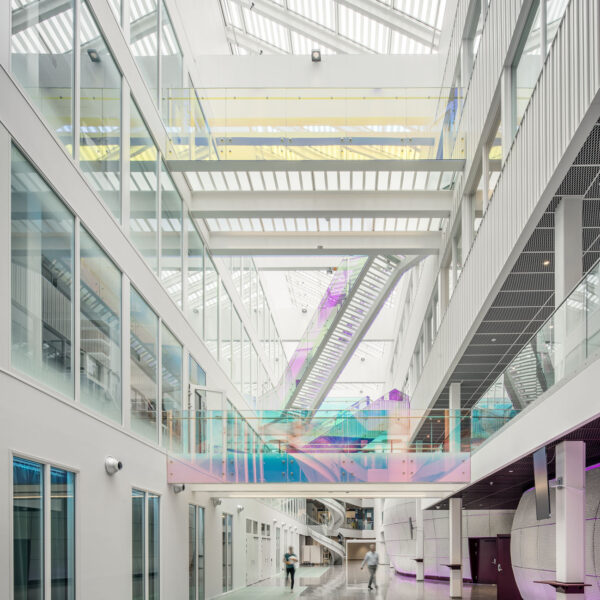
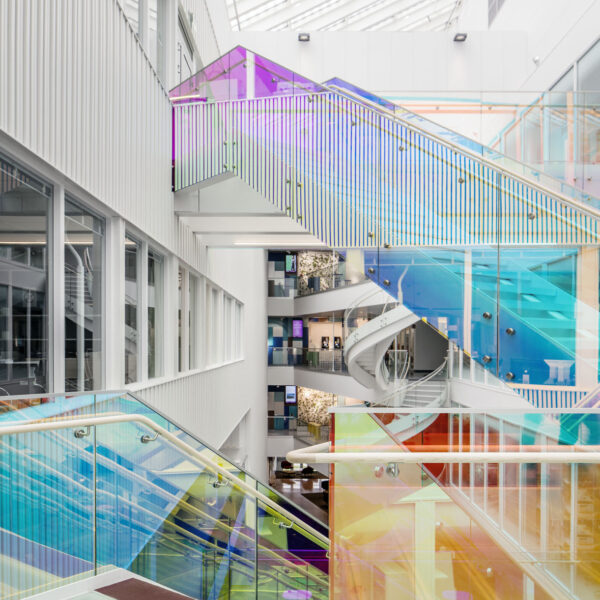
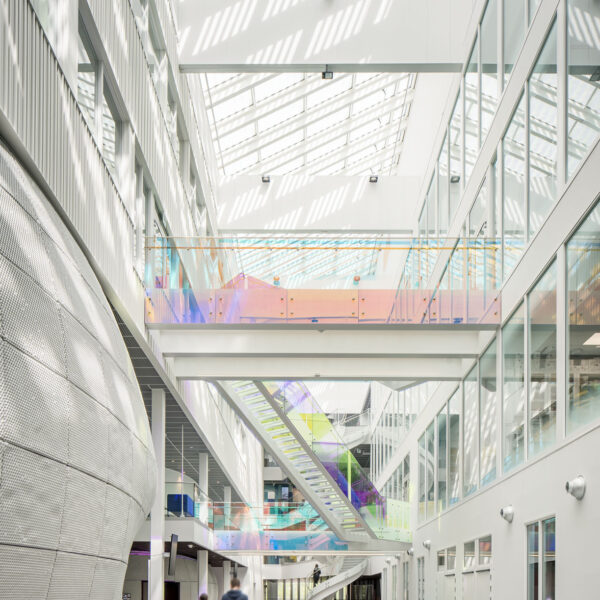
Technology for Health, the project’s first phase, opened in July 2016. This new building, directly connected to the hospital, is specifically tailored to the needs of its new tenants, KTH School of Technology and Health, and the Red Cross University College. Interior spaces open toward a brightly lit atrium featuring angled staircases and balconies designed to encourage informal meetings.

The project’s second phase, NEO, will be home to Karolinska Institutet. The building is expected to be completed by the end of 2017. Here too, we have designed spaces aligned with our shared project vision. From an open, social ground floor, there is visual connection to the advanced research and laboratory environments above. Within the atrium, we have created an auditorium. A spherical form in semi-transparent concrete that shifts in color through an LED lighting system, generating a vibrant and dynamic atmosphere.

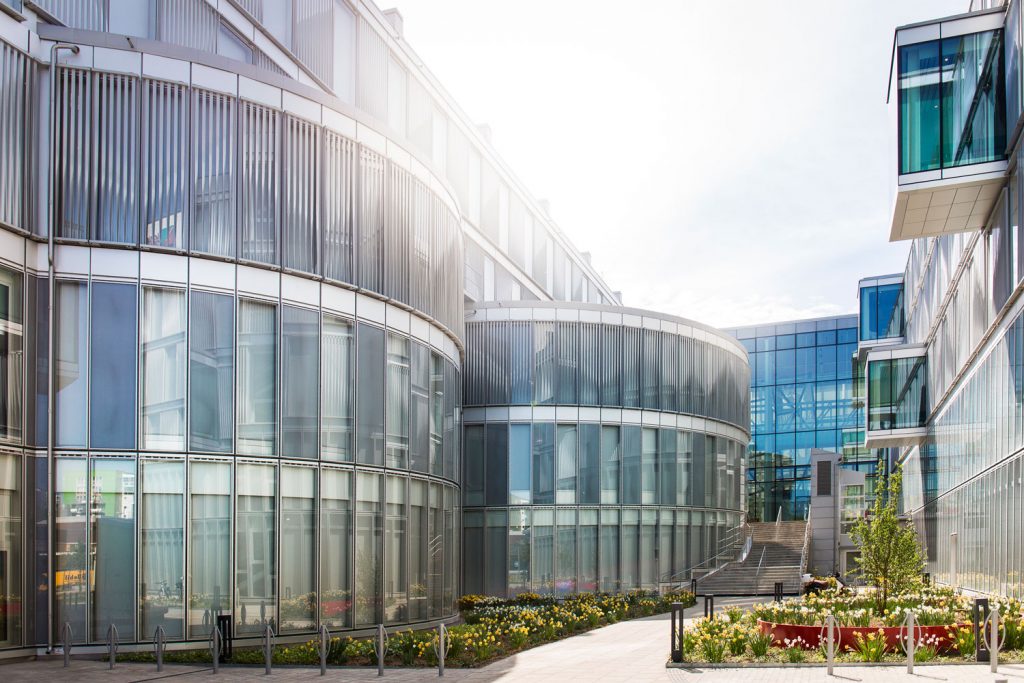
We have paid careful attention to reflect the vision of Life Science environments in the exteriors of both buildings. The façades, with floor-to-ceiling glass panels interspersed with striking metallic lattices in varied sections, signal both transparency and advanced technical precision. The commercial ground floor surrounding the buildings invites people from across the area to meet and network. A gathering place that fosters knowledge and innovation.

Contact person

Anna Morén

+46 841 03 54 47

Mejeriet

A care home that invites the city in
Architecture
Health, Housing
Client: Vaggeryd Municipality
Construction period: 2017–2020
Location: Skillingaryd, Småland
Area (GFA): 6,325 sqm
Photographer: Sten Jansin

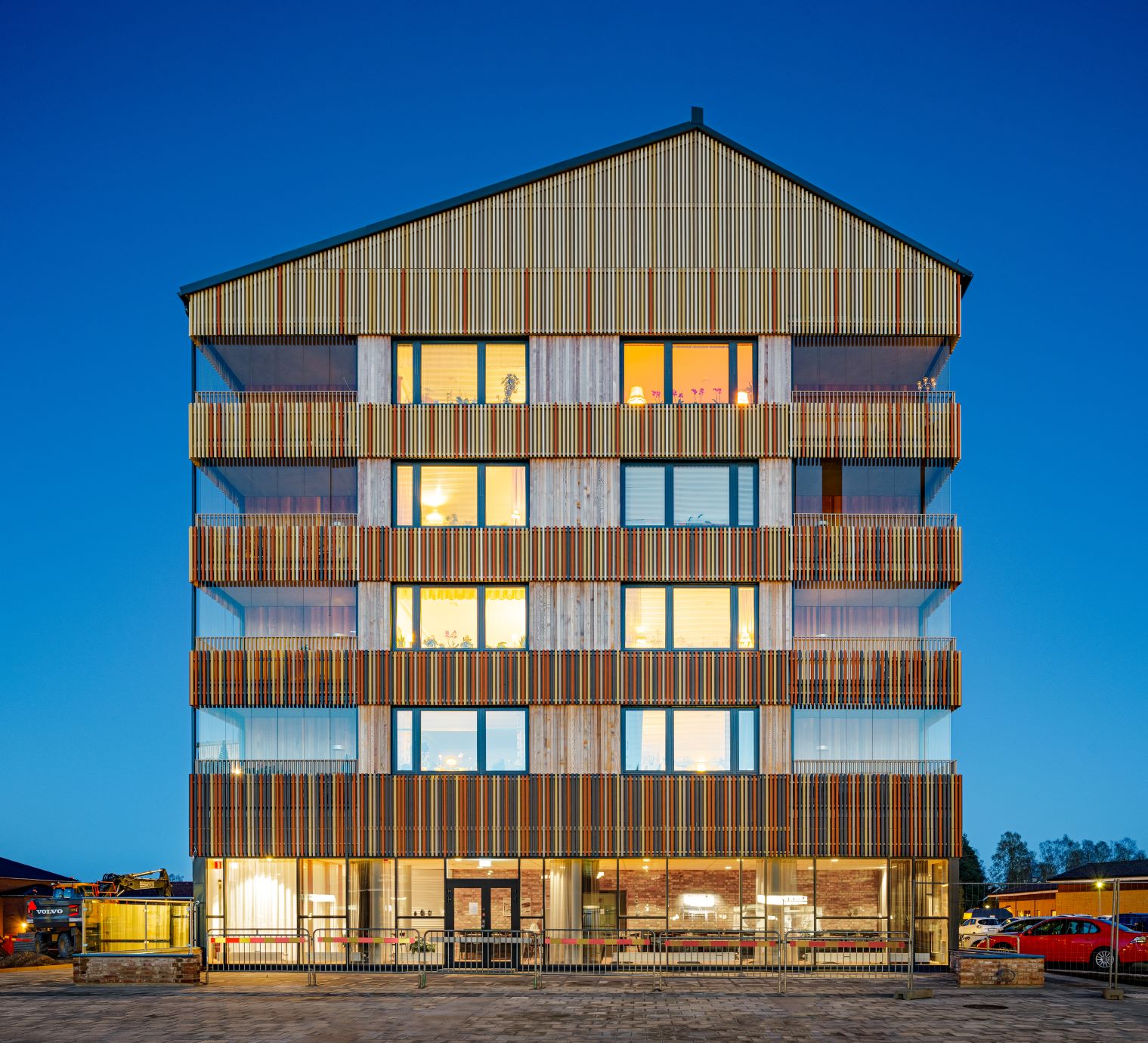
Once a dairy. Now a distinctive, state-of-the-art senior living and activity center housed in a building that makes an impression. Within a limited footprint, we elevated the quality of life for residents, staff, and the wider community.

Have you ever played Tetris? Small, irregular blocks forming a harmonious whole. That was our strategy when integrating assisted living, senior apartments, restaurant, gym, spa, activity rooms, offices, and gardens under one roof — while keeping the floor plan for Mejeriet legible and clear.

A building for the people

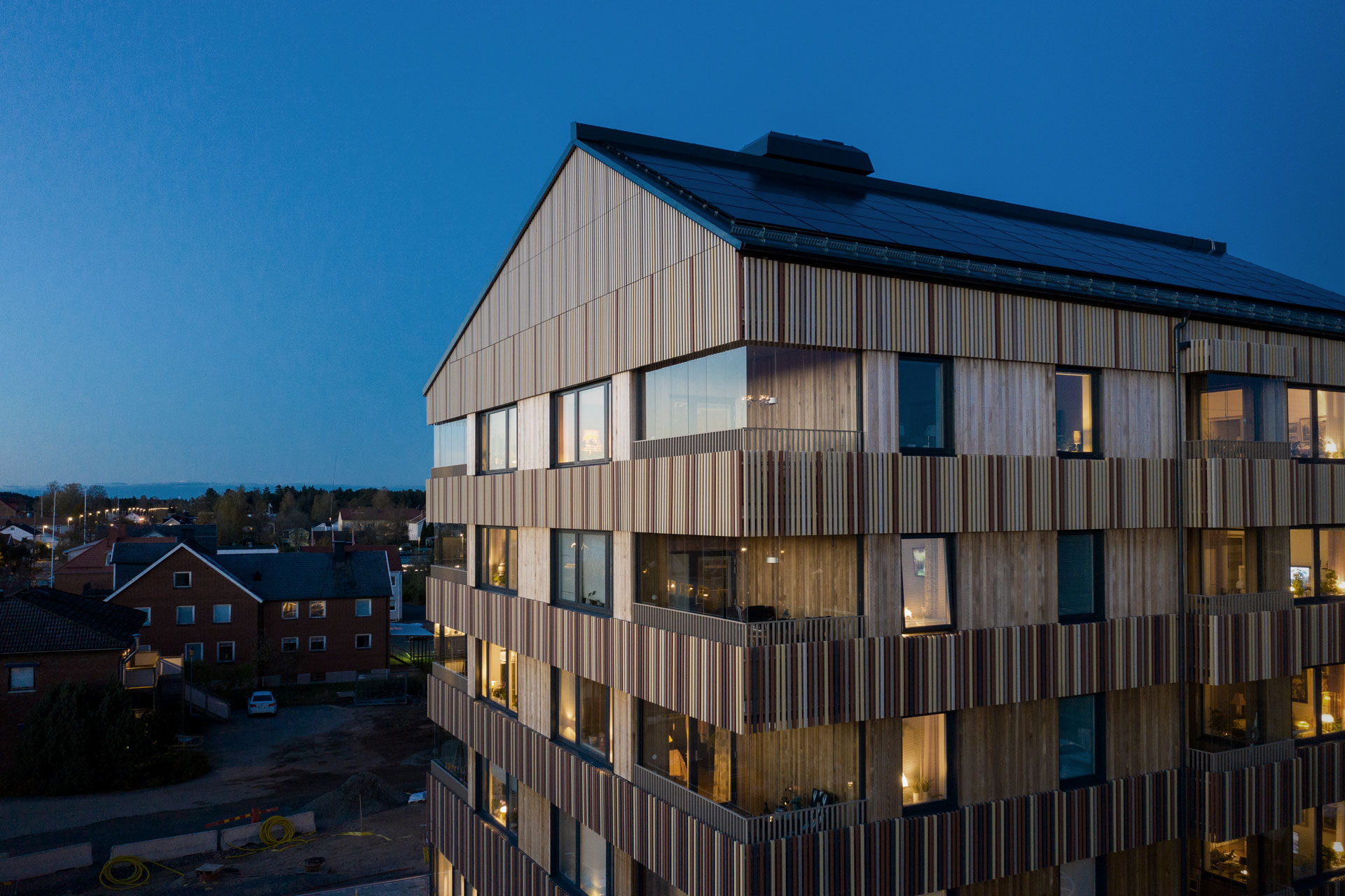
With Mejeriet, Vaggeryd Municipality undertook one of its largest investments ever, aiming to create something extraordinary that would strengthen the town’s sense of identity. The seven-storey building, hosting public facilities, services, and specialist housing, was envisioned as a true house for everyone — an integral part of Skillingaryd. At the same time, residents would feel a strong connection to life outside the building.

Breaking down large volumes

The building’s large masses were methodically divided into smaller, more legible units. The senior apartments were placed facing the main street to maintain contact with urban life, while the care home was nestled toward the natural surroundings on the opposite side. Staff facilities and offices occupy a dedicated section in the building’s center.

The restaurant, serving both residents and the public, opens up toward the town square. Public functions such as conference rooms, lounges, gym, and spa face the water.

Terracotta façade

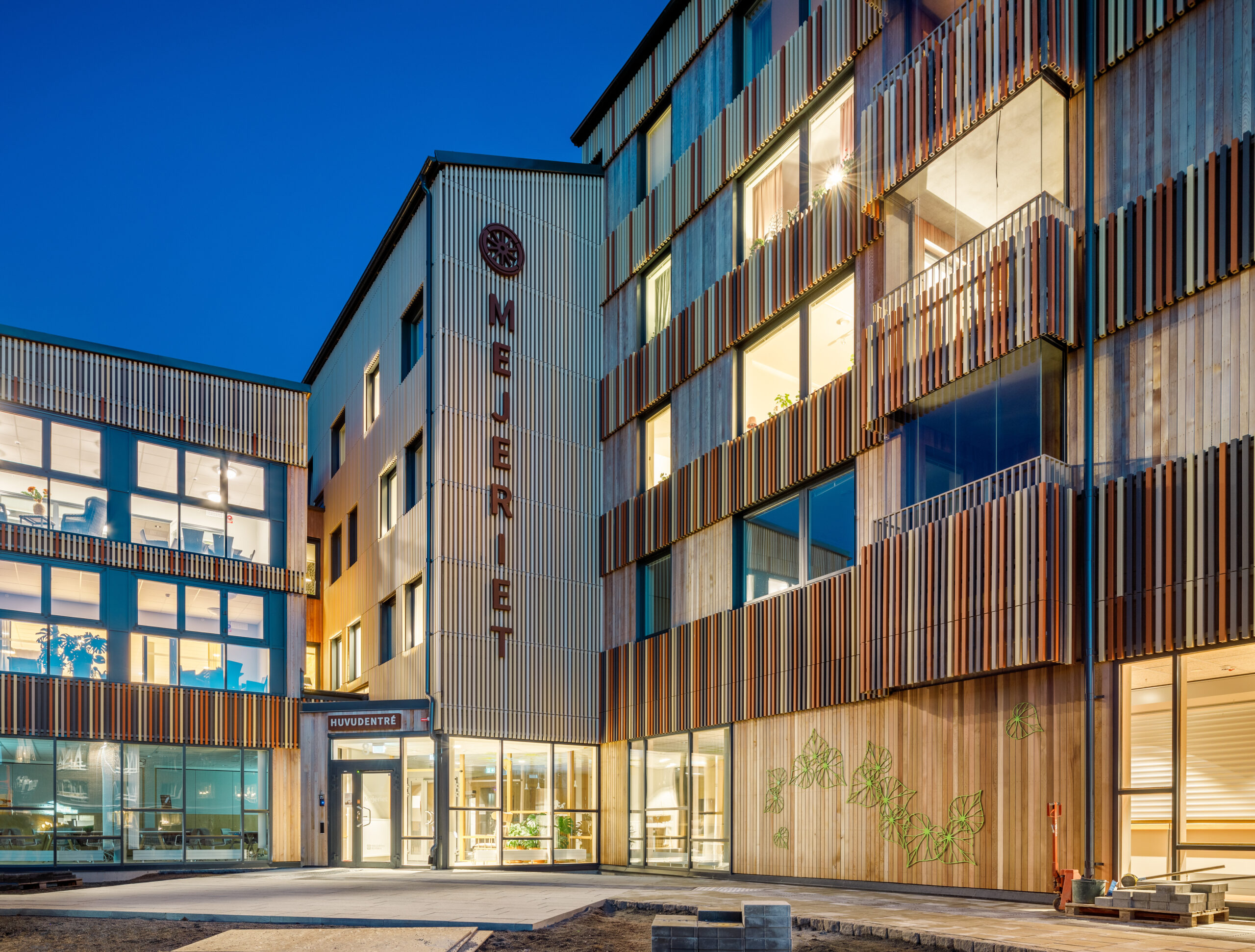
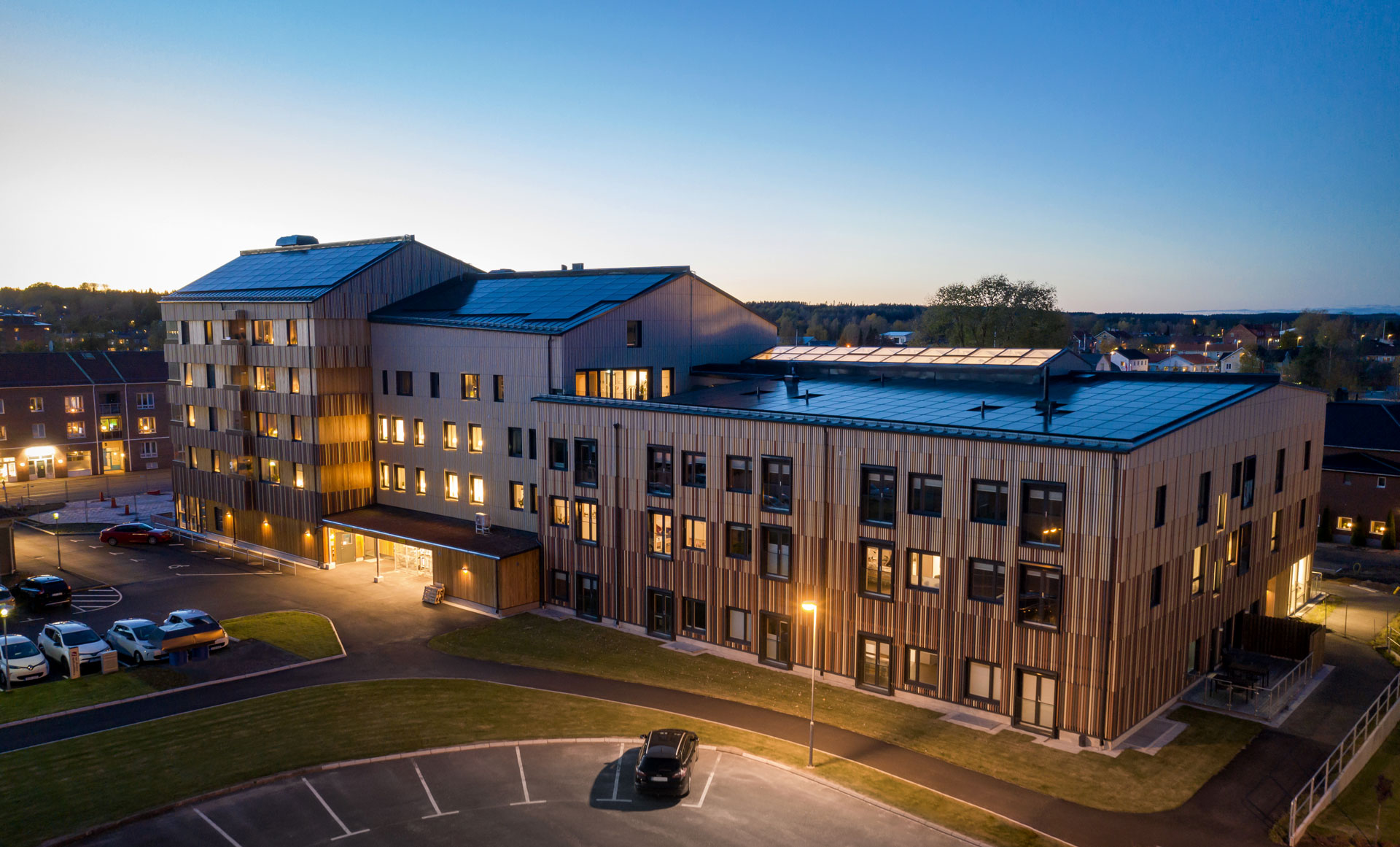
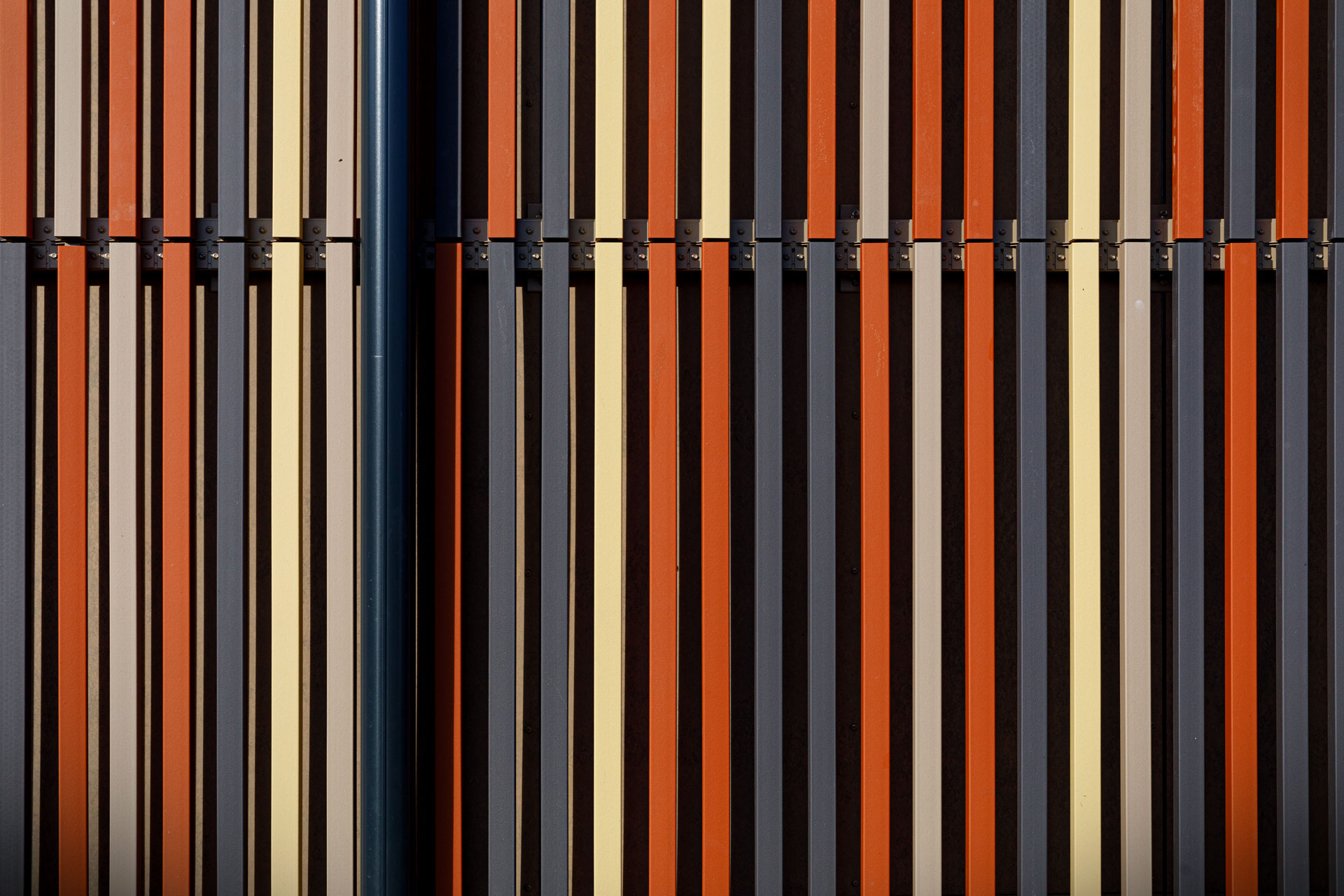
The striking terracotta façade catches everyone’s attention. Terracotta rods are grouped and mounted on the façade alongside vertical wooden cladding. Together, they break down the scale of the building and radiate warmth and a sense of closeness to nature. The strong colors and play of light and shadow make the façade shift in tone as you move around it — adding life and vibrancy.

Leftover bricks from the old dairy were reused — some integrated into the restaurant walls, others built into the entrance courtyard walls. A tangible memory of the dairy that once stood here in the 1930s.

Openness and spaciousness

Although the building nearly touches every property boundary, it is characterized by remarkable openness and volume. Clear wayfinding reinforces this sense of openness.

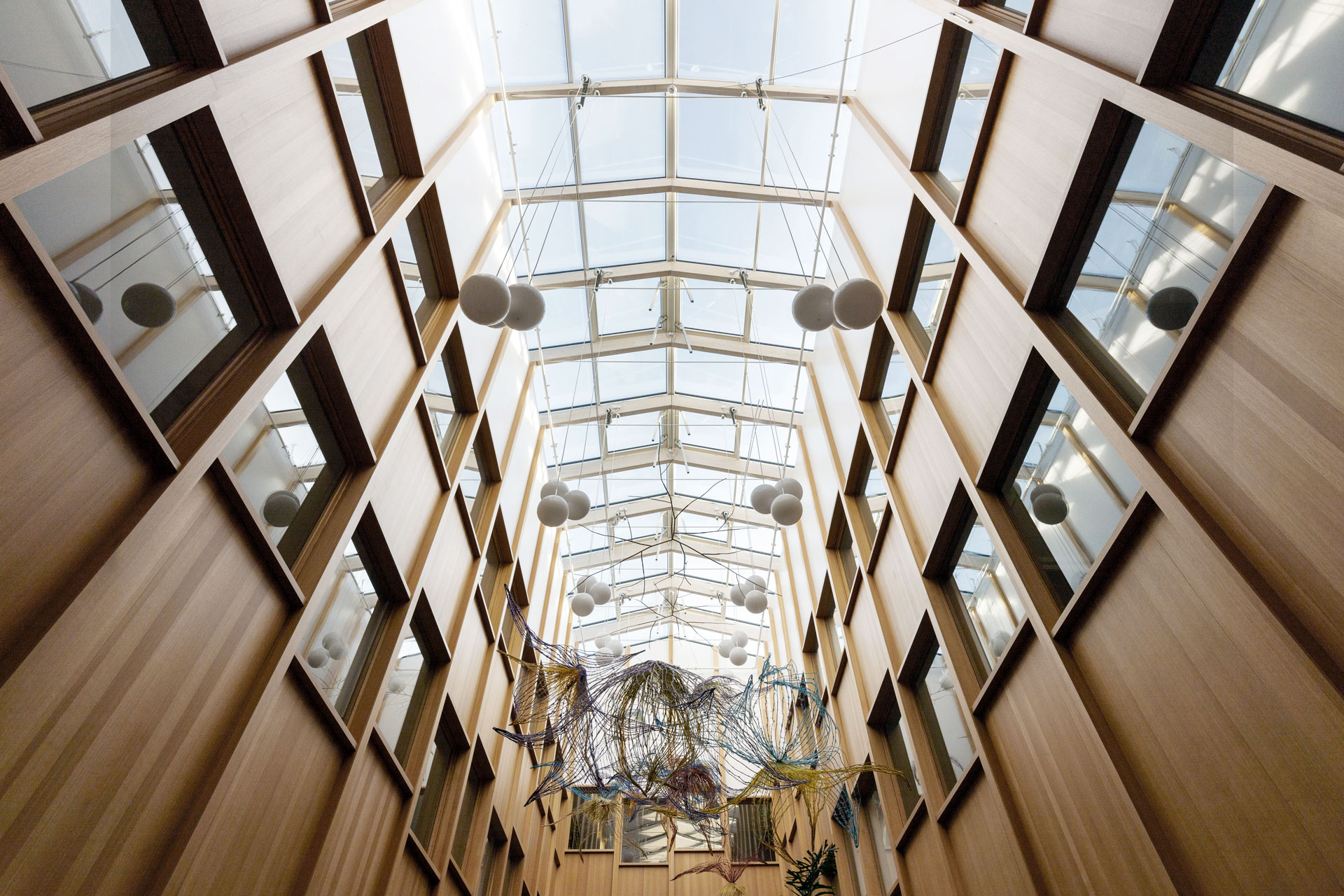
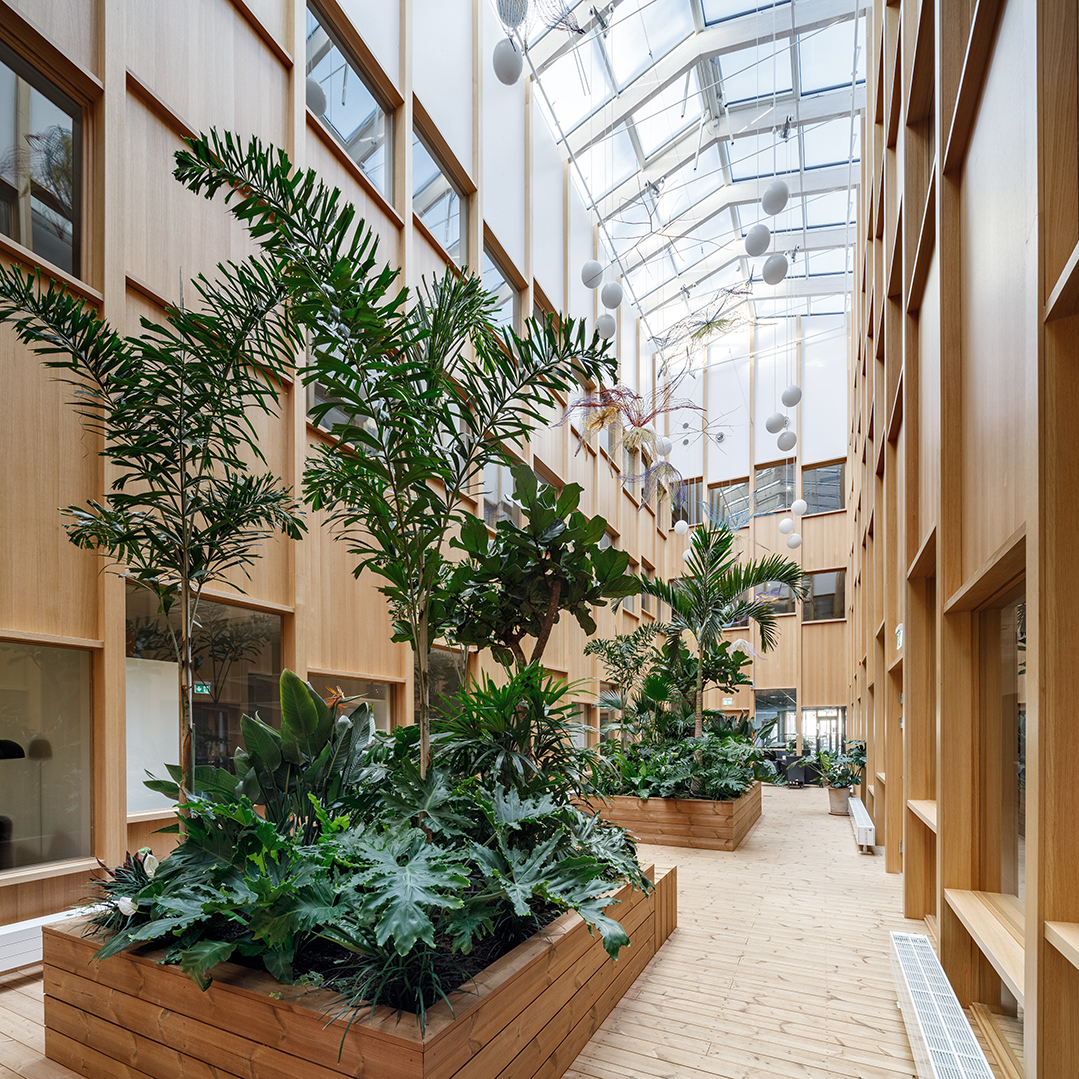
Upon entering, you get the feeling of stepping into a hotel lobby rather than a traditional entrance hall. From here, all of the building’s functions are accessible via a single central staircase. A connecting corridor runs through the entire structure, leading to the Winter Garden — accessible from every floor. This is an oasis for both residents and visitors.

Mejeriet

Quality for the elderly

The senior housing consists of 16 apartments facing the square, while the care home includes 25 apartments. Room sizes are generous to ensure flexibility for both residents and staff. French balconies and low parapet windows allow residents to look outside from their bed or wheelchair. Shared spaces are large, and there is a guest apartment for relatives as well as a terrace at the core of the care units.

A key ambition was to create a calm and secure environment for residents while also streamlining the workflow for staff in an intensive care setting.

The municipality invested heavily in technology to enhance resident safety. Sensor-controlled floors alert staff if someone has fallen. Toilets are height-adjustable, and both residents and staff wear wrist chips that automatically unlock specific apartment doors.

A building of character

We wanted to create a building that takes its place and speaks up — a structure deeply connected to nature yet engaged with the urban fabric. A building people can draw strength from. Now there is Mejeriet.

Contact person

Matt Patterson

+46 36 440 90 81

Djupängen care home

A social and homely care environment
Architecture
Health, Life Science
Client: Hammarö kommun
Location: Hammarö, Värmland
Type of project: Elderly housing
Completed year: 2020
Photographers: Felix Gerlach and Mia Hernell Blomquist, Helena Christersdotter

Djupängen Care Home in Värmland was developed through close collaboration, where everyone. From dementia nurses and social directors to electricians, technical consultants, and, most importantly, the residents had a voice in the design. From start to finish, attentiveness and care for the residents’ well-being were at the heart of the project.

When a party approaches, of course the guitar comes out. Photo: Mia Hernell Blomquist

“The environment should feel like a home, not an institution,” explains Anki Haasma, lead architect at Tengbom in Karlstad. “We designed Djupängen to provide a comfortable living and working environment, improve orientation for both staff and residents, and accommodate individual needs.”

To ensure a positive living experience, the project followed a partnering model, with workshops allowing all perspectives to be heard throughout the process. From the initial sessions defining values and goals to the final review moderated by an external party, engagement was high. The result? A care home where everyone is satisfied, especially the residents and their families.

“We focus on creating activities that give people purpose and joy, and it’s a huge advantage to work in such fantastic spaces. Visitors often say, ‘Wow, can a care home look like this?’ And the answer is – absolutely!”, says Mia Hernell Blomquist, Development Coordinator, Hammarö Municipality

Join in a dance, have coffee at the café, share a glass of wine with a friend, stack firewood in the garden, or enjoy a good book in the library.

There are 120 carefully designed homes here – it should feel like home. Photo: Felix Gerlach

A homely feel, close to nature

At  Djupängen Care Home, residents are truly the focus. The home consists of 120 apartments, spread across three wings surrounding two smaller courtyards and one larger central courtyard. This main courtyard is designed to create a safe and pleasant outdoor space, easily accessible to all residents via paths leading from the entrance.

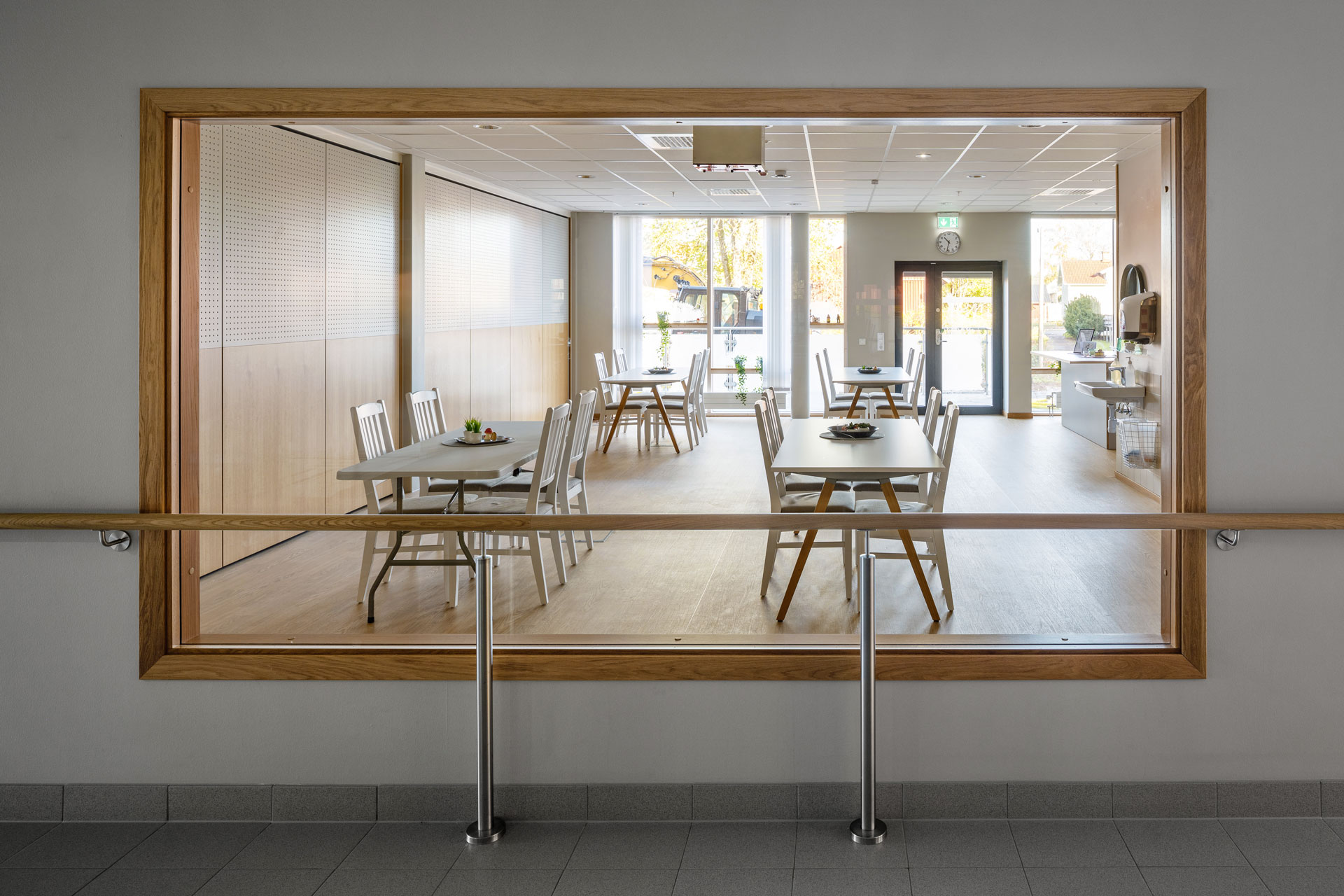
Inside, the warm and welcoming interior enhances the homely atmosphere. Inspired by its natural surroundings, the care home is themed around meadows, with colour schemes and symbols reflecting this connection. Each unit is named after a wildflower, and common areas like the spacious lounge are designed in inviting, earthy tones. The fireplace and lounge seating give the space the feel of a café rather than a traditional care facility.
Balancing privacy and social life

Anki Haasma explains that staff involvement, from practical functions to interior details, was key in shaping the design of Djupängen. Positioned between meadow and forest, yet connected to the town, the care home creates a sense of both security and inclusion.

“A modern care home should reflect life, both inside and outside its walls,” says Anki.

Each apartment is a private home, offering residents the option to retreat for solitude. Meanwhile, common areas provide opportunities to socialise with neighbours.

Residents join in a variety of activities, from hairdresser visits and singing sessions to gardening, coffee breaks, and reading in the library. Staff and residents share laughter and companionship, filling Djupängen’s Instagram feed with moments of joy.

Soft shapes and textures for a sense of calm

Tengbom was also responsible for the interior design, ensuring a warm and functional indoor environment. The team carefully considered colours, lighting, and furniture, following the same collaborative process as the rest of the project. They selected furniture that offers comfort, support, and safety, with rounded shapes and pleasant textures that create a soft and welcoming feel.

“There are spaces for socialising, but also places for quiet moments with a view of the surroundings,” says Anki. “The materials create a warm and inviting feel. At the same time, they are durable and easy to maintain. It’s a balance between aesthetic quality and practicality.”

Contact person

Anki Haasma

+46 54 400 50 68

Malmö morgue

To death, we are all equal
Architecture
Health
Client: Region Skåne
Location: Malmö new hospital area
Developer: Peab
Project years: 2016–2021
Environmental certification: Miljöbyggnad Silver
Photography: Mads Frederik

The Malmö morgue needed to be renewed, both in size and to align with contemporary needs. A morgue is a place for everyone’s grief and final goodbyes, regardless of religious or social affiliation—while still functioning as a modern workplace.

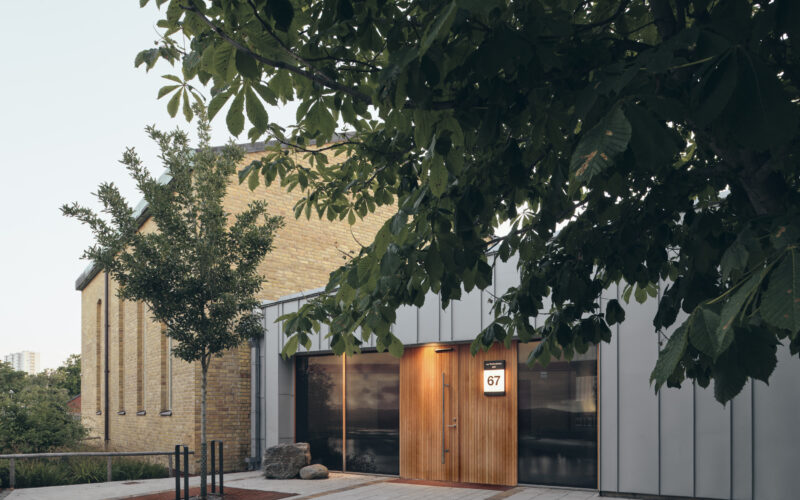
The new zinc-clad building reaches its lowest point where it connects to the chapel made of Limhamn brick. A glass corridor featuring art photography etched into the glass links the two structures. Photo: Mads Frederik

Malmö is one of Sweden’s largest cities, and its morgue is designed to be a neutral space welcoming everyone, regardless of religion, age, or social standing. It serves as a serene environment for relatives to bid a final farewell. The project is part of the new Malmö Hospital Area and includes a new building as well as an upgrade of the morgue alongside the existing chapel.

180 nationalities will say goodbye here

Anyone registered in Malmö who passes away—regardless of where they are in the world—will come to Malmö morgue. The building is designed to accommodate around 180 different nationalities from Malmö on equal terms. Throughout the project, the city’s residents, users, funeral directors, and employees were engaged in workshops to ensure a building that welcomes all. Creating a religiously neutral space was particularly important, where people of varying backgrounds, ages, and beliefs can gather. Symbols or elements associated with specific religions have been deliberately avoided—even in the building’s exterior and materials.

In the stairwell leading down to the mortuary coolers, strategically placed windows allow staff to look outside and connect with nature, even while working in the basement. Photo: Mads Frederik

New, preserved, and sustainable on three levels

The building has three levels. At the rear, the top floor houses a technical room, deliberately distanced from the chapel. The basement contains rooms with body refrigerators for deceased storage. The ground floor is where farewells take place, in viewing rooms and washing rooms. Additionally, there are offices for employees and workspaces, along with a garage for funeral directors.

The older chapel connected to the morgue has been preserved. Internally, old brick walls have been maintained and highlighted. Artistic features have been integrated into the building, serving not only as aesthetic elements but also offering privacy, contrast marking, and improved orientation. The new materials used also emphasize sustainability. Granite flooring, oak, and raw concrete are materials chosen for their longevity and dignified aging over time. Malmö Morgue is the first in Sweden to use Azengar zinc panels, a material that shimmers with the changing weather and light conditions.

People express their grief in different ways, and there must be room for this.

The window recesses are framed in oak, the same material as the original bench. The pigment in the concrete brings the surface to life, giving it an almost marbled appearance despite being completely untreated. Photo: Mads Frederik

Calm vegetation in views

Designing modern spaces for farewells is no easy task. Integrating the older chapel into the new morgue made the challenge even greater. However, small adjustments can significantly change what a building conveys, with inspiration drawn from spaces like art galleries rather than religious structures.

“The room shapes in the morgue differ from traditional religious spaces. We’ve worked to remove the focus from the former altar, which was central, and been careful not to introduce any new religious directions. A common example is marking a direction toward Mecca, which we deliberately avoided,” says Helena Beckman, lead architect.

“Lighting is another crucial design component. Window shapes and placements were studied carefully to bring natural light and beautiful views into the rooms, while maintaining privacy in the viewing rooms. For instance, if light comes from above, it evokes something divine, which we wanted to avoid. The focus should be on the deceased, with opportunities for soothing views of vegetation or the sky,” Helena Beckman continues.

Grief takes different forms

To create a calm, contemplative atmosphere, we chose materials that age naturally and beautifully and have long lifespans. The public spaces on the entry-level floor include viewing rooms where loved ones can say goodbye.

“Someone may need to stay for a long time, and others should be able to sit and chat without disturbing them,” says Helena Beckman. There should also be a waiting room or consultation room directly connected to the viewing rooms, offering a place for quiet retreat.

Different cultures may have different needs. Sometimes, for instance, a large number of people gather for farewells, necessitating separate entrances and exits to avoid crowding. People express their grief in various ways, and there must be space for this. Malmö’s new morgue provides just that.


Contact person

Novum Research Park

At the heart of life science
Architecture
Health, Life Science
Client: Hemsö
Location: Flemingsberg, Huddinge
Assignment years: 2017-
Construction company: Oljibe

At the center of one of Stockholm’s rapidly growing life science clusters, Novum Research Park will be vitalized with the transplant of a vibrant new Heart.

Facing Hälsovägen, the top story of the building extends over Novum’s main entrance, providing shelter to a welcoming, retracted entrance. Through the vestibule, a spacious lobby awaits with twice the story height, intuitively leading visitors to the various areas of Novum.

All communication is through the new Heart

Tasked with developing and modernizing Novum, and with giving the building a more distinct main entrance, it was only natural to design a brand-new atrium – the Heart – to connect the existing labs and offices. Life and movement will flow through the Heart to the various organizations. It is our first point of arrival, a meeting place, and the point from which we navigate onward. With 10 stories and 10,000 m², the Heart is expanding Novum’s total area to about 70,000 m² of flexible space for various activities.

A robust wooden frame

With major sustainability requirements for the design of the new construction, both the structure and exterior of the Heart are entirely in wood, creating an eye-catching feature for the area. As part of the sustainability solution, the wooden frame is clad in glass, which improves the energy performance by capturing sunlight and protecting the wooden construction inside.

“In the midst of a climate crisis, it’s wonderful to get to work according to ambitious environmental goals set by the client. We wanted to take that even further in our design, which we’ve done by not only using wood for the frame, but by making it our primary material wherever possible. Wood has climate-friendly characteristics, and for Novum, it visually symbolizes a new era of growth, environmentally speaking,” says Henrik Börjesson, architect and lead designer.

Inside the vestibule at Novum Research Park, visitors step into a spacious lobby. The lobby faces Hälsovägen, creating a clear connection to the street. It also links to the new properties planned on the other side of the road.

A transparent and sustainable heart

The wooden frame within the transparent façade creates a warm contrast against the existing concrete. Together, they shape an important social function. The design opens up the bustling activity inside to the surroundings.

“The Heart’s ventilated double façade highlights the wood exterior and protects it from graying. It also keeps maintenance at a reasonable level. The smart ‘glass skin’ reduces energy consumption by keeping the space warm in winter and cool in summer. At the same time, it makes the building’s environmental footprint visible from the outside,” says Stefan Samuelsson, architectural technician.

Novum Research Park
Novum Research Park
The light wells bring in as much daylight as possible into the work environments. Bridges run through the light wells to connect the Heart to the existing Novum. This strengthens the spatial experience of the new building.

Harmonious materials

The existing buildings at Novum Research Park date back to the 1990s. Their smooth gray concrete facades blend with the Heart’s palette of natural materials. Wood, glass, concrete, and greenery create a harmonious look. The original windows, with colorful green, yellow, red, and blue exteriors and white interiors, no longer meet energy standards. To improve efficiency, the team is replacing them with light gray aluminum frames and pine interiors. This change brings a new sense of warmth to the interior.

“It’s especially exciting in this project that the new building is guiding the choice of materials for the renovation and the new windows. It’s usually the other way around,” says Krister Bjurström, architect.

A close partnership with the client created the conditions for working with a wooden frame and a double facade. This communicates the environmental ambitions which also apply to the existing building.

Grand opening of the new Novum is planned to 2024 the earliest.

Novum Research Park
Bird’s-eye view from the north. Novum is centrally located in Flemingsberg’s medical and research district. It is surrounded by Huddinge Hospital, Karolinska Institutet and Södertörn University. But the two closest neighbors are the research and teaching buildings TAH and NEO. Together, Novum and its neighbors form a powerful life science cluster.

Contact person

Anna Morén

+46 841 03 54 47

Ersta Hospital

Holistic care
Ersta hospital
Architecture, Interior Design, Landscape
Health, Parks, Play & Public Spaces
Client: Ersta Diakoni
Location: Södermalm, Stockholm
Assignment years: 2017 - 2023
Gross area: Approx. 24,000 m²
Partners: Emma Olbergs Design

Together with Ersta Diakoni, Tengbom is developing Ersta Hospital on Södermalm in central Stockholm. With an evidence-based approach and in close partnership with healthcare providers, the organization, patients and family members, we are creating an industry-leading healthcare environment where people will feel (almost) completely at home.

Ersta hospital

Ersta Hospital opened on the heights of Södermalm in 1864. In 1907, Axel Kumlien designed a new building for the hospital, which relocated nearby. Fifty years later, Tengbom designed major additions and extensions to the block. In 2014, an architectural design competition launched for Ersta Nya Sjukhus—the new Ersta hospital. The goal was to create a design that honored the historic identity of both the surroundings and the hospital’s key areas of expertise. Nyréns Arkitektkontorwon the competition and, together with RATIO, developed a concept that elegantly followed the topography and reflected the area’s scale and classical aesthetic. They led the project until the building permit application phase.

Ersta hospital

Winner of Best Healthcare category in Monocle Design Awards 2024

In 2017, Tengbom was tasked with managing and carrying out the project – and developing the function and design of the new hospital. Work was conducted in close partnership with the Ersta Diakoni Program Office, and in light of the modified and granted building permit, with the City of Stockholm and its architecture office.

Connection to the city

The new hospital rises some six stories up the hill from one of the island’s busiest streets, Folkungagatan. At eight stories, the building’s highest section runs from east to west along the crest of the hill, in harmony with the characteristic buildings nearby. Two projecting buildings – one facing south toward Folkungagatan and one facing the old hospital building to the north – form two lush courtyards.

Even inside the new hospital, the connection to the city is the primary theme. From the wards and rooms to the hallways and large rooftop terraces, the surrounding city and vegetation have a constant presence. The city landscape is part of the healing environment. The glassed-in hospital lobby is a large, bright and welcoming room rising up three stories, with views of the surroundings.

Ersta hospital

Architecture, exterior character and facades of the hospital

The interior and exterior of the new Ersta hospital create a sense of cohesion. Patients and visitors should feel welcome, safe and well cared for. In a classic interplay of large windows and horizontal and vertical features, the facades are made of metal and ocher brown anodized aluminum in a carefully chosen hue.

Ersta hospital

The materials change in character and reflect light, while the colours complement the yellow and brown plaster facades of the surroundings. Windows match the facade colour, creating a sturdy and uniform expression that enhances the urban quality. A grayish-red flamed granite foundation reinforces the building’s cohesive design.

Tengbom’s starting point is to create healthcare environments in which patients are the focus, and where the architecture supports medical development and new working methods.

Somewhere between a hospital and a home

If you imagine a scale ranging from the public, often impersonal spaces of large hospitals, to a private, home-like setting, the aim is for the new Ersta hospital to be a balance between both worlds. It should be infused with personality and a sense of care-giving, paired with professionalism and trust.

Ersta hospitalInterior

The new Ersta hospital is characterized by calm, quality, and genuine natural materials like wood and stone. The details are thoughtful and the colours are classic, light and earthy. The colour and material concept was developed with inspiration from Ersta’s visual legacy in an exciting collaboration with Emma Olbers Design.

Ersta hospital

The bright, glassed-in lobby runs through the building like an axis. A spacious open staircase defines the backdrop, creating a welcoming focal point with a sense of space and clarity. Patients, visitors, and staff share the hospital lobby and the adjacent elevator hall, reinforcing an open and inclusive atmosphere.

Ersta hospital

Ersta hospitalOutdoor environments

Designing the hospice ward required extra care. Patients and their families should feel at ease and spend quality time together. A private, green rooftop terrace offers a peaceful retreat. A swing by the elevators and a playroom for children add warmth and comfort to the environment.

In front of the main entrance at Folkungagatan, the courtyards and rooftop terraces are significant in terms of design. A fundamental part of our task is to make it possible to see nature from multiple stories in the building.

Ersta hospitalUnique operational development with long-term solutions

The new Ersta Hospital delivers resource efficiency, flexibility, a good working environment, and a strong focus on patient safety. The floorplan improves efficiency by using just one elevator hall with short corridors. Stacking hospital units keeps related functions close. The busiest departments, with the shortest visitation times, sit nearest to the entrance. In-ward recovery plays a central role in the hospital’s care concept. Patient rooms prioritise proximity to windows. The layout places the patient and family area by the window and the care provider area by the corridor. Staff conceal medical equipment and materials or integrate them into the surroundings. This creates a calmer and more patient-friendly atmosphere.

Ersta hospital

With Ersta Nya Sjukhus, the new Ersta hospital, the team at Tengbom aims to contribute to world-class medical care. The building extends the hospital’s long history and strengthens its presence in the city. It will play a key role in Stockholm’s continued growth.

Awards and nominations for Ersta Hospital

Stockholm Building of the Year 2024. Monocle Design Awards 2024, winner in the Best Healthcare category. Vårdbyggnadspriset 2025, awarded in the category “Spaces for Care”.

Contact person

Anna Morén

Studio Manager Health and Life Science
+46 841 03 54 47

NEO auditoriums

Butong meets parametric design

When Tengbom designed NEO and Technology and Health, they featured two spherical lecture halls, but there was no technical solution as to how the shape would actually be realised. By means of parametric design and the material Butong, a complex design proposal became a reality.

The requirement was to design an exterior that reflects the high-tech, digital “state of the art” interior. It also needed to have the ability to both reflect light and absorb sound. The result became the almost futuristic elements of the world-leading Life Science cluster at Karolinska in Huddinge.  

From charcoal sketch to complex formability

With the help of Computational Design, the vision for the auditoriums was realised. Through a close collaboration with Lars Höglund, founder of Butong, and our digital expert in ArchTech & Future, the complex shapes were developed based on a parametric model – with only a series of charcoal sketches as the foundation.

NEO
By working with 3D we could alter the shape how many times we wanted until the day of production.

The shape was created from a variety of mathematical parameters that can be rendered in 3D, which creates flexibility in the shape that continues until the final pressing of the production button. The finished solution required approximately 3,500 unique parts for the frame and mould, with minimal tolerance over the double curved surfaces of the mould.
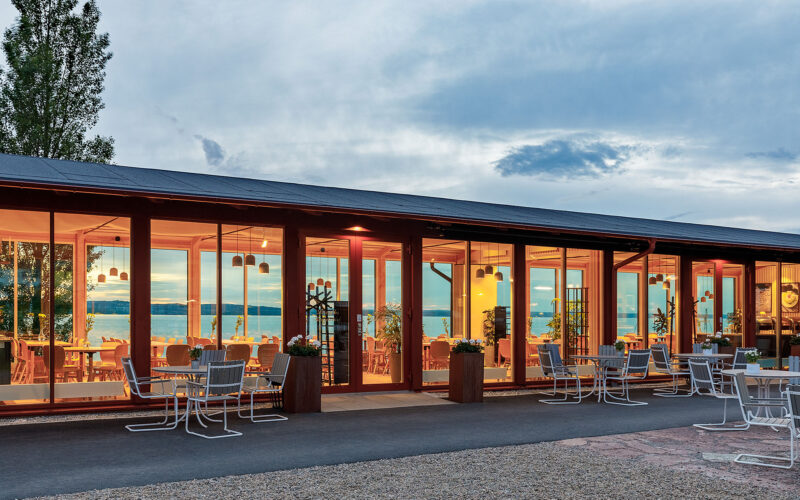
When Butong met parametric design, the positive effects were numerous. In addition to being able to design complex environments, zero intermediates and minimal material consumption were required, which was good from both a sustainability and cost saving perspective.

“We adjusted every part of the casting together with the customer,” says Shahrokh Kamyab. “This made the project more time-efficient and allowed us to generate finished production files directly for manufacturing.”

“We regularly work with plant walls, especially green façades. But Tengbom took our material in a completely new direction,” says Lars Höglund, founder of Butong. “They focused on formability and the permeability of light and sound. This solution could only have been created through digital fabrication and parametric design.”

NEO
Photo: Felix Gerlach

Contact person

Mark Humphreys

Practice Director Stockholm
+46 8 412 53 43

SciLifeLab

An extented biomedical hub
Architecture
Health, Life Science
Client: Akademiska Hus
Completed: 2014
Structure: extension, reconstruction
BTA: 10.000 m2
Classification: Environmental Building Silver

The extension to BMC in Uppsala has become something of a local landmark. SciLifeLab has been given a lively green colour that daringly takes its place on campus, and contributes to a new feel.

SciLifeLab SciLifeLab

The Biomedical Centre (BMC) stands as a well-executed example of late functionalism. Its carefully planned system for lab spaces remains effective even today. When Tengbom took on the task of designing an extension, the goal was clear—to break the rigid structure and create a natural, inviting gathering place. The original building’s size and systematic repetition made navigation monotonous and difficult. Tengbom set out to change that.

SciLifeLab

The exterior was also intended to create a contrast with the existing building. The extension has its back firmly anchored to the original austere structure, while the new façade flows freely towards the courtyard. The façade’s shifting green steel grid contributes to a soft feel. Indoors, the environment offers fresh air, greenery, and views. The meeting square in The Hub serves a function that is otherwise missing from BMC. By connecting the floor plan as mezzanines, open or with glass, to the entrance hall, the whole extension has an airy and open feeling. The added part, The Hub, is classified as Environmental Building (miljöbyggnad in Swedish) Silver.

SciLifeLab on our Swedish website.

Photo: Tim Meier

Contact person

Mark Humphreys

Practice Director Stockholm
+46 8 412 53 43

Malmö Service Building

Seamless logistics at a high level
Architecture, Landscape
Health, Life Science, Parks, Play & Public Spaces
Client: Region Skåne
Location: Malmö Hospital Area
Years of commission: 2016-2021
Contractor: Regionfastigheter
Project type: Service building
Awards and Recognitions: Nominated for Steel Building Prize

The new service building at Malmö Hospital Campus blends efficiency with architectural integrity and aesthetic clarity. A pivotal facility for both patients and staff—framed by generous green spaces.

Photo: Mads Frederik

A logistical powerhouse behind the scenes

At a modern hospital, operations must run smoothly—if not seamlessly. An efficient service infrastructure is essential. Inside the new service building in Malmö, four hundred staff members ensure that goods and services reach every corner of the hospital. According to lead architect Magnus Nilsson, it’s something of a “logistical marvel”, supplying hospital departments with everything from medications and lab results to freshly prepared meals. The building also manages laundry, waste, and returns, all flowing through an extended underground culvert system.

“This building is here to support healthcare,” explains Helena Beckman, healthcare specialist at Tengbom. “It’s designed to make staff’s work easier—so they can focus on delivering safer, more efficient and more sustainable care. Our hope is that this building contributes to better care for patients and that staff feel proud of their working environment.”

Deliveries are handled by compact autonomous robots pulling single trolleys or even small trains to and from the hospital units.

Photo: Mads Frederik

A glass house powered by robots

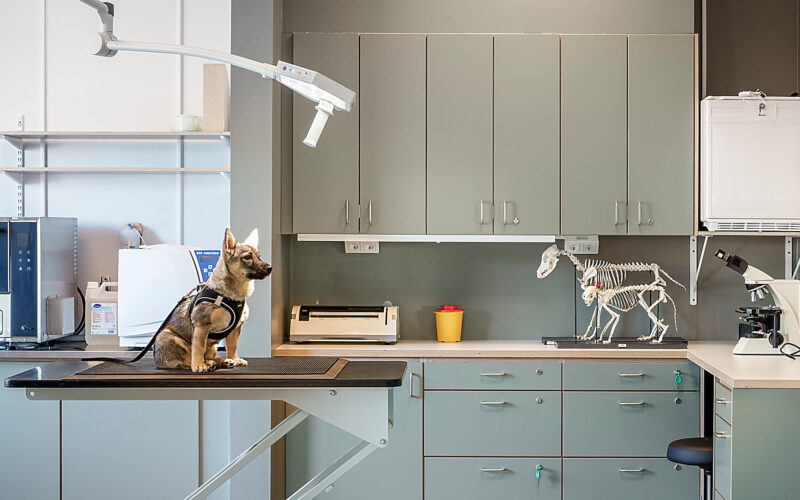
Dark corridors and hidden back-of-house zones? Not here. Deliveries are instead transported via small robots that travel by lift directly to the wards.

“The region’s ambition is clear,” says Helena. “Doctors and nurses should be able to devote as much time as possible to their patients.”

Photo: Mads Frederik

Here, the service process doesn’t hide behind closed doors. Quite the opposite. Instead, through stacked glass volumes, the building proudly allows a degree of visibility into its inner workings. According to architect Patrik Ekenhill, that might come as a surprise.

“When you hear the term ‘service building’, glass isn’t the first thing that comes to mind. But we see it as a sustainable material—and one that lets us put the operations on display.”

Photo: Mads Frederik

“You’ll see the trolleys gliding to and from the culvert system,” adds Magnus. “Even the art installations reinforce the experience from the outside.”

A great deal of work has gone into making the building and its surroundings inviting—not only for staff and patients but also for the public.

A new civic landmark

One of the project’s key challenges was integrating the service building with the city. Located at the edge of the hospital campus, the site faces residential buildings just across the street. Socially, it’s vital that the hospital feels open and accessible to the public. Together with an older building and the new mortuary, a public square has been created in front of the building.

“I can picture it becoming a kind of attraction—where people pause to watch the little robots on the move,” says Helena.

Paths from the surrounding city lead towards the square and further into the hospital campus. This area has been designed as a calm, semi-wild environment, where visitors walk on boardwalk-style paths between rain gardens and planted zones. The square forms part of a wider area once home to the early 20th-century epidemic hospital. Here, old and new architecture come together. The existing parkland is interwoven with newly designed outdoor spaces, which offer hospital staff moments of rest and relaxation.
A complete approach to a complex system

Designing outdoor environments in a hospital context is no small feat. The site is governed by a detailed programme and a network of systems, logistics and technologies. As landscape architects, our task was to make the whole system work. At the same time, we needed to ensure that the space remains welcoming and safe for visitors and passers-by.

The service building itself is a large and complex undertaking—one that demanded close collaboration between architects from multiple disciplines: building, landscape, interior and urban planning. Both Magnus and Helena agree: this kind of teamwork just feels right.

Photo: Mads Frederik

Awards and recognition

In 2023, the Malmö Hospital Service Building was nominated for the Swedish Steel Construction Prize (Stålbyggnadspriset).

Contact person

Josefin Klein

Practice Director Skåne
+46 40 641 31 18