Project type:
Upper secondary school (Gymnasieskola)
A mix of natural sciences, technology, health, and entrepreneurship. A foundation for collaboration and innovation. A modern school and an inspiring workplace. That’s the essence of Widerströmska Upper Secondary School in Huddinge.
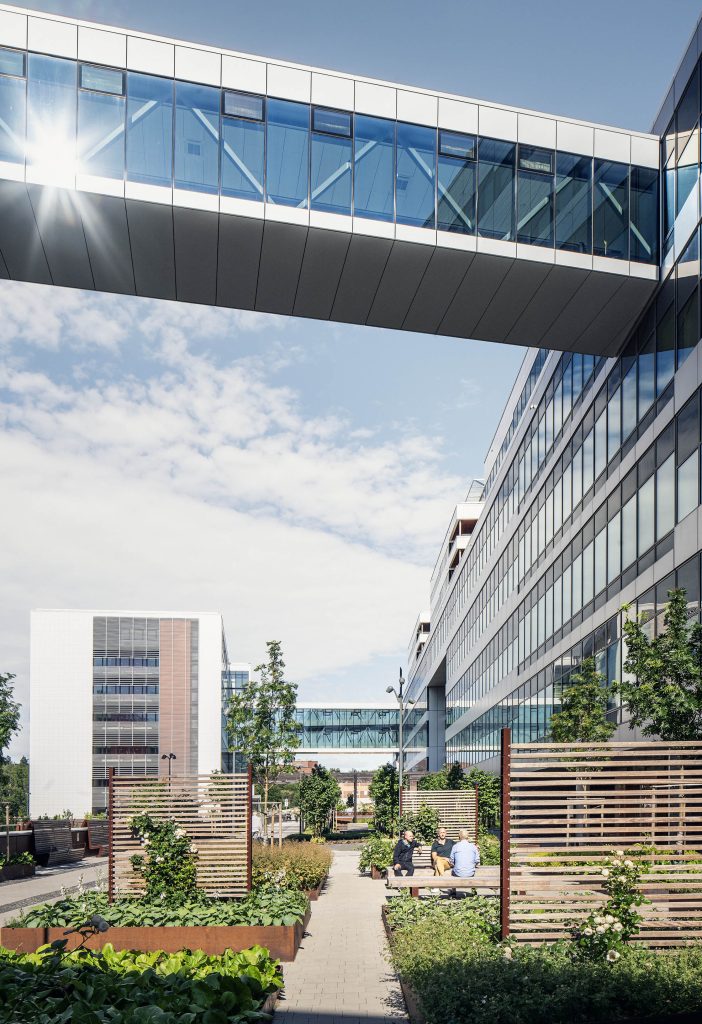
Just like the NEO and Technology and Health buildings, Widerströmska is part of the life science cluster that has taken shape in Campus Flemingsberg in recent years. Tengbom has been the lead architect for approximately 50,000 square metres here between 2012 and 2019.
The school, named after Karolina Widerström, Sweden’s first female medical doctor, now occupies one floor of the NEO building. Here, future researchers and entrepreneurs learn in close collaboration with the academic and healthcare institutions surrounding them.
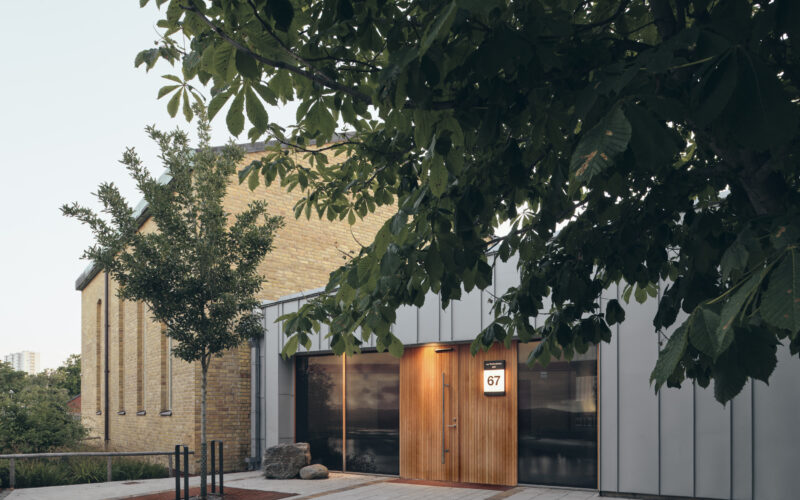
Widerströmska upper secondary school’s entrance. Photo: Felix Gerlach
A life science hub for future innovators
Bright and inspiring classrooms
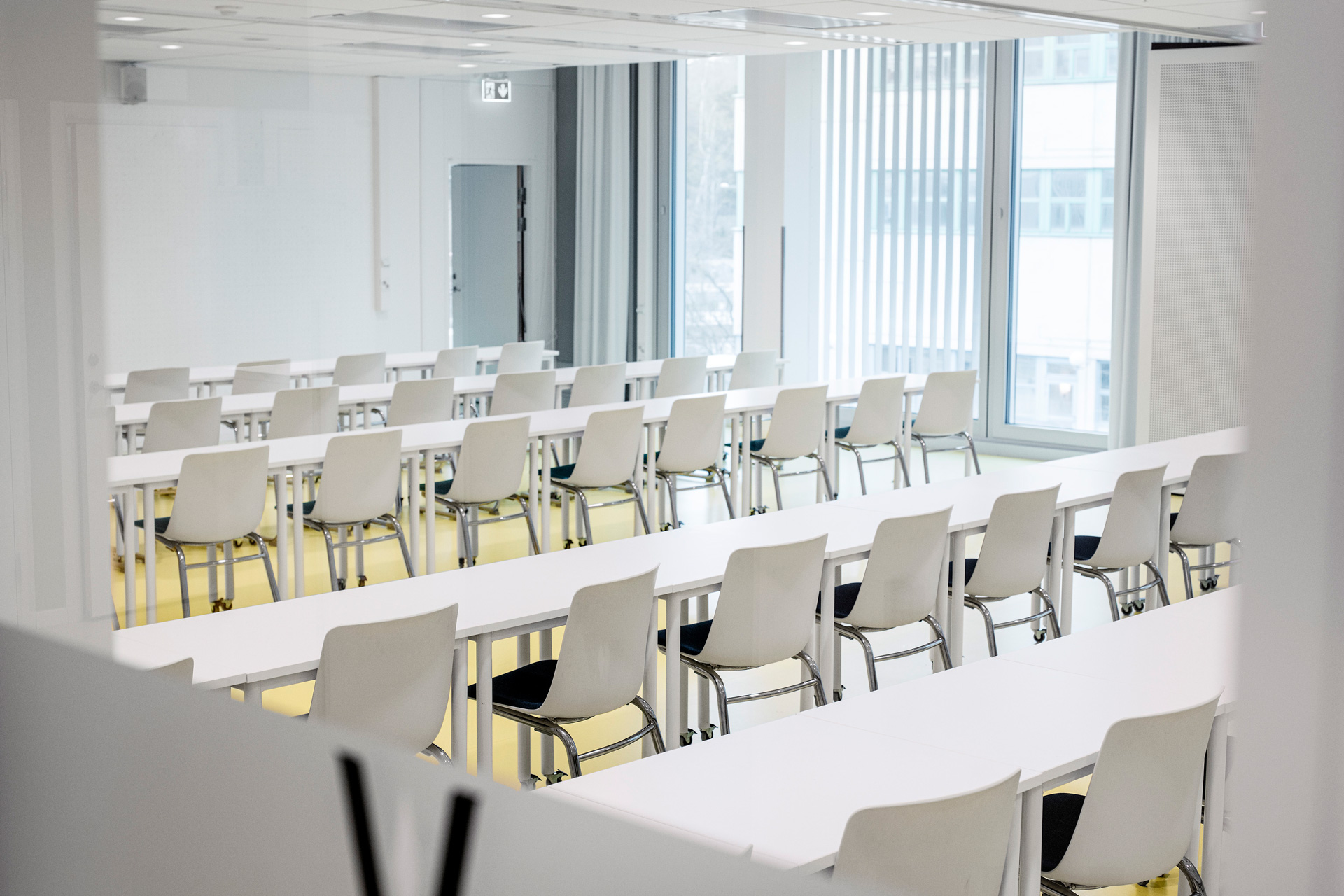
Inside, light, space, colour, and openness define the NEO building—and these qualities also shape the school’s interior. While the upper floors house cutting-edge research labs for Karolinska Institutet, the Widerströmska floor is designed to be a creative and inspiring learning environment.
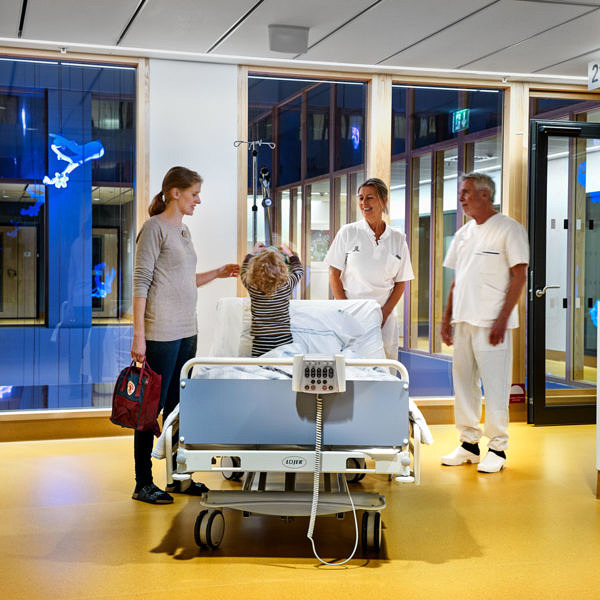
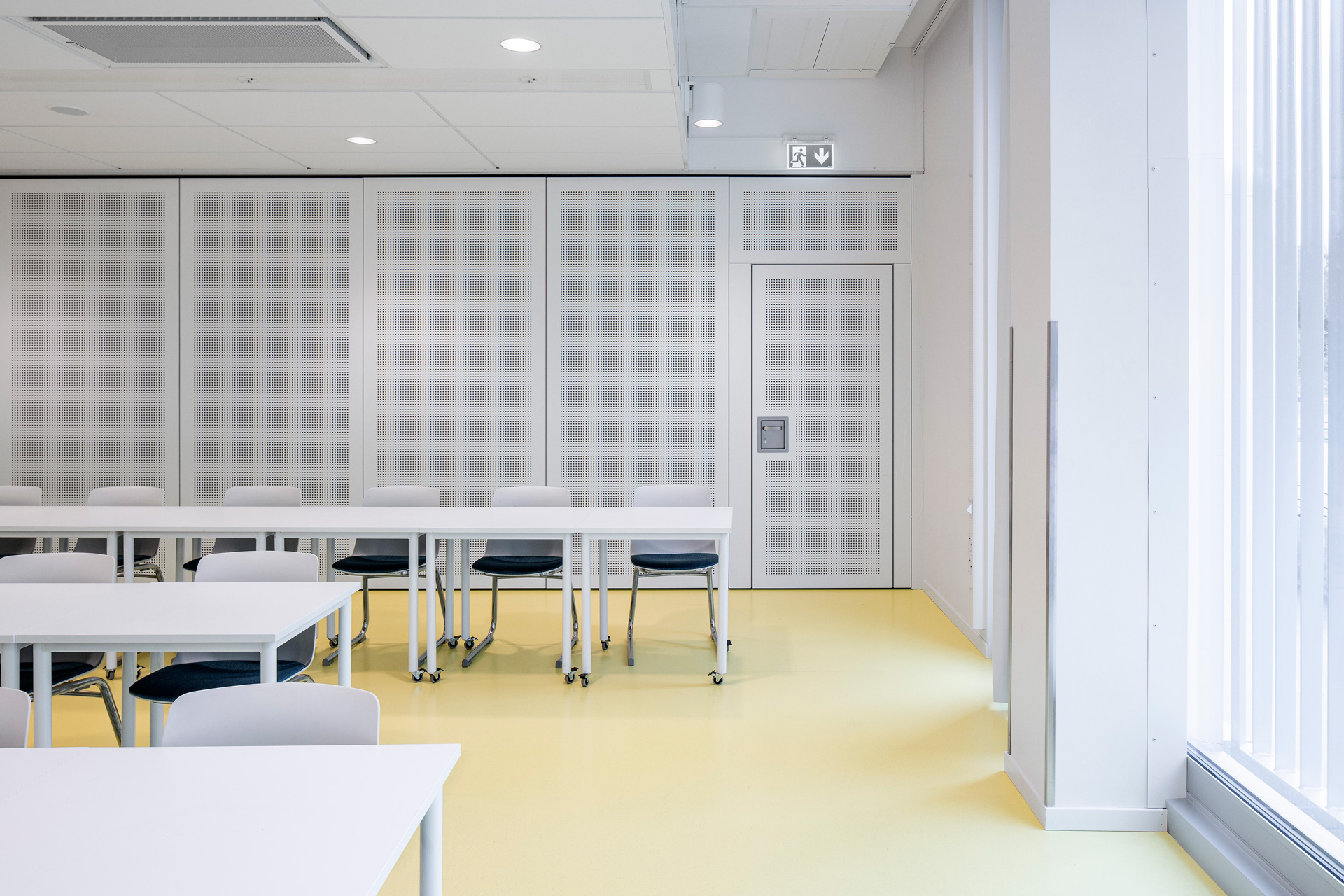
Students and teachers can write directly on the walls, and large glass partitions ensure that natural daylight reaches every corner of the study spaces. A yellow-green carpet, running through all the classrooms, enhances the brightness even further.
“It has been incredibly exciting to help create a new upper secondary school that, through collaboration and synergies with academia, has become the first school with a life science profile.”
— Anna Morén Sahlin, lead architect
Design details create a cohesive identity
In collaboration with LINK Interior Architecture, Tengbom developed a material and colour scheme that aligns with the identity of the rest of the NEO building. Subtle design details connect the school’s interiors with the upper floors, including spiral staircases and accent colours in ceilings, doorways, and furniture.
A safe and social learning environment
Beyond classrooms and lecture halls, the school features a central gathering space known as Arenan, as well as a gym, science labs, café, multipurpose hall, and staff rooms.
A key priority in the project has been to foster a sense of social security and community. The spatial layout encourages interaction between students and teachers, with transparent environments and open sightlines.
“There are no hidden corners anywhere. Staff rooms are evenly distributed throughout the school, where students naturally spend their time.”
The school’s entrance and spaces. Photo: Felix Gerlach
Together with Ersta Diakoni, Tengbom is developing Ersta Hospital on Södermalm in central Stockholm. With an evidence-based approach and in close partnership with healthcare providers, the organization, patients and family members, we are creating an industry-leading healthcare environment where people will feel (almost) completely at home.
Ersta Hospital opened on the heights of Södermalm in 1864. In 1907, Axel Kumlien designed a new building for the hospital, which relocated nearby. Fifty years later, Tengbom designed major additions and extensions to the block. In 2014, an architectural design competition launched for Ersta Nya Sjukhus—the new Ersta hospital. The goal was to create a design that honored the historic identity of both the surroundings and the hospital’s key areas of expertise. Nyréns Arkitektkontorwon the competition and, together with RATIO, developed a concept that elegantly followed the topography and reflected the area’s scale and classical aesthetic. They led the project until the building permit application phase.
Winner of Best Healthcare category in Monocle Design Awards 2024
In 2017, Tengbom was tasked with managing and carrying out the project – and developing the function and design of the new hospital. Work was conducted in close partnership with the Ersta Diakoni Program Office, and in light of the modified and granted building permit, with the City of Stockholm and its architecture office.
Connection to the city
The new hospital rises some six stories up the hill from one of the island’s busiest streets, Folkungagatan. At eight stories, the building’s highest section runs from east to west along the crest of the hill, in harmony with the characteristic buildings nearby. Two projecting buildings – one facing south toward Folkungagatan and one facing the old hospital building to the north – form two lush courtyards.
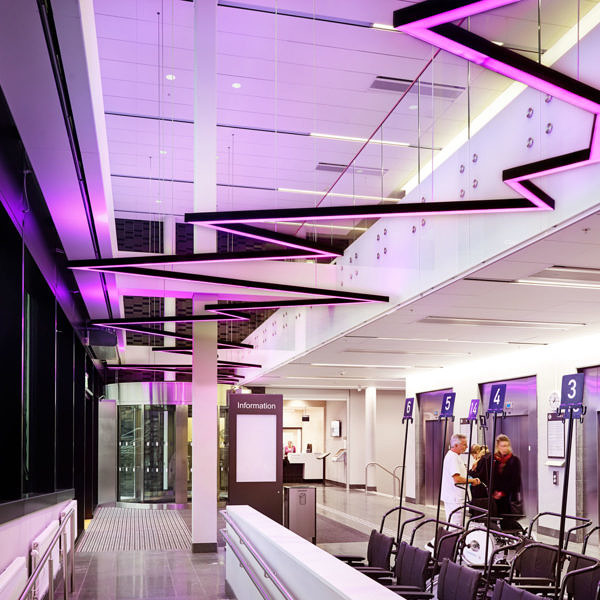
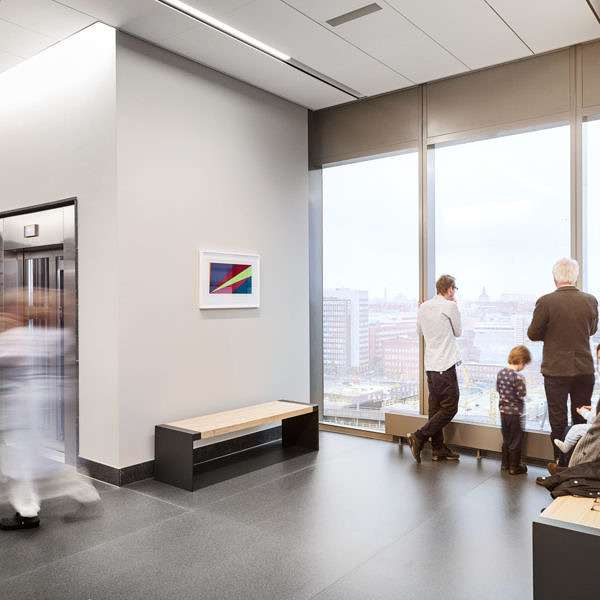
Even inside the new hospital, the connection to the city is the primary theme. From the wards and rooms to the hallways and large rooftop terraces, the surrounding city and vegetation have a constant presence. The city landscape is part of the healing environment. The glassed-in hospital lobby is a large, bright and welcoming room rising up three stories, with views of the surroundings.
Architecture, exterior character and facades of the hospital
The interior and exterior of the new Ersta hospital create a sense of cohesion. Patients and visitors should feel welcome, safe and well cared for. In a classic interplay of large windows and horizontal and vertical features, the facades are made of metal and ocher brown anodized aluminum in a carefully chosen hue.
The materials change in character and reflect light, while the colours complement the yellow and brown plaster facades of the surroundings. Windows match the facade colour, creating a sturdy and uniform expression that enhances the urban quality. A grayish-red flamed granite foundation reinforces the building’s cohesive design.
Tengbom’s starting point is to create healthcare environments in which patients are the focus, and where the architecture supports medical development and new working methods.
Somewhere between a hospital and a home
If you imagine a scale ranging from the public, often impersonal spaces of large hospitals, to a private, home-like setting, the aim is for the new Ersta hospital to be a balance between both worlds. It should be infused with personality and a sense of care-giving, paired with professionalism and trust.
Interior
The new Ersta hospital is characterized by calm, quality, and genuine natural materials like wood and stone. The details are thoughtful and the colours are classic, light and earthy. The colour and material concept was developed with inspiration from Ersta’s visual legacy in an exciting collaboration with Emma Olbers Design.
The bright, glassed-in lobby runs through the building like an axis. A spacious open staircase defines the backdrop, creating a welcoming focal point with a sense of space and clarity. Patients, visitors, and staff share the hospital lobby and the adjacent elevator hall, reinforcing an open and inclusive atmosphere.
Outdoor environments
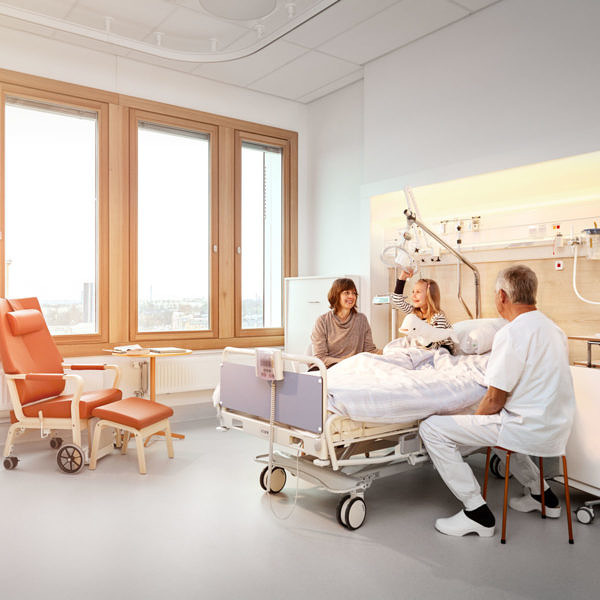
Designing the hospice ward required extra care. Patients and their families should feel at ease and spend quality time together. A private, green rooftop terrace offers a peaceful retreat. A swing by the elevators and a playroom for children add warmth and comfort to the environment.
In front of the main entrance at Folkungagatan, the courtyards and rooftop terraces are significant in terms of design. A fundamental part of our task is to make it possible to see nature from multiple stories in the building.
Unique operational development with long-term solutions
The new Ersta Hospital delivers resource efficiency, flexibility, a good working environment, and a strong focus on patient safety. The floorplan improves efficiency by using just one elevator hall with short corridors. Stacking hospital units keeps related functions close. The busiest departments, with the shortest visitation times, sit nearest to the entrance. In-ward recovery plays a central role in the hospital’s care concept. Patient rooms prioritise proximity to windows. The layout places the patient and family area by the window and the care provider area by the corridor. Staff conceal medical equipment and materials or integrate them into the surroundings. This creates a calmer and more patient-friendly atmosphere.
With Ersta Nya Sjukhus, the new Ersta hospital, the team at Tengbom aims to contribute to world-class medical care. The building extends the hospital’s long history and strengthens its presence in the city. It will play a key role in Stockholm’s continued growth.
Awards and nominations for Ersta Hospital
Stockholm Building of the Year 2024. Monocle Design Awards 2024, winner in the Best Healthcare category. Vårdbyggnadspriset 2025, awarded in the category “Spaces for Care” and winner of Urban Development Project of the Year 2026.
Welcome to one of the world’s most sustainable university hospitals and number seven in the ranking of the world’s best hospitals. Perhaps Sweden’s most extensive project of its kind, New Karolinska Solna is also a major driving force in the development of Hagastaden, a new urban district and Scandinavian centre for Life Science.
Photo: Felix GerlachPhoto: Felix Gerlach
A great investment to meet the care challenges of the future
Stockholm County is growing rapidly. Between 2010 and 2020, the population is expected to increase by 350,000 people. At the same time, the number of children and older adults is rising faster than other age groups, and our lifespan will continue to grow.
Most of today’s hospitals were planned in the 1960s and 70s. They are not designed for today’s or tomorrow’s rapid developments in, for example, medical technology, pharmaceuticals, new treatment methods, or working practices. Neither do they meet the expectations of the modern patient. As in many other sectors, healthcare increasingly depends on interdisciplinary environments, not least to enable knowledge exchange between medicine, research, and education—so-called Life Science operations.
To meet future healthcare needs, the Stockholm County Council is making one of its largest investments ever. As part of this initiative, the NKS project plays a central role. The hospital welcomed its first patients in 2016 and is now fully operational.
Photo: Fredrik Sweger
Collaboration in the White Tengbom Team
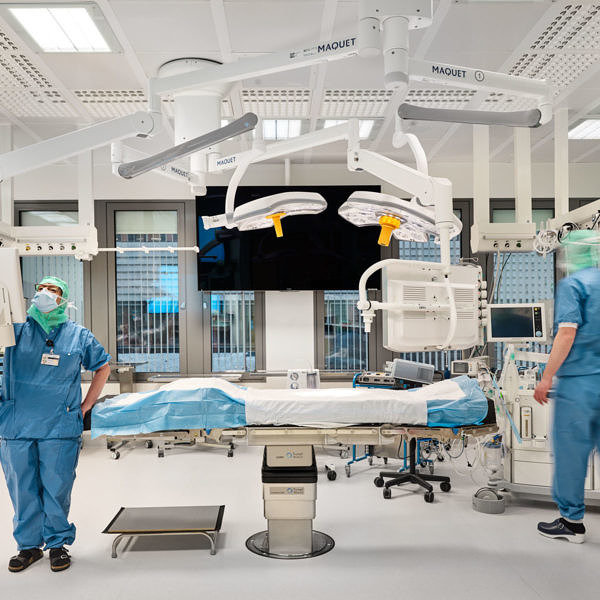
With a total area of around 330,000 m², including 630 patient rooms, 35 operating theatres, advanced technology for highly specialised care, and stringent environmental requirements, the NKS project presents immense challenges for all parties involved. It is Sweden’s largest project carried out as a Public–Private Partnership (PPP) and the country’s most advanced BIM project. The hospital is also the first to be environmentally certified according to both Swedish and international standards.
To address the architectural complexity, we formed White Tengbom Team in 2010—a project-specific company through which we collaborated with architecture firm White to jointly design the hospital. Around sixty of our architects, engineers, and project managers have worked on the assignment over the eight years the project has been ongoing. Follow-up work continues until the final phase is handed over in 2018.
Flexible environments for sustainable development
The hospital is designed to function for up to one hundred years—even though we cannot predict what healthcare will look like then. We anticipate rapid medical progress and exciting technological advances. The facility is planned with a high degree of generality and flexibility. The building can be adapted over time as research, treatment methods, working processes, or technology evolve and demand new solutions.
Generous floor-to-floor heights, robust floor structures, and substantial capacity in infrastructure and technical systems are examples of important investments. These enable the hospital operations to develop sustainably over time.
The patient in focus
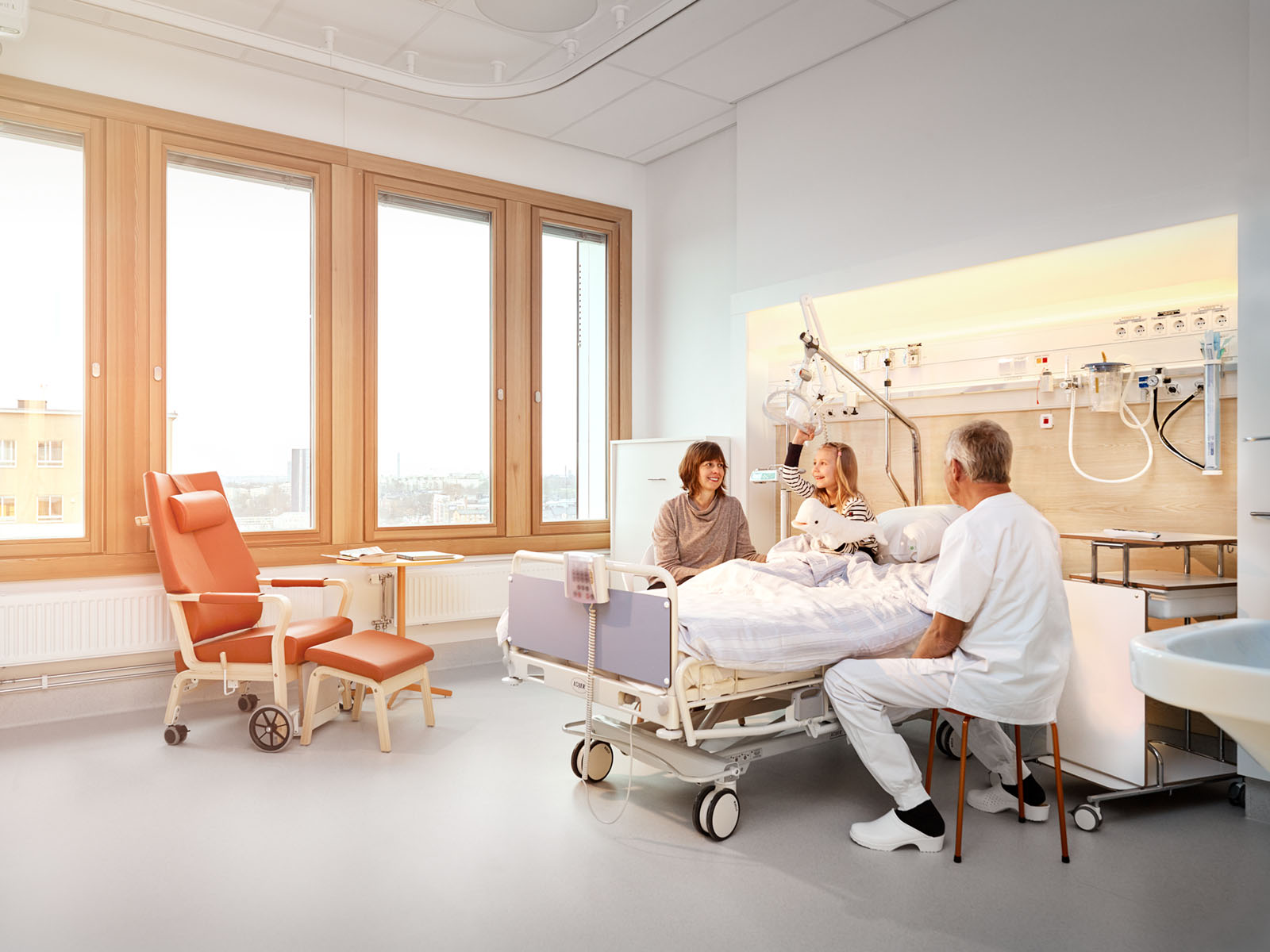
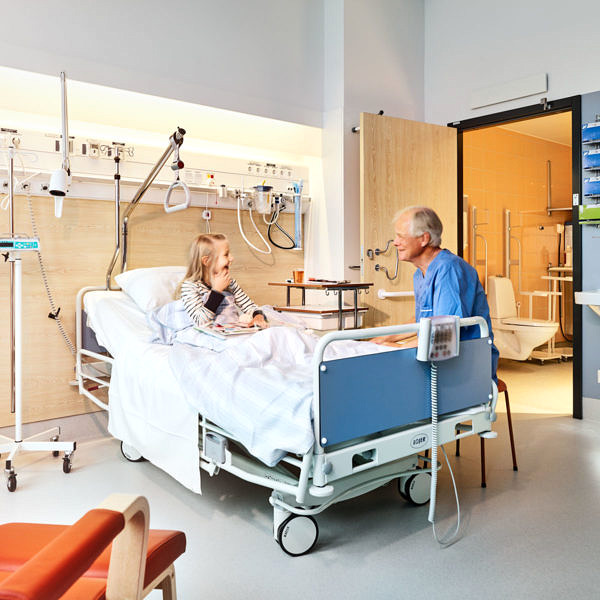
The guiding principle for the entire NKS project is “the patient always first.” Patient safety, privacy and comfort have guided all planning and design. Each patient receives care in a private room with an associated hygiene room. Single rooms provide greater privacy and security and reduce the risk of infection and medication errors. Their design also enables care teams to work together at the patient’s bedside and facilitates close collaboration with researchers and students, who can visit in new ways. In this way, care moves closer to the patient.
A healing atmosphere within Nya Karolinska Solna
Photo: Felix Gerlach
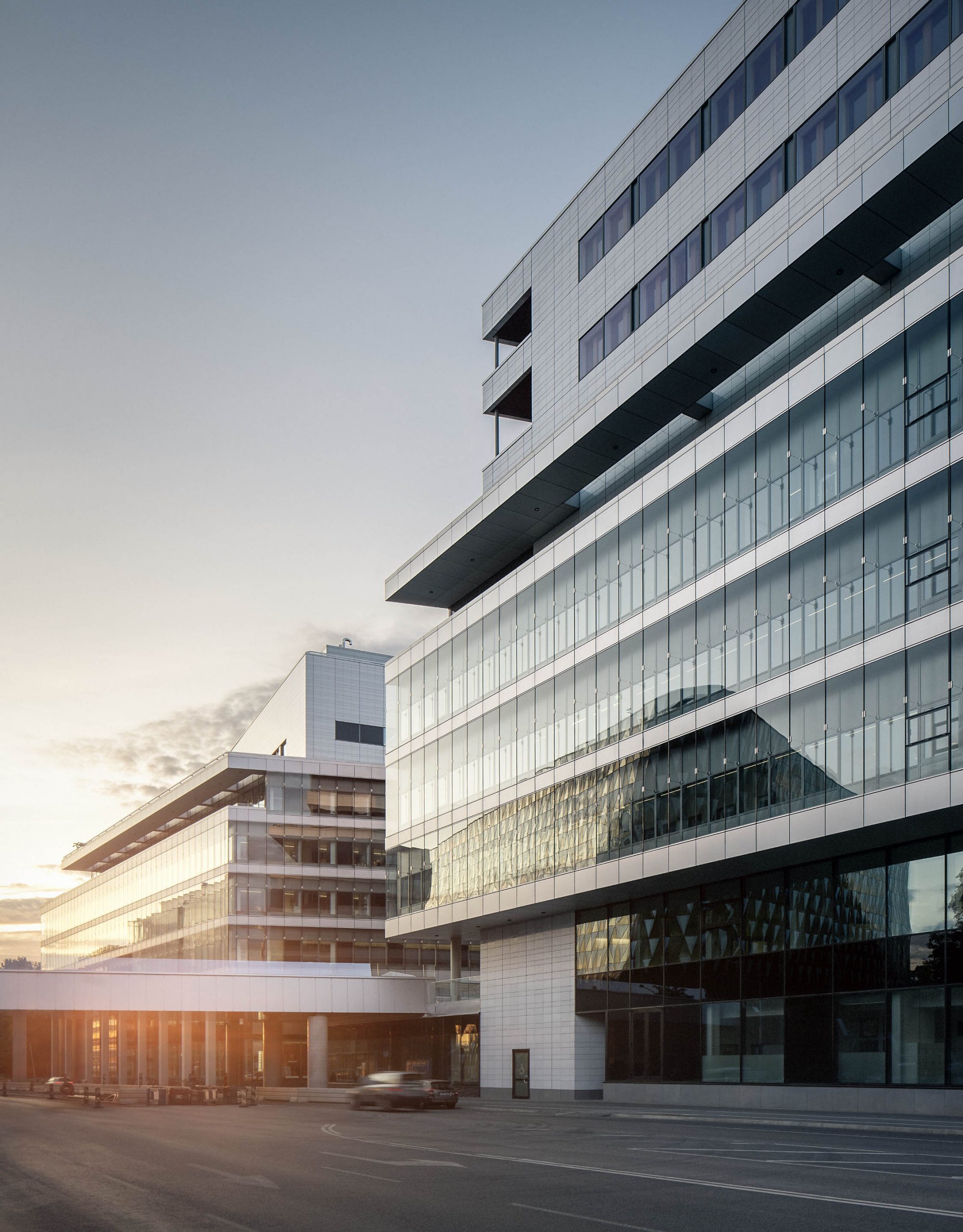
We have carefully shaped care environments that have a positive impact on patients. Generous public spaces and numerous meeting places create a welcoming atmosphere where people can gather. On the outside, New Karolinska Solna features a façade of glass, steel and white tiles. The building follows a rectilinear block structure that continues the pattern of the traditional stone city. Five building volumes come together within a glass-clad mantle structure. At the same time, entrances and functions maintain an open relationship with the surrounding streets and squares.
An Academic Promenade
The care quarters connect to the research buildings to the north and Karolinska Institutet’s new laboratory to the west. In addition, the Academic Promenade runs between the care and research functions. It links the hospital with Karolinska Institutet and crosses Solnavägen via a new pedestrian and cycle bridge.
World leading Life Science cluster in Hagastaden
Stockholm aims to be a Scandinavian centre and catalyst within Life Science—a place where industry, academia, and clinical care and research meet and collaborate. This is the vision expressed by Karolinska Institutet, KTH, Stockholm University, the City of Stockholm, the City of Solna, and the Stockholm County Council in the joint “Vision 2025 – Science City.” Consequently, collaboration between healthcare, research, and education has been a fundamental architectural premise in the NKS project.
The New Karolinska Solna project will ultimately be a key driver in the development of Hagastaden, where the cities of Solna and Stockholm meet. Once fully developed, the area will offer around 6,000 new homes and 50,000 workplaces. Here, Stockholm Life is taking shape as a science district for world-leading education and research. The hospital’s main building will form the backdrop at Hagaplan, the district’s new urban square.
Photo: Felix GerlachPhoto: Felix Gerlach
Nya Karolinska Solna will also be the single most important motor behind the development of Hagastaden – the new district where Solna and Stockholm meet, and which when completed will offer approximately 5,000 new homes and 50,000 jobs of which just over 6 000 at NKS. We are creating a science city for cutting edge education and research under the common name Stockholm Life. The main building of the hospital will form the focal point of Hagaplan, the new town square.
Illustration: Tengbom
Awards and Recognitions
In 2019, NKS received two prestigious award nominations. The first was for the World Architecture Festival Award in the Completed Buildings: Health category. Meanwhile, the second was for the Healthcare Building Award in the Large Projects category. Later, in 2025, Newsweek ranked NKS as the fifth-best hospital in the world.




 Interior


 Outdoor environments
 Unique operational development with long-term solutions