Archives

Technology and Health

Where ideas ignite
Technology and Health
Architecture
Education, Health, Life Science
Client: TKV (SveaNor Fastigheter & Hemsö)
Location: Huddinge
Years of Commission: 2012–2016
Contractor: Veidekke/arcona
Area: 22 000 sqm
Competences: Health and Life Science, Education, BIM, ArchTech & Future

Can we change the world by bringing people together? Of course we can. The Technology and Health building in Flemingsberg was built with that very ambition in mind. This is where scientists and students from several universities meet to exchange experiences and knowledge. They are also in close proximity to the University Hospital and Karolinska Institute. One step closer to better health for us all.

Technology and Health_Tengbom
Photographer: Felix Gerlach

We all want to have good neighbours, and to be one – both at home and in the workplace. But how do you create a building that facilitates human connections as much as possible? That’s the question we asked ourselves when starting our work on Technology and Health (TAH) in Flemingsberg. Here, the KTH School of Technology and Health will mingle with Karolinska Institute, Camst (The Center for Advanced Medical Simulation and Training), the Red Cross University College and its nursing programme. It is all part of a bigger project, a centre for Life Science in conjunction with the University Hospital in Huddinge. The idea is to meet and learn from each other – in an environment that does its best to help.

Technology and Health_Tengbom
Photographer: Felix Gerlach

Technology from the outside in

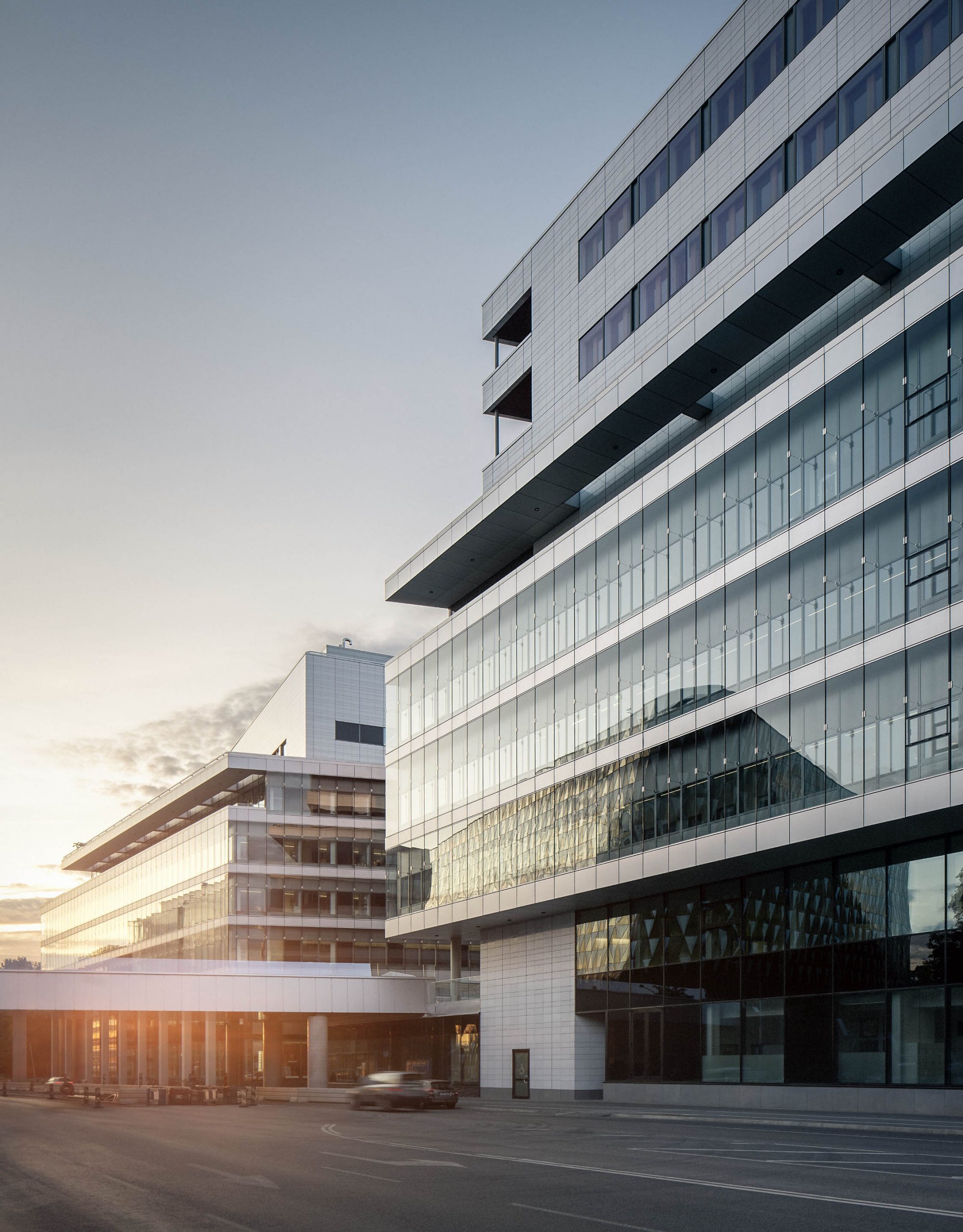
The Technology and Health building, which is the first of two in the new centre, is located on top next to the university hospital. The location encourages encounters and serves as the perfect starting point for the appearance of the building.

“We wanted to work with something that felt modern in the exterior and had an ease of expression, contrasting with the heavy hospital building on the side,” says Anna Morén Sahlin, one of the architects responsible for the project.

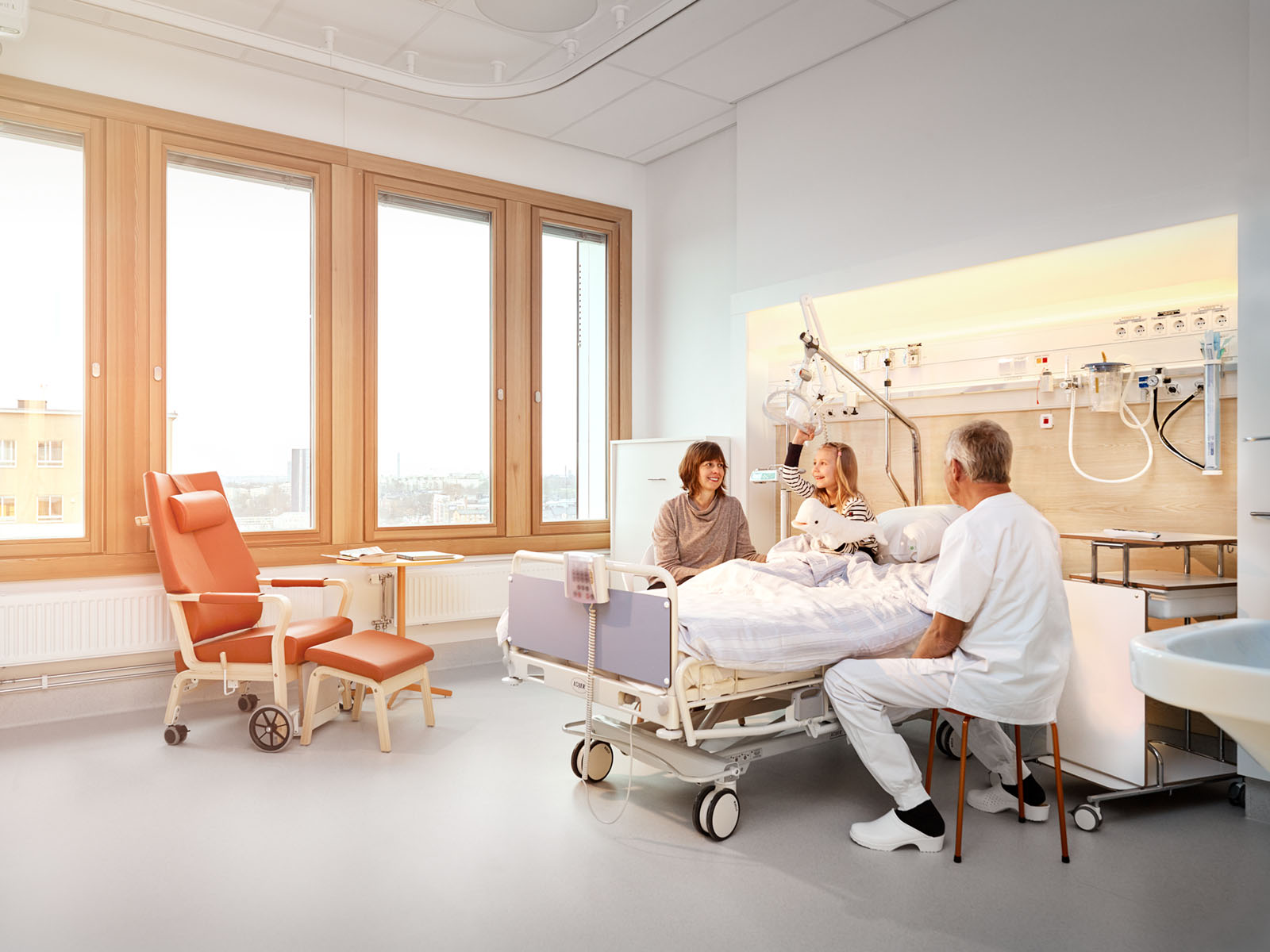
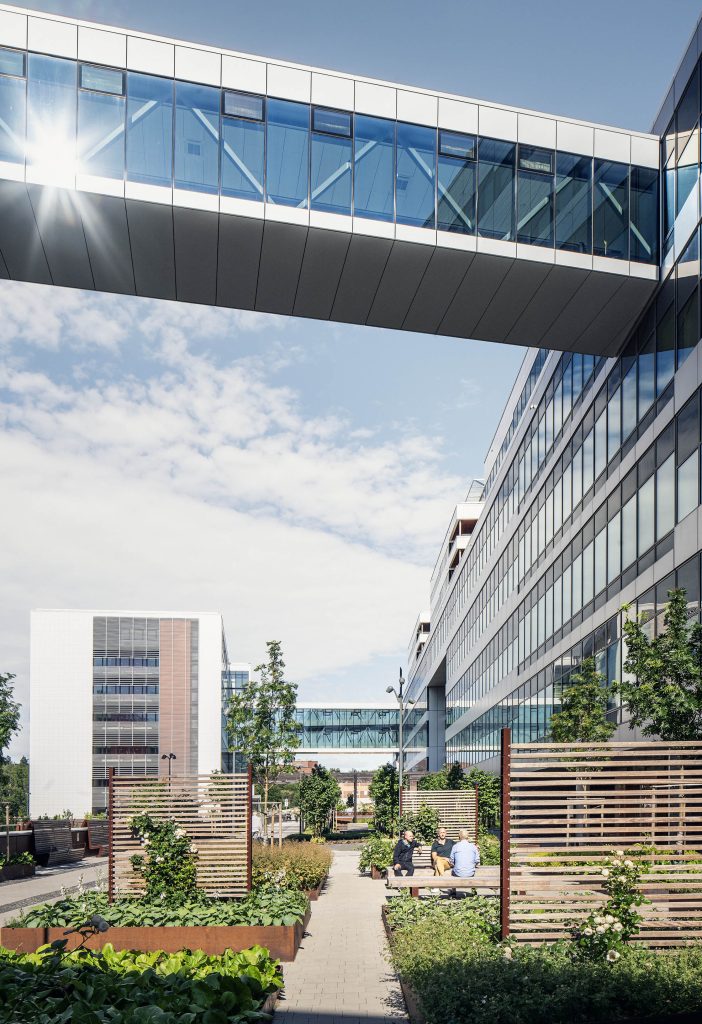
“So, we went with the metaphor that the outside is technology and the inside is health; so the outside is minimalist, made of aluminium and glass, while the interior features accent colours, plus wood and natural light,” says Krister Bjurström, another architect on the project.

Technology and Health_Tengbom
Photographer: Felix Gerlach

Watchword: encounters

No doubt it was a huge project. The TAH building measures in at 22,000 square metres, and its neighbour NEO, which will be inaugurated next year, boasts 26,000 square metres (the latter will house the researchers from the Karolinska Institute). Between the two buildings is a plaza that serves as a meeting place and common main entrance.

The TAH building has everything that is needed for a functioning university environment. Lecture rooms, reception, custodian, a lunchroom, clubroom, staff room and two large auditoriums, specially adapted for the various needs of KTH and the Red Cross. Plus, there are more exotic elements, like rooms where students can operate on lifelike dolls and a research apartment in which the home environment is under the microscope.

Technology and Health_Tengbom
Photographer: Felix Gerlach

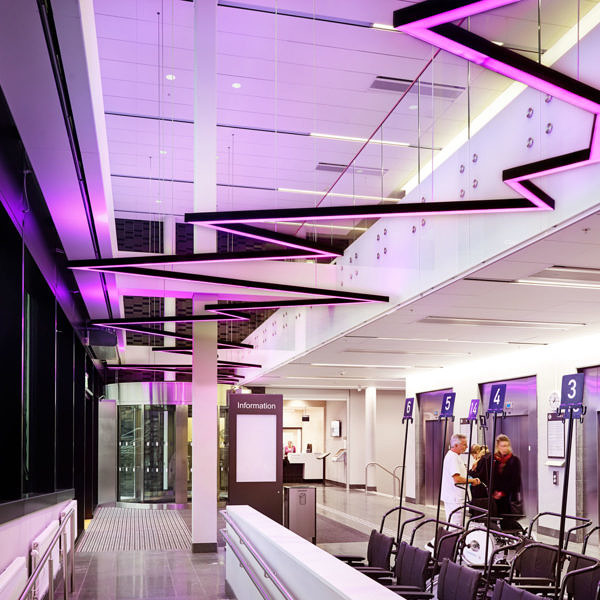
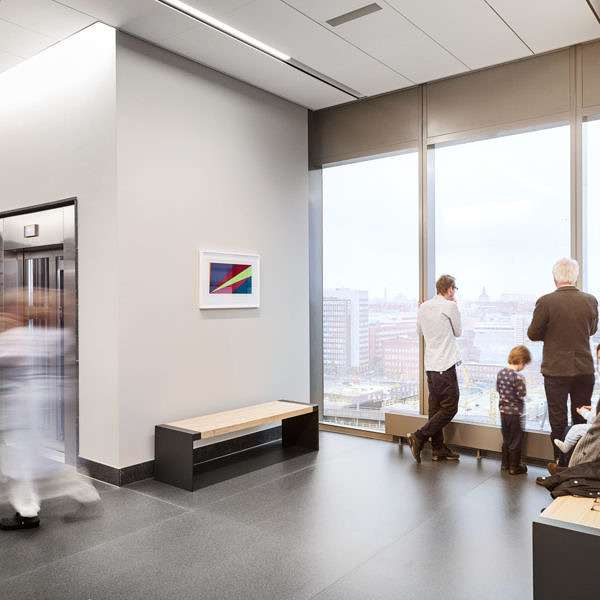
The interior was inspired by the notion of a city or town. You should be able to meet in the avenues and alleys. There will be many small intersections and corners where you can hang out.

Technology and Health_Tengbom
Photographer: Felix Gerlach

“In addition to working with the ‘technology/health’ pair, we worked with ‘meetings’ as a key word. The interior was inspired by the notion of a city or town. You should be able to meet in the avenues and alleys. There will be many small intersections and corners where you can hang out. We tried to create vibrant atrium,” Anna says Morén Sahlin.

Technology and Health
Photographer: Felix Gerlach

Defines Huddinge as a Life Science hub

TAH was inaugurated in October 2016, with students, teachers and researchers already flooding in – and hanging out along the streets and boulevards just as was envisioned. Might this lead to a completely unique approach to both health and technology in the future?

“This project brings together a wide range of activities. It also creates opportunities for crossover encounters between different educational programs and research,” says Krister Bjurström. “Even more impressive is how it has attracted businesses to Huddinge. Many of them were previously based in the city center.”

Awards and Recognitions

TAH received a nomination for the Huddinge Urban Design Prize in 2017.

Contact person

Mark Humphreys

Practice Director Stockholm
+46 8 412 53 43

NKS – Nya Karolinska Solna

A world-class hospital
Architecture, Interior Design
Health, Life Science
Client: Skanska & Skanska Health Care
Location: Stockholm
Years of commission: 2009–2018
Contractor: Stockholms Läns Landsting & NKS
Partners: White, Reflex & Dot arkitekter among others
Environmental rating: Miljöbyggnad Gold, LEED Gold

Welcome to one of the world’s most sustainable university hospitals and number seven in the ranking of the world’s best hospitals. Perhaps Sweden’s most extensive project of its kind, New Karolinska Solna is also a major driving force in the development of Hagastaden, a new urban district and Scandinavian centre for Life Science.

Nya Karolinska
Photo: Felix Gerlach
Nya Karolinska Solna
Photo: Felix Gerlach

A great investment to meet the care challenges of the future

Stockholm County is growing rapidly. Between 2010 and 2020, the population is expected to increase by 350,000 people. At the same time, the number of children and older adults is rising faster than other age groups, and our lifespan will continue to grow.

Most of today’s hospitals were planned in the 1960s and 70s. They are not designed for today’s or tomorrow’s rapid developments in, for example, medical technology, pharmaceuticals, new treatment methods, or working practices. Neither do they meet the expectations of the modern patient. As in many other sectors, healthcare increasingly depends on interdisciplinary environments, not least to enable knowledge exchange between medicine, research, and education—so-called Life Science operations.

To meet future healthcare needs, the Stockholm County Council is making one of its largest investments ever. The NKS project is a central component of this initiative. The hospital welcomed its first patients in 2016 and is now fully operational.

Nya Karolinska Solna

Photo: Fredrik Sweger

Collaboration in the White Tengbom Team

With a total area of around 330,000 m², including 630 patient rooms, 35 operating theatres, advanced technology for highly specialised care, and stringent environmental requirements, the NKS project presents immense challenges for all parties involved. It is Sweden’s largest project carried out as a Public–Private Partnership (PPP) and the country’s most advanced BIM project. The hospital is also the first to be environmentally certified according to both Swedish and international standards.

To address the architectural complexity, we formed White Tengbom Team in 2010—a project-specific company through which we collaborated with architecture firm White to jointly design the hospital. Around sixty of our architects, engineers, and project managers have worked on the assignment over the eight years the project has been ongoing. Follow-up work continues until the final phase is handed over in 2018.

Flexible environments for sustainable development

The hospital is designed to function for up to one hundred years—even though we cannot predict what healthcare will look like then. We anticipate rapid medical progress and exciting technological advances. The facility is planned with a high degree of generality and flexibility. The building can be adapted over time as research, treatment methods, working processes, or technology evolve and demand new solutions.

Generous floor-to-floor heights, robust floor structures, and substantial capacity in infrastructure and technical systems are examples of important investments. These enable the hospital operations to develop sustainably over time.

The patient in focus

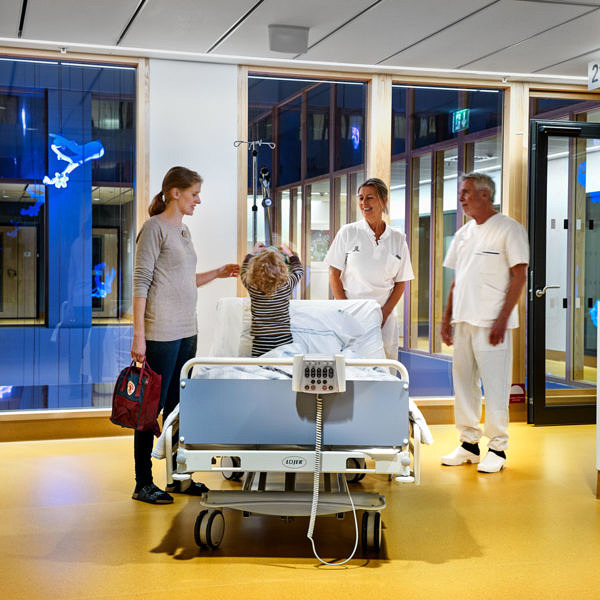
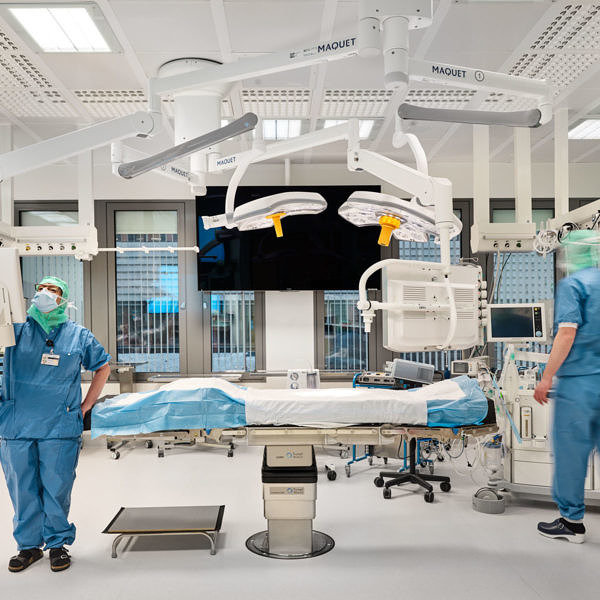
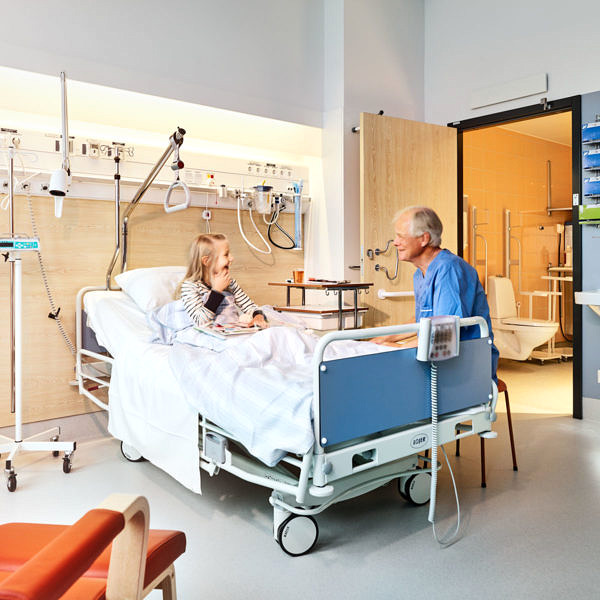
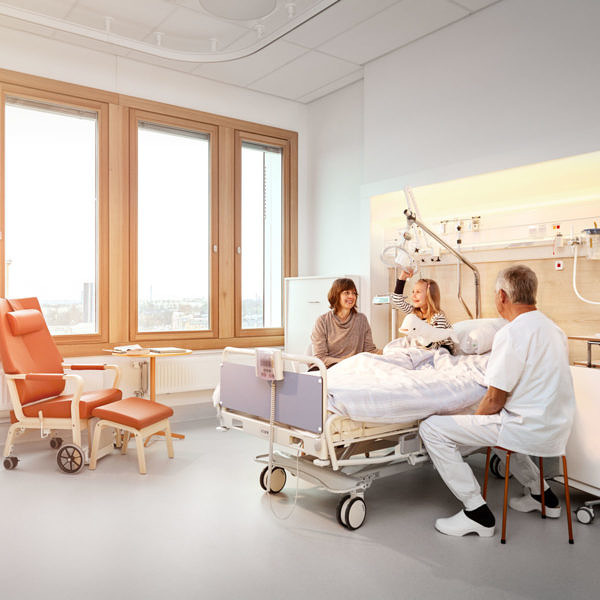
The guiding principle for the entire NKS project is “the patient always first.” All planning and design have been based on the patient’s safety, privacy, and comfort. Each patient is cared for in a private room with an associated hygiene room. Single rooms provide greater privacy and security and reduce the risk of infection and medication errors. Their design also enables care teams to work together at the patient’s bedside and facilitates close collaboration with researchers and students, who can visit in new ways. In this way, care moves closer to the patient.

A healing atmosphere within Nya Karolinska Solna

Nya Karolinska
Photo: Felix Gerlach

We have carefully shaped care environments that have a positive impact on patients. The interior atmosphere is characterised by generous public spaces and numerous meeting places where people can gather. Externally, New Karolinska Solna features a façade of glass, steel, and white tiles. The building follows a rectilinear block structure that continues the pattern of the traditional stone city. Five building volumes are tied together by a glass-clad mantle structure. Entrances and functions maintain the most open relationship possible to surrounding streets and squares.

The care quarters connect to the research buildings to the north and to Karolinska Institutet’s new laboratory to the west. Between the care and research functions runs the Academic Promenade, which links the hospital with Karolinska Institutet and bridges Solnavägen via a new pedestrian and cycle bridge.

World leading Life Science cluster in Hagastaden

Stockholm aims to be a Scandinavian centre and catalyst within Life Science—a place where industry, academia, and clinical care and research meet and collaborate. This is the vision expressed by Karolinska Institutet, KTH, Stockholm University, the City of Stockholm, the City of Solna, and the Stockholm County Council in the joint “Vision 2025 – Science City.” Consequently, collaboration between healthcare, research, and education has been a fundamental architectural premise in the NKS project.

The New Karolinska Solna project will ultimately be a key driver in the development of Hagastaden, where the cities of Solna and Stockholm meet. Once fully developed, the area will offer around 6,000 new homes and 50,000 workplaces. A science district for world-leading education and research is being created here under the collective name Stockholm Life. The hospital’s main building will form the backdrop at Hagaplan, the district’s new urban square.

Photo: Felix Gerlach
Nya Karolinska
Photo: Felix Gerlach

Nya Karolinska Solna will also be the single most important motor behind the development of Hagastaden – the new district where Solna and Stockholm meet, and which when completed will offer approximately 5,000 new homes and 50,000 jobs of which just over 6 000 at NKS. We are creating a science city for cutting edge education and research under the common name Stockholm Life. The main building of the hospital will form the focal point of Hagaplan, the new town square.

Nya Karolinska
Illustration: Tengbom

Awards and Recognitions

The World Architecture Festival nominated NKS in 2019 in the Completed Buildings: Health category. In 2025, Newsweek ranked it fifth globally.

Contact person

Mark Humphreys

Practice Director Stockholm
+46 8 412 53 43

The Psychiatric Building

A vision of transparency and integration
Architecture
Health, Life Science
Client: Landstingsservice i Uppsala
Location: Uppsala
Years of commission: 2008-2012, opened 2013
Area: 34 000 sqm BTA
Type of project: Healthcare building
Competences: Healthcare, Project Management, Interior Design, 3D illustration

Psykiatrins Hus, The Psychiatric Building in Uppsala has been named one of the world’s most architecturally impressive hospitals. We designed it with a clear vision: to create a patient-centred environment that demystifies mental illness. Transparency and integration are at the heart of the design.

In 2007, we won the pre-qualification contest regarding a new building for psychiatric care and research on the campus of the Academic Hospital in central Uppsala. Through the new hospital, the Regional Health Authority wanted to improve the health care processes, create clearer connections with the somatic health care and integrate research and teaching.

Psykiatrins hus
Photo: Åke E:son Lindman

Integration for collaboration and better processes

Every floor has wards for research, teaching, in-patient and outpatient care instead of the usual tradition of dividing the disciplines in different buildings. Our architecture helps the operation to develop new forms of collaboration.

“The Psychiatry Building has developed exactly in line with our vision which is fantastic. We have not needed to make any changes between contest entry and realisation, which means that we really have succeeded in creating a healthy environment that encourages integration,” says Jesper Husman, architect in charge.

Light, open environment

Openness was one of our key words throughout the project. The result is a transparent hospital with a common entrance for both the healthcare and the mental health care on one floor, open to the public. Here, there is a restaurant, a library and an auditorium. Around a large, glazed atrium in the heart of the building, the operation takes place in open layouts.

The Psychiatry Building forms a continuous corpus, with light flowing in from the atrium and two smaller courtyards. Outpatient wards face the municipality and its lively surroundings. In-patient wards open toward the castle park, connecting patients to nature and a beautiful view. A rooftop terrace provides a peaceful space for relaxation.

Psykiatrins hus
Photo: Åke E:son Lindman

Praised and striking architecture

The ranking placed the Psychiatry Building among the world’s most architecturally impressive hospitals. It ranked ninth on American Online Master of Public Health’s list, The 30 Most Architecturally Impressive Hospitals in the World. The motivation described it as a striking building with a light and positive environment that encourages spontaneous interaction.

“We are incredibly proud and happy that the Psychiatry Building has been ranked so highly by international standards. Sweden is at the forefront when it comes to healthcare architecture, and we have been among the first to put the patient at the centre,” says Christine Hammarling, architect and healthcare specialist at Tengbom.

The World Architecture Festival Award nominated the Psychiatry Building in Uppsala in the Health category. Known as “The World Championship in Architecture,” the award recognises outstanding design worldwide.

Contact person

Mark Humphreys

Practice Director Stockholm
+46 8 412 53 43