Summartårg Visby
Tableware on the move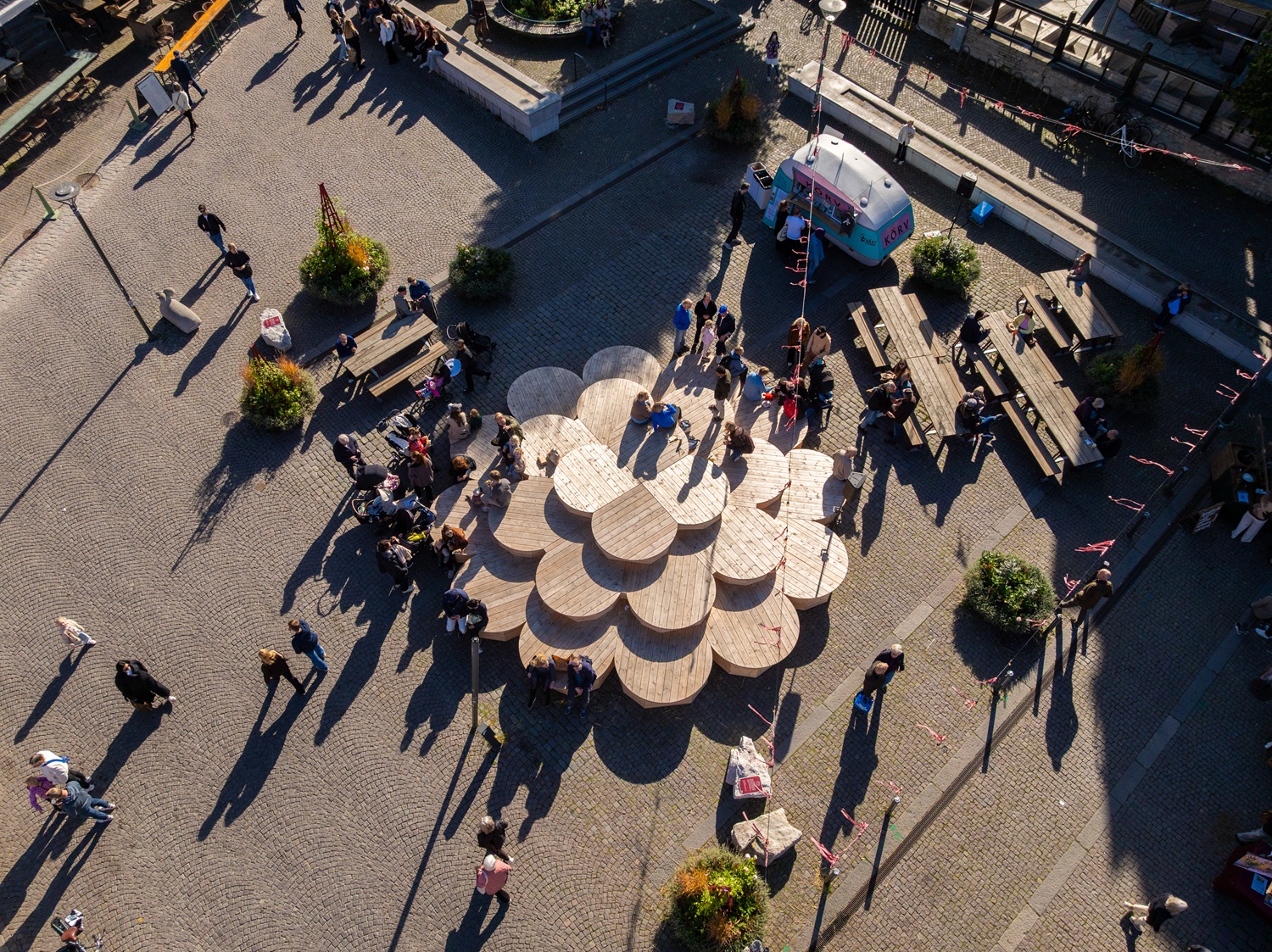
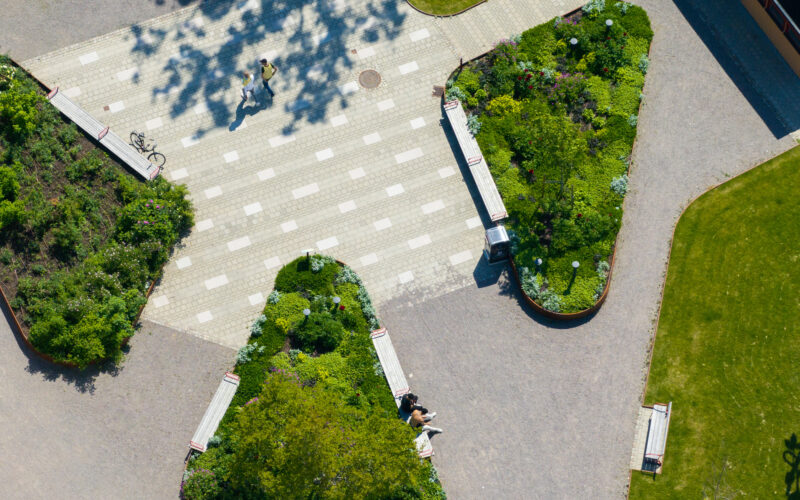
Two squares, one summer, and the freedom of not knowing exactly how things will turn out. Through temporary architecture, reuse, and greenery, we worked with Region Gotland to explore new ways of using the city’s shared spaces. And the people of Visby were quick to respond, with concerts, World Cup evenings, and breakfasts served on their own tableware.
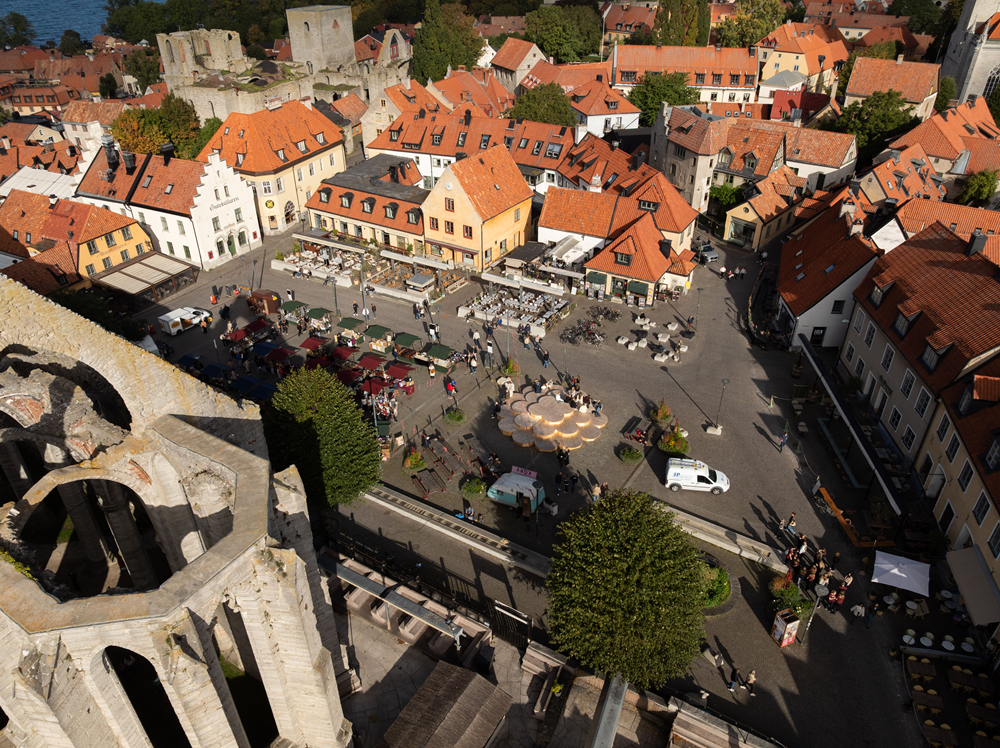
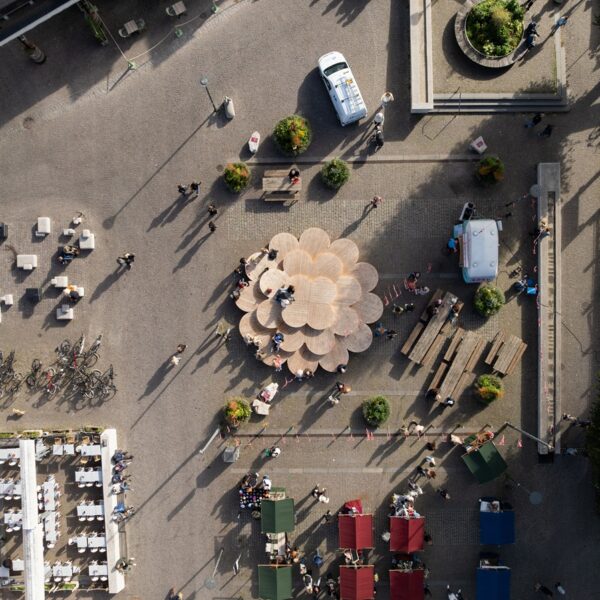
In the summer of 2026, Stora torget and Södertorg in Visby became testing grounds for the SUMMARTÅRG pilot project. Region Gotland wanted to explore what temporary interventions could teach us about how people use the city’s public spaces. Insights that could inform the city’s continued development.
In close collaboration with Studio Doms and Region Gotland, we developed the design concept and detailed design documentation for the two squares. Our work was preceded by a dialogue process conducted by the region with a range of local stakeholders during autumn 2025.
“The beauty of a project like this is that we can actually test ideas at a 1:1 scale. We don’t have to decide in advance exactly how a place should function for years to come. Instead, we can see what happens when people start using it in new ways,” explains Anna Valman, landscape architect and project lead at Tengbom.
One size doesn’t fit all
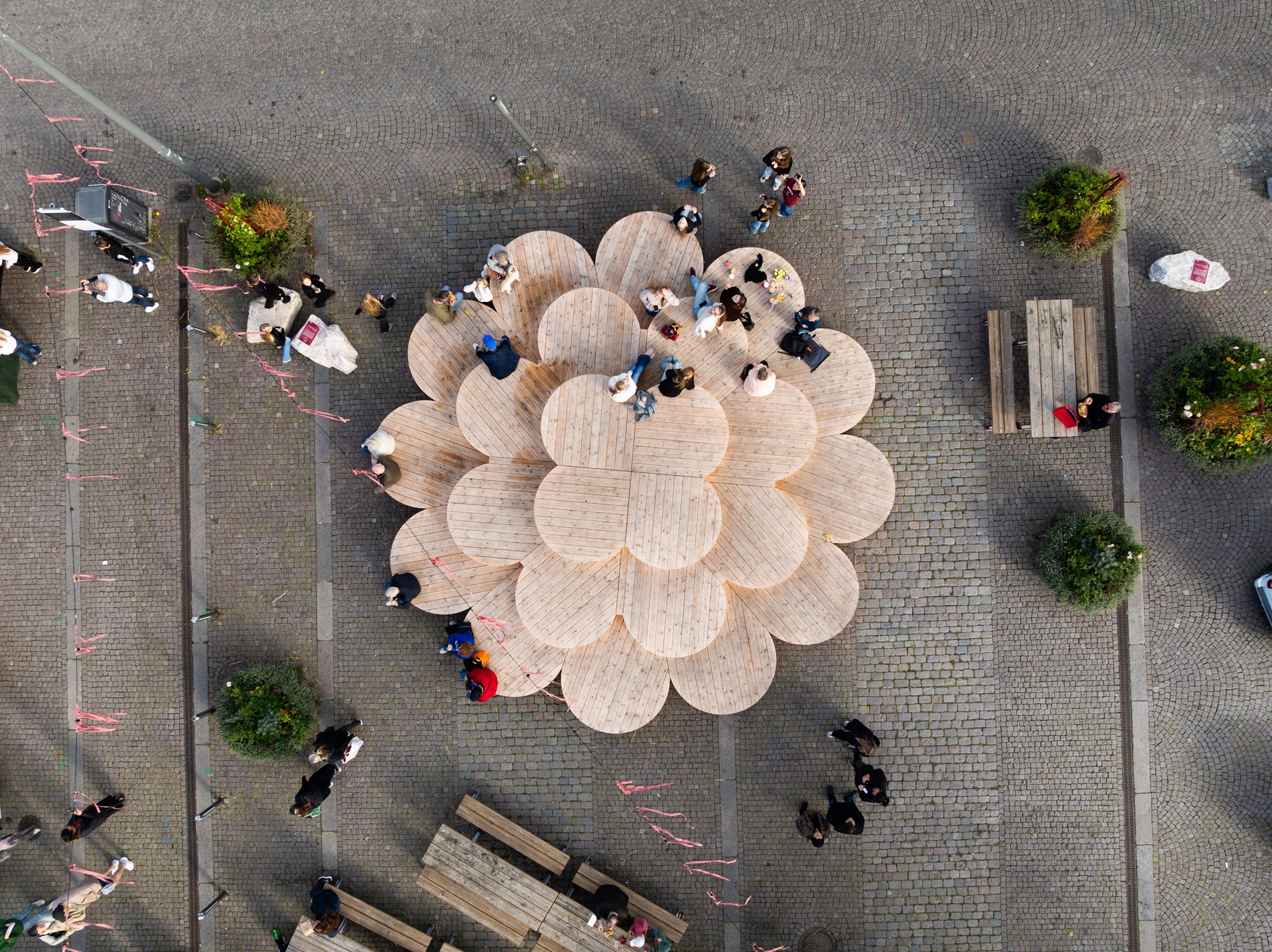
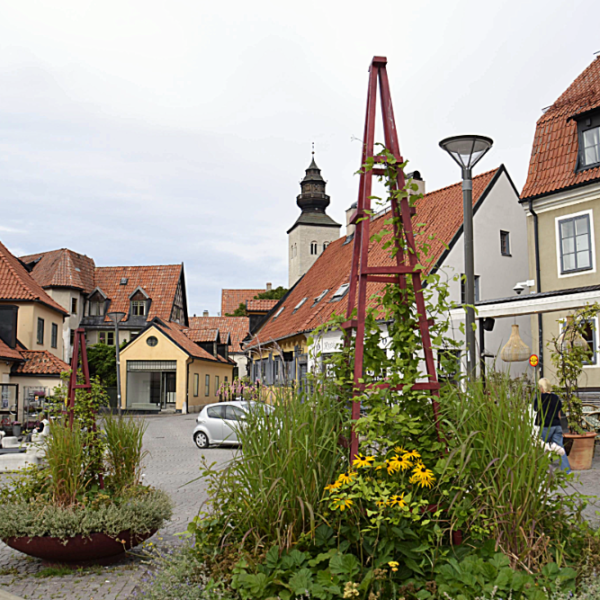
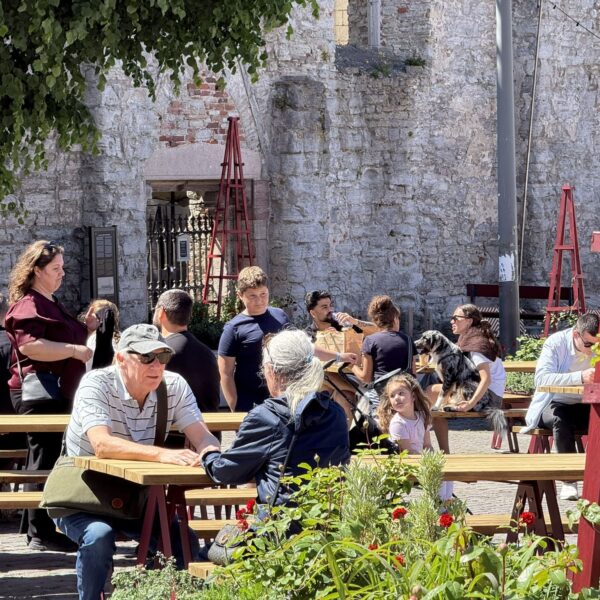
 With the ruins of Sankta Katarina as a backdrop, Stora torget hardly needed more history. What it did need was more reasons to sit down and stay a while. Roses, reused planters, picnic tables, bunting, and strings of lights created new opportunities to linger.
Traces of the past also found their way into the new additions. The rosette motif draws inspiration from the rose windows of Visby’s ruined churches, and the shape appears in both the project’s visual identity and the stage installed in late summer.
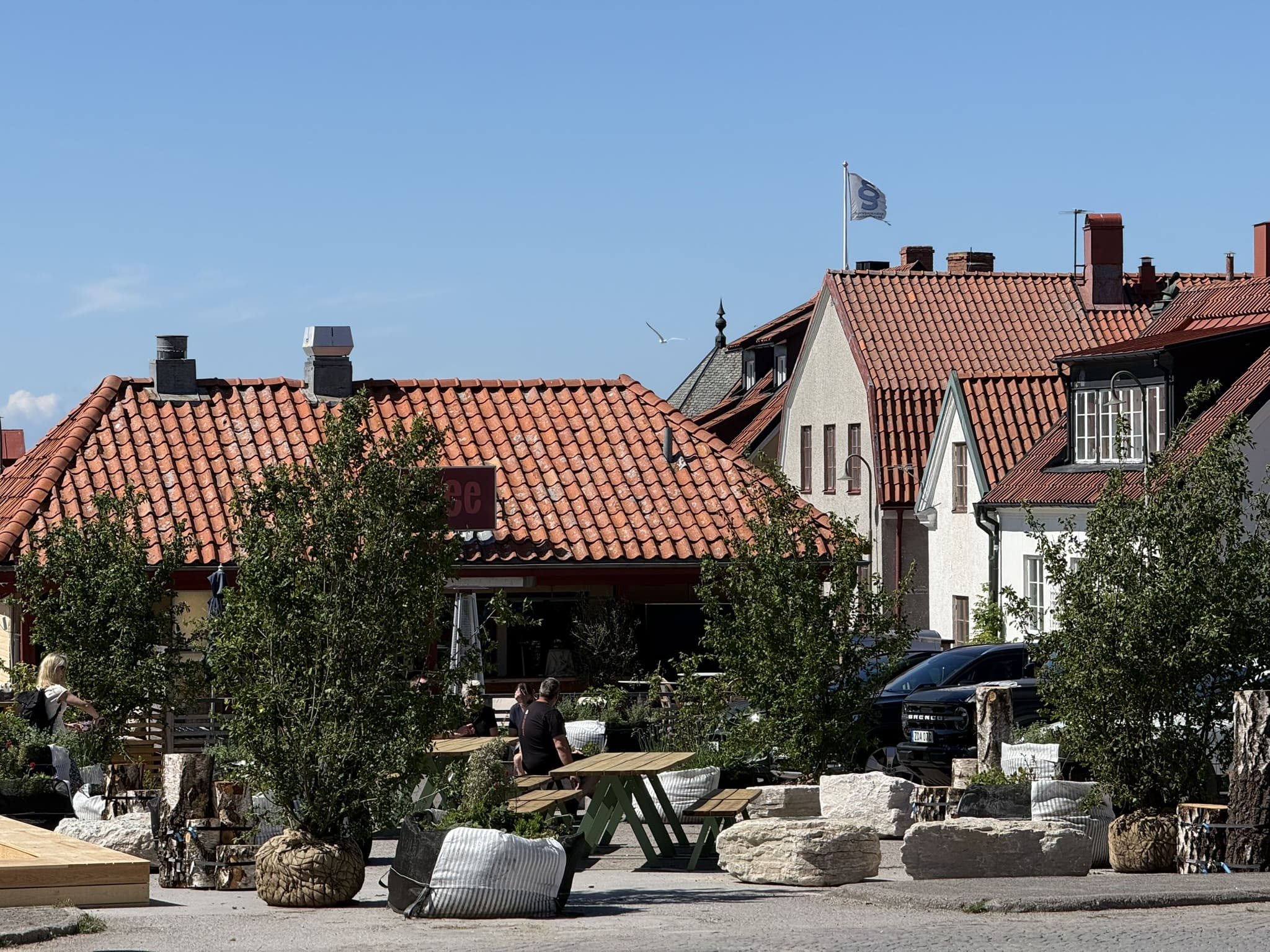
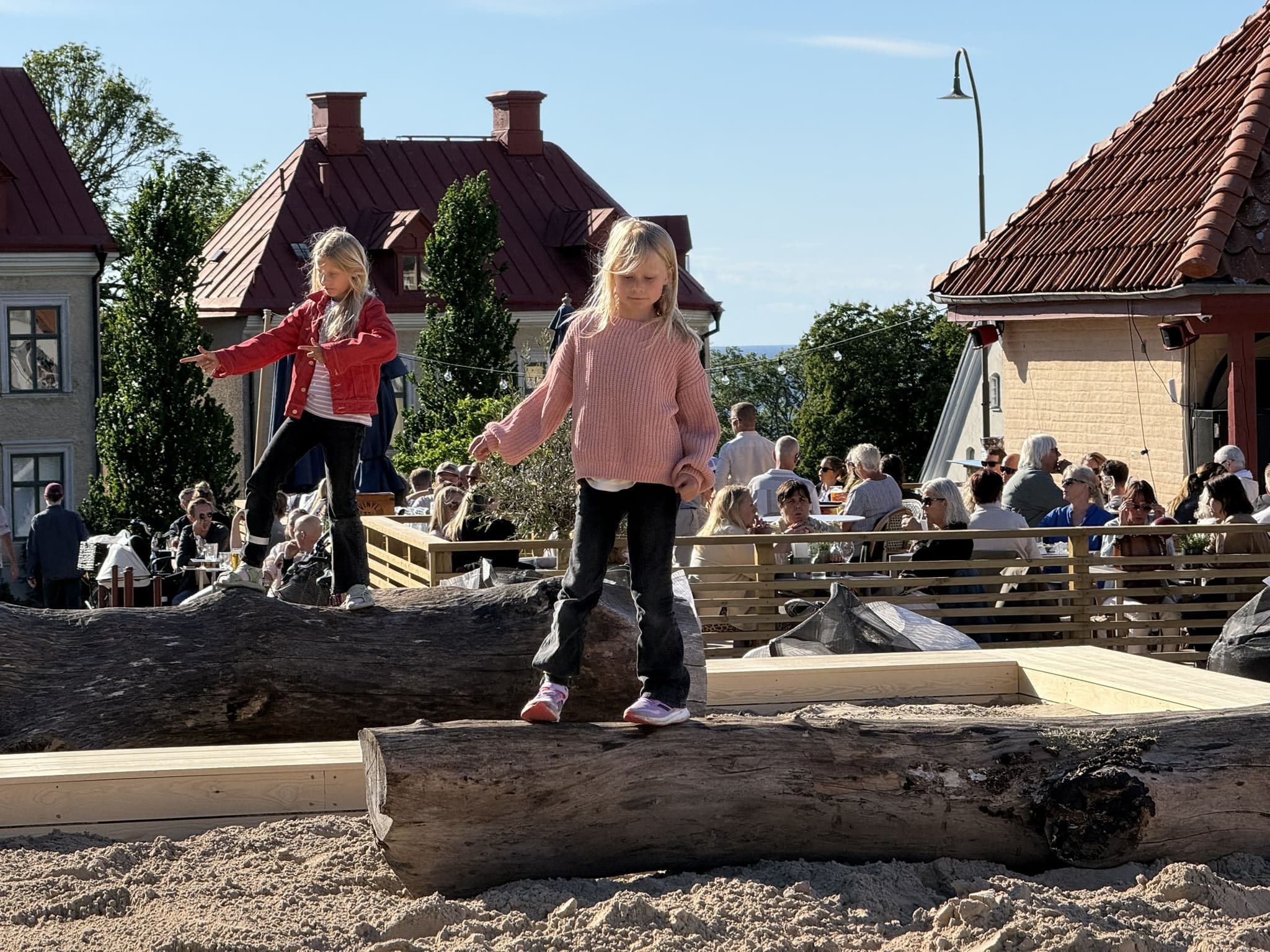
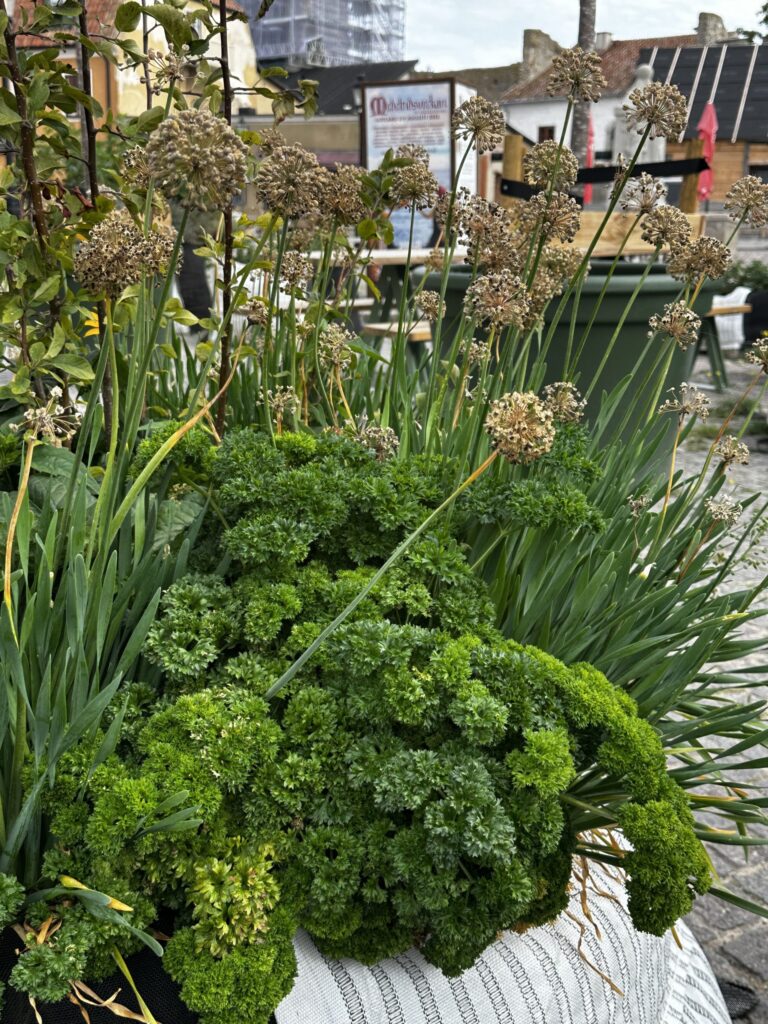
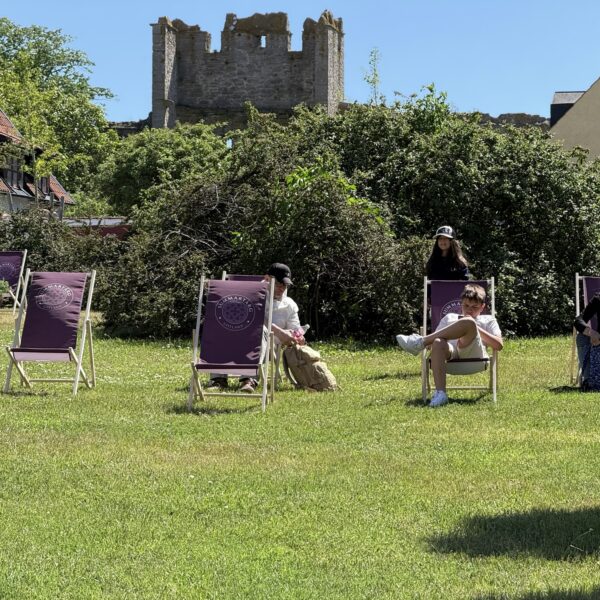
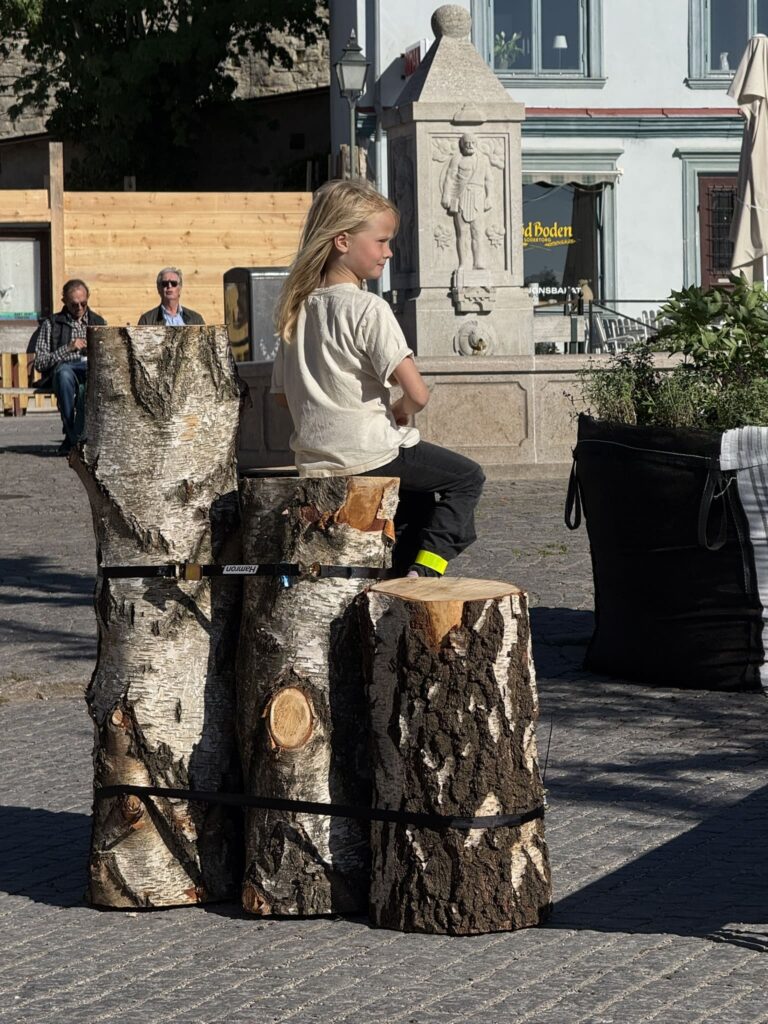
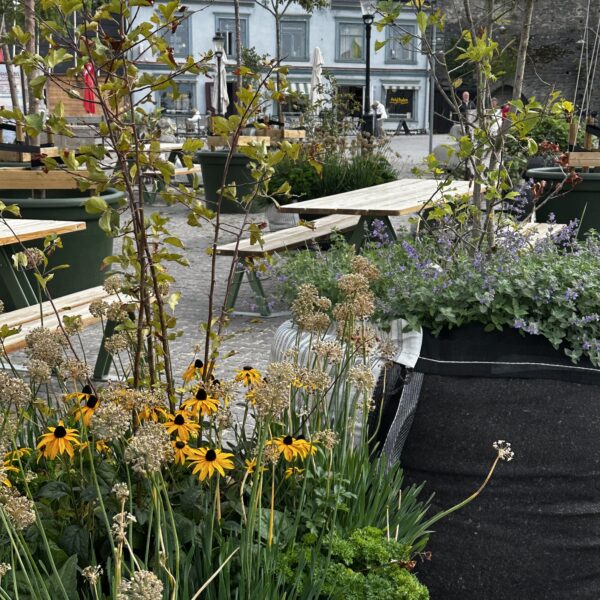
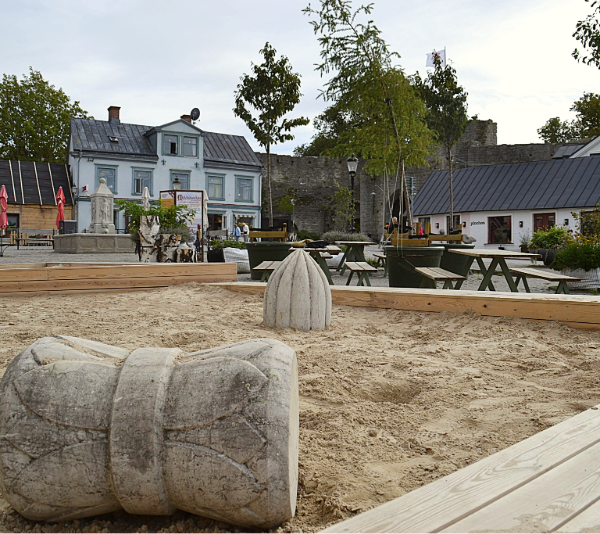
A few blocks away lies Södertorg. Here, the challenge was different, and we created a more informal, playful setting with sand, deckchairs, oak logs, picnic tables, and abundant greenery. Edible plants, herbs, and garden plants transformed the square into an urban garden in the heart of the city.
“Stora torget has its history and its ceremonial role, while Södertorg has a much more everyday character. What they share is the ambition to make it easy for people to stay, spend time together, and use the city in new ways,”
Ludmila Sandqvist, landscape architect.
You can’t design a breakfast
The project became an exploration of what actually happens when a car parking area is given new functions. And the answers came quickly.
During the FIFA World Cup, large groups gathered in the squares in the evenings. The stage at Stora torget hosted small concerts and spontaneous performances, and the greenery at Södertorg proved particularly popular. But one of the clearest signs that something had changed was when residents from the surrounding buildings began coming down to the square with their own crockery to enjoy breakfast outdoors.
“These are exactly the kinds of behaviours we find so interesting. You can design a place and imagine how it will be used. But it’s only when people make it their own that you really learn something. The fact that someone chooses to bring their breakfast down to the square says a great deal about how the role of the place has changed,” Anna explains.
Reuse as a starting point
Much of our design was based on reuse. The process therefore began with an inventory of Region Gotland’s material storage facilities to identify objects that could be given new purposes in the squares.
At Södertorg, four sculptures were among the elements reused, while local materials such as limestone, birch logs, and oak logs complemented the design.
Studio Doms is based in Visby and was responsible for project management and implementation. Their local knowledge of stakeholders and suppliers made it possible to realise the ideas within the project’s tight timeframe. Future users of the spaces contributed fresh perspectives and ideas. Students from a school for pupils with special educational needs, along with participants in daily activity programmes, were also involved in the production.
The limited budget became a driving force behind a flexible approach to reuse and local resources.
A testing ground – what happens next?
The installations will remain in place into early autumn before being dismantled in October. The materials and objects will then be documented and returned to Region Gotland’s storage facilities for future reuse. The plants will be replanted in other projects around Visby, and if everything goes according to plan, the stage at Stora torget will be reused next summer.
Exactly how SUMMARTÅRG will develop in 2027 has yet to be decided. But Region Gotland wants to continue experimenting and building on the experiences of the first summer.
“Temporary projects can be a very practical tool in urban development. You can test, observe, and adjust before making decisions that need to stand the test of time. For us, perhaps the most interesting thing about SUMMARTÅRG is that it’s part of the city’s long-term development,” concludes Anna Valman.