The glass roof
High-tech glass roof unites old and new
When Östermalms Saluhall in Stockholm was inaugurated in 1888, many visitors looked up in admiration at its modern roof with cast-iron trusses. Now, as the market hall has been renovated alongside the new Hotell Villa Dagmar, eyes are once again drawn upward. This time to the glass roof covering the hotel’s inner courtyard. Here, parametric design has created a high-tech extension of the sky, while neighbouring residents have retained their views over Stockholm’s rooftops.
Old and new coexist harmoniously at Hotell Villa Dagmar. The hotel is connected to the newly refurbished Östermalms Saluhall through a new passageway. The glass roof of the courtyard was designed to link an old confectionery factory from 1910 with an Art Nouveau façade from 1888 and a contemporary extension in hand-laid brick.
Our task was to respect the historical character of the buildings from their respective stylistic periods, while creating a roof that preserved the outdoor atmosphere of the courtyard, home to a restaurant and bar. The goal was a meeting place to be enjoyed all year round.
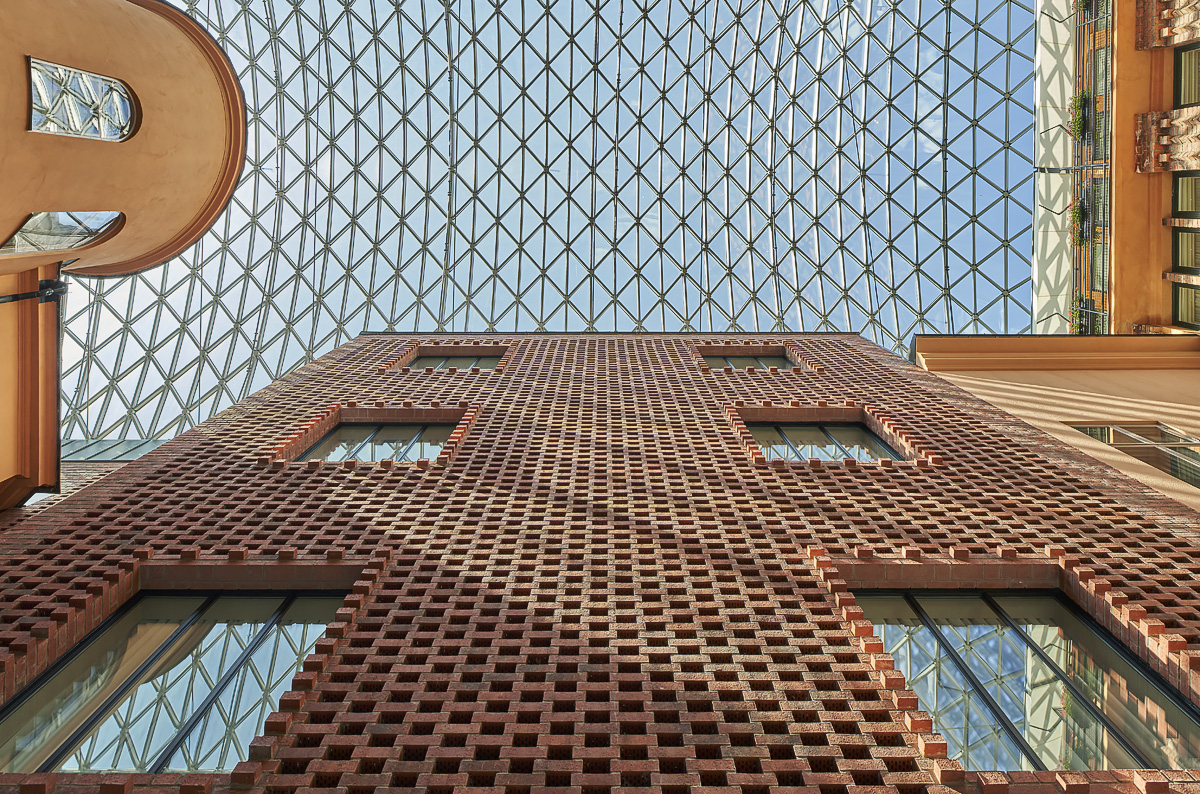
Indoors yet outdoors through parametric design
Architectural challenge of the glass roof
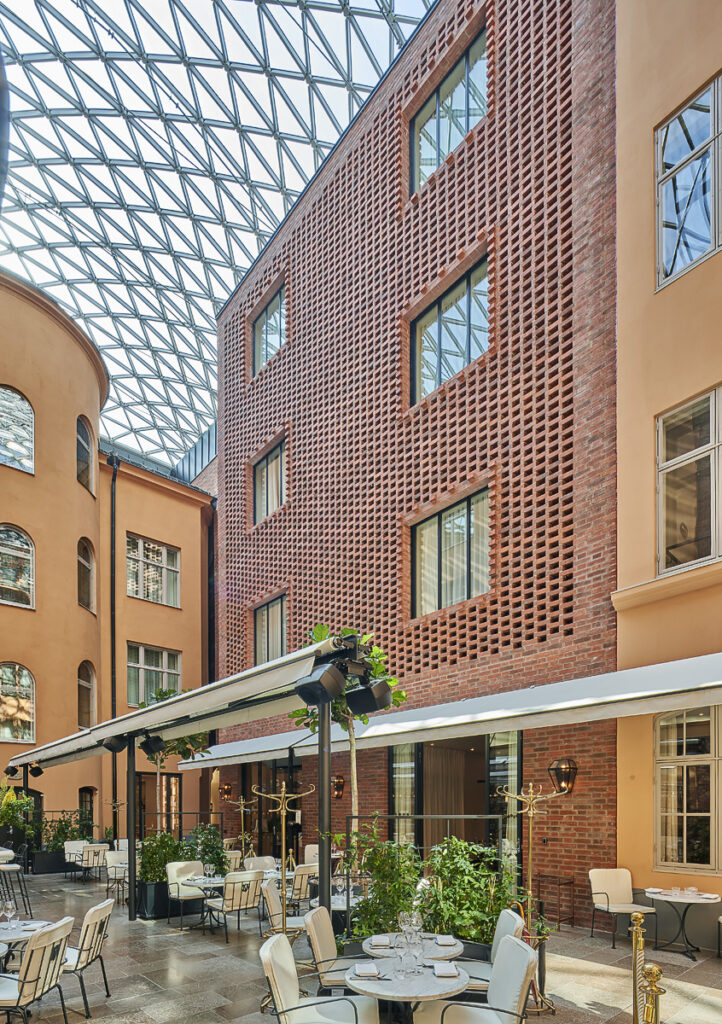
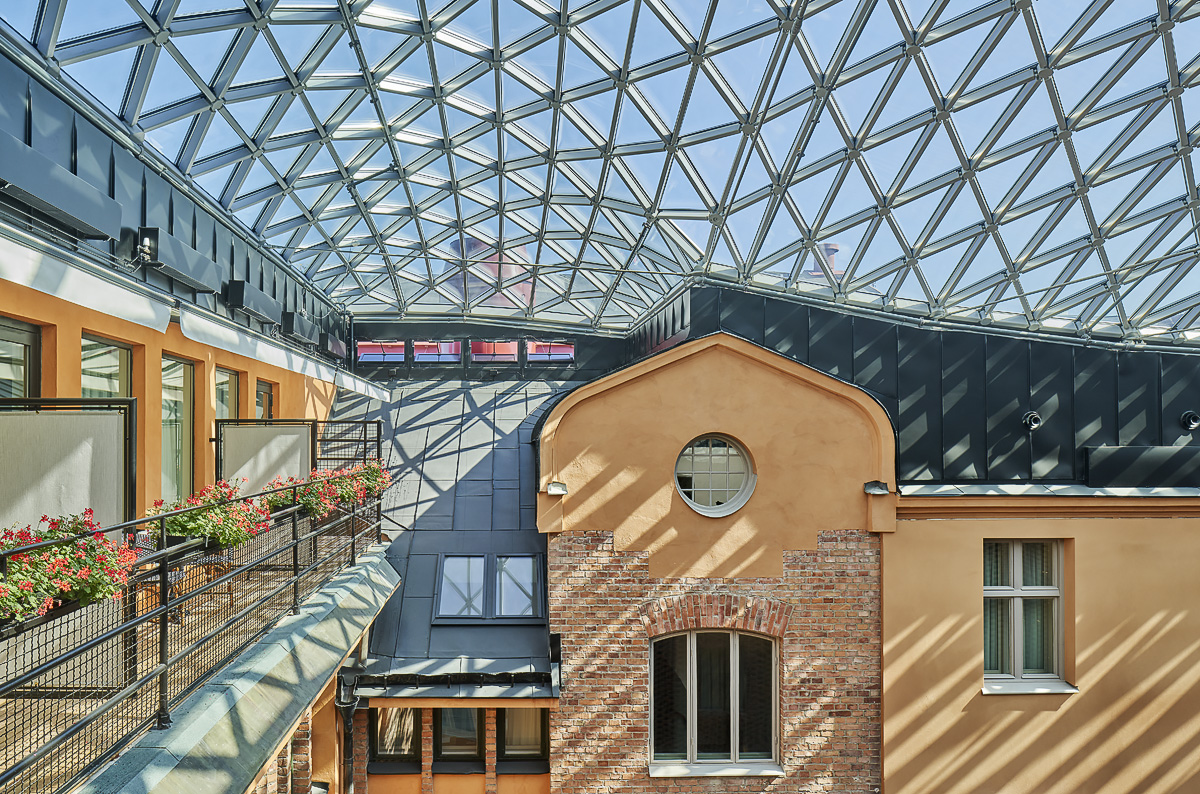
The major architectural challenge was that the eaves of the historic block varied in height. The simplest solution in this situation would have been to build up to the highest shared point and place the roof there. However, that would have made the structure too tall, obstructing the views of nearby residents and leading to dissatisfaction. And, likely a lengthy appeal process. A costly risk for the client.
Parametric design resolved the structure
The solution was a glass roof constructed using digital parametric and generative design. What do we mean by that? It is a process in which the computer searches for the optimal form based on defined parameters. This approach made it possible to generate a structure entirely adaptable to the varying eave heights, resulting in a lower roofline. In this way, residents could keep their view. The parametric design made it possible by optimising each angle individually and reducing each unique glass section. The vision of a gently undulating form with two peaks thus moved from concept to reality.
Contact person
Related
-

Östermalm Market Hall and Hotel
Updated for the future
-

Östermalmshallen Padel
Upcycling rescues great architecture

-

The Bicycle Garage
Bicycle parking worth the extra mile
-
Bicycle house Ekonomikum
A safer campus with a lantern in the park
-

Campus Vasastan
One building - many lives
-

Kalmar City Library
Kids get the best room in the new library
-

Klosterhuset – Vreta Kloster
An exhibition in itself
-

Rödaberg School
A new chapter on the hill
-

Stjärnorp Castle Ruins
Where architecture meets restoration